The Kalahari and the Makgadikgadi pans
The white expanses of Makgadikgadi with its meerkats, the baobabs of Nxai Pan, the Kalahari and the delta, starting from Victoria Falls.
- Victoria Falls
- Chobe
- Nata
- Makgadikgadi
- Nxai Pan
- Central Kalahari
- Maun
- Okavango
Day by day
- Day 1
Arrival at the Victoria Falls
This trip is devoted to the Botswana of great empty spaces. It starts at the Victoria Falls, passes along the Chobe River among the elephants, then heads south: the Nata bird sanctuary, the white salt pans of the Makgadikgadi with their meerkats, the baobabs of Nxai Pan and the desert of the Central Kalahari. It ends in Maun and the Okavango Delta. You travel by 4x4 and often sleep in a tent.
Before you go: for Zimbabwe the visa is obtained on the official portal evisa.gov.zw or on arrival. According to the British government, the KAZA Univisa, valid for Zimbabwe and Zambia and for short trips into Botswana, is issued at Victoria Falls airport and at the Victoria Falls and Kazungula borders. For Zambia the rules are different: check everything for Italian citizens on Viaggiare Sicuri. Italian citizens enter Botswana without a visa for tourism for up to 90 days, with a passport valid for at least six months and blank pages. Other nationalities should check their own rules. The United States asks for increased caution in Botswana, level 2, because of crime. The British government does not advise against any part of Botswana or Zimbabwe, but reports rising crime in Maun and thefts at some lodges in the Chobe area. The north of the route is a malaria area: ask your doctor.
You land at Victoria Falls airport, in Zimbabwe, and travel to the town, a few kilometres from the falls. Already from the road you see the column of spray rising above the forest. In the evening stroll around the small, quiet centre.
Practical tip: bring US dollars in small notes, widely used in Zimbabwe for visas, entrance fees and tips.
- Day 2
The Victoria Falls
Today you visit Mosi-oa-Tunya, the smoke that thunders, the local name of the Victoria Falls. They are a UNESCO World Heritage Site and mark the border between Zimbabwe and Zambia: the Zambezi, about 1,700 metres wide, plunges into a narrow, deep gorge and throws up a cloud of spray visible from many kilometres away.
Early in the morning walk the path through the rainforest, which runs right opposite the falls with a series of viewpoints. You walk among mahogany and fig trees, ferns and creepers, kept green all year by the spray. At the closest points the water soaks you like rain. With the sun low the spray often forms a rainbow. Check prices and times.
The flow changes a great deal with the seasons. Between April and June the water is at its peak and the cloud can hide the view; at the end of the dry season the falls are less powerful, but you see the basalt walls of the gorge better.
In the afternoon walk to the Victoria Falls Bridge, the old iron structure linking Zimbabwe and Zambia above the Batoka Gorge, and watch the Zambezi flowing far below.
At sunset take a cruise on the river above the falls, among palm-covered islands, hippos, crocodiles and birds.
Practical tip: bring a light waterproof and a waterproof case for your phone and camera. Near the falls you get wet even under a clear sky.
- Day 3
Kazungula, Kasane and the Chobe by boat
Today you enter Botswana. From the town of Victoria Falls the road heads west and in about an hour reaches the Kazungula border, where Botswana, Zimbabwe, Zambia and Namibia meet. A few kilometres further on you reach Kasane, on the Chobe River.
If you are driving yourself, collect the 4x4 here, rented in Botswana. Vehicles with foreign plates receive from BURS, the Botswana revenue service, a temporary permit valid for a maximum of 14 days, less than the length of this trip in the country: with a car rented in Botswana the problem does not arise. Alternatively choose a guided safari with a driver.
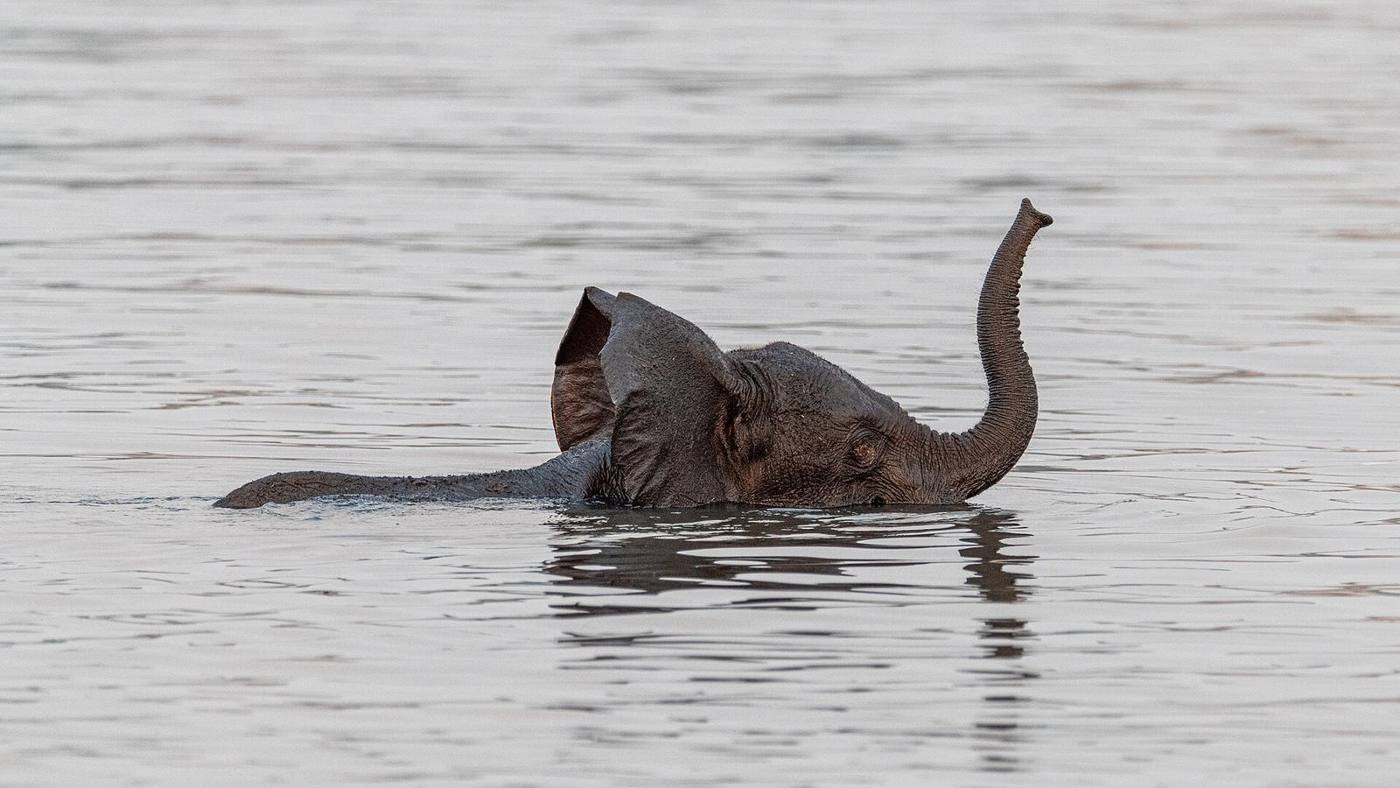
In the afternoon you board a boat for a cruise along the river. Chobe National Park, Botswana's first, is famous for one of the largest elephant populations in Africa. From the water you see elephants swimming with their trunks raised, buffalo on the grassy islands, hippos, crocodiles and a great many birds.
At sunset the sun sinks behind the plains of Namibia, on the far bank, and the river turns orange. In the evening you sleep in Kasane, near the river, and listen to hippos grunting in the dark.
Practical tip: in Kasane withdraw cash in pula, do your shopping and fill up. Further south, between the pans and the Kalahari, fuel stations and shops are few and far between.
- Day 4
The Chobe by jeep
Today you explore the Chobe from land. At dawn you enter the park and drive the sandy tracks along the riverfront, the part of the river closest to Kasane. Early morning is the best time for predators: lions returning from the hunt, sometimes leopards and hyenas.
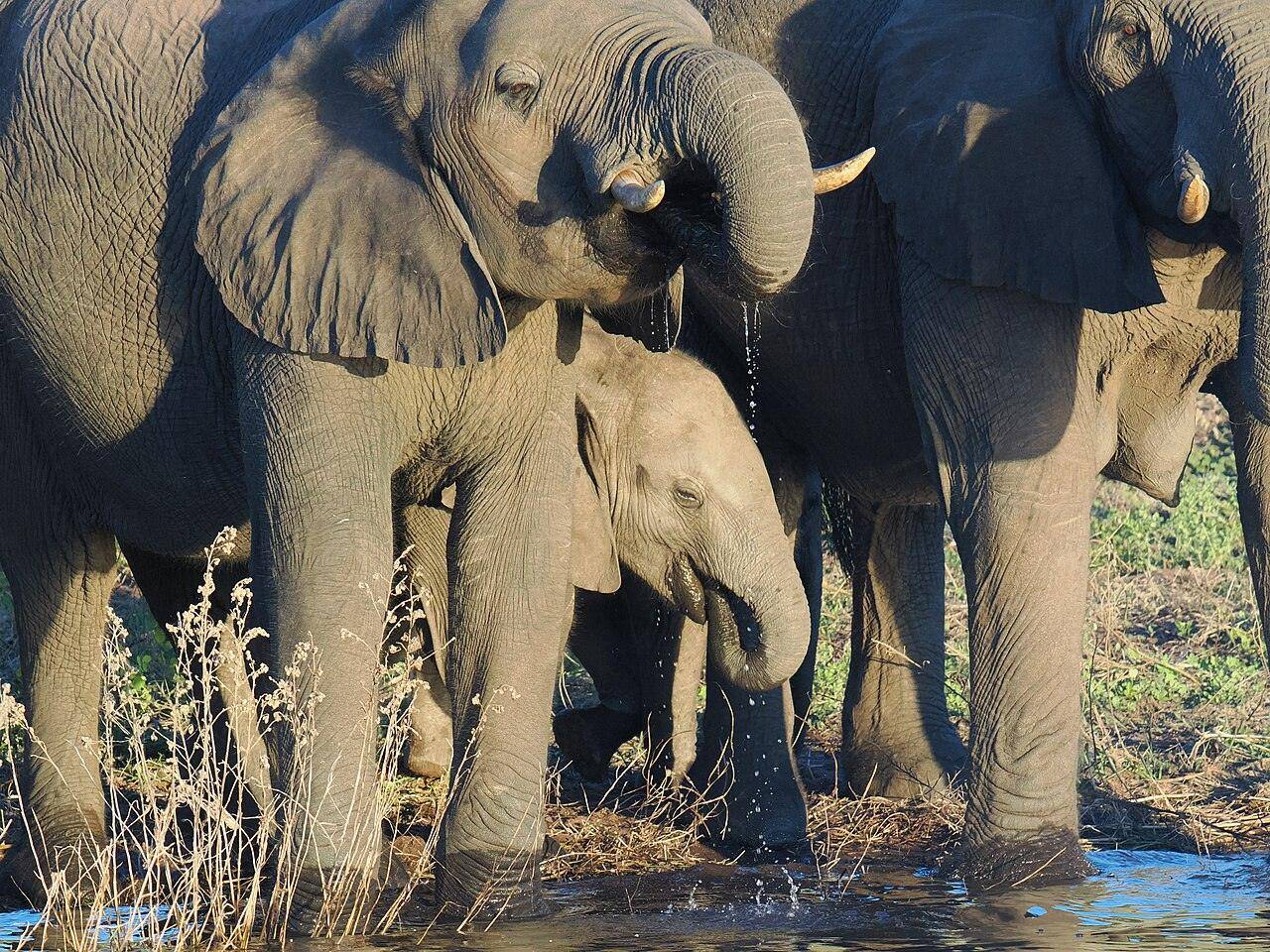
In the dry season, when the pools inland dry up, thousands of elephants come down to the river. You see them arrive in long lines from the woods, drink, play in the water and cover themselves in mud. Along the bank you also find giraffes, kudu, sable antelopes and puku, small golden-coated antelopes which in Botswana live almost only here.
Mid-morning you leave the park for lunch and a rest. In the afternoon take a second jeep drive or another boat cruise, to see the river in a different light.
The British government reports thefts at some lodges in the Chobe area, especially those on the river: lock your door and windows when you go out and use the safe for your passport and money.
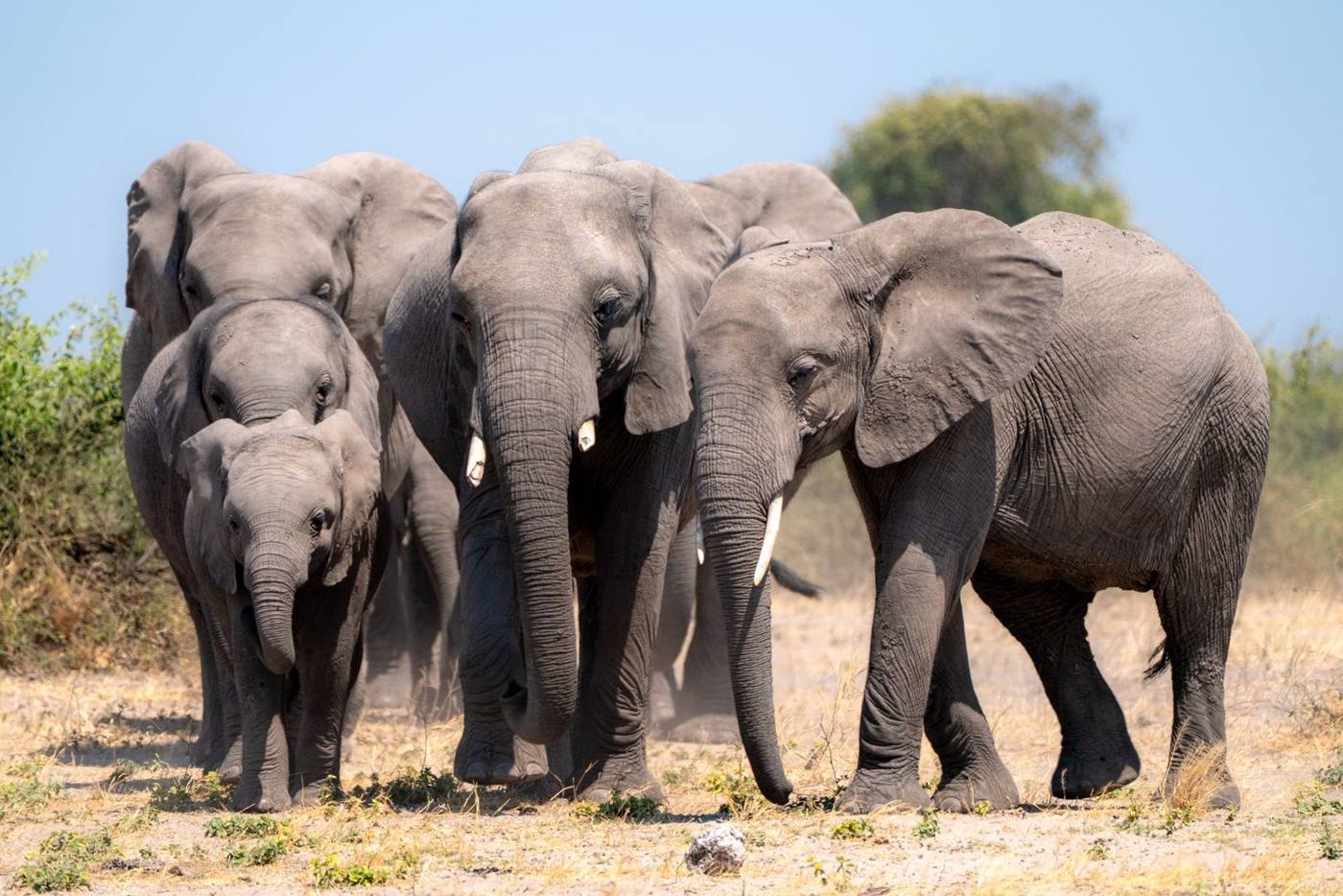
Always give way to elephants. If an elephant is on the track, switch off the engine and wait at a distance, especially if there are females with calves. An elephant that shakes its ears and raises its head is asking you to move away.
Practical tip: leave the park before sunset. Gate times are strict and driving after dark in the parks is forbidden.
- Day 5
Nata and the bird sanctuary
Today you leave the river and head south on the tarred road linking Kasane to Nata. It is a long transfer through mopane woodland and villages, where the road is also used by elephants: drive carefully and keep to the speed limits.
Nata is a small village at the junction between the Kasane road and the road linking Francistown to Maun, on the northern edge of the Makgadikgadi pans. Not far away lies the Nata Bird Sanctuary, a reserve run by the communities of the nearby villages, on the northern part of Sowa Pan.
The sanctuary changes completely with the seasons. In the rainy season, when the Nata River brings water into the pan, thousands of pink flamingos, pelicans and other water birds arrive, and the expanse becomes a shallow lake full of life. In the dry season the water retreats, the pan turns white again and you mostly see ostriches, springbok, zebras and birds of prey. Either way the view of the pan vanishing into the horizon is spectacular. Check prices and times.
In the evening you sleep near Nata, in the savannah with palms. Before dinner check the car, water and supplies: from tomorrow you enter the pans, where services are almost non-existent.
Practical tip: between Kasane and Nata there are few fuel stations. Fill up in Kasane and check the fuel level again in Nata before continuing towards the pans.
- Day 6
The Makgadikgadi pans and the meerkats
Today you enter the heart of the Makgadikgadi salt pans. From Nata you drive west to the Gweta area, on the edge of Ntwetwe Pan. The Makgadikgadi pans are among the largest in the world and are what remains of a huge ancient lake, dried up thousands of years ago.
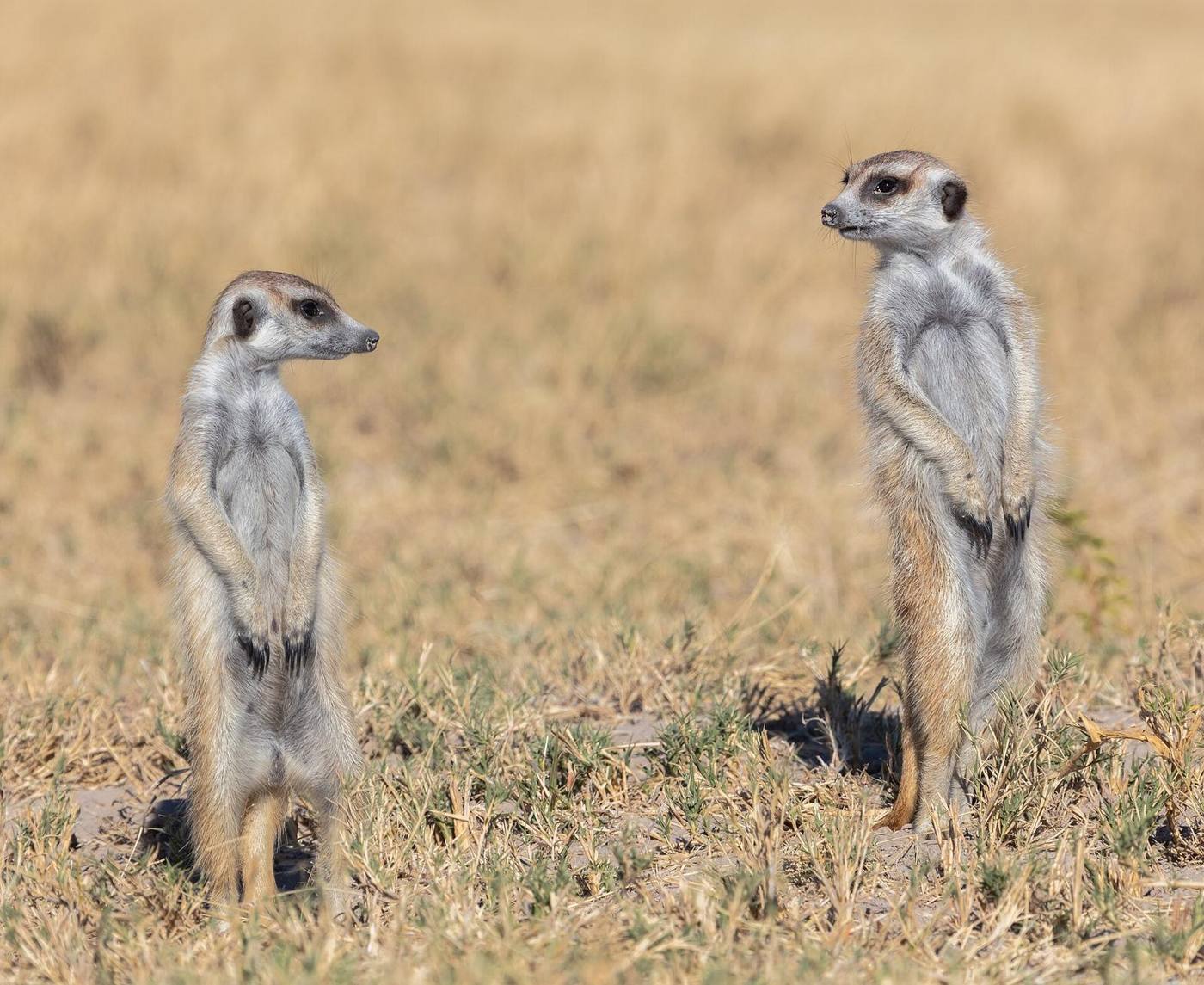
In the afternoon you meet the most famous inhabitants of the pans: a colony of meerkats used to the presence of people. With a guide you approach slowly, sitting or crouching. The meerkats come out of their burrows, stand up on their hind legs to warm themselves in the sun and sometimes even use visitors as a lookout post to scan the horizon.
The guide explains the life of the colony: the sentries keeping watch, the young playing, the adults digging for insects and scorpions. At the first sign of danger, a bird of prey or a jackal, the whole colony disappears underground in seconds.
Driving on the pans is dangerous in the rainy season. The salt crust looks hard and dry, but underneath there can be deep mud where a 4x4 sinks up to its axles, far from any help. Always stay on existing tracks, never cut across the crust and, if you do not know the area, go with a local guide.
Practical tip: for the meerkats wear neutral colours and move slowly. Sudden movements frighten them and they go back into their burrows.
- Day 7
A night on the pan and Chapman's Baobab
Today you visit the great baobabs on the edges of the pans. In the morning you reach the site of Chapman's Baobab, for centuries one of the most famous trees in southern Africa: travellers used it as a landmark for crossing the pans. The tree collapsed in 2016, and today you see the remains of the huge trunk on the ground, still impressive. Not far away stands Green's Baobab, with carvings left by nineteenth-century travellers.
In the afternoon, in the dry season, you set off with the guide towards the centre of the pan. Around you there is only white: no plants, no sounds, just the perfect line of the horizon. It is a sense of space that is hard to find anywhere else. At some camps you can take a quad bike ride over the hard crust, always with the guide.
At sunset the white of the salt turns pink and then blue. In the evening you sleep in the open on the pan, on a mattress under blankets, with the starry sky above you. With no lights for hundreds of kilometres, you see the Milky Way from one horizon to the other, the Southern Cross and the Magellanic Clouds.
Remember: the night on the pan is done only when the crust is dry and with people who know the ground.
Practical tip: in the desert the temperature drops sharply after sunset. For the night on the pan bring a thick fleece, a hat and a head torch.
- Day 8
Nxai Pan and the elephant waterhole
Today you wake up on the pan at dawn, with the sun rising over the white crust. After breakfast you set off west again, on the road to Maun, and then take the sandy track that runs north to Nxai Pan National Park.
Nxai Pan is an ancient salt pan covered in grass, surrounded by acacia woodland and small clumps of trees. It is different from the Makgadikgadi: here the landscape is open savannah, flat and green after the rains, yellow in the dry season. The park is famous for the zebra migration, which arrives here with the rains, and for its springbok, born in their thousands in the wet season.
In the afternoon stop at the park's main waterhole, a water point kept going even in the dry season. Bull elephants, giraffes, springbok, wildebeest and kudu come here to drink, and sometimes lions wait hidden in the grass. Stay in the car and watch in silence: it is one of the quietest places on the trip for watching animals.
In the evening you sleep at the park's campsite, without fences. Pitches and permits from the DWNP, the parks department, must be booked and paid for before you leave: without a booking you will not get through the gate.
Practical tip: the track to Nxai Pan is deep sand. Let some air out of the tyres, as the rental company showed you, and drive in four-wheel drive at a steady speed.
- Day 9
Baines' Baobabs
Today you visit one of the most photographed places in Botswana: Baines' Baobabs. In the morning take the track to Kudiakam Pan, in the southern part of the park. On the edge of the pan stands a group of great baobabs, some of them centuries old, with grey trunks and bare branches that look like roots turned towards the sky.
The name comes from Thomas Baines, a nineteenth-century painter and explorer, who painted them during a journey across the Kalahari. His paintings can be compared with today's landscape: the trees are still there, almost the same.
In front of the baobabs opens the white crust of Kudiakam Pan. Walk around the trees and watch the landscape change with the light: in the morning the salt is white and the trunks are grey, at sunset everything turns pink and orange.
In the afternoon return to the main waterhole and look for predators. Nxai Pan is home to lions, cheetahs, hyenas and, with luck, the bat-eared fox, the small fox with big ears that hunts insects in the grass.
Here too the crust of the pan can be dangerous in the rainy season: never drive off the tracks.
Practical tip: for photos of the baobabs arrive early or stay until sunset. At midday the light is flat and the salt reflects a white glare that burns your eyes.
- Day 10
Into the Central Kalahari
Today you leave Nxai Pan and drive south-west to the Central Kalahari reserve. After the tarred road you cross villages and plains of scrub to Rakops, one of the last villages before the reserve. At the last filling station on the road fill up with fuel and water: in the reserve there are no fuel stations, shops or drinking water.
The Central Kalahari Game Reserve is one of the largest reserves in Africa, an immense territory of dry savannah, low grass-covered dunes, acacia woodland and ancient dry riverbeds. For centuries it was the land of the San, the hunter-gatherers of the Kalahari.
Safety in the desert is rule number one. Carry water for more days than you plan, spare fuel, a first aid kit and a satellite phone. If you are driving yourself, travel with two vehicles if you can: if one breaks down, the other goes for help. Here too pitches and DWNP permits must be booked and paid for in advance.
You enter by the north-eastern gate and in the afternoon reach the campsite, a pitch in the sand under an acacia, without fences. In the evening light a fire only where it is allowed and cook before dark.
Practical tip: leave your route and expected dates with someone. If you do not arrive, they will know where to look for you.
- Day 11
Deception Valley and the dark-maned lions
Today you explore Deception Valley, the bed of an ancient river that winds through the heart of the reserve. The valley floor is a flat, open grassland, surrounded by low dunes with acacias.
Set off at dawn, when the air is cool and the animals are active. Gemsbok, springbok, wildebeest and red hartebeest graze in the valley. This is also home to the Kalahari lions, famous for their dark manes, which in adult males become almost black. They often rest in the shade of an acacia on the edge of the valley. With luck you also see cheetahs and the brown hyena.
In the hot hours return to the campsite and rest in the shade. The animals know the campsites: jackals often pass close by looking for food, and sometimes ground squirrels come near out of curiosity.
In the late afternoon take another drive through the valley. The low light turns the grass gold and the dunes red, and the gemsbok stand out against the sky with their long straight horns.
After dinner leave nothing outside the vehicle: food, rubbish and shoes attract animals. At night, before leaving the tent, look around with your torch: animals' eyes reflect the light.
In the evening switch off the lights and look at the sky. Far from any town, the silence is broken only by the call of jackals or the roar of a distant lion.
Practical tip: check the tyres every morning and carry a puncture repair kit. In the Kalahari acacia thorns easily pierce even off-road tyres.
- Day 12
The Kalahari pans
Today you visit the pans of the reserve, scattered along the tracks near Deception Valley: flats of short grass and salty earth where animals come to lick the minerals. In the rainy season, after storms, these flats turn green and fill with thousands of springbok, gemsbok and wildebeest. In the dry season the animals are more scattered, but the landscape is just as beautiful.
Each pan has a different character. In some you see gemsbok sparring with their horns, in others cheetahs watching the plain from a small rise. Birds of prey are everywhere: eagles, vultures and the secretary bird, the long-legged bird that hunts snakes on the ground. In the hot hours, in the shade of the acacias, you often see giraffes eating the highest leaves.
Along the tracks you meet very few other cars. It is one of the most remote places on the trip, and the solitude is part of its beauty. Drive carefully, without hurry, and always calculate fuel and water for the return.
In the evening, for the last night in the desert, sit around the fire and enjoy the silence of the Kalahari. When the fire dies down, look at the sky: the Milky Way is so bright that it looks like a white cloud above the dunes.
Practical tip: in the desert drink often, even if you are not thirsty. The air is so dry that sweat evaporates at once and you notice too late that you are dehydrated.
- Day 13
Maun, the gateway to the delta
Today you leave the Central Kalahari and drive north to Maun. You exit by the north-eastern gate and return to the tarred road, passing through villages with goats and cattle pens. Before going back onto tarmac, pump the tyres back to normal pressure.
Maun is a small town on the Thamalakane River and the gateway to the Okavango Delta. Here you find supermarkets, fuel stations, workshops and park offices, as well as a few restaurants on the river where you can finally eat sitting at a table. After the days in the desert it is the right place to rest, wash clothes full of dust and pack for the delta.
If you have been driving yourself, return the 4x4 here. Before handing it over, empty the fridge, clean the sand out of the car and check the vehicle and equipment with the rental company.
The British government reports rising crime in Maun: do not leave valuables in sight, travel by licensed taxi in the evening and keep your documents safe.
In the late afternoon stroll along the river, where at sunset you see herons, storks and the odd hippo. In the evening you sleep in a real bed, after many nights in a tent.
Practical tip: for the small planes of the delta luggage must be light and in soft bags. Leave the rest in storage in Maun.
- Day 14
A flight over the delta and a first mokoro trip
Today you enter the Okavango Delta. A small plane takes you from Maun to a dirt airstrip in the heart of the delta. The flight is short, but already a spectacle: below you channels of clear water divide between the islands, round pools shine in the sun and sometimes you see a herd of elephants or buffalo.
The Okavango Delta, a UNESCO World Heritage Site, is a rare phenomenon: the river rises in the highlands of Angola and, instead of reaching the sea, spreads out and vanishes into the sand of the Kalahari. Water from the Angolan rains arrives here months later, so the delta is fullest in the dry season, between June and August. After the days in the desert, the contrast is striking.
In the late afternoon you get into the mokoro, the traditional canoe. A poler standing at the stern pushes it with a long pole through the reeds and water lilies, in silence. Sitting at water level you see the small painted reed frogs, kingfishers and lechwe antelopes leaping through the shallows.
If there is a hippo, the poler changes course: hippos are the most dangerous animals in the delta.
Practical tip: in the mokoro stay seated and still, keep your hands inside the canoe and bring a light jacket for the return, when the temperature drops quickly.
- Day 15
A walking safari on the islands
Today you explore the delta on foot. At dawn, after a coffee by the fire, you reach one of the nearby islands by mokoro and walk with a qualified guide, in a small group and in single file.
On foot the safari changes completely. You are not just looking for big animals, but learning to read the bush: fresh tracks in the sand, dung that reveals who has passed, giant termite mounds where palms grow, branches broken by elephants. With a little luck you see zebras, giraffes, wildebeest and impala, and feel the thrill of standing on the same ground as the animals.
The rules are simple and strict: walk quietly behind the guide, do not wander from the group and, if you see a dangerous animal, never run and do exactly what you are told. Walking safaris are only allowed with licensed guides.
Mid-morning you return to camp for a late lunch and rest in the hot hours. In the afternoon take another mokoro trip or, where the water is deeper, a motorboat trip along the wide channels.
In the evening, around the fire, you listen to the sounds of the delta: frogs, grunting hippos and, far off, the roar of a lion.
Practical tip: for the walking safari wear neutral colours, green, beige or brown, and comfortable closed shoes. Avoid white, which can be seen from afar, and very dark colours, which attract insects.
- Day 16
The last day in the delta and the return to Maun
Today is your last day in the delta. At dawn take a last mokoro trip, when the water is a mirror and the birds wake up among the reeds: herons, kingfishers, jacanas walking on water lily leaves and the African fish eagle, whose cry becomes the soundtrack of the delta.
Around midday a small plane takes you back to Maun. Make the most of the flight to look at the delta one last time from above: you really understand its shape, with channels spreading out like the fingers of a hand, round islands and game trails linking the islands. If you want an even fuller view, in the afternoon you can take a scenic helicopter flight. Check prices and times.
In the afternoon, in Maun, visit a market or a craft shop to buy a woven basket, a typical craft of northern Botswana, made from palm leaves.
Also pack for the journey home and check your flight times. In the evening have the last dinner of the trip near the Thamalakane River, watching the sunset and thinking back over the landscapes you have crossed: the falls, the river, the salt, the sand and the water.
Practical tip: keep a few pula notes for tips for the poler and the camp guides. Tips are an important part of their income.
- Day 17
Departure from Maun
Today is departure day. If your flight leaves late, take a last walk along the Thamalakane River, where in the morning you see herons, storks and the odd hippo, and enjoy a last breakfast outdoors.
In seventeen days you have seen the Botswana of great empty spaces: the Victoria Falls, the elephants of the Chobe, the flamingos or dry expanses of Nata, the meerkats and the night on the Makgadikgadi pan, Baines' Baobabs at Nxai Pan, the dark-maned lions of the Central Kalahari and the silence of the mokoro in the delta. Sleeping on the pan, under a sky with no lights for hundreds of kilometres, is a rare experience. It is a less famous trip than the classic safaris of the north, but it shows a side of Botswana that few visitors know: the desert, the salt and the silence.
When to go: the best period is June to October. From May to October the pans are dry and passable, and you can sleep on the salt crust. From December to March, in the rainy season, zebras and flamingos arrive and the Kalahari turns green, but some tracks flood and driving on the pans becomes dangerous. The delta holds the most water from June to August.
Practical tip: arrive at Maun airport early, because checks are slow and flights to Johannesburg often leave full.
Botswana's great empty spaces. Sleeping on the Makgadikgadi pan, under a sky with no lights for hundreds of kilometres, is a rare experience. From May to October the pans are dry and drivable; from December to March zebras and flamingos arrive, but some tracks flood.
Before you go
- Documents and visa
- Passport valid for at least six months from arrival, with blank pages for stamps. Italian citizens enter without a visa for tourism, for stays of up to 90 days. Children must carry their full birth certificate, original or certified copy, and if travelling without one parent, written consent with a copy of that parent's ID. Cash of 10,000 pula or more must be declared on arrival.
- Health and vaccines
- The north of the country, including the Okavango Delta and Chobe, is a malaria area: ask your doctor about antimalarials. A yellow fever vaccination certificate is required if you arrive from a country with a risk of transmission. You need insurance covering medical costs and evacuation, because the parks are far from hospitals. Emergencies: 999 police, 997 ambulance, 998 fire.
- Money and payments
- Botswana pula. Cards work in towns and lodges; there are no ATMs in the parks or remote areas, so withdraw cash in Maun or Kasane before you set off.
- Power sockets
- Types D and G, 230 volts: type G is the British plug, so British plugs fit those sockets.
- Time zone
- UTC+2 all year.
- Safety
- The United States asks travellers to exercise increased caution in Botswana, level 2, because of crime. The British government does not advise against any part of the country, but reports rising crime in Gaborone, Francistown and Maun and thefts at some lodges in the Chobe area. Wild animals and livestock cross the roads: do not drive at night outside towns and always follow park rules. Official advice: GOV.UK.
Information checked in November 2026 for Italian and EU citizens. Rules change: always check before you travel.
Variations
In 12 days: the Victoria Falls, the Chobe, the Makgadikgadi and Nxai Pan, departing from Maun without the Kalahari and the delta.
In 21 days: add Savuti and Moremi between the Chobe and Maun, before the delta.
Frequently asked questions
Can you drive yourself on the Makgadikgadi pans?
Only in the dry season, staying on existing tracks. In the rainy season the salt crust looks hard, but underneath there is deep mud where vehicles sink. If you do not know the area, go with a local guide.
When can you see flamingos at Nata?
In the rainy season, when Sowa Pan fills with shallow water, usually between December and April, depending on the rains. In the dry season the pan is dry and there are no flamingos.
Does Chapman's Baobab still exist?
No, the tree collapsed in 2016. You can still visit the remains of the trunk on the ground and, not far away, Green's Baobab and Baines' Baobabs at Nxai Pan, which are still standing.
Indicative itinerary written by World Atlas. Before booking, check timetables, seasonal openings, documents and safety.
 7 daysChallenging
Okavango and Chobe
Africa's most exclusive safari: mokoro canoes through the delta channels and boats among Chobe's elephants.
 15 daysChallenging
Botswana, Victoria Falls and the Kalahari
A dream journey: Victoria Falls, Chobe, the delta and the Makgadikgadi salt pans with their meerkats.
 12 daysModerate
Botswana express: Victoria Falls, Chobe and the Okavango
The best of Botswana in under two weeks: the falls, the Chobe elephants and the Okavango Delta by mokoro.