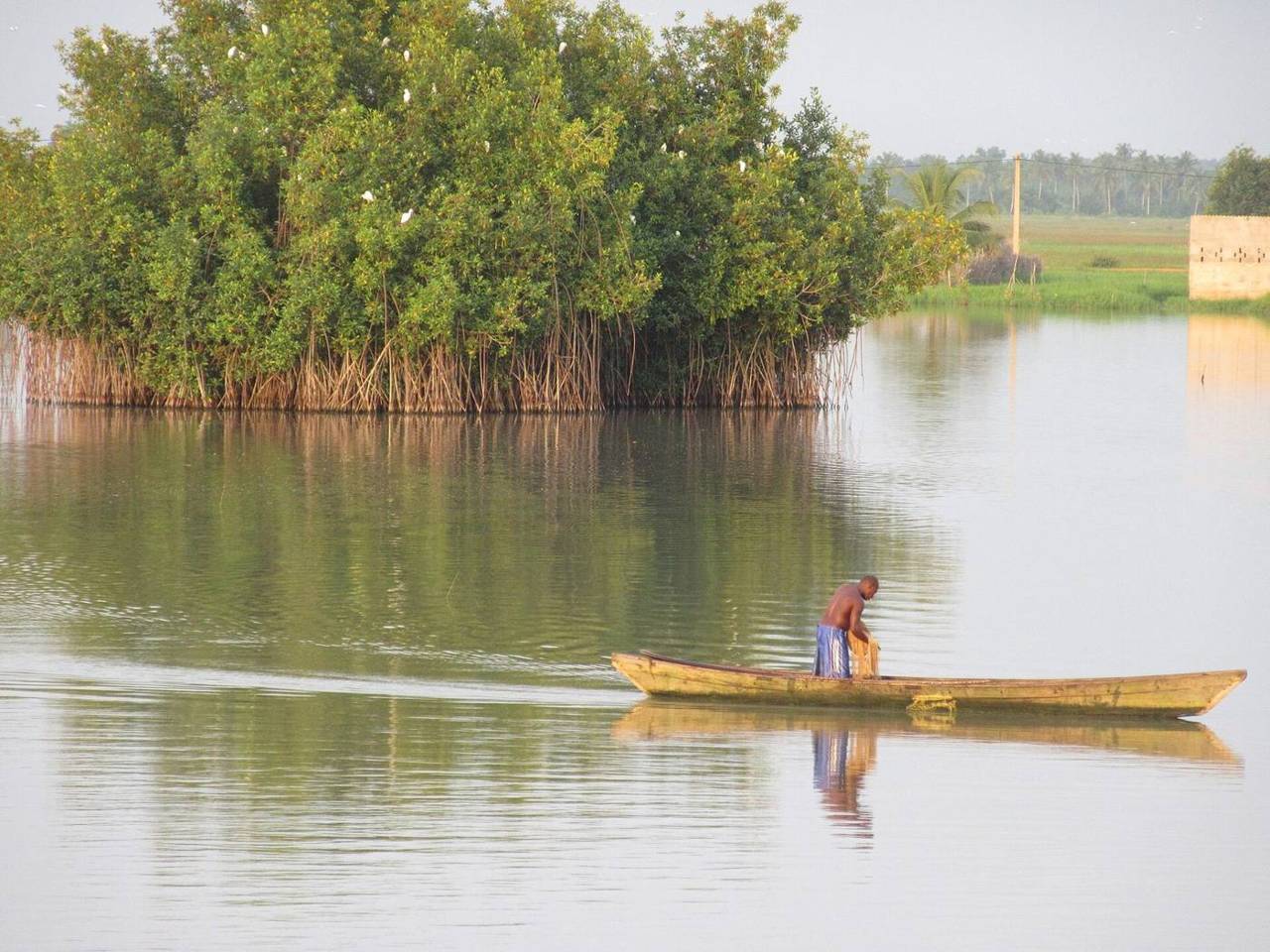
Lake Ahémé and Possotomé
Lake Ahémé with its fishermen and their branch traps, the acadja, the village of Possotomé with its spring and walks among medicinal plants and vodun ceremonies.
- Cotonou
- Possotomé
- Lake Ahémé
Day by day
- Day 1
To Possotomé and a pirogue on the lake
This short trip takes you to Lake Ahémé, in south-western Benin, where fishermen still work with traps made of branches and where the village of Possotomé welcomes visitors with simple community tourism. You travel by car with a driver from Cotonou and by pirogue on the lake.
Before you go: Italian citizens enter Benin with a passport, valid for the whole length of the stay, and an electronic visa, to be requested only on the official website evisa.bj a few days before departure. Yellow fever vaccination is compulsory: since September 2026 the certificate is no longer routinely checked on arrival, but it can be requested, so always carry it. Talk to your doctor about malaria prevention. Other nationalities should check their own rules. Italy, the UK and the United States advise against the north of the country, with the W and Pendjari parks and the borders with Burkina Faso and Niger, because of terrorism and kidnapping: this trip stays in the south, far from those areas.
You leave Cotonou in the morning and follow the coast road west, then turn inland. In about two hours you reach Possotomé, on the western shore of the lake. The village is known for its spring of warm mineral water.
In the afternoon you board a wooden pirogue with a fisherman. You glide among the acadja, enclosures of branches planted in the lake bed, where fish find shelter and multiply. The fisherman shows you how he harvests them with nets.
At sunset the lake turns golden and the pirogues return to shore.
Sleep in Possotomé.
Practical tip: in the pirogue wear a hat and sunscreen. There is no shade on the lake and the sun is strong even in winter.
- Day 2
The lake villages and back to Cotonou
Today you discover the life of the villages around Lake Ahémé, then return to Cotonou.
In the morning take a walk with a local guide along the paths around Possotomé. The guide shows you the medicinal plants used in the villages: leaves to treat fever, bark for pain, roots for digestion. In Benin traditional medicine is still very important and is often linked to vodun, the religion born in this part of Africa and still alive in many families.
You can visit a potters' workshop, where women shape large terracotta jars by hand, and a small vodun shrine, with decorated altars and offerings. Listen to the guide's explanations of the meaning of the deities and the fetishes. Always ask before photographing ceremonies and shrines: in some places it is forbidden, in others it is allowed after leaving an offering.
After lunch, with grilled fish from the lake and pâte, the maize porridge, you set off back to Cotonou.
In two days you have seen Lake Ahémé with its pirogues and acadja, the village of Possotomé with its spring, the medicinal plants and vodun as part of daily life.
When to go: the best period is from November to March, in the dry season, when the roads are easier and the heat is less humid. From April to July come the long rains, and in autumn there is a second, shorter rainy season.
Practical tip: carry small CFA franc notes to pay guides, offerings at shrines and handicrafts. In the villages it is hard to find change for large notes, and small coins are useful for tips and for buying fruit along the road.
Simple, genuine community tourism. Always ask before photographing vodun ceremonies and shrines.
Before you go
- Documents and visa
- Passport valid for at least the whole length of your stay and a compulsory visa: the electronic visa is requested only on the official website evisa.bj, a few days in advance. Beware of unofficial websites offering visas for Benin. A return ticket is also required.
- Health and vaccines
- Yellow fever vaccination is compulsory to enter Benin: since September 2026 the certificate is no longer routinely checked on arrival, but it can be requested, so always carry it. Malaria prevention is recommended, after medical advice; dengue is also present. Healthcare facilities are basic: you need insurance covering medical costs and repatriation. Drink only bottled water.
- Money and payments
- West African CFA franc, with a fixed exchange rate to the euro. Almost everything is paid in cash; cards work mainly in large hotels and cash machines accepting foreign cards are rare outside Cotonou.
- Power sockets
- Type C and E, 220 volts: you need an adapter for British plugs.
- Time zone
- UTC+1 all year.
- Safety
- The north is advised against by the UK, the United States and Italy because of terrorism and kidnapping: the W and Pendjari parks and nearby hunting zones, the borders with Burkina Faso and Niger, Kandi, Tanguiéta, Malanville and the north-eastern border with Nigeria. The UK also advises against all but essential travel to the rest of Alibori and Atacora and to the area between the RNIE 2 road, from Tchaourou to Malanville, and Nigeria. The south is calmer; in Cotonou watch out for theft in crowded markets such as Dantokpa and in the outskirts after dark. Official advice: GOV.UK.
Information checked in November 2026 for Italian and EU citizens. Rules change: always check before you travel.
Variations
In one day: a return trip from Cotonou with the pirogue on the lake, without sleeping in Possotomé.
In 4 days: continue west to Grand-Popo and the Bouche du Roy, where the Mono River meets the ocean.
Frequently asked questions
What documents do I need for Benin?
Italian citizens enter with a passport and an electronic visa, to be requested only on the official website evisa.bj. Yellow fever vaccination is compulsory: always carry the certificate. Other nationalities should check their own rules.
Can I photograph vodun ceremonies?
Always ask first. In some shrines photos are forbidden, in others they are allowed after asking permission or leaving an offering. Respect the people and the sacred places.
Is Lake Ahémé safe?
The lake is in the south of Benin, far from the northern areas advised against by Italy, the UK and the United States. Still, check the current advice before you go.
Indicative itinerary written by World Atlas. Before booking, check timetables, seasonal openings, documents and safety.
 3 daysEasy
Ouidah's Vodun Days
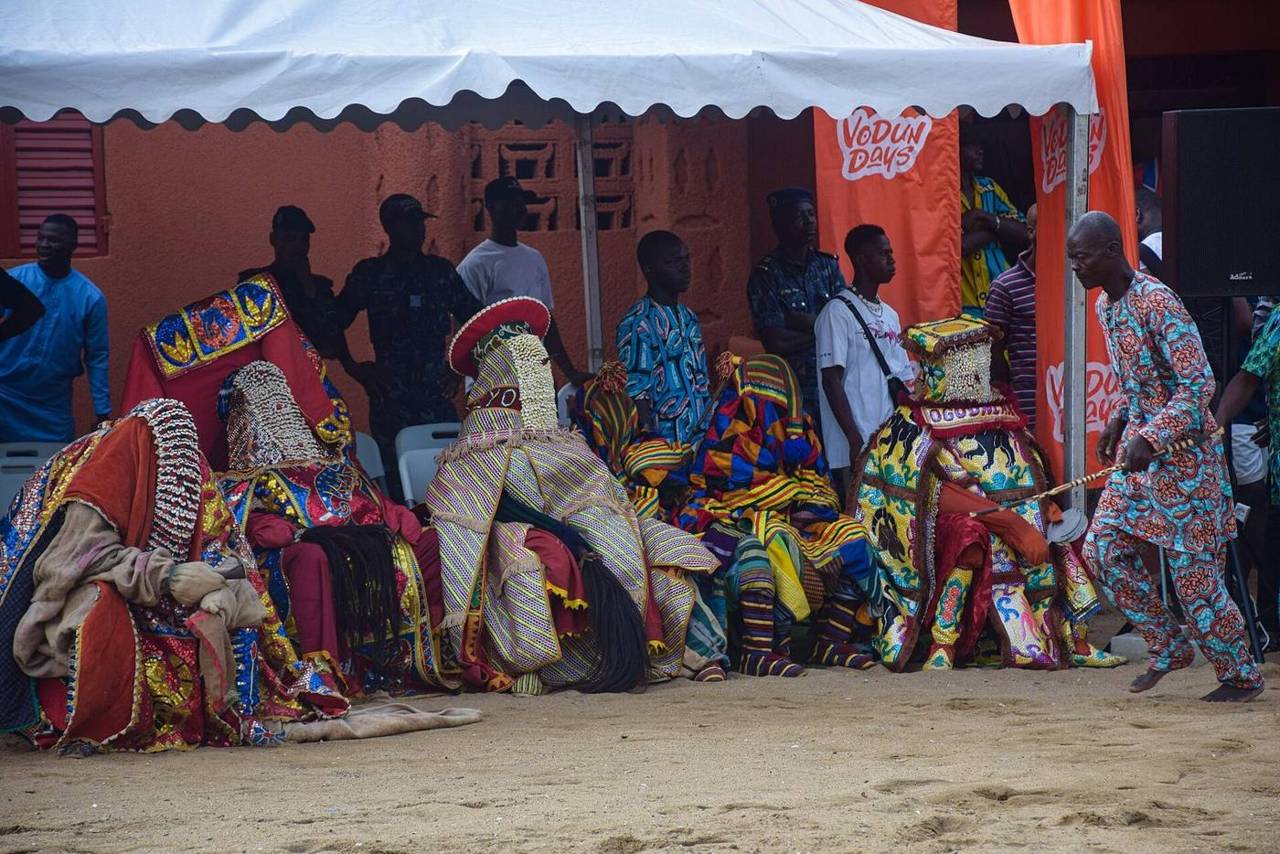
The great national vodun festival in early January in Ouidah, lasting a week from 2027: ceremonies, egungun and zangbeto masks, dances on the beach beside the Door of No Return and the Slave Route.
 5 daysEasy
The coast and Ouidah
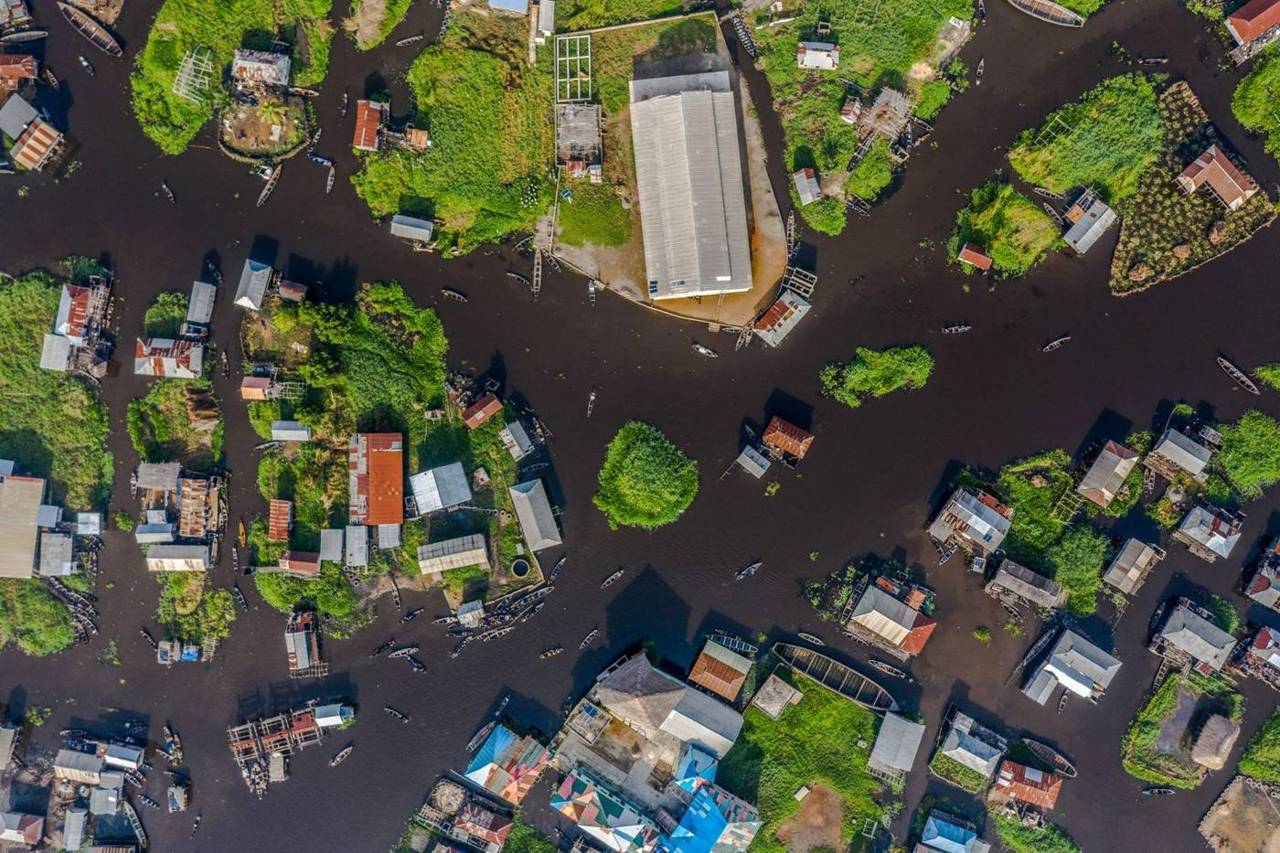
Cotonou, the lake village of Ganvié on stilts, Ouidah with the python temple and the Door of No Return, and Porto-Novo.
 4 daysEasy
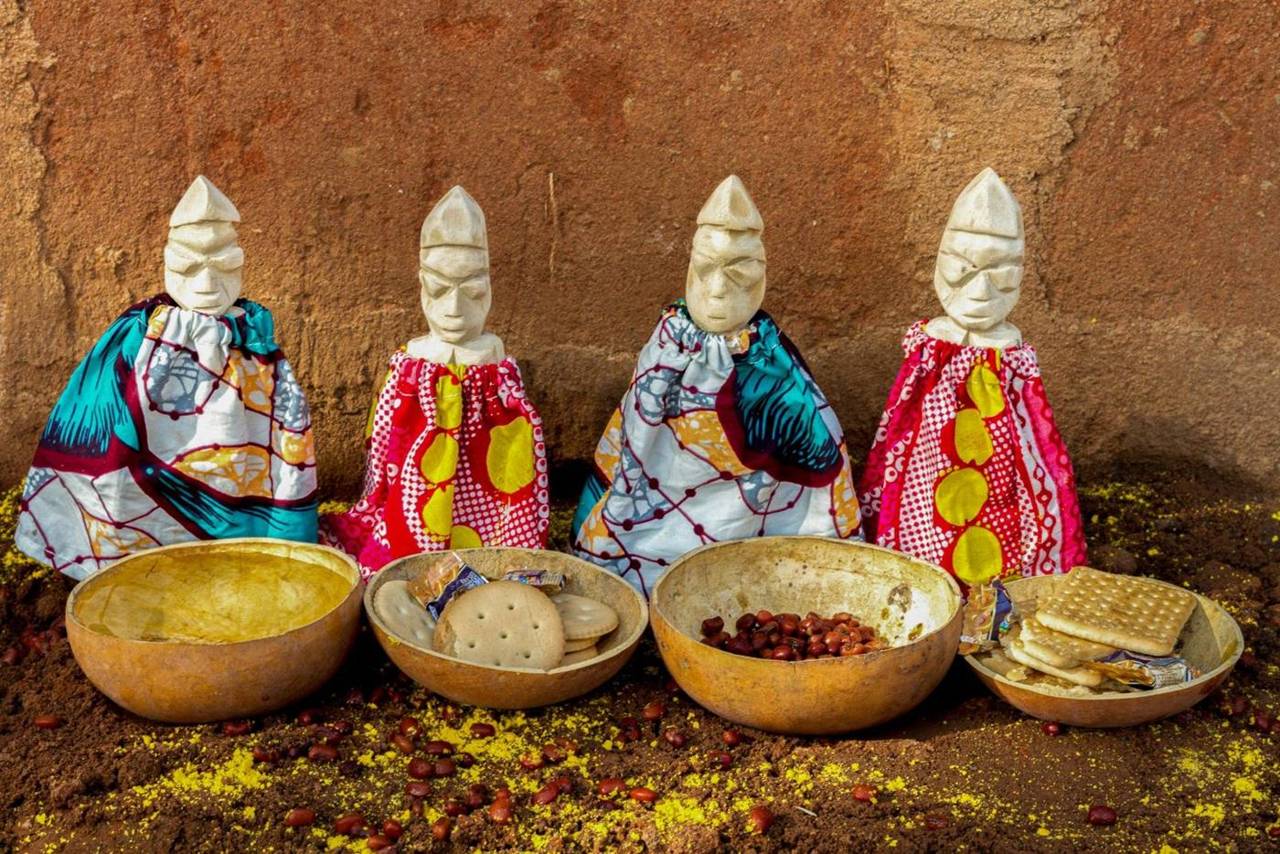
Abomey and the royal palaces
The UNESCO royal palaces of the Kingdom of Dahomey with their bas-reliefs, the treasures returned by France and the hills of Dassa.