Quba and Xinaliq
The town of Quba and the Jewish quarter of Qırmızı Qəsəbə, then Xinaliq, one of the highest inhabited villages in the Caucasus, with a language of its own.
- Baku
- Candy Cane Mountains
- Quba
- Qırmızı Qəsəbə
- Xinalıq
Day by day
- Day 1
The Candy Cane Mountains and Quba
This four-day trip takes you to the north of the country, among colourful striped hills, Quba, the village of the Mountain Jews and Xinalıq, with a language spoken only there.
Before you go: Italian citizens need a passport, valid for at least three months beyond the expiry of the visa, and an e-visa, applied for online only on the official website evisa.gov.az: it is valid for one entry and up to 30 days and is not issued at the airport. Other nationalities should check their own rules. You can only enter by air. Viaggiare Sicuri, the Italian government's travel service, advises against the areas along the Armenian border and the United States, at level 3 since 2026, against the border with Iran: Quba and Xinalıq are in the north, far from both.
In the morning leave Baku northwards, by car or with a driver. After about an hour and a half leave the main road and take a track towards the Candy Cane Mountains, in the Xızı district. They are clay hills with red, white and grey stripes, drawn by the different layers of rock. The track is unpaved: in rain it turns to mud, so ask beforehand and use a four-wheel drive if needed.
Then rejoin the road and stop at Mount Beşbarmaq, a rock that sticks out like five fingers above the Caspian plain, a place of pilgrimage for many Azerbaijanis.
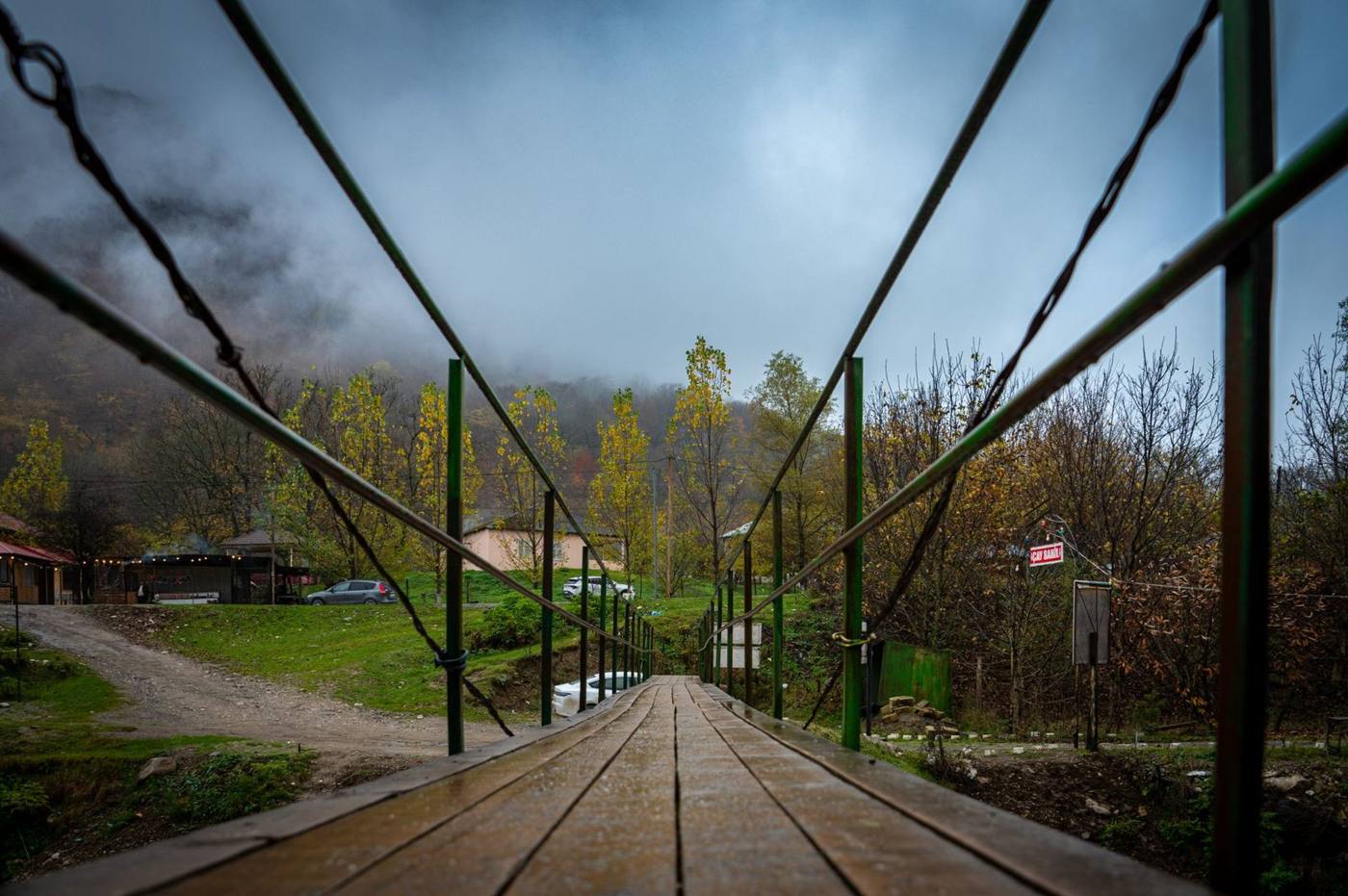
In the afternoon you arrive in Quba, a quiet town on the Qudiyalçay river, famous for its apple orchards and carpets. Walk through the centre, among low houses with tiled roofs, and visit the red brick Juma mosque. Sleep in Quba.
Practical tip: there are no services at the Candy Cane Mountains; bring water, food and a map downloaded to your phone, because the signal is weak.
- Day 2
Qırmızı Qəsəbə, the Mountain Jewish village
Today you cross the river and discover a unique community.
In the morning walk over the bridge on the Qudiyalçay to Qırmızı Qəsəbə, the red village, on the bank opposite Quba. It is home to the Mountain Jews, a community that has lived in the eastern Caucasus for many centuries, with its own language, Judeo-Tat, close to Persian. It is considered one of the few settlements in the world, outside Israel, inhabited almost only by Jews.
Walk through the orderly streets, with brick houses and iron gates, and visit one of the restored synagogues, with painted vaults and chandeliers. Then go into the museum dedicated to the history of the Mountain Jews, with photographs, clothes, household objects and documents. Check prices and times. In summer many families who live abroad come back here on holiday, and the village fills up.
In the afternoon return to Quba and visit the memorial built near a mass grave from 1918, discovered during building work, which remembers the civilian victims of the violence of that year. It is a place of painful history, to be visited respectfully. Check times.
In the evening have plov, rice with meat, and fruit from the Quba orchards for dinner; in autumn buy fresh apple juice at the market.
Sleep in Quba.
Practical tip: Saturday is the day of rest for the Jewish community and some synagogues are closed to visitors; plan Qırmızı Qəsəbə for another day of the week.
- Day 3
Xinalıq and the high pastures
Today you climb to the most remote village of the trip.
In the morning leave Quba westwards, on a paved road that climbs the gorge of the Qudiyalçay, between rock walls, bridges and small waterfalls. In about an hour and a half you arrive in Xinalıq, at more than 2,000 metres, on a green ridge surrounded by mountains.
Xinalıq is a village of stone houses in terraces, one above the other, where the roof of one house is the courtyard of the one above. Its inhabitants speak Khinalug, a Caucasian language spoken only here, different from Azerbaijani and the neighbouring languages. The cultural landscape of the village, with the shepherds' transhumance route, is a UNESCO World Heritage Site.
Leave your bag at the family home where you will sleep and walk around the village, among dirt lanes, haystacks and piles of dried dung that families use as fuel in winter. Visit the small local museum, with objects of daily life. Check times.
In the afternoon take a walk on the pastures above the village, to a viewpoint over the valleys and the peaks of the Greater Caucasus. In summer you meet shepherds with flocks of sheep and dogs. Choose an easy route and, if you want to go further, ask for a local guide.
In the evening have dinner with your host family: soups, sheep's cheese, homemade bread and tea. Sleep in Xinalıq.
Practical tip: family homes are very simple, often with outside toilets and limited hot water; bring a light sleeping bag and warm clothes, because nights are cold even in summer.
- Day 4
Back to Baku
Today you come down from the mountains and return to the capital.
In the morning wake up early and watch the sunrise over the mountains: the light colours the rock walls and the village wakes to the sound of flocks setting off to the pastures. Have breakfast with the family, with cheese, butter, honey and warm bread.
Then go down the gorge to Quba. Stop along the road at the viewpoints over the canyon and, if you like, take a short walk near one of the waterfalls.
In Quba take a last walk around the market to buy dried fruit, apples, walnuts or a small carpet. Then head back to Baku, about two and a half hours along the northern motorway.
In these four days you have seen a different north: the striped hills of the Candy Cane Mountains, the orchard town of Quba, the Mountain Jewish community of Qırmızı Qəsəbə and the stone village of Xinalıq, with its unique language and high pastures.
When to go: the best time is from June to September, when the road to Xinalıq is open and the pastures are green. In winter snow can make the road difficult or close it for a few days. May and October are possible, but it is already cold at altitude.
Practical tip: in Xinalıq carry cash in small notes, because there are no cash machines in the village and almost nobody accepts cards; withdraw money in Quba before going up.
A short but different trip, among rare communities and high-altitude scenery. The road to Xinaliq is paved but hard in winter snow. Homestays are very basic.
Before you go
- Documents and visa
- Passport valid for at least three months beyond the expiry of the visa, and an e-visa, applied for online only on the official website evisa.gov.az: it is valid for one entry and up to 30 days, with an urgent service at a higher cost. Visas are not issued at the airport. Today you can only enter by air: land borders are closed to arrivals, except in exceptional authorised cases. A previous visit to Karabakh without Azerbaijani permission can lead to refused entry. Stays over 15 days require registration with the State Migration Service, which hotels often do for you.
- Health and vaccines
- No compulsory vaccinations. Tap water is not safe to drink: drink bottled water. You need insurance covering medical costs and repatriation. Air pollution is high in Baku. Emergencies: 112.
- Money and payments
- Azerbaijani manat. In Baku cards are accepted almost everywhere; in villages and markets carry cash.
- Power sockets
- Types C and F, 220 volts.
- Time zone
- UTC+4 all year.
- Safety
- The UK advises against all travel within 5 km of the Armenian border and against all but essential travel to the war-affected districts of the south-west, around Karabakh, which are full of mines and need an official permit. In 2026 the United States raised the country to level 3 and advises against travel to the border region with Iran. Official advice: GOV.UK.
Information checked in November 2026 for Italian and EU citizens. Rules change: always check before you travel.
Variations
In 3 days: Quba, Qırmızı Qəsəbə and one night in Xinalıq, without the Candy Cane Mountains.
In 6 days: add two days at Shahdag and Laza, a short distance from Quba, with the cable cars and the waterfalls.
Frequently asked questions
Where do you sleep in Xinalıq?
In very simple family homes, with dinner and breakfast together with your hosts. Book beforehand through local contacts or ask in Quba, and bring warm clothes.
Is the road to Xinalıq difficult?
It is paved and takes about an hour and a half from Quba. In winter snow can make it difficult or close it for a few days.
Can you visit the synagogues of Qırmızı Qəsəbə?
Yes, some restored synagogues can be visited, together with the community museum. Some are closed on Saturdays: check prices and times.
Indicative itinerary written by World Atlas. Before booking, check timetables, seasonal openings, documents and safety.
 4 daysEasy
Gabala and Ismayilli
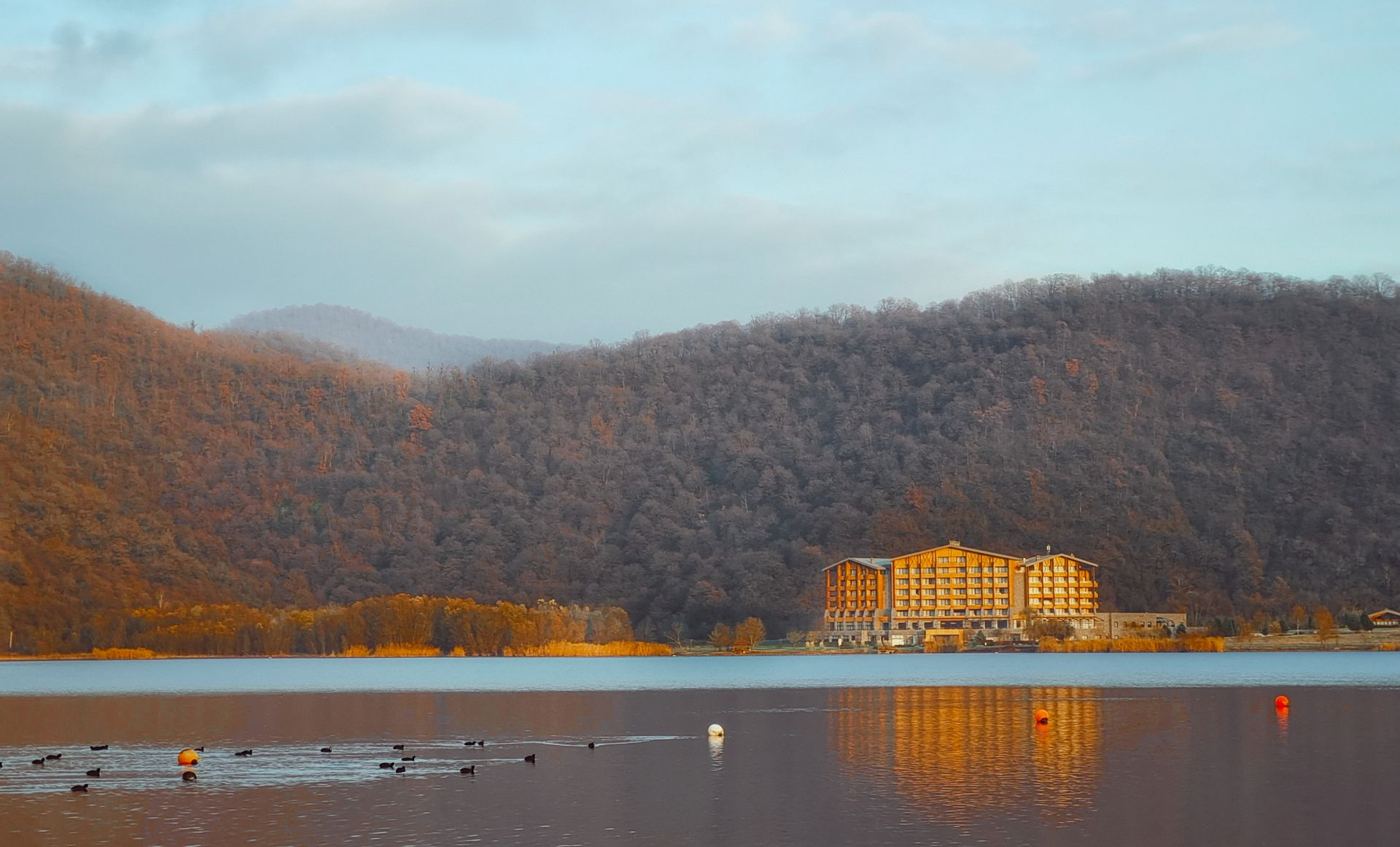
The Caucasus forests around Gabala, the Tufandağ cable car, Lake Nohur, the Yeddi Gozal waterfalls and the villages of Ismayilli.
 4 daysEasy
Lankaran and the south
The subtropical south on the Caspian: the tea plantations of Lankaran, the Hirkan park forests with their ancient trees and the mountain villages of Lerik.
 3 daysEasy
Ganja and Göygöl
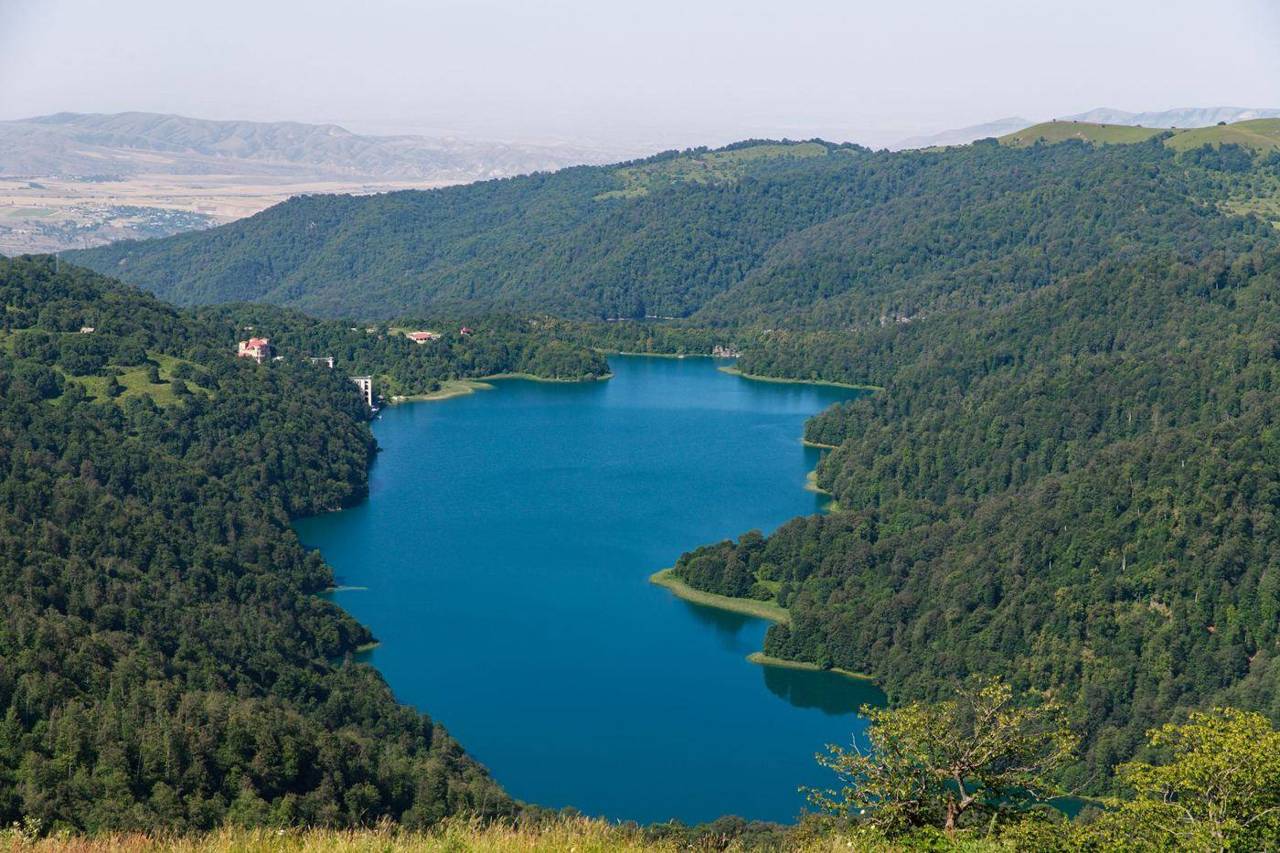
The country's second city with the mausoleum of the poet Nizami and the Bottle House, then Lake Göygöl in its national park and the town of Göygöl founded by German settlers.