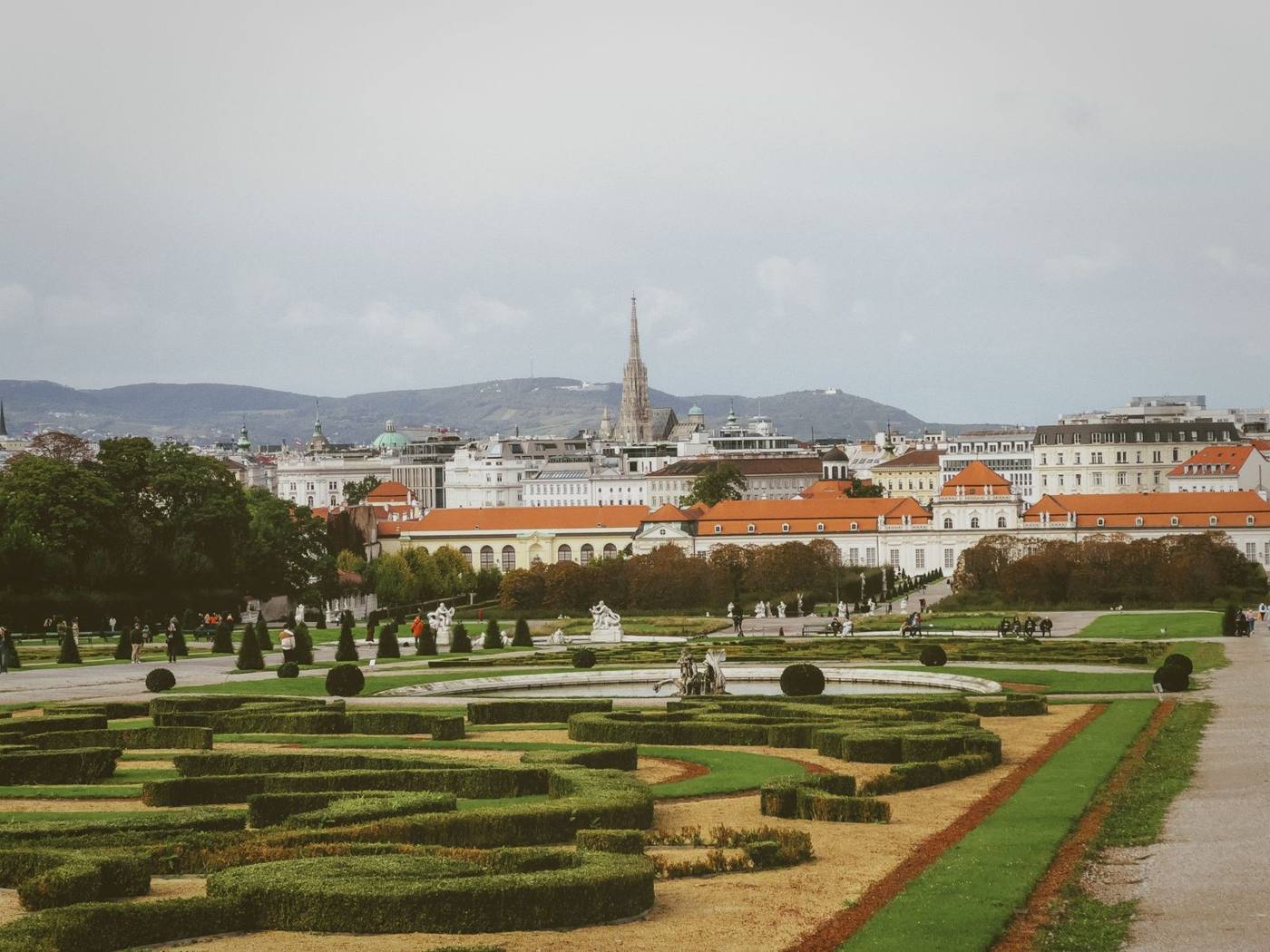
Vienna in five days
The Hofburg and Schönbrunn, Klimt at the Belvedere, the Kunsthistorisches Museum, the historic cafés, the Opera and the Heuriger wine taverns of Grinzing.
- Innere Stadt
- Hofburg
- Belvedere
- Schönbrunn
- MuseumsQuartier
- Grinzing
Day by day
- Day 1
The centre: St Stephen's, the Graben and the Hofburg
This trip is a five day stay in Vienna, one of the most elegant capitals in Europe: the Hofburg and Schönbrunn, the palaces of the Habsburgs, Klimt's Kiss at the Belvedere, the great museums, the historic cafés, an evening at the Opera and the wine taverns of Grinzing. You get around on foot, by tram and by underground.
Before you go: Austria is part of the European Union and the Schengen area and uses the euro. Italian citizens only need an electronic identity card valid for travel abroad or a passport; the paper identity card has not been valid for travel abroad since 3 August 2026. Other nationalities should check their own rules. The United States rates Austria level 1, the lowest. The UK warns of the risk of terrorist attacks in crowded places and of pickpockets in stations and on public transport: keep an eye on your belongings.
From the airport you reach the centre by train in about twenty minutes. Start with St Stephen's Cathedral, the Stephansdom, Gothic, with its roof of coloured tiles and a south tower over 130 metres tall. Climb the tower or go down into the catacombs. Check prices and times.
Then walk along the Graben, the elegant street with the seventeenth century Plague Column, and the Kohlmarkt to the Hofburg, the imperial palace. Visit the imperial apartments, the museum devoted to Empress Elisabeth, known as Sisi, and the court silver collection. Check prices and times.
Next door is the Spanish Riding School, with its white Lipizzaner horses: in the morning you can watch them train. Check prices and times.
Sleep in Vienna, for four nights.
Practical tip: buy a public transport ticket valid for several days. Validate it before boarding: checks are frequent and fines are high.
- Day 2
The Kunsthistorisches Museum, the MuseumsQuartier and an evening at the Opera
Today is museum day.
In the morning go into the Kunsthistorisches Museum, the museum of art history, on the Ringstrasse, in a nineteenth century palace with a splendid staircase and dome. It holds the world's largest collection of paintings by Pieter Bruegel the Elder, including the Tower of Babel and the Hunters in the Snow, and works by Raphael, Titian, Caravaggio, Rubens, Rembrandt and Vermeer. Allow at least three hours. Check prices and times.
Across the square stands the Natural History Museum, in a twin building.
In the afternoon cross the road into the MuseumsQuartier, the old imperial stables turned into a museum quarter, with courtyards full of colourful benches. Visit the Leopold Museum, with the largest collection of works by Egon Schiele, or the modern art museum, the mumok. Check prices and times.
In the evening go to the State Opera, on the Ring, one of the most important opera houses in the world. For those on a small budget there are standing places, for a few euros: the sales rules change, so check on the official website how and when to buy them. If you cannot get in, join a guided tour of the theatre by day. Check prices and times.
Sleep in Vienna.
Practical tip: dress smartly for the Opera, even in the standing places. Bring a scarf to tie to the rail: it is the traditional way to keep your spot during the interval.
- Day 3
The Belvedere with Klimt's Kiss and the Naschmarkt
Today you see the Vienna of the early twentieth century, the city of Klimt and the Secession.
In the morning go to the Belvedere, two baroque palaces built for Prince Eugene of Savoy, joined by a terraced garden with fountains and statues. The Upper Belvedere holds the most famous painting in Vienna, The Kiss by Gustav Klimt, all in gold, along with other works by Klimt, Schiele and Kokoschka. Check prices and times.
Then walk towards St Charles's Church, the Karlskirche, with its great green dome and two decorated columns in front of the facade.
A little further on is the Secession building, white, with a dome of golden leaves and the motto on the facade: to every age its art, to art its freedom. In the basement is the Beethoven Frieze painted by Klimt. Check prices and times.
In the afternoon stroll through the Naschmarkt, Vienna's best known market, more than a kilometre long, with stalls of fruit, vegetables, spices, cheese, olives and small places to eat. On Saturdays there is also a flea market next to it.
In the evening have Tafelspitz for dinner, boiled beef served with its broth, potatoes, apple sauce and horseradish.
Sleep in Vienna.
Practical tip: for the Belvedere buy a timed ticket online. There is always a crowd in front of The Kiss: go at opening time or in the last hour before closing.
- Day 4
Schönbrunn and the historic cafés
Today you visit the summer palace of the Habsburgs.
Take the underground to Schönbrunn, the yellow baroque palace with more than a thousand rooms, on the UNESCO World Heritage list. The tour of the state rooms passes through the apartments of Franz Joseph and Sisi, the Hall of Mirrors where the young Mozart played and the ceremonial rooms. Tickets are timed and must be booked. Check prices and times.
Then walk through the great park, along the avenues, past the statues and the Neptune Fountain, up to the Gloriette, the colonnade at the top of the hill, with a view over the whole palace and the city. The park also holds Schönbrunn Zoo, founded in the eighteenth century, the oldest zoo in the world still open. Check prices and times.
In the afternoon go back to the centre and sit in one of Vienna's historic cafés, with marble tables, newspapers on wooden holders and waiters in jackets. People have come here to read, write and talk for more than three centuries. Order a Melange, coffee with frothed milk, and a slice of Sachertorte, the chocolate cake with apricot jam, or an apple strudel.
In the evening walk along the Ringstrasse, the great boulevard that circles the centre, past the floodlit Parliament, city hall and university.
Sleep in Vienna.
Practical tip: in Viennese cafés you can stay a long time with a single order. A glass of water always comes with your coffee: it is the tradition.
- Day 5
The Prater, Grinzing and departure
Last day in Vienna.
In the morning go to the Prater, the city's great public park, with its meadows and long tree lined avenue. At the entrance is the funfair, with the Giant Ferris Wheel, the Riesenrad, built in 1897, one of the symbols of Vienna. From its wooden cabins you see the whole city. Check prices and times.
In the afternoon take the tram to Grinzing, a winemaking village on the edge of the city, at the foot of the Vienna Woods hills. Vienna is one of the few capitals with vineyards inside the city limits. Here are the Heurigen, the taverns where winemakers serve their new wine, usually Gemischter Satz, a white made from several grape varieties grown in the same vineyard, with a buffet of cold meats, cheese and salads. If you have time, go up the Kahlenberg for the view over the Danube.
Then go back to the centre and on to the airport.
In these five days you have seen the best of Vienna: St Stephen's and the Hofburg, the Lipizzaners, the Kunsthistorisches and the MuseumsQuartier, the Opera, Klimt's Kiss at the Belvedere, the Secession and the Naschmarkt, Schönbrunn, the historic cafés, the Prater and the taverns of Grinzing.
When to go: the best months are April to June and September and October, with mild weather. In December the Christmas markets are beautiful, but the city is crowded and cold. In July and August it is hot and the Opera is closed for the summer break.
Practical tip: before you leave, buy something to take home, such as a Sachertorte in a wooden box, Mozartkugeln, the marzipan chocolates, or a bottle of Viennese wine.
One of Europe's most elegant and liveable capitals, with a huge cultural offering. The Opera sells standing places for a few euros on the day. Schönbrunn needs a timed booking. In December the Christmas markets are lovely but the city is full and cold.
Before you go
- Documents and visa
- EU citizens need a valid identity card or passport: Austria is in the EU and the Schengen area. Until 15 March 2027 Austria is running checks on its borders with Slovenia, Hungary, the Czech Republic and Slovakia: always carry your document. Other nationalities should check the Schengen rules.
- Health and vaccines
- No vaccines required. EU citizens should bring their EHIC; for skiing and hiking you need insurance covering mountain rescue and helicopter costs. Emergencies: 112, police 133, ambulance 144, mountain rescue 140.
- Money and payments
- Euro. Cards are accepted almost everywhere, but carry some cash for alpine farms, mountain huts and small taverns. Motorways need a vignette, digital only from 2027, from the official ASFINAG website or sales points.
- Power sockets
- Types C and F, 230 volts.
- Time zone
- Central European Time (UTC+1, summer UTC+2).
- Safety
- A very safe country: the United States has rated Austria level 1, the lowest, since 21 August 2026. The UK warns that terrorists are likely to try to carry out attacks in crowded places, and of pickpockets at stations and on trains. In the mountains check the weather and the avalanche bulletin; off-piste skiing is very dangerous. Official advice: GOV.UK.
Information checked in November 2026 for Italian and EU citizens. Rules change: always check before you travel.
Variations
In 3 days: the centre with the Hofburg, the Belvedere and Schönbrunn, with an evening at the Opera.
In 7 days: add a train trip to the Wachau, with Melk abbey and the village of Dürnstein, and a day in Bratislava, an hour away by train.
Frequently asked questions
What document do I need for Austria?
Italian citizens only need an electronic identity card valid for travel abroad or a passport. Other nationalities should check their own rules.
How can I go to the Opera on a small budget?
With the standing places, for a few euros. The sales rules change: check on the State Opera's official website how and when to buy them. Remember that the Opera is closed in summer.
Do I need to book Schönbrunn?
Yes, it is best. Tickets for the state rooms are timed and in peak months the best slots go early. Buy online on the official website and check prices and times.
Indicative itinerary written by World Atlas. Before booking, check timetables, seasonal openings, documents and safety.
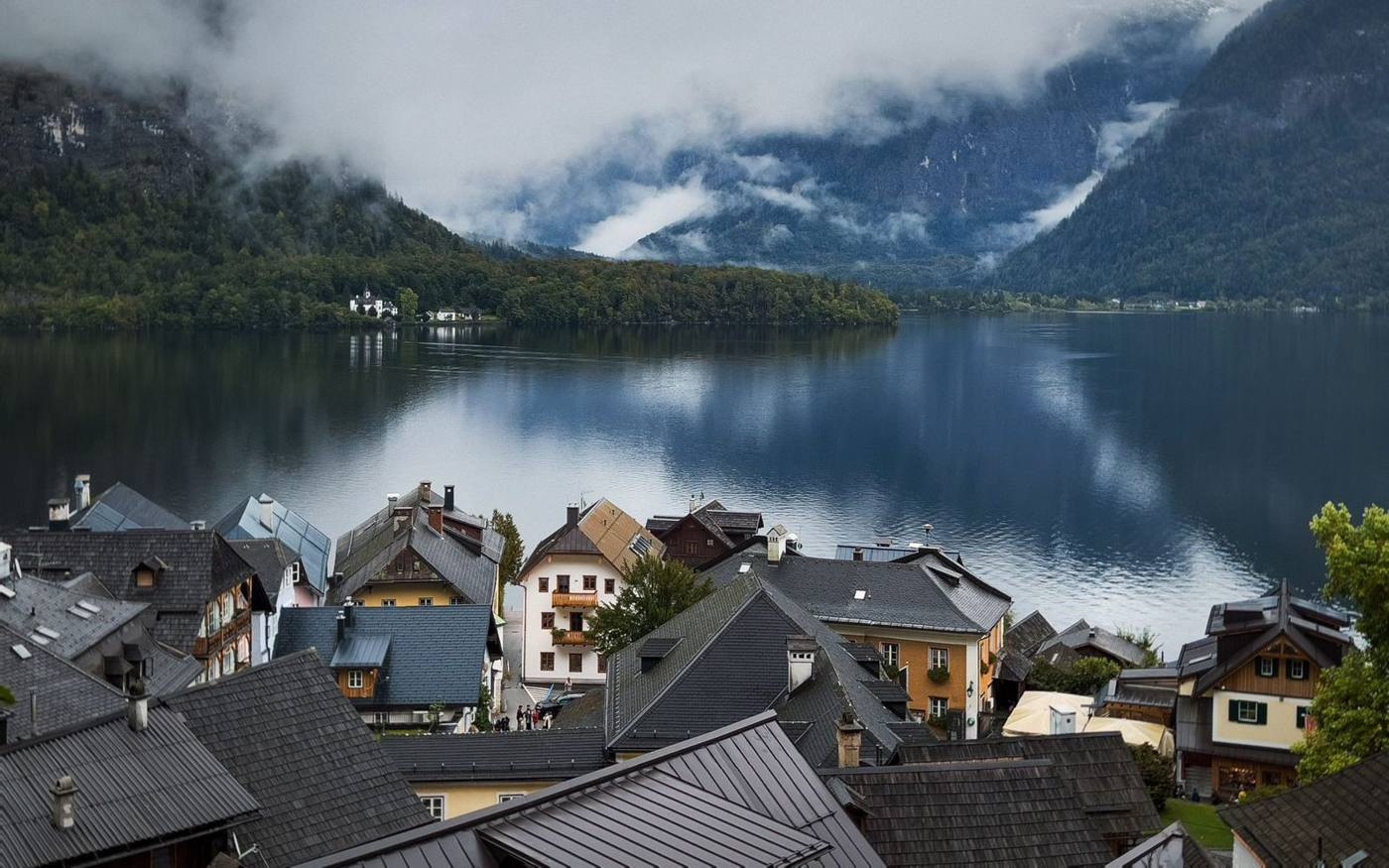 9 daysEasy
Vienna, Salzburg and Hallstatt
The great classic by train: imperial Vienna, Melk Abbey on the Danube, the lakes of the Salzkammergut with Hallstatt and Mozart's Salzburg.
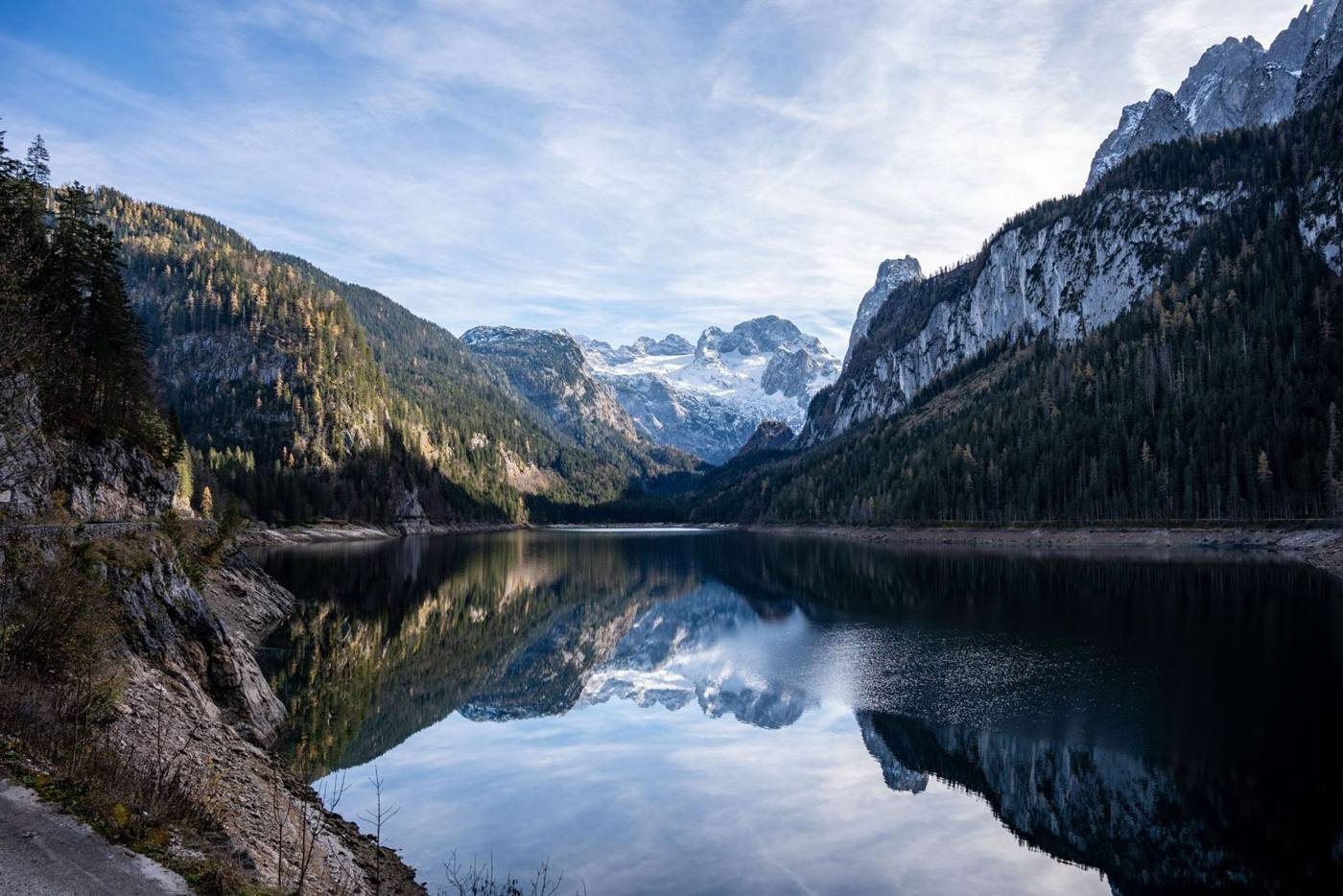 5 daysEasy
The Salzkammergut
Austria's lake district: the Wolfgangsee and the Schafberg railway, Hallstatt, the Dachstein with its ice caves and the Five Fingers viewpoint.
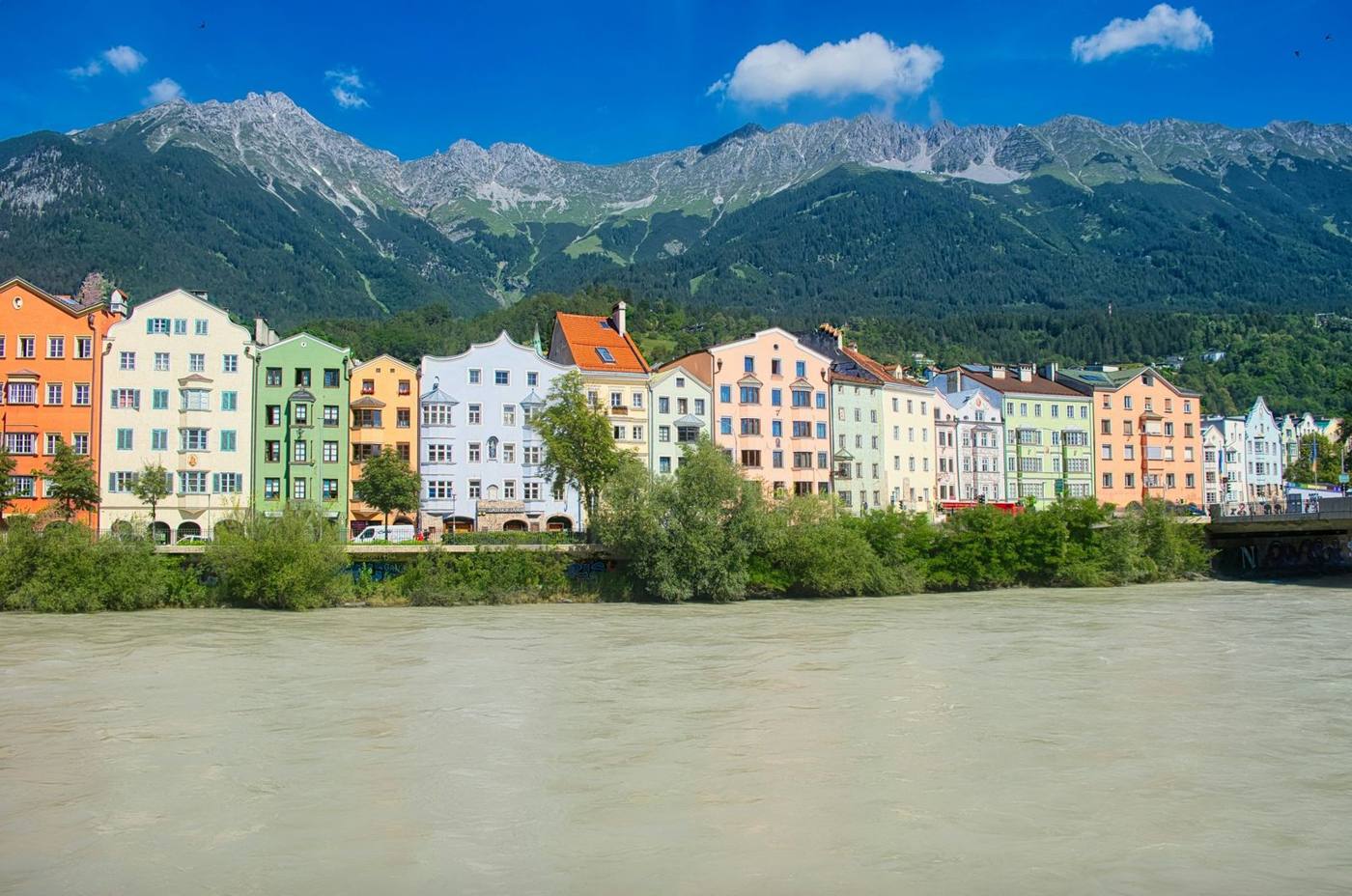 6 daysModerate
Tyrol: Innsbruck and the Zillertal
Innsbruck with the Golden Roof and the Nordkette cable car, the Swarovski Crystal Worlds, the Zillertal valleys and the Krimml waterfalls.