Queensland: Brisbane, K'gari and the Whitsundays
The east coast on the road: the sand island of K'gari (Fraser Island) by 4x4, the turtles of Bundaberg, sailing among the Whitsunday islands and Whitehaven beach.
- Brisbane
- Noosa
- K'gari
- Bundaberg
- Airlie Beach
- Whitsunday
- Whitehaven
Day by day
- Day 1
Arrival in Brisbane
This trip travels up the Queensland coast from Brisbane to the Whitsunday Islands: the river city, the beaches and park of Noosa, the sand island of K'gari by four wheel drive, the whales of Hervey Bay, the turtles of Bundaberg and two nights under sail among the islands of the Coral Sea. You travel by rental car, with one long transfer north.
Before you leave: Italian citizens enter Australia with a passport and the eVisitor electronic authorisation, to be requested online before the trip. Other nationalities should check their own rules. Between October and February there is a risk of bushfires in Australia: follow local warnings.
You arrive at Brisbane airport after a long flight, almost always with a stop in Asia or the Gulf. From the airport a train takes you to the centre in under half an hour.
The first day is for recovering from the time difference. Walk along the Brisbane River to South Bank, the riverbank with gardens, museums and an artificial beach with water where you can swim safely. Cross the river on one of the footbridges and look at the city lit up at sunset.
Dinner with grilled fish and salad, or an Asian dish: Brisbane has large Vietnamese and Chinese communities.
Sleep in Brisbane.
Practical tip: in Australia you drive on the left. Pick up the rental car only tomorrow, when you are rested.
- Day 2
Noosa, the coastal park and koalas
Today you pick up the car and drive up the coast to Noosa, about two hours north of Brisbane.
The road passes near the Glass House Mountains, volcanic peaks rising from the plain like columns. If you have time, stop at a lookout to see them.
Noosa is a seaside town on a river, with a sheltered beach and a national park on the headland. The coastal walk of Noosa National Park starts from town and follows the coast for about five kilometres, past bays with surfers' waves, rock pools and cliffs. In the eucalyptus branches along the trail you sometimes see koalas, which sleep almost all day: look up, in the forks of the branches. From the cliffs, between June and November, you sometimes see whales and dolphins.
In the afternoon swim at Main Beach, the patrolled town beach. Always swim between the red and yellow flags, which mark the area watched by lifeguards.
Towards evening walk along the Noosa River, where pelicans wait for the fishermen.
Sleep in Noosa.
Practical tip: on Australian beaches the currents are strong. Swim only between the lifeguard flags. Always wear a hat and sunscreen: the Queensland sun is very strong even when it is cloudy.
- Day 3
K'gari by four wheel drive: the 75 mile beach
Today you reach K'gari, the largest sand island in the world, a UNESCO World Heritage site. Its ancient name, officially restored in 2023, comes from the Butchulla people.
There are no paved roads on the island: you get around only by four wheel drive. There are two ways. The first is an organised tour with driver and guide, the simplest choice. The second is renting an equipped four wheel drive and driving it yourself, with the Queensland parks permit for vehicles and camping: check the rules and prices before you go.
You arrive by vehicle ferry from Inskip Point, north of Rainbow Beach, or from River Heads, near Hervey Bay.
The east side of the island is a very long beach, Seventy-Five Mile Beach, which works like a road: there are speed limits, light planes landing on the sand and fishermen. You drive only at low tide, two hours before and two hours after: at high tide the water reaches the dunes.
In the afternoon stop at Eli Creek, a stream of clear fresh water flowing down to the beach: you walk on the boardwalks and then let the current carry you.
Sleep on the island.
Practical tip: on the east beach you do not swim in the sea. Currents are strong and there are sharks.
- Day 4
K'gari: the Maheno wreck and Lake McKenzie
Today you see the most famous places on the island.
In the morning, at low tide, drive up the beach to the Maheno wreck, a passenger ship that ran aground on the beach during a cyclone in 1935. The rusty hull is half buried in the sand. Further north are the Pinnacles, sand cliffs coloured red, yellow and orange, and the Champagne Pools, natural pools between the rocks where the waves arrive gently and foam: it is one of the few places on the east side where you can bathe.
In the afternoon you cross the interior of the island on sand tracks through rainforest. Yes, a forest grows on sand, with very tall trees and giant ferns. Wanggoolba Creek, at Central Station, runs so clear you can hardly see the water.
Then you reach Lake McKenzie, a rainwater lake with white sand and water from clear to blue. No river feeds it: the water stays clean because the sand filters it. Swim and try not to use sunscreen in the lake.
Sleep on the island or return to the mainland.
Practical tip: dingoes, the wild dogs, live on the island. Never feed them, stay in a group and keep children close.
- Day 5
Hervey Bay and the whales
Today you leave the island and spend the day in Hervey Bay, the town on the sheltered bay behind K'gari.
From July to October humpback whales stop in the bay during their migration back towards Antarctica. The calm and shallow waters are a resting place for mothers with calves. Boat trips leave from the town harbour and usually last half a day. The whales often come close to the boats, breach, slap their tails and fins. Book ahead in high season and check prices and times. Choose operators that respect the distance rules from the whales.
Outside the whale season you can take trips to see dolphins and turtles, or kayak along the coast.
In the afternoon walk on Urangan Pier, an old pier almost a kilometre long, built to load sugar and timber. From the end of the pier you see fish, rays and sometimes dugongs, the marine mammals that eat seagrass.
In the evening dinner on the seafront with prawns and barramundi, the most popular fish in Australia.
Sleep in Hervey Bay.
Practical tip: if you get seasick, choose a morning trip on the sheltered bay, when the wind is weaker. Bring a jacket: on the water it is cooler than on land.
- Day 6
Bundaberg and the turtles
Today you go to Bundaberg, about an hour and a half north, the town of sugar and turtles.
Bundaberg is surrounded by sugar cane fields. In town you can visit the distillery of the local rum, one of the best known in the country: check times and tours.
The main reason to come here is Mon Repos beach, just outside town. From November to March it is one of the most important nesting sites in the Pacific for sea turtles, above all the loggerhead. At night the females come out of the sea, dig a hole in the sand and lay their eggs. From January to March the hatchlings emerge and run to the water.
The beach is protected: it is visited only at night with park rangers, in small groups and with a booking. Check dates and prices first: places sell out. You wait at the visitor centre until the rangers find a turtle, then walk in the dark on the sand. Lights and flash photos are forbidden.
Outside the season, Bundaberg is the base for boat trips to Lady Elliot and Lady Musgrave, islands of the Great Barrier Reef.
Sleep in Bundaberg.
Practical tip: the turtle visit can end very late, sometimes after midnight. Sleep near Mon Repos.
- Day 7
The long transfer north
Today is a road day: from Bundaberg to Airlie Beach it is about nine hundred kilometres, almost ten hours of driving with stops.
If you prefer, you can split the journey over two days, sleeping in Rockhampton or Mackay, or return the car and take a flight to Proserpine, the Whitsunday airport, connecting in Brisbane. Check which option costs less.
The road is the Bruce Highway, the great east coast road. You pass Rockhampton, the cattle city on the Tropic of Capricorn: a monument on the edge of town marks the line. From here you are in the tropics.
Further north the road crosses sugar cane fields, pastures and hills covered in eucalyptus. Mackay is worth a stop on its riverfront. Early in the morning, at the weir near the village of Finch Hatton, in the Eungella valley, you sometimes see platypus, but it is a detour of an hour and a half.
Along the road stop every two hours: rest areas have toilets and tables. Fill up when you can, because sometimes there are many kilometres between towns.
In the evening you reach Airlie Beach, the departure town for the islands.
Sleep in Airlie Beach.
Practical tip: do not drive at dawn and dusk. Those are the hours when kangaroos cross the road.
- Day 8
Sailing in the Whitsundays
Today you board a sailing boat for two nights among the Whitsunday Islands.
The Whitsundays are 74 islands in the Coral Sea, almost all national park, with forest covered hills, sheltered bays and white beaches. Boats leave from the harbour of Airlie Beach. There are boats of every kind: large tall ships with many passengers, catamarans, small boats with few guests. You sleep on board in small cabins. Book ahead and read carefully what is included. If you hold a boat licence, you can also charter a boat yourself.
In the morning you leave the harbour and cross the channel towards the islands. With wind you sail. On the first day you usually stop in a bay to snorkel on the coral: parrotfish, butterflyfish, turtles and sometimes small reef sharks.
In the evening the boat anchors in a sheltered bay. You have dinner on deck and look at the sky: far from the lights, the stars are countless.
Sleep on the boat.
Practical tip: from November to May there are venomous jellyfish in the Coral Sea. Always wear the light stinger suit provided on the boat when you go in the water. Bring a soft bag: there is no room for hard suitcases in the cabin.
- Day 9
Whitehaven Beach and Hill Inlet
Today is the day of the most famous beach in Australia.
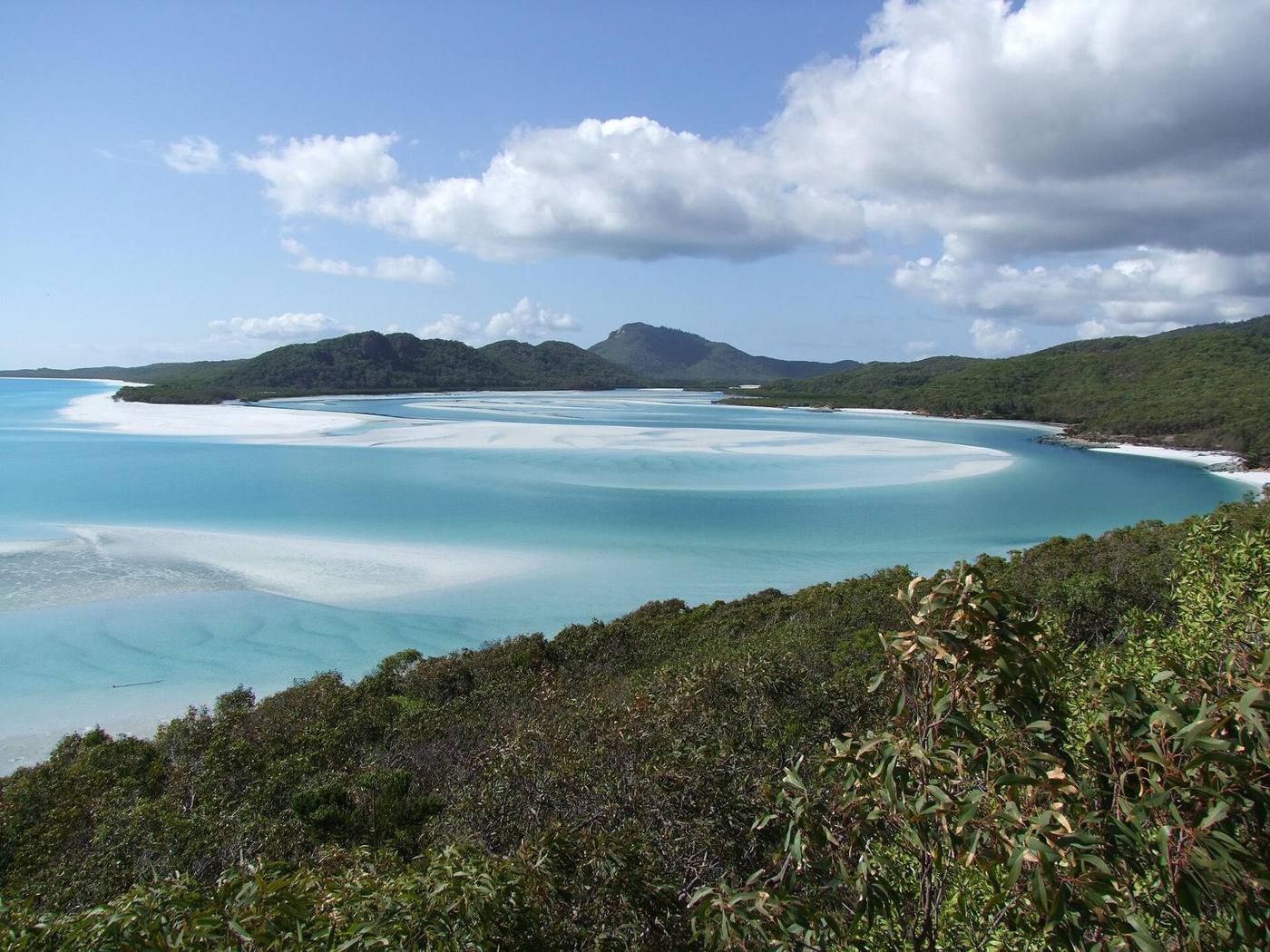
In the morning the boat reaches Whitsunday Island, the largest of the islands. You land in the bay at Tongue Point and walk up for ten minutes to the Hill Inlet lookout. From here you see the inlet where white sand and turquoise water mix with the tide, creating patterns that change every hour. The finest view is at low tide.
Then you go down to Whitehaven Beach, seven kilometres of very white sand. The sand is almost pure silica, very fine, and does not heat up in the sun. Walk along the shore, swim in the lagoon at low tide and look for rays and small sharks in the shallow water.
In the afternoon the boat moves to another bay for snorkelling. The Whitsunday reefs are part of the Great Barrier Reef: the coral has been hit by bleaching in recent years, but in many places it is still alive and full of fish.
In the evening the boat anchors again in a quiet bay.
Sleep on the boat.
Practical tip: use a reef friendly sunscreen and wear a shirt while snorkelling. The sun on the water burns in minutes.
- Day 10
The last bays and the return to harbour
Today is the last morning on the boat before returning to Airlie Beach.
At dawn take a last swim or a last snorkel in the bay. Boats often stop at a place where you can swim with sea turtles, which feed on the algae near the shore. Do not touch them and do not chase them.
At midday you sail towards the harbour, with a following wind if conditions are good. It is the time to help the crew with the sails, if you like, or to watch the islands slip past.
In the afternoon you reach Airlie Beach. Take a long shower and rest.
If you still have energy, you can book a scenic flight by helicopter or seaplane over the reef and Heart Reef, a small heart shaped reef seen only from above. Check prices and times: flights depend on the weather.
In the evening walk along the harbour promenade of Airlie Beach, where all travellers meet at sunset. From the pier you see the boats coming back and sometimes turtles coming up to breathe near the jetties.
Sleep in Airlie Beach.
Practical tip: after two days on a boat it is normal to still feel the swaying on land. It passes in a few hours. Drink plenty of water and eat lightly on the first evening.
- Day 11
Airlie Beach and the coast
Today is a quieter day in Airlie Beach and the surroundings.
In the morning swim in the Airlie Beach lagoon, a large public outdoor pool on the seafront. In jellyfish season it is the safest place to swim. In the sea around the town there are also saltwater crocodiles in the estuaries: respect the signs and do not swim in rivers and river mouths.
Then walk a trail in Conway National Park, which lies just behind the town. The Honeyeater Lookout trail climbs through the forest to a viewpoint over the islands. Colourful birds, blue butterflies and wallabies live in the forest.
In the afternoon go to Cannonvale or Shute Harbour, the island port, to see the coast from another angle.
If you want a last day on the reef, there are fast boat trips to the outer reef, where the water is clearer: check prices and weather.
In the evening a last dinner with grilled fish and seafood, and a mango dessert, as mangoes grow everywhere here.
Sleep in Airlie Beach.
Practical tip: buy tropical fruit at roadside stalls. Mango, papaya and passion fruit cost less and taste better. Many stalls work with an honesty box for the money: bring coins.
- Day 12
Departure from Proserpine
On the last day you leave from Proserpine airport, about half an hour from Airlie Beach.
If the flight is in the afternoon, in the morning take a last walk on the seafront or a last swim in the lagoon.
From Proserpine flights go to Brisbane, Sydney and Melbourne, where you take the international flight home. Leave a margin between the domestic and the international flight: domestic flights are sometimes late. If you have the rental car, return it at the airport: ask beforehand if there is a fee for returning it in a different city from where you picked it up.
Alternatively, you can continue north to Townsville or Cairns and take the return flight from there, adding a few days on the reef and in the rainforest of the north.
What to take home: eucalyptus honey, macadamia nuts, which are native to Queensland, Bundaberg rum, Aboriginal art bought in galleries that explain who the artist is.
This trip shows the east coast of Australia with its different settings: the city, the surfers' beaches, a sand island with forests and lakes, whales, turtles and the Coral Sea.
Practical tip: Australia has strict rules on food, plants and seeds coming in and going out. Always declare what you carry.
Australia's beach trip, perfect by campervan. Whitehaven is one of the whitest beaches in the world. On K'gari you drive only with a 4x4 and a permit, and only at low tide on the beach. Best months: May-October, without summer's jellyfish.
Before you go
- Documents and visa
- Valid passport and an eVisitor, the no-cost electronic authorisation applied for online on the official Australian government website before departure.
- Health and vaccines
- No compulsory vaccines arriving from Europe. Very strong sun: high-factor sunscreen and a hat. Emergencies: 000.
- Money and payments
- Australian dollar. Contactless cards are used everywhere, even for small amounts and on public transport; cash is rarely needed.
- Power sockets
- Type I, 230 volts: you need an adapter for the angled flat-pin plugs.
- Time zone
- The country has several time zones. Sydney and Melbourne are UTC+10, UTC+11 with daylight saving from October to April.
- Safety
- One of the safest countries for travellers. The risks are natural: rip currents, bushfires especially from October to February, cyclones and floods in the north in the wet season. Official advice: GOV.UK.
Information checked in November 2026 for Italian and EU citizens. Rules change: always check before you travel.
Variations
In 8 days: only Brisbane, Noosa, K'gari and Hervey Bay, without the transfer to the Whitsundays.
In 16 days: continue from Airlie Beach to Cairns, with Mission Beach, the Daintree rainforest and a trip to the outer reef.
Frequently asked questions
What document do I need?
Italian citizens enter with a passport and the eVisitor electronic authorisation, to be requested online before leaving. Other nationalities should check their own rules.
When can you see whales and turtles?
Humpback whales in Hervey Bay from July to October. Turtles at Mon Repos from November to March, with hatchlings from January to March. You see both in the same trip only at the end of October and early November, and it is not certain.
Are there dangers in the sea?
Yes. Venomous jellyfish from November to May, strong currents on open beaches and crocodiles in estuaries. Swim between the lifeguard flags and wear a stinger suit on boats.
Indicative itinerary written by World Atlas. Before booking, check timetables, seasonal openings, documents and safety.
 7 daysEasy
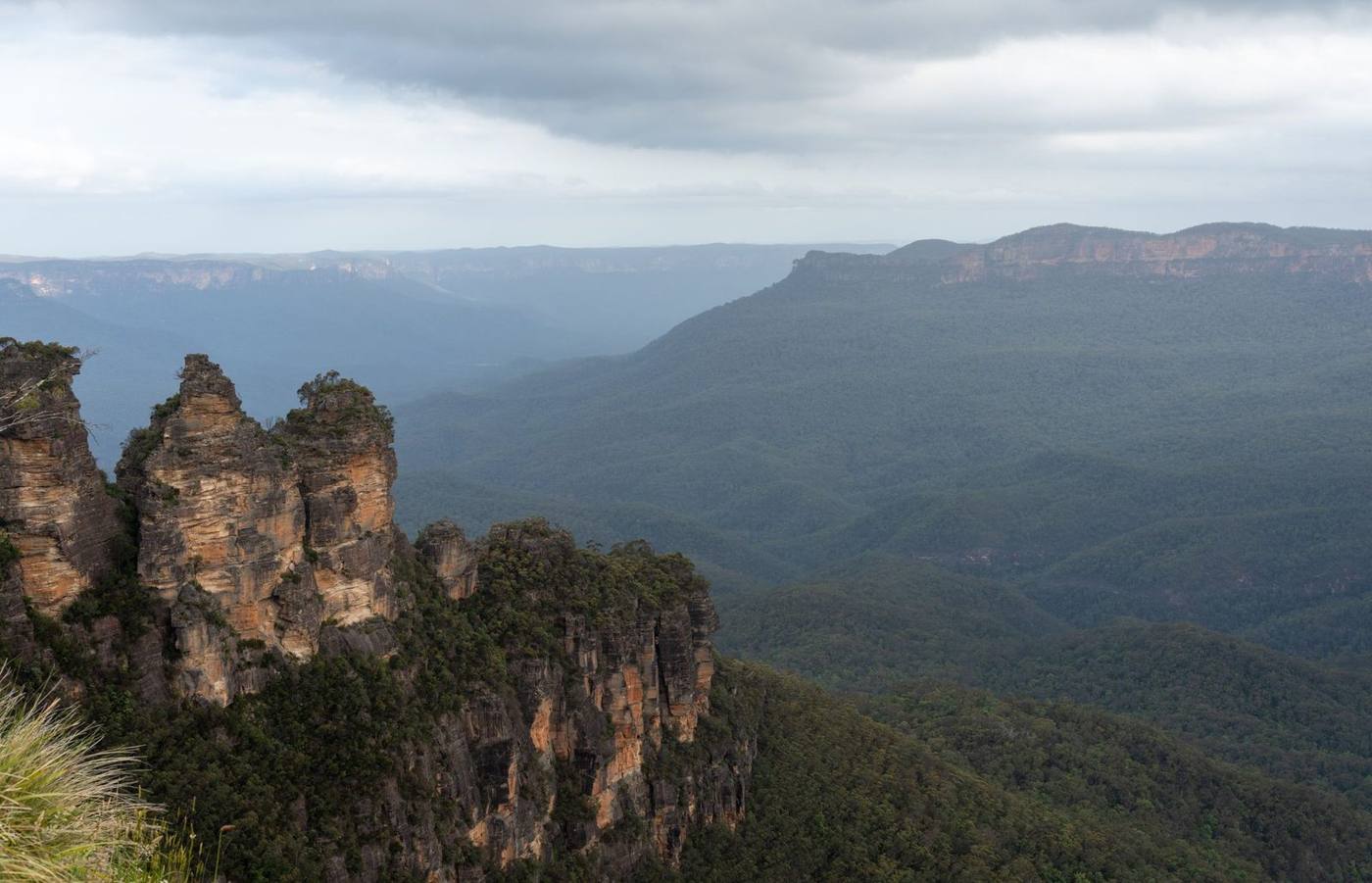
Sydney and the Blue Mountains
A week of Sydney harbour, Bondi and Manly beaches and the canyons of the Blue Mountains. For such a long journey, two weeks is better.
 15 daysModerate
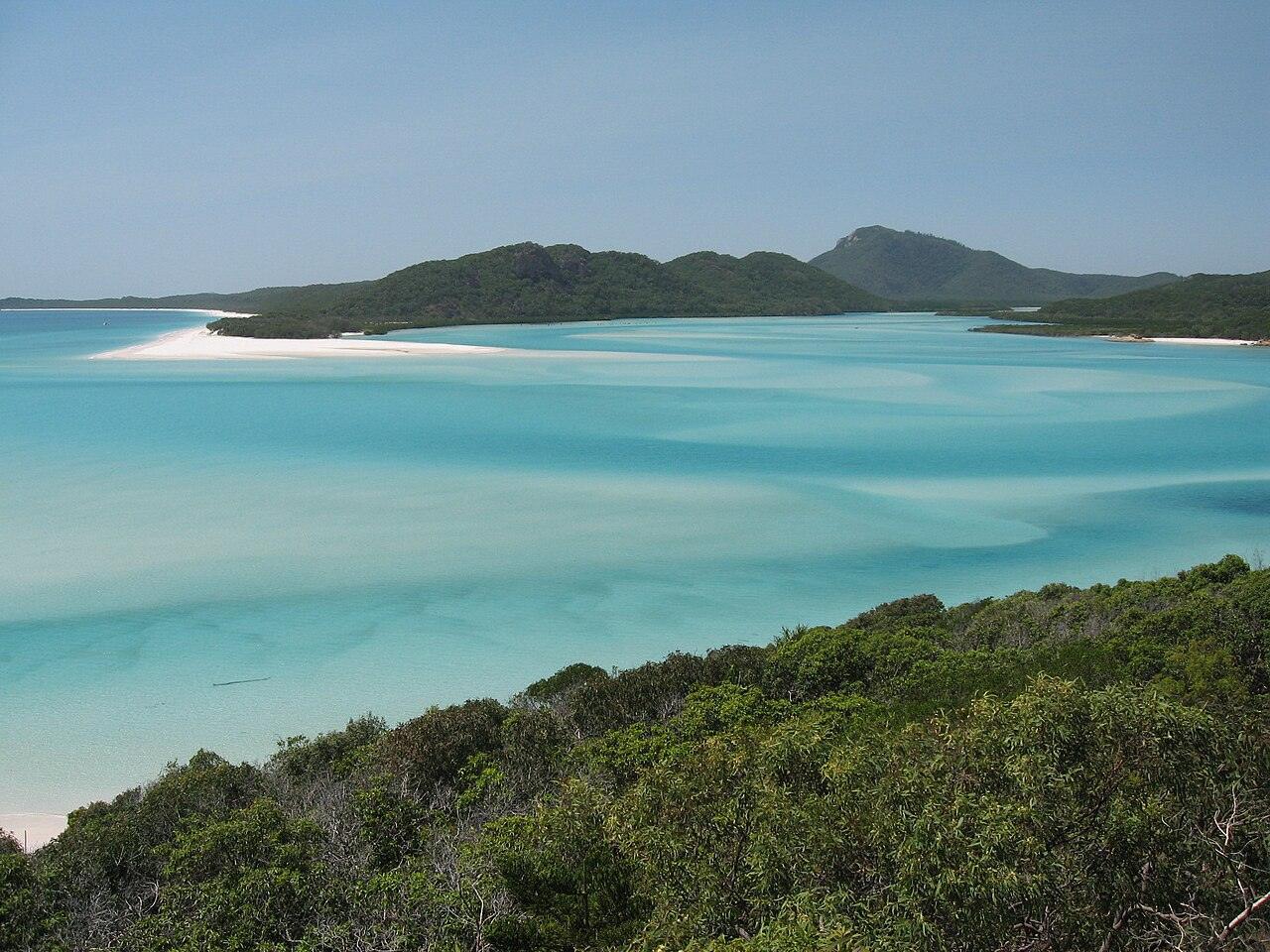
The Outback, the Great Barrier Reef and Sydney
Australia's three faces: the red heart of Uluru, the reef and rainforest of Queensland, the great city.
 17 daysEasy
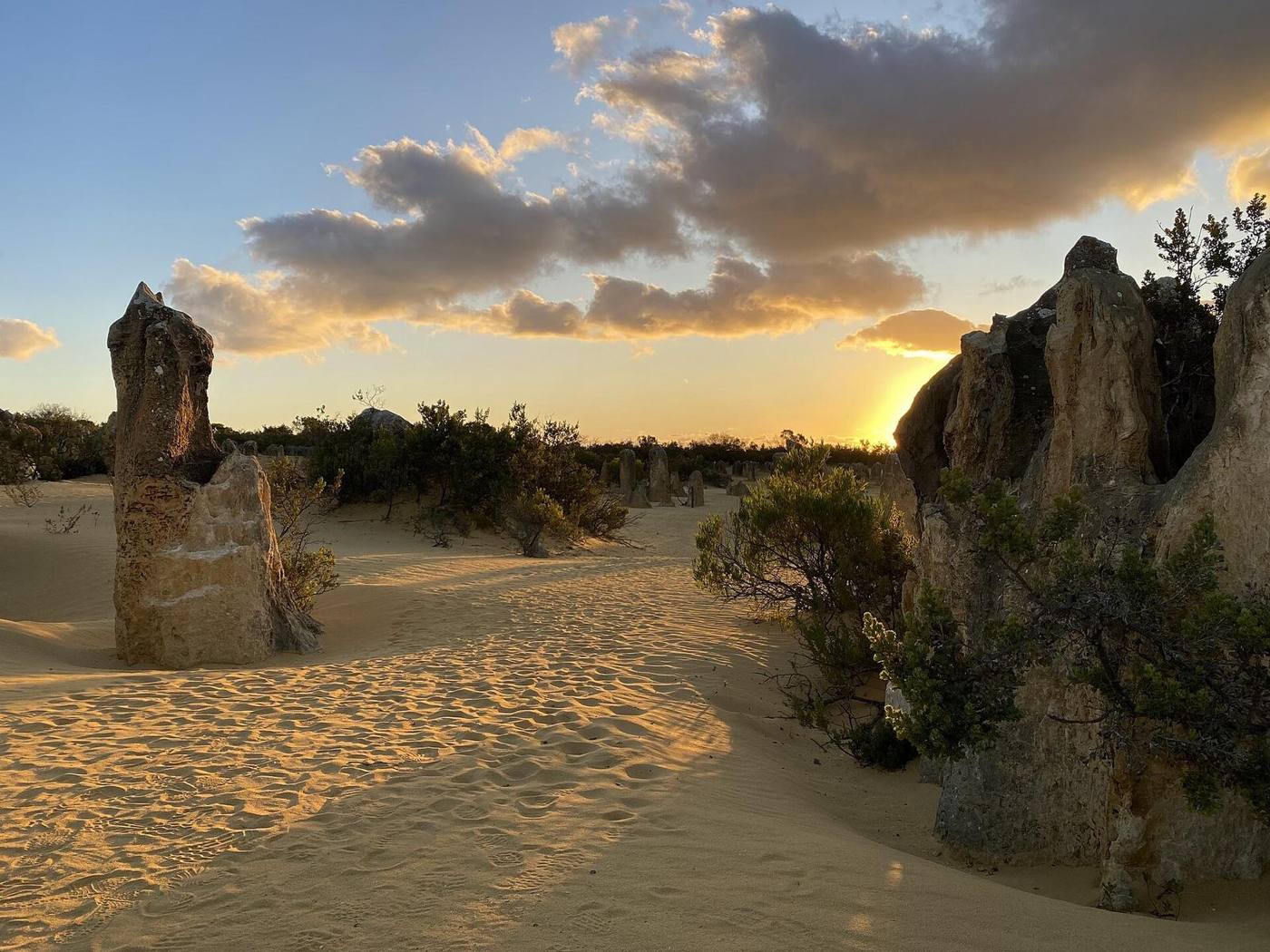
All of Australia: the west coast, Uluru, the Reef and Sydney
The continent in seventeen days: Perth and the Pinnacles, the red heart at Uluru, the Great Barrier Reef and the Daintree forest, ending in Sydney.