Melbourne and the Great Ocean Road
Australia's most European city and its coast road: cliffs, the Twelve Apostles sea stacks, eucalyptus forests with koalas and the penguins of Phillip Island.
- Melbourne
- Torquay
- Lorne
- Apollo Bay
- Twelve Apostles
- Phillip Island
Day by day
- Day 1
Arrival in Melbourne and the city laneways
For Australia EU citizens must apply online for the eVisitor, the no-cost electronic authorisation, on the official Australian government website before departure. On arrival always declare food, seeds and animal products: customs checks are very strict.
From Melbourne airport a shuttle bus reaches the centre in about half an hour. In the city you travel with a myki card on trams, trains and buses; trams in the centre, within the No-cost Tram Zone, are at no cost. The most convenient areas to stay are the centre, Southbank on the river, or the livelier residential districts of Fitzroy and Carlton.
In the early afternoon, if jet lag allows, start at Federation Square, the modern square opposite Flinders Street station with its great nineteenth-century yellow building. From here go into the laneways, the narrow lanes at the heart of Melbourne: tight passages full of small cafés, murals and shops. Hosier Lane is the most famous for street art, which changes constantly; Degraves Street and Centre Place are the café lanes. Victorian arcades such as the Block Arcade have mosaic floors and glass roofs.
Melbourne is considered Australia's coffee capital: coffee is taken seriously here. Practical tip: Melbourne's weather changes several times a day, even in summer; always carry a light jacket, and stay awake until evening to adjust to the time zone.
- Day 2
The gardens, the museums and St Kilda
In the morning visit the Royal Botanic Gardens, among the most beautiful in Australia, with lawns, lakes and huge trees along the Yarra River. Entry is at no cost. Nearby are the Shrine of Remembrance, the great war memorial with views over the centre, and the National Gallery of Victoria, the country's oldest art museum, with its great stained-glass ceiling and collections of European, Asian and Aboriginal art. The permanent collection is at no cost.
In the early afternoon choose between the Queen Victoria Market, a large nineteenth-century covered market with fresh produce, delicatessens and stalls, and the Melbourne Museum, with sections on Aboriginal cultures and Australian nature, next to the Royal Exhibition Building, a UNESCO World Heritage site.
In the late afternoon take the tram to St Kilda, the seaside district on Port Phillip Bay. The esplanade and the pier are perfect for a sunset stroll. At the end of the pier's breakwater lives a small colony of little penguins, the smallest in the world, which come ashore after sunset; a boardwalk lets you watch them without disturbing them. Do not use flash.
Practical tip: the water in the bay is cool even in summer. For swimming choose patrolled beaches and always respect the lifeguards' flags, and check the forecast, because the wind can turn cold very quickly.
- Day 3
Torquay, Bells Beach and Lorne
Today you pick up the rental car and set off on the Great Ocean Road, Australia's most famous coastal road, built after the First World War by soldiers returning from the front, in memory of fallen comrades: it is the world's largest war memorial. Australia drives on the left. Before leaving check the official Victorian roads website for closures due to landslides or fires.
After about an hour and a half you reach Torquay, Australia's surfing capital, with its dedicated museum. Shortly after, Bells Beach is world famous for its waves and for the surfing contest held every Easter. From the lookout you watch surfers on the long swells.
After Anglesea pass under the wooden Memorial Arch, the symbolic entrance to the road, and continue along bends high above the ocean to the Split Point lighthouse at Aireys Inlet, white with a red dome. From here the road becomes more spectacular, between cliffs and forest.
In the afternoon reach Lorne, a seaside town between the beach and the rainforest of the Otway Ranges. Just outside town a forest path leads to Erskine Falls. Sleep in Lorne. Practical tip: the road is narrow and winding; drive calmly, use the pull-outs to let faster drivers pass and never stop on the carriageway for photos.
- Day 4
The Kennett River koalas and Cape Otway lighthouse
In the morning drive the finest stretch of coast to Kennett River, about half an hour away. In the small village, along the gravel road climbing the hill, koalas live wild in the eucalyptus trees: look up into the branches and you will see them sleeping, sometimes very close. You also see colourful parrots. Never feed the animals: human food makes them ill.
Continue to Apollo Bay, a fishing town with a long beach, then climb into Great Otway National Park, a temperate rainforest of tree ferns, towering trees and waterfalls. The Maits Rest walk, a boardwalk loop of about thirty minutes, crosses ancient forest.
In the afternoon take the side road to Cape Otway lighthouse, the oldest surviving lighthouse on mainland Australia, from 1848, on a towering cliff where the waters of Bass Strait meet the Southern Ocean. The visit is paid. Along the access road koalas are often seen in the eucalyptus trees.
Sleep in Apollo Bay or around Cape Otway. Practical tip: at dusk kangaroos and wallabies often cross the roads; drive slowly after sunset and try to arrive before dark, because a collision can seriously damage the car and the animal, and help can be far away on these rural roads at night.
- Day 5
The Twelve Apostles and Loch Ard Gorge
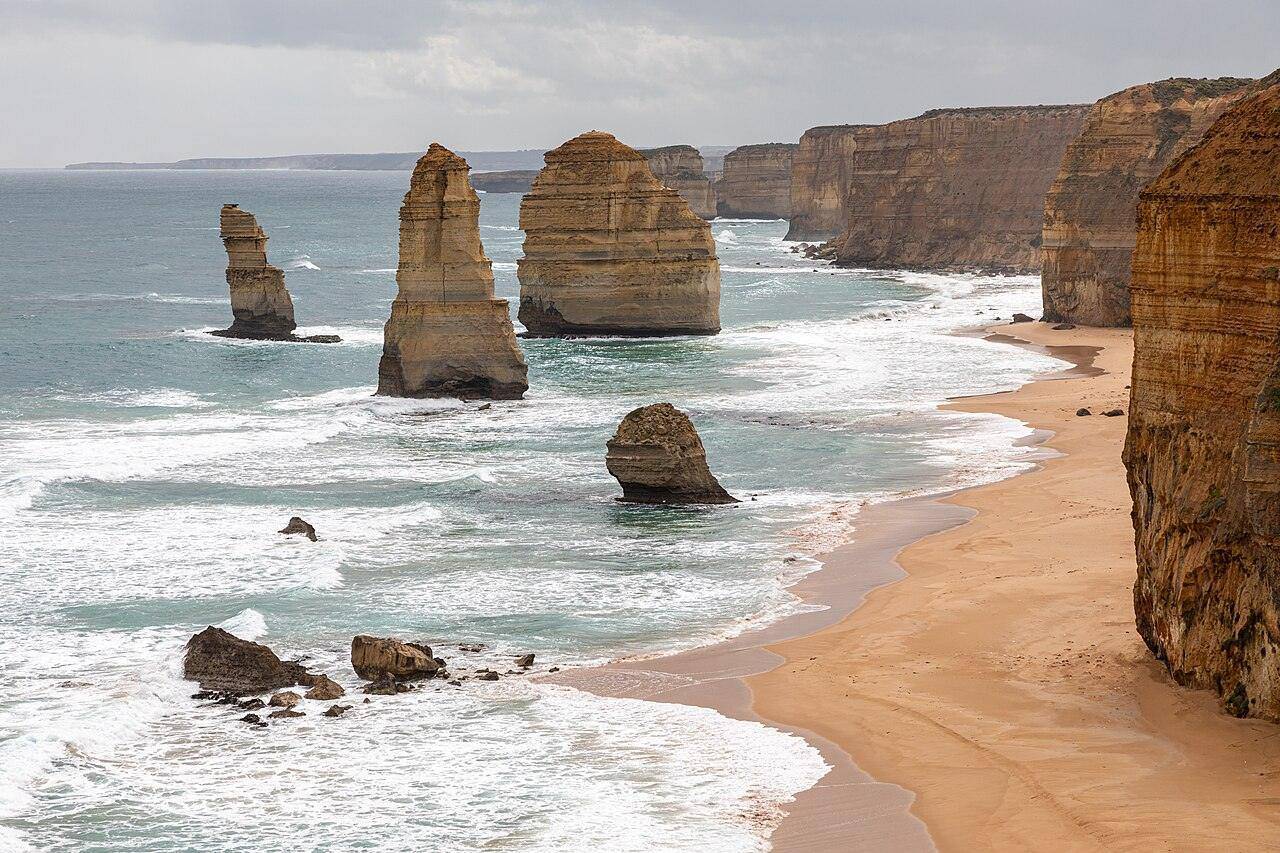
Today is the most famous part of the road, the Port Campbell coast. Leave early in the morning to reach the Twelve Apostles, the limestone stacks rising from the ocean in front of the cliffs, before the tour buses. Despite the name there were never twelve stacks, and today only some remain: the sea erodes them constantly, and one collapsed in 2005. The visitor centre, the car park and the viewing boardwalks are at no cost. A helicopter flight is available, at a cost.
Just ahead is Loch Ard Gorge, a narrow gorge with a small beach enclosed by towering cliffs, linked to the wreck of the Loch Ard in 1878, in which only two young people survived. A staircase descends to the beach; cliff paths tell the story of the wrecks on this stretch, called the Shipwreck Coast.
In the afternoon continue west: London Arch, a rock bridge that collapsed in 1990, leaving two tourists stranded on the outer part, later rescued by helicopter; The Grotto, a cave carved by the sea; and the Bay of Islands, with stacks scattered across the sea.
At sunset return to the Twelve Apostles: the light on the rocks is splendid. Sleep in Port Campbell. Practical tip: always stay behind the fences, because the cliffs are unstable and can collapse.
- Day 6
The inland return or the Grampians
Today you have two options. The first is the inland return to Melbourne, faster than the coast road: about three hours through the countryside and farms of western Victoria. On the way you can stop in the extinct volcano area around Camperdown, with crater lakes, or in the historic city of Ballarat, famous for the nineteenth-century gold rush, with the open-air museum of Sovereign Hill, which recreates a mining village.
The second option, if you have more time, is to head up to Grampians National Park, called Gariwerd by Aboriginal peoples, about three hours north of Port Campbell. Here sandstone ranges rise above the plain, with spectacular lookouts such as The Balconies and MacKenzie Falls, trails among the rocks and many kangaroos in the fields around the village of Halls Gap. The Brambuk cultural centre tells the history and rock art of the local communities.
If you choose the Grampians, sleep in Halls Gap and return to Melbourne the next day, about three hours. Practical tip: in the Grampians always check trail closures on the Parks Victoria website; in recent years some areas have been hit by fires and landslides. In summer start early to walk in the cool, and carry plenty of water.
- Day 7
The Phillip Island Penguin Parade
Today go to Phillip Island, an island linked to the mainland by a bridge, about two hours south-east of Melbourne. In the afternoon visit the Koala Conservation Reserve, with boardwalks through the eucalyptus trees to see koalas up close, and Churchill Island, a historic farm with gardens and animals. Then continue to The Nobbies, a rocky point with cliff boardwalks and views of Seal Rocks, home to one of Australia's largest seal colonies.
At sunset comes the most awaited moment: the Penguin Parade. Every evening thousands of little penguins, the smallest in the world, just over thirty centimetres tall, come out of the sea after a day's fishing and cross Summerland Beach in small groups to reach their burrows in the dunes. You watch from stands on the beach or from boardwalks; closer viewing places are also available, at extra cost. Arrive at least an hour before the stated penguin arrival time, which changes with the season.
Tickets are sold on the official Phillip Island Nature Parks website, which also offers a combined ticket for the three parks. Photography and filming are forbidden during the parade, so as not to disturb the animals.
Practical tip: there are no public buses to the parade and no evening return to Melbourne; go by car or with an organised tour. On the beach it is cold in the evening even in summer.
- Day 8
A last morning in Melbourne and departure
The last day depends on your flight time. Return the car and spend the morning in the city. You can visit Fitzroy, with its main street full of vintage shops, bookshops and cafés, and murals on the lane walls. Or ride the no-cost tourist tram that circles the centre, useful for getting your bearings.
Sports fans can visit the Melbourne Cricket Ground, the great historic stadium, with the national sports museum and guided tours of the changing rooms and the ground. Alternatively, the Ian Potter Centre in Federation Square shows only Australian art, including Aboriginal and Torres Strait Islander art, and is at no cost.
To return to the airport the shuttle leaves from Southern Cross station and takes about half an hour; allow for rush-hour traffic. Things to take home: ground coffee from Melbourne roasters, Yarra Valley wine, honey and macadamia products, Aboriginal art bought from art centres that guarantee fair payment to artists.
Practical tip: Australian customs also checks luggage on departure, and food products may be banned in your destination country. Reach the airport at least three hours before international flights, because checks take time and queues can be long, especially during the school holidays and around the Christmas period, when flights are full.
The easiest Australian trip if you're short on time, all by car from Melbourne. Visit the Twelve Apostles at dawn, before the coaches. December to March is summer and the weather is perfect; winter (June-August) is cool and windy but much less crowded.
Before you go
- Documents and visa
- Valid passport and an eVisitor, the no-cost electronic authorisation applied for online on the official Australian government website before departure.
- Health and vaccines
- No compulsory vaccines arriving from Europe. Very strong sun: high-factor sunscreen and a hat. Emergencies: 000.
- Money and payments
- Australian dollar. Contactless cards are used everywhere, even for small amounts and on public transport; cash is rarely needed.
- Power sockets
- Type I, 230 volts: you need an adapter for the angled flat-pin plugs.
- Time zone
- The country has several time zones. Sydney and Melbourne are UTC+10, UTC+11 with daylight saving from October to April.
- Safety
- One of the safest countries for travellers. The risks are natural: rip currents, bushfires especially from October to February, cyclones and floods in the north in the wet season. Official advice: GOV.UK.
Information checked in November 2026 for Italian and EU citizens. Rules change: always check before you travel.
Variations
In 5 days: Melbourne in a day and a half, then the Great Ocean Road to the Twelve Apostles with a night in Lorne and one in Port Campbell, returning inland.
In 11 days: add the Grampians for two nights and the Yarra Valley, the wine region an hour from Melbourne, or the Mornington Peninsula.
Frequently asked questions
Do I need a visa for Australia?
Yes: EU citizens apply online for the eVisitor, a no-cost electronic authorisation, on the official Australian government website before departure.
How long do I need for the Great Ocean Road?
At least two nights on the coast to reach the Twelve Apostles calmly, stopping in Lorne and Port Campbell. A day trip from Melbourne is possible, but with many hours of driving.
Can I photograph the Phillip Island penguins?
No, photography and filming are forbidden during the parade, so as not to disturb the animals. Tickets are sold on the official Phillip Island Nature Parks website.
Indicative itinerary written by World Atlas. Before booking, check timetables, seasonal openings, documents and safety.
 7 daysEasy
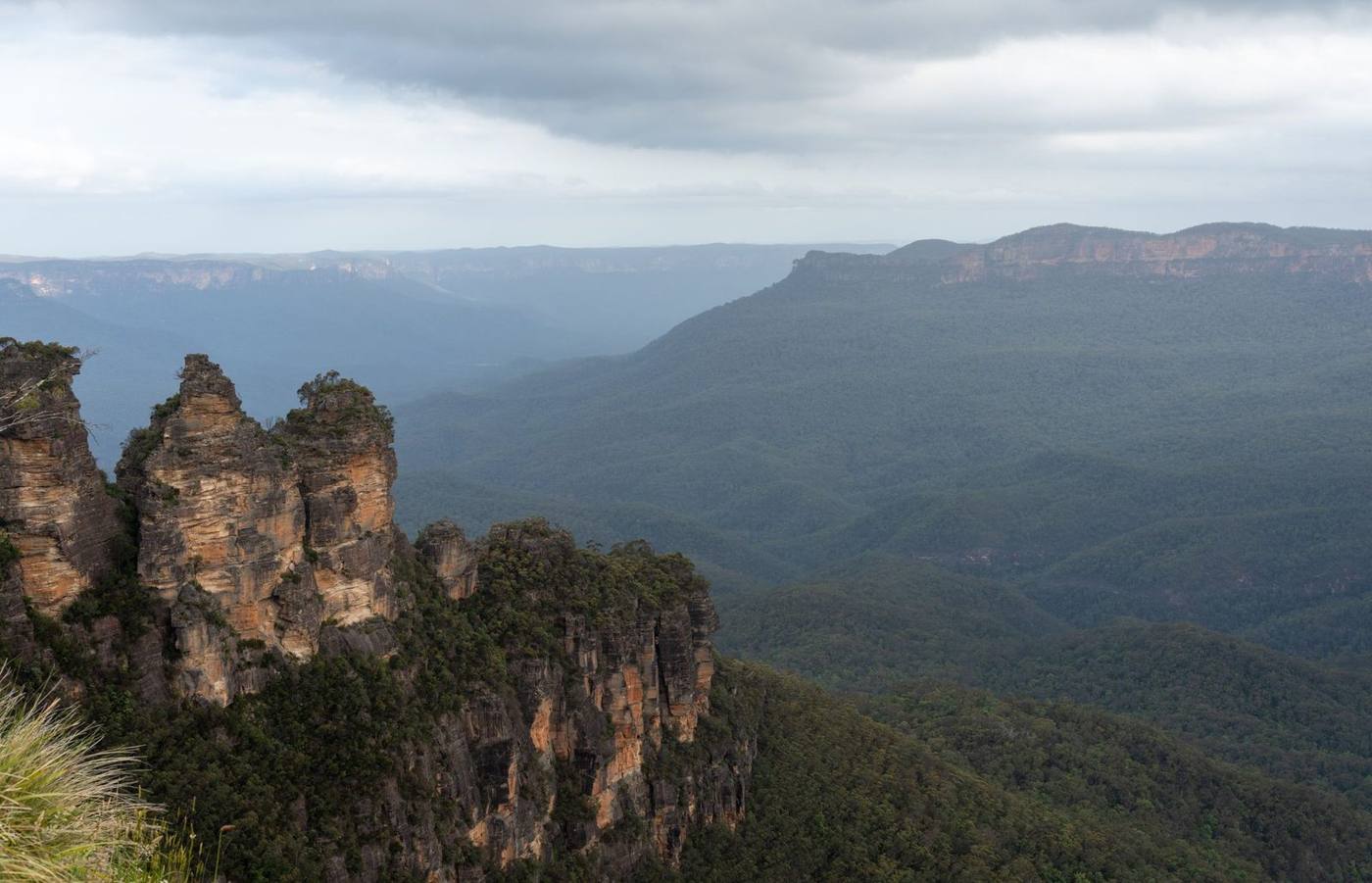
Sydney and the Blue Mountains
A week of Sydney harbour, Bondi and Manly beaches and the canyons of the Blue Mountains. For such a long journey, two weeks is better.
 15 daysModerate
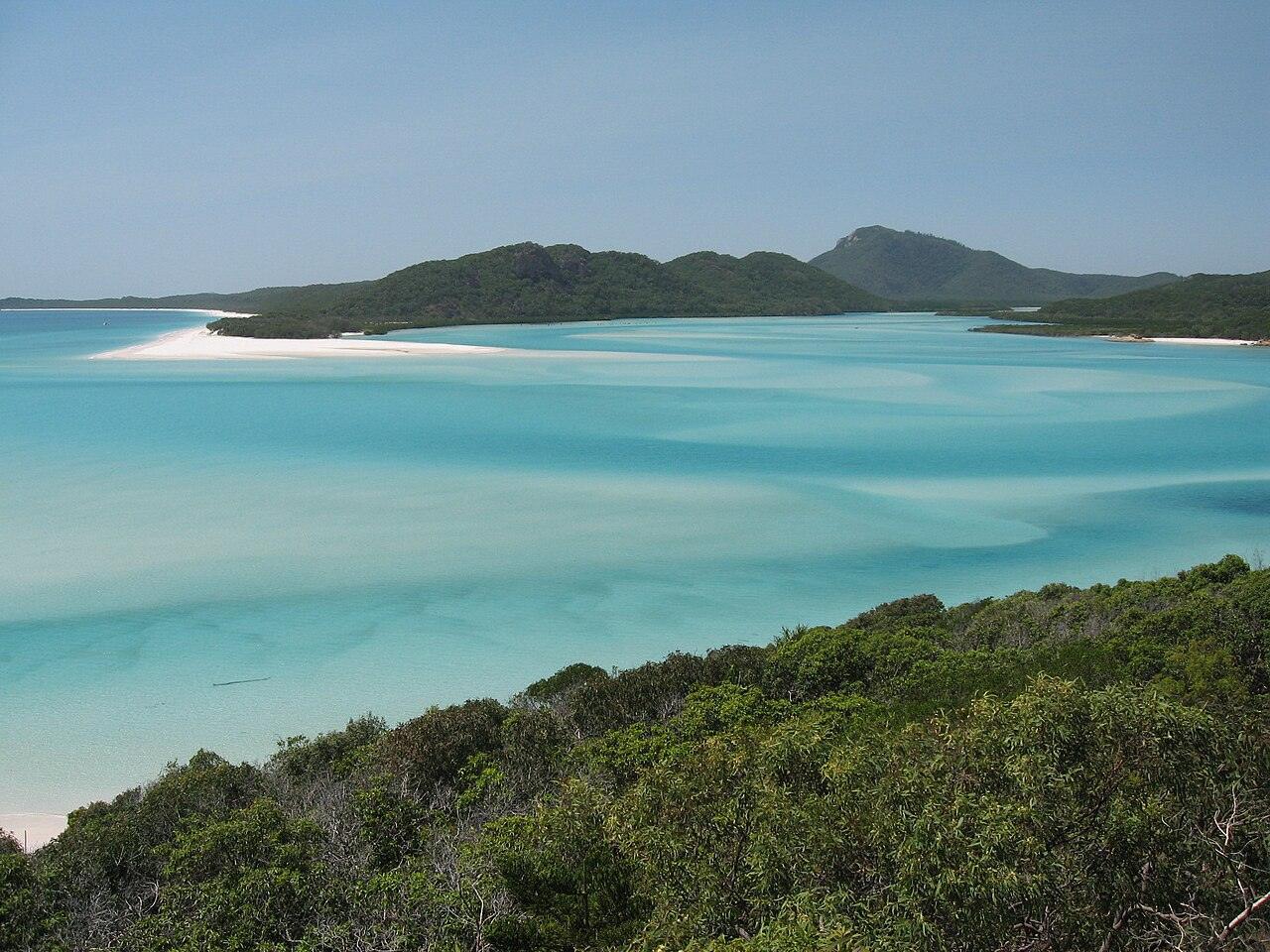
The Outback, the Great Barrier Reef and Sydney
Australia's three faces: the red heart of Uluru, the reef and rainforest of Queensland, the great city.
 17 daysEasy
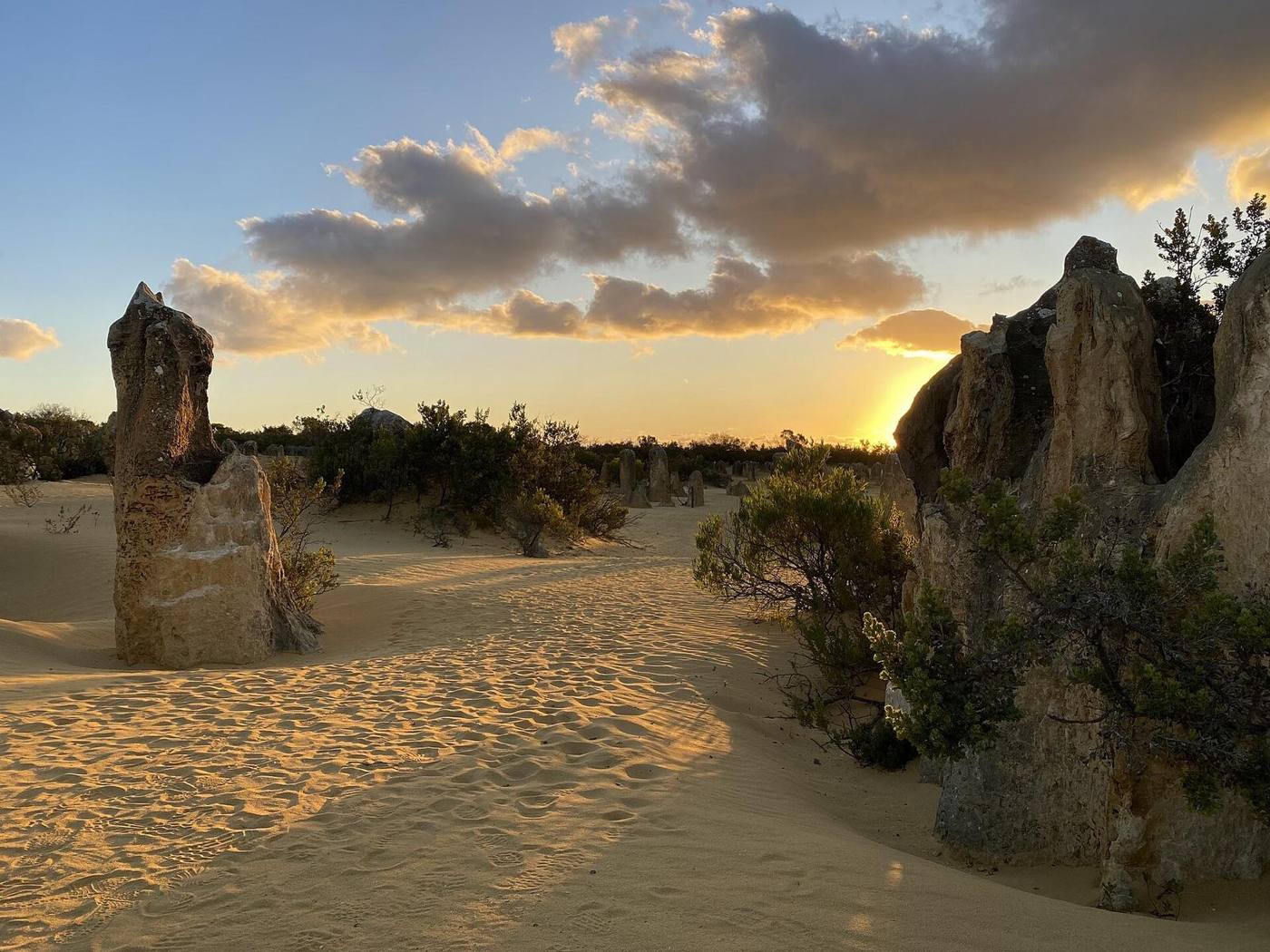
All of Australia: the west coast, Uluru, the Reef and Sydney
The continent in seventeen days: Perth and the Pinnacles, the red heart at Uluru, the Great Barrier Reef and the Daintree forest, ending in Sydney.