Vietnam from north to south
The Sapa rice terraces, Ha Long, imperial Hue, Hoi An and the Mekong Delta down to Saigon.
- Hanoi
- Sapa
- Ha Long
- Hue
- Hoi An
- Ho Chi Minh City
- Mekong Delta
Day by day
- Day 1
Arrival in Hanoi
This trip crosses Vietnam from north to south in two weeks: Hanoi, the terraced rice fields of Sapa, Ha Long Bay, the imperial city of Hue, the Hai Van Pass, Hoi An with its lanterns, Ho Chi Minh City, the Cu Chi tunnels and the Mekong Delta. You travel by domestic flights, by car with a driver, by night train and by boat.
Before you go: Italian citizens can enter without a visa for stays of up to 45 days, an exemption valid until 14 March 2028; for longer stays there is the 90 day electronic visa. Other nationalities should check their own rules. The passport must be valid.
You land at Noi Bai international airport, about forty minutes from Hanoi, the capital of Vietnam, a city of lakes, trees and scooters, founded more than a thousand years ago on the Red River.
In the afternoon, settle into the Old Quarter, known as the 36 streets, where each street was devoted to a trade: silk, silver, shoes, medicinal herbs. Walk to Hoan Kiem Lake, the lake of the returned sword, in the centre of the city, with the red bridge of Ngoc Son temple on a small island. At sunset local people exercise and dance around the lake.
In the evening, sit on a plastic stool on the pavement and have pho, the rice noodle soup with beef and herbs, the national dish born here in the north, or bun cha, grilled pork with noodles and fresh herbs.
Overnight in Hanoi, for two nights.
Practical tip: to cross the road in Hanoi, walk slowly and steadily, without stopping suddenly and without running. The scooters will pass around you.
- Day 2
Hanoi, between temples and lakes
Today you explore the capital.
Early in the morning, visit the mausoleum of Ho Chi Minh, the founder of modern Vietnam, in a large granite building on Ba Dinh square, where you see his embalmed body. The rules are strict: dress with shoulders and legs covered, keep silent, no photos inside. The mausoleum is only open in the morning and closes at certain times of year for maintenance. Check times. Nearby are the stilt house where he lived and the One Pillar Pagoda, a small wooden pagoda on a single column in the middle of a pond.
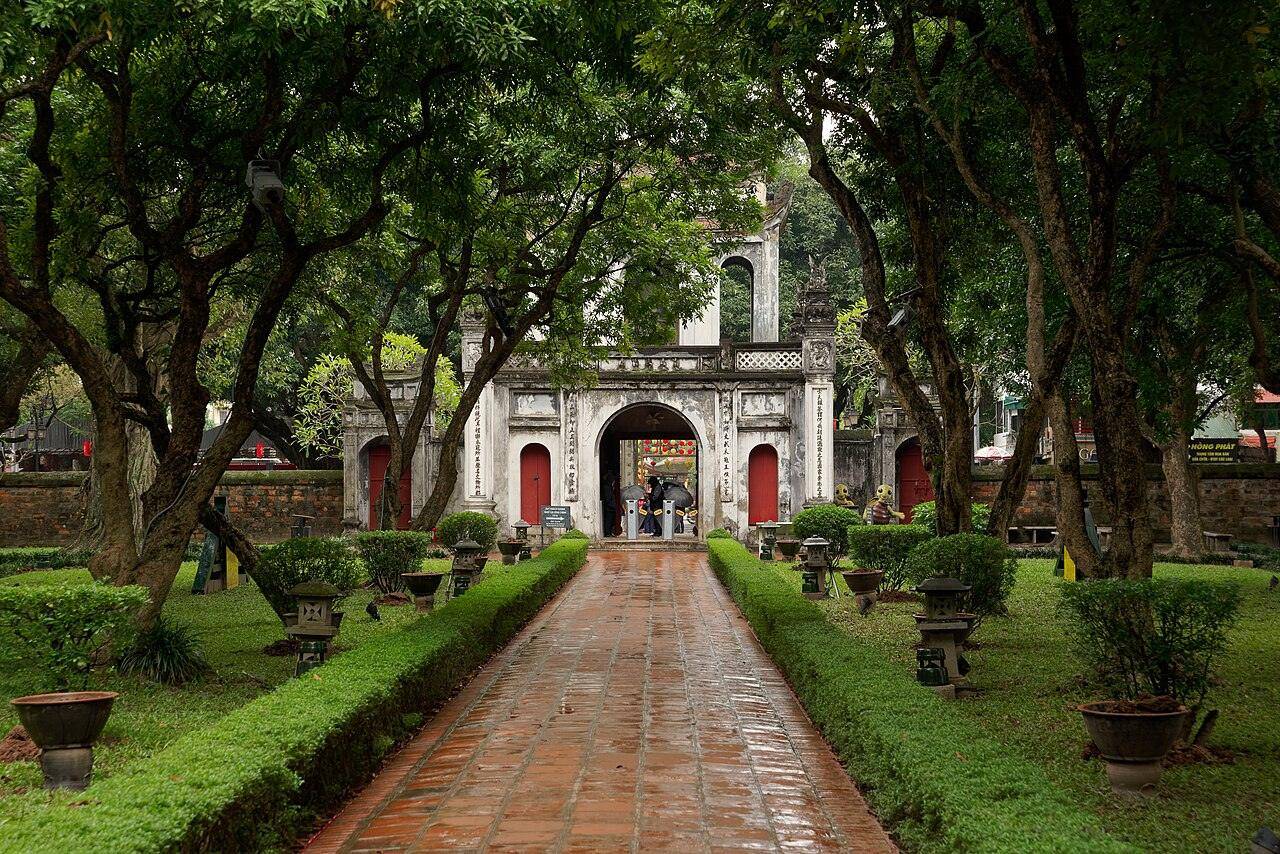
Then visit the Temple of Literature, built in 1070 in honour of Confucius, the seat of Vietnam's first university, with courtyards, gardens and stone turtles carrying on their backs the steles with the names of graduates. Check prices and times.
In the afternoon, visit the Museum of Ethnology, with traditional houses of Vietnam's 54 ethnic groups rebuilt in the garden, or Hoa Lo prison, built by the French and later used for American pilots during the war. Check prices and times.
In the evening, watch a water puppet show, a traditional art of northern Vietnam, with wooden puppets moving on the water of a pool to the rhythm of live music. Check prices and times.
After dinner, try egg coffee, a Hanoi speciality: strong coffee topped with a cream of egg yolk and sugar.
Overnight in Hanoi.
Practical tip: late in the evening the night train leaves for Lao Cai, towards Sapa. If you choose this option, check out of your room and take a small backpack with you.
- Day 3
To Sapa
Today you reach the mountains of the north-west.
In the morning, leave Hanoi heading north-west by bus or car along the motorway, about five or six hours, to Sapa, a mountain town at about 1,500 metres, near the border with China. Alternatively, the night before you can take the night train to Lao Cai, with sleeper berths, then an hour by road to Sapa. Check times and prices.
Sapa was founded by the French at the start of the twentieth century as a mountain retreat, to escape the heat of Hanoi. It lies at the foot of Fansipan, the highest mountain in Indochina, over 3,100 metres. Around it are valleys covered in terraced rice fields, carved into the mountainsides, and the villages of ethnic minorities, such as the Black Hmong, in indigo-dyed clothes, and the Red Dao, in red turbans.
In the afternoon, walk around the town, with its market, the stone church built by the French and the lake. Then climb Ham Rong mountain, above the town, with gardens and views over the valley. Check prices and times.
If the weather is clear and you want to go up Fansipan, a cable car runs almost to the summit. Check prices and times.
In the evening, have mountain food, such as grilled stream fish, black pork and mountain vegetables.
Overnight in Sapa, for two nights.
Practical tip: Sapa is cool all year round and in winter it can be very cold, sometimes with snow. Bring a fleece, a waterproof jacket and hiking shoes.
- Day 4
Trekking among the rice fields
Today you walk among the rice fields and villages of the mountains.
In the morning, set off on foot from Sapa with a local guide, often a Hmong or Dao woman, who knows the trails, the villages and the people. The best-known route goes down into the Muong Hoa valley, among terraced rice fields, streams, bamboo and the villages of Lao Chai and Ta Van, about ten or twelve kilometres, five or six hours.
Along the way you see people working in the fields, water buffaloes in the paddies, wooden houses, women weaving hemp and dyeing fabric with indigo, and children playing. In the valley there are also the ancient stones of Muong Hoa, large boulders covered in engraved designs, whose origin is still a mystery. There is a ticket to enter the village area: check the price.
The rice fields change colour with the seasons: green from May to July, when the rice is growing, yellow and golden in September and early October, before the harvest, and full of water reflecting the sky in spring.
At midday, have lunch in a village house, with the family that hosts you, then rest.
In the afternoon, return to Sapa by car or motorbike with your guide. If you wish, you can also spend a night in a village house.
In the evening, have dinner in Sapa and rest.
Overnight in Sapa.
Practical tip: in the villages many women offer to walk with you and then sell their work. Choose a guide in advance, through a local cooperative or agency, and if you buy fabrics ask the price first. Always ask permission before photographing people.
- Day 5
Ha Long Bay
Today you reach one of Asia's natural wonders.
Early in the morning, leave Sapa and head back towards Hanoi, then continue east to Ha Long Bay, about eight or nine hours in all. Alternatively, return to Hanoi the evening before and set off from there, about two and a half hours on the motorway.
Ha Long Bay, a UNESCO World Heritage Site, has almost two thousand limestone islands and islets, covered in forest, rising from the emerald sea, with caves, hidden lagoons and beaches. The name means where the dragon descends into the sea: according to a legend, a dragon sent by the gods created the islands to defend the country from invaders.
In the afternoon, board a boat for an overnight cruise in the bay, or, better, in neighbouring Lan Ha or Bai Tu Long bays, which are quieter, with fewer boats. During the cruise the boat sails among the islands, with stops for swimming, kayaking among the rocks and visiting a cave. Choose a reputable operator with a safe boat, and check prices and what is included. There is also a bay entrance ticket, usually included in the price.
At sunset, watch from the deck as the sun goes down behind the islands, with fishing boats around.
In the evening, have dinner on board with fish, prawns and squid from the Gulf of Tonkin.
Overnight on a boat in the bay.
Practical tip: cruises in the bay are suspended in rough seas and typhoons, especially from July to September. Keep your plans flexible and check the forecast.
- Day 6
Caves, kayaks and back
Today you explore the bay at dawn and head back towards Hanoi.
At dawn, if you wish, go up on deck for a tai chi lesson as the sun rises among the islands and the morning mist.
Then the boat stops for a visit to one of the bay's great caves, such as Sung Sot, the cave of surprises, one of the largest, with enormous halls full of stalactites and stalagmites, or take a kayak or bamboo rowing boat to a floating fishing village or a lagoon hidden among the rocks, such as Luon. In Lan Ha and Bai Tu Long bays there are small beaches for swimming and islands with trails up to viewpoints, such as Ti Top, from which you see the whole bay.
At midday, have lunch on board as the boat returns to port.
In the afternoon, drive back to Hanoi, about two and a half or three hours. On the way many stop at a pearl or ceramics workshop: if you do not want to buy, tell your driver.
In the evening, in Hanoi, take a last walk in the Old Quarter, with the weekend night market, or have dinner on a street food street with bun bo nam bo, noodles with beef and herbs.
Overnight in Hanoi.
Practical tip: if you prefer to spend two nights in the bay, there are two-night cruises, which are calmer. Alternatively, you can also visit Ninh Binh, Ha Long Bay on land, about two hours south of Hanoi, with rice fields, rivers and limestone rocks.
- Day 7
Hue, the imperial city
Today you fly to central Vietnam.
In the morning, take the flight from Hanoi to Hue, about an hour and twenty minutes. Hue was the capital of Vietnam from 1802 to 1945, under the Nguyen dynasty, the country's last imperial dynasty, and lies on the banks of the Perfume River. The monuments of Hue are a UNESCO World Heritage Site.
In the afternoon, visit the imperial citadel, a great fortified city with walls, moats and gates, built on the model of Beijing's Forbidden City. Inside is the imperial city, with palaces, temples, courtyards, gardens and the Palace of Supreme Harmony, where court ceremonies were held. During the Vietnam War, in 1968, many buildings were destroyed in the fighting of the Tet Offensive, and today they are partly restored and partly in ruins, among grass and lotus ponds. Check prices and times.
At sunset, visit Thien Mu Pagoda, on the riverbank, with its seven-storey tower, the symbol of the city.
In the evening, take a boat trip on the Perfume River, with the traditional court music of Hue, UNESCO intangible heritage. Then have Hue's imperial cuisine, famous for spicy, refined dishes such as bun bo Hue, noodle soup with beef and lemongrass, and banh beo, small steamed rice cakes.
Overnight in Hue.
Practical tip: it rains a lot in Hue from September to December, sometimes with floods. Bring an umbrella and a waterproof jacket in these months.
If you have more time, visit the emperors' tombs along the river, such as those of Tu Duc and Khai Dinh.
- Day 8
The Hai Van Pass and Hoi An
Today you drive one of the most beautiful roads in Vietnam.
In the morning, if you wish, visit one of the Nguyen emperors' tombs outside the city, such as that of Khai Dinh, on the hill, with stone statues of mandarins and an interior decorated with glass and ceramic mosaics, or that of Minh Mang, among lakes and gardens. Check prices and times.
Then head south by car with a driver, along the coast, to the Hai Van Pass, known as the pass of the clouds, at about 500 metres, on the mountain that drops into the sea between Hue and Da Nang. The road climbs in hairpin bends through forests, with views over beaches, lagoons and the South China Sea. At the top are the remains of a French and American fort. This pass once marked the border between the kingdoms of the north and the south, and it divides the cooler climate of the north from the warmer climate of the south.
Then go down towards Da Nang, with its long My Khe beach, and, if you wish, visit the Marble Mountains, five hills of marble and limestone with caves, pagodas and viewpoints. Check prices and times.
In the afternoon, you arrive in Hoi An, about half an hour from Da Nang, a small town on the Thu Bon River, a UNESCO World Heritage Site.
In the evening, walk through the old town lit by coloured silk lanterns, along the river and in the lanes.
Overnight in Hoi An, for three nights.
Practical tip: many people ride the Hai Van Pass by motorbike, with a driver, to feel the road. Choose a reputable service with approved helmets, and only ride yourself if you hold a motorbike licence.
- Day 9
Hoi An, the town of lanterns
Today you discover Hoi An at a slow pace.
Between the fifteenth and nineteenth centuries Hoi An was one of the most important trading ports in South-East Asia, where ships arrived from China, Japan, India and Europe. The old town has kept its wooden merchant houses, with yellow facades, shutters, carved beams and tiles, the assembly halls of the Chinese communities and the temples.
Early in the morning, before the groups, walk through the old town, where cars do not enter. To enter the old town you buy a ticket that includes visits to some monuments: check prices and rules. Cross the Japanese covered bridge, built at the end of the sixteenth century, the symbol of the town. Then visit one of the old houses, such as Tan Ky house, and one of the assembly halls, such as Phuc Kien, of the Chinese community from Fujian, with its temple, courtyard and ceramic dragons.
In the afternoon, visit the central market, on the river, with fish, fruit and spices, and one of the town's tailors, famous for made-to-measure clothes in a few hours. Then rest during the hot hours.
At sunset, get into a boat on the Thu Bon River and place a small paper lantern with a candle on the water, for good luck.
In the evening, have Hoi An dishes, such as cao lau, noodles with pork and herbs, white rose, small shrimp dumplings, and banh mi, the Vietnamese sandwich.
Overnight in Hoi An.
Practical tip: in Hoi An's tailor shops choose your fabric carefully, ask the price first and have at least one fitting: the best tailors need one or two days.
- Day 10
My Son or the Hoi An countryside
Today you choose between the Cham ruins and the countryside around the town.
Early in the morning, go to the My Son sanctuary, about an hour west of Hoi An, a UNESCO World Heritage Site, in a jungle-covered valley among the mountains. Here are the ruins of red brick temples built between the fourth and thirteenth centuries by the kingdom of the Cham, a Hindu people who ruled central and southern Vietnam for centuries. The temples, dedicated mainly to the god Shiva, are decorated with sculptures of gods, dancers and animals. During the war many temples were destroyed by bombing, and bomb craters can still be seen. Arrive at opening time, when there is mist over the jungle and it is cooler. Check prices and times.
Alternatively, take a bike ride through the Hoi An countryside, among rice fields, water buffaloes and the village of Tra Que, where aromatic herbs are grown, or take a ride in a basket boat, the round bamboo boats, among the water palms of Cam Thanh.
In the afternoon, relax on An Bang beach, about fifteen minutes by bike from town, with white sand and places to eat on the beach.
In the evening, if you wish, take a Vietnamese cooking class, with a visit to the market, to learn to make spring rolls and pho. Check prices and times.
Overnight in Hoi An.
Practical tip: in Hoi An rent a bicycle: it is the best way to move between the town, the rice fields and the beach. Many places to stay lend them at no extra cost or for very little.
- Day 11
Flight to Ho Chi Minh City
Today you fly to southern Vietnam.
In the morning, go to Da Nang airport, about forty minutes from Hoi An, and take the flight to Ho Chi Minh City, still called Saigon by many, about an hour and twenty minutes.
Ho Chi Minh City is the largest and liveliest city in Vietnam, with over nine million inhabitants and millions of scooters, skyscrapers, markets, alleys and French colonial buildings.
In the afternoon, walk around the centre, in District 1. Visit the Notre-Dame Cathedral, built by the French at the end of the nineteenth century with red bricks brought from France, and the Central Post Office, built in the same period in colonial style, with a large portrait of Ho Chi Minh and old maps. Then visit the War Remnants Museum, with photographs, planes, tanks and stories of the Vietnam War, very moving. Check prices and times.
Then pass the Reunification Palace, the former presidential palace of South Vietnam, where on 30 April 1975 tanks from the north entered, ending the war. Check prices and times.
In the evening, go to Ben Thanh market, the city's most famous covered market, and then have dinner at the stalls around it, or go up to one of the rooftop terraces to see the city lights.
Overnight in Ho Chi Minh City, for two nights.
Practical tip: in Ho Chi Minh City use metered taxis from reliable companies or apps. Hold your phone and bag tightly on the pavement: thieves sometimes pass on scooters.
- Day 12
The Cu Chi tunnels
Today you visit the wartime tunnels and the city.
In the morning, leave for the Cu Chi tunnels, about an hour and a half north-west of the city. It is a network of over two hundred kilometres of tunnels dug by hand on several levels, used by Viet Cong fighters during the war against the French and then the Americans, with rooms, kitchens, hospitals, weapons stores and exits hidden in the forest. With a guide you walk through the forest, see the traps and hidden trapdoors, and can go into a stretch of tunnel widened for visitors, very narrow and hot. There are two main sites, Ben Dinh, closer and busier, and Ben Duoc, quieter. Check prices and times.
Alternatively, you can reach Cu Chi by speedboat along the Saigon River. Check prices and times.
In the afternoon, return to the city and visit Cholon, the Chinese district, with the great Binh Tay market and pagodas such as Thien Hau, dedicated to the goddess of the sea, with incense coils hanging from the ceiling. Then visit the Jade Emperor Pagoda, one of the most beautiful in the city, full of statues and incense smoke.
In the evening, have southern food, sweeter and rich in herbs, such as com tam, broken rice with grilled pork, and a coconut drink.
Overnight in Ho Chi Minh City.
Practical tip: in the Cu Chi tunnels the passages are very narrow, low and hot. Do not go in if you suffer from claustrophobia or heart or back problems: there is plenty to see above ground.
- Day 13
The Mekong Delta
Today you reach the delta of the great river.
Early in the morning, leave Ho Chi Minh City heading south-west into the Mekong Delta, about two or three hours, to Ben Tre or Can Tho. The Mekong rises on the Tibetan plateau and, after more than four thousand kilometres through China, Myanmar, Laos, Thailand and Cambodia, reaches Vietnam, where it splits into nine branches, called the nine dragons, before flowing into the sea. The delta is one of the richest farming areas in Asia, with rice fields, orchards, coconut palms and thousands of canals.
In Ben Tre, the coconut province, take a boat trip along narrow canals, under water palms, in small rowing boats. Visit a workshop where coconut candy is made, a honey farm and an orchard, with tastings of tropical fruit and the traditional music of the south, called don ca tai tu, UNESCO intangible heritage.
In the afternoon, continue to Can Tho, the largest city in the delta, and walk along the riverfront.
In the evening, sleep in a family homestay by a canal, on a river island, with dinner prepared by the family, such as fried elephant ear fish, wrapped in rice paper with herbs, and crispy banh xeo pancakes.
Overnight in a homestay in the delta.
Practical tip: there are many mosquitoes in the Mekong Delta, especially in the evening. Use repellent and long clothes, and ask your doctor whether malaria prevention is needed for the area.
- Day 14
The floating market
Today you see one of the floating markets of the Mekong.
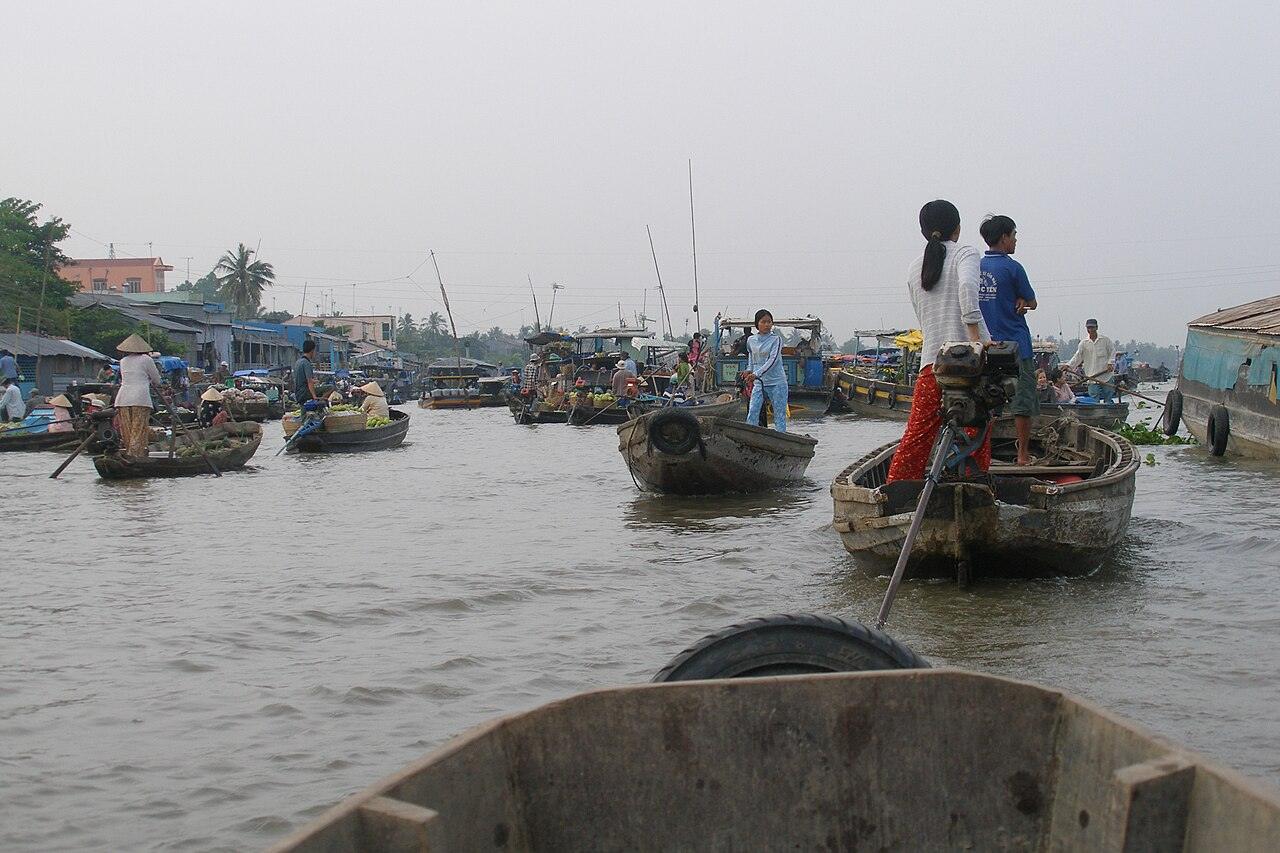
At dawn, board a boat and go to Cai Rang floating market, near Can Tho, the largest in the delta. Here hundreds of boats laden with fruit and vegetables gather on the river to sell wholesale. Each boat hangs a sample of what it sells at the top of a long pole, such as a pineapple, a cabbage or a pumpkin, so buyers can see it from afar. Small boats pass among the others selling coffee, pho and noodles for breakfast. The market is liveliest between five and eight in the morning. In recent years it has become smaller, because many traders use the roads, but it is still very beautiful.
Then visit a workshop where rice noodles are made by hand, with large rice sheets laid out to dry in the sun, and take a bike ride or walk along paths among the orchards and villages of the island.
In the afternoon, return towards Ho Chi Minh City, about three or four hours.
In the evening, have your last dinner in Vietnam, perhaps at a night market or a rooftop restaurant, with fresh spring rolls and a Vietnamese beer.
Overnight in Ho Chi Minh City.
Practical tip: for the floating market, leave very early, at dawn: later the boats leave.
If you have more time, you can spend a second night in the delta and visit the Tra Su forest, a flooded forest of mangroves and melaleuca trees full of birds, about three hours from Can Tho.
- Day 15
Departure from Ho Chi Minh City
Today you leave Vietnam.
In the morning, if your flight leaves late, take a last walk in the city. Have a Vietnamese coffee, cà phê sữa đá, strong coffee with condensed milk and ice, in one of the cafés in the old buildings on Nguyen Hue, the great pedestrian street of the centre. Then do your last shopping at Ben Thanh market, for Vietnamese coffee, silk, lacquerware, ceramics and spices.
Then go to Tan Son Nhat international airport, about half an hour to an hour from the centre depending on traffic, and take your flight home, often with a connection in Asia or the Gulf.
In these fifteen days you have crossed all of Vietnam: the Old Quarter and lakes of Hanoi, the terraced rice fields and villages of Sapa, the rock islands of Ha Long Bay, the imperial citadel of Hue, the Hai Van Pass, the lanterns of Hoi An, the temples of My Son, Ho Chi Minh City, the Cu Chi tunnels and the canals and markets of the Mekong Delta.
When to go: Vietnam is long and has different climates. The north is best from October to April, with a cool winter from December to February. The centre is best from February to July, while from September to December it rains a lot. The south is best from December to April, in the dry season. For this trip, the best months are March and April.
Practical tip: traffic to Ho Chi Minh City airport can be very slow. Leave with plenty of time.
In Vietnam tipping is not compulsory, but it is much appreciated for guides, drivers and boat crews.
Vietnam in full in two weeks, with a good balance of mountains, cities and delta. Domestic flights are cheap and save a lot of time. With such different climates between north and south, no month is perfect everywhere: March and April are the best compromise.
Before you go
- Documents and visa
- Passport with at least six months' validity remaining. Italian, French and several other European citizens need no visa for tourism up to 45 days, an exemption valid until 14 March 2028; otherwise use the e-visa from the official portal.
- Health and vaccines
- No compulsory vaccines. Protect yourself against mosquitoes because of dengue; drink only bottled water. Emergencies: 113 police, 114 fire, 115 ambulance.
- Money and payments
- Vietnamese dong. Cards and QR code payments are widespread in cities; in markets, villages and for small purchases you need cash.
- Power sockets
- Types A and C, among others, 220 volts: a universal adapter is useful.
- Time zone
- UTC+7 all year: Vietnam does not use daylight saving time.
- Safety
- A safe country for travellers. In big cities beware of snatch thefts from scooters; from July to December typhoons and floods hit the centre and north. Official advice: GOV.UK.
Information checked in November 2026 for Italian and EU citizens. Rules change: always check before you travel.
Variations
In 10 days: Hanoi, Ha Long Bay, Hoi An and Ho Chi Minh City with a day trip to the Mekong Delta, without Sapa and without Hue.
In 19 days: add Ninh Binh and the Phong Nha caves between Hanoi and Hue, or the island of Phu Quoc, for a few days by the sea, at the end of the trip.
Frequently asked questions
What document do I need for Vietnam?
Italian citizens can enter without a visa for stays of up to 45 days, an exemption valid until 14 March 2028. For longer stays there is the 90 day electronic visa. The passport must be valid. Other nationalities should check their own rules.
When is the best time to go?
Vietnam has different climates in the north, centre and south. For a north to south trip the best months are March and April, when the weather is good in almost the whole country. From September to December it rains a lot in the centre.
How do you get around?
By domestic flights between Hanoi, Hue or Da Nang and Ho Chi Minh City, which save a great deal of time, and by car with a driver or bus for shorter stretches. For Sapa there is also the night train to Lao Cai.
Indicative itinerary written by World Atlas. Before booking, check timetables, seasonal openings, documents and safety.
 10 daysEasy
Hanoi, Ha Long and Hoi An
The north by boat among the karsts, the lantern town and some of Asia's best street food.
 7 daysEasy
Cape Town and the Cape Peninsula
A week of Table Mountain, the penguins of Boulders Beach, the Cape of Good Hope and the Stellenbosch vineyards.
 15 daysModerate
Kruger, the Garden Route and Cape Town
The great classic: a Kruger safari, the scenic Garden Route and a finale in Cape Town.