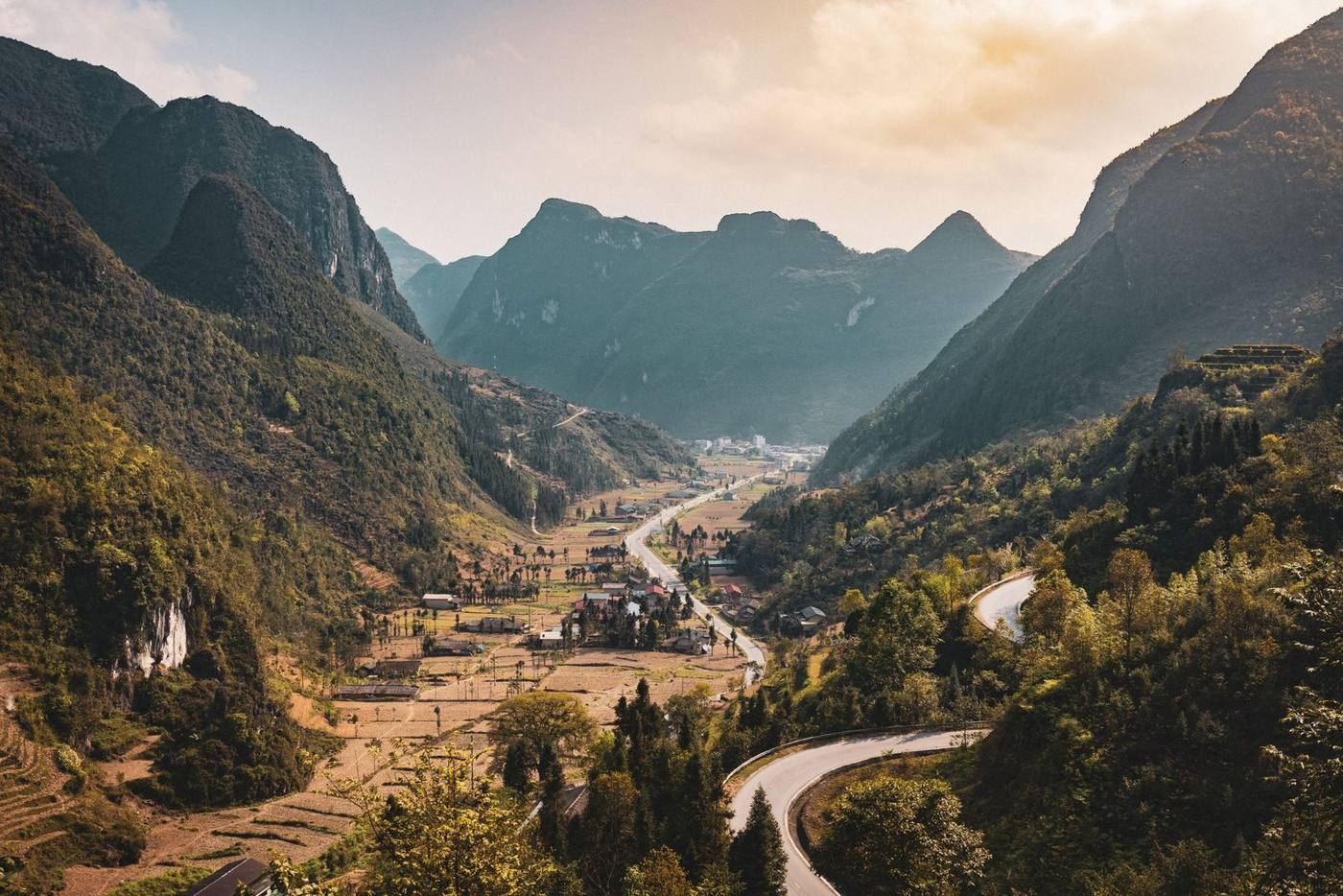
Hill tribes of Vietnam and Laos
Northern Vietnam from Ha Giang to Dien Bien Phu, then across the border to Phongsaly for three days of trekking and the calm of Luang Prabang.
- Hanoi
- Ha Giang
- Dong Van
- Meo Vac
- Hoang Su Phi
- Bac Ha
- Sapa
- Dien Bien Phu
- Phongsaly
- Luang Prabang
Day by day
- Day 1
Arrival in Hanoi
This trip crosses the mountains of northern Vietnam and Laos, among the peoples who live along the borders: the Dong Van plateau and the Ma Pi Leng Pass, the rice terraces of Hoang Su Phi, the markets of Can Cau and Bac Ha, Sapa and Dien Bien Phu, then the Tay Trang crossing, three days of walking around Phongsaly and finally Luang Prabang and Vientiane. You travel by minibus, local bus, train and on foot.
Before you go: Italian citizens can enter Vietnam without a visa for stays of up to 45 days, an exemption valid until 14 March 2028; for longer stays there is the 90 day electronic visa. For Laos you need a passport valid for at least six months, with two blank pages, and a 30 day tourist visa. The official eVisa, to be requested only on laoevisa.gov.la, is valid only at certain airports and crossings, and according to recent information no visa on arrival is issued at the Tay Trang crossing either: so obtain your visa in advance from a Lao embassy. Other nationalities should check their own rules.
Safety: in Vietnam, areas near the Chinese border may require a permit from the local authorities, and some villages need permission from the provincial police; on the Dong Van plateau police stepped up checks on foreigners in the border communes in 2026. Have the permit arranged before you set off, always carry your passport and do not photograph barracks or military posts. The British Foreign Office advises against all but essential travel to Xaisomboun Province in Laos: this trip does not go there. Unexploded ordnance from the war remains throughout Laos: always stay on the paths.
You land at Noi Bai and in the evening walk around the lake.
Sleep in Hanoi, for two nights.
Practical tip: bring two passport photos and a copy of your passport, useful for the visa and the permits.
- Day 2
Hanoi, from the mausoleum to the Museum of Ethnology
Today you get to know the capital and prepare for the journey among the peoples of the north.
Early in the morning visit the mausoleum of Ho Chi Minh, the founder of modern Vietnam, on the vast Ba Dinh square. The rules are strict: shoulders and legs covered, silence, no photos inside. It is open only in the morning and closes at certain times of year for maintenance. Nearby are the stilt house where he lived and the One Pillar Pagoda, a small wooden pagoda on a single column in the middle of a pond.
Then go to the Museum of Ethnology, the most important stop for this trip. The galleries present the 54 ethnic groups of Vietnam, and in the garden there are full size traditional houses: the Ede longhouse, the Bahnar communal house with its very tall roof, the Hmong earth house. Look carefully at those of the Hmong, Dao, Tay and Giay, whom you will meet in the mountains. Check prices and times.
In the afternoon change or withdraw enough cash for the days in remote areas and complete your kit: waterproof, head torch, sleeping bag liner.
In the evening eat pho, the rice noodle soup with beef, or cha ca, fish with dill and turmeric fried in a pan at the table, a speciality of the city.
Sleep in Hanoi.
Practical tip: leave your large suitcase in the city or in storage. For three weeks in the mountains a soft holdall is enough, easy to load onto bus roofs and motorbikes.
- Day 3
Ha Giang, the Quan Ba Pass and Nam Dam
Today you leave the plains and climb towards the mountains of the north east.
In the morning set off by minibus to Ha Giang, a drive of about six hours following the valley of the Lo river, among tea plantations and hills. Ha Giang, part of Tuyen Quang province since 2025, is the gateway to the Dong Van plateau.
After lunch the climb begins. Stop at Heaven's Gate at Quan Ba, a pass with a viewpoint over the Tam Son valley, where two rounded hills called the Twin Mountains rise. This is where the limestone landscape that will accompany you over the coming days begins.
In the late afternoon descend to Nam Dam, a Dao village, where people live in rammed earth houses with tiled roofs at the foot of the mountains. Walk among the houses and fields with your guide, watch the women working cotton and indigo, and notice the ancestral altars, central to Dao life.
In the evening you have dinner with your host family: rice, pork, mountain vegetables, eggs and maize spirit. The houses are simple, with mattresses on the floor under a mosquito net, but the welcome is warm.
This is the first border area of the trip: keep your passport with you and show it calmly if asked.
Sleep in a family home in Nam Dam.
Practical tip: bring a small useful gift for the families who host you, such as exercise books for school or fruit, instead of sweets.
- Day 4
Lung Tam, Pho Bang, Lung Cam and Dong Van
Today you cross the heart of the karst plateau.
In the morning stop at Lung Tam, a Hmong village where women weave hemp as it used to be done: they beat the fibres, spin them by hand, dye them with indigo and draw patterns with hot beeswax before dyeing. You can see every stage of the work.
Then continue towards Pho Bang, an old village right on the border with China, with two storey earth houses, wooden doors and red lanterns. It was once an important trading post; today it is a quiet, almost motionless place.
After lunch you cross the pine forest of Yen Minh and climb onto the Dong Van plateau, recognised as a UNESCO Global Geopark, with mountains of grey rock and small maize fields among the stones.
In the afternoon visit Lung Cam, a village of Hmong earth houses with dry stone enclosures, which became famous thanks to a Vietnamese film shot here. Then reach Dong Van and, in the evening, stroll along the old market street, with stone houses and tiled roofs lit by lanterns.
Along this stretch you are very close to the border. Always carry your passport, follow your guide's instructions and do not go towards military posts or areas with no entry signs.
Sleep in Dong Van.
Practical tip: on the plateau the nights are cold, even in spring and autumn. Keep a light down jacket and a hat to hand.
- Day 5
The Ma Pi Leng Pass and Meo Vac
Today you travel the most spectacular road in the north.
Early in the morning you leave Dong Van and climb onto the Ma Pi Leng Pass. The road runs along the mountainside for about twenty kilometres, cut into the rock above the canyon of the Nho Que river, which flows emerald green many hundreds of metres below. Stop at the viewpoints and look at the maize terraces clinging to almost vertical slopes.
With your guide you can walk down a path to the river or, when the boats are running, take a short trip on the river in the Tu San canyon, between towering walls. Check prices and times, and give it up if it has rained a lot: the steep paths become dangerous.
In the early afternoon you reach Meo Vac, a small town in a hollow among the mountains. On Sundays there is a large market here, attended by Hmong, Lolo, Giay and Dao, and the animal market is one of the liveliest in the region.
For the rest of the afternoon walk through the villages around Meo Vac, among stone walls and small vegetable plots, with children walking home from school along the road.
In the evening try thang co, the stew of meat and offal cooked in the big market pots, a typical Hmong dish. It is not for everyone, but it is part of local culture.
Sleep in Meo Vac.
Practical tip: on Ma Pi Leng stop only in the lay-bys at the viewpoints. The road is narrow, with lorries and motorbikes, and the bends hide oncoming traffic.
- Day 6
Lung Phin market and Hoang Su Phi
Today you see another mountain market and cross the province to the west.
In the morning go to the Lung Phin market, between Meo Vac and Dong Van, usually held on Sundays. It is less visited than the more famous ones: Hmong women arrive in colourful pleated skirts with baskets on their backs, men bargain over pigs and horses, and traders offer fabrics, tools and maize spirit.
The mountain markets follow a weekly calendar, and on a single trip it is hard to see them all on the right day. Before fixing your dates, decide which matter most to you and plan the route accordingly.
After the market a long transfer begins: you leave the plateau, return towards the Lo river valley and then climb west to Hoang Su Phi, in the mountains bordering Lao Cai province. It is many hours on the road, with short stops for lunch and to stretch your legs.
The landscape changes completely: the grey rock of the plateau gives way to mountains of earth and forest, and the slopes are sculpted by rice terraces, among the most beautiful in Vietnam.
You arrive at sunset in a Red Dao or Nung village, where you sleep in a family home.
Sleep in Hoang Su Phi, for two nights.
Practical tip: on long transfers sit by the window and keep water, fruit and wet wipes to hand. Stops are few and short.
- Day 7
On foot among the rice terraces of Hoang Su Phi
Today is a whole day on foot among the terraces.
In the morning set off with your guide from the village and follow the narrow paths along the dykes of the paddy fields. The terraces climb from the valley floor to halfway up the mountains, built by the Dao, Nung and La Chi over generations. Their design follows exactly the curves of the land, with bamboo channels and small ditches carrying water from one terrace to the next.
The colour changes with the seasons: between spring and early summer the terraces are full of water and reflect the sky, in summer they are green, and at the end of September and in October they turn yellow for the harvest.
Around midday you stop in a La Chi village, one of the smallest peoples in Vietnam, who live in houses partly of earth and partly on stilts. Have lunch of sticky rice, mountain chicken and garden vegetables.
In the afternoon you walk on among the terraces and cardamom groves, then return to your host's house. In all it is five or six hours of walking, with constant ups and downs but no technical sections.
In the evening, if the family offers it, try the Red Dao herbal bath, with hot water and plants gathered in the forest.
Sleep in Hoang Su Phi.
Practical tip: on the dykes walk in single file and watch where you put your feet. The edge is narrow, and if it gives way or you slip, you damage the farmers' work.
- Day 8
From Hoang Su Phi to Bac Ha
Today you move from Ha Giang province to Lao Cai province.
In the morning you leave Hoang Su Phi and take the mountain roads towards Xin Man, a plateau where mainly Nung and Hmong live, with maize fields and villages scattered across the hills. The road is narrow and winding, but with little traffic and wide views over deep valleys.
Then you descend to the Chay river and climb the other side to Bac Ha, a small town on a plateau at around nine hundred metres, surrounded by plum and pear orchards. In spring the trees blossom white and the whole valley looks covered in snow.
In the afternoon visit the palace of Hoang A Tuong, a colonial style building with Chinese influences, built at the beginning of the twentieth century for the family of a local lord who governed the area under the French. Check prices and times.
Then walk in one of the villages around the town, among the earth houses of the Flower Hmong and the maize fields. The Flower Hmong are recognisable by the brilliant colours of the women's clothes: pink, green, yellow, embroidered by hand and today often with added factory made fabrics.
In the evening try Bac Ha maize spirit, famous throughout the north, but carefully: it is very strong.
Sleep in Bac Ha, for three nights.
Practical tip: cash machines are rare in these areas and do not always work. In Bac Ha withdraw what you need for the following days, up to Sapa.
- Day 9
Can Cau market and Ban Pho
Today you see the most authentic market in the area.
Early in the morning head north for about an hour to Can Cau, near the border with China. The market is held on Saturdays, on an open hillside. It is the meeting place of the Flower Hmong from the nearby villages, and visitors here are still few compared with local people.
The heart of the market is the animal section: buffalo, horses, pigs and dogs are examined and bargained over at length. Further on there are fabrics, embroidery, farm tools, medicinal herbs and the big pots of thang co. By mid morning the men sit in circles drinking maize spirit, and families go home on foot or by motorbike in the early afternoon.
After lunch you return towards Bac Ha and take a walk of a couple of hours to the village of Ban Pho, a Flower Hmong village in the hills, with rammed earth houses and terraced fields. The path climbs gently and offers a fine view over the Bac Ha valley.
In Ban Pho, if the family allows it, step inside a traditional house, with the hearth in the centre and maize hung to dry under the roof.
In the evening you return to Bac Ha.
Sleep in Bac Ha.
Practical tip: at the market always ask before taking photos, with a gesture and a smile. If someone says no, respect their choice and move on.
- Day 10
Bac Ha market and the climb to Sapa
Today you see the largest market in the area, then climb to Sapa.
On Sunday morning Bac Ha fills up: Flower Hmong, Dao, Tay, Nung and Phu La arrive from the surrounding villages. The market is divided into sections: animals, fabrics and embroidery, vegetables and fruit, tools, cooked food. There are more visitors than at Can Cau, but it is still a real market, where people buy and sell.
Walk among the fabric stalls, where women sell embroidered skirts and jackets, and then among the steaming pots where people eat standing up. Try a bowl of pho or banh cuon, steamed rice rolls.
Late in the morning set off west. The road descends to Lao Cai, the town on the border with China, and then climbs again for about an hour to Sapa, at around 1,500 metres. In all it is about three hours of travel.
Sapa is a mountain town that began as a French hill station and is now very busy. In the late afternoon walk around the centre, around the stone church built by the French and the small lake, with the mountains of the Hoang Lien Son range in the background. If the sky is clear you can see Fansipan, the highest peak in Indochina.
In the evening try lau, the mountain hot pot, with mushrooms, vegetables and salmon farmed in the cold streams of the area.
Sleep in Sapa.
Practical tip: Sapa has many outdoor gear shops. It is your last chance to buy a jacket or a sleeping bag liner before Laos.
- Day 11
Cat Cat and the road to Dien Bien Phu
Today you visit a village near Sapa and then make one of the longest transfers of the trip.
At dawn walk down to the village of Cat Cat, a few kilometres from the centre, home to the Black Hmong, dressed in hemp dyed with indigo. The path descends among the houses and terraces to a waterfall with a suspension bridge and the old water mills for rice. The village is very touristy, but early in the morning it is quiet. Check prices and times.
Late in the morning take the bus to Dien Bien Phu. The road climbs to the O Quy Ho Pass, on the Hoang Lien Son range, one of the highest and most scenic mountain passes in Vietnam, then descends towards Lai Chau and continues through long valleys, among paddy fields, Thai villages and rivers. The journey takes many hours, and you arrive in the evening.
Dien Bien Phu lies in a wide, flat valley surrounded by hills, near the border with Laos. It is the site of the decisive battle of the Indochina War, in 1954.
On the final stretch look out of the window: the valley is covered in paddy fields, and around it you can see the hills that were the scene of the fighting.
In the evening have dinner in town, with Black Thai dishes such as grilled fish with herbs and sticky rice.
Sleep in Dien Bien Phu, for two nights.
Practical tip: buy your bus ticket the day before and ask how long the journey really takes. On mountain roads the stated times are almost always optimistic.
- Day 12
Dien Bien Phu, the battle of 1954
Today you visit the sites of the battle that ended the French presence in Indochina.
In 1954 the French army built a large fortified camp in the Dien Bien Phu valley. The Vietnamese troops, led by General Vo Nguyen Giap, carried guns and supplies by hand and by bicycle onto the hills around it, and after almost two months of siege the camp fell on 7 May 1954. A few months later the Geneva Accords divided Vietnam in two.
In the morning visit the Dien Bien Phu Victory Museum, with weapons, photographs, maps and a large painted panorama of the battle. Check prices and times.
Then climb Hill A1, one of the most fiercely contested points of the fighting, with trenches, a French tank and the large crater of a mine dug by the Vietnamese under the enemy positions. From the top you see the whole valley.
In the afternoon visit the bunker of the French commander, Colonel de Castries, and then the cemetery of the Vietnamese soldiers, with thousands of white graves.
Before evening buy your bus ticket for Laos and check the departure time: buses to Muang Khua usually leave very early. Have your passport ready with the Lao visa already obtained and some dollars in cash.
In the evening have an early dinner and go to bed.
Sleep in Dien Bien Phu.
Practical tip: areas near the border with Laos may still contain unexploded ordnance. Around the battle sites, stay on the marked routes and do not pick up metal objects.
- Day 13
The Tay Trang crossing and Muang Khua
Today you cross the border and enter Laos.
At dawn take the bus to Muang Khua. After about an hour you reach the Tay Trang crossing, where you leave Vietnam. Then the bus covers the stretch between the two border posts and stops at the Lao checkpoint of Sop Hun, where you show your passport with the visa already obtained. Formalities can take time, and at midday the offices usually close for lunch.
On the Lao side the road is narrow and descends through forests and villages, with little traffic. You notice the change at once: wooden and bamboo houses, children waving, a slower pace. Laos uses the kip, and few people in these areas accept cards: bring cash.
In the early afternoon you reach Muang Khua, a small town on the Nam Ou river, with long wooden boats moored on the bank. If the bus arrives early, continue to Phongsaly, many hours further north, arriving in the evening. If you arrive late, sleep in Muang Khua and leave the next morning at dawn.
At sunset, in Muang Khua, sit on the bank and watch the boats crossing the river.
Sleep in Phongsaly, or in Muang Khua.
Practical tip: at the border keep your passport, visa, photos and cash in a single pouch that is easy to reach. If you are asked for unclear fees, calmly ask for a receipt.
- Day 14
Phongsaly and the first day of walking
Today you start trekking in the mountains of Phongsaly.
Phongsaly is the northernmost province of Laos, squeezed between China and Vietnam, and one of the least visited in the country. The town sits high up, above a thousand metres, and is often in cloud in the morning. It is home mainly to the Phunoi, one of the peoples of the area, and to families of Chinese origin, with wooden and brick houses along steep streets.
In the morning arrange the trek with a licensed local guide. This is essential: the guide knows the paths, speaks the village languages, arranges the nights in family homes and knows where it is safe to walk. Laos still has a great deal of unexploded ordnance from the war: never leave the paths and do not pick up metal objects.
Late in the morning set off on foot towards the first villages. The path climbs and drops along forested ridges, upland rice fields and tea plantations. Around Phongsaly there are very old tea trees, and the local tea is famous.
In the afternoon you reach a Phunoi village, where the houses are built of wood and thatch. In the evening you have dinner with your host family, sitting on the floor around the hearth, with sticky rice, vegetables and sometimes fish or chicken.
Sleep in a family home in a Phunoi village.
Practical tip: learn a few words of Lao, such as sabaidee, hello, and khop chai, thank you. In the villages it is a much appreciated gesture.
- Day 15
The Akha villages
Today you walk towards the Akha villages, higher up in the mountains.
In the morning you leave the Phunoi village and climb a path through forest and open fields. The walk takes five or six hours, with steep climbs and slippery sections if it has rained. There are few signs: always follow your guide and do not take short cuts.
Around midday you reach an Akha village. The Akha are a people living across Laos, China, Thailand and Myanmar. The women wear headdresses decorated with silver coins, beads and feathers, and black clothes dyed with indigo. The houses stand on stilts, with large thatched roofs that come down almost to the ground.
At the entrance to the village you may see a wooden gate, which for the Akha separates the world of people from that of the spirits. Do not touch it and do not walk under it unless your guide tells you to: it is a sacred place.
In the afternoon walk calmly among the houses. Women work at their looms, children watch the visitors with curiosity, and men return from the fields with baskets on their backs.
In the evening you have dinner with your host family. The food is simple, and rice liquor is often offered: you can take a sip out of courtesy.
Sleep in a family home in an Akha village.
Practical tip: bring a head torch and a roll of toilet paper. In the villages there may be no electricity and the toilets are very basic.
- Day 16
Back to Phongsaly
Today you finish the trek and return to town.
In the morning, if you get up early, watch the clouds filling the valleys below the village, with the ridges emerging like islands. It is one of the finest moments of the three days of walking.
After breakfast say goodbye to the family and set off again on foot. The path descends through forest, tea plantations and upland rice fields, and passes another village, where you can stop for lunch. In all it is four or five hours of walking, then a car takes you back to Phongsaly.
In the afternoon, in Phongsaly, take a hot shower and rest. Then climb the steps up Phou Fa hill, above the town, with a white stupa at the top and a wide view over the surrounding mountains, as far as the Chinese border on clear days.
Then stroll around the old part of town, with its Chinese style wooden and brick houses, its tea shops and the market, where Phunoi and Akha sell vegetables, mushrooms and mountain herbs.
In the evening have dinner in town and try Phongsaly tea, green or black, picked from very old trees on the surrounding hills.
Sleep in Phongsaly.
Practical tip: buy your ticket for tomorrow's journey today and ask for the exact departure time. In this province transport is scarce and leaves early.
- Day 17
Towards Luang Prabang
Today you come down from the northern mountains towards the Mekong valley.
At dawn you leave Phongsaly by bus or car heading south. The road descends for many hours among forested mountains, villages and rivers, to Oudomxay, the most important town in northern Laos. Roads in the north are slow: landslides, roadworks and broken sections make journey times always uncertain.
In Oudomxay you can take the train on the Laos China railway, opened at the end of 2021, which takes you to Luang Prabang in about an hour. It is much faster and more comfortable than the bus. Buy your ticket in advance, because trains are often full, and bring your passport, which you need to board. Alternatively there are direct buses, which take several hours longer.
In the late afternoon you arrive in Luang Prabang, the old royal capital, a UNESCO World Heritage Site since 1995. The old town lies on a peninsula between the Mekong and the Nam Khan river, with dozens of temples, wooden houses and French colonial buildings.
In the evening stroll through the night market, along the main street, where textiles, mulberry paper and silver objects are sold. Have dinner of laap, minced meat salad with herbs, and sticky rice.
Sleep in Luang Prabang, for two nights.
Practical tip: after days in family homes, treat yourself to comfortable lodgings. A hot shower and a soft bed will set you up for the last days.
- Day 18
Luang Prabang, the city of monasteries
Today you have a whole day in the most beautiful city in Laos.
At dawn watch the tak bat, the procession of monks in orange robes walking in line to receive rice from local families. It is a religious ritual, not a show: keep your distance, stay silent, use no flash and do not stand in front of the monks. If you want to offer rice, do so only if you are genuinely involved, kneeling and with your shoulders covered.
After breakfast visit Wat Xieng Thong, built in 1560, with roofs sweeping almost to the ground and coloured glass mosaics on the walls, one of the finest temples in the country. Check prices and times.
Late in the morning visit the Royal Palace, now the National Museum, with the king's rooms, gifts from foreign countries and the temple of the Phra Bang Buddha, the symbol of the city. Check prices and times, and wear clothes covering your shoulders and legs.
In the afternoon walk along the Mekong and around the peninsula, stepping into the small temples along the way. Before sunset climb the steps of Mount Phousi, in the centre of town, to watch the sun go down over the river. Check prices and times.
In the evening have dinner by the river with Mekong fish and or lam, the stew of meat, vegetables and peppery wood typical of the city.
Sleep in Luang Prabang.
Practical tip: Mount Phousi is very crowded at sunset. For a quieter view, go up early in the morning.
- Day 19
From Luang Prabang to Vientiane
Today you head south to the capital of Laos.
In the morning set off by bus from Luang Prabang heading south on National Road 13. The road crosses the mountains of the centre, with scenic passes and villages, then descends towards Vang Vieng, in the Nam Song river valley, among limestone pinnacles, and finally crosses the plain to Vientiane. It is a long journey, many hours with stops, but it lets you see the landscapes of the centre of the country.
Alternatively you can take the train, which links Luang Prabang and Vientiane in about two hours. It is faster and more comfortable, but you see little of the scenery, because the line often runs through tunnels. Here too buy your ticket in advance and bring your passport.
Stay on the main road and the usual routes: the British Foreign Office advises against all but essential travel to Xaisomboun Province, east of this road, which this trip does not enter.
In the late afternoon you arrive in Vientiane, a small, quiet capital on the banks of the Mekong, with Thailand on the far bank. At sunset stroll along the river, where there is an evening market and people gather to exercise in the open air.
In the evening try khao piak sen, rice noodle soup, or a filled baguette, a reminder of the colonial period.
Sleep in Vientiane.
Practical tip: on the bus bring a jumper: the air conditioning is often very strong, even on long journeys.
- Day 20
Vientiane and departure
Today you visit the capital and leave in the evening.
In the morning go to Pha That Luang, the great golden stupa that is the symbol of Laos and of Buddhism in the country, surrounded by a cloister. Check prices and times. Then climb Patuxai, the victory arch in the middle of the main avenue, built between the 1950s and the 1960s, from whose top you can see the whole city.
Late in the morning visit Wat Si Saket, one of the oldest temples in the city, with the cloister walls covered by thousands of small Buddha statues in niches. Check prices and times.
In the afternoon visit the COPE visitor centre, which tells the story of unexploded ordnance in Laos. During the Vietnam War the country was heavily bombed, and even today cluster bombs left in the fields injure farmers and children. The centre also shows the work on prosthetics and rehabilitation. After your days on the paths of the north, you understand better why it was so important never to leave the trail. Check prices and times.
In the late afternoon have a last Lao coffee, strong and sweet with condensed milk, then go to Wattay airport, close to the centre, for your flight home, usually with one or two stops in Asia.
Sleep on the plane.
Practical tip: keep a little kip for the taxi and your last meal, but change or spend the rest before you leave: outside Laos it is hard to exchange.
- Day 21
Arrival in Italy
Today you arrive home, after three weeks in the mountains of Vietnam and Laos.
The flight lands in Italy in the morning or the afternoon, depending on the stopover. The time difference between South East Asia and Italy is five or six hours: to recover, try to stay awake until the evening and get out in daylight.
In these twenty one days you have crossed two countries following the border roads: Hanoi and the Museum of Ethnology, the Quan Ba Pass and the Dao village of Nam Dam, the hemp textiles of Lung Tam, Pho Bang, Lung Cam and Dong Van, the Ma Pi Leng Pass and Meo Vac, the Lung Phin market and the terraces of Hoang Su Phi, the markets of Can Cau and Bac Ha, Sapa and Cat Cat, the battlefield of Dien Bien Phu, the Tay Trang crossing, Muang Khua on the Nam Ou, three days on foot among the Phunoi and Akha villages of Phongsaly, the monasteries of Luang Prabang and finally Vientiane.
When to go: the best periods are October and November, and from February to April. In autumn the sky is clear, the rice has just been harvested and buckwheat flowers on the Dong Van plateau; in February and March plum and peach trees blossom. In December and January it is cold in the mountains, with fog and sometimes frost. From May to September the rains make the paths muddy and landslides often block the roads, especially in Laos.
Practical tip: if you have a fever in the weeks after your return, see a doctor and tell them where you have been.
For travellers who already know classic Vietnam and want border roads with few tourists. Phongsaly is one of the least visited corners of Laos, and the walking days there justify the trip. The drawback is the effort of the transfers: the Tay Trang crossing and the roads of northern Laos are long and rough, and comforts are minimal for several nights. Bring patience, trekking boots and a sleeping bag liner.
Before you go
- Documents and visa
- Passport with at least six months' validity remaining. Italian, French and several other European citizens need no visa for tourism up to 45 days, an exemption valid until 14 March 2028; otherwise use the e-visa from the official portal.
- Health and vaccines
- No compulsory vaccines. Protect yourself against mosquitoes because of dengue; drink only bottled water. Emergencies: 113 police, 114 fire, 115 ambulance.
- Money and payments
- Vietnamese dong. Cards and QR code payments are widespread in cities; in markets, villages and for small purchases you need cash.
- Power sockets
- Types A and C, among others, 220 volts: a universal adapter is useful.
- Time zone
- UTC+7 all year: Vietnam does not use daylight saving time.
- Safety
- A safe country for travellers. In big cities beware of snatch thefts from scooters; from July to December typhoons and floods hit the centre and north. Official advice: GOV.UK.
Information checked in November 2026 for Italian and EU citizens. Rules change: always check before you travel.
Variations
Without Laos, in fifteen days: Hanoi, the Dong Van plateau, Hoang Su Phi, Bac Ha, Sapa and back from Hanoi.
With four or five extra days you can stop in Nong Khiaw, among the mountains on the Nam Ou river, and in Vang Vieng before Vientiane.
Frequently asked questions
What visa do you need to enter Laos at the Tay Trang crossing?
Italian citizens need a 30 day tourist visa and a passport valid for at least six months, with two blank pages. The official eVisa from laoevisa.gov.la is valid only at certain airports and crossings, and according to recent information no visa on arrival is issued at Tay Trang: obtain your visa in advance from a Lao embassy. Other nationalities should check their own rules.
Is it safe to walk in Phongsaly province?
Yes, with a licensed local guide and by following the rules. Laos still has a great deal of unexploded ordnance from the war: never leave the paths, do not pick up metal objects and do not take short cuts. The British Foreign Office advises against all but essential travel only to Xaisomboun Province, which this trip does not enter.
Do you need a permit for the border areas in Vietnam?
Some areas near the Chinese border, such as those around Dong Van and Pho Bang, may require a permit from the local authorities, and in 2026 police stepped up checks on foreigners. Have the permit arranged before you set off, always carry your passport and do not photograph barracks or military posts.
Indicative itinerary written by World Atlas. Before booking, check timetables, seasonal openings, documents and safety.
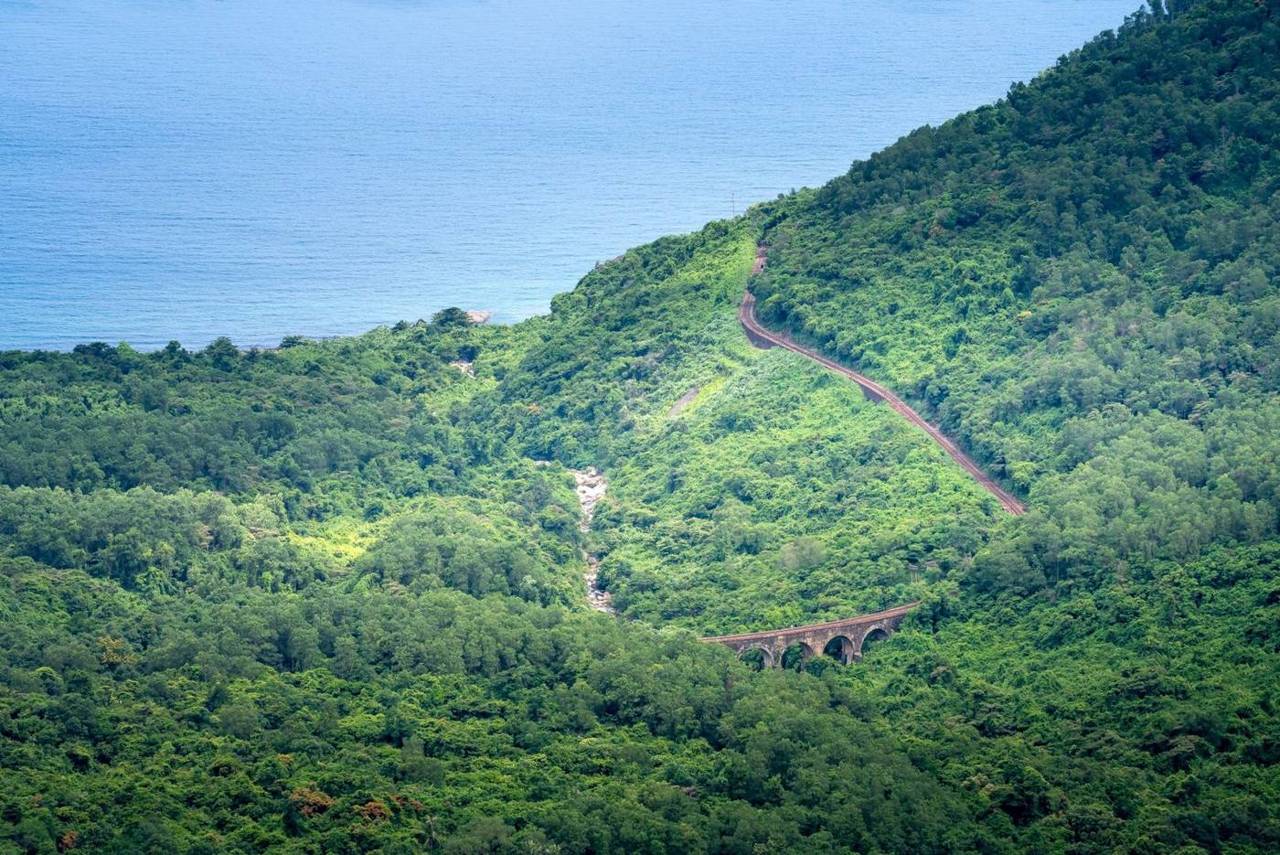 17 daysChallenging
By motorbike on the Ho Chi Minh Trail
Hanoi to Saigon in the saddle, through the interior: Phong Nha, Khe Sanh, the Kon Tum highlands, Dalat and the Cat Tien forest.
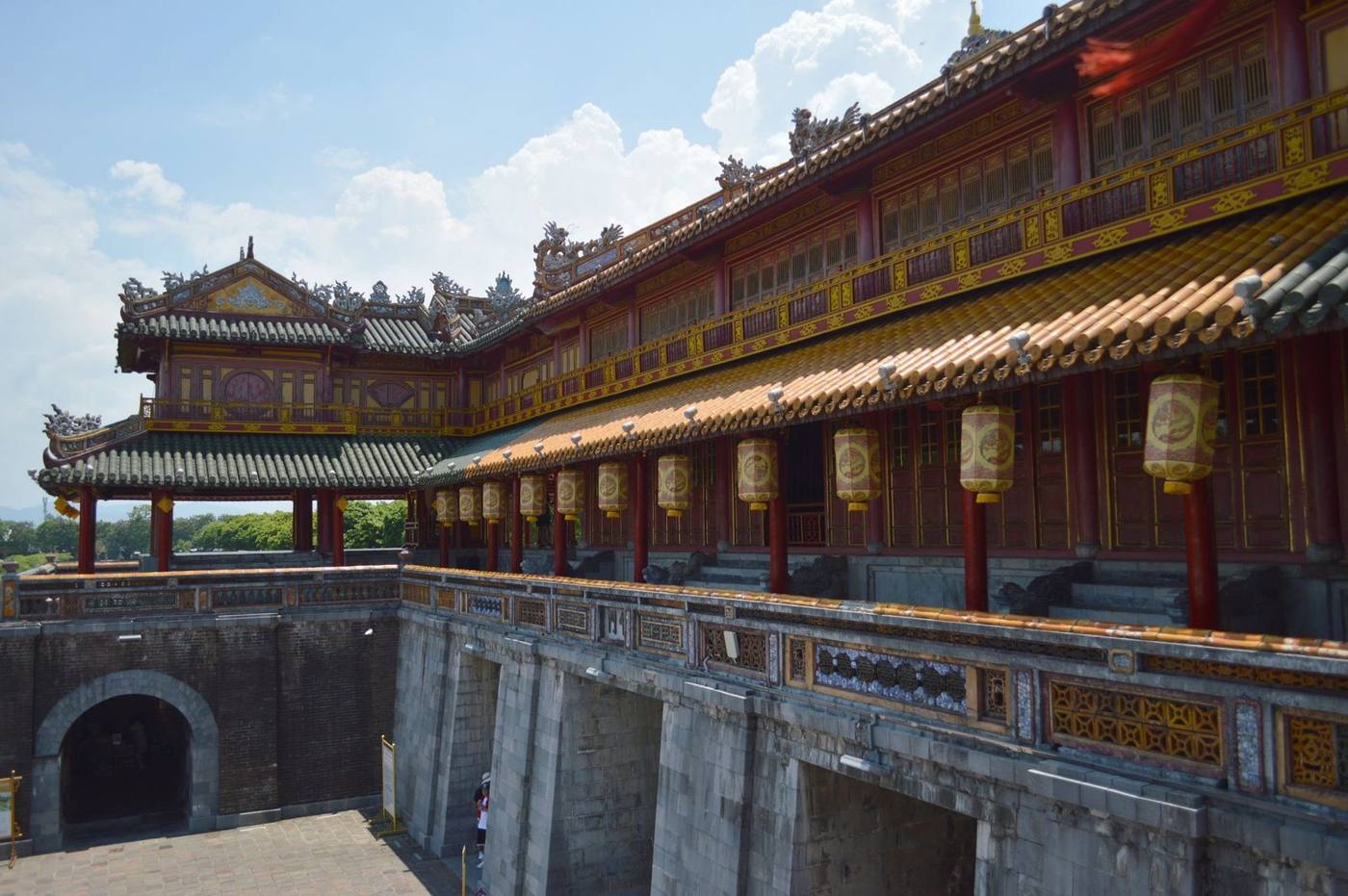 23 daysModerate
Indochina: Cambodia, Vietnam and Laos
Three countries in just over three weeks: Angkor's temples as far as Koh Ker, Vietnam from Saigon to Ha Long, Laos from Vientiane to Luang Prabang.
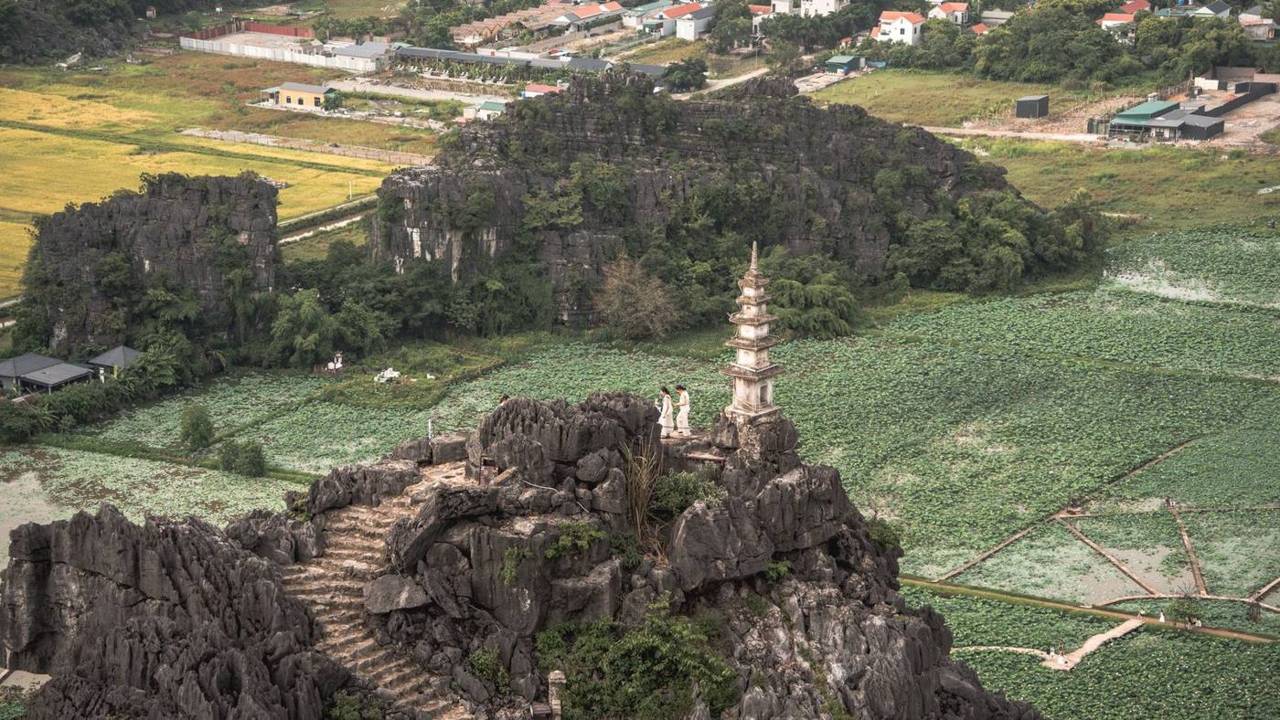 12 daysModerate
Karst and caves: Ninh Binh, Phong Nha and Lan Ha
Limestone Vietnam in twelve days: paddies among the pinnacles, the Pu Luong reserve, the caves of Phong Nha and kayaking in Lan Ha Bay.