Yellowstone and Grand Teton
Geysers, coloured hot springs and the Lamar Valley with bison, bears and wolves, then the Grand Teton peaks above Jackson Hole.
- Bozeman
- Mammoth Hot Springs
- Lamar Valley
- Canyon
- Old Faithful
- Grand Teton
- Jackson
Day by day
- Day 1
Flight to Bozeman and drive to the park
This trip crosses Yellowstone from north to south and ends in Grand Teton: geysers, coloured springs, canyons, valleys full of bison and wolves, and then the most photographed mountains in Wyoming above clear lakes. It is ten days by car, with many hours outdoors and early starts to see the wildlife.
Before you leave: to enter the United States without a visa you need a passport and an ESTA authorisation, which costs 40.62 dollars since 16 October 2026. Other nationalities should check their own rules. Since 1 January 2026, non residents aged 16 and over pay an extra 100 dollars per person to enter Yellowstone and Grand Teton, on top of the normal entry; alternatively there is the 250 dollar annual pass for non residents, which also covers the car. With two parks the pass is almost always worth it.
You fly into Bozeman, Montana, almost always with a stop in the United States. At the airport pick up the rental car: you need it for the whole trip, because there is no useful public transport inside the parks.
From Bozeman to Gardiner, the town at the north entrance, takes about an hour and a half. The road follows the Yellowstone River valley between ranches and mountains.
In the evening go shopping: inside the park shops are few and distances long. Buy water, packed lunches and bear spray, which is sold in local shops.
Sleep in Gardiner.
Practical tip: in the summer months, lodging inside and near the park sells out many months ahead. Book as soon as you have your dates.
- Day 2
Mammoth Hot Springs and the north entrance
Today you enter the park through the north entrance, the only one open to cars all year.
At the entrance you pass under the Roosevelt Arch, the stone gateway built in the early twentieth century. Here you pay the entry or show your pass. Keep your document at hand.
In half an hour you reach Mammoth Hot Springs. The terraces are steps of white and orange rock formed by hot water depositing travertine: they change shape every year, some go dry and others are born. The boardwalks of the lower terraces take one or two hours; the upper terrace road is driven by car.
In the small village of Mammoth there is the visitor centre, the buildings of the old army fort that ran the park before the park service was created, and often herds of elk grazing on the lawns between the houses.
In the afternoon drive along the road towards Tower, stopping at the viewpoints. Undine Falls can be seen from the road.
The park rules are strict: always stay on the boardwalks in thermal areas, because the ground is thin and the water below can be boiling. Stay at least 100 yards, about 90 metres, from bears and wolves and at least 25 yards, about 23 metres, from bison, elk and other animals.
Sleep in Gardiner or Mammoth.
Practical tip: buy the park map at the visitor centre and ask about road and trail conditions. Works and closures change often.
- Day 3
The Lamar Valley at dawn
Today the alarm goes off very early: the Lamar Valley is visited at dawn, when the animals are moving.
Leave in the dark and drive east through Tower Junction. In about an hour you are in the valley: a wide open meadow crossed by the Lamar River, with low hills on both sides. It is one of the best places in North America to see wildlife. There are herds of bison, often a few metres from the road, elk, pronghorn, coyotes and, with luck, wolves and grizzly bears.
For wolves you need binoculars or better a spotting scope. Along the road you will see groups of people with scopes pointed at the hills: stop in a pull out, never in the middle of the road, and ask politely. They are often enthusiasts who have followed the packs for years.
By mid morning the animals withdraw. Take a walk to Trout Lake, a small lake a few minutes on foot from the road, surrounded by meadows.
In the afternoon rest. Towards evening go back into the valley: at sunset the animals start moving again.
Sleep at Tower or Mammoth, or in Cooke City, the town at the north east entrance.
Practical tip: bring warm clothes even in summer. At dawn in the valley the temperature can be close to freezing, while at midday it is hot.
- Day 4
The Grand Canyon of the Yellowstone
Today you head down to the centre of the park and see the most spectacular canyon in Yellowstone.
From Tower the road climbs to Dunraven Pass, one of the highest roads in the park, with views of the mountains. Check first that it is open: it has been closed for works in some years.
You reach the Canyon area. The Grand Canyon of the Yellowstone is a deep gorge with yellow, pink and orange walls, cut by the river into volcanic rock altered by heat. The river drops in two waterfalls: the Upper Falls and the Lower Falls, the tallest, over 90 metres.
On the south rim go to Artist Point, where you see the Lower Falls with the coloured canyon: it is the classic view of the park. Then follow the rim trail towards Point Sublime.
On the north rim the scenic drive leads to Lookout Point, Grand View and Inspiration Point. The Brink of the Lower Falls trail goes down to the edge of the waterfall: it is short but steep, and climbing back takes effort.
In the afternoon, if you have energy, walk the North Rim Trail, which links the viewpoints on foot.
Sleep at Canyon Village or nearby.
Practical tip: the best light on the canyon is in the morning. Arrive early at Artist Point: by midday the car park is full.
- Day 5
Hayden Valley and Yellowstone Lake
Today you follow the river south, through the bison valley, to the great lake.
At dawn the Hayden Valley is like the Lamar: an open meadow where the river flows slowly. Here the bison herds are large and often cross the road. When that happens, wait in the car and let them pass: do not honk and do not get out. In the valley you also see trumpeter swans, pelicans, eagles and sometimes grizzly bears.
Further south is Mud Volcano, an area of boiling mud pots and fumaroles that smell of sulphur. The boardwalk loop takes less than an hour.
Then you reach Yellowstone Lake, the great mountain lake of the park, at over 2,300 metres. Stop at Fishing Bridge, the bridge over the river leaving the lake, and then at Lake Village, with the old large yellow hotel on the shore.
In the afternoon follow the west shore to West Thumb, a bay of the lake where the hot springs lie right on the shore. The blue and turquoise pools are a few metres from the cold water of the lake.
Sleep in the lake area or at Grant Village.
Practical tip: the lake water is very cold all year. Swimming is dangerous even in summer.
- Day 6
Old Faithful and Grand Prismatic
Today is geyser day, in the thermal heart of the park.
From West Thumb drive west to Old Faithful, in the Upper Geyser Basin, the area with the most geysers in the world. Old Faithful erupts fairly regularly: the visitor centre posts the predicted eruption times of Old Faithful and other large geysers. Once you have seen the eruption, walk the boardwalks of the basin: you pass dozens of geysers, blue pools and coloured springs. The walk to Morning Glory Pool, a pool in orange and green colours, is long but easy.
To see Old Faithful from above, climb to Observation Point, a short and steep trail.
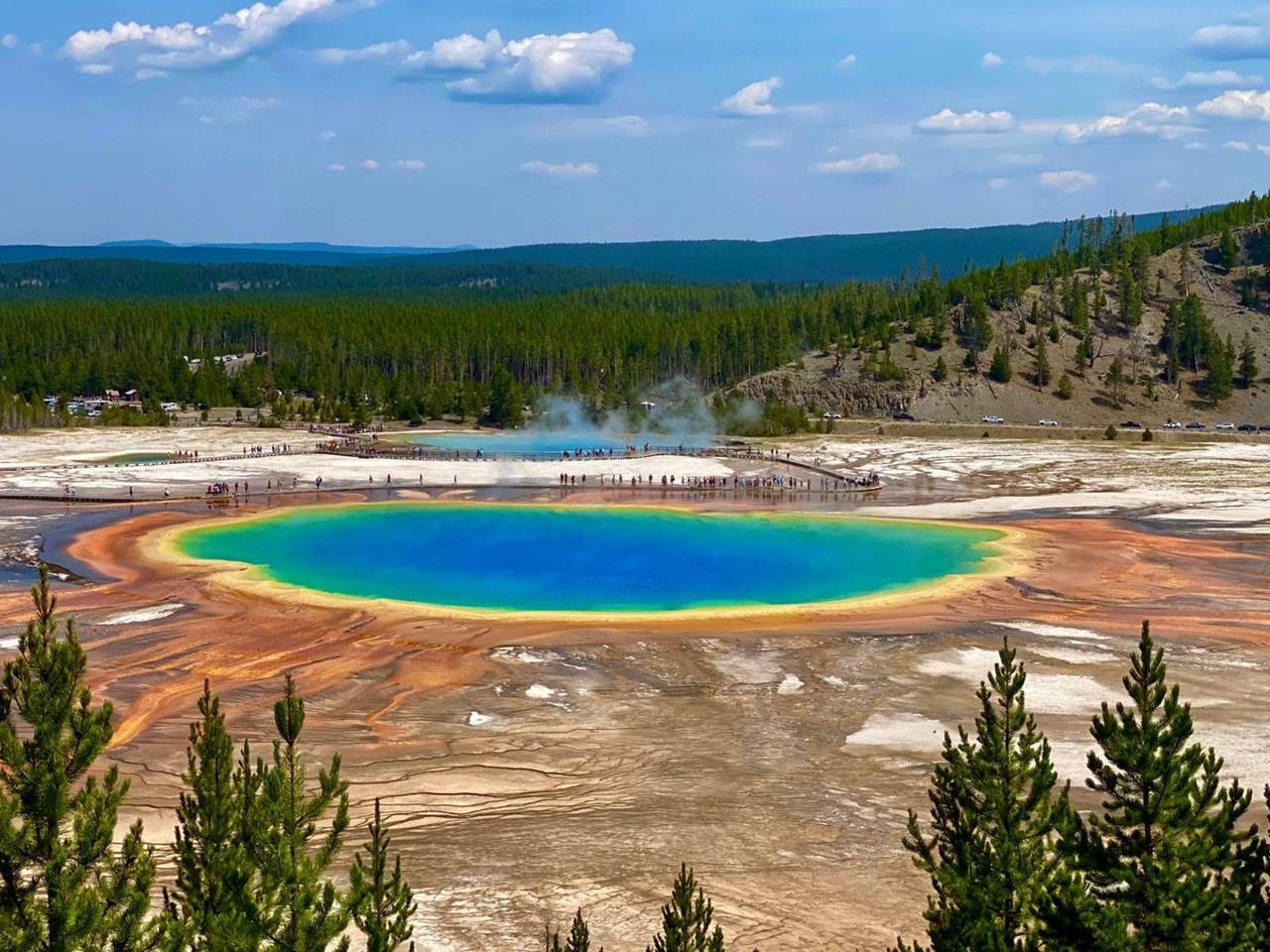
In the afternoon go to the Midway Geyser Basin. Here is Grand Prismatic Spring, the largest hot spring in the United States, with blue water in the centre and yellow, orange and red rings formed by bacteria. From the boardwalks you see the steam. To see it from above, take the Fairy Falls trail from the car park to the south and climb to the overlook, about half an hour on foot.
On the way back stop at the Lower Geyser Basin and Fountain Paint Pot, with its mud pots.
Sleep at Old Faithful or in the area.
Practical tip: in geyser areas steam and wind change. Keep your camera dry and never touch the water.
- Day 7
From Yellowstone to Grand Teton
Today you leave Yellowstone through the south entrance and enter Grand Teton.
From Old Faithful or Grant Village the road descends along the Lewis River, with a small waterfall and a canyon. At the south entrance the road continues into the John D. Rockefeller Jr. Memorial Parkway, a strip of forest between the two parks.
Soon the Tetons appear: a range of granite mountains rising suddenly from the plain, with no foothills in front. The Grand Teton is over 4,100 metres high. Below the mountains lie glacial lakes: Jackson Lake, the largest, and smaller lakes such as Jenny Lake and String Lake.
Stop at Oxbow Bend, a bend in the Snake River where still water reflects Mount Moran. It is a famous place for moose, herons and otters.
In the afternoon you reach Jenny Lake. A boat crosses the lake to the trail for Inspiration Point and Hidden Falls: it is paid and runs in the summer season, check the times. Alternatively you can walk the trail around the lake.
Sleep in the park or in Jackson.
Practical tip: the annual pass is also valid at Grand Teton. Have it ready at the entrance together with your passport. At Jenny Lake and String Lake the car parks fill early: arrive by mid morning.
- Day 8
Mormon Row, Schwabacher and a canoe on String Lake
Today you see the Tetons in the dawn light and then look at them from the water.
At dawn go to Mormon Row, a country road with old wooden barns built by Mormon settlers in the late nineteenth century. With the mountains behind, it is one of the most famous photographs of the West. Bison and pronghorn often graze in the surrounding meadows.
Then go to Schwabacher Landing, a stretch of the Snake River with beaver dams. At dawn the still water reflects the mountains. It is easy to see beavers, ducks and moose.
In mid morning go up to String Lake, a narrow and shallow lake at the foot of the mountains. Here you can rent canoes and kayaks, or bring your own with a park boat permit: check the rules. Paddling on the lake, with the Teton above, is one of the finest moments of the trip. The lake is shallow and in summer the water is less cold than in Jenny Lake.
In the afternoon walk the trail around String Lake or go to Leigh Lake, a little further north.
Sleep in the park or in Jackson.
Practical tip: black bears and grizzlies live in Grand Teton. Carry bear spray even on short trails and make noise.
- Day 9
Hike in Cascade Canyon
Today is the day of the great hike, inside the mountains.
Cascade Canyon is a glacial valley climbing between the Teton peaks, behind Jenny Lake. It is one of the most beautiful hikes in the park.
Take the Jenny Lake boat early, if it is running, or walk along the lake. From the landing the trail climbs to Hidden Falls and then to Inspiration Point, a rock balcony above the lake. Here many visitors end their walk.
Continue into the canyon: the trail becomes almost flat, along a stream, through flower meadows and granite walls. The Grand Teton and Mount Owen rise above the valley. You often see moose in the wet meadows, marmots on the rocks and sometimes bears.
You walk to the fork of the canyon, about seven kilometres from the lake, then turn back. Very fit hikers can climb on to Lake Solitude, a high mountain lake: it is a very long day.
Carry plenty of water, food and clothes for the cold: in the mountains the weather changes quickly and on summer afternoons thunderstorms are frequent.
Sleep in the park or in Jackson.
Practical tip: start early to avoid afternoon storms. If you hear thunder, come down from exposed points.
- Day 10
Jackson and departure
The last day is in Jackson, the town of the valley, before the flight.
Jackson is the tourist town of the valley called Jackson Hole. In the central square there are the arches made of elk antlers, which the elk shed every year on their own. Around them are shops, art galleries and old wooden saloons.
Just outside town is the National Elk Refuge, a reserve where thousands of elk arrive in winter. In summer the reserve is emptier, but you see birds and sometimes bison. Above the reserve is the National Museum of Wildlife Art, a museum of art featuring wild animals; check times and tickets.
If you have time, make a last stop at a viewpoint over the Tetons, such as the Snake River Overlook, made famous by a photograph by Ansel Adams.
Jackson Hole airport lies inside Grand Teton park, a few minutes from town: it is the only airport in the United States inside a national park. Many flights connect through Denver or Salt Lake City. If the flight from Jackson costs too much, you can drive back to Bozeman, but it is about five hours on the road.
What to take home: a book of park photographs, a cowboy hat, honey and mountain berry jams.
This trip shows the West of open spaces and wildlife, with geysers you cannot see anywhere else in the world.
Practical tip: return the rental car at the arrival airport to avoid the cost of picking up and dropping off in different places, or check how much it costs.
The best place in the United States to see wildlife. Lodges inside the park sell out a year ahead, so book as soon as they open or stay in West Yellowstone or Gardiner. Carry bear spray and keep your distance from bison, which injure more visitors than bears do.
Before you go
- Documents and visa
- Electronic passport and ESTA authorisation for Visa Waiver nationalities, applied for online on the official site at least 72 hours ahead: since 16 October 2026 it costs 40.62 dollars and is valid for two years. Travellers who have visited certain countries, such as Cuba or Iran, need a visa.
- Health and vaccines
- No vaccines required. Healthcare is extremely expensive: insurance with very high medical cover is essential. Emergencies: 911.
- Money and payments
- Dollar. Cards accepted everywhere. Prices are shown before tax, added at the till; restaurant tips of 15 to 20 per cent are expected.
- Power sockets
- Types A and B, 120 volts: you need a flat-pin adapter.
- Time zone
- Six time zones: New York is UTC-5, Los Angeles UTC-8; daylight saving changes on different dates from Europe.
- Safety
- Risks are mainly crime in some urban areas and natural hazards: hurricanes, wildfires, extreme desert heat. Official advice: GOV.UK.
Information checked in November 2026 for Italian and EU citizens. Rules change: always check before you travel.
Variations
In 7 days: Yellowstone only, entering and leaving from Bozeman, without Grand Teton.
In 14 days: add Glacier National Park in Montana before Yellowstone, or Utah and Salt Lake City after Grand Teton.
Frequently asked questions
How much does it cost to enter the parks?
Since 1 January 2026, non residents aged 16 and over pay an extra 100 dollars per person at Yellowstone and Grand Teton, on top of the entry fee. The annual pass for non residents costs 250 dollars and also covers the car: with two parks it is worth it.
When is the best time?
From June to September, when almost all roads are open. The rest of the year many Yellowstone roads close for snow: check the dates on the park website.
Is it dangerous with bears and bison?
Not if you follow the rules: at least 100 yards, about 90 metres, from bears and wolves and 25 yards from bison and other animals. Carry bear spray on trails and make noise as you walk.
Indicative itinerary written by World Atlas. Before booking, check timetables, seasonal openings, documents and safety.
 12 daysEasy
Hawaii: Big Island and Maui
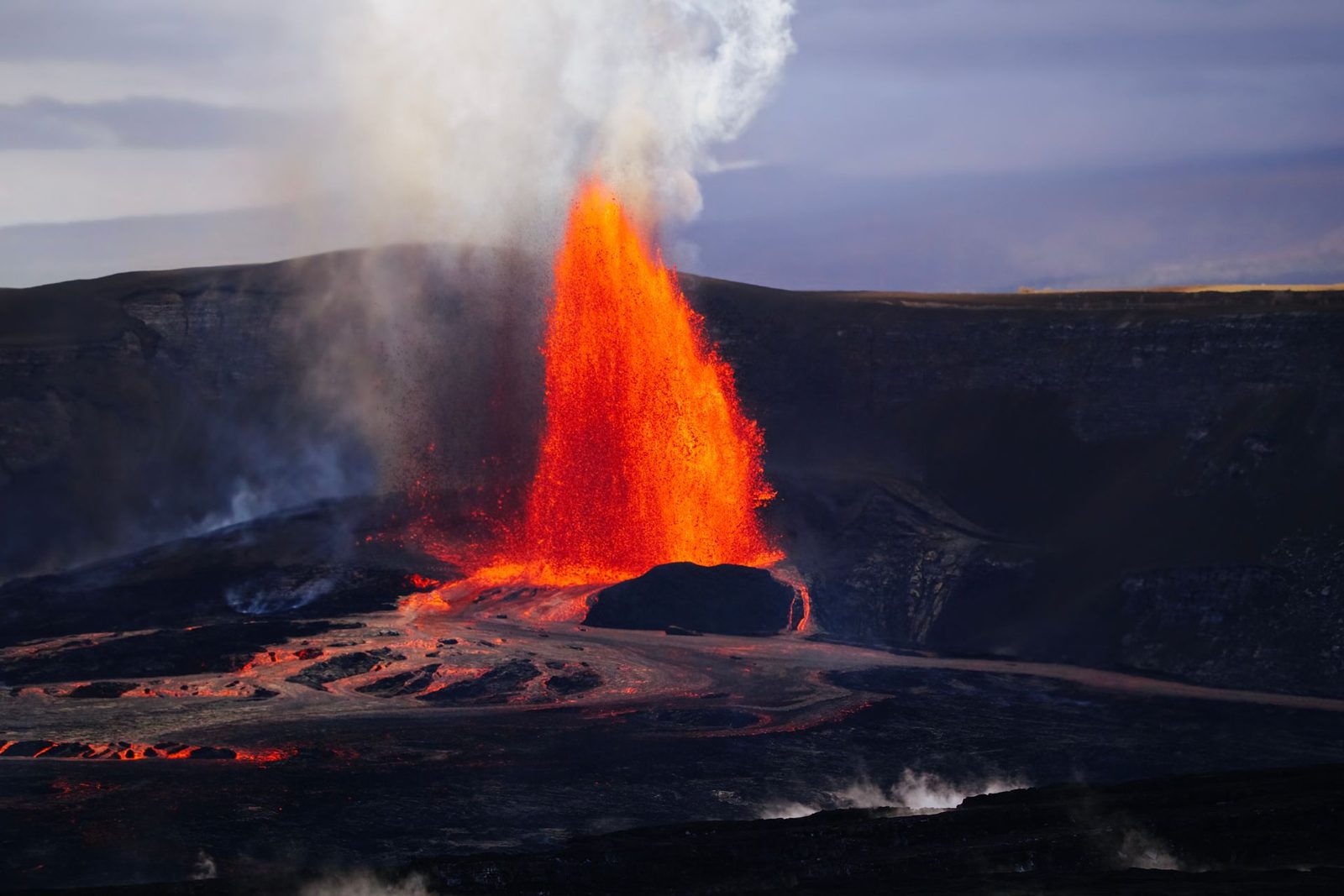
The active volcanoes of the Big Island and night snorkelling with manta rays, then the Road to Hana and sunrise on Haleakalā in Maui.
 21 daysModerate
Route 66 from Chicago to Los Angeles
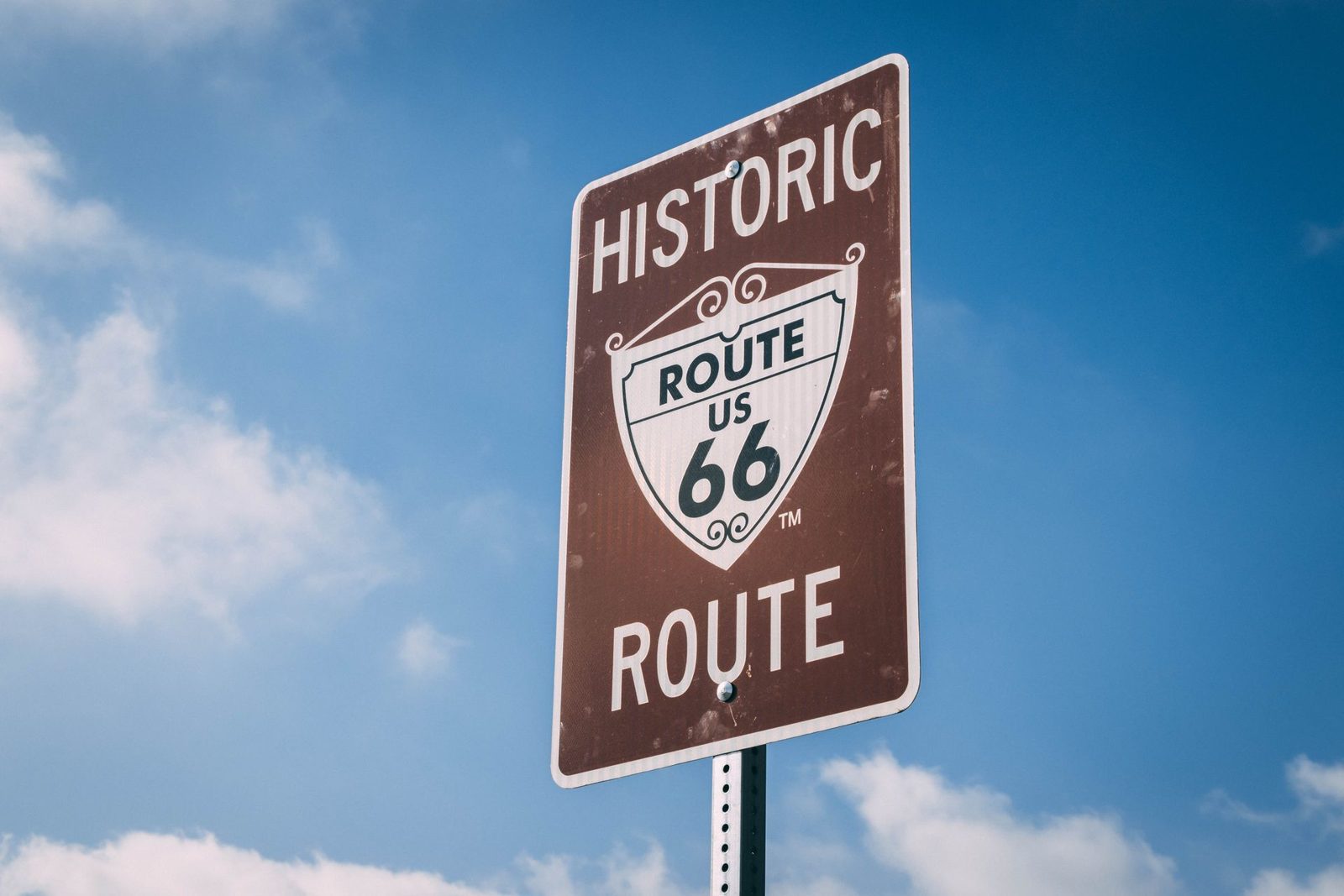
Almost 4,000 kilometres across eight states: diners, neon-signed motels, Santa Fe, the Grand Canyon and Santa Monica Pier.
 10 daysEasy
The musical South: New Orleans, Memphis and Nashville
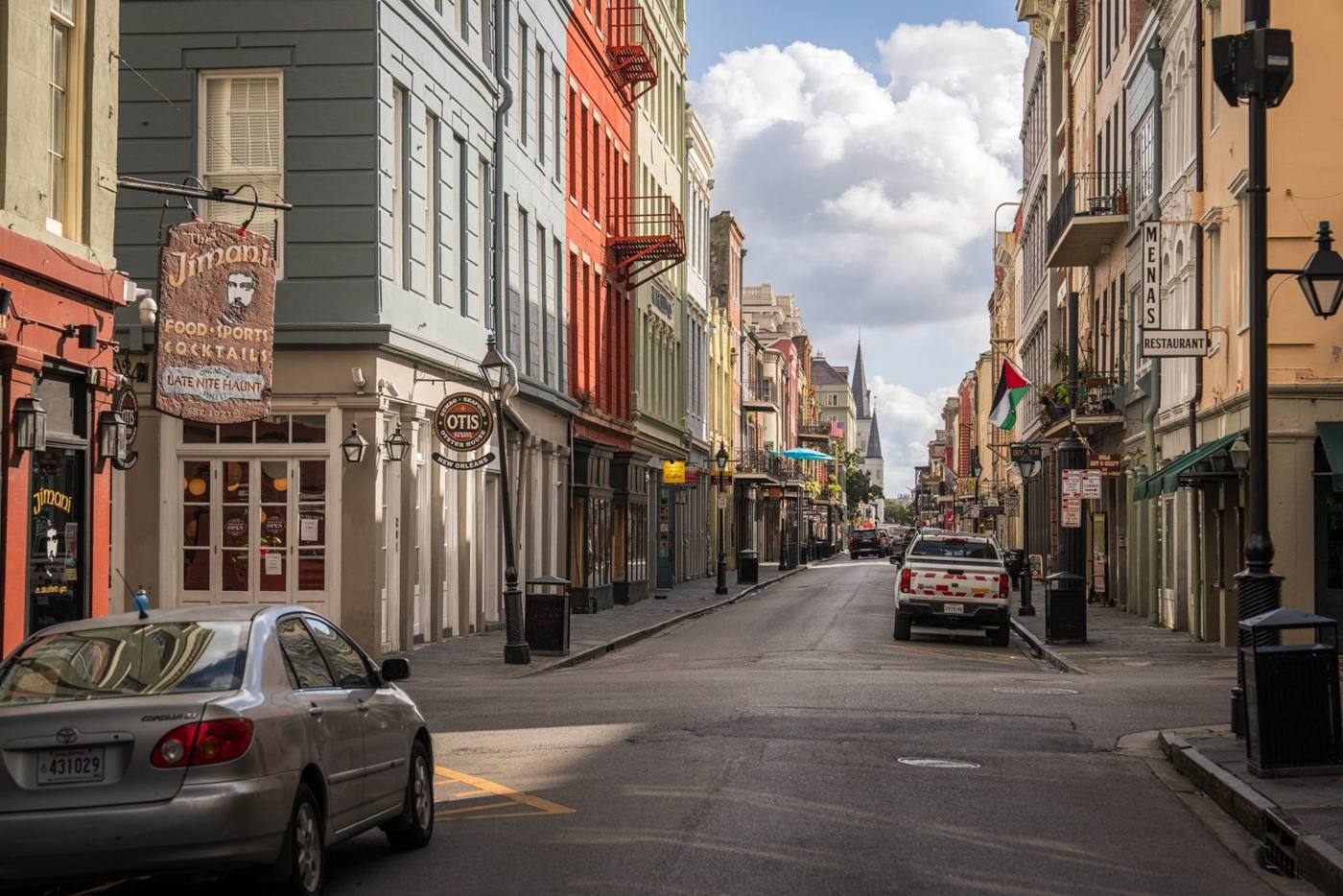
Jazz in New Orleans, Mississippi Delta blues, Graceland and Sun Studio in Memphis, country music in Nashville.