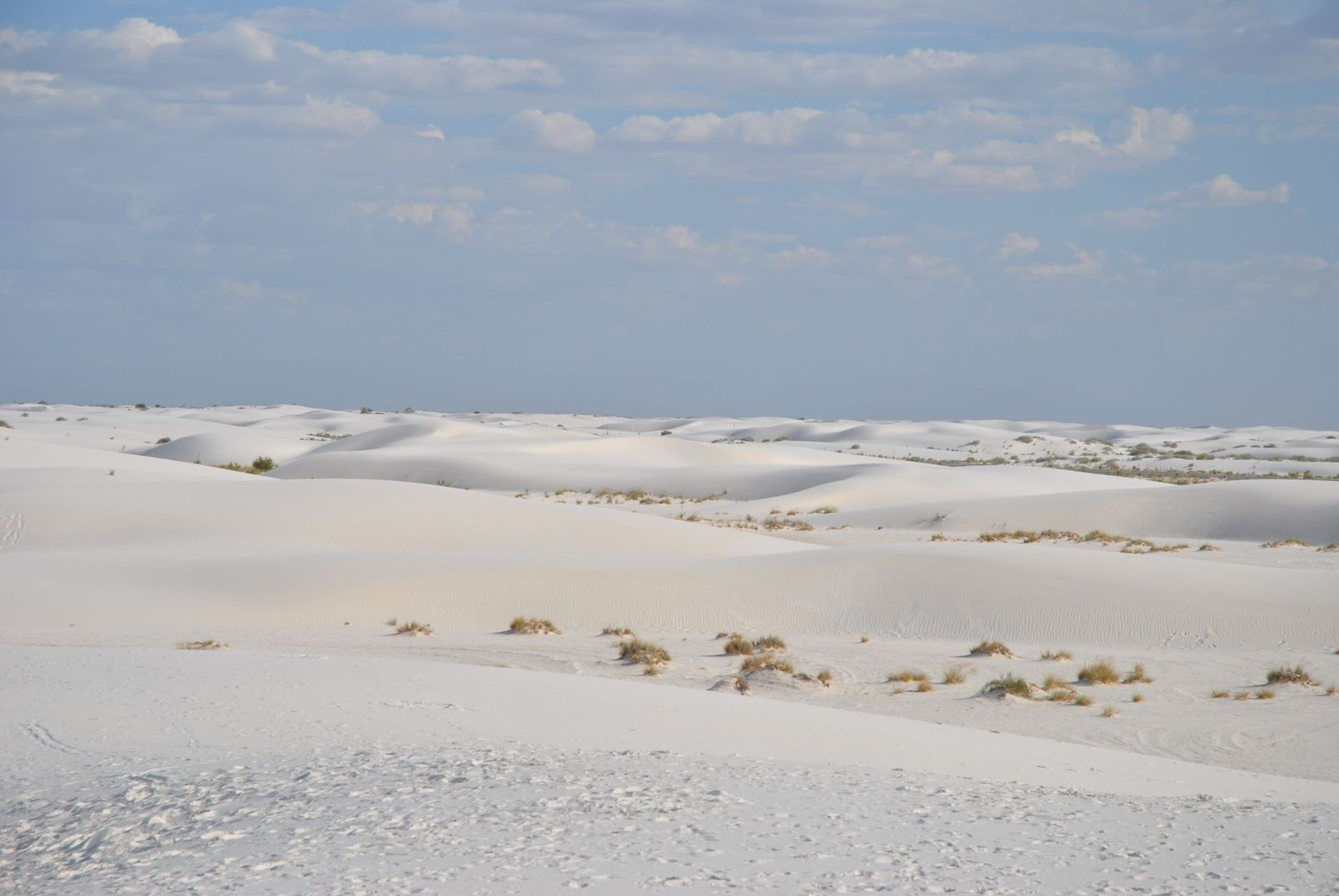
New Mexico: Santa Fe, Taos, White Sands and Carlsbad
The land of adobe: Santa Fe with its art and chile cooking, Taos Pueblo inhabited for a thousand years, the white gypsum dunes of White Sands and the vast underground halls of Carlsbad Caverns, with bats flying out at sunset.
- Albuquerque
- Santa Fe
- Taos
- White Sands
- Alamogordo
- Carlsbad Caverns
Day by day
- Day 1
Santa Fe: the plaza and the adobe centre
This trip crosses New Mexico, in the south western United States, known as the Land of Enchantment: a plateau of deserts, mountains and immense skies, where three cultures meet, that of the Native peoples, the Hispanic culture brought by the Spanish and the American one. You travel from Santa Fe, the capital, to Taos and its pueblos, then south to the white dunes of White Sands and the caves of Carlsbad.
To enter the United States you need a passport and an ESTA, which costs 40.62 dollars. You fly into Albuquerque, with domestic flights from many American cities, and pick up a hire car. Santa Fe is about an hour's drive away.
Santa Fe is the oldest capital in the United States, founded by the Spanish in 1610, and the highest, at about 2,100 metres. The city is built almost entirely in adobe, bricks of mud and straw, with rounded earth coloured walls and projecting wooden beams. A local law still requires this style.
In the afternoon walk around the plaza, the heart of the city, and under the portal of the Palace of the Governors, the oldest public building in the United States still in use, where Native artisans sell silver and turquoise jewellery laid out on blankets. Then visit the cathedral of Saint Francis of Assisi and the Loretto Chapel, with its wooden spiral staircase without a central support.
In the evening have New Mexican cooking, with red or green chile. When the server asks which you want, you can answer christmas, to have both.
Spend the night in Santa Fe.
Practical tip: Santa Fe is at high altitude. For the first days drink plenty, walk slowly and use sunscreen: the sun is very strong.
- Day 2
Santa Fe: Canyon Road, Georgia O'Keeffe and art
Your second day in Santa Fe is devoted to art, as the city is one of the largest art markets in the United States.
In the morning visit the Georgia O'Keeffe Museum, devoted to the American painter who fell in love with New Mexico and lived there for decades, painting giant flowers, sun bleached bones and the coloured hills of the desert. The museum holds the largest collection of her work.
Then stroll along Canyon Road, a narrow uphill street about a kilometre long, with more than a hundred art galleries, studios and gardens in adobe houses. You find painting, sculpture, jewellery, Native pottery and contemporary art.
In the afternoon, on Museum Hill, visit the Museum of Indian Arts and Culture, telling the story of the Native peoples of the south west, and the Museum of International Folk Art, with thousands of objects from around the world.
Alternatively, in Santa Fe's railyard district there is a large immersive art installation built in an old bowling alley, with rooms, secret passages, lights and sounds, much loved by young people and families.
At sunset climb to the Cross of the Martyrs viewpoint, a small hill above the centre, with a view over the city and the Sangre de Cristo mountains, which turn red at sunset, hence the name, blood of Christ.
Spend the night in Santa Fe.
Practical tip: many galleries and museums close early or on certain days of the week. Check opening times. The railyard district has a farmers' market on Saturday mornings.
- Day 3
The High Road to Taos: Chimayó, the pueblo and the Rio Grande
Today drive from Santa Fe to Taos along the High Road, a scenic route through the mountains and Hispanic villages of northern New Mexico, about two and a half hours without stops.
The first stop is Chimayó, a village famous for its sanctuary, a small adobe church from 1816 and a pilgrimage site. In a small room of the church is a hole in the floor with earth that, by tradition, has healing powers. The walls of the next room are covered with crutches and photos left by people who say they were healed. Chimayó is also famous for weaving wool blankets.
The road continues through mountains, woods and small villages such as Truchas and Las Trampas, with colonial adobe churches.
In the afternoon you reach Taos and visit Taos Pueblo, a UNESCO World Heritage Site, continuously inhabited for about a thousand years. The multi storey adobe houses, stacked one above another with wooden ladders, are still lived in by some families, without electricity or running water. You visit with a pueblo guide.
At sunset go to the Rio Grande Gorge Bridge, about twenty minutes from Taos, a steel bridge about 200 metres above a narrow, deep gorge cut by the river into the plateau.
Spend the night in Taos.
Practical tip: Taos Pueblo closes at certain times for ceremonies, especially in late winter. Check beforehand. Photograph people only with their permission, and in some areas photos are forbidden.
- Day 4
Albuquerque, Old Town and Sandia Peak at sunset
Today drive south from Taos to Albuquerque, about two and a half hours, along the Low Road, which follows the Rio Grande gorge, with the river beside you and dark rock walls.
Albuquerque is New Mexico's largest city, founded in 1706. It is famous for its international balloon fiesta, held every October, with hundreds of colourful balloons rising together at dawn.
Walk around Old Town, the historic centre, with a tree lined plaza, the eighteenth century San Felipe de Neri church and small streets of adobe houses, craft shops and jewellers.
Then visit the Indian Pueblo Cultural Center, run by New Mexico's nineteen pueblos, which tells their history, art and traditions. At weekends there are often traditional dances.
In the late afternoon take the Sandia Peak tramway, one of the longest in the world, which climbs in about fifteen minutes to the top of the Sandia Mountains, at more than 3,100 metres. From the summit you see a panorama covering tens of thousands of square kilometres of desert and mountains. At sunset the mountains turn pink, and the name Sandia, watermelon in Spanish, comes from this colour.
Spend the night in Albuquerque.
Practical tip: it is cold at the top of Sandia Peak even in summer. Check prices and times of the tramway, which closes in strong wind.
- Day 5
White Sands: white dunes on foot or by sled
Today drive south to White Sands National Park, about three and a half hours from Albuquerque, in the Tularosa Basin.
White Sands is the world's largest gypsum dune field: a sea of brilliant white sand covering about 700 square kilometres, with dunes up to fifteen metres high. Gypsum is a mineral that usually dissolves in rain, but here the water stays trapped in a basin with no outlet to the sea, evaporates and leaves crystals, which the wind turns into sand. Gypsum sand does not heat up in the sun and stays cool underfoot even in summer.
The park road, Dunes Drive, runs about thirteen kilometres into the dunes, with car parks and trails. The Alkali Flat trail is the most demanding, marked with posts across the dunes; the Interdune boardwalk is easy and explains desert life. There are also picnic areas with sun shelters in the middle of the sand.
An activity everyone loves is sledding down the dunes on a plastic sled, sold at the visitor centre.
Stay until sunset, when the white sand turns pink and orange and the surrounding mountains go purple.
Spend the night in Alamogordo or Las Cruces.
Practical tip: the park lies next to a military range: the access road and park can close for a few hours during missile tests. Check beforehand. Bring plenty of water and do not leave marked trails.
- Day 6
Carlsbad Caverns: the descent and the Big Room
Today go to Carlsbad Caverns National Park, about three hours from Alamogordo, across the Sacramento Mountains and then the Chihuahuan plain.
The park, a UNESCO World Heritage Site, protects more than a hundred caves carved into the limestone of an ancient reef, formed in an inland sea about 250 million years ago. The main cave is visited on foot.
The most spectacular descent starts at the natural entrance, a great opening in the rock, and drops by a switchback trail for about two kilometres and two hundred and fifty metres of descent, slowly entering the darkness. You pass huge chambers full of stalactites, stalagmites and columns.
At the bottom you reach the Big Room, one of the largest underground chambers in North America, more than a kilometre long, with a loop trail of about two kilometres among formations of every shape: rock curtains, giant columns, small pools and stalactites as thin as needles. Lighting is discreet and the chamber is silent. To come back up you take the lift.
In the evening, from late May to October, return to the amphitheatre at the natural entrance to watch the bat flight: at sunset hundreds of thousands of Mexican no-cost tailed bats leave the cave in a cloud spiralling upwards to hunt insects. A ranger explains the spectacle.
Spend the night in Carlsbad or White's City.
Practical tip: entry to the cave requires a timed reservation: check and book in advance. Phones and cameras are banned during the bat flight.
- Day 7
Carlsbad and departure from El Paso
On the last day, early in the morning, if you enjoyed the cave, you can return to Carlsbad for a guided tour of one of the lesser known rooms, such as the King's Palace, with particularly rich decoration, visited only with a ranger.
Alternatively, take a surface hike in the park, along one of the Chihuahuan Desert trails, among cacti, yucca and agave, with views over the canyons. Or drive the Walnut Canyon Desert Drive, a scenic gravel road in the park.
Near Carlsbad, about half an hour away, is Guadalupe Mountains National Park in Texas, with Guadalupe Peak, the highest point in Texas, and El Capitan, a great limestone wall rising above the desert. If you have time, stop at least at the viewpoint.
In the afternoon drive to El Paso airport in Texas, about two and a half hours away. From here there are flights to many American cities. Alternatively, return to Albuquerque, about four and a half hours away, if your flight leaves from there.
Before leaving buy some souvenirs: dried New Mexican chile, silver and turquoise jewellery made by Native artisans, pueblo pottery.
Practical tip: buy Native jewellery from sellers who name the artisan and pueblo of origin, to avoid imitations. Returning the car in another state can cost more: check with the hire company.
For lovers of art, Native cultures and desert landscapes. Santa Fe sits at 2,100 metres: nights are cool even in summer. Taos Pueblo may close to visitors on some ceremonial days, and photography inside has strict rules. The road to White Sands crosses a missile test range and can close for a few hours. At Carlsbad Caverns a timed entry booking may be needed in peak season: check the park website.
Before you go
- Documents and visa
- Electronic passport and ESTA authorisation for Visa Waiver nationalities, applied for online on the official site at least 72 hours ahead: since 16 October 2026 it costs 40.62 dollars and is valid for two years. Travellers who have visited certain countries, such as Cuba or Iran, need a visa.
- Health and vaccines
- No vaccines required. Healthcare is extremely expensive: insurance with very high medical cover is essential. Emergencies: 911.
- Money and payments
- Dollar. Cards accepted everywhere. Prices are shown before tax, added at the till; restaurant tips of 15 to 20 per cent are expected.
- Power sockets
- Types A and B, 120 volts: you need a flat-pin adapter.
- Time zone
- Six time zones: New York is UTC-5, Los Angeles UTC-8; daylight saving changes on different dates from Europe.
- Safety
- Risks are mainly crime in some urban areas and natural hazards: hurricanes, wildfires, extreme desert heat. Official advice: GOV.UK.
Information checked in November 2026 for Italian and EU citizens. Rules change: always check before you travel.
Variations
In 4 days: Santa Fe, the High Road and Taos.
In 10 days: add Chaco Canyon, Bandelier and Ghost Ranch, where Georgia O'Keeffe painted.
Frequently asked questions
When is the best time to go?
Spring and autumn, with mild temperatures. October is balloon month in Albuquerque. Summer is very hot in the south.
Do I need an ESTA?
Yes, with a passport. The ESTA costs 40.62 dollars and must be obtained before departure.
Do I need to book Carlsbad Caverns?
Yes, entry is by timed reservation. Check and book before you go.
Indicative itinerary written by World Atlas. Before booking, check timetables, seasonal openings, documents and safety.
 8 daysModerate
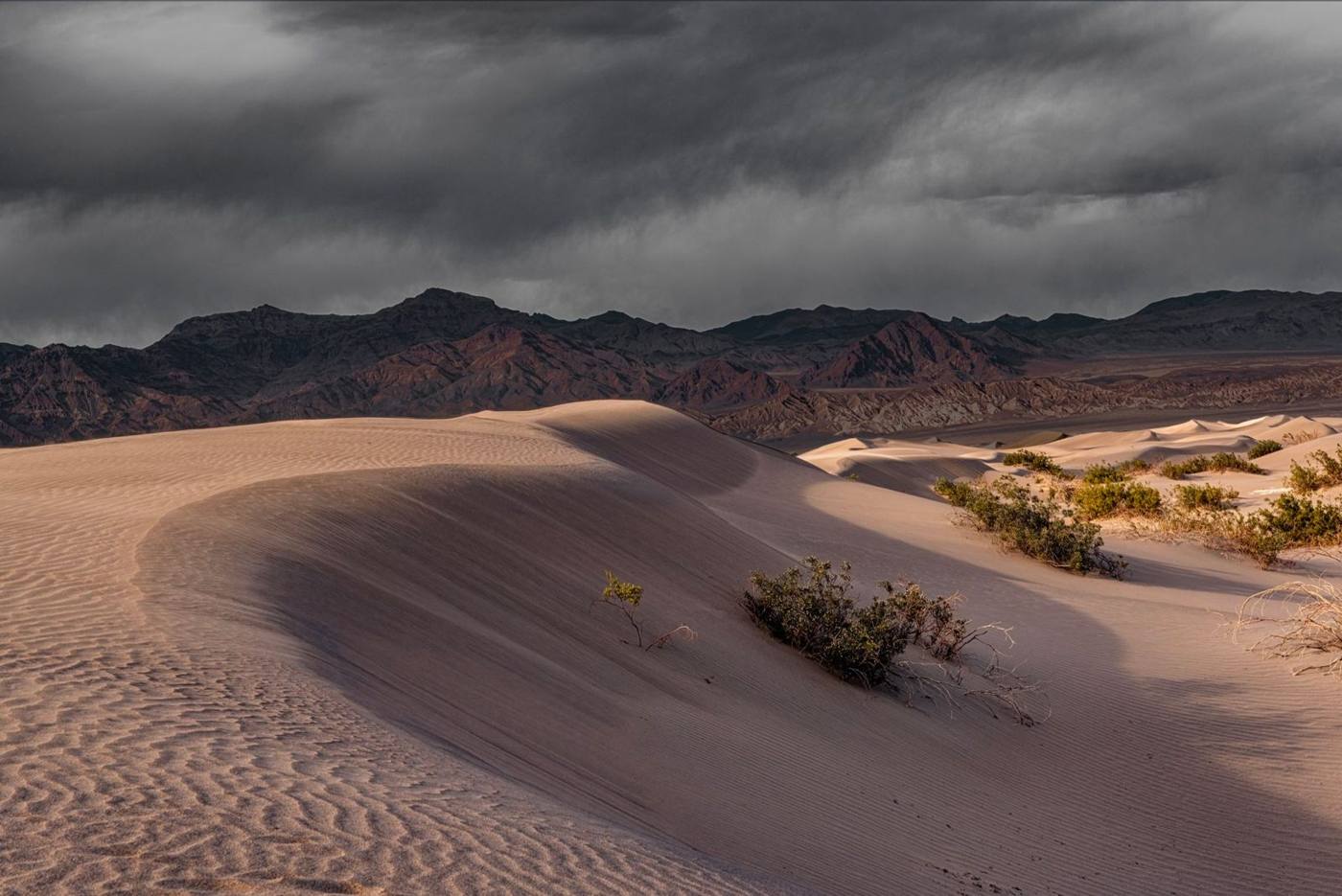
California's deserts and giant sequoias
The other California, away from the coast: the Joshua trees and boulders of Joshua Tree, Palm Springs, Death Valley with its dunes and North America's lowest point, then the giant sequoias and canyons of Sequoia and Kings Canyon.
 5 daysEasy
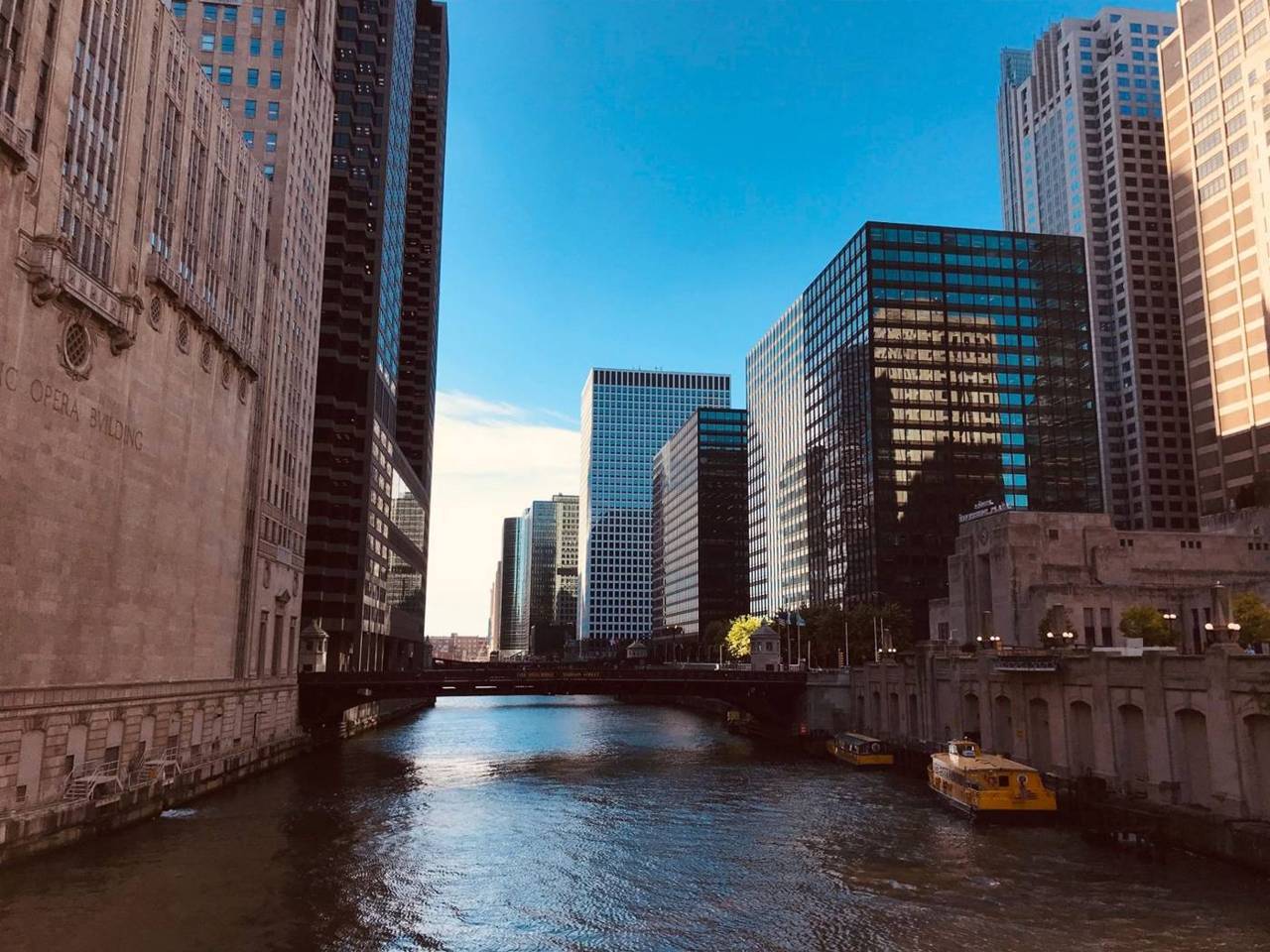
Chicago and Lake Michigan
The city of skyscrapers seen from the river, the Art Institute and Millennium Park, blues and deep-dish pizza, then the towering Sleeping Bear dunes and the fishing villages on the eastern shore of Lake Michigan.
 14 daysEasy
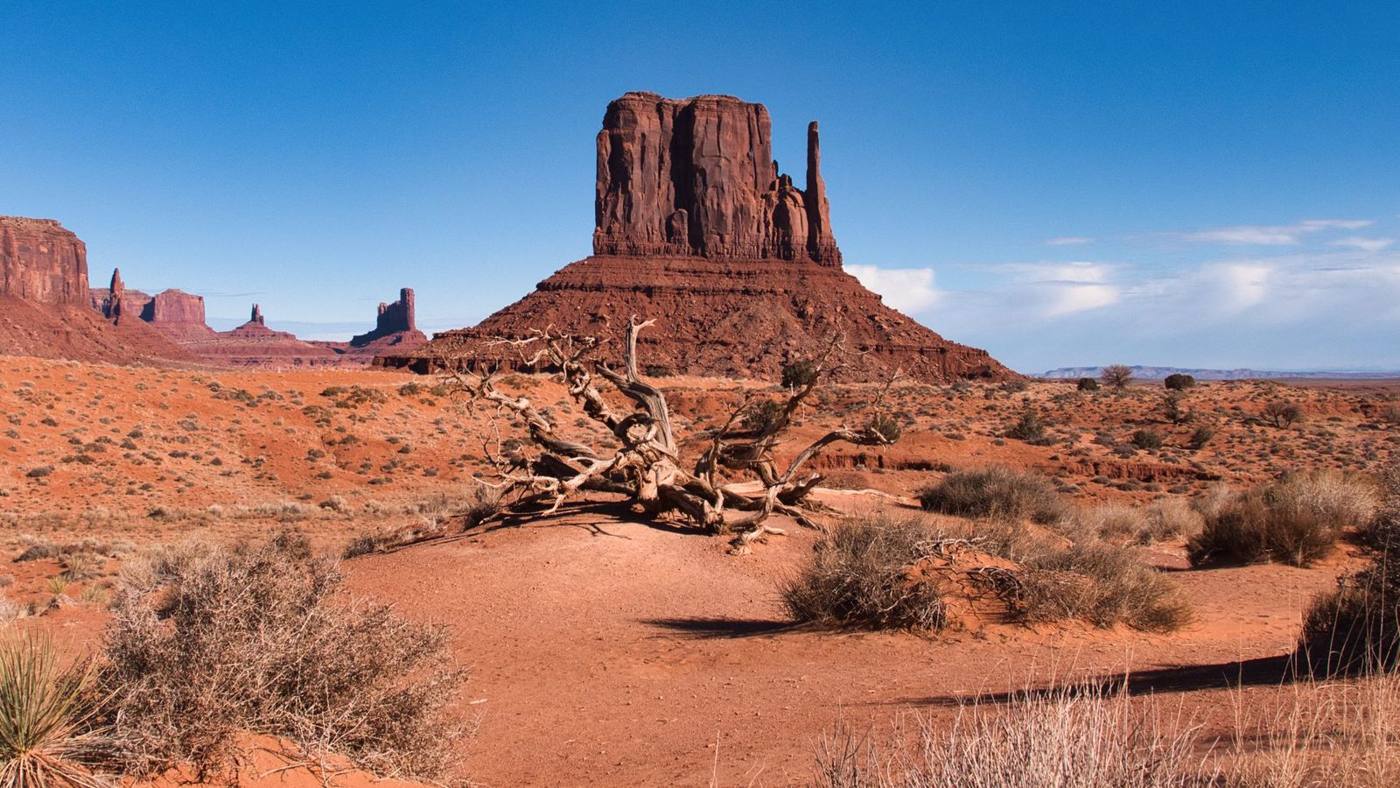
The great parks of the Southwest
Two weeks by car between Las Vegas, Zion, Bryce Canyon, Monument Valley and the Grand Canyon, with nights in roadside motels.