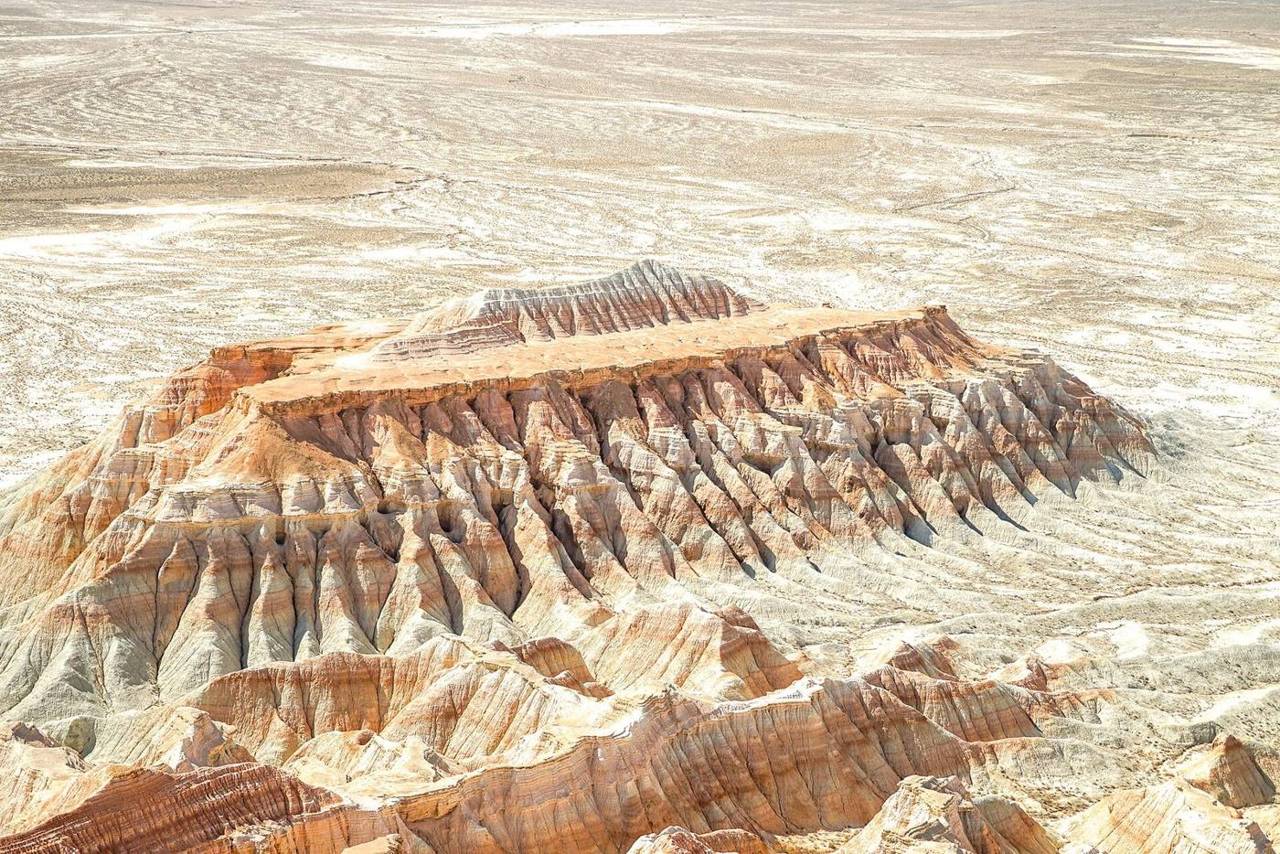
Yangykala and the Caspian
The desert west: the flight to Turkmenbashi on the Caspian Sea, then by 4x4 to the Yangykala canyons, pink, white and red walls above an ancient seabed, and a night in a tent in the silence.
- Ashgabat
- Turkmenbashi
- Yangykala
Day by day
- Day 1
The flight from Ashgabat to Turkmenbashi
This four-day trip takes you to the desert west of Turkmenistan: the city of Turkmenbashi on the Caspian Sea and the canyons of Yangykala, pink, white and red walls carved into an ancient seabed, with a night in a tent in the silence.
Before you go: Italian citizens need a passport, valid for at least six months, and a tourist visa, which you can obtain only with a letter of invitation from an authorised local agency, the same one that organises the programme. Outside Ashgabat a guide is compulsory, and registration within three days of arrival is usually done by the agency. Other nationalities should check their own rules. Photography is forbidden in many places, including airports, government buildings and barracks: always ask your guide.
In the morning take the domestic flight from Ashgabat to Turkmenbashi, just over an hour above the Karakum desert. From the window you see the dunes, the straight tracks and, at the end, the blue of the Caspian, the largest lake in the world.
Turkmenbashi, the former Krasnovodsk, was founded by the Russians in the nineteenth century as a port and the starting point of the Trans-Caspian railway. Today it is a quiet city, with low buildings, the harbour and dry hills behind. Visit the small local history museum, which tells the story of the coastal peoples, fishing and the railway. Check prices and times.
In the late afternoon walk along the seafront and watch the sunset over the water.
Sleep in Turkmenbashi.
Practical tip: get ready for the desert this evening: water, sun cream, a hat, a head torch and warm clothes for the night.
- Day 2
By four-wheel drive to Yangykala
Today you head into the desert, towards one of the most spectacular landscapes in Central Asia.
In the morning set off by four-wheel drive with your driver and guide. The tarmac soon gives way to sand and gravel tracks across the plateau, with no villages and almost no traffic. Along the way you see white salt flats, camels grazing freely and, now and then, isolated wells.
If the programme includes it, stop at Gozli Ata, a place of pilgrimage with the mausoleum of a medieval Sufi master and an old cemetery in the desert. Turkmen pilgrims come here to pray: dress modestly and follow your guide's directions.
In the afternoon you reach the canyons of Yangykala. The walls drop for tens of metres towards the floor of a large depression, with bands of pink, white, red and ochre. Millions of years ago there was a sea here, and the rock layers are its ancient beds, later carved by wind and rain.
Walk with your guide along the edge of the canyons and choose a spot for the sunset, when the colours light up and the shadows grow long.
In the evening have dinner at the camp, organised by the agency, and look at the starry sky, with no lights for tens of kilometres.
Sleep in a tent near the canyons.
Practical tip: do not go too close to the edge: the rock is crumbly and can give way under your feet.
- Day 3
The canyons at dawn and the return to the Caspian
Today you see the canyons in the best light and head back to the sea.
Wake up before dawn. Leave the tent with a jacket and walk to the viewpoint you chose the evening before. When the sun rises, the low light turns the walls pink and orange, and you clearly see the shapes of the pillars, towers and valleys carved by water.
After breakfast at the camp take a longer walk with your guide, going down, if conditions allow, towards the floor of one of the canyons. The silence is complete, broken only by the wind and, now and then, by the call of a bird of prey.
Then drive back by four-wheel drive towards Turkmenbashi. Along the way, if there is time, stop at a point on the Caspian coast, with empty beaches, salty water and gulls above the waves.
In the late afternoon you reach the city. Have a shower and rest: two days in the desert are tiring.
In the evening have dinner with Caspian fish and Turkmen dishes, such as plov with mutton and chorek, the round bread baked in the clay oven.
Sleep in Turkmenbashi.
Practical tip: keep your camera in a closed bag: the fine desert dust gets everywhere and damages lenses.
- Day 4
The Turkmenbashi seafront and the flight
The last day is calm, on the Caspian coast.
In the morning walk along the Turkmenbashi seafront and, if the programme includes it, go to the nearby tourist zone of Awaza, with sandy beaches, wide avenues and large white buildings put up in recent years along the sea. In spring and autumn the water is cool, but the beach is pleasant for a stroll.
Visit the city market, with fruit, bread, smoked fish and spices, and watch everyday life. Remember that you cannot take photos in markets: always ask your guide.
In the afternoon take the flight to Ashgabat.
In four days you have seen Turkmenbashi and its port on the Caspian, the tracks of the plateau, the pilgrimage site of Gozli Ata, the canyons of Yangykala at sunset and at dawn and the coast of Awaza. It is one of the grandest landscapes in Central Asia, with very few visitors.
When to go: April and May or September and October, with warm days and cool nights. In summer the heat is unbearable, and in winter the desert nights are freezing and the wind is strong.
This trip can be combined with Ashgabat and the Darvaza crater, for a full week in the country.
Practical tip: always carry your passport and registration papers, because checks are frequent at the airport and on the roads.
One of Central Asia's most spectacular landscapes, with almost no visitors. Only with a licensed agency, driver and organised camp; summer heat is prohibitive.
Before you go
- Documents and visa
- Passport with at least six months' remaining validity and a compulsory visa, also for tourists: it is obtained through a letter of invitation or a procedure started by an authorised local agency, which also organises the trip. Outside Ashgabat a guide is compulsory. You must register with the State Migration Service within three days of arrival, usually done by the agency or hotel. Some fees are payable on arrival: check the current amounts.
- Health and vaccines
- Medical facilities are poor and medicines are scarce: bring what you need and take insurance covering medical costs and repatriation. Ask your doctor about vaccines for hepatitis A and B and typhoid. Do not drink tap water and avoid ice. Emergencies: police 02, ambulance 03, fire 01.
- Money and payments
- Turkmen manat (TMT). Cards are hardly used and cash machines are rare: bring US dollars in cash, in new notes. Currency must be declared on entry and changing money on the black market is forbidden.
- Power sockets
- Types C and F, 220 volts: you need an adapter for British plugs.
- Time zone
- UTC+5 all year: five hours ahead of the UK in winter, four in summer.
- Safety
- The country is tightly controlled. The area along the border with Iran is off limits except at the crossing, and some border areas and reserves can be visited only with a special permit. Photographing government buildings, barracks, markets and many public places is forbidden: always ask your guide. Borders can close without notice. Official advice: GOV.UK.
Information checked in November 2026 for Italian and EU citizens. Rules change: always check before you travel.
Variations
In three days you skip the seafront day and fly to Ashgabat straight after the canyons.
In five days you add a second night in the desert to explore other parts of the canyons at a slower pace.
Frequently asked questions
Can you go to Yangykala on your own?
No. You need an authorised local agency, which arranges the visa, guide, four-wheel drive with driver and camp. The tracks are long, with no services and no phone signal.
What is the night in a tent like?
The camp is simple but organised by the agency, with tents, dinner and breakfast. Nights are cold even in spring and autumn: bring a good sleeping bag or ask if one is provided.
Can you swim in the Caspian?
Yes, from the beaches on the coast, but the water is cool in spring and autumn. The warmest time for the sea is summer, when the desert is too hot.
Indicative itinerary written by World Atlas. Before booking, check timetables, seasonal openings, documents and safety.
 5 daysModerate
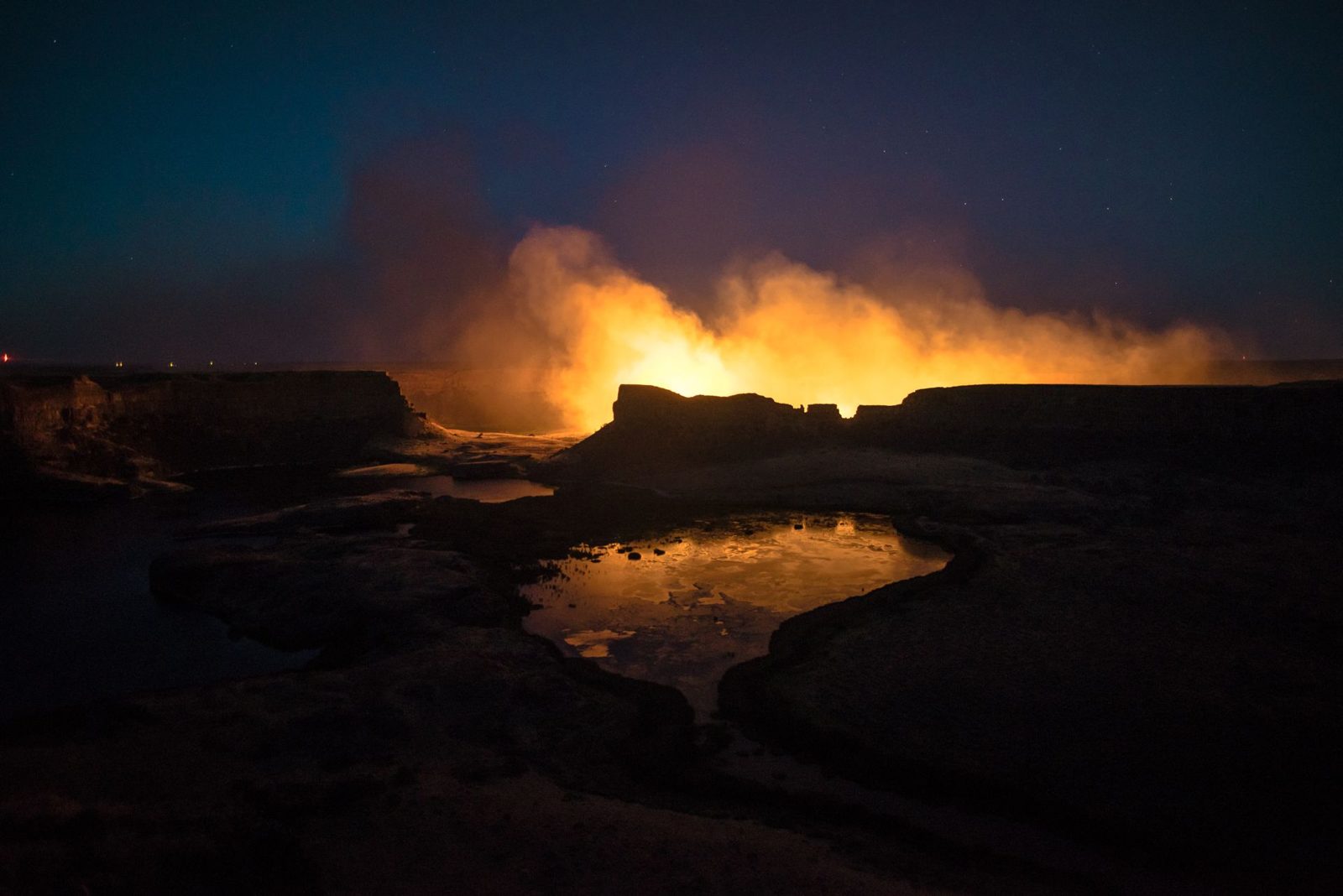
Ashgabat and the Darvaza crater
The white-marble capital, the Parthian ruins of Nisa and a night in the Karakum desert beside the 'Gates of Hell', the gas crater burning since 1971.
 6 daysModerate
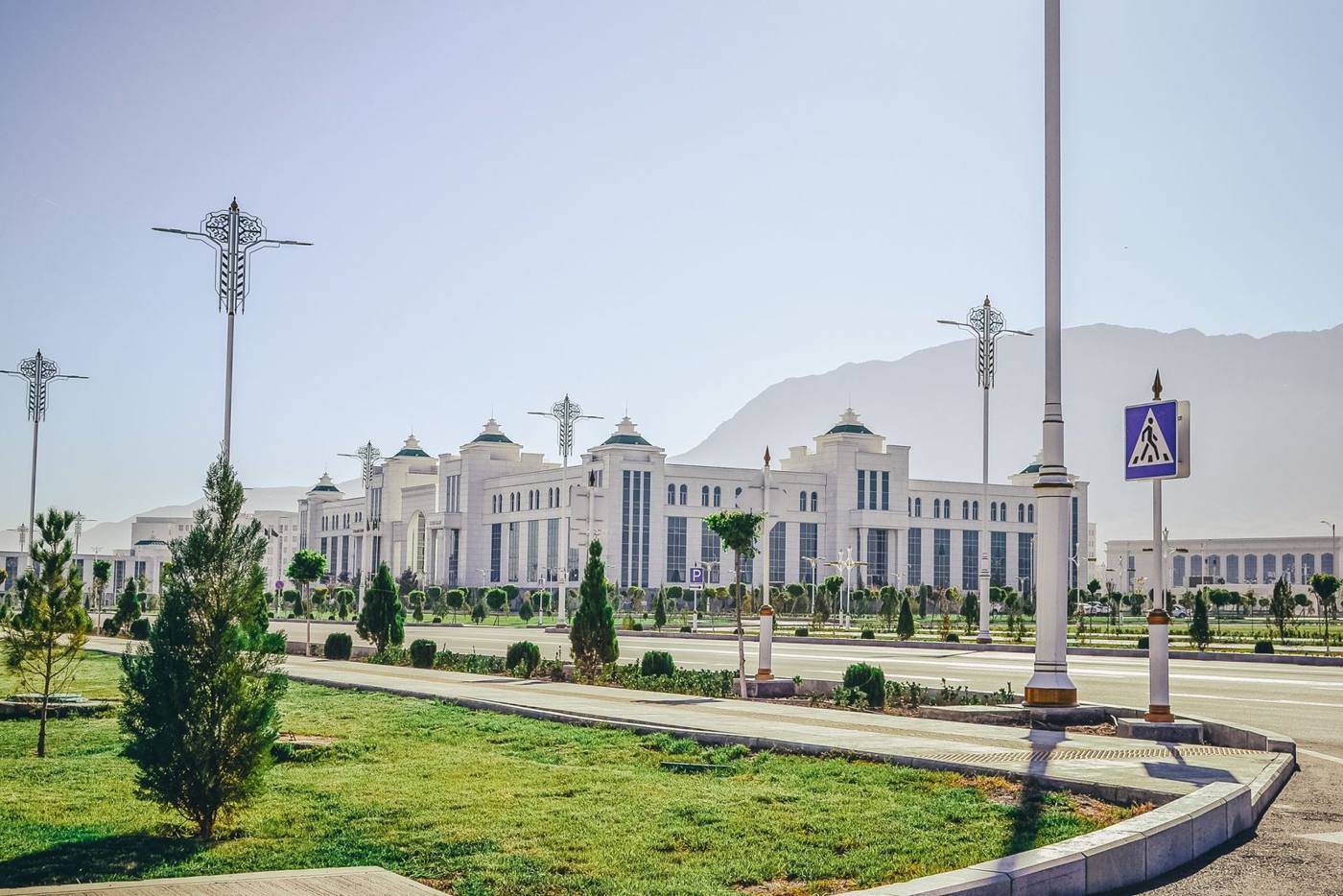
Merv and the Silk Road
The great caravan city of Merv, the mausoleum of Sultan Sanjar, Konye-Urgench with Central Asia's tallest minaret and the crossing to Khiva.
 2 daysEasy
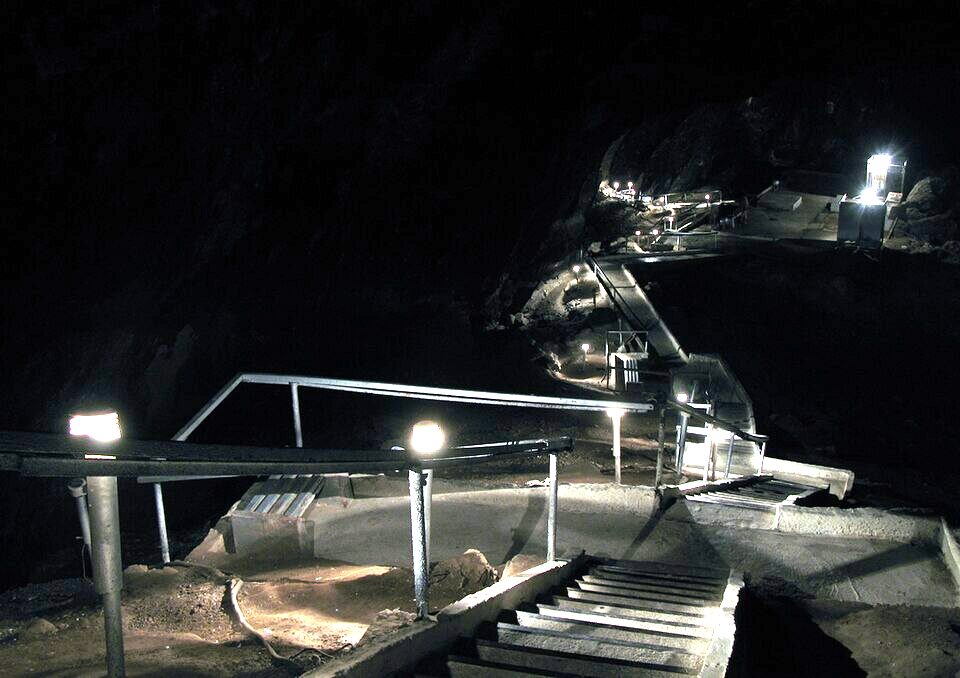
Kow Ata and the Kopetdag
West of Ashgabat, at the foot of the Kopetdag mountains: the underground lake of Kow Ata, with warm sulphurous water at the bottom of a cave, the Geok Tepe fortress and the lowland villages.