Around the island
Taipei and its night markets, Taroko Gorge, the east coast, Kenting, Tainan and its temples and Sun Moon Lake, by train.
- Taipei
- Jiufen
- Hualien
- Taroko
- Taitung
- Kenting
- Tainan
- Sun Moon Lake
Day by day
- Day 1
Taipei: temples, Taipei 101 and night markets
This trip goes round Taiwan in ten days, mostly by train: Taipei and its night markets, the village of Jiufen, Taroko Gorge, the east coast on the Pacific, Kenting in the far south, Tainan with its temples and Sun Moon Lake, before returning to Taipei on the high-speed train.
Before you go: Italian citizens need a passport valid for at least six months from the date of entry; the electronic identity card is not enough. They can stay up to 90 days without a visa. Within the three days before arrival, fill in the Taiwan Arrival Card online on the official immigration website. Other nationalities should check their own rules. Taiwan is very safe; the risks are earthquakes and typhoons, which can close mountain roads and trails. Since the 2024 earthquake Taroko has been only partly open: check the park's website before you leave.
From Taoyuan airport you reach the centre on the airport metro. Buy an EasyCard, which you will use on the metro, local trains and buses all over the island.
In the morning visit the Chiang Kai-shek Memorial Hall, with the changing of the guard every hour, and then Longshan Temple, in the Wanhua district, always full of worshippers and incense.
In the afternoon go to the Xinyi district and go up to the Taipei 101 observatory, or climb nearby Elephant Mountain, a half-hour staircase with the best view of the city at sunset.
In the evening eat at Raohe or Ningxia night market: pepper buns, oyster omelettes, skewers and iced tea.
Practical tip: book the fast trains to the east coast online as soon as sales open. They are the first to fill up.
- Day 2
The National Palace Museum and Jiufen
In the morning go to the National Palace Museum, with one of the most important collections of Chinese art in the world: bronzes, porcelain, paintings and jade objects that came from the Forbidden City in Beijing. Allow at least two or three hours and take the audio guide. Check prices and times.
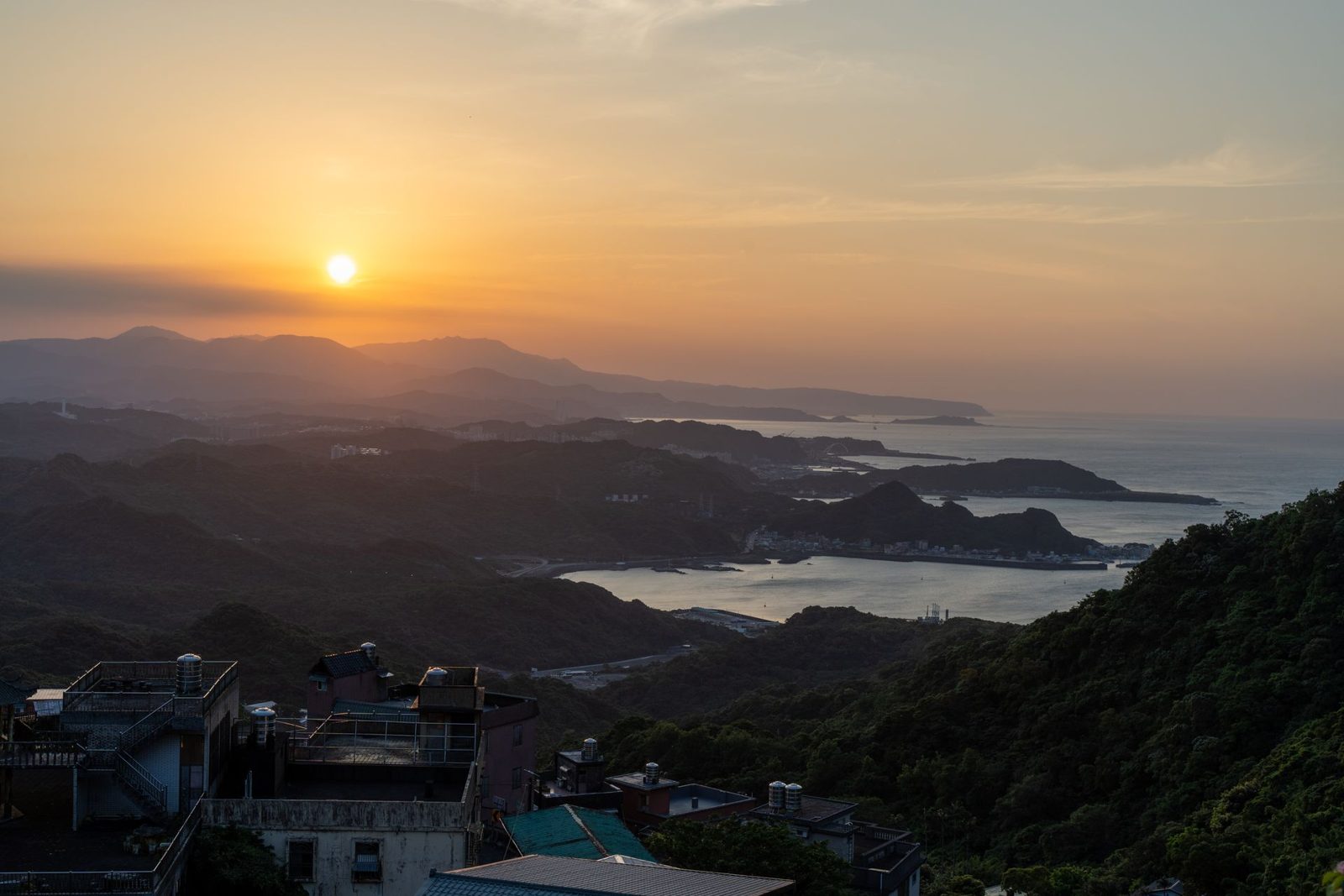
After lunch take a bus, or the train to Ruifang and then a bus, to Jiufen, an old gold-prospecting village built on the side of the mountain, with views of the sea. Its covered lanes are full of teahouses, stalls selling rice cakes and taro balls, and red lanterns.
In the afternoon Jiufen is very crowded. To enjoy it more, first visit the nearby Jinguashi Gold Museum, in the old mines, and return to Jiufen towards sunset, when the groups leave and the lanterns light up. Sit in a teahouse with a terrace over the sea and watch the lights of the coast and the fishing boats come on.
If you have time, you can also stop at Shifen, on the Pingxi railway line, where people release paper lanterns from the tracks. The lanterns, though, litter the valley: better to watch them than to release them.
In the evening return to Taipei by bus.
Practical tip: travel with a small suitcase or a backpack. On many trains there is little luggage space and smaller stations have lots of stairs.
- Day 3
By train to Hualien
In the morning take the fast train to Hualien, on the east coast, in about two hours. It is the best way to get there: the Suhua coastal road, high above the sea, often closes because of landslides after typhoons and earthquakes. From the window you see the cliffs and the Pacific.
Hualien is a quiet city, squeezed between the mountains and the ocean. Drop your bags and go to Qixingtan beach, a long pebble bay with dark blue water and the mountains behind. The sea here is deep and the waves are strong: do not swim, walk along the shore.
In the afternoon visit the centre, with old Japanese-era houses restored and turned into cultural spaces, and the old winery park, now an arts centre.
In the evening go to Dongdamen night market, one of the largest on the east coast, where there are also stalls of indigenous cooking, with grilled pork, rice cooked in bamboo and mountain vegetables.
Sleep in Hualien for two nights. Choose a place near the station: tomorrow departures for Taroko are early and the buses to the park also leave from here.
Practical tip: Hualien is the base for Taroko. If you want a car with a driver or an organised visit for tomorrow, book it today and ask which sections of the road are open.
- Day 4
Taroko Gorge
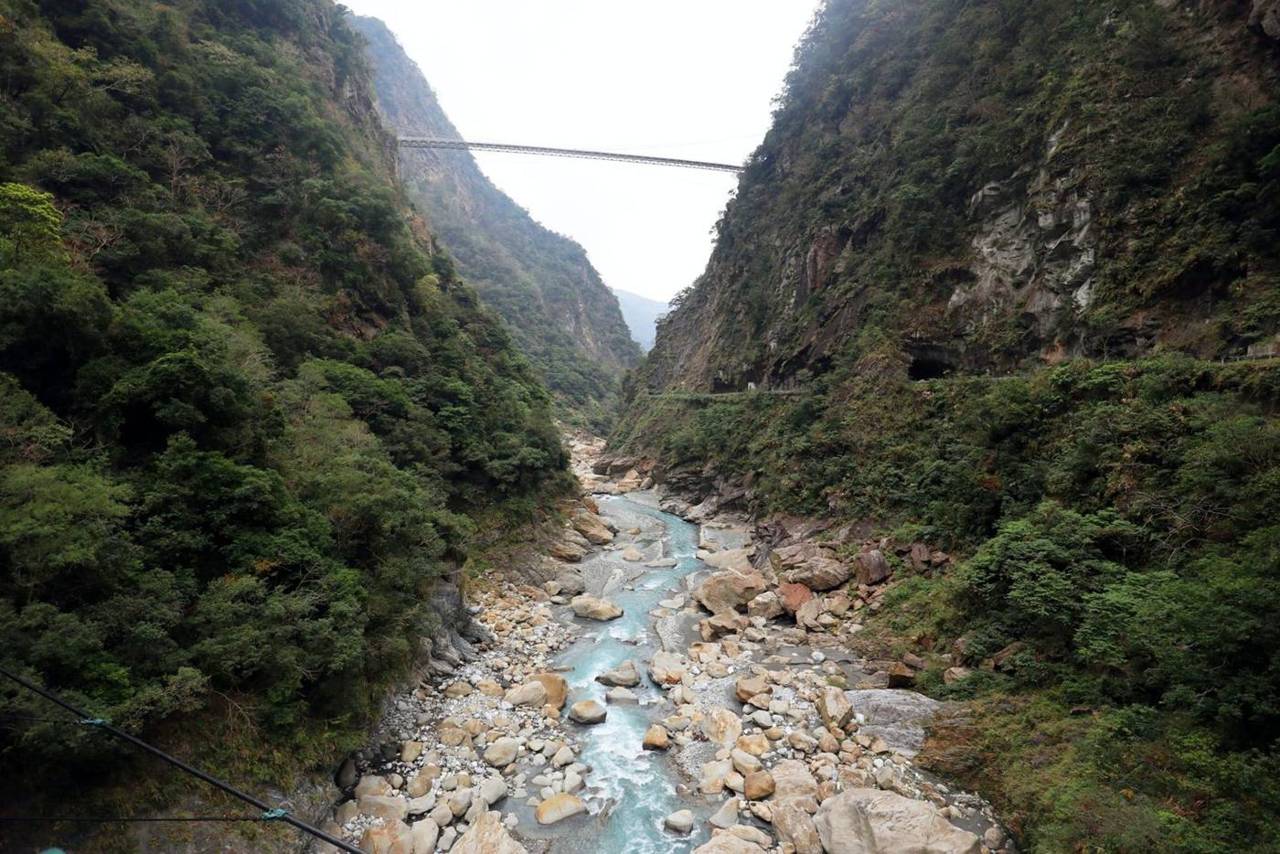
Today you visit Taroko National Park, with its marble gorge carved by the Liwu river, walls hundreds of metres high and green water at the bottom. The earthquake of 2 April 2024 hit the area hard and the park is only partly open. The Shakadang, Swallow Grotto and Baiyang trails remain closed for years; the Changchun Shrine trail will not reopen before 2029.
Provincial Highway 8 through the gorge opens only in fixed time windows, a few times a day, with roadworks and one-way sections. The times change often: check them on the official websites the evening before and leave early.
Start at the visitor centre, with the Taroko Terrace trail and the Dekalun trail, short and open. Then continue, if the road allows, to Tianxiang, with its suspension bridge, the pagoda and the temple above the river, and the short trails around.
On the way back stop at the Chongde trail, now reopened, which climbs through the woods to a viewpoint over the Qingshui cliffs, among the highest in Taiwan, dropping straight into the ocean.
Always follow the rangers' instructions: after heavy rain and tremors some areas close again without warning.
Practical tip: wear a helmet if one is provided or can be hired at the entrance. In many parts of the gorge the risk of falling rocks remains high.
- Day 5
The east coast to Taitung
Today you travel down the east coast to Taitung on Provincial Highway 11, between the Pacific and the coastal mountains. The best way is by car or with a driver; there are also buses, slower and with few departures. Alternatively take the train along the Rift Valley, further inland.
The first stop is Shitiping, a coast of white volcanic rocks carved by the sea into steps and natural pools. Then you pass the Tropic of Cancer monument on the coast and the archaeological site of the Baxian caves, where prehistoric people lived.
Further south is Sanxiantai, a rocky islet linked to the coast by a long footbridge with eight arches that rises and falls like a dragon over the sea. Walk to the islet and go round it on the path among the rocks.
Along the road there are Amis villages and small harbours where you can eat fresh fish. Stop whenever you see a viewpoint: the east coast is the wildest in Taiwan, with very few houses and long stretches of cliff with nobody around.
In the late afternoon you reach Taitung, a green and quiet city. Walk in the forest park near the river mouth and have dinner at the night market in the centre, when it is open.
Sleep in Taitung.
Practical tip: on the east coast petrol stations and cash machines are few. Fill up and withdraw cash in Hualien.
- Day 6
Kenting and the southern tip
In the morning take the train on the southern line, which crosses the mountains through tunnels and valleys to the west coast. Get off at Fangliao and take the bus to Kenting, or continue to Kaohsiung and take a direct bus from there.
Kenting is the southern tip of the island, inside a national park with beaches, coral reefs, tropical forests and cliffs. The climate is warm almost all year round.
Hire a scooter or a car, or use the park buses. Go to Eluanbi lighthouse, at the far south, white and from the nineteenth century, in a park of tropical trees. Not far away is Longpan Park, a plateau of grass and coral that ends in a sheer drop to the sea, perfect at dawn and sunset.
In the afternoon swim at one of the beaches with lifeguards, such as Baisha beach, with pale sand and clear water. Watch out for currents and swim only where it is allowed.
In the evening stroll along Kenting's main street, which turns into a night market with stalls of fish, tropical fruit and skewers.
Sleep in Kenting. In winter the north-east wind blows hard on the southern tip, while in summer the beaches are packed: in every season book in good time.
Practical tip: in Kenting the sun is strong even in winter. Use reef-safe sun cream and drink plenty of water.
- Day 7
Tainan, the ancient city
In the morning leave Kenting by bus for Kaohsiung and take the train to Tainan, in about half an hour. Tainan is the oldest city in Taiwan, the island's first capital, with hundreds of temples and the richest cooking in the country.
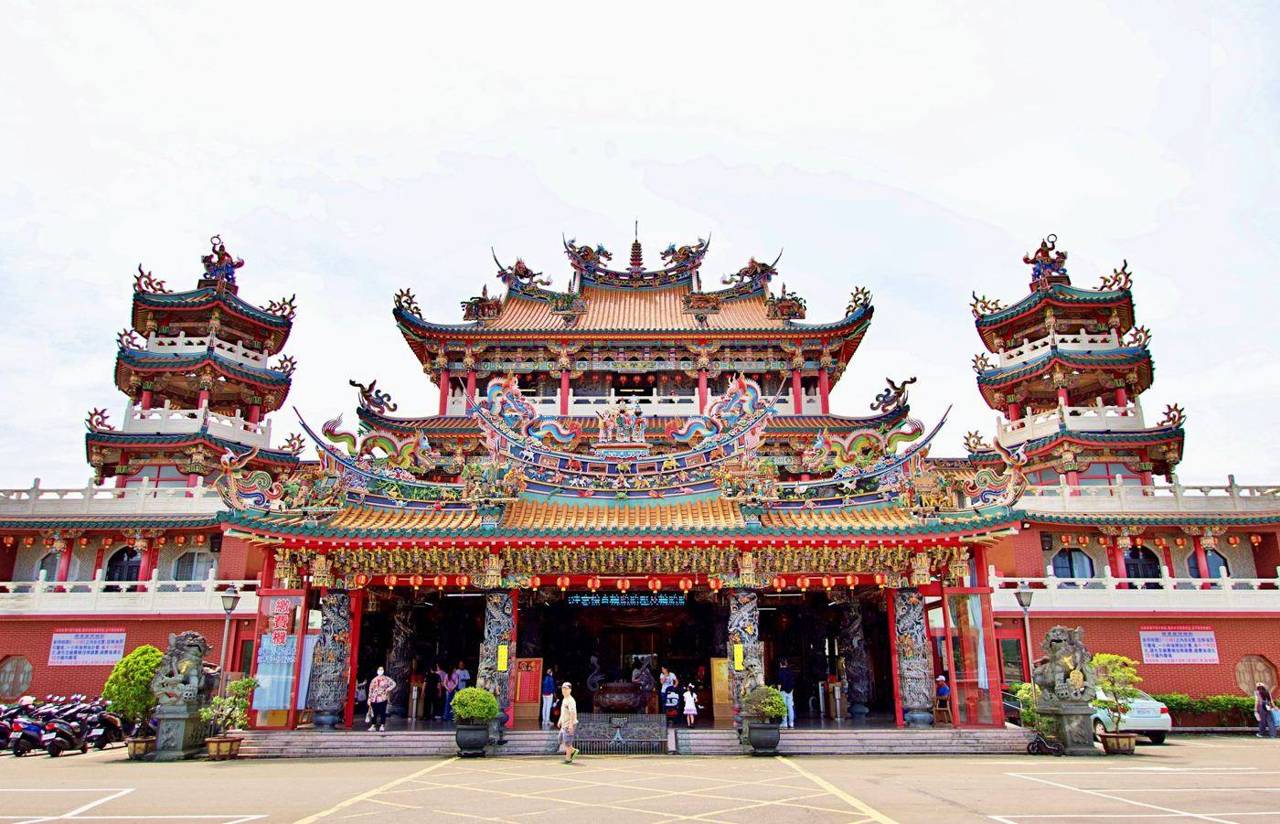
Start with the Confucius Temple, the first built in Taiwan, in 1665, with quiet courtyards and large trees. Then walk to Chihkan Tower, built by the Dutch in the seventeenth century and later turned into Chinese pavilions. Nearby are the Grand Mazu Temple and the temple of the god of war, with painted doors, gilded statues and worshippers at prayer.
In the afternoon stroll along Shennong Street, a lane of old houses with lanterns, small temples and workshops. Tainan is easy to explore on foot or by public bike: the distances are short and the city is flat.
In the evening eat in the small eateries and stalls of the centre. Try danzai noodles with shrimp broth, coffin bread filled with creamy stew and rice cakes. If it is one of its opening days, go to the Garden night market, the largest in the city.
Sleep in Tainan for two nights, ideally in the centre, near the temples.
Practical tip: in Tainan many famous places open only a few hours a day and close when the food runs out. Go early.
- Day 8
Anping and Tainan street food
Early in the morning taste Tainan beef soup, served at dawn with slices of raw meat that cook in the boiling broth. It is the city's typical breakfast.
Then go to Anping, the seaside district where in 1624 the Dutch built Fort Zeelandia. What remains is a stretch of red-brick wall covered in roots and an observation tower built later. Check prices and times.
A few minutes away is the Anping Tree House, an old warehouse that the roots of a banyan have completely wrapped, so that walls and tree have become one. Then walk along Anping Old Street, with shrimp fritters, jellies and traditional sweets.
In the afternoon, if you like, visit the Eternal Golden Castle, a nineteenth-century fortress with a moat and old cannons, or return to the centre and visit the National Museum of Taiwan Literature, in an elegant Japanese-era building.
In the evening continue your food tour: milkfish soup, shrimp rolls, rice with braised pork and tropical fruit juices. Eat a little in many places, as the locals do, and leave room for a red bean sweet or a milk tea.
Practical tip: in summer Tainan is very hot and there are dengue outbreaks. Use repellent and do your outdoor visits in the morning and towards evening.
- Day 9
Sun Moon Lake
In the morning take the high-speed train from Tainan to Taichung and then the direct bus to Sun Moon Lake, in about an hour and a half. The lake, the largest in Taiwan, is surrounded by forest-covered mountains, at about 750 metres above sea level.
Buy a ticket for the boats that link the main piers and go round the lake. At Ita Thao live the Thao people, one of the smallest indigenous peoples on the island: in its streets you find indigenous cooking and crafts.
Then go up to Xuanguang Temple, on a headland above the lake, and walk to Wenwu Temple, large and colourful, with a long staircase, from which you can see the whole surface of the water.
In the afternoon hire a bike and ride a stretch of the cycle path along the shore, through woods and over boardwalks on the water. It is one of the most beautiful cycle routes on the island.
The area is also famous for black tea, grown here since the Japanese era: taste it at one of the plantations around the lake.
Sleep by the lake, in Shuishe village or in Ita Thao. At dawn the mist rises from the water and the landscape is at its best.
Practical tip: at weekends and on public holidays the lake is full of visitors. If you can, go on a weekday and book accommodation in advance.
- Day 10
The high-speed train to Taipei
Early in the morning walk along the lakeshore to see the sunrise, when the water is calm and the mist rises among the mountains. Then take the bus to Taichung high-speed rail station and the train to Taipei, in under an hour. From there you can go straight on to Taoyuan airport.
If your flight is in the evening, you have a few hours in Taipei: stroll along Dihua Street, in Dadaocheng, with its nineteenth-century brick houses, its tea and medicinal herb shops and the temple of the city god.
In short, in ten days you go round the island: the Taipei of temples, museums and night markets, the village of Jiufen, Taroko Gorge and the east coast on the Pacific, the beaches of Kenting, ancient Tainan and Sun Moon Lake. Taiwan is one of the easiest, safest and friendliest countries in Asia, with excellent transport and street food famous around the world.
When to go: from October to December and from March to May, with mild temperatures, clearer skies and less rain. From July to September it is very hot and humid and typhoons arrive, which can stop trains and ferries and close mountain roads. January and February are cool and rainy in the north, but mild in the south. Lunar New Year, between January and February, fills trains and accommodation.
Practical tip: buy a local SIM card with unlimited data at the airport. You will need it for maps, train times and translations throughout the trip.
One of Asia's easiest, safest and friendliest countries, with excellent transport. Taroko was damaged by the 2024 earthquake and some trails remain closed: check beforehand. Typhoons hit from July to September.
Before you go
- Documents and visa
- Passport valid for at least six months from the date of entry. British citizens can visit without a visa for up to 90 days, which can be extended by a further 90 days after arrival. Since 1 October 2025 the online Taiwan Arrival Card is compulsory: submit it within three days before arrival on the official National Immigration Agency website (twac.immigration.gov.tw), or you cannot clear immigration.
- Health and vaccines
- No vaccinations required. Healthcare is excellent; you still need insurance covering medical costs. In summer there are dengue outbreaks in the south: use repellent. Drink bottled or boiled water. Emergencies: 119 ambulance and fire, 110 police.
- Money and payments
- New Taiwan dollar. Cards work in cities, hotels and large shops; night markets, temples and the countryside need cash. Convenience store cash machines accept foreign cards. The rechargeable EasyCard works on the metro, buses, local trains and for small purchases.
- Power sockets
- Type A and B, 110 volts: you need an adapter for British plugs; phone and laptop chargers work, but hair dryers and straighteners often do not.
- Time zone
- UTC+8 all year, eight hours ahead of the UK in winter, seven in summer.
- Safety
- Taiwan is very safe and the United States rates it level 1, the lowest. The main risks are natural: earthquakes, and typhoons from May to November that cause landslides and close mountain roads, especially in the centre and south. Since the 2024 earthquake Taroko National Park has been only partly open. Relations with mainland China are tense and military exercises sometimes take place in the strait: follow local news. Official advice: GOV.UK.
Information checked in November 2026 for Italian and EU citizens. Rules change: always check before you travel.
Variations
In 7 days: Taipei, Hualien with Taroko, Tainan and Sun Moon Lake, without the east coast and Kenting.
In 14 days: add Alishan, two days in the Rift Valley and the Penghu Islands.
Frequently asked questions
Can I go round the island without a car?
Yes. Fast and local trains link the whole coast, the high-speed train runs along the west side and buses reach Kenting and Sun Moon Lake. For the east coast and Taroko a car with a driver saves time.
Is Taroko open?
Only partly. Since the 2024 earthquake many trails have been closed, some until 2029 or 2031, and Highway 8 opens only in time windows. Check the official park and road websites before you go.
When is the best time to go?
From October to December and from March to May. From July to September there are typhoons; during Lunar New Year trains and accommodation are full.
Indicative itinerary written by World Atlas. Before booking, check timetables, seasonal openings, documents and safety.
 5 daysEasy
Taipei and around
The capital with the Beitou hot springs, Elephant Mountain, Maokong tea, the village of Jiufen and the lanterns of Shifen.
 5 daysModerate
Alishan and Yushan
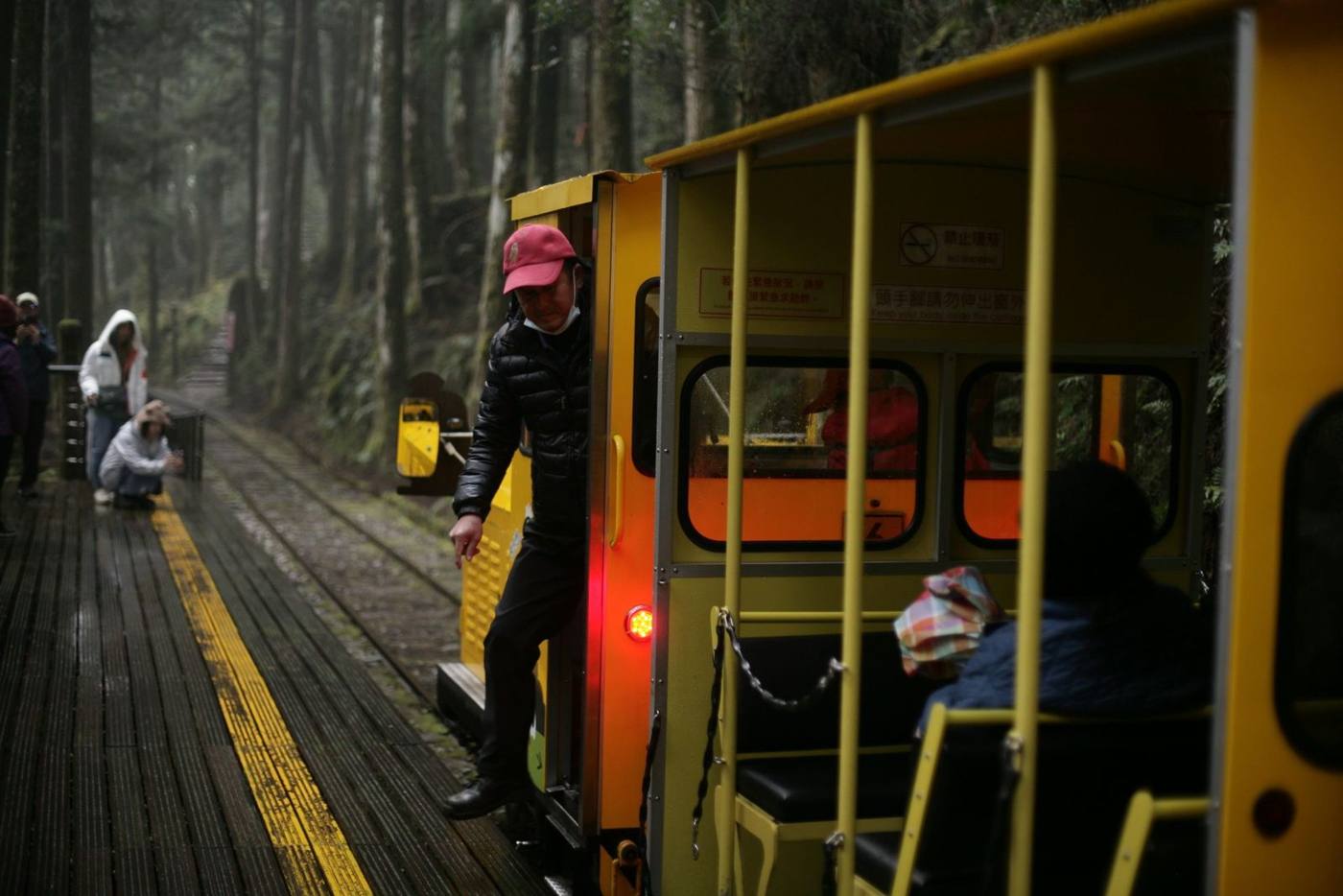
The Alishan forest railway, sunrise over the sea of clouds, high-mountain tea gardens and the climb of Yushan, the highest mountain in East Asia.
 4 daysEasy
Tainan and Kaohsiung
Southern Taiwan: Tainan, the oldest city with its temples and street food, and Kaohsiung with its harbour, the Pier-2 art district and Lotus Pond.