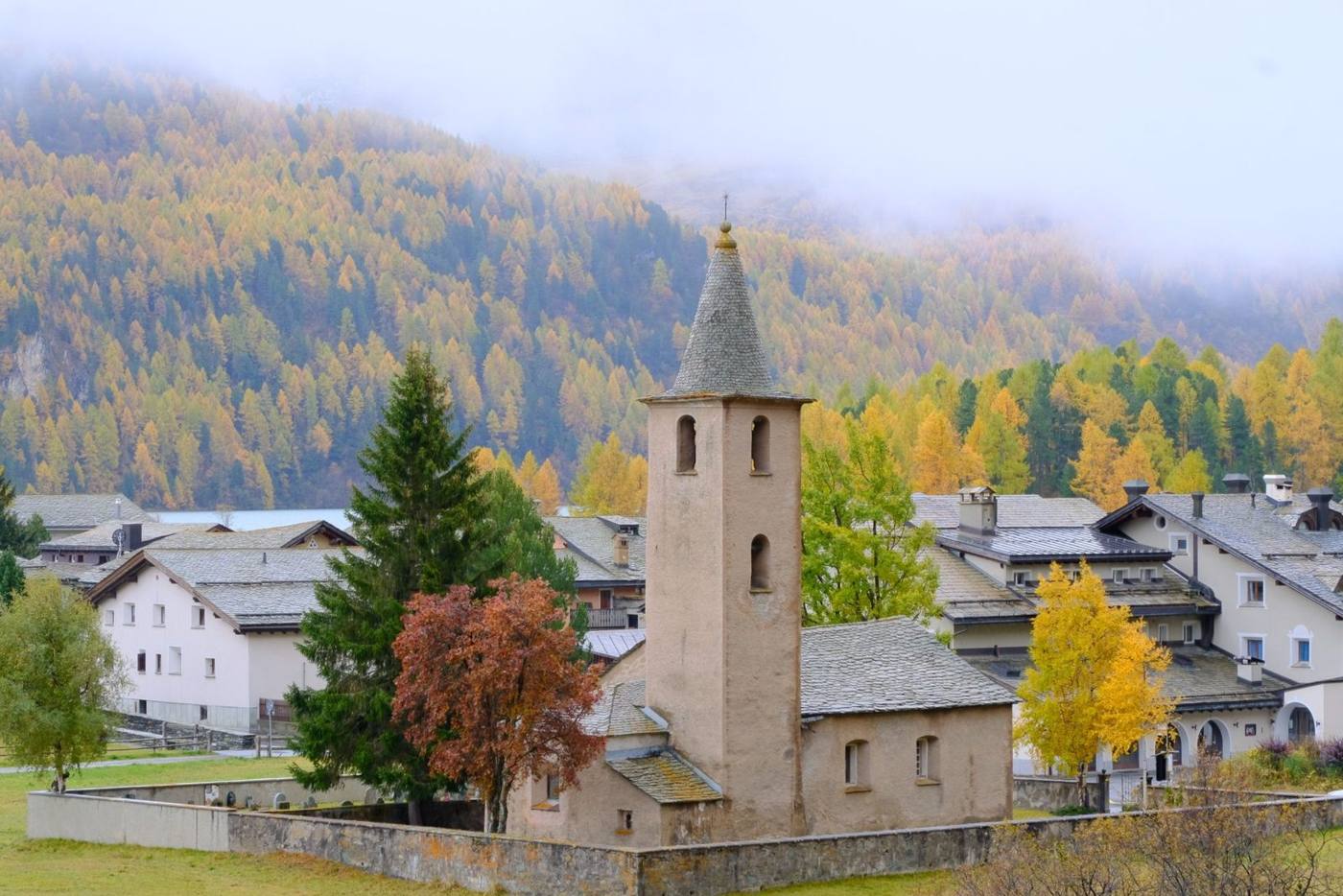
The Engadine
St. Moritz and the lakes of the Upper Engadine, Muottas Muragl, the Val Roseg, the Swiss National Park and the painted villages of Guarda and Scuol.
- St. Moritz
- Sils
- Val Roseg
- Pontresina
- Zernez
- Guarda
- Scuol
Day by day
- Day 1
St. Moritz and the lakes walk to Sils
This trip crosses the Engadine in six days, the long valley of the Inn in the canton of Graubünden: the Upper Engadine lakes between St. Moritz and Sils, the Val Roseg and Muottas Muragl, the Swiss National Park and the painted villages of the Lower Engadine, as far as the baths of Scuol. This is a high, bright Switzerland, where Romansh is spoken as well.
Before you go: Italian citizens only need an electronic identity card valid for travel abroad or a passport, with no visa. Switzerland is not in the European Union but is in the Schengen area; you pay in Swiss francs, and driving on motorways requires the vignette. Other nationalities should check their own rules. The country is very safe; for hikes bring mountain boots and insurance that covers rescue.
You arrive in St. Moritz by train from Tirano or Chur, or by bus from Chiavenna over the Maloja. In the morning stroll around the village, at about 1,800 metres, between the leaning tower and the Segantini museum, devoted to the painter of the Alps. Check prices and times.
In the afternoon follow the path along the lakes to Sils, in about three hours, almost on the level: you pass Champfèr and Lake Silvaplana, where the wind loved by surfers blows, and reach Lake Sils, the wildest. In Sils Maria visit the house where Friedrich Nietzsche spent several summers, now a small museum. Check prices and times.
In the evening go back to St. Moritz by bus or stay in Sils, which is quieter.
Practical tip: St. Moritz is very expensive; the villages around it, such as Pontresina, Celerina and Sils, are often quieter and just as well connected by the valley's buses and trains.
- Day 2
The Val Roseg up to the glacier
Today you enter the Val Roseg, a valley with no cars that climbs from Pontresina towards the glaciers of the Bernina group.
In the morning take the train or bus to Pontresina and walk to the entrance of the valley, near the station. From here a gravel road and a path through the larch and Swiss pine forest rise gently for about seven kilometres to the plain at the head of the valley, in about two hours. If you prefer, ride up in the horse-drawn carriage, which runs in summer, or the sleigh in winter. Check prices and times.
At midday you reach the plain, with the stream splitting into many channels across the gravel and, ahead, the tongue of the Roseg glacier and the Tschierva glacier. Have a picnic on the meadows, looking at peaks over three thousand metres.
In the afternoon, if your legs are strong, continue for about an hour towards the glacial lake at the foot of the glacier, where pieces of ice sometimes float. The glacier has retreated a great deal in recent decades: signs along the path show where it used to reach.
Walk back to Pontresina along the stream, all downhill, or take the carriage. In the woods look out for squirrels, used to people, and for marmots on the higher meadows.
Practical tip: do not feed wild animals, not even the squirrels: it harms their health and changes their behaviour.
- Day 3
Muottas Muragl and the path to Alp Languard
Today you climb above the valley to see all the Upper Engadine lakes from above and walk one of the finest panoramic paths in the region.
In the morning take the train to Punt Muragl and the funicular up to Muottas Muragl, at about 2,450 metres, one of the oldest funiculars in the valley, opened in 1907. From the terrace you see the chain of lakes from St. Moritz to the Maloja and, opposite, the Bernina group. Check prices and times.
Then start the panoramic path to Alp Languard, above Pontresina, in about three and a half hours with little climbing. The path runs high up, among pastures, streams and small lakes, with views always open over the Val Roseg and the Morteratsch glacier. Along the way you may see marmots, chamois and, with a little luck, ibex on the rocks above you.
At midday look up towards the Schafberg: up there is the hut where the painter Giovanni Segantini died in 1899 while painting his Alpine triptych, reached by an uphill detour for those with the breath for it.
In the afternoon you reach Alp Languard and go down to Pontresina by chairlift, or on foot through the woods, in about an hour.
In the evening try Engadine nut tart, a pastry filled with walnuts and caramel, and capuns.
Practical tip: at this altitude the weather changes quickly: check the forecast in the morning, set off early and carry a waterproof jacket even if the sky is clear.
- Day 4
The Swiss National Park from Zernez
Today you visit the Swiss National Park, the oldest in the Alps, founded in 1914, where nature is left to itself.
In the morning take the train to Zernez and stop at the park's visitor centre, with exhibitions on the animals and the park rules and maps of the trails. Check prices and times.
The park has strict rules: you never leave the marked paths, you do not pick flowers or take stones, dogs are not allowed and there are no ski lifts or cable cars. That is why the animals are plentiful and not very shy.
To see chamois and ibex choose the Val Trupchun, starting from S-chanf: the path follows the stream for about two and a half hours to a clearing where people stop to scan the slopes with binoculars. Here you often see herds of red deer, chamois on the scree and ibex higher up; in September, during the rut, you hear the stags roaring all over the valley. Alternatively, shorter paths start from the Ofen Pass road, for example towards the Val dal Botsch.
At midday have a picnic at the marked rest areas: fires are not allowed in the park and rubbish must be carried back down.
In the afternoon return to Zernez and continue by train into the Lower Engadine, as far as Scuol.
Practical tip: bring binoculars and set off at dawn: the animals are most active early in the morning and at sunset, when they come out to feed on the meadows.
- Day 5
Guarda, the painted houses and the baths of Scuol
Today you discover the Lower Engadine, greener and quieter, with its villages of painted houses above the valley.
In the morning take the train to Guarda station and walk or take the bus up to the village, on a sunny terrace above the Inn. Engadine houses have thick walls, windows as narrow as arrow slits and façades decorated with sgraffito, a technique in which the light plaster is scraped away to reveal the dark layer beneath, with geometric designs, animals and inscriptions in Romansh. Guarda is also the village of the children's book about Uorsin, the little shepherd boy with the big cowbell, known throughout Switzerland.
Then follow the panoramic path from Guarda to Ardez and Ftan, in about three hours, among meadows, barns and woods, with views of the mountains of the Lower Engadine.
At midday have lunch in Ardez, another village with fine decorated façades, below the ruins of the Steinsberg tower.
In the afternoon go down to Scuol and visit Tarasp Castle, on a rocky hill opposite the village, on a guided tour. Check prices and times. Then relax at the Scuol thermal baths, with outdoor pools and mountain views. Check prices and times.
In the village there are several fountains of natural mineral water, each with a different taste: try them.
Practical tip: anyone staying overnight in the Lower Engadine usually receives a guest card that includes local transport: ask for it on arrival and check what it covers.
- Day 6
The Val Müstair and departure towards Italy
On your last day you leave the Engadine heading down towards Italy, with a stop at a UNESCO-listed monastery.
In the morning take the train from Scuol to Zernez and then the bus that climbs to the Ofen Pass, crossing the National Park, and descends into the Val Müstair. In Müstair visit the Benedictine convent of St John, said by tradition to have been founded by Charlemagne, a UNESCO World Heritage Site since 1983: the church holds one of the largest cycles of Carolingian frescoes in Europe, painted around the year 800. Nuns still live in the convent. Check prices and times.
After Müstair the bus crosses the border and goes down into the Val Venosta, in South Tyrol, from where trains run to Merano and Bolzano. Alternatively, from St. Moritz you can return on the Bernina Express to Tirano or by bus over the Maloja to Chiavenna.
In six days you have seen both sides of the Engadine: the Upper Engadine of lakes, glaciers and views at St. Moritz, Sils and Pontresina, and the Lower Engadine of painted villages, the baths of Scuol and the National Park, with its wild animals. It is a moderate trip, with walks of three or four hours a day.
When to go: from late June to September for open paths and flowering meadows; September is perfect for the colours and the roaring of the stags. In winter the Engadine is famous for skiing and for its frozen lakes, where people walk and skate.
Practical tip: the Ofen Pass bus is the most convenient public link between the Engadine and South Tyrol: check prices and times, because services are not frequent.
Another Switzerland, high and bright, where Romansh is also spoken. The national park has strict rules: you must stay on trails and there are no lifts. St. Moritz is very expensive, but the Lower Engadine villages are quieter and more affordable. It is easy to reach from Tirano and Chiavenna.
Before you go
- Documents and visa
- Switzerland is not in the EU but is in the Schengen area. British visitors can stay up to 90 days in any 180 days without a visa, and the EU Entry/Exit System applies. Motorways need the vignette, as a sticker or an e-vignette from the official website.
- Health and vaccines
- No vaccines required. Healthcare is excellent but very expensive: take travel insurance that covers repatriation and mountain rescue, because helicopter rescue costs a great deal. Watch out for ticks in woods. Emergencies: 112, police 117, fire 118, ambulance 144, Rega air rescue 1414.
- Money and payments
- Swiss franc. Cards are accepted almost everywhere, even for small amounts; euros are taken in many places, but change comes in francs at a poor rate.
- Power sockets
- Swiss type J, 230 volts: you need an adapter for British plugs.
- Time zone
- Central European Time (UTC+1, summer UTC+2).
- Safety
- A very safe country. In the mountains carry the right gear, check the MeteoSwiss forecast and, in winter, the avalanche bulletin. Traffic fines are severe, especially for speeding. Official advice: GOV.UK.
Information checked in November 2026 for Italian and EU citizens. Rules change: always check before you travel.
Variations
Shorter: four days in the Upper Engadine, with St. Moritz, Sils, the Val Roseg and Muottas Muragl.
Longer: add two days with the Bernina Express to Tirano and a stop at Alp Grüm.
Frequently asked questions
What are the rules of the Swiss National Park?
You do not leave the paths, you do not pick plants or take stones, dogs are not allowed, fires are forbidden and you take your rubbish away. There are no lifts.
Where can you see ibex and chamois?
In the Val Trupchun, starting from S-chanf, and along the path from Muottas Muragl to Alp Languard. Early morning and sunset are the best times.
Is St. Moritz expensive?
Yes, it is one of the most expensive resorts in the Alps. The villages of the Lower Engadine, such as Scuol, Ardez and Guarda, are quieter and often more affordable.
Indicative itinerary written by World Atlas. Before booking, check timetables, seasonal openings, documents and safety.
 4 daysEasy
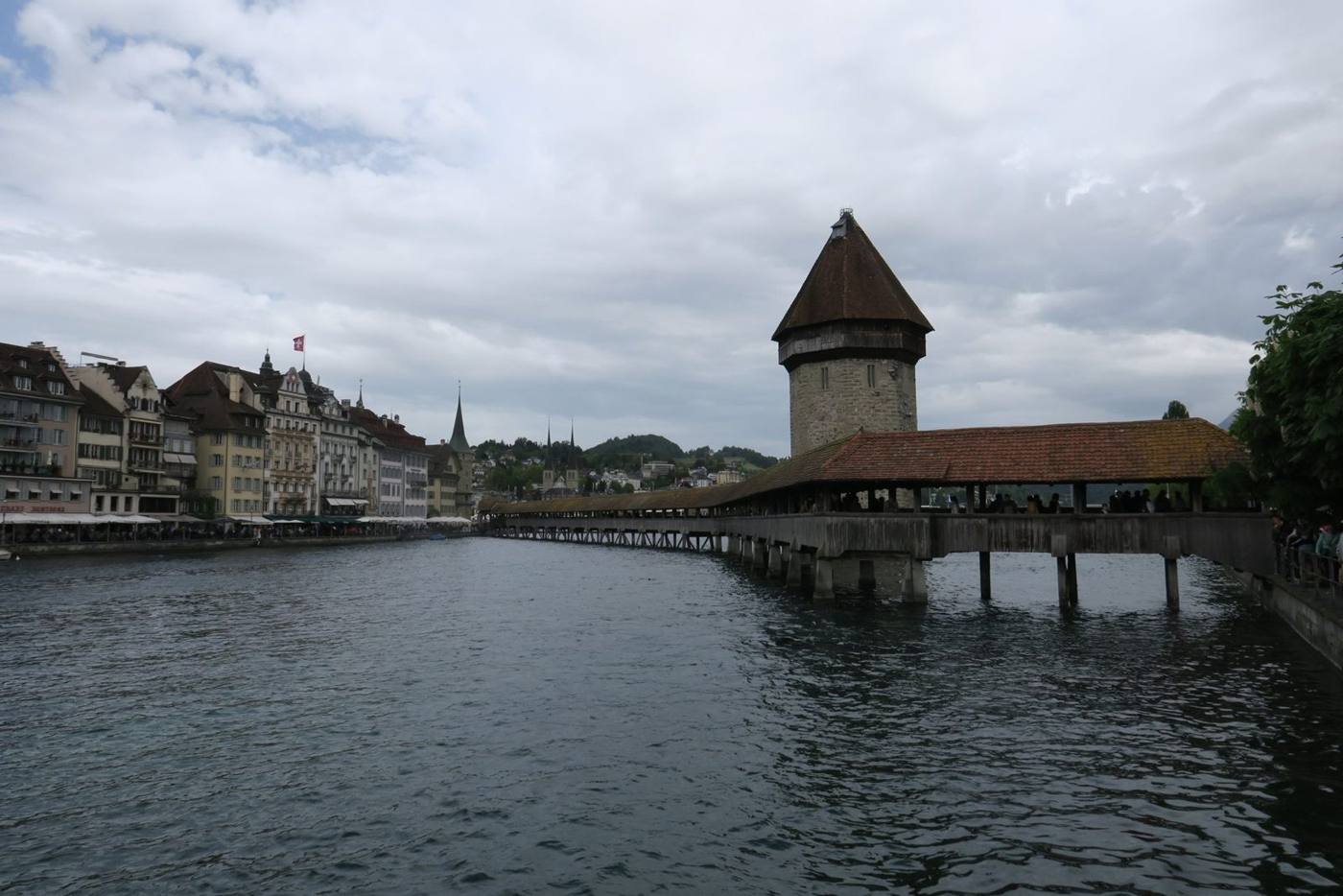
Lucerne and Central Switzerland
The Chapel Bridge and Lion of Lucerne, a steamer on Lake Lucerne, Pilatus with the world's steepest cogwheel railway and the Rigi.
 12 daysChallenging
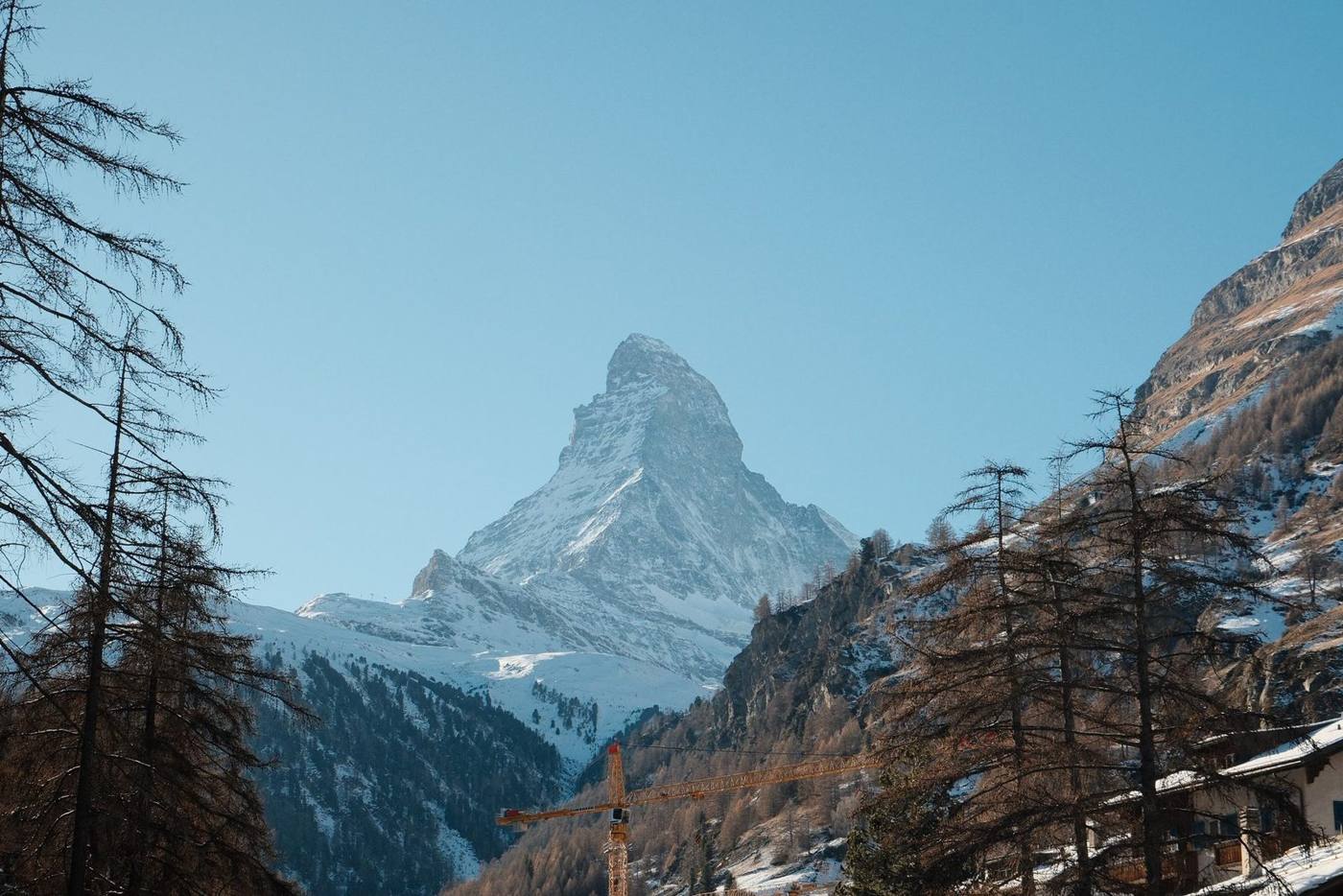
The Haute Route from Chamonix to Zermatt
The trek between the two capitals of mountaineering, below Mont Blanc and the Matterhorn, across eleven passes and the valleys of the Valais.
 5 daysEasy
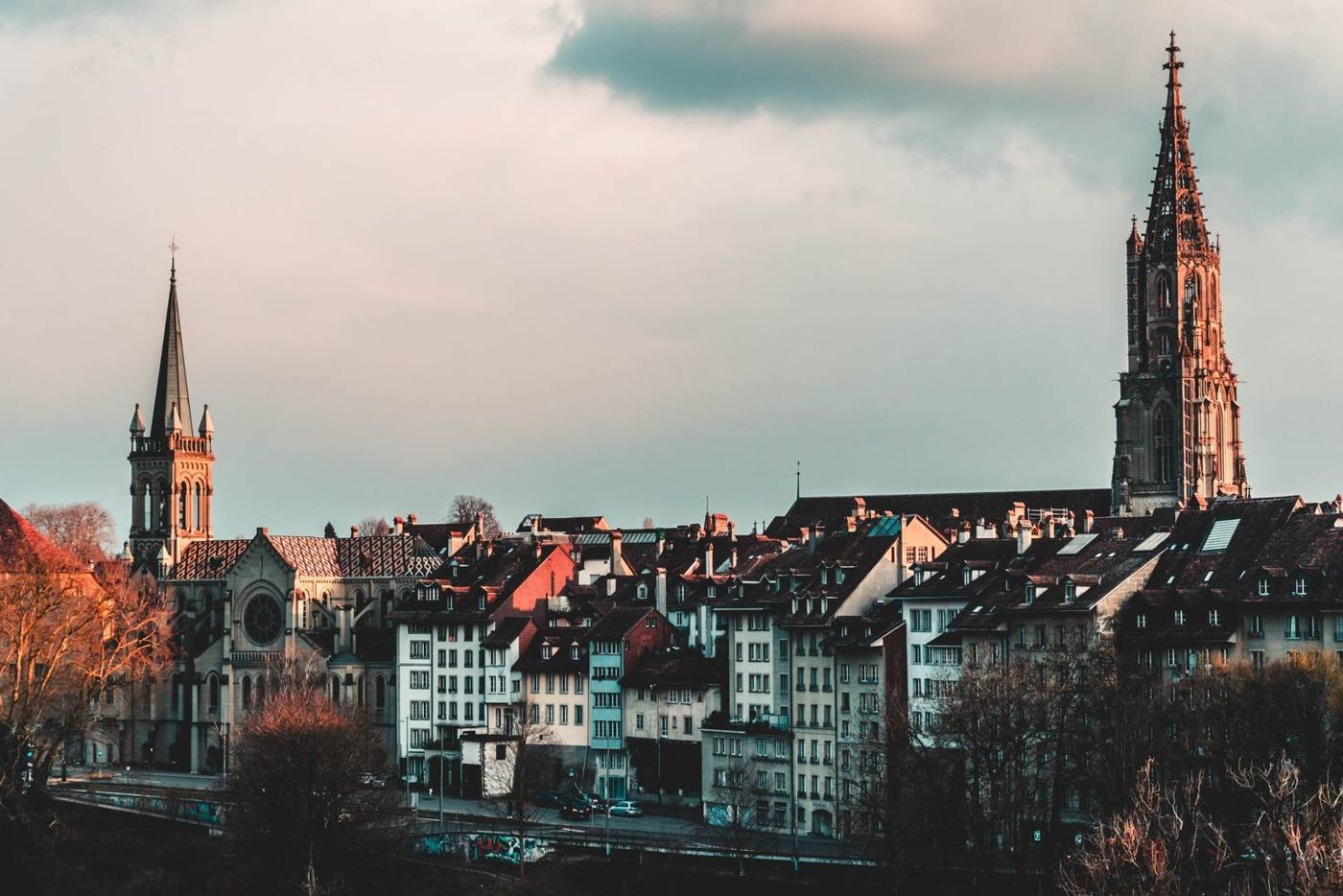
Bern, Zurich and Basel
Switzerland's cities: medieval Bern with its arcades and the Aare, Zurich and its districts, Basel and its great art museums, with a swim in the Rhine.