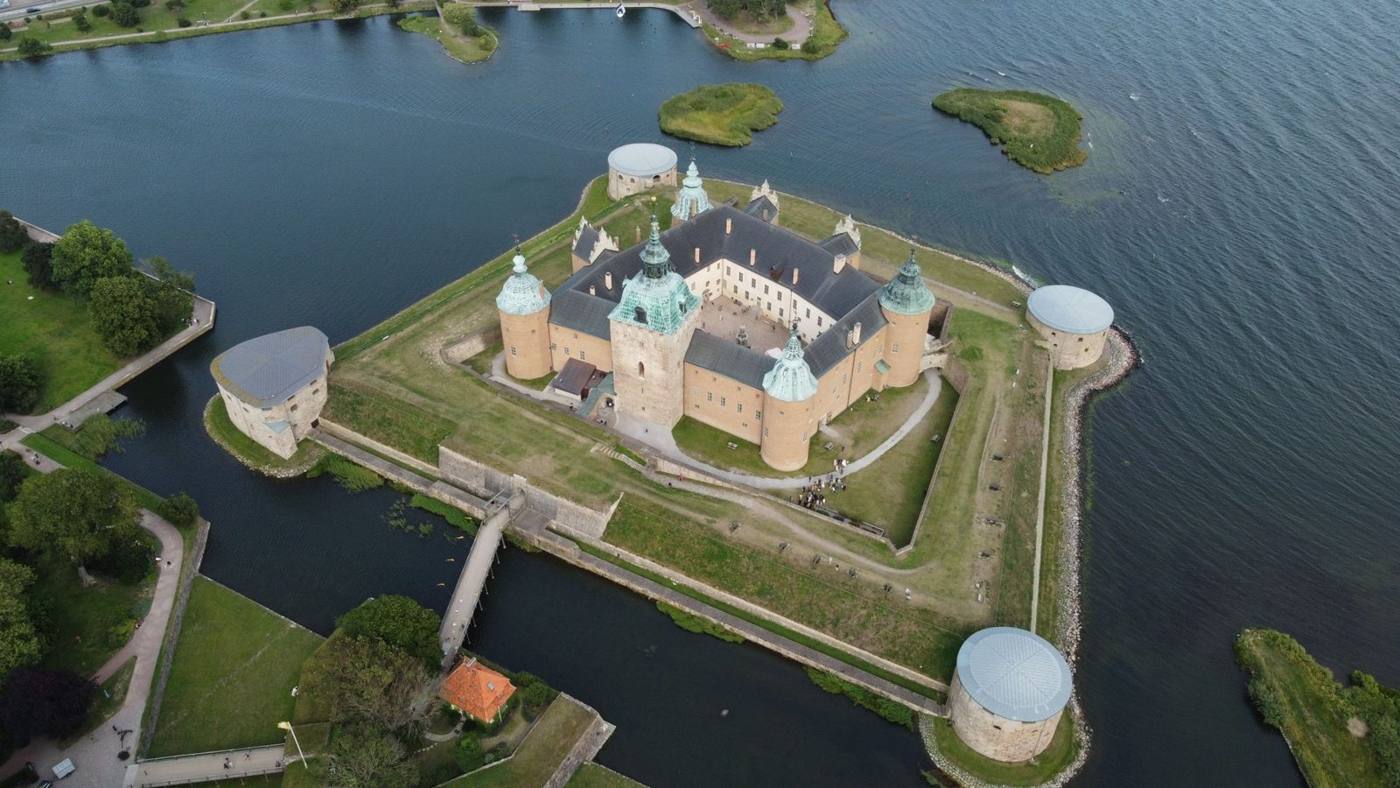
Kalmar and Öland
Kalmar castle, the bridge to Öland, the UNESCO limestone plain of Stora Alvaret, windmills, Eketorp fortress and Långe Jan lighthouse.
- Kalmar
- Borgholm
- Stora Alvaret
- Eketorp
- Långe Jan
Day by day
- Day 1
Kalmar Castle and the old town
This trip takes you to south-east Sweden, on the Baltic Sea. You start in Kalmar, a town of castles and history, cross the long bridge to the island of Öland, visit Borgholm and the north of the island, then the limestone plain of Stora Alvaret, Eketorp fort and the Långe Jan lighthouse at the southern tip.
Before you go: Italian citizens can enter Sweden with a valid electronic identity card or passport, without a visa. Other nationalities should check their own rules. Sweden has reintroduced border checks: always carry your document. You pay by card almost everywhere, even at kiosks and car parks. In summer there are ticks in the meadows: check yourself in the evening.
Start at Kalmar Castle, on the water, surrounded by a moat. It began as a medieval fortress and was turned into a Renaissance palace by the kings of the Vasa dynasty. Visit the royal halls, the chapel and the dungeons. Nearby, in 1397, the Kalmar Union was signed, which united Sweden, Denmark and Norway under a single ruler for more than a century. Check prices and times.
Then walk around the island of Kvarnholmen, the old centre rebuilt in the seventeenth century with straight streets and the great baroque cathedral. In the afternoon, visit the county museum, which displays the remains of the warship Kronan, sunk in 1676 off Öland. Check prices and times.
In the evening, stroll along the ramparts and through the park around the castle.
Practical tip: for Öland, hire a car or a bike in Kalmar; the island is more than a hundred kilometres long and buses are few.
- Day 2
North Öland: Borgholm and the castle ruins
Today you cross the Öland Bridge, about six kilometres long and opened in 1972. By car or bus the crossing takes a few minutes; bikes are not allowed on it, but in summer there is a bus service that carries them: check the times.
Öland is a long, narrow, flat island, with fields, villages of low houses, dry-stone walls and hundreds of wooden windmills, once used to grind grain.
Head north to Borgholm, the main town. Above the town stand the ruins of Borgholm Castle, a large stone palace destroyed by fire in 1806. The walls are still high and massive, and in summer concerts are held inside. Check prices and times.
Just south of the castle is Solliden, the summer residence of the Swedish royal family. In summer the gardens are open to the public, with flowers, vegetable beds and a fine view of the sea. Check prices and times.
In the afternoon, continue to the north of the island. Stop at the limestone sea stacks of Byrum, on the west coast, and then at Trollskogen, the troll forest near the northern tip, with oaks and pines twisted by the wind. At the very end stands the Långe Erik lighthouse.
In the evening, head back towards Borgholm to watch the sunset over the sea from the west coast.
Practical tip: in summer Öland is full of Swedish holidaymakers, especially in July; book accommodation well in advance and choose a central base such as Borgholm.
- Day 3
South Öland: Stora Alvaret, Eketorp and the lighthouse
Today you explore the south of the island, a UNESCO World Heritage Site for its farming landscape. The area is dominated by Stora Alvaret, a great limestone plain with very thin soil, short grass and shrubs. It looks like a steppe and changes colour with the seasons. In May and June it fills with flowers, including many wild orchids.
Drive the roads that cross the plain and stop at the marked spots to walk. Here farmers still graze cows and sheep as they have for centuries, and in the villages the houses line a single street.
Along the east coast, reach Eketorp, a circular Iron Age fort with stone walls and reconstructed houses inside. It shows what life on the island was like more than a thousand years ago. In summer there are family activities and farm animals. Check prices and times.
Then go down to the southern tip, at Ottenby, where Långe Jan stands, the tallest lighthouse in Sweden, built at the end of the eighteenth century. You can climb to the top for a view of the sea and the island. Check prices and times.
Ottenby is also one of the best places in Sweden to watch migrating birds, and seals often rest on the rocks around the point.
On the way back, stop at Gettlinge, where a row of windmills stands out against the plain.
Practical tip: on the plain and at the southern tip the wind is strong and there is no shade; bring water, a hat and a jacket, even on sunny days.
- Day 4
Departure
On the last day you head back to Kalmar. If you have a few hours, stop in the middle of the island at Gråborg, the largest ring fort on Öland, with stone walls in the middle of the fields, or at Ismantorp, another Iron Age fort in the woods, with the remains of dozens of houses.
Before leaving the island, try the local dishes, such as kroppkakor, potato dumplings filled with pork, served with melted butter and lingonberry jam. In summer, the villages have stalls selling vegetables, eggs and home-made cakes.
Cross the bridge again and, if your train or flight leaves late, take a last walk in Kalmar along the seafront, with views of the castle and the bridge.
In these four days you have seen the Renaissance castle of Kalmar, the Kvarnholmen centre and the Kronan ship, the Öland Bridge, the ruins of Borgholm and the gardens of Solliden, the sea stacks of Byrum and the Trollskogen forest, the plain of Stora Alvaret, Eketorp fort and the Långe Jan lighthouse.
When to go: from May to September. In May and June the Alvaret plain is full of orchids and the days are very long. July is the hottest and busiest month, with the island full of Swedes on holiday. September is quieter, with migrating birds passing through and the harvest festival at the end of the month.
Practical tip: Kalmar has a railway station and a small airport with flights to Stockholm; check connections in advance, because out of season there are few.
Bright, historic Sweden, with a flat island perfect for cycling. In May the Alvaret plain fills with orchids. In summer Öland is very popular with Swedes.
Before you go
- Documents and visa
- EU citizens need a valid identity card or passport: Sweden is in the EU and the Schengen area. Sweden has reintroduced border checks, so carry your document on trains and ferries too. Other nationalities should check the Schengen rules and the Entry/Exit System.
- Health and vaccines
- Excellent healthcare. EU citizens should bring their EHIC, plus insurance covering medical costs and repatriation. In summer, meadows and woods may have ticks that carry Lyme disease and tick-borne encephalitis, especially around Stockholm, the archipelago and Lake Mälaren: ask your doctor about the vaccine. In summer in the north, bring mosquito repellent. Emergencies: 112.
- Money and payments
- Swedish krona. Cards are accepted almost everywhere, even for tiny amounts, and many shops, buses and public toilets do not take cash. Sweden is expensive, especially in the cities and the mountains.
- Power sockets
- Types C and F, 230 volts.
- Time zone
- Central European Time (UTC+1, summer UTC+2).
- Safety
- The national terrorism threat level is raised. Some suburbs of Stockholm, Malmö and Gothenburg are affected by organised crime; in Stockholm theft is common in bars and on public transport. Bags may be banned at large concerts, festivals and sports events. The drink-drive limit is very low and headlights must be on during the day. Official advice: GOV.UK.
Information checked in November 2026 for Italian and EU citizens. Rules change: always check before you travel.
Variations
In 2 days: Kalmar and a day in the south of Öland.
In 6 days: add two days cycling on the island and a visit to the Kingdom of Crystal, the glassworks area in the forests of Småland.
Frequently asked questions
Can I tour Öland by bike?
Yes, the island is flat and there are many quiet roads and cycle paths. However, you cannot cycle across the bridge: in summer there is a transport service for bikes. The wind can make the stages harder.
When do the orchids flower?
Usually between May and June, on the Stora Alvaret plain and in the meadows of the south of the island. The dates vary a little each year depending on the weather.
Are Kalmar and Öland good for families?
Yes. There are beaches with shallow water, reconstructed forts such as Eketorp, castles and plenty of outdoor activities. Distances are short and the roads are quiet.
Indicative itinerary written by World Atlas. Before booking, check timetables, seasonal openings, documents and safety.
 5 daysEasy
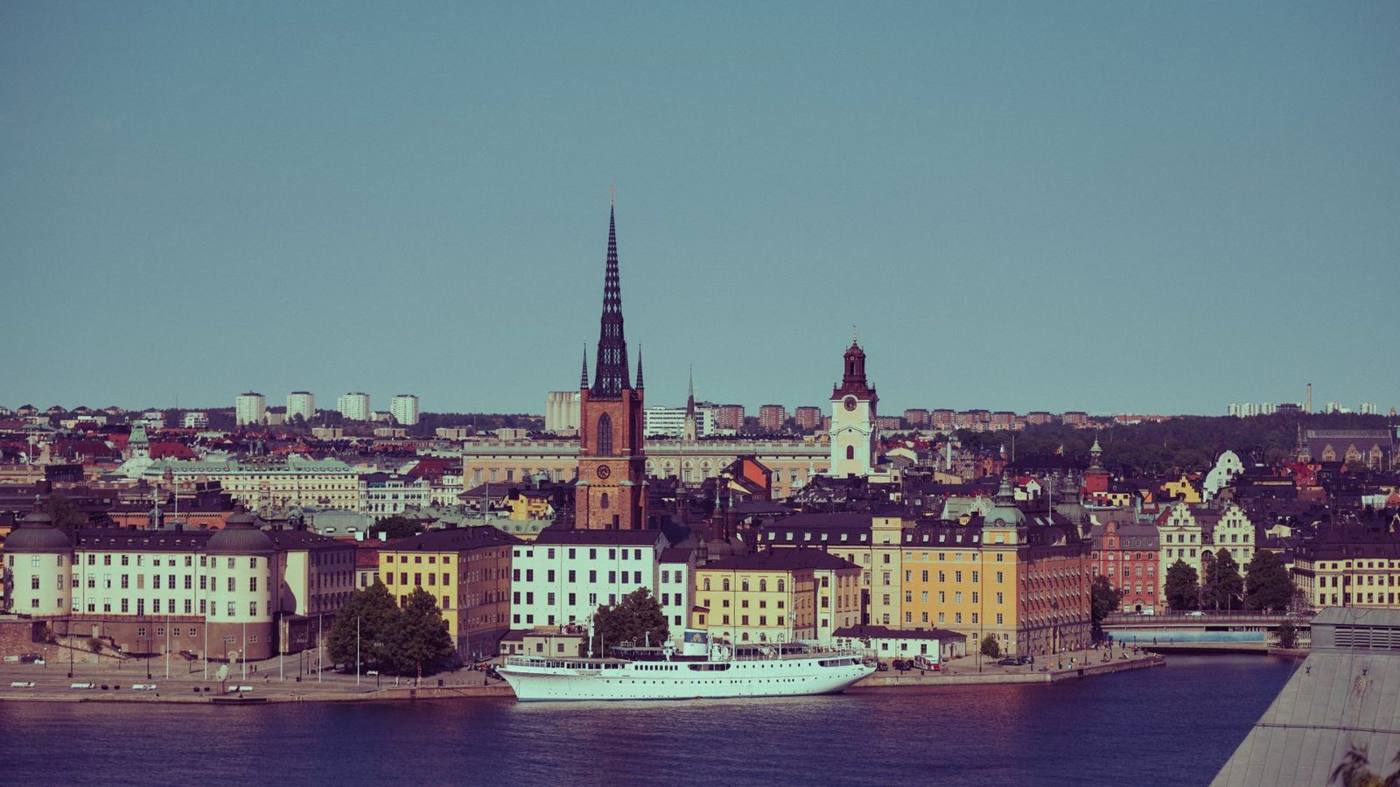
Stockholm and the archipelago
Gamla stan, the Vasa Museum, Skansen and Djurgården, then by boat among the archipelago islands to Sandhamn or Vaxholm.
 6 daysModerate
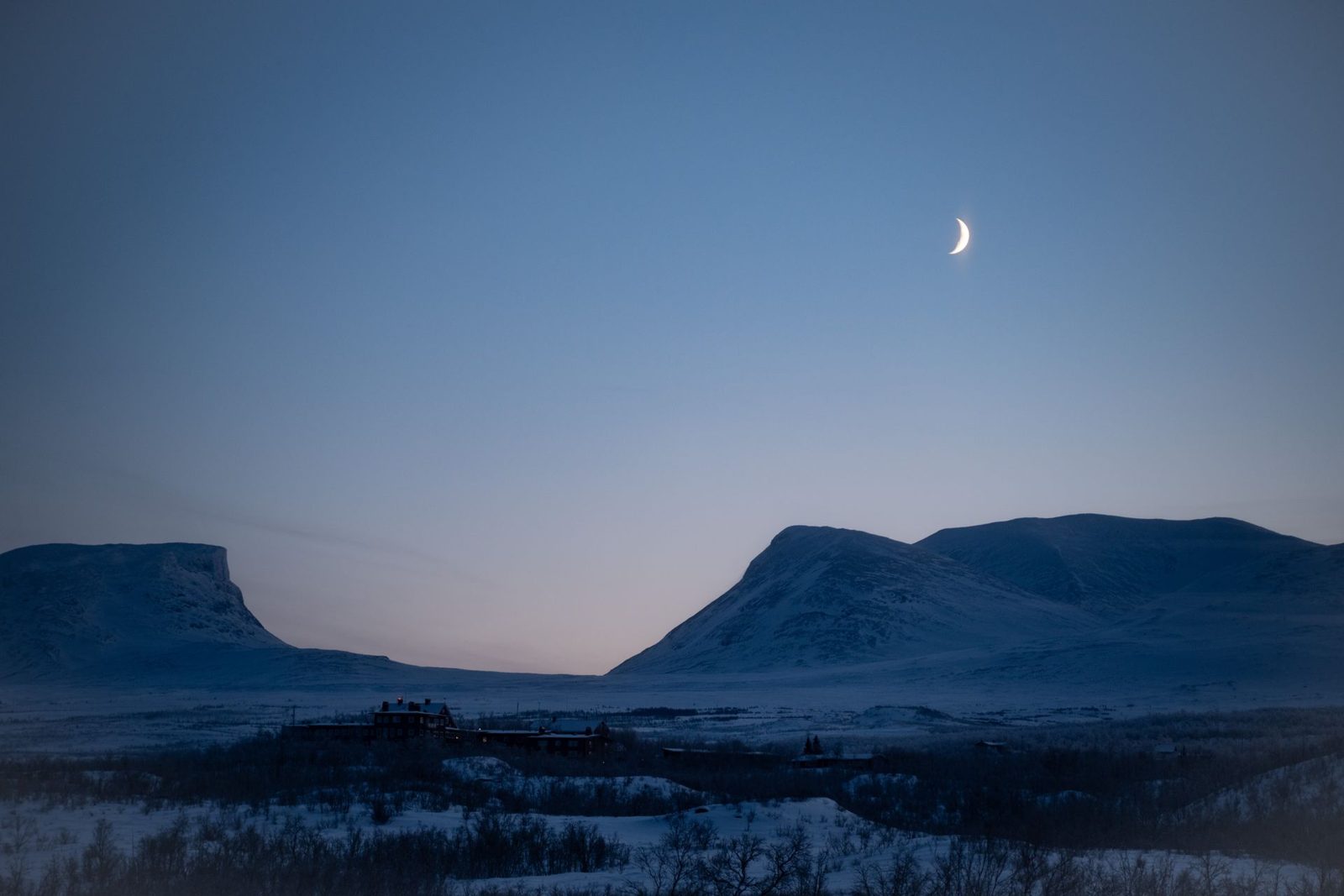
Swedish Lapland
Kiruna, the Icehotel at Jukkasjärvi, dog sledding, the northern lights from Abisko's Aurora Sky Station and Sami culture.
 6 daysEasy
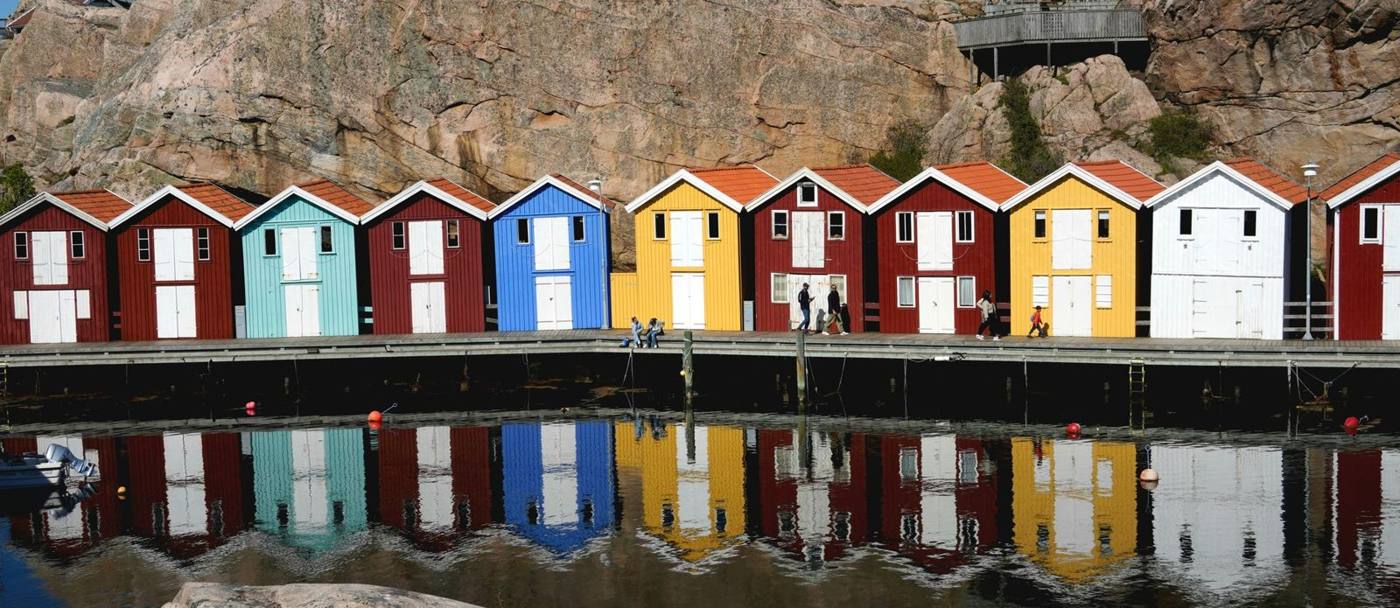
Gothenburg and the west coast
Gothenburg and its archipelago closed to cars, then the Bohuslän coast: Marstrand, Smögen, Fjällbacka and the oysters and langoustines of Grebbestad.