San Marino and Montefeltro
Mount Titano, the fortress of San Leo, Pennabilli, Urbino and Montefeltro flavours such as piadina, pit-aged cheese and truffle.
- San Marino
- San Leo
- Pennabilli
- Sant'Agata Feltria
- Urbino
Day by day
- Day 1
San Marino and the three towers
This trip widens a visit to San Marino into the hills of Montefeltro, which lie in Italy, between Romagna and the Marche: Mount Titano with its towers, the fortress of San Leo, Pennabilli with the places of Tonino Guerra, Sant'Agata Feltria and Urbino, with local flavours such as piadina, formaggio di fossa and truffle. You travel by car.
Before you go: San Marino is not part of the European Union, but you enter from Italy with no border checks. Italian citizens only need an electronic identity card or a passport, with no visa. Other nationalities should check their own rules.
Leave the car in Borgo Maggiore and ride the cable car up to the old town, a UNESCO World Heritage Site. In Piazza della Libertà, look at the Palazzo Pubblico, the seat of government, and, in the warmer months, the changing of the Guardia di Rocca. Then visit the Basilica of San Marino, which holds the relics of the founding saint.
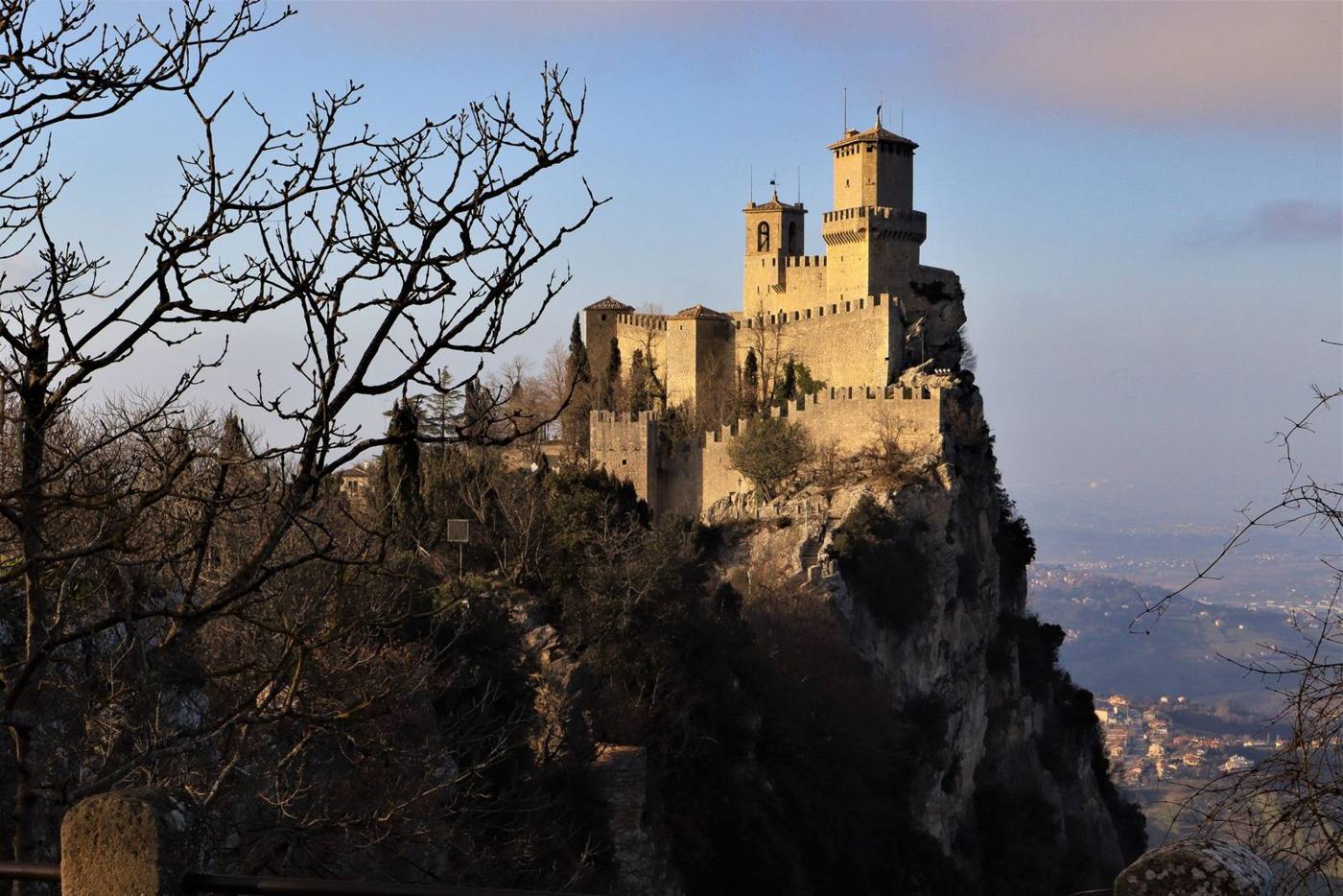
In the afternoon, climb to the Guaita, the oldest tower, and take the Witches' Path, the trail along the edge of the cliff, to the Cesta, on the highest summit of Mount Titano, with the Museum of Ancient Arms. From the ramparts you see the Adriatic on one side and, on the other, the hills and fortresses of Montefeltro that you will visit in the next few days. Check prices and times.
In the evening, have cappelletti in broth or nidi di rondine, a baked pasta typical of San Marino.
Overnight in San Marino or nearby, for two nights.
Practical tip: in summer the centre fills with day-trip groups from the coast between mid-morning and mid-afternoon: go up early or stay until the evening.
- Day 2
The fortress of San Leo, where Cagliostro died
Today you drive down into the Marecchia valley to reach the place that gave its name to the whole of Montefeltro.
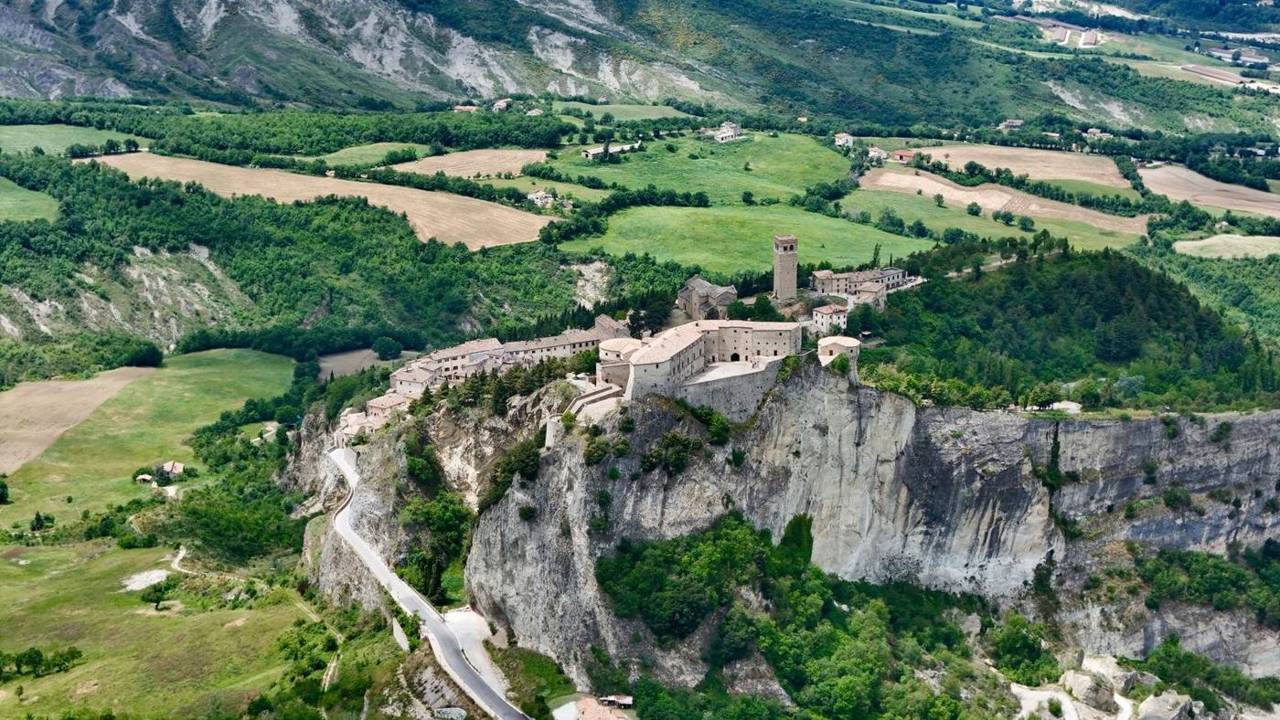
In about half an hour by car you reach San Leo, a village on a huge block of rock with sheer walls, reached by a single road. In Roman times it was called Mons Feretrius, from which the region takes its name. Dante mentions it in Purgatory for its difficult climb.
In the morning, visit the fortress, rebuilt in the fifteenth century for Federico da Montefeltro to a design by Francesco di Giorgio Martini, with great round towers designed to resist cannon fire. Later it became a prison of the Papal States: the adventurer and alchemist Cagliostro was locked up here and died in the fortress in 1795. You can see the cell where he was held. Check prices and times.
Then walk down into the village and visit the Pieve, a pre-Romanesque stone church, and the Romanesque cathedral, next to the bell tower standing alone on a spur. According to tradition, it was in San Leo that Saint Francis was given Mount La Verna.
For lunch, try piadina with the cured meats and cheeses of the valley, or passatelli.
In the afternoon, return to San Marino through the villages of the valley.
Practical tip: the road to San Leo is narrow and the car park below the village is small: arrive in the morning, especially at weekends.
- Day 3
Pennabilli, the places of Tonino Guerra, and Sant'Agata Feltria
Today you enter the upper Marecchia valley, a land of poets and truffles.
In the morning, drive to Pennabilli, a village born from the union of two castles on two neighbouring rocks. Tonino Guerra, poet and screenwriter for Federico Fellini, lived here for many years and left the Places of the Soul around the village: small corners designed to make you stop and think. Walk to the Garden of Forgotten Fruits, with old varieties of fruit trees that have almost disappeared, and look for the sundials painted on the walls of the houses. Check prices and times.
On the road to Sant'Agata Feltria you can stop in Talamello, where formaggio di fossa is matured: the cheeses are sealed in pits dug into the rock for about three months and opened in autumn. Taste it with honey or with piadina.
In the afternoon you reach Sant'Agata Feltria, overlooked by the Rocca Fregoso, built on a large boulder. Visit the fortress and the small seventeenth-century wooden theatre in the town hall. Check prices and times. On Sundays in October the village hosts a very popular white truffle fair: if you come then, book ahead.
Overnight in Sant'Agata Feltria or in the valley, or continue towards Urbino.
Practical tip: the roads of the upper Marecchia valley are narrow and winding: allow more time than the maps suggest.
- Day 4
Urbino and the Ducal Palace
Today you end the trip in the city of the Renaissance.
In the morning, drive to Urbino, in the Marche, a university town on two hills, with an old town that is a UNESCO World Heritage Site. Here, in the fifteenth century, Duke Federico da Montefeltro created one of the most refined courts in Italy.
Visit the Ducal Palace, with its two slender towers and the Torricini facade facing the valley. Inside is the National Gallery of the Marche, with famous works such as Piero della Francesca's Flagellation, the Ideal City and Raphael's La Muta. Do not miss the duke's studiolo, with walls decorated in wood inlay that creates false bookcases, cupboards and instruments. Check prices and times and book at weekends.
Then climb the steep streets to Raphael's birthplace, where the painter was born in 1483. Check prices and times. For lunch, try crescia sfogliata, Urbino's version of piadina.
In the afternoon, walk up to the Albornoz fortress, in the park above the centre, for the best view of the Torricini and the rooftops. Then head home.
In short, in four days you have seen Mount Titano and its towers, the fortress of San Leo, Pennabilli and Sant'Agata Feltria, and Urbino, with the flavours of Montefeltro.
When to go: from April to November; October and November for truffles and formaggio di fossa.
Practical tip: in Urbino, leave the car in the car parks below the walls and walk up or take the lift: the old town is closed to traffic.
The best way to make sense of a visit to San Marino, extending it to the surrounding hills, which are in Italy. A car is needed. Sant'Agata Feltria hosts a popular white truffle fair in October.
Before you go
- Documents and visa
- EU citizens need a valid electronic identity card or passport, with no visa. British visitors need a passport. San Marino is not in the European Union, but the border with Italy is open: you arrive by car or by bus from Rimini with no checks and no customs formalities.
- Health and vaccines
- No vaccinations beyond those usual in Italy. The State Hospital is of a good standard and works closely with nearby Italian hospitals for serious cases. Medical emergencies: 118.
- Money and payments
- Euro. Cards are accepted almost everywhere.
- Power sockets
- Types C, F and L, 230 volts: you need an adapter for British plugs.
- Time zone
- UTC+1, UTC+2 in summer, one hour ahead of the UK.
- Safety
- Good security conditions, with no areas of particular concern. In summer the old town is very crowded: keep an eye on your wallet. The roads on Mount Titano are steep and can freeze in winter. Official advice: GOV.UK.
Information checked in November 2026 for Italian and EU citizens. Rules change: always check before you travel.
Variations
With two days, see San Marino and the fortress of San Leo.
With two extra days, add the castles of San Marino on foot and the coast at Rimini.
Frequently asked questions
Is Montefeltro in San Marino or in Italy?
It is a historic region around San Marino, split between Romagna and the Marche, in Italy. San Marino is at its centre, but San Leo, Pennabilli, Sant'Agata Feltria and Urbino are in Italy.
When is white truffle season?
In autumn. On Sundays in October, Sant'Agata Feltria hosts a very popular white truffle fair.
Do you need a car for this trip?
Yes. Public transport links between the Montefeltro villages are poor and the distances, though short, involve hill roads.
Indicative itinerary written by World Atlas. Before booking, check timetables, seasonal openings, documents and safety.
 2 daysModerate
The castelli on foot
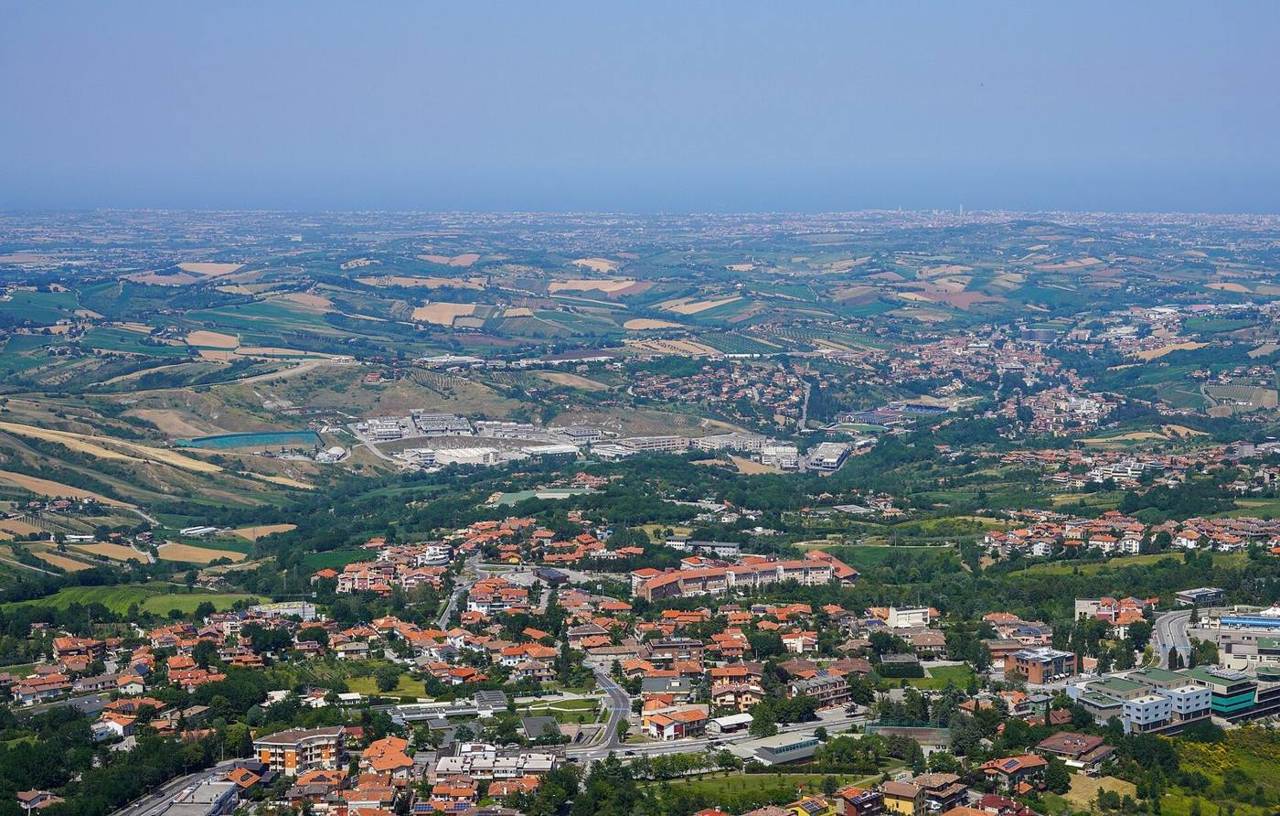
The republic on foot beyond the centre: from Mount Titano down to Borgo Maggiore on the old path, then the quiet castelli of Montegiardino, Fiorentino and Chiesanuova among hills and vineyards.
 2 daysEasy
Middle Ages and Christmas
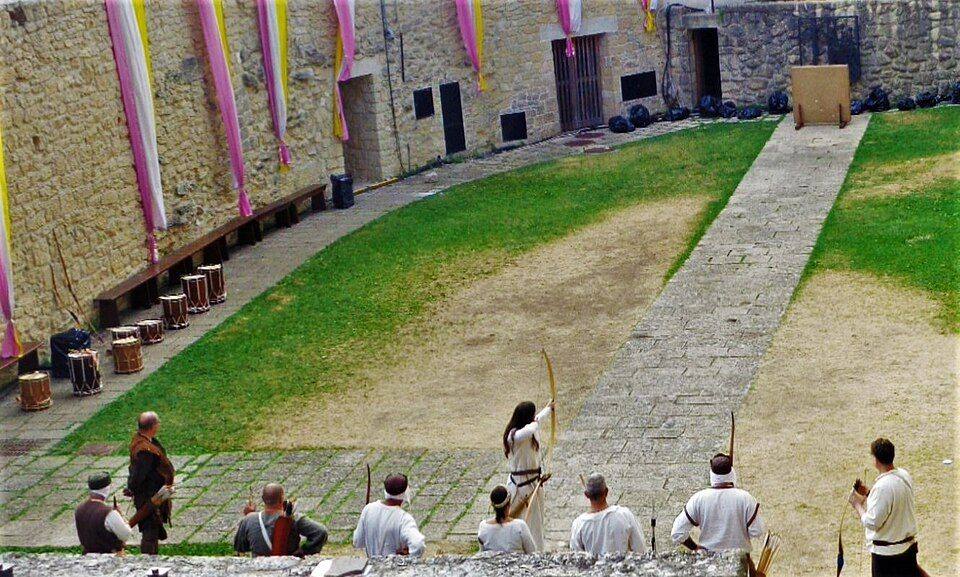
Two special times on Mount Titano: the summer medieval re-enactments, now called San Marino Antiqua and heirs to the historic Medieval Days, with crossbowmen, processions and period food, and Christmas with markets and lights in the old town.
 2 daysEasy
The Three Towers of San Marino
The UNESCO historic centre on Mount Titano, the Palazzo Pubblico and its changing of the guard, the Guaita, the Cesta and the Witches' Path.