Slow Nevis
The quieter sister island: Charlestown and Alexander Hamilton's birthplace, the Bath hot springs, the long Pinney's Beach and old plantations turned into inns.
- Basseterre
- Charlestown
- Pinney's Beach
Day by day
- Day 1
By ferry to Charlestown
This three-day trip takes you to Nevis, the quieter sister island of the federation: the small capital Charlestown, the museum in the birthplace of Alexander Hamilton, the hot springs of Bath, the drive around the island beneath Nevis Peak and the long beach of Pinney's.
Before you go: Italian citizens enter St Kitts and Nevis with a passport, ideally valid for at least six months after arrival, and without a visa for stays of up to 90 days in any 180, under the agreement with the European Union. Before your flight you must obtain the online Electronic Travel Authorisation, eTA, on the official government portal, where you also fill in the immigration and customs form. Other nationalities should check their own rules. The United Kingdom does not advise against any area, but reports serious crime, including armed robbery: avoid beaches and isolated places after dark and use only licensed taxis, with yellow plates. Wearing camouflage clothing is illegal, even for children. Hurricane season runs from June to November.
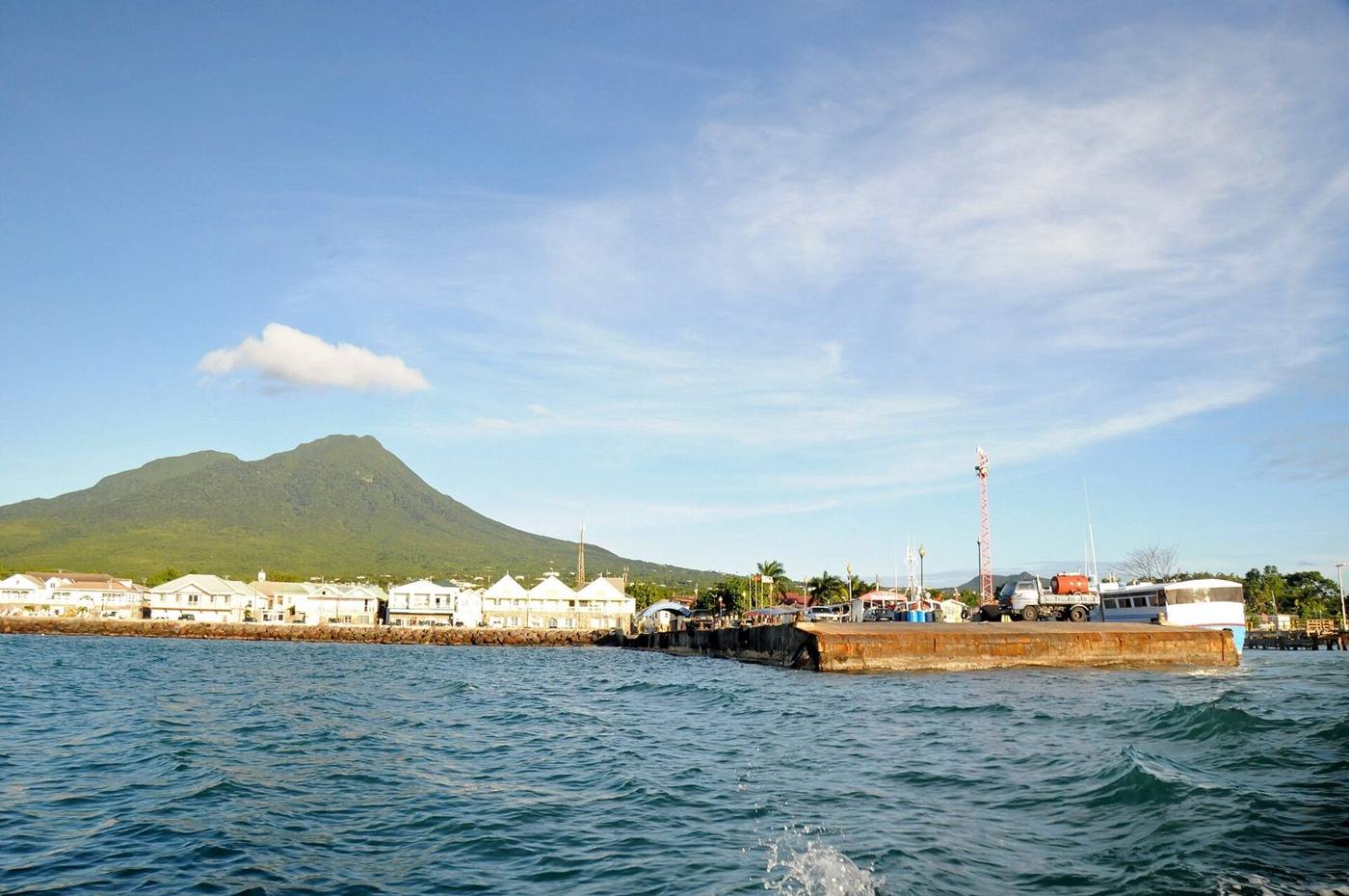
From Basseterre, the capital of St Kitts, take the ferry to Charlestown: the crossing takes less than an hour and shows you the green cone of Nevis Peak, almost always with a cloud on top. Check prices and times.
Charlestown is tiny and easy to explore on foot: stone and wooden houses with verandas, the square with its war memorial, the courthouse and the small shops of Main Street. Walk to the old Jewish cemetery, one of the oldest in the Caribbean, a reminder of the merchants who lived here in the seventeenth century.
Sleep on Nevis for two nights.
Practical tip: carry cash in East Caribbean dollars for minibuses and small purchases.
- Day 2
Hamilton, the baths of Bath and the island drive
Today you discover the history of Nevis and drive all the way round the island.
In the morning visit the Museum of Nevis History, in a rebuilt stone house by the sea where Alexander Hamilton, one of the founding fathers of the United States, was born. The rooms tell the story of his childhood on the island, the era of the sugar plantations and everyday life on Nevis. Check prices and times.
Just south of town you reach Bath, where hot water rises from the ground into small stone pools beside a stream. Next to them stands the large building of the old eighteenth-century spa hotel, from the days when wealthy visitors came here to take the cure. Dip your feet or sit in the water, which is really hot, and let local people show you the right pool.
Then set off around the island, by taxi with a driver or in a hire car. The coast road makes a loop around Nevis Peak, past villages, stone churches and the ruined windmills of old plantations. Stop at St John's church in Fig Tree, which keeps the register of Horatio Nelson's marriage to Frances Nisbet, held on the island in 1787. On the wilder east coast watch the Atlantic waves and the green monkeys crossing the road.
In the evening try the local cooking: grilled fish, rice and peas, and goat water, a spicy goat stew.
Sleep on Nevis.
Practical tip: traffic drives on the left and you need a temporary local permit to drive, which the hire company usually arranges.
- Day 3
Pinney's Beach and the way back
Today you enjoy the sea of Nevis and then return to St Kitts.
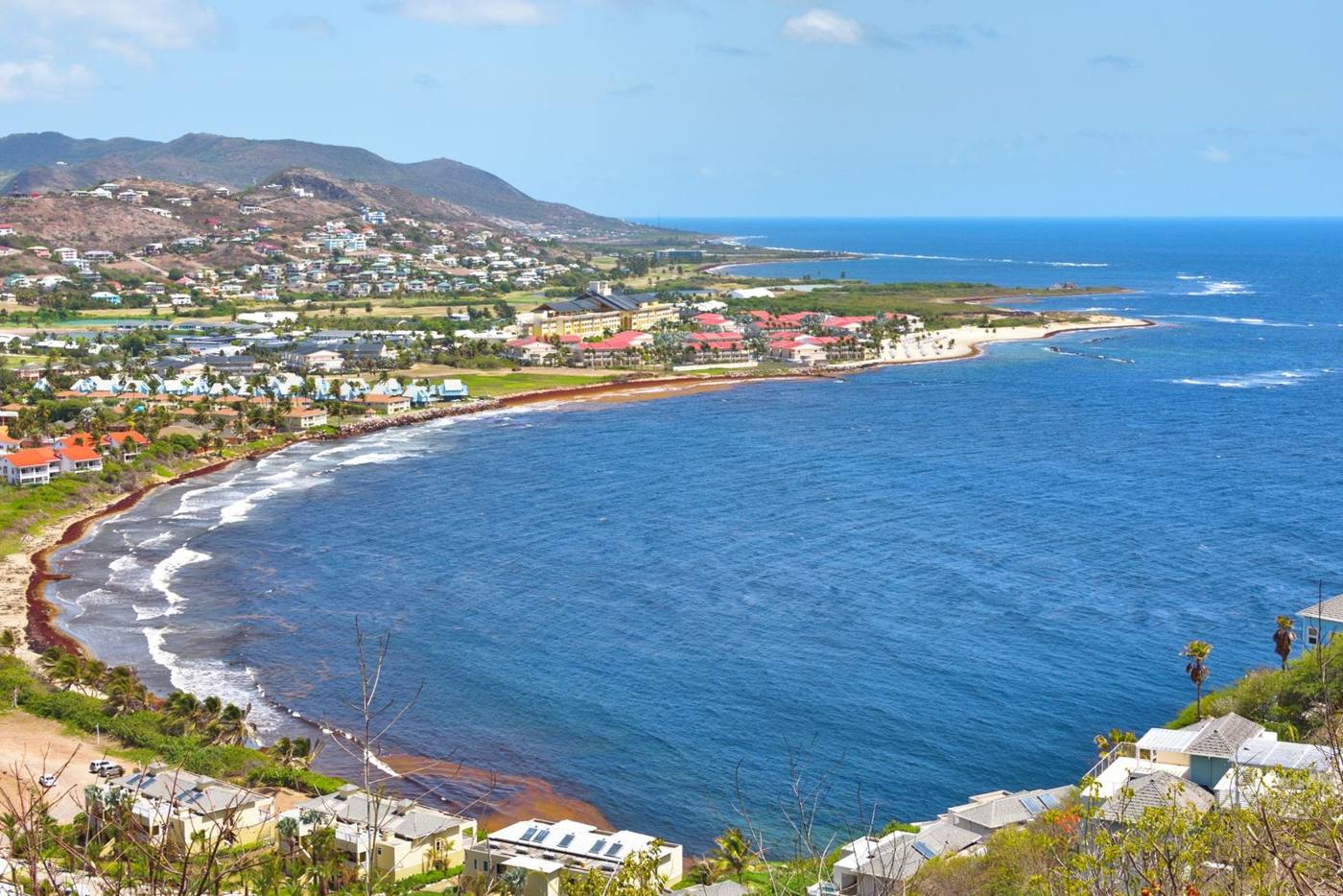
In the morning go to Pinney's Beach, the long stretch of golden sand north of Charlestown, lined with coconut palms, with Nevis Peak behind you and St Kitts in front, across the channel. Walk along the shore, swim in the calm water and, if you bring a mask and snorkel, look at the fish near the rocks at each end of the beach. Currents can be stronger than they look and there is not always a lifeguard: go into the water only where it is calm.
Have lunch with a plate of fish or lobster, if it is in season, at one of the beach shacks on the sand, and drink a fresh passion fruit or guava juice.
In the afternoon go back to Charlestown and take the ferry to Basseterre. Arrive a little early, because times sometimes change.
In these three days you have seen slow Nevis: little Charlestown with its stone houses and Jewish cemetery, Hamilton's house, the hot waters of Bath, the windmills of the old plantations around Nevis Peak and Pinney's Beach. It is an island to enjoy without hurry, with few tourists and plenty of history.
When to go: from December to April, in the dry season, with cooler weather and a calm sea. From June to November it is the season of hurricanes and rain.
Practical tip: wear sun cream even when it is cloudy, and do not leave valuables unattended on the beach.
For those seeking calm and history on a small scale. The United States is at level 1. June to November is hurricane season.
Before you go
- Documents and visa
- Valid passport, ideally with at least six months' validity after arrival; Italian and EU citizens can stay up to 90 days in any 180 without a visa, British citizens up to 6 months. Before travelling you need an Electronic Travel Authorisation (eTA), applied for on the official portal knatravelform.kn, where you also fill in the immigration and customs form.
- Health and vaccines
- No compulsory vaccinations, except a yellow fever certificate if you arrive from a risk country. Protect yourself from mosquitoes, which can carry dengue. Get insurance with medical cover and repatriation. Emergencies: 911.
- Money and payments
- East Caribbean dollar, pegged to the US dollar, which is accepted almost everywhere. Cards work in accommodation and larger shops; taxis have no meters, so agree the fare first.
- Power sockets
- Types A, B and G, 230 volts: British plugs fit type G sockets, but bring an adapter for the others.
- Time zone
- UTC-4 all year, four hours behind the UK in winter and five in summer.
- Safety
- No areas are advised against. Serious crime happens, including armed robbery and sexual assault: avoid beaches and isolated places after dark and use only licensed taxis, with yellow plates. Wearing camouflage clothing is illegal, even for children. Traffic drives on the left and you need a temporary local licence. Currents can be strong and not all beaches have lifeguards. Hurricane season runs from June to November. Official advice: GOV.UK.
Information checked in November 2026 for Italian and EU citizens. Rules change: always check before you travel.
Variations
Shorter: two days, with the morning crossing, Charlestown, the museum and Bath, and the return the next day after Pinney's Beach.
Longer: add a day to climb Nevis Peak with a local guide, a steep and muddy ascent through the forest.
Frequently asked questions
How do you get to Nevis?
By ferry from Basseterre, on St Kitts, in less than an hour. There is also a small airport, but the boat crossing is the simplest way. Check prices and times.
Do I need a car?
Not necessarily: you can drive round the island by taxi with a driver, agreeing the fare first. If you hire a car, traffic drives on the left and you need a local permit.
Can you bathe in the springs at Bath?
Yes, in the small stone pools beside the stream. The water is very hot: get in slowly and do not stay too long.
Indicative itinerary written by World Atlas. Before booking, check timetables, seasonal openings, documents and safety.