Saint Kitts and Nevis
The UNESCO fortress of Brimstone Hill, the scenic sugarcane railway, Basseterre and the quiet island of Nevis with its hot springs.
- Basseterre
- Brimstone Hill
- St. Kitts Scenic Railway
- Charlestown
- Nevis
Day by day
- Day 1
Basseterre, the little capital
This five-day trip introduces you to the two islands of the federation: St Kitts, with Basseterre, the UNESCO fortress of Brimstone Hill and the scenic train of the old sugar cane plantations, and quieter Nevis, with Charlestown, the house of Alexander Hamilton and the hot springs.
Before you go: Italian citizens enter St Kitts and Nevis with a passport, ideally valid for at least six months after arrival, and without a visa for stays of up to 90 days in any 180, under the agreement with the European Union. Before your flight you must obtain the online Electronic Travel Authorisation, eTA, on the official government portal, where you also fill in the immigration and customs form. Other nationalities should check their own rules. The United Kingdom does not advise against any area, but reports serious crime, including armed robbery: avoid beaches and isolated places after dark and use only licensed taxis, with yellow plates. Wearing camouflage clothing is illegal, even for children. Hurricane season runs from June to November.
Basseterre is easy to see on foot in half a day. Start at the Circus, the small roundabout with its green Victorian clock, and walk down towards the harbour. Visit the National Museum, in the old Treasury Building on the seafront, which tells the story of the Kalinago, colonisation and the plantations. Check prices and times. Then reach Independence Square, a garden with a fountain and trees where enslaved people were once sold, and the Co-Cathedral of the Immaculate Conception, built of dark stone.
In the evening eat grilled fish with rice and peas.
Sleep in Basseterre for two nights.
Practical tip: taxis have no meters, so always agree the fare before getting in.
- Day 2
Brimstone Hill and the scenic train
Today you see the most famous fortress in the Caribbean and travel round the island on the sugar cane line.
In the morning follow the coast road west to Brimstone Hill, the national park with the fortress listed by UNESCO. The British built it on a volcanic hill rising sheer from the sea, with the labour of enslaved Africans, over more than a century. In 1782 it was besieged and taken by the French, then returned to the British with the peace of the following year. Climb up to the citadel of Fort George, with its cannons, black stone bastions and a small museum. Check prices and times. From the top, on clear days, you can see the nearby islands of Sint Eustatius and Saba.
In the afternoon board the scenic train, which runs on an old narrow-gauge railway built in the early twentieth century to carry sugar cane to the mills. The route circles much of the island, past abandoned fields, villages, bridges over ravines and ocean views, with a commentary on the history of the plantations. The sugar industry closed in 2005. The train runs mainly on days when cruise ships are in port: book ahead and check prices and times.
Return to Basseterre at sunset.
Sleep in Basseterre.
Practical tip: at Brimstone Hill bring a hat and water, because there is little shade on the bastions and the sun is strong.
- Day 3
Ferry to Nevis and Charlestown
Today you cross the channel and arrive on Nevis, the sister island.
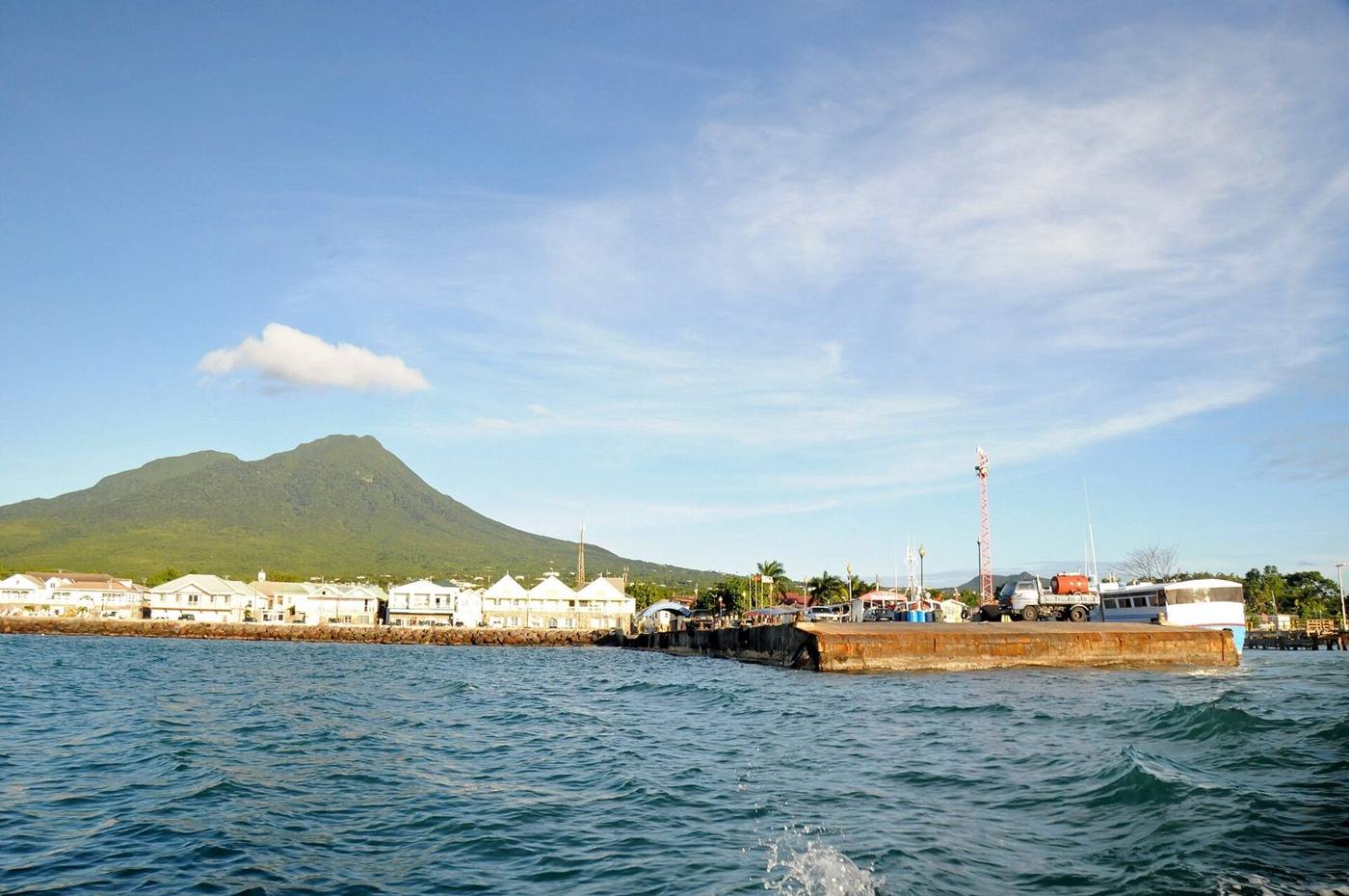
In the morning take the ferry from Basseterre to Charlestown. In less than an hour you watch Nevis Peak grow in front of you, the extinct volcano covered in forest, its summit almost always in the clouds. Check prices and times.
Charlestown is a small town of stone and wooden houses with colourful verandas. Start at the Museum of Nevis History, in a Georgian house by the sea rebuilt on the spot where Alexander Hamilton was born, one of the founding fathers of the United States, who left the Caribbean as a boy. The rooms tell the story of his life, plantation society and the island's traditions. Check prices and times.
Then walk along Main Street and on to the old Jewish cemetery, with seventeenth-century gravestones in the grass, a sign of a merchant community that lived here for centuries.
In the afternoon relax at Pinney's Beach, the long palm-lined beach north of town, and watch the sunset over St Kitts across the channel. Swim only where the water is calm, because there is not always a lifeguard.
In the evening try goat water, the spicy goat stew, or a fish dish.
Sleep on Nevis for two nights.
Practical tip: keep a copy of your passport and eTA on your phone, which is also useful for checks at the port.
- Day 4
The hot springs and the Nevis drive
Today you explore Nevis at an easy pace, among hot springs, stone churches and old plantations.
In the morning go to Bath, just south of Charlestown. Here hot water comes out of the ground and fills small stone pools along a stream, where local people come to bathe. Above the pools stands the large building of the eighteenth-century spa hotel, one of the first hotels in the Caribbean. Sit in the steaming water and then cool off in the shade of the trees.
Then set off round the island by taxi with a driver. The road makes a loop around Nevis Peak and passes through villages such as Gingerland, fields, woods and the ruins of the stone windmills where cane was crushed. Stop at St John's church in Fig Tree: its register records the marriage of Admiral Horatio Nelson to Frances Nisbet, in 1787. On the Atlantic coast the sea is rougher and the beaches are wild: look, but do not swim. With a bit of luck you will see green monkeys by the roadside.
In the afternoon head back to the west coast and enjoy the last swim of the day.
Sleep on Nevis.
Practical tip: if you want to climb Nevis Peak, book a local guide and leave at dawn: the trail is steep and muddy and takes a whole day.
- Day 5
The return and departure
Today you go back to St Kitts and leave the federation.
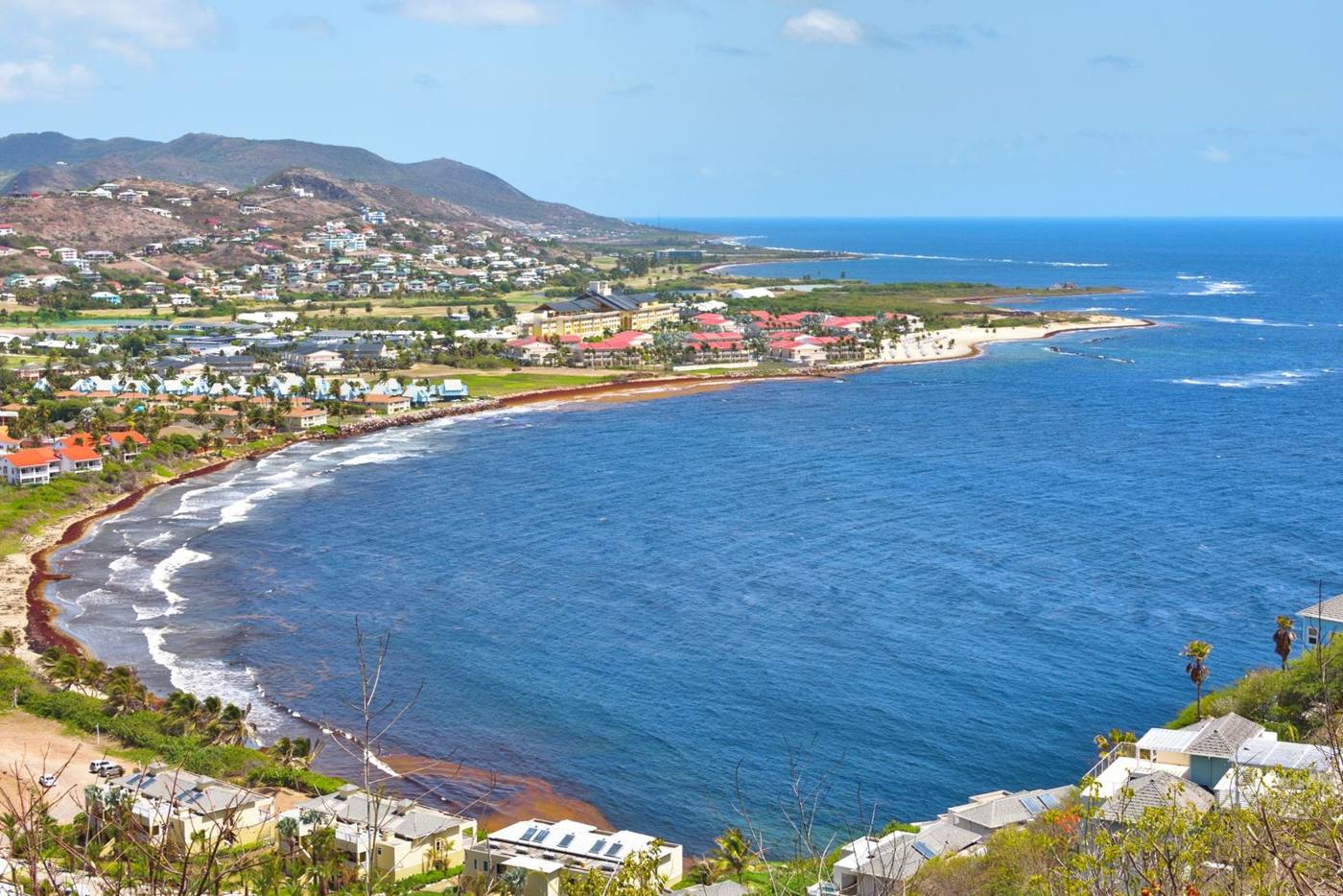
In the morning take the ferry to Basseterre, early, to leave margin before your flight. If you still have a few hours, take a taxi along the road of the south-east peninsula, which climbs to the Timothy Hill viewpoint: from here you see the Caribbean Sea on one side and the Atlantic Ocean on the other, with Nevis in the background. The beaches of the peninsula are quiet and the water is clear.
Then go to the airport, a few minutes from Basseterre.
In these five days you have seen two small, peaceful islands with well-preserved colonial history: Basseterre with the Circus and Independence Square, the fortress of Brimstone Hill above the sea, the sugar cane train, Charlestown and Hamilton's house, the hot waters of Bath, and the churches and windmills around Nevis Peak. St Kitts is livelier, Nevis more authentic and quiet.
When to go: from December to April, in the dry season, when the weather is cooler and the sea is calm. From June to November is hurricane season; in summer it is hotter and rains more often.
Practical tip: keep a few East Caribbean dollars for last purchases, but the US dollar is accepted almost everywhere.
Two small, quiet islands with well-preserved colonial history. The railway runs mainly when cruise ships arrive. Nevis is more authentic and quiet.
Before you go
- Documents and visa
- Valid passport, ideally with at least six months' validity after arrival; Italian and EU citizens can stay up to 90 days in any 180 without a visa, British citizens up to 6 months. Before travelling you need an Electronic Travel Authorisation (eTA), applied for on the official portal knatravelform.kn, where you also fill in the immigration and customs form.
- Health and vaccines
- No compulsory vaccinations, except a yellow fever certificate if you arrive from a risk country. Protect yourself from mosquitoes, which can carry dengue. Get insurance with medical cover and repatriation. Emergencies: 911.
- Money and payments
- East Caribbean dollar, pegged to the US dollar, which is accepted almost everywhere. Cards work in accommodation and larger shops; taxis have no meters, so agree the fare first.
- Power sockets
- Types A, B and G, 230 volts: British plugs fit type G sockets, but bring an adapter for the others.
- Time zone
- UTC-4 all year, four hours behind the UK in winter and five in summer.
- Safety
- No areas are advised against. Serious crime happens, including armed robbery and sexual assault: avoid beaches and isolated places after dark and use only licensed taxis, with yellow plates. Wearing camouflage clothing is illegal, even for children. Traffic drives on the left and you need a temporary local licence. Currents can be strong and not all beaches have lifeguards. Hurricane season runs from June to November. Official advice: GOV.UK.
Information checked in November 2026 for Italian and EU citizens. Rules change: always check before you travel.
Variations
Shorter: three days, with Basseterre and Brimstone Hill on the first day, the train on the second and a day on Nevis on the third.
Longer: add a day on St Kitts to climb Mount Liamuiga, the highest volcano in the federation, with a guide.
Frequently asked questions
Does the train run every day?
No, it runs mainly when cruise ships are in port. Book ahead and plan the second day around the timetable.
How long is the ferry to Nevis?
Less than an hour between Basseterre and Charlestown. There are several crossings a day: check prices and times and arrive early.
Do I need a visa?
No, Italian citizens enter without a visa for up to 90 days in any 180, but they must obtain the online Electronic Travel Authorisation before the flight.
Indicative itinerary written by World Atlas. Before booking, check timetables, seasonal openings, documents and safety.