The Banat and the Danube gorges
Timișoara, a European Capital of Culture with its Art Nouveau squares, then the Danube's Iron Gates with the carved face of Decebalus, Mraconia monastery and Bigăr waterfall.
- Timișoara
- Bigăr
- Dubova
- Cazanele Dunării
- Orșova
Day by day
- Day 1
Timișoara: Victory Square and the 1989 revolution
This five-day trip takes you to the Banat, in south-western Romania, a Central European region shaped by its rivers: Timișoara, the Bigăr waterfall, the Danube gorges with the face of Decebalus, and Orșova.
Before you go: Italian citizens can enter Romania with an electronic identity card or a passport; Romania has been in the Schengen area since 1 January 2025. Other nationalities should check their own rules. The currency is the Romanian leu, not the euro. In the city watch out for pickpockets on public transport and in crowded areas, and book taxis through an app to avoid inflated fares. If you drive, remember that the alcohol limit for drivers in Romania is zero.
Timișoara is an elegant city, with nineteenth and early twentieth-century buildings that recall Vienna and Budapest. Start from Victory Square, a long pedestrian boulevard with flower beds and fountains. At one end stands the Opera House; at the other the Orthodox Metropolitan Cathedral, built between the 1930s and 1940s, with colourful domes and mosaic roofs.
This square is linked to the revolution of December 1989: it was in Timișoara that the protests began which within a few days brought down the regime of Nicolae Ceaușescu. To understand those days, visit the Memorial of the Revolution, a small museum with photos, documents and testimonies. Check prices and times.
In the evening walk along the Bega canal, with its parks and bridges, and have dinner in the centre. Try ciorbă, a sour soup, and mici, small grilled rolls of minced meat.
Sleep in Timișoara, for two nights.
Practical tip: Timișoara is easy to explore on foot; for the airport, about twelve kilometres away, use a taxi booked through an app.
- Day 2
Baroque Timișoara and the Fabric district
On the second day you discover the oldest side of Timișoara and its historic districts.
In the morning go to Unirii Square, the city's Baroque square, one of the most beautiful in Romania. On one side stands the eighteenth-century Baroque Catholic cathedral, on the other the Serbian Orthodox cathedral; in the middle rises a Holy Trinity column, erected after a plague epidemic. Around it, the colourful buildings house cafés with outdoor tables. Nearby visit the Art Museum, in a Baroque palace on the square. Check prices and times.
Then cross Liberty Square, with the old town hall, and walk through the streets of the centre, full of Art Nouveau façades with ironwork and stucco decorations. Timișoara was already a modern city in the nineteenth century: in 1884 it was one of the first cities in Europe to have electric street lighting.
In the afternoon take the tram to the Fabric district, across the canal. Craftsmen and workers of many origins lived here, Hungarians, Germans, Serbs, Jews and Romanians. You see the large synagogue, the churches and the Art Nouveau buildings, some restored, others waiting for restoration. In 2023 Timișoara was European Capital of Culture and many spaces were renovated.
In the evening, if it is the season, sit at one of the outdoor places along the Bega.
Practical tip: in the historic districts watch the pavements, which are broken in places; wear comfortable shoes, not sandals.
- Day 3
The Bigăr waterfall and the Nera gorges
Today you leave Timișoara and head south-east into the Banat mountains, about three hours by car. The road crosses karst plateaus and beech forests, with few villages and the odd flock of sheep grazing.
Your destination is the Bigăr waterfall, in the Cheile Nerei-Beușnița National Park, right on the forty-fifth parallel, halfway between the equator and the North Pole, as a sign by the road reminds you. The waterfall flows over a dome-shaped rock covered in moss, and the water splits into many thin threads. In 2021 part of the rock broke away and the waterfall changed, but it is still very beautiful. The path from the car park is short. Below the waterfall the water forms small pools, but do not go in: the area is protected. Check prices and times.
If you have time, before or after, visit another part of the park: the gorges of the river Nera, with the lake of Ochiul Beiului, with turquoise, clear water, reached on foot along a forest path. Allow a few hours. Ask about the trails beforehand, because some passages are narrow and slippery.
In the late afternoon continue to the Danube, in about two hours, to Dubova or Eșelnița, two villages on the riverbank.
Sleep in or near Dubova, for two nights.
Practical tip: on the Banat mountain roads drive by day and take it slowly: they are narrow, with bends, potholes and sometimes animals on the road, and petrol stations are few.
- Day 4
By boat through the Danube gorges
Today you see the most spectacular part of the Danube, where the great river passes between the mountains of the Carpathians and the Balkans.
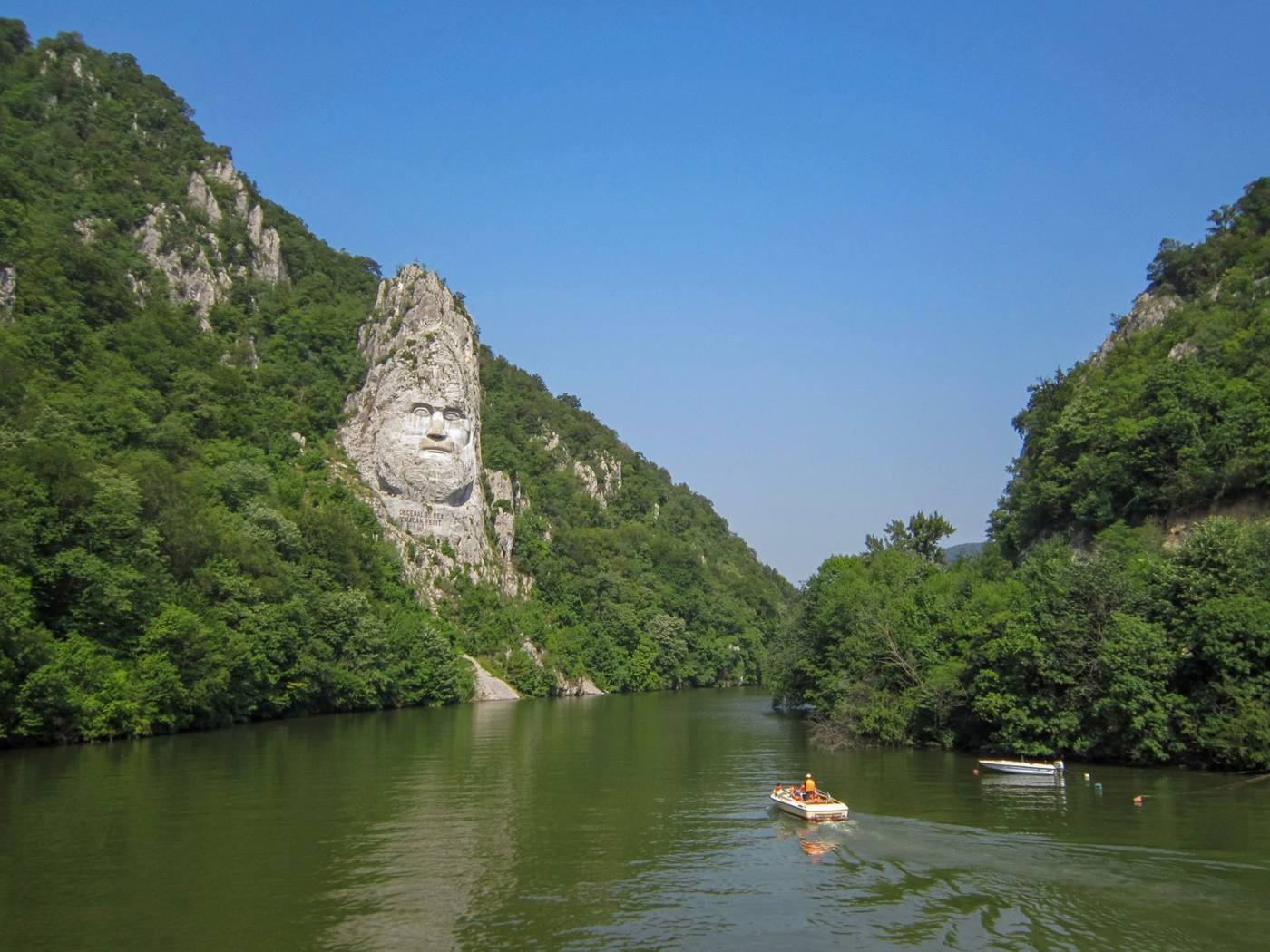
In the morning board a boat at Dubova for a trip through the Cazane, the Cauldrons, the narrowest stretch of the Danube gorges, where the river squeezes between very high rock walls. On the other bank is Serbia. The boat passes the face of Decebalus, the last king of the Dacians, carved into the rock between 1994 and 2004: it is about fifty metres high and one of the largest rock carvings of a face in Europe. It is a recent work, not an ancient one. Nearby you see Mraconia Monastery, on the bank, and, on the Serbian side, the Tabula Traiana, a Roman plaque that recalls the road built by the emperor Trajan along the river. Many boats also stop at Ponicova Cave or Veterani Cave. Check prices and times.
In the afternoon walk one of the trails of the Iron Gates Natural Park, which climb above the river. From the viewpoint of Ciucaru Mare you see the gorges from above, with the bends of the Danube below you. The path is steep and has no shade.
In the evening have dinner with Danube fish, such as carp or catfish, grilled.
Practical tip: before getting on a boat check that there are life jackets for everyone and wear a hat, because the sun is strong on the river.
- Day 5
Orșova, the Iron Gates and the way back
On the last day you follow the Danube to Orșova and then drive back towards Timișoara.
Orșova is a new town: old Orșova was flooded when, in the 1970s, the Iron Gates dam raised the level of the river. The island of Ada Kaleh also disappeared, home to a Turkish community, with its mosque and bazaar. Walk along the riverfront and visit the Sfânta Ana Monastery, on the hill, from where you see the lake created by the dam. Check prices and times.
If you have time, continue a few kilometres along the river to the Iron Gates I dam, one of the largest hydroelectric plants in Europe, built jointly by Romania and Yugoslavia. You can look at it from a viewpoint on the road.
Then drive back to Timișoara, about three and a half hours away, for your departure.
Trip summary: in five days you have seen Timișoara, with Victory Square, the Memorial of the Revolution, Unirii Square and the Fabric district; the Bigăr waterfall and the Nera gorges; the Danube gorges by boat, with the face of Decebalus; and Orșova with the Iron Gates.
When to go: from May to September. In May and June the green is intense and the waterfalls have more water; in July and August it is very hot, but the river is pleasant. In September the light is soft and there are fewer people.
Practical tip: along the Danube there are few cash machines outside the towns; withdraw money in Timișoara or Orșova and carry cash for boats and guesthouses.
A different Romania, central European and riverside. The face of Decebalus is recent, carved between 1994 and 2004. The Danube roads are narrow but scenic.
Before you go
- Documents and visa
- EU citizens need a valid identity card or passport: Romania is in the EU and, since 1 January 2025, fully in the Schengen area, with no checks at internal borders. Check your document is intact and readable. Other nationalities should check the Schengen rules.
- Health and vaccines
- No vaccines required. EU citizens should bring their EHIC; take insurance covering medical costs, repatriation and, for hiking, mountain rescue. Emergencies: 112.
- Money and payments
- Romanian leu (RON); Romania does not use the euro. Cards work almost everywhere in towns, but carry cash in villages and mountain huts. Change money only at banks or authorised exchange offices. To drive on national roads outside towns you need the electronic rovinieta: buy it only on the official CNAIR portal (erovinieta.ro) or from authorised sellers, as some unofficial websites add fees. Check current prices.
- Power sockets
- Types C and F, 230 volts.
- Time zone
- Eastern European Time (UTC+2, summer UTC+3).
- Safety
- A generally safe country. Watch for pickpockets in large towns, especially Bucharest and on public transport, taxis that overcharge (taxi apps are more reliable) and drink spiking in bars and clubs. Romania has a very large number of brown bears, including near roads and town outskirts: keep your distance, do not stop to photograph them and never feed them, which is illegal. The country is in an earthquake zone. Drone debris can fall near the Ukrainian border: do not touch it and follow local authorities. Official advice: GOV.UK.
Information checked in November 2026 for Italian and EU citizens. Rules change: always check before you travel.
Variations
In 3 days: Timișoara and one day by boat in the Danube gorges.
In 7 days: add the spa town of Băile Herculane and the villages of the Banat Mountains.
Frequently asked questions
Is the face of Decebalus ancient?
No, it is a recent work, carved into the rock between 1994 and 2004. It is best seen from a boat on the Danube.
How do I get to the Danube gorges?
By car from Timișoara, in about three or four hours. Public transport is limited: a hire car is the easiest choice.
How long is the boat trip in the Cazane?
Usually one to three hours, depending on the route and the stops at the caves. Check prices and times before boarding.
Indicative itinerary written by World Atlas. Before booking, check timetables, seasonal openings, documents and safety.
 8 daysEasy
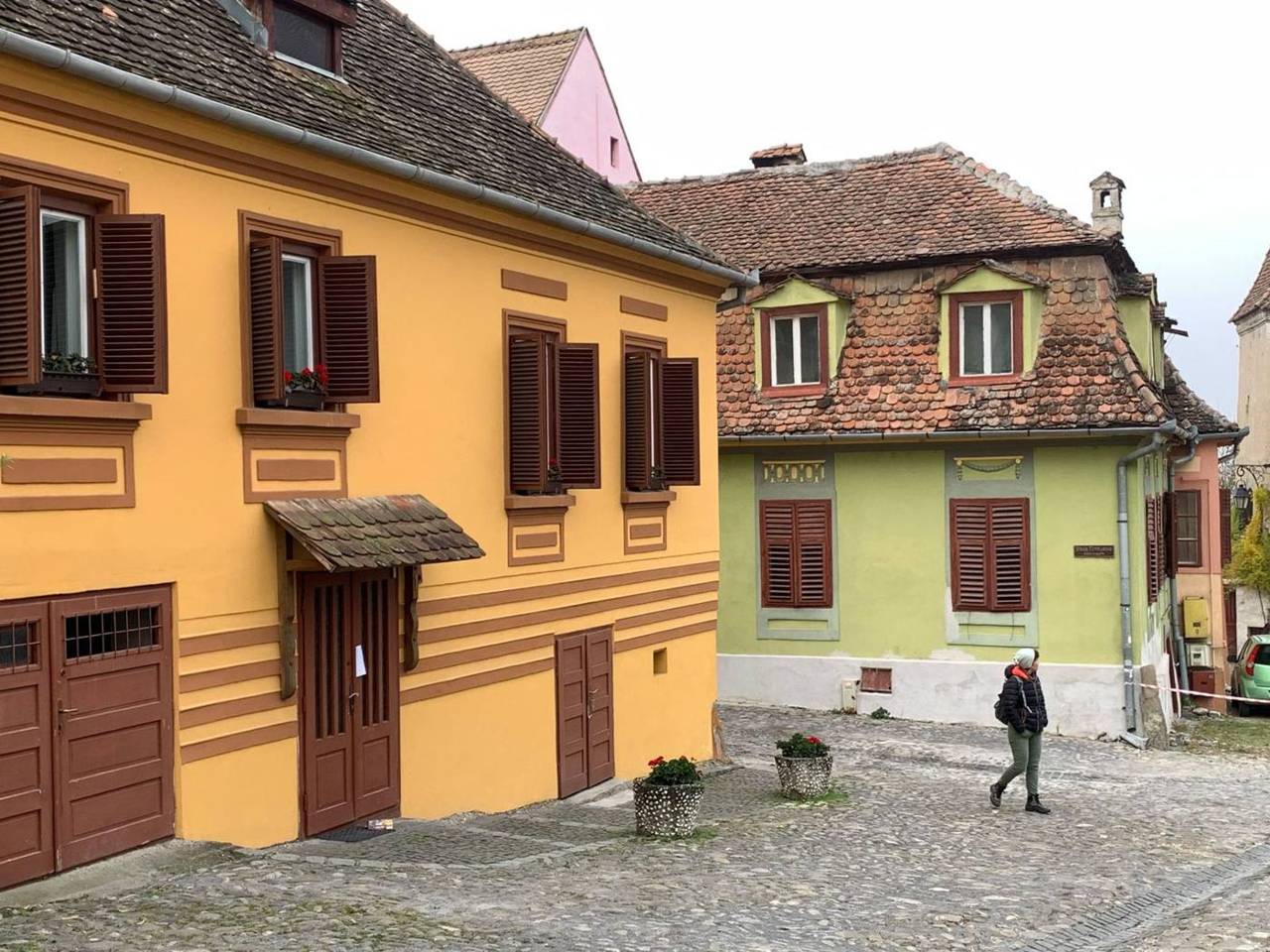
Transylvania
The Saxon towns of Brașov, Sighișoara and Sibiu, Bran Castle, Râșnov fortress and the UNESCO fortified churches.
 8 daysModerate
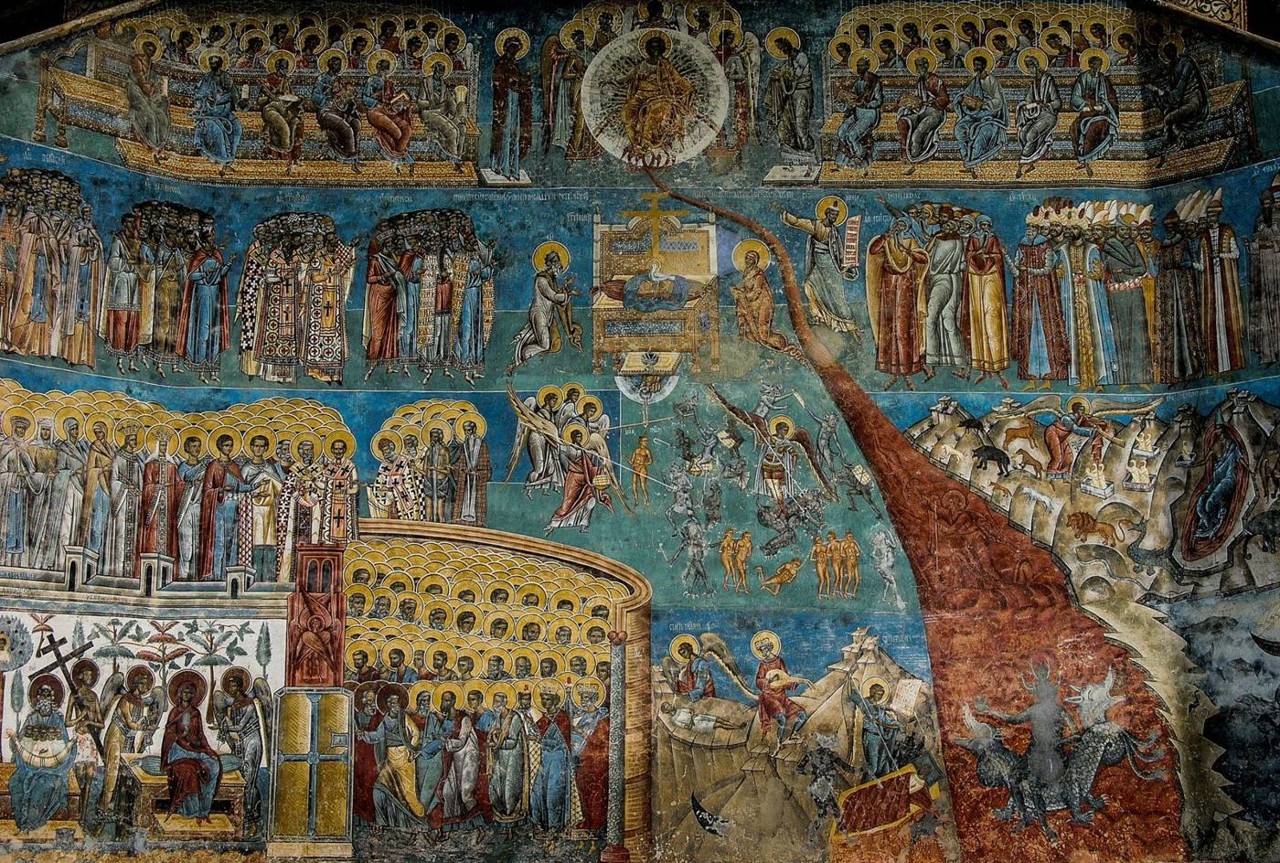
Maramureș and Bucovina
The UNESCO wooden churches of Maramureș, the Merry Cemetery of Săpânța and the painted monasteries of Bucovina.
 5 daysEasy
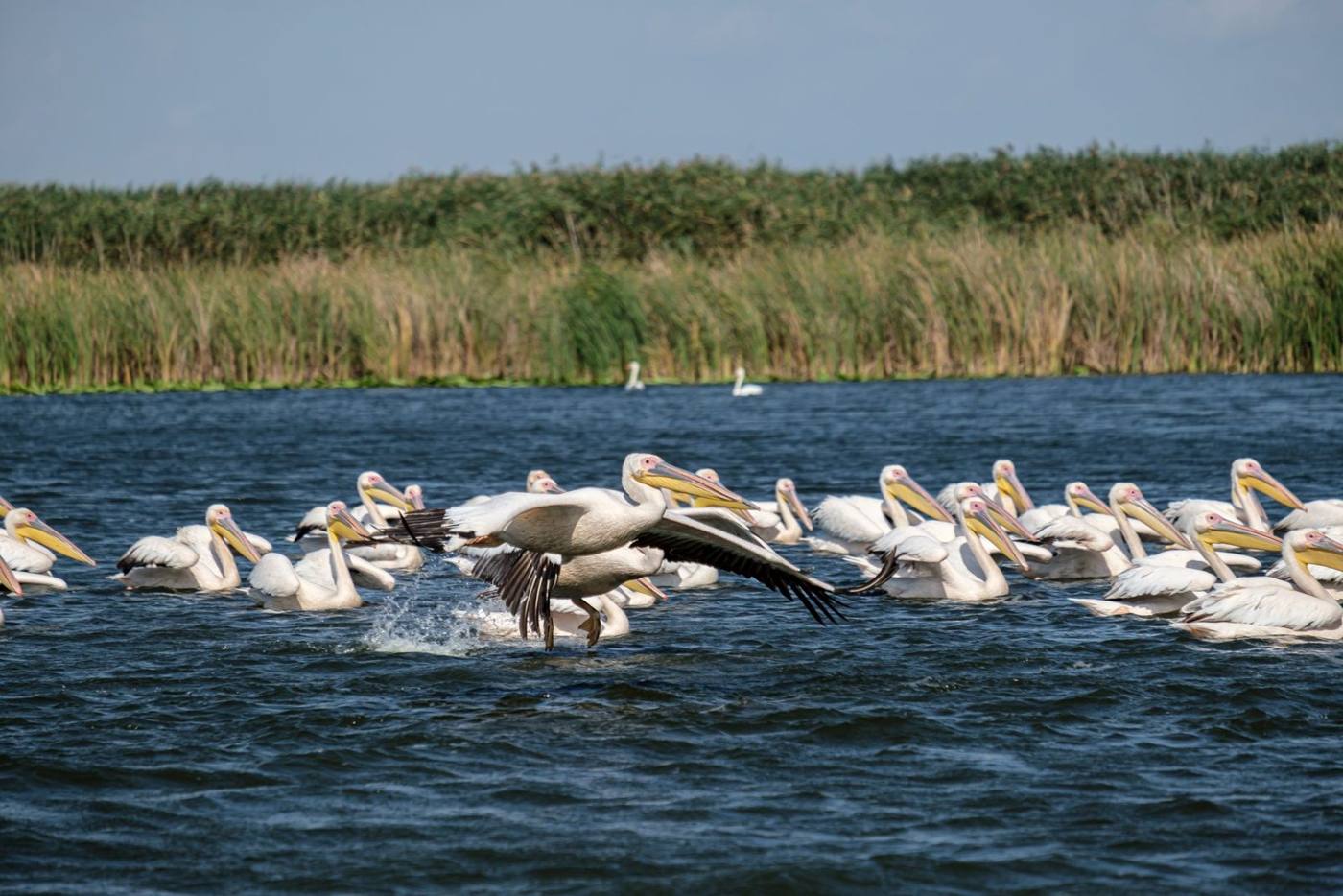
The Danube Delta
Channels, lagoons and reed beds in one of Europe's largest deltas: pelicans, herons and fishing villages reached only by boat.