Alentejo: Évora, Monsaraz and Mértola
A slow week in Portugal's plains, among white towns, Neolithic stone circles, wineries and a reservoir under one of Europe's darkest night skies.
- Lisbon
- Évora
- Cromeleque dos Almendres
- Estremoz
- Vila Viçosa
- Monsaraz
- Alqueva
- Mértola
- Beja
Day by day
- Day 1
Arrival in Lisbon and the drive to Évora
This trip goes to the Alentejo, the great region of southern Portugal between Lisbon and the Algarve, called the land beyond the Tagus. It is Portugal at its slowest and quietest: golden wheat plains, cork oak and holm oak woods, olive groves, vineyards, white villages with windows edged in blue and yellow, hilltop castles, megalithic monuments older than Stonehenge and simple, flavourful food. In summer it is very hot; in spring the fields are covered in flowers.
Portugal is in the Schengen area: EU citizens only need an identity card valid for travel. You fly into Lisbon and pick up a hire car.
From Lisbon you drive east to Évora, about an hour and a half on the motorway, crossing the Vasco da Gama bridge over the Tagus, one of the longest bridges in Europe, and then the Alentejo plain, with cork oaks scattered across the fields.
Évora is the capital of the Alentejo, a walled university town and UNESCO World Heritage Site, with white houses, cobbled lanes, squares and monuments of every era, Roman, medieval, Moorish and Renaissance.
In the evening walk in Praça do Giraldo, the main square, with its arcades and marble fountain, and the nearby lanes.
Have dinner with Alentejo food: black pork, from the black pigs raised no-cost range among the oaks and fed on acorns, with a glass of the region's red wine.
Spend the night in Évora.
Practical tip: the best time is March to May and September to October. In July and August temperatures often exceed forty degrees.
- Day 2
Évora on foot: the Roman temple, the cathedral and the Chapel of Bones
Today explore Évora on foot. The town is small and can be seen in a day.
In the morning start at the Roman temple, at the highest point of town, from the first century AD, with its granite Corinthian columns and white marble capitals, one of the best preserved Roman monuments on the Iberian peninsula. For centuries it was called the temple of Diana, although it was probably dedicated to the imperial cult.
Next door is the cathedral, the Sé, from the thirteenth century, looking like a fortress, with two different towers and a Gothic cloister. You can climb onto the cathedral roof and walk among the domes and towers, with a view over the whole town and the plain.
In the afternoon go to the church of St Francis, home to the Capela dos Ossos, the Chapel of Bones, built in the seventeenth century by the Franciscan friars: the walls and columns are entirely covered with human bones and skulls taken from the town's cemeteries and arranged in patterns. Above the entrance an inscription reads: we bones that are here, await yours. It was an invitation to reflect on the brevity of life.
Then walk along the sixteenth century Água de Prata aqueduct, which runs into the town and has small houses built into its arches.
Spend the night in Évora.
Practical tip: the cathedral roof and the Chapel of Bones charge entry: check prices and times. Dress respectfully in churches.
- Day 3
The Almendres Cromlech and Arraiolos with its carpets
Today explore the area around Évora, with some of the oldest monuments in Europe and a village of embroidered carpets.
In the morning go to the Almendres Cromlech, about fifteen kilometres west of Évora, reached by a dirt road through cork oaks. It is one of the largest megalithic complexes on the Iberian peninsula: about a hundred standing stones, called menhirs, arranged in circles and ellipses on a hillside, some decorated with carvings. The oldest date back about seven thousand years, long before Stonehenge. Scholars think it was a place of worship linked to the sun and the seasons. Not far away, in a field, stands an isolated menhir about four metres high. There are also dolmens in the area, such as the Anta Grande do Zambujeiro.
Early in the morning, when the light is low and no one is around, the place is magical.
In the afternoon go to Arraiolos, about twenty minutes north of Évora, a white village dominated by a circular castle on the hill. Arraiolos is famous for its carpets, embroidered by hand with coloured wool on jute canvas, with designs of flowers, animals and geometric patterns, a tradition dating back to the seventeenth century. You can watch the embroiderers at work and visit the carpet interpretation centre.
In the evening return to Évora.
Spend the night in Évora.
Practical tip: the cromlech is at no cost and open all day, but the dirt road can be difficult after rain. A handmade Arraiolos carpet takes weeks of work and is expensive: ask where it was made.
- Day 4
The marble towns: Estremoz and Vila Viçosa
Today head north east of Évora to the marble towns, about forty minutes away.
The area between Estremoz, Borba and Vila Viçosa is one of Europe's main marble regions: the white and pink marble quarried here has been used for centuries, and in these towns even pavements, doorsteps and wash houses are made of marble. Along the road you see the great open quarries, tens of metres deep.
In the morning go to Estremoz, ideally on a Saturday, when the market fills the great Rossio square, with stalls of cheese, charcuterie, vegetables, ceramics, antiques and the bonecos de Estremoz, small painted clay figurines on UNESCO's intangible heritage list. Then climb to the walled upper town, with the castle and its tower of the three crowns, and the chapel of the holy queen Isabel.
In the afternoon go to Vila Viçosa, about twenty minutes away, a small elegant town with the ducal palace of the Braganzas, the family that gave Portugal its kings from the seventeenth century to 1910. The palace, with a long marble facade, holds decorated rooms, tapestries, porcelain, a great kitchen with copper pans and the royal carriages. Nearby are the castle and the sanctuary of Portugal's patron saint.
In the evening return to Évora or stay in Estremoz.
Spend the night in Estremoz or Évora.
Practical tip: the ducal palace is visited only on guided tours and closes on some days: check times and price. The Estremoz market is held on Saturday mornings.
- Day 5
Monsaraz above Lake Alqueva and the stars
Today go to Monsaraz, about an hour east of Évora, near the Spanish border.
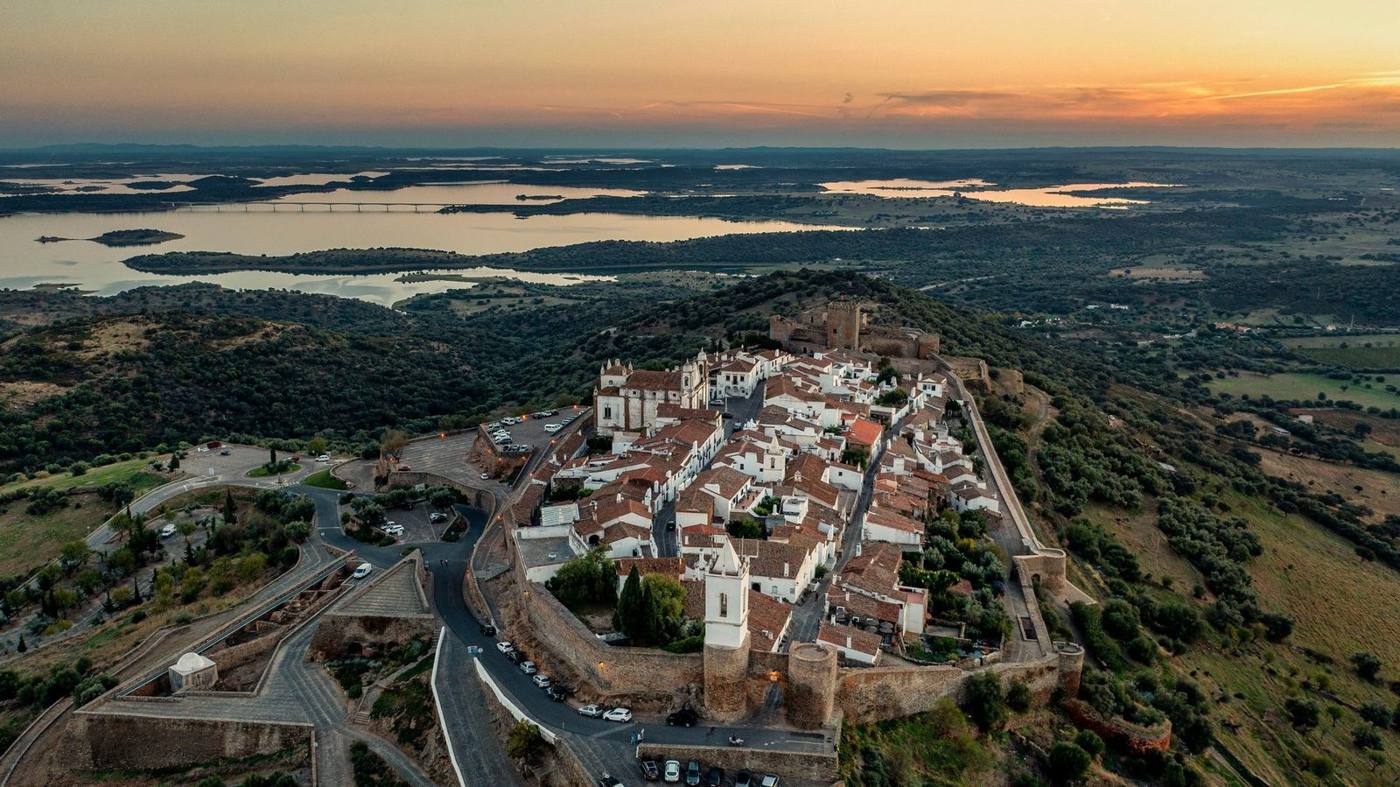
Monsaraz is a small walled medieval village on a hill, with white houses and dark stone streets, a castle and a church, from which you see the whole plain and the great Alqueva lake, the largest artificial lake in western Europe, created by a dam on the Guadiana in the early 2000s, with hundreds of small islands. The village has only a few dozen inhabitants and no cars in its streets.
In the morning walk around Monsaraz, climb the walls and the castle tower, and visit the small museum with a medieval fresco of the good and the bad judge.
In the afternoon visit a winery in the Reguengos de Monsaraz area, one of the most important wine areas of the Alentejo, producing red and white wines. Some wineries keep up the tradition of talha wine, fermented in large clay jars as in Roman times.
Alternatively take a boat or kayak trip on Lake Alqueva.
In the evening, the Alqueva lake area is a Dark Sky reserve, one of the first in the world recognised for the quality of its night sky, with an observatory for watching the stars and the Milky Way.
Spend the night in or near Monsaraz.
Practical tip: winery visits and stargazing sessions must be booked: check prices and times. Moonless nights are best for the stars.
- Day 6
Along the Guadiana to Mértola
Today head south along the Guadiana, which partly marks the border with Spain, to Mértola, about two hours from Monsaraz.
On the way you pass Moura, a town with a castle and an old Moorish quarter, and ever wilder landscapes, with hills covered in rockrose, holm oaks and olive trees.
Mértola is one of the most beautiful and unusual villages in Portugal, called a museum town. It stands on a hill above the point where the Oeiras river flows into the Guadiana, with white houses climbing the slope, a castle and walls. It was an important port in Roman and then Moorish times, when the Guadiana was navigable to the sea, and keeps remains of all these eras.
The most extraordinary monument is the main church, which was a twelfth century mosque, converted into a church after the Christian reconquest: inside you still see the forest of columns and the mihrab, the niche indicating the direction of Mecca. It is one of the few medieval mosques preserved in Portugal.
In the village visit the museums, spread across several buildings: the Islamic museum, with ceramics and objects from the Moorish period, the early Christian museum and the Roman house beneath the town hall.
At sunset climb to the castle, with a view over the river and the valley.
Spend the night in Mértola.
Practical tip: Mértola's museums share a single ticket: check. Every two years, in May, an Islamic festival with a market is held: ask about the dates.
- Day 7
Beja and the drive back to Lisbon
Today head back north towards Lisbon via Beja, about an hour from Mértola.
Beja is a quiet town in the middle of the Lower Alentejo plain, with a medieval castle and a very tall keep, the torre de menagem, one of the tallest in Portugal, from which you see the plain to the horizon.
Beja's most famous monument is the Convent of Our Lady of the Conception, now the regional museum, with a cloister decorated with azulejos, Portuguese painted tiles, and a church covered in gilded wood. The convent is linked to the story of Mariana Alcoforado, a seventeenth century nun to whom the Portuguese Letters are attributed, passionate love letters to a French officer, published in France and famous throughout Europe, although scholars still debate who really wrote them.
At midday stop at a herdade, a large Alentejo farming estate, for lunch with produce from the land: Alentejo bread, olive oil, sheep's cheese, black pork charcuterie, açorda, a soup of bread, garlic, coriander and egg, and convent sweets.
In the afternoon continue to Lisbon, about two hours away.
In the evening, in Lisbon, walk around the Alfama or Chiado district.
Spend the night in Lisbon.
Practical tip: visits and lunches at herdades must be booked in advance. The Beja museum closes on some days: check.
- Day 8
Flight home from Lisbon
On the last day you leave from Lisbon.
If your flight is in the afternoon, you can make a last visit in the city in the morning. One option is the Belém district, with the Jerónimos Monastery, a UNESCO World Heritage Site, the Belém Tower on the Tagus and the Monument to the Discoveries, and the historic bakery where pastéis de Belém, custard tarts in puff pastry, are made.
Another option is the Alfama, Lisbon's oldest district, with steep lanes, stairways, houses with washing hung out, St George's Castle and the miradouros, viewpoints over the Tagus and the red roofs of the city.
Alternatively visit the National Tile Museum, in an old convent, which tells the story of Portuguese painted tiles from the fifteenth century to today, with a great panorama of Lisbon before the 1755 earthquake.
Before leaving buy some Alentejo produce: olive oil, wine, Serpa or Évora cheeses, an Arraiolos carpet, cork goods, and painted ceramics from Redondo or São Pedro do Corval, Portugal's largest pottery centre, near Monsaraz.
Lisbon airport is close to the city, about twenty to thirty minutes from the centre by metro or taxi.
Practical tip: return the car at the airport, checking the electronic tolls on Portuguese motorways, paid through a device in the hire car: ask the rental company about the conditions.
For people who already know Lisbon and want Portugal at a slower pace, built around wine and the table, with no crowds. The highlight is the small towns, still intact, and evenings in Monsaraz. The limit is that you need a car, the distances look short but the roads are slow, and summer easily goes above 40 degrees. Book wineries ahead, many only receive by appointment.
Before you go
- Documents and visa
- EU citizens need a valid identity card or passport. Other nationalities should check the Schengen rules.
- Health and vaccines
- No vaccines required. EU citizens should bring their EHIC. Emergencies: 112.
- Money and payments
- Euro. Cards are accepted almost everywhere. Lisbon, Porto and several municipalities, including in the Algarve, charge a tourist tax per person per night.
- Power sockets
- Types C and F, 230 volts.
- Time zone
- Western European Time (UTC+0, summer UTC+1); the Azores are one hour behind the mainland.
- Safety
- A very safe country. In Lisbon watch for pickpockets on tram 28 and in the busiest areas; in summer, wildfire risk inland. Official advice: GOV.UK.
Information checked in November 2026 for Italian and EU citizens. Rules change: always check before you travel.
Variations
In 5 days: Évora, Almendres, Estremoz and Monsaraz.
In 11 days: add the Costa Vicentina and the Algarve, or the Serra de São Mamede and Marvão.
Frequently asked questions
When is the best time to go?
March to May and September to October. In summer it is very hot, often over forty degrees.
Do I need a car?
Yes, for the villages, megalithic sites and wineries. Évora can also be reached by train or bus from Lisbon.
Do I need a passport?
No, Portugal is in the Schengen area and EU citizens only need an identity card valid for travel.
Indicative itinerary written by World Atlas. Before booking, check timetables, seasonal openings, documents and safety.
 9 daysEasy
The Douro Valley and the Historic Villages of the Beiras
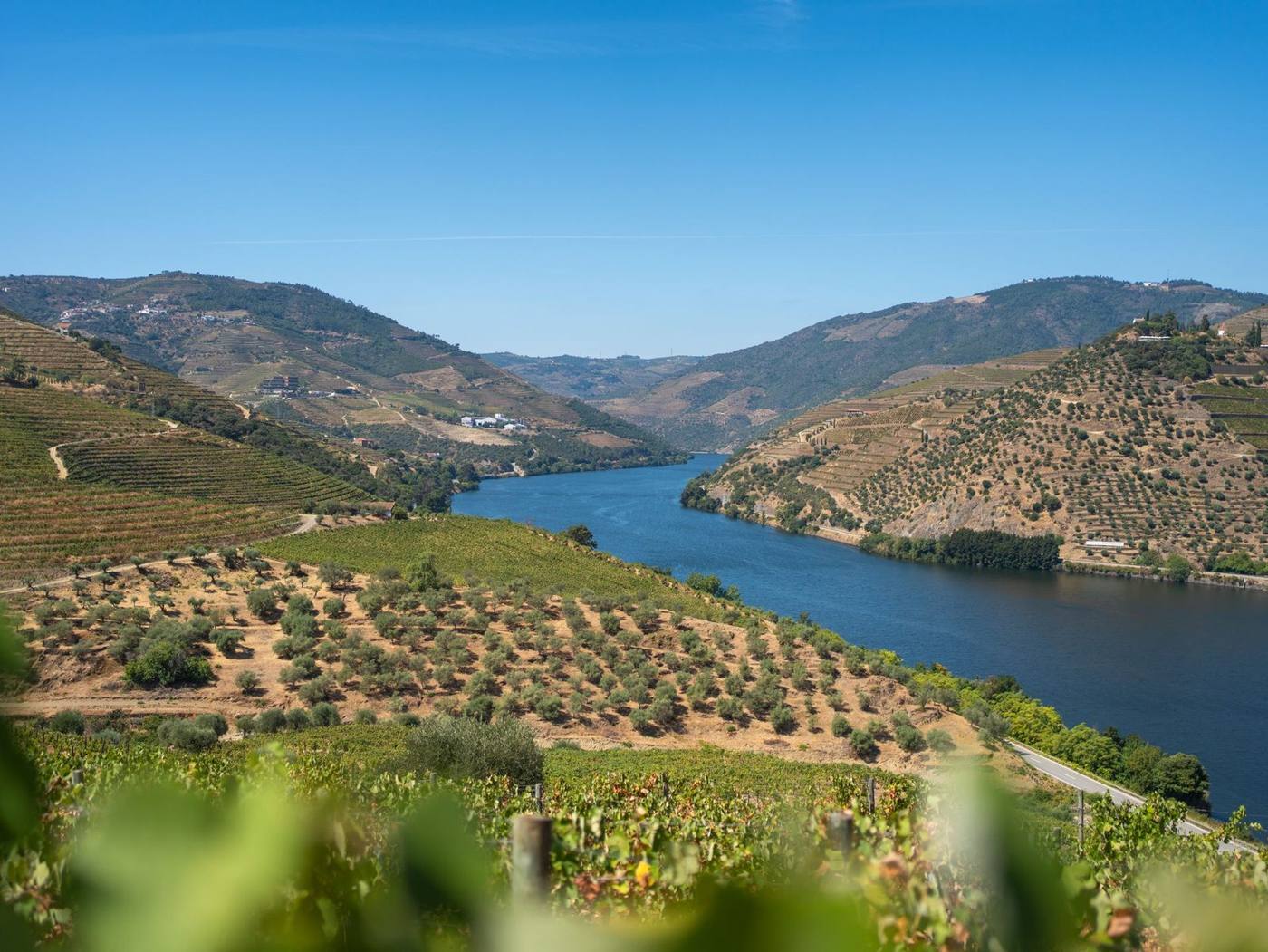
From Porto up the river past the wine quintas, on to the rock engravings of the Côa, and back along the Spanish border from one fortress to the next.
 4 daysEasy
Arrábida, Setúbal and the Sado dolphins
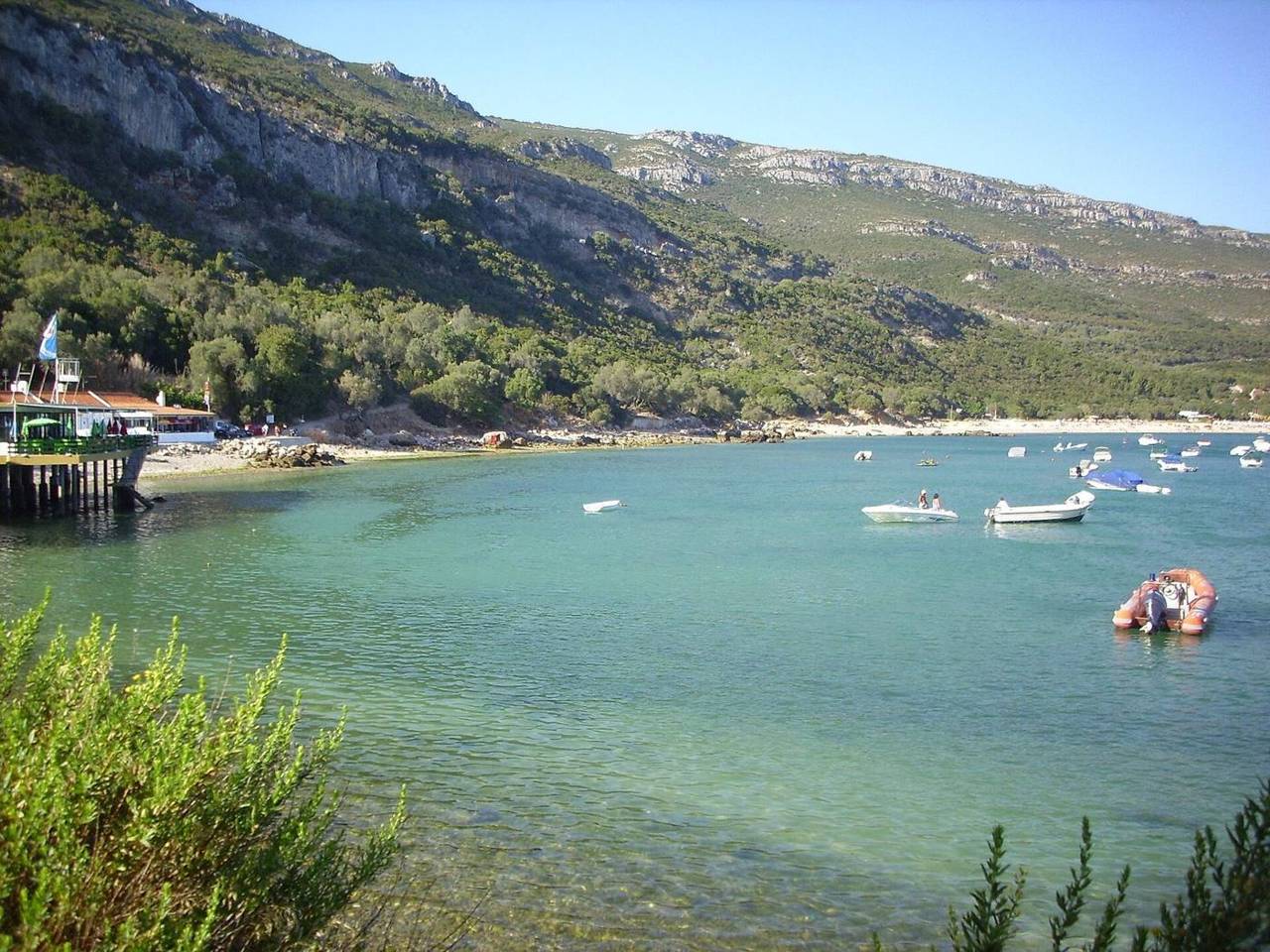
South of Lisbon, across the bridge: the Arrábida hills with the turquoise beaches of Portinho and Galapinhos, the fishing village of Sesimbra, Setúbal and its market, the resident dolphins of the Sado estuary by boat and the dunes of the Tróia peninsula.
 4 daysEasy
The central monasteries: Batalha, Alcobaça and Tomar
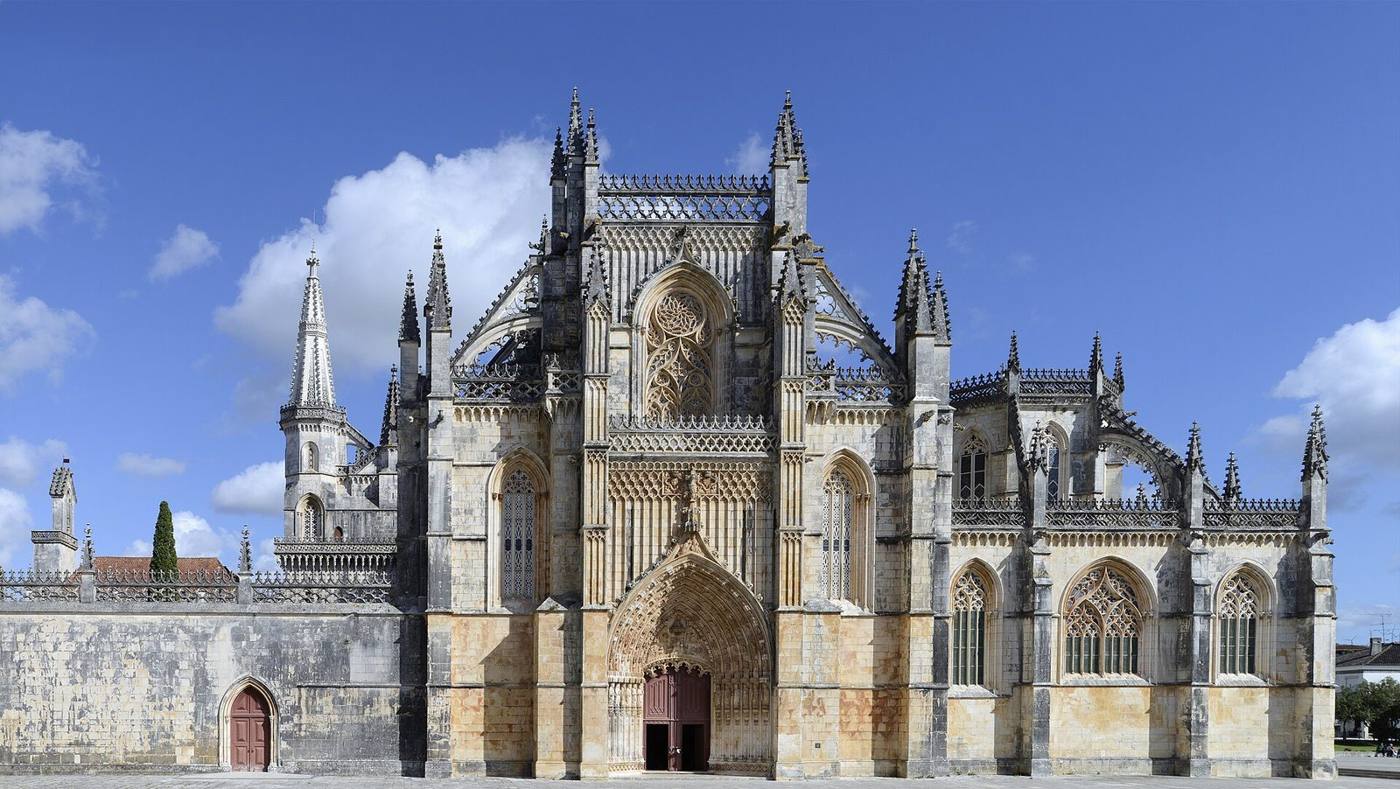
Three UNESCO monasteries a few kilometres apart: Gothic Batalha with its Unfinished Chapels, the Cistercian abbey of Alcobaça with the tombs of Pedro and Inês, the Templar convent at Tomar, then Coimbra with the university's baroque library and the fishing town of Nazaré.