Philippines express: Palawan, El Nido and Coron
Puerto Princesa's underground river, the lagoons of El Nido among limestone cliffs, and Coron's lakes and wrecks.
- Manila
- Puerto Princesa
- Sabang
- El Nido
- Coron
Day by day
- Day 1
Arrival in Manila and flight to Puerto Princesa
This trip crosses Palawan, the long and narrow island of the western Philippines, from south to north: the underground river of Sabang, the lagoons and beaches of El Nido, then the boat to Coron, with its lakes between the rocks and its Second World War wrecks. You travel by plane, van and boat, with many days at sea.
Before you leave: Italian citizens enter the Philippines without a visa for stays of up to 30 days, with a valid passport and an onward ticket. In the 72 hours before arrival you must fill in the eTravel form online. Other nationalities should check their own rules. The United States rates the Philippines at level 2, with areas to avoid in the south, in Mindanao and the Sulu archipelago: Palawan is not among them.
You arrive at Manila airport after a long flight with one stop. At the airport you change terminal for domestic flights: check the terminal carefully and leave plenty of margin, because traffic between terminals is slow.
In the afternoon take the flight to Puerto Princesa, the capital of Palawan, just over an hour. In town there is a cathedral, a seafront and the fish market.
In the evening try grilled fish or kinilaw, raw fish marinated in vinegar and lime.
Sleep in Puerto Princesa.
Practical tip: change some pesos in Manila. In El Nido and Coron cash machines are sometimes empty or out of order.
- Day 2
The underground river of Sabang
Today you go to see the Puerto Princesa underground river, one of the longest navigable underground rivers in the world, a UNESCO World Heritage site.
From Puerto Princesa you go by van to the village of Sabang, on the west coast, about two hours on the road between hills and rice fields. From Sabang a motor boat takes you in a quarter of an hour to the park's beach, in front of the forest.
The number of visitors per day is limited and you need a park permit, to be booked in advance: check how to book and how much it costs. Many buy it together with transport through an agency in Puerto Princesa.
Monitor lizards and macaques live on the beach, and the macaques steal bags: keep everything closed. You walk to the cave entrance, where you board a canoe with a guide who paddles and a passenger holding the torch. The canoe enters the river flowing under the mountain, between huge stalactites, walls carved by water and very high chambers. Thousands of bats and cave swiftlets live inside. The visit lasts about forty minutes, in silence.
In the afternoon return to Puerto Princesa or sleep in Sabang, a small village on the beach with forest behind.
Sleep in Sabang or Puerto Princesa.
Practical tip: in the cave do not open your mouth while looking up. Drops and guano fall from the ceiling.
- Day 3
The journey to El Nido
Today you travel up Palawan to El Nido, at the northern tip of the island.
From Puerto Princesa to El Nido it is about five or six hours by van, a little less from Sabang. The road crosses the island between forest covered mountains, villages of wood and bamboo houses, rice fields and coconut plantations. Halfway there is a stop to eat.
The van is often full and the road is winding: if you get carsick, sit in front. Alternatively there are flights from Manila directly to El Nido, more expensive.
In the afternoon you reach El Nido, a seaside town at the foot of great black limestone cliffs. The town is small and full of travellers, with narrow streets, shops and agencies selling boat trips.
On arrival in El Nido you pay the municipal environmental fee, the ETDF, which costs 400 pesos and is valid for ten days: it is paid at the port or the town hall and the tag must be carried on boat trips.
At sunset walk on the town beach and watch the boats coming back between the islands.
Sleep in El Nido, in town or on nearby beaches.
Practical tip: book boat trips the day before at an agency in town. The boats leave around nine in the morning.
- Day 4
El Nido: tour A through the lagoons
Today you take your first boat trip in the Bacuit archipelago, off El Nido.
Boat trips are organised as lettered tours: A, B, C, D. Tour A is the most famous, the lagoon tour. You leave in the morning on a bangka, the traditional Filipino boat with bamboo outriggers, with a group of other travellers. The price usually includes lunch on the beach.
The trip passes the Big Lagoon, a large lagoon enclosed by rock walls, with emerald water, which you enter by kayak. Then the Small Lagoon, smaller, which you enter by kayak or by swimming through a narrow opening in the rock. Inside it is silent and the water is turquoise.
At the lagoon entrances a separate ticket is paid and the number of visitors per day is limited: ask the agency if it is included.
There are then stops for snorkelling over corals, with colourful fish, and for swimming on white beaches such as Seven Commandos.
In the late afternoon you return to El Nido.
Sleep in El Nido.
Practical tip: bring water shoes, a dry bag and coral friendly sunscreen. There is little shade on the boats. Drink plenty of water throughout the day and reapply sunscreen after every swim.
- Day 5
El Nido: tour C, hidden beaches and Secret Beach
Today you take the second trip, tour C, more adventurous and less crowded.
Tour C heads to the more distant islands of the archipelago, where the cliffs are higher and the beaches smaller. You pass Hidden Beach, a beach enclosed by rocks reached by swimming or walking in shallow water between the rocks. Then Secret Beach, a small beach inside a rock, reachable only through a hole in the wall, swimming at low tide.
The trip also includes Matinloc Shrine, an old abandoned shrine on the island of Matinloc, from which you climb a rock with a view over the archipelago, and one or two snorkelling stops.
Lunch is on the boat or on a beach: grilled fish, chicken, rice, fruit.
In rough seas tour C sometimes does not leave, because the islands are more exposed. The coast guard decides whether boats can go out: follow their decisions.
In the late afternoon you return to El Nido.
Sleep in El Nido.
Practical tip: to enter Secret Beach swim calmly and follow the guide. With waves the opening in the rock is dangerous. If you are not a strong swimmer, stay on the boat: no one will make you go. Wear the life jacket the crew gives you.
- Day 6
Nacpan and sunset at Las Cabanas
Today you stay on land and see the beaches reachable by tricycle or scooter.
In the morning go to Nacpan beach, about forty minutes north of El Nido. It is a beach four kilometres long, with golden sand, palms and almost no buildings. Together with nearby Calitang it forms a twin beach separated by a hill: climb the hill to see the two bays from above. The sea is open: watch out for the waves.
Tricycles, motorbikes with a covered sidecar, are hired for half a day or a full day: agree the price beforehand. You can also rent a scooter, but the roads are sometimes unpaved.
In the afternoon head back towards El Nido and go to Las Cabanas, a beach south of town, famous for its sunset over the islands. There are bars on the sand and you watch the sun go down behind the cliffs of the archipelago. It is where everyone meets in the evening.
If you want to walk, early in the morning climb Taraw Peak, the cliff above town, only with a guide and with the right shoes: the rock is sharp and the climb steep. Check whether the path is open.
Sleep in El Nido.
Practical tip: in a tricycle carry cash in pesos and the agreed price. They do not always have change.
- Day 7
By boat from El Nido to Coron
Today you cross from Palawan to the Calamian Islands, to the north, by boat.
Between El Nido and Coron there are fast boats that make the journey in about four hours, crossing the sea between the islands. They leave in the morning. Check the times and buy your ticket the day before. In rough seas the crossing can be suspended or become uncomfortable: if you get seasick, take medicine beforehand.
Alternatively, if you have more time you can make the crossing in three days on an expedition boat, sleeping on the islands: it is a different trip, to be booked separately.
In the early afternoon you reach Coron, the town on Busuanga island. Coron is less touristy than El Nido, with a harbour, a market and wooden houses over the water.
In the late afternoon climb Mount Tapyas, the hill above town, with over seven hundred steps up to a large cross. From the top you see the town, the islands and the sea. At sunset the view is beautiful, but the stairway is crowded.
In the evening, if you still have energy, go to the Maquinit hot springs, near town, where warm salt water flows into the sea among the mangroves. Check times and prices.
Sleep in Coron.
Practical tip: on the Mount Tapyas steps go early or at sunset. At midday the sun is too strong.
- Day 8
Kayangan Lake and the Twin Lagoon
Today you tour the lagoons of Coron, on the island opposite the town.
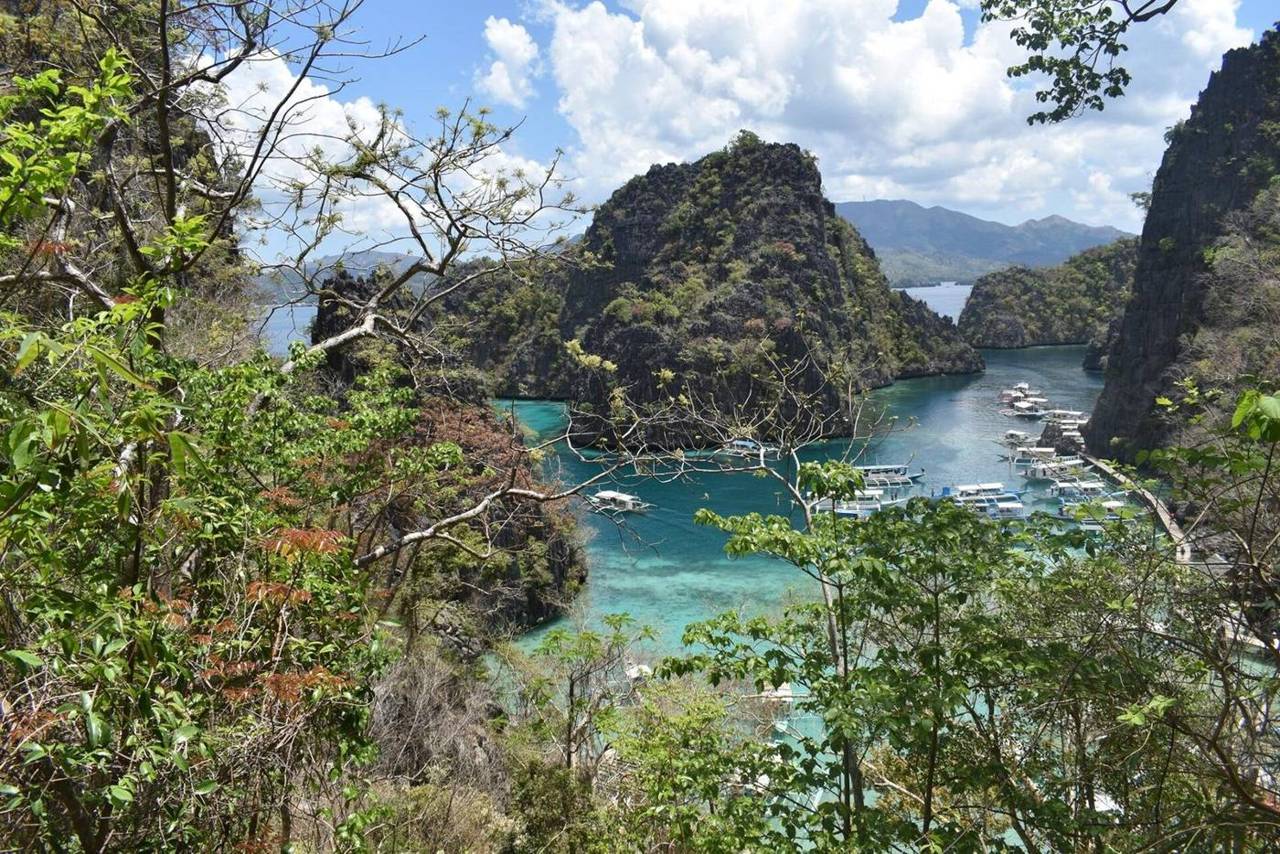
You leave by bangka from the harbour. The first stop is Kayangan Lake: from the beach you climb a stairway of about three hundred steps in the rock, to a viewpoint with one of the most famous views in the Philippines, the bay with its islands and boats. Then you go down the other side to the lake, a lake of fresh and salt water, very clear, enclosed by limestone rocks. You swim over the submerged rocks.
Then you go to the Twin Lagoon, two lagoons separated by a rock wall. You pass from the first to the second by swimming under a small opening or climbing a wooden ladder. The water changes temperature and colour: at the top it is warmer, below it is cooler.
The trip also includes stops for snorkelling over a coral garden and for swimming on a beach, where you have lunch.
At the lake entrances a separate ticket is paid, managed by local communities: check prices and whether they are included in the tour. The lakes are on the ancestral land of the Tagbanua people, who protect them.
Sleep in Coron.
Practical tip: life jackets are compulsory in the lakes. Do not touch the bottom and do not leave rubbish.
- Day 9
Barracuda Lake and the Japanese wrecks
Today is the day of the seabed, with snorkelling or diving.
In September 1944 American aircraft attacked a fleet of Japanese ships anchored around Coron. Many ships sank and today lie on the bottom, at different depths. It is one of the best places in the world for wreck diving, the hulls covered in coral and fish.
Certified divers can book two or three dives on the largest wrecks with an authorised dive centre in town. Some wrecks are deep enough to require experience. Check requirements, prices and the state of the equipment.
If you only snorkel you can see the Skeleton Wreck, shallow and close to the coast, and other wrecks where the structure comes close to the surface.
During the trip you also pass Barracuda Lake, a lake between the rocks where fresh water sits on top of salt water. As you swim you feel the change between the cooler and the warmer water. It is famous among divers for this phenomenon.
In the evening dine on seafood on the Coron seafront.
Sleep in Coron.
Practical tip: do not dive in the 24 hours before your flight. The pressure in a plane is dangerous after a dive. Make your last dive two days before departure.
- Day 10
Coron at a slow pace: beaches and hot springs
Today is a quieter day, to rest after the days at sea.
In the morning you can take a boat trip to the islands west of Coron, such as Malcapuya or Banana Island, with white beaches and clear water, less crowded than the lakes. You have lunch on the sand. Each island charges a small entry fee: ask the agency.
If you prefer dry land, hire a car with driver or a scooter to tour Busuanga. The island has green hills, pastures and small villages. In the north there are beaches with red sand and mangroves.
In the afternoon relax in the hot springs, or walk through the town market, where dried fish, fruit and Palawan cashew nuts are sold.
In the evening, if it is clear, look at the starry sky from the pier: far from big cities, you see the Milky Way.
For the last dinner try adobo, meat cooked in vinegar and soy sauce, the national dish of the Philippines, or sinigang, the sour tamarind soup.
Sleep in Coron.
Practical tip: between June and November typhoons arrive. Boats stop and flights can be cancelled: always keep a day of margin before the international flight. Travel insurance that covers delays is useful.
- Day 11
Flight to Manila
Today you leave Palawan and return to Manila.
Coron airport is on Busuanga, about thirty or forty minutes from town. The flight to Manila takes just over an hour. Baggage on domestic flights has a weight limit: check first.
In the afternoon, in Manila, visit Intramuros, the walled city built by the Spanish in the sixteenth century. Inside the walls are the cathedral, the church of San Agustín, the oldest in the Philippines and a UNESCO World Heritage site along with the country's other baroque churches, and Fort Santiago, on the Pasig River. You get around on foot, in a horse drawn carriage, or on a bamboo bicycle with a guide.
At sunset go to the Manila Bay seafront, where the sun sets into the sea.
In the evening dine in Makati or Bonifacio Global City, the modern districts with skyscrapers and shopping centres, or try lechón, roast suckling pig with crispy skin, a festive dish.
Sleep in Manila, near the airport if your flight is early.
Practical tip: in Manila traffic is very slow. Always allow double the time for getting around. Use metered taxis or ride apps, not cars that stop you in the street. Keep your bag on your lap in the car.
- Day 12
Departure from Manila
On the last day you leave from Manila airport.
If your flight is in the afternoon or evening, in the morning you can visit the National Museum of the Philippines, in Rizal Park, with the country's natural history, art and archaeology collections. Check times and closing days. In the park there is also the monument to José Rizal, the national hero of the Philippines.
Remember to go to the airport well in advance: Manila traffic is unpredictable and terminals differ by airline. Check which terminal your flight leaves from.
What to take home: Palawan cashew nuts, dried mangoes from Cebu, Philippine pearls bought in reputable shops, hand woven fabrics, shell objects, mountain chocolate and coffee.
This trip shows Palawan, the island many consider among the most beautiful in Asia: the river flowing under the mountain, the green lagoons of El Nido, the lakes between the rocks and the sunken ships of Coron.
If you have more time, you can add a few days in Port Barton or San Vicente, between Puerto Princesa and El Nido, with long beaches and few people.
Practical tip: keep a few thousand pesos in cash for the taxi and expenses at the airport. Change leftover pesos before security.
Essential Palawan, the most spectacular sea in South-East Asia. El Nido's boat tours get crowded: leave early or choose private boats. The El Nido-Coron crossing is long and the sea can be rough. Right months: December-May.
Before you go
- Documents and visa
- Passport valid for at least six months and an onward ticket; no visa for tourism up to 30 days for EU citizens. In the 72 hours before the flight you fill in the no-cost eTravel form online.
- Health and vaccines
- No compulsory vaccines arriving from Europe. Protect yourself against mosquitoes because of dengue and keep away from dogs and monkeys because of rabies. Drink only bottled water. Emergencies: 911.
- Money and payments
- Philippine peso. On small islands cash machines are few and often empty: carry cash.
- Power sockets
- Types A, B and C, 220 volts: bring a universal adapter.
- Time zone
- UTC+8 all year.
- Safety
- The United States rates the Philippines level 2, with level 4 for the Sulu archipelago, the southern Sulu Sea and Marawi, and level 3 for much of Mindanao. Typhoons occur from June to November. Official advice: GOV.UK.
Information checked in November 2026 for Italian and EU citizens. Rules change: always check before you travel.
Variations
In 8 days: only El Nido and Coron, flying from Manila to El Nido and from Coron to Manila, without the underground river.
In 16 days: add Port Barton and San Vicente between Sabang and El Nido, or the boat crossing from El Nido to Coron sleeping on the islands.
Frequently asked questions
Do I need a visa?
No, Italian citizens enter without a visa for up to 30 days with a valid passport and an onward ticket. In the 72 hours before, you fill in eTravel online. Other nationalities should check their own rules.
How much is the El Nido fee?
The municipal environmental fee, the ETDF, costs 400 pesos and is valid for ten days. Separate tickets are also paid at the lagoons and lakes.
When is the best time?
From December to May, the dry season. From June to November there are rains and typhoons: boats can stay in port for days.
Indicative itinerary written by World Atlas. Before booking, check timetables, seasonal openings, documents and safety.
 7 daysEasy
Palawan: El Nido and the lagoons
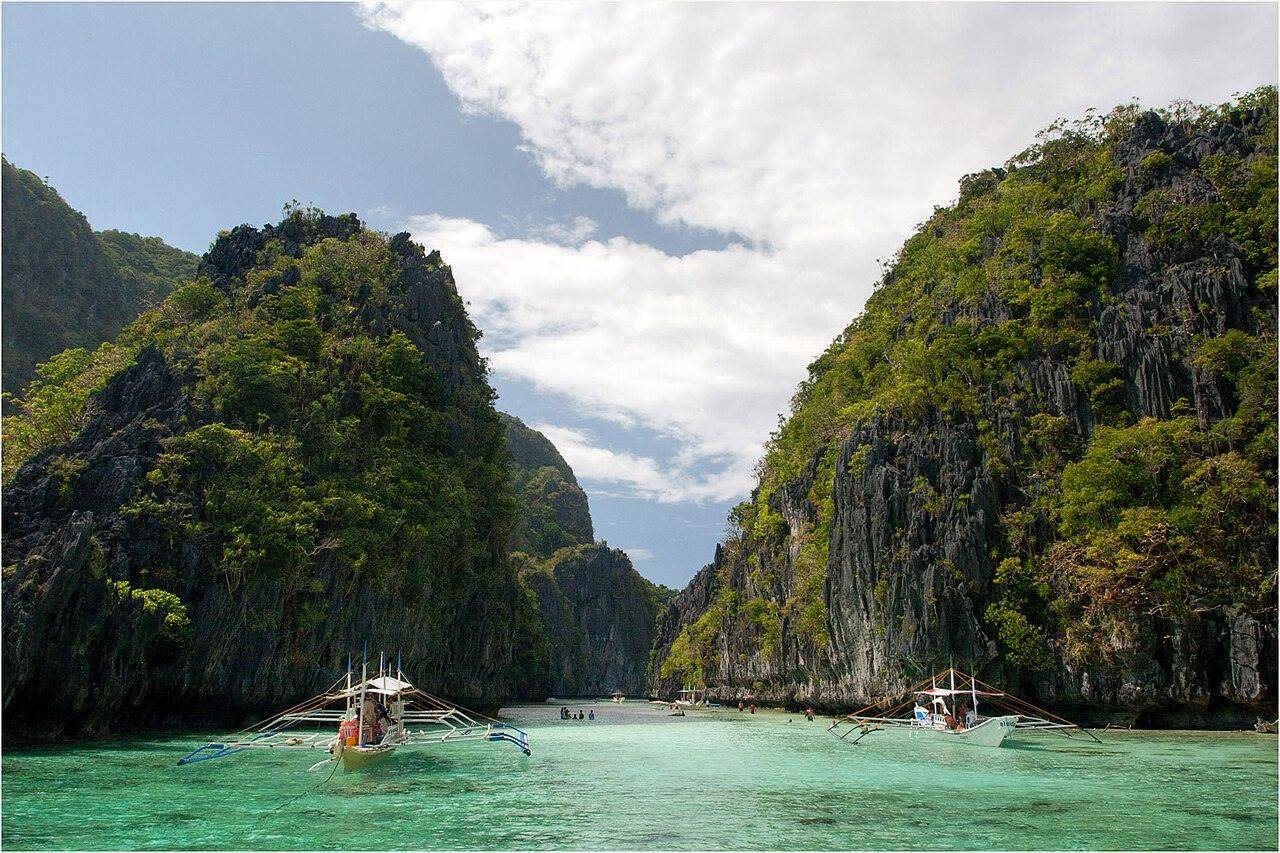
A week of islands, turquoise lagoons and snorkelling in the Bacuit archipelago, with a stop at the underground river.
 15 daysModerate
Palawan, Coron, Bohol and Cebu
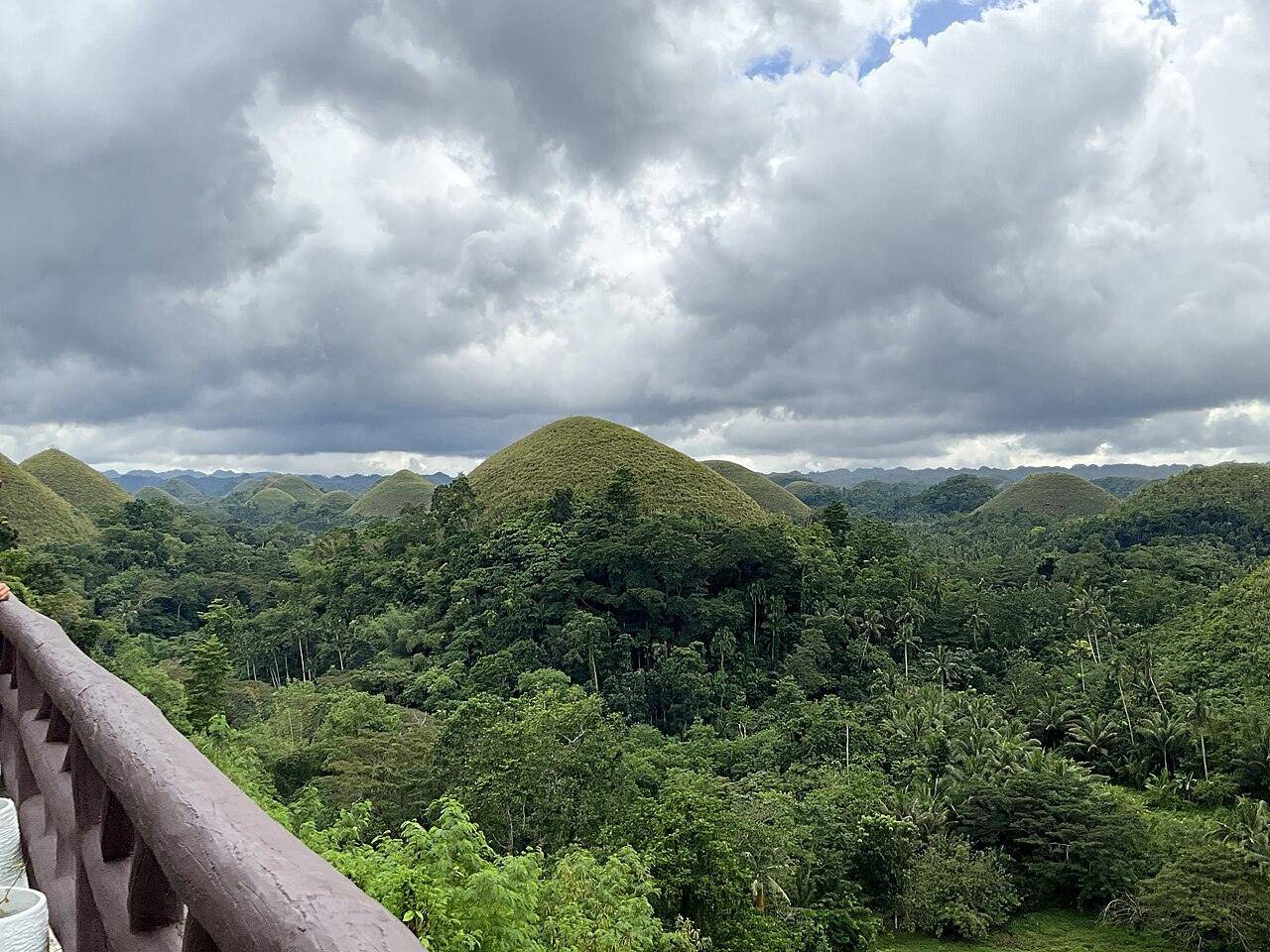
The finest islands in two weeks: El Nido's lagoons, Coron's lakes and wrecks, Bohol's Chocolate Hills and tarsiers.
 17 daysModerate
The Philippines: Banaue's rice terraces, Sagada and Palawan
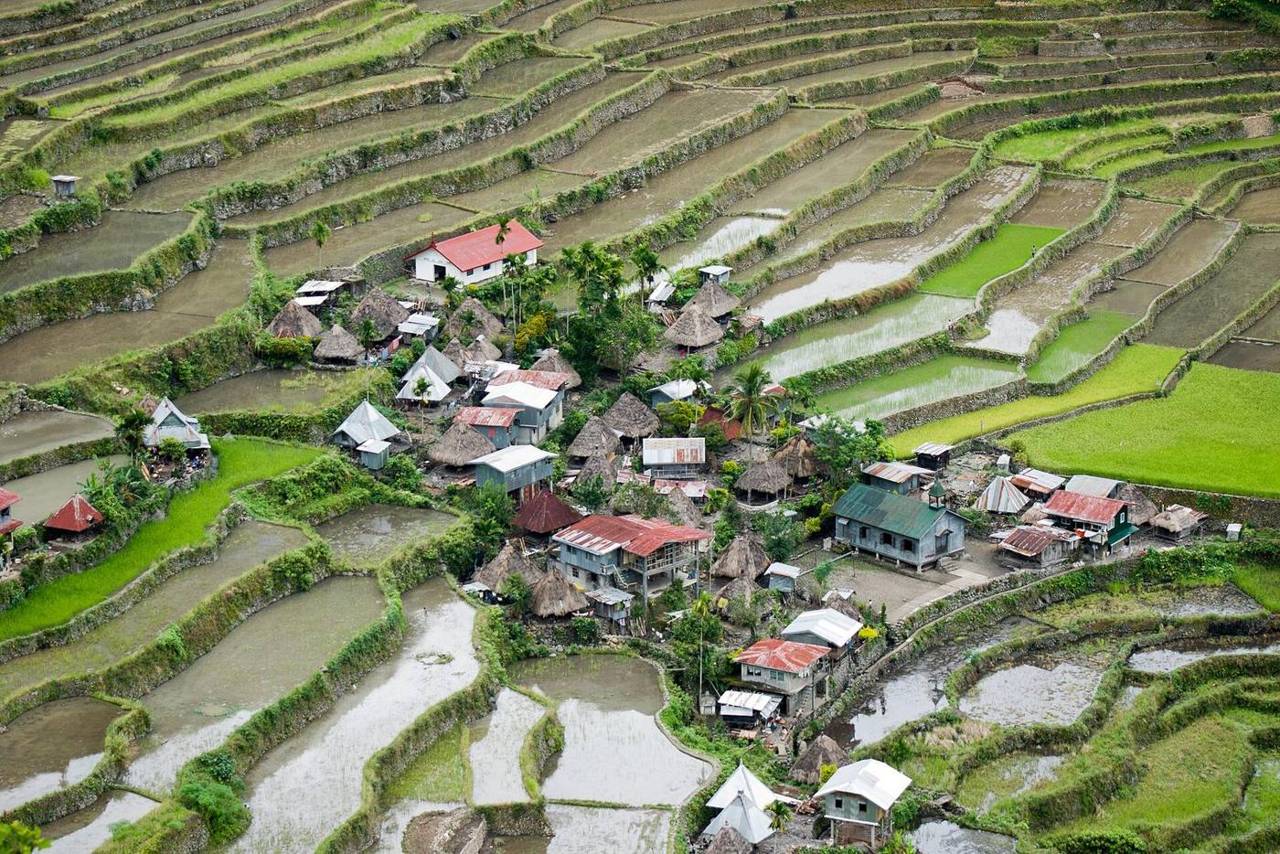
The UNESCO-listed rice terraces in the Cordillera mountains, the hanging coffins of Sagada and then two weeks of sea in Palawan.