Palawan, Coron, Bohol and Cebu
The finest islands in two weeks: El Nido's lagoons, Coron's lakes and wrecks, Bohol's Chocolate Hills and tarsiers.
- Manila
- El Nido
- Coron
- Cebu
- Bohol
Day by day
- Day 1
Arrival in Manila
This trip takes you to the most beautiful islands of the Philippines: Palawan, with the lagoons of El Nido and the lakes of Coron, and the Visayas, with the Chocolate Hills and tarsiers of Bohol, the turtles off Panglao and the sardine shoals of Moalboal, on Cebu. You travel by domestic flights, boats and ferries.
Before you go: Italian citizens enter the Philippines without a visa for tourism for up to 30 days, with a passport valid for at least six months and an onward ticket. Within the 72 hours before the flight you must fill in the eTravel form online on the official government website: beware of sites that charge for it. Other nationalities should check their own rules. The United States rates the Philippines at level 2 and advises against some areas of Mindanao and the Sulu Sea; the islands on this trip are far from those areas.
You land at Manila airport, the capital, a huge and congested city, almost always with a connection in the Gulf or in Asia. In winter the Philippines is seven hours ahead of Italy.
In the afternoon, rest. If you have energy, visit Intramuros, the walled city built by the Spanish in the sixteenth century, with the church of San Agustín, the oldest in the Philippines and a UNESCO World Heritage Site, and Fort Santiago on the Pasig River.
In the evening, try adobo, the national dish: chicken or pork slowly cooked with vinegar, soy sauce, garlic and pepper.
Overnight in Manila.
Practical tip: traffic in Manila is extremely slow. Sleep near the airport if your flight to Palawan leaves early, and always allow plenty of time for getting around the city.
- Day 2
Flight to El Nido
Today you reach Palawan, considered one of the most beautiful islands in the world.
In the morning, take the flight from Manila to El Nido, about one hour and twenty minutes, on a small plane that lands at an airport with a thatched roof. Alternatively, you can fly to Puerto Princesa and continue by minibus, about five or six hours.
El Nido is one of the most famous destinations in Asia, for the Bacuit archipelago, with dozens of tall, sculpted islands of black limestone rising from an emerald sea, hidden lagoons and white beaches. The area is protected, and every visitor pays the ecotourism development fee on arrival, 400 Philippine pesos, valid for the whole stay: keep the receipt, as it is checked on the boats.
In the afternoon, settle in and walk around the town, with its beach, the colourful fishing boats called bangka, and the rock wall behind.
In the late afternoon, go to Las Cabañas beach, south of the town, for sunset over the islands: it is one of the finest sunsets in the Philippines.
In the evening, have grilled fish and rice, and try calamansi, a small green citrus fruit used in juices and sauces.
Overnight in El Nido, for four nights.
Practical tip: in El Nido the power sometimes goes off for a few hours, and cash machines are few and often empty. Bring cash in pesos from Manila.
- Day 3
The lagoon tour
Today you explore the Bacuit archipelago by boat.
In the morning, set off on one of the organised boat trips, called tours A, B, C and D. Tour A is the most famous: it includes the Big Lagoon and the Small Lagoon on Miniloc Island, emerald lagoons enclosed by tall black limestone walls. You enter the Small Lagoon by kayak through a narrow opening in the rock, and inside there is total silence. The number of visitors to the lagoons is limited each day, and some require a booking: check the rules and prices.
Along the way there are stops for snorkelling at the Secret Lagoon and at Seven Commando beach, with palm trees and white sand, and lunch on the beach with fish, rice and tropical fruit.
In the afternoon, you return to El Nido.
In the evening, relax on Marimegmeg beach, near Las Cabañas, or have dinner in town.
Overnight in El Nido.
Practical tip: bring reef shoes, because many beaches and lagoons have sharp rocks and coral. Use sun creams that do not harm the sea, and never touch the coral.
The boat trips usually leave between eight and nine and come back around four in the afternoon. Bring water, a hat and a long-sleeved swim shirt: the sun on the water is very strong.
- Day 4
The caves and beaches tour
Today you take another trip around the archipelago.
In the morning, set off on tour C, which usually goes to the wildest beaches of Matinloc Island: Hidden Beach, tucked between rock walls and reached by swimming or scrambling over rocks, and Secret Beach, which you reach by swimming through a hole in the rock wall. Then visit the Matinloc shrine, an abandoned chapel on an island, with a viewpoint above the cliffs. The snorkelling on this tour is among the best in El Nido, with colourful coral and tropical fish.
Alternatively, choose tour B, with caves such as Cudugnon Cave, and Snake Island, a serpent-shaped sandbar that appears between two islands at low tide. Check prices and what is included.
In the afternoon, you return to El Nido.
In the evening, have dinner in town and try halo-halo, the best-loved Filipino dessert: shaved ice with milk, sweet beans, fruit, ice cream and purple ube jelly, made from a sweet yam.
Overnight in El Nido.
Practical tip: when the sea is rough, boat trips can be changed or cancelled by the coast guard. Keep your plans flexible and choose the tour according to the day's sea. From June to October the rainy season brings rougher seas.
- Day 5
Nacpan and a day on land
Today you explore the coast of El Nido on land.
In the morning, rent a scooter or a tricycle with a driver, the most common form of transport, and head north to Nacpan beach, about an hour away. Nacpan is a long beach of golden sand, about four kilometres, with coconut palms and open sea, much quieter than the beaches in town. From the hill at the north end of the beach you see the twin bays of Nacpan and Calitang, one of the finest views on Palawan.
In the afternoon, if you want something different, try the zip line that links Las Cabañas to a small island opposite, or climb the Taraw viewpoint above the town, a steep climb on sharp limestone, to be done only with a guide, gloves and closed shoes. From the top you see the whole archipelago. Check prices and rules.
In the evening, back in El Nido, relax at one of the places on the beach and watch the boats come back to harbour.
Overnight in El Nido.
Practical tip: the roads of Palawan are sometimes unpaved, narrow and unlit. Only ride a scooter if you hold a motorbike licence, and always wear a helmet. At night, take a tricycle.
In this area, do not drink tap water: buy bottled water or use the filtered water refill stations, which are better for the environment.
- Day 6
The crossing to Coron
Today you sail from El Nido to Coron.
In the morning, take the fast boat from El Nido to Coron, about four hours, across the sea between the islands of northern Palawan. Alternatively, if you want an adventure, there are expeditions of two or three days on a traditional boat, with nights camping on deserted islands. Check times, prices and sea conditions.
The crossing passes green islands and small fishing villages, and sometimes you see dolphins.
In the afternoon, you arrive in Coron, a harbour town on Busuanga Island, the base for exploring Coron Island, with its lakes among limestone mountains and its sunken wrecks.
In the late afternoon, climb Mount Tapyas, a hill above the town, with about 700 steps and a large cross at the top. From up there you see the town, the harbour and the islands, and it is one of the best places for sunset.
In the evening, relax in the Maquinit hot springs, a natural pool of warm salt water near the mangroves, about half an hour from town. Check prices and times.
Overnight in Coron, for three nights.
Practical tip: the crossing from El Nido to Coron only runs when the sea is calm, mostly from November to May. Keep a spare day and check conditions the evening before. If you suffer from seasickness, take medication before leaving.
- Day 7
Kayangan Lake and the Twin Lagoon
Today you visit the lakes and lagoons of Coron Island.
In the morning, set off on a boat trip to Coron Island, an island of limestone mountains that is the ancestral land of the Tagbanwa people, who manage access to the lakes. There are entrance fees for each site: check prices and rules.
The first stop is Kayangan Lake, one of the cleanest lakes in Asia, with clear fresh water between rock walls. You climb about 300 steps to a viewpoint with the famous view of the bay and its limestone rocks, then go down to the lake to swim or snorkel among the underwater rock formations.
Then go to the Twin Lagoon, two lagoons separated by a rock wall: you pass from one to the other by swimming under an opening in the rock or climbing a small wooden ladder. The water changes temperature from warm to cool, because fresh and salt water mix.
In the afternoon, snorkel over the Skeleton Wreck, a small wreck in shallow water, and at the Coral Garden, then relax on one of the beaches on the tour.
In the evening, in Coron, have fish and shellfish from the market.
Overnight in Coron.
Practical tip: many people arrive at Kayangan Lake in the middle of the morning. Ask your guide to go early or to do the tour in reverse. Bring shoes that can get wet for the steps and the rocks.
- Day 8
The Japanese wrecks or Calauit
Today you choose between wreck diving and a day with the animals.
If you dive, Coron is one of the best places in the world for wreck diving. In September 1944 a fleet of Japanese ships, hidden in the bays around the island, was sunk by American aircraft. Today about ten ships rest between 10 and 40 metres deep, covered in coral and full of fish, with their holds, cabins and decks still recognisable. Some wrecks are suitable for divers with little experience. Choose a reputable centre with certified instructors, and check prices and the level required.
If you do not dive, take a trip north to Calauit Safari Park, an island where giraffes, zebras and antelopes were brought from Africa in the 1970s; they now live freely alongside Philippine animals such as the Calamian deer. The journey is long, about three hours by car or boat. Check prices and times.
Alternatively, in the afternoon, go island hopping to Banana and Malcapuya islands, with white beaches and clear water.
In the evening, in Coron, have dinner and pack for tomorrow.
Overnight in Coron.
Practical tip: do not dive in the 24 hours before a flight. If you dive today, tomorrow's flight must leave at least a full day later.
- Day 9
Flight to Cebu and ferry to Bohol
Today you leave Palawan and reach the Visayas.
In the morning, take the flight from Busuanga airport, near Coron, to Cebu, about an hour and a half. Cebu is the second city of the Philippines and the place where Ferdinand Magellan arrived in 1521, during the first voyage around the world.
If you have a few hours in Cebu, visit Magellan's Cross, in a small chapel in the centre, which recalls the baptism of the first Christian Filipinos, and the Basilica of the Santo Niño, the oldest church in the country, with a small statue of the Child Jesus brought by the Spanish.
In the afternoon, take the fast ferry from Cebu port to Tagbilaran, on Bohol Island, about two hours. Check times and prices.
In the evening, continue to Panglao, an island linked to Bohol by two bridges, with white sand beaches, and settle in.
Have dinner with Visayan cooking, such as lechon, roast suckling pig with crackling skin, a speciality of Cebu, or kinilaw, raw fish marinated in vinegar and calamansi.
Overnight in Panglao, for three nights.
Practical tip: in Cebu and Bohol the traffic and the ports are very crowded. Arrive at the port at least an hour before departure and keep your documents to hand for the checks.
- Day 10
The Chocolate Hills and the tarsiers
Today you explore the interior of Bohol.
In the morning, hire a car with a driver and head inland. The first stop is the tarsier sanctuary at Corella, home of the Philippine tarsier, one of the smallest primates in the world, the size of the palm of a hand, with enormous eyes. They are nocturnal and very delicate animals that suffer from noise and light: in the sanctuary you watch them in silence, without flash and without touching them. Avoid places where they are kept in cages. Check prices and times.
Then take a cruise on the Loboc River, between palm trees and forest, with lunch on board and live music.
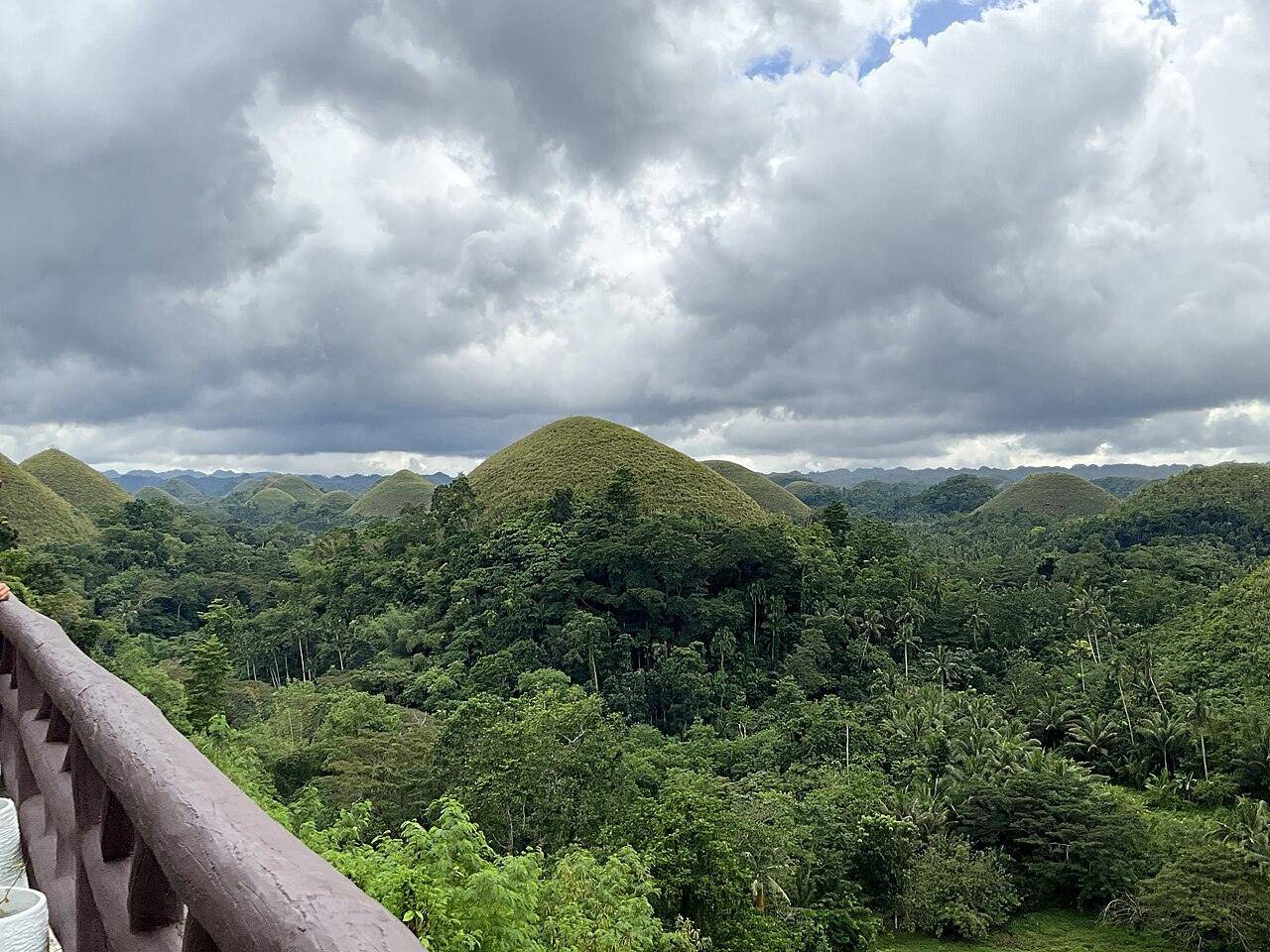
In the afternoon, you reach the Chocolate Hills, more than a thousand cone-shaped grassy hills, most of them between 30 and 50 metres high, covering a plain of more than 50 square kilometres. In the dry season the grass turns brown and the hills look like chocolates, hence the name. Climb to the main viewpoint for the view over the whole area. Check prices and times.
In the evening, return to Panglao.
Overnight in Panglao.
Practical tip: along the road there are also the old church of Baclayon, one of the oldest in the Philippines, and the man-made mahogany forest, much photographed. Ask your driver to stop.
- Day 11
Balicasag and the turtles
Today you spend a day at sea around Panglao.
Early in the morning, set off by boat to Balicasag Island, a small coral island about half an hour away, inside a marine sanctuary. Here the sea is crystal clear and the reef drops steeply into a deep wall, rich in coral, tropical fish, schools of jacks and sea turtles, which you often see feeding or swimming near the surface. Snorkel or, if you dive, go down the wall. There is a sanctuary fee: check prices and rules.
At dawn, before Balicasag, some trips pass off Pamilacan to see dolphins. Check the trips and choose those that respect the animals, without chasing them.
In the afternoon, return to Panglao and relax on Alona beach, the most famous on the island, or on Dumaluan, which is quieter.
In the evening, have dinner on the beach with the catch of the day and watch the sunset.
Overnight in Panglao.
Practical tip: keep a distance of at least a few metres from the turtles, do not touch them and do not chase them. Do not feed the fish: it changes their behaviour and harms the reef.
Bring a swim shirt and check the sea the evening before: with strong wind the boats to Balicasag may not leave, and it is better to move the trip to the next day.
- Day 12
To Moalboal
Today you return to Cebu and cross the island to the west coast.
In the morning, take the fast ferry from Tagbilaran to Cebu, about two hours. Then continue by car or bus south-west to Moalboal, about three hours, through the hills and villages of the island.
Moalboal is a small village on the west coast of Cebu, famous for snorkelling and diving, with the reef right in front of the shore.
In the afternoon, settle into your accommodation near Panagsama beach, the centre of the area, and go for your first snorkel straight from the shore. A few metres from the beach lives an enormous shoal of sardines, millions of fish moving together in silver clouds that keep changing shape, just a few metres down. It is one of the finest natural sights in the Philippines, and you can see it without a boat.
In the evening, have dinner at one of the places by the sea and watch the sunset over Negros Island, on the other side of the strait.
Overnight in Moalboal, for two nights.
Practical tip: when snorkelling with the sardines, swim slowly and calmly, without waving your arms. The shoal opens and closes around you. There are boats further out: stay close to the shore or use a brightly coloured float.
- Day 13
Pescador and Kawasan Falls
Today is a day between the sea and the waterfalls.
In the morning, take a boat to Pescador Island, a small islet about half an hour away, inside a marine sanctuary. Around the island the reef drops into a deep wall, with coral, turtles, tropical fish and, at times, the sardine shoals. It is one of the best places in the area for snorkelling and diving. Check prices and the sanctuary rules.
In the afternoon, drive south for about half an hour to Kawasan Falls, in the forest, with intensely turquoise water falling into a series of natural pools. You walk about twenty minutes through the forest to reach the first waterfall, where you can swim. Many people also go canyoneering, a descent of the river with jumps into the pools, ropes and passages between the rocks, with a guide and a helmet. Check prices, conditions and the safety standards of the operators.
In the evening, return to Moalboal and have dinner on the beach.
Overnight in Moalboal.
Practical tip: many people arrive at Kawasan Falls from mid-morning. Go early or in the late afternoon. For canyoneering, choose a reputable operator with trained guides, life jackets and helmets, and always follow the instructions. Leave valuables at your accommodation and use a waterproof case for your phone.
- Day 14
A last day by the sea and back to Cebu
Today you enjoy your last day on the coast and head back towards the city.
Early in the morning, go for a last snorkel with the sardines or the turtles off Panagsama, when the sea is calm and there are fewer people.
Then, if you want to see a white sand beach, go to White Beach in Moalboal, north of the village, with pale sand and calm, shallow water.
In the afternoon, drive to Cebu, about three hours, and stay near the airport on Mactan Island, linked to Cebu by bridges. On Mactan there is the shrine of Lapu-Lapu, the local chief who in 1521 defeated Magellan at the Battle of Mactan, where the Portuguese explorer died. He is considered the first national hero of the Philippines.
In the evening, have lechon, if you have not tried it yet, or a seafood dish.
Overnight in Cebu or on Mactan.
Practical tip: between Moalboal and Cebu traffic can be very slow, especially in the evening and at weekends. Leave with plenty of time, and do not schedule your international flight on the same day as the journey from Moalboal.
If you have pesos left over, change or spend them before you leave: outside the Philippines they are hard to change, and the airport rate is less favourable.
- Day 15
Home via Manila
Today you leave the Philippines.
In the morning, take your flight from Cebu, direct or with a connection in Manila, towards Italy. If you have a few hours in Manila, visit the National Museum of the Philippines, with its art and history collections, including the great canvas Spoliarium by the painter Juan Luna, or take a walk in Rizal Park, dedicated to the national hero José Rizal. Check opening times.
Allow plenty of time between the domestic and the international flight: in Manila, domestic and international flights can leave from different terminals, far apart and connected by shuttles and taxis through the traffic.
In these fifteen days you have seen the finest of the Philippines: the lagoons and limestone islands of El Nido, the clear lakes and wrecks of Coron, the Chocolate Hills and tarsiers of Bohol, the turtles of Balicasag and the sardine shoals of Moalboal.
When to go: the best period is from December to April, the dry season, with calm seas and clear skies. March, April and May are the hottest months. From June to November come the rainy season and the typhoons, which can stop flights and boats for days.
Practical tip: in the Philippines people are very hospitable and nearly everyone speaks English. Learn a few words of Filipino, such as salamat, thank you: a smile and a thank you open every door.
The best of the Philippines in two weeks, for lovers of sea, snorkelling and diving. The catch is moving between islands, with flights and boats that can be cancelled by weather, so leave a no-cost day. The boat crossing between El Nido and Coron is long but beautiful.
Before you go
- Documents and visa
- Passport valid for at least six months and an onward ticket; no visa for tourism up to 30 days for EU citizens. In the 72 hours before the flight you fill in the no-cost eTravel form online.
- Health and vaccines
- No compulsory vaccines arriving from Europe. Protect yourself against mosquitoes because of dengue and keep away from dogs and monkeys because of rabies. Drink only bottled water. Emergencies: 911.
- Money and payments
- Philippine peso. On small islands cash machines are few and often empty: carry cash.
- Power sockets
- Types A, B and C, 220 volts: bring a universal adapter.
- Time zone
- UTC+8 all year.
- Safety
- The United States rates the Philippines level 2, with level 4 for the Sulu archipelago, the southern Sulu Sea and Marawi, and level 3 for much of Mindanao. Typhoons occur from June to November. Official advice: GOV.UK.
Information checked in November 2026 for Italian and EU citizens. Rules change: always check before you travel.
Variations
In 9 days: Palawan only, with four nights in El Nido and three in Coron, and back from Coron to Manila.
In 19 days: add Siargao, the island of surfing and lagoons, or Siquijor, the island of waterfalls and traditions, after Bohol.
Frequently asked questions
What documents do I need for the Philippines?
Italian citizens enter without a visa for tourism for up to 30 days, with a passport valid for at least six months and an onward ticket. Within the 72 hours before the flight you must fill in the eTravel form online on the official website. Other nationalities should check their own rules.
How much is the El Nido fee?
On arrival in El Nido you pay the ecotourism development fee of 400 Philippine pesos, valid for the whole stay. Other entrance fees, such as the lagoons, Coron and the marine sanctuaries, are paid separately: check the prices.
When is the best time to go?
From December to April, in the dry season, with calm seas. From June to November there are rains and typhoons, which can cancel flights and boats even for several days.
Indicative itinerary written by World Atlas. Before booking, check timetables, seasonal openings, documents and safety.
 7 daysEasy
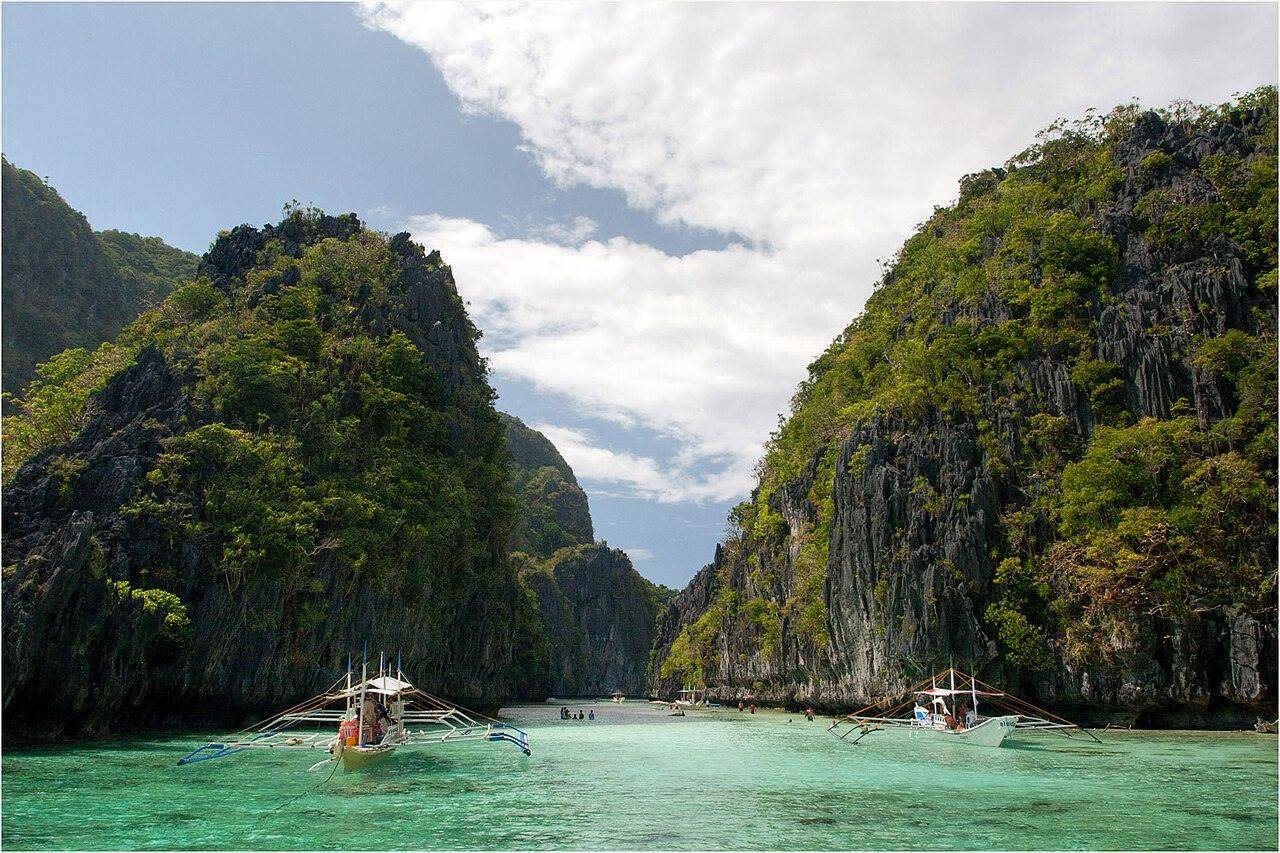
Palawan: El Nido and the lagoons
A week of islands, turquoise lagoons and snorkelling in the Bacuit archipelago, with a stop at the underground river.
 12 daysEasy
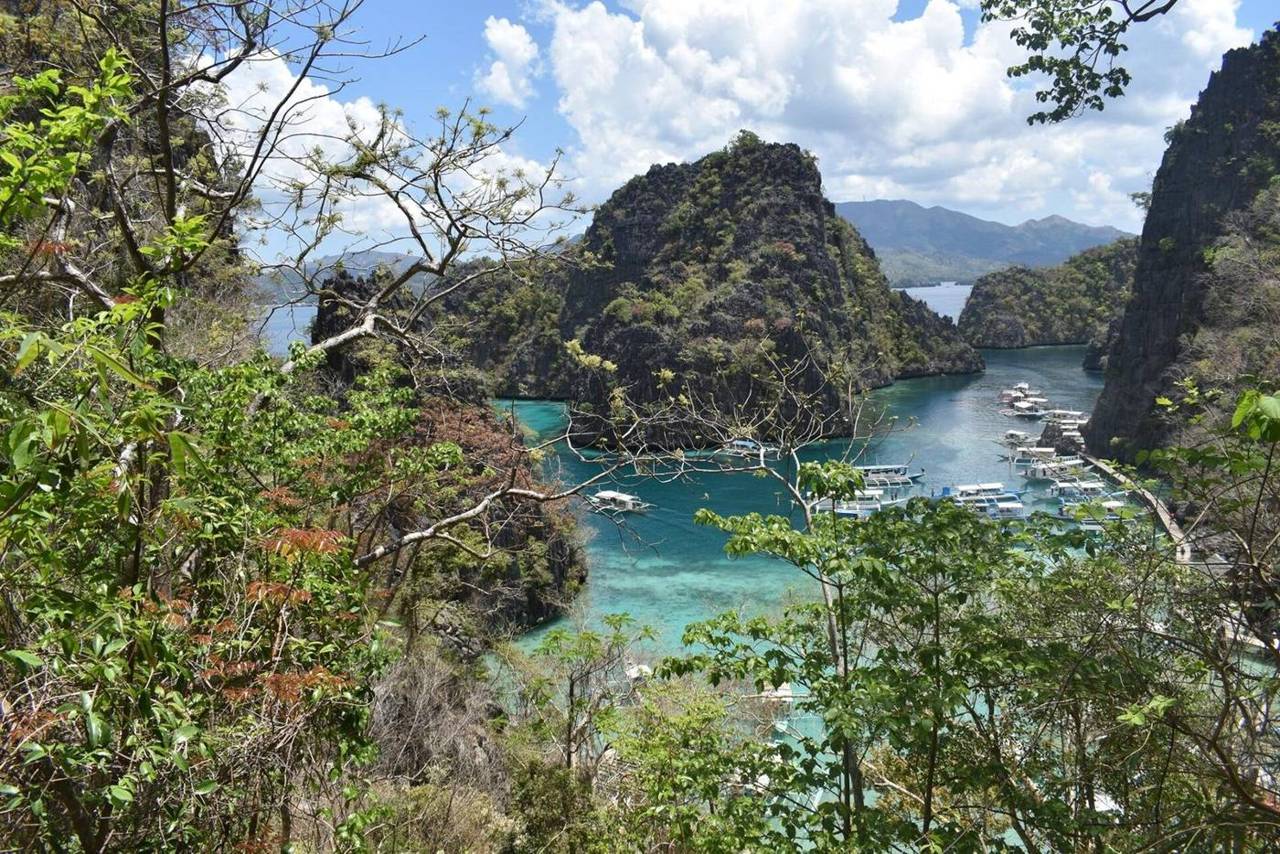
Philippines express: Palawan, El Nido and Coron
Puerto Princesa's underground river, the lagoons of El Nido among limestone cliffs, and Coron's lakes and wrecks.
 17 daysModerate
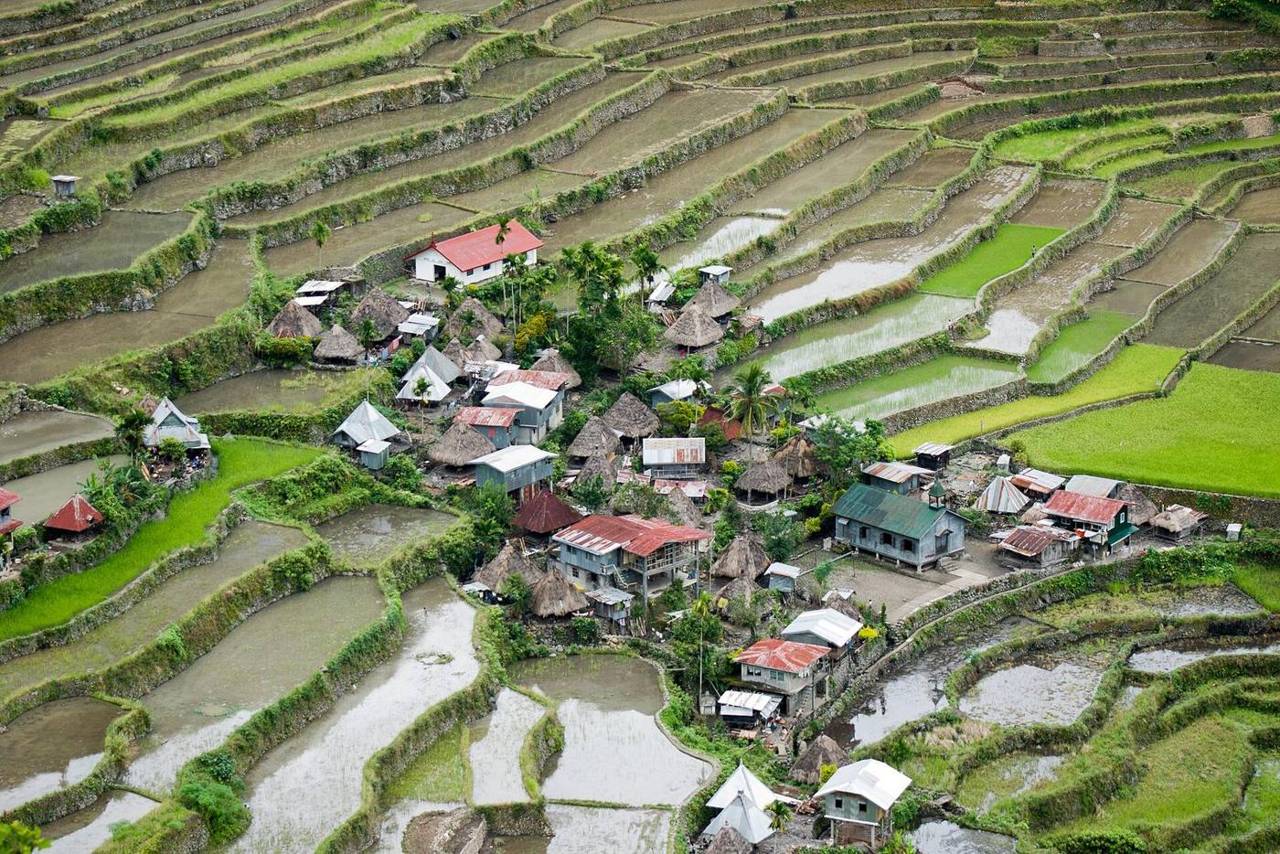
The Philippines: Banaue's rice terraces, Sagada and Palawan
The UNESCO-listed rice terraces in the Cordillera mountains, the hanging coffins of Sagada and then two weeks of sea in Palawan.