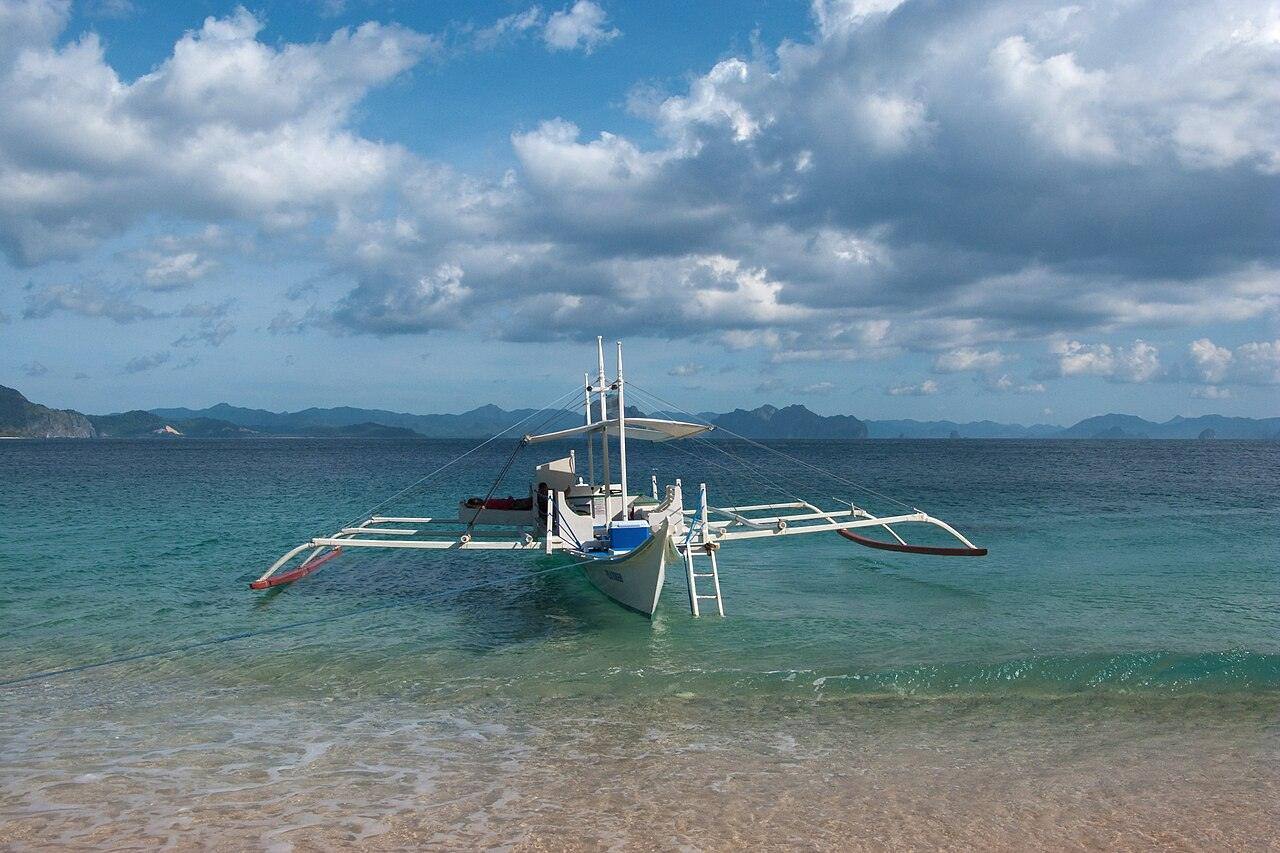
El Nido to Coron by boat, sleeping on the islands
A multi-day expedition on a traditional bangka among the deserted islands of northern Palawan, with nights in beach base camps.
- El Nido
- Bacuit islands
- Linapacan
- Coron
Day by day
- Day 1
Arrival in El Nido
This trip crosses the sea by boat between El Nido, in northern Palawan, and Coron, in the Calamian Islands, one of the most beautiful stretches of sea in South East Asia. For several days you sail on a bangka, the traditional Filipino boat with bamboo outriggers on each side, among deserted islands, limestone cliffs, coral reefs and fishing villages, sleeping each night on a different island in simple huts on the beach. It is an adventure trip, without luxury, with little electricity and little connectivity.
To enter the Philippines European citizens do not need a visa for stays of up to 30 days, but must register online on the eTravel system within 72 hours of arrival.
You reach El Nido on a flight from Manila, landing at a small airport north of town, or by flying to Puerto Princesa and then taking a van, about five or six hours by road.
El Nido is a town on Bacuit Bay, enclosed by huge black limestone walls, facing a sea full of islands. On arrival you pay the El Nido environmental fee, which costs 400 pesos.
On the first day rest, stroll around town and on the beach, and at sunset go to Las Cabanas beach, south of town, with views of the bay's islands turning into dark silhouettes against the orange sky.
Spend the night in El Nido.
Practical tip: in El Nido and during the expedition there are few ATMs and they often do not work. Bring enough cash in pesos for the whole trip to Coron.
- Day 2
El Nido, preparation and briefing
Today is devoted to preparing for the expedition and a first outing at sea.
In the morning take one of El Nido's classic boat trips, called tours A, B, C and D, which visit the lagoons and beaches of Bacuit Bay. Tour A is the most famous, with the Big Lagoon and Small Lagoon of Miniloc island, emerald green lagoons enclosed by rock walls that you enter by kayak, and the Secret Lagoon, reached through a small hole in the rock. Alternatively, tour C goes to the hidden beaches and snorkelling spots of Matinloc island.
In the afternoon the group leaving on the expedition meets the guides for the briefing: they explain the route, which can change depending on wind and sea, safety rules on board, life in the island camps and what to bring. Usually you leave your large luggage, which is sent on to Coron, and carry only a small backpack.
In the evening pack your bag: swimsuit, light clothes, a rain jacket, reef safe sunscreen, mosquito repellent, a torch, personal medicines and a dry bag to protect your phone and documents.
Spend the night in El Nido.
Practical tip: the El Nido lagoons have a daily visitor limit and some require booking. Book your tour a day in advance.
- Day 3
The expedition: leaving El Nido heading north
Today the bangka expedition begins. The boat leaves El Nido harbour in the morning and sails north, out of Bacuit Bay.
Expeditions between El Nido and Coron usually last three to five days, covering about a hundred and fifty kilometres of sea, with daily stops for snorkelling, swimming, walking on beaches and visiting villages. The exact route and the islands where you sleep vary with the organiser, the wind and the sea conditions: these days therefore describe what is usually done, not a fixed programme.
On the first day you pass along the north coast of Palawan, with limestone cliffs, forests and empty beaches, stopping at coral reefs to snorkel among hard and soft corals, clownfish, parrotfish, starfish and, with a little luck, sea turtles.
At lunch, on board or on a beach, the crew cooks freshly caught grilled fish, rice, vegetables, tropical fruit such as mango and pineapple, and salads.
In the afternoon you reach the first camp, on a deserted island or near a fishing village: bamboo and palm leaf huts on the beach, with a mattress, a mosquito net and simple bathrooms.
In the evening everyone has dinner together on the beach, under the stars, to the sound of the waves.
Spend the night in a hut on an island.
Practical tip: the sea between El Nido and Coron can be rough. If you suffer from seasickness, bring medication and ask for a seat in the middle of the boat.
- Day 4
Deserted islands, snorkelling and fishing villages
Today is a full day at sea. The boat leaves camp early and stops several times during the day.
In the morning you snorkel on a new reef, in warm, clear water, with large table and brain corals, anemone gardens and shoals of colourful fish. In some places you swim over coral walls dropping into the blue.
Then you stop at a deserted beach of white sand, with palms and turquoise water, where you can swim, walk, doze in the shade or explore the island's interior on foot.
In the afternoon you often visit a fishing village on one of the islands. Families live in wooden and bamboo stilt houses and live from fishing, seaweed and small vegetable plots. The children come to greet the boat. The tourism of these expeditions helps some communities, which sell fish and fruit or host the camps.
The second camp is on another island, with huts on the beach, a hammock between the palms and the sunset over the sea.
In the evening, after dinner, the crew sometimes plays guitar and sings Filipino songs, and you have a glass of Filipino rum or tuba, palm wine.
Spend the night in a hut on an island.
Practical tip: do not touch or stand on the coral, do not feed the fish and do not take shells. Use reef safe sunscreen, or wear a T shirt to protect yourself from the sun in the water.
- Day 5
At sea between Palawan and the Calamian Islands
Today the boat continues north, crossing the most open stretch of sea between Palawan and the Calamian Islands. The crossing can take several hours, depending on wind and waves.
During the crossing you often see flying fish leaping ahead of the boat and sometimes dolphins swimming alongside the bow. At certain times of year you also see seabirds fishing.
The boat still stops for snorkelling on reefs far from the coast, where the coral is often in better condition because few visitors come this far.
In the afternoon you reach a new group of islands, with grassy hills, white sand beaches and mangroves. On some expeditions there is a short walk to a hilltop viewpoint to see the surrounding islands.
The last beach camp is often the most beautiful of the trip, on an almost deserted island. In the evening, after dinner, a fire is lit on the beach. On moonless nights, in the shallow water near the shore, you sometimes see bioluminescent plankton glowing blue when you move your hands in the water.
Spend the night in a hut on an island.
Practical tip: if the sea is too rough, the captain may change the route, stay an extra day on an island or shorten the legs. Leave a day's margin before your return flight.
- Day 6
The last day by boat to Coron
Today is the last day of the expedition. The boat sails among the Calamian Islands towards Coron, through an area of limestone islands similar to those of El Nido, with black rock walls and lagoons.
In the morning there is still time for one or two swims and a last snorkel. In the Coron area some expeditions snorkel over the wreck of a Second World War Japanese ship in shallow water, covered in coral and fish.
Coron is in fact world famous for wreck diving: in September 1944 American aircraft attacked and sank a fleet of Japanese ships hidden in the bay. Today more than ten wrecks lie on the bottom at different depths, among the finest wreck dives in the world. The deeper dives are for divers with advanced certification.
In the afternoon the boat arrives at Coron harbour, on Busuanga island. You say goodbye to the crew and collect the large luggage sent from El Nido.
In the evening, in Coron, climb Mount Tapyas, a hill above the town with about seven hundred steps and a large cross at the top, to watch the sunset over the islands. Then have dinner in town, your first meal not cooked on the boat.
Spend the night in Coron.
Practical tip: after days at sea and in the sun, drink plenty of water and rest. If you want to dive the wrecks, arrange it with a certified dive centre and check your certification level.
- Day 7
Coron: Kayangan Lake
Today visit Coron's most famous sights, on Coron island, about half an hour by boat from town.
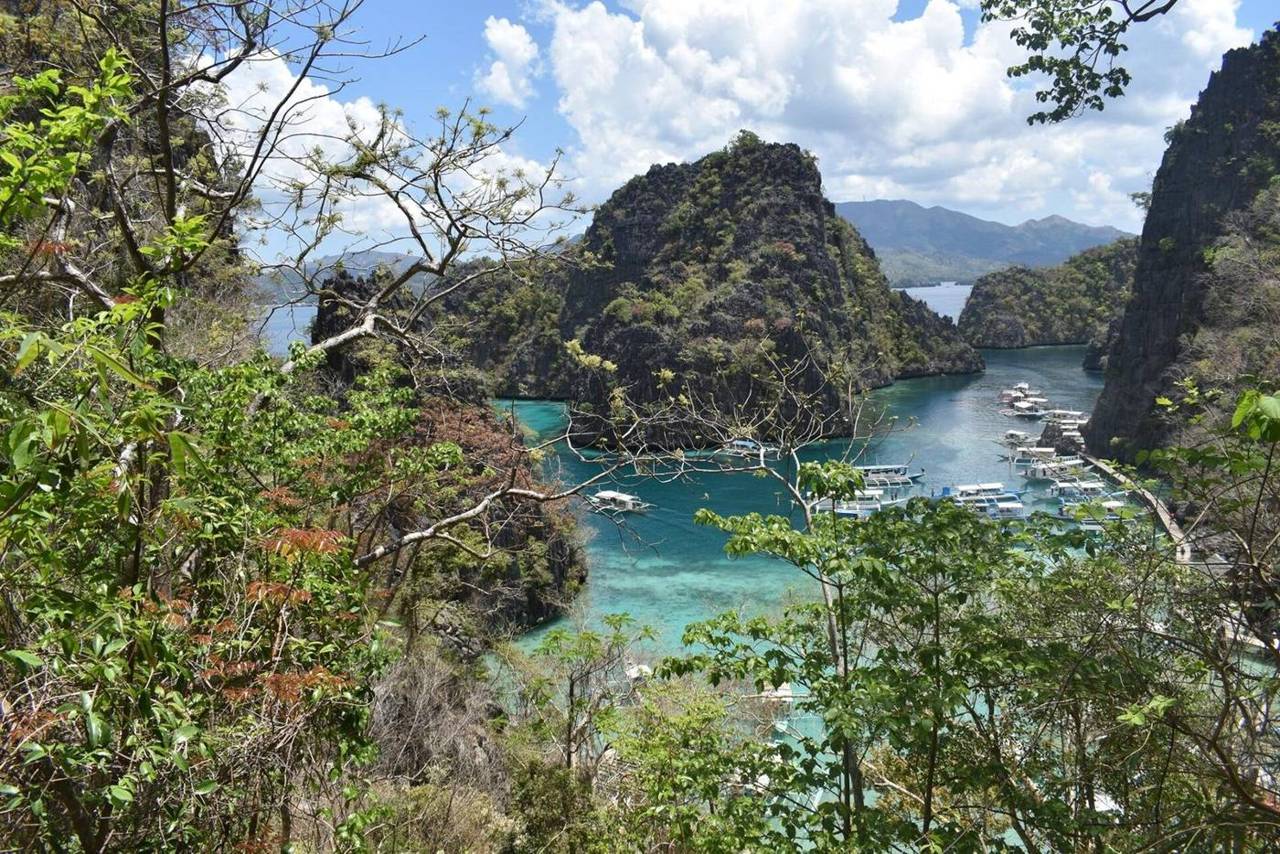
The most famous is Kayangan Lake, considered one of the cleanest lakes in the Philippines. You climb a steep staircase of about three hundred steps and then descend the other side. Halfway up is a much photographed viewpoint looking over the turquoise lagoon enclosed by rocks and full of boats: one of the country's most famous images. The lake, of mixed fresh and salt water, is surrounded by limestone walls and has a wooden boardwalk from which you jump in. Underwater there are rock formations and few fish.
The boat trip then continues to Barracuda Lake, another lake among the rocks where fresh water on the surface and salt water below create a layer of different temperatures that you feel as you swim. Next comes the Twin Lagoon, two lagoons linked by a passage under the rock, which you swim through at low tide or cross by a ladder at high tide.
In the afternoon you stop at beaches such as Banol, with white sand and shaded huts, and snorkelling spots such as the Coral Garden.
In the evening, in Coron, relax at the Maquinit hot springs near town, pools of warm salt water at the edge of the mangroves.
Spend the night in Coron.
Practical tip: in Coron each lake and beach has its own entrance ticket: check the prices. Kayangan Lake is very crowded in the middle of the day: start early.
- Day 8
Flight to Manila and departure
On the last day you leave Coron. The airport is on Busuanga island, about forty minutes by road from town. From here there are flights to Manila, about an hour, and to other Philippine cities.
If your flight is in the afternoon, you can make a last outing in the morning. One option is a short boat trip to the islands closest to town. Another is the Calauit park, in northern Busuanga, about two hours by road, a reserve created in the 1970s where giraffes, zebras and antelopes brought from Africa live alongside the Calamian deer, a rare species found only on these islands.
Alternatively, rest in town, stroll along the waterfront and buy some souvenirs: Palawan cashews, famous throughout the country, pearls, baskets and bags woven from leaves, and the islands' coffee and dried fruit.
In Manila, if you have a few hours before your international flight, you can visit Intramuros, the old fortified Spanish city, with the church of San Agustín, a UNESCO World Heritage Site, and Fort Santiago.
Practical tip: small flights from Coron have very low baggage weight limits: check beforehand. Bad weather can cause cancellations: leave at least a day's margin in Manila before your flight to Europe, especially in the rainy season.
The finest experience in the Philippines for those happy with minimal comfort: no electricity, basic toilets, but a sea all to yourself. It only runs with calm seas, November to May; in the monsoon departures are cancelled.
Before you go
- Documents and visa
- Passport valid for at least six months and an onward ticket; no visa for tourism up to 30 days for EU citizens. In the 72 hours before the flight you fill in the no-cost eTravel form online.
- Health and vaccines
- No compulsory vaccines arriving from Europe. Protect yourself against mosquitoes because of dengue and keep away from dogs and monkeys because of rabies. Drink only bottled water. Emergencies: 911.
- Money and payments
- Philippine peso. On small islands cash machines are few and often empty: carry cash.
- Power sockets
- Types A, B and C, 220 volts: bring a universal adapter.
- Time zone
- UTC+8 all year.
- Safety
- The United States rates the Philippines level 2, with level 4 for the Sulu archipelago, the southern Sulu Sea and Marawi, and level 3 for much of Mindanao. Typhoons occur from June to November. Official advice: GOV.UK.
Information checked in November 2026 for Italian and EU citizens. Rules change: always check before you travel.
Variations
In 5 days: El Nido only, with the lagoon tours and a night camping on an island.
In 11 days: add Port Barton or the Puerto Princesa underground river before El Nido.
Frequently asked questions
When is the best time to go?
December to May, in the dry season, when the sea is calmer. From June to November there is rain and there are typhoons, and some expeditions do not run.
Do I need a visa?
No, for stays of up to 30 days. You must, however, register on eTravel within 72 hours of arrival.
Is it a tiring trip?
No special fitness is needed, but you sleep in simple huts with little electricity and spend many hours on the boat and in the sun.
Indicative itinerary written by World Atlas. Before booking, check timetables, seasonal openings, documents and safety.
 7 daysEasy
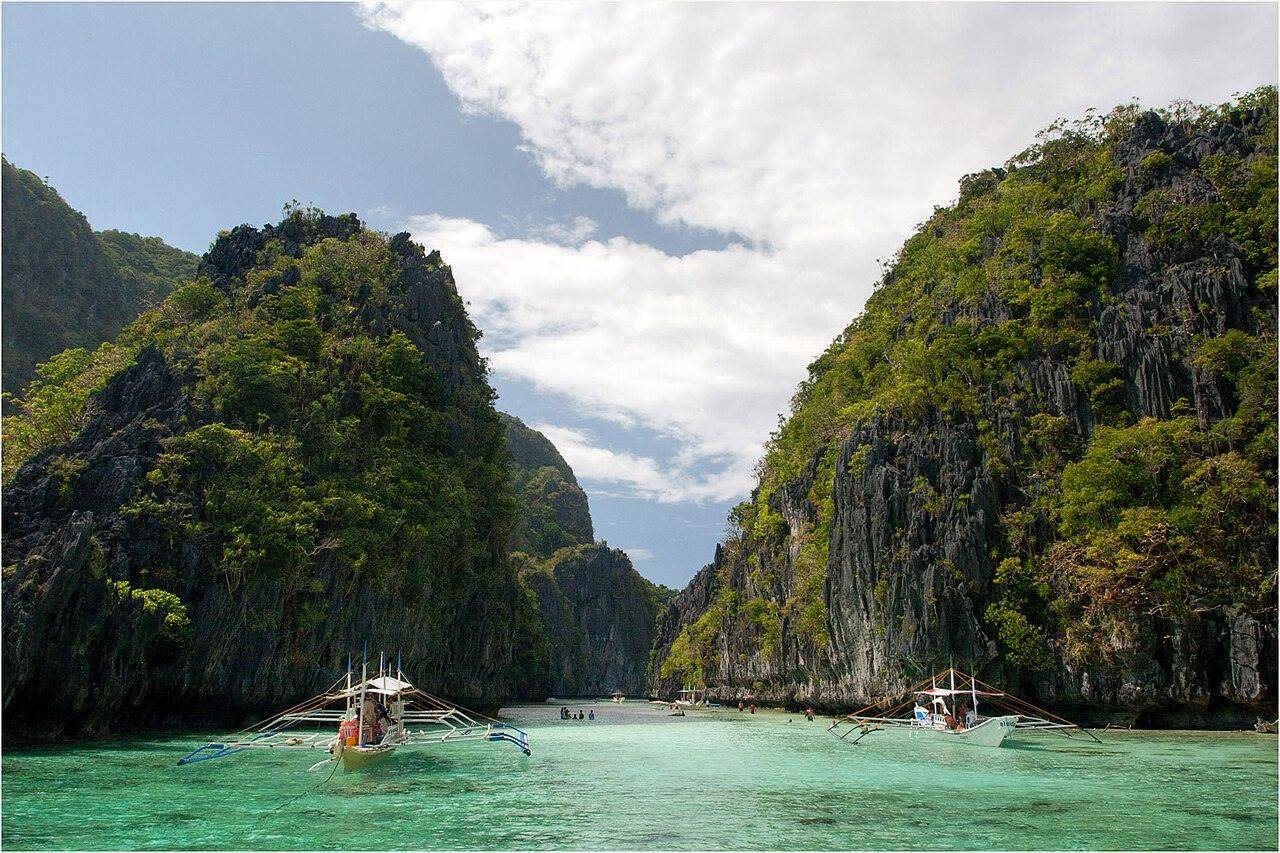
Palawan: El Nido and the lagoons
A week of islands, turquoise lagoons and snorkelling in the Bacuit archipelago, with a stop at the underground river.
 15 daysModerate
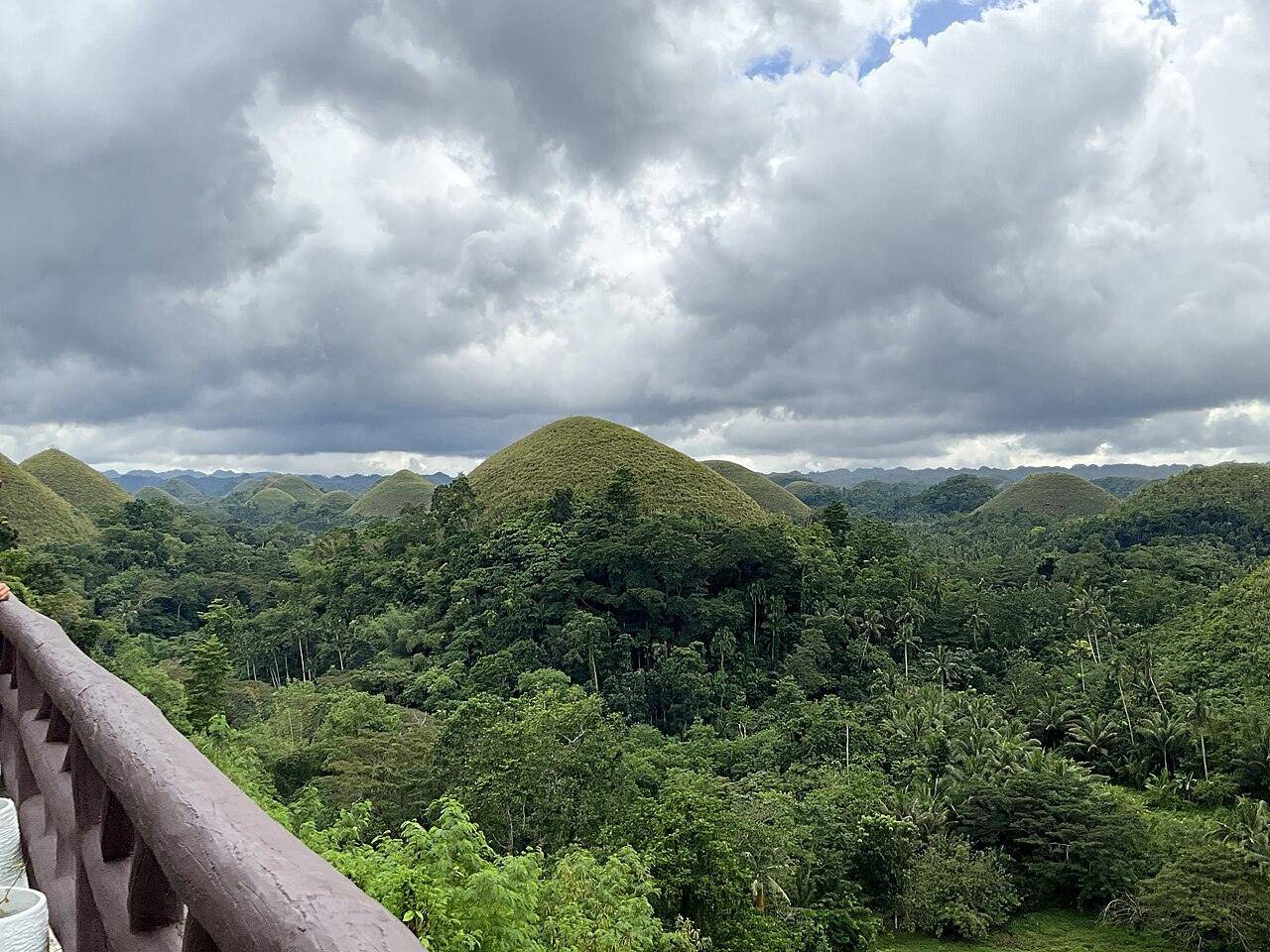
Palawan, Coron, Bohol and Cebu
The finest islands in two weeks: El Nido's lagoons, Coron's lakes and wrecks, Bohol's Chocolate Hills and tarsiers.
 12 daysEasy
Philippines express: Palawan, El Nido and Coron
Puerto Princesa's underground river, the lagoons of El Nido among limestone cliffs, and Coron's lakes and wrecks.