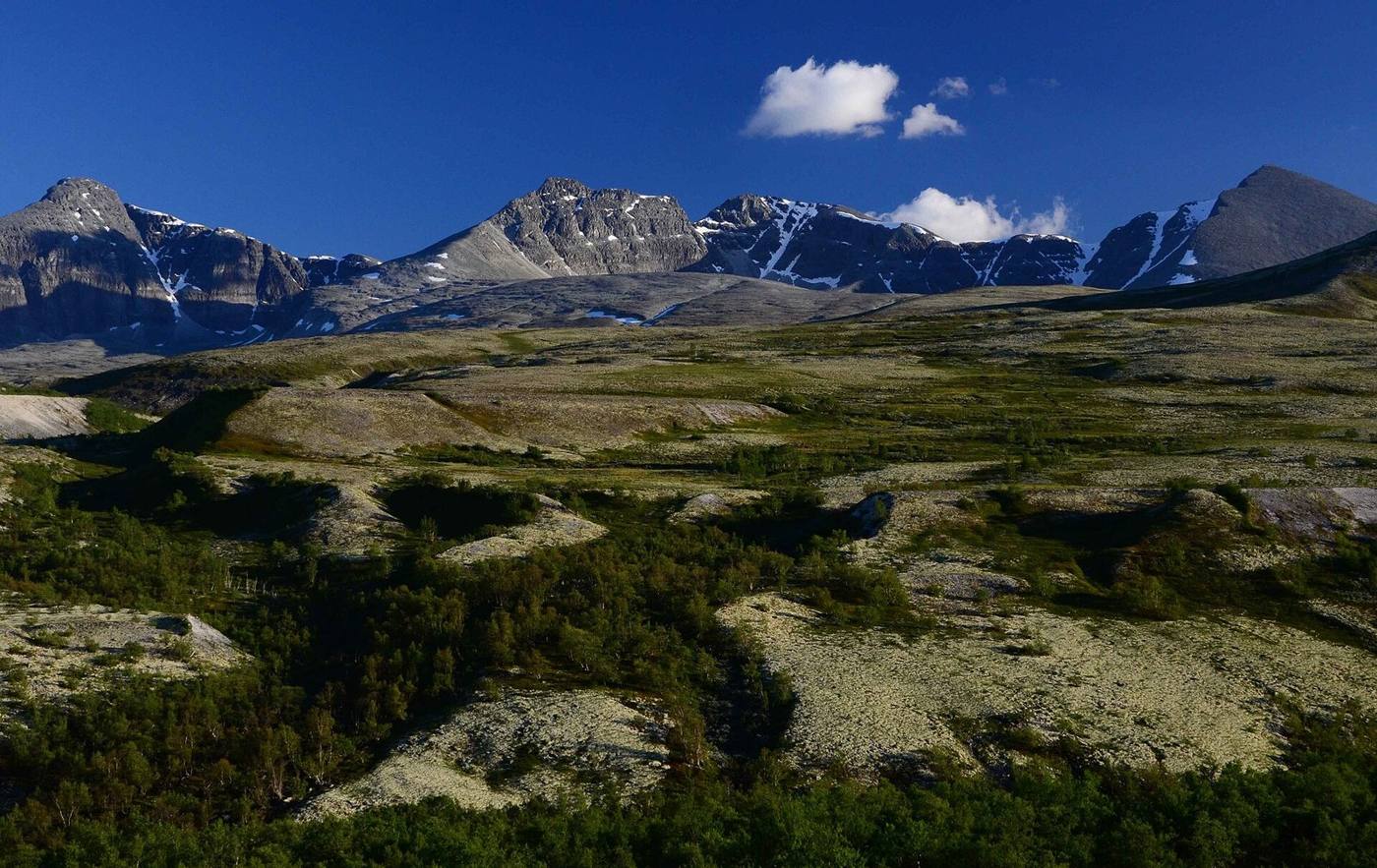
Rondane and Dovrefjell
Norway's high plateaus: the country's first national park, Rondane, with its rounded peaks and wild reindeer, then the Dovrefjell plateau with guided walks to see musk oxen, Ice Age animals, and the Snøhetta reindeer observation pavilion.
- Oslo
- Otta
- Rondane
- Kongsvoll
- Dovrefjell
- Hjerkinn
Day by day
- Day 1
By train from Oslo to Otta
Rondane and Dovrefjell are two mountain national parks in central Norway, between the Gudbrandsdalen and Østerdalen valleys. There are no fjords or glaciers here, but plateaus of lichen and rock, lakes, rounded mountains over two thousand metres and rare wildlife: musk oxen, which look as if they came out of prehistory, and the last wild reindeer in Europe. Rondane was Norway's first national park, in 1962. In five days you walk in both, reaching them by train.
In the morning, take the train from Oslo towards Trondheim, on the Dovre line. The journey to Otta takes about four hours. The train runs along the great lake Mjøsa, the largest in Norway, passes Lillehammer, host of the 1994 Winter Olympics, and climbs the Gudbrandsdalen valley, with red wooden farms, meadows and the Lågen river.
Otta is a small town where the valleys meet, the gateway to Rondane. In summer, buses leave from the station for Spranghaugen, the car park at the park entrance, or you can sleep in town and go up the next day.
If you arrive early, take a walk nearby, for example to the rock pillars of Kvitskriuprestin, curious earth towers topped by a stone, formed by erosion after the last ice age, a short distance from town.
In the evening, eat the valley's mountain food: reindeer stew, brown cheese and oat cakes.
Practical tip: the walking season usually runs from late June to mid-September. Before that, snow covers the high trails; after it, the huts close and the cold comes early.
- Day 2
Rondane: the walk to Rondvassbu hut
In the morning, go up from Otta to Spranghaugen, at the park entrance, at about a thousand metres. From here a dirt road closed to traffic leads to Rondvassbu hut, on the shore of lake Rondvatnet, in about two hours of easy walking, or by bike, which you can rent at the car park.
The Rondane landscape is open and bright: a plateau of pale lichen, dwarf birch, streams and boulders left by glaciers, with ten peaks over two thousand metres all around. The grey-green lichen is the reindeer's food, which they dig out from under the snow in winter.
Rondvassbu is a hut of the Norwegian Trekking Association, with rooms, a dining room and a large window over the lake and mountains. You can sleep here, or return to Spranghaugen in the evening.
In the afternoon, from the hut, walk along the lakeshore northwards, between steep mountain walls dropping into the water. In summer a small boat crosses the lake to its northern end, from where you can walk back. Check the boat times at the hut, as they depend on the season.
In the evening, at the hut, you dine with the other hikers, with a fixed mountain menu, and watch the peaks lit by the sun, which sets very late in summer.
Practical tip: in Rondane the weather changes quickly even in summer. Always carry a waterproof jacket, a fleece, a hat and gloves.
- Day 3
Climbing a Rondane peak
Today climb one of the park's peaks. The easiest from Rondvassbu is Storronden, 2,138 metres high, a climb of about six hours there and back on a trail marked with red Ts painted on the stones, with no technical passages but long and tiring, with the last stretch over scree.
More demanding is the climb to Rondeslottet, the Rondane castle, 2,178 metres high, the highest peak in the park, in about seven or eight hours. For a less tiring day there is Veslesmeden, 2,015 metres high, with a shorter trail and excellent views of the walls of the other mountains and the lake.
From the summits you see deep glacier-carved valleys, green lakes, plateaus stretching to the horizon and, on clear days, the mountains of Jotunheimen and Dovrefjell. With a bit of luck you see herds of wild reindeer on the plateau.
In the afternoon, descend to Rondvassbu and then to Spranghaugen, to return to Otta or continue north. Many hikers spend a second night at the hut and go down the next day.
In the evening, if you are back in the valley, take the train or bus to Dombås or Hjerkinn, at the edge of Dovrefjell, to be ready for the next morning.
Practical tip: if you meet a herd of reindeer, stop and let them pass. They are very shy, and disturbance, especially in spring when the calves are born, forces them to flee and waste precious energy.
- Day 4
Dovrefjell: on foot among the musk oxen
Dovrefjell is a high, bare plateau of lichen, marshes, rivers and mountains, dominated by Snøhetta, 2,286 metres high. For Norwegians it is a symbolic place: by tradition it is the home of the trolls, and in the 1814 constitution the deputies swore to stay united until the mountains of Dovre should fall.
Dovrefjell is also the only place in Europe where musk oxen live in the wild. These large, shaggy animals with curved horns lived here during the ice age and had died out. They were brought back from Greenland between the 1930s and 1950s, and today the herd numbers a few hundred animals.
In the morning, set off from Kongsvoll, an old coaching inn on the king's road, with a railway station and an alpine botanical garden, for a walking safari with a guide. The walk usually lasts five or six hours on the plateau. The guide knows where the animals graze and takes the group to a safe distance to watch them through binoculars. You also see reindeer, arctic foxes if you are very lucky, and mountain birds.
In the afternoon, return to Kongsvoll and continue to Hjerkinn for the night.
Practical tip: musk oxen can be dangerous. Always stay at least two hundred metres away, never approach a lone animal and, if an ox turns towards you or shakes its head, move away calmly. Without experience, it is best to go with a guide.
- Day 5
The Snøhetta reindeer pavilion and the return
On your last morning, go to the Snøhetta reindeer viewpoint above Hjerkinn. An easy, marked trail of about a kilometre and a half climbs onto the plateau to a glass and steel pavilion designed by the architecture firm Snøhetta and opened in 2011. Inside, a large wooden wall carved in waves, like rock smoothed by the wind, offers a warm shelter and a big window over Snøhetta mountain and the plateau where wild reindeer graze.
With binoculars, especially early in the morning or in the evening, you can see reindeer herds in the distance. The pavilion is also a small information centre on the animals and the history of the area, including the story of the Hjerkinn military firing range, closed and returned to nature in recent years.
In the afternoon, take the train from Hjerkinn or Dombås back to Oslo, in about five hours, or continue north to Trondheim, in about two and a half hours.
This trip combines well with Jotunheimen to the west, with the Besseggen ridge, or with Røros and Trondheim to the north. In winter Rondane and Dovrefjell become places for cross-country skiing and snowshoe walks.
Practical tip: Italian citizens only need an identity card valid for travel. Norway is not in the European Union but is in the Schengen area, and uses the Norwegian krone. Cards are accepted almost everywhere.
Musk oxen are dangerous if approached: keep at least 200 metres away and go with a guide. The Oslo-Trondheim railway stops at every place on the trip. A valid identity card is enough for EU citizens. Norway is expensive: a credit card is accepted almost everywhere, even for small amounts.
Before you go
- Documents and visa
- EU citizens need only a valid identity card or passport: Norway is not in the European Union but is in the Schengen area.
- Health and vaccines
- No vaccines required. The European Health Insurance Card is valid in Norway; insurance covering mountain rescue is useful. Emergencies: 112 police, 113 ambulance, 110 fire.
- Money and payments
- Norwegian krone. Cards are accepted almost everywhere, even for small sums and on public transport; cash is hardly needed. Prices are among the highest in Europe.
- Power sockets
- Types C and F, 230 volts.
- Time zone
- UTC+1 in winter, UTC+2 in summer.
- Safety
- One of the safest countries in the world. Risks are natural: bad weather in the mountains, rockfalls, roads closed in winter. Official advice: GOV.UK.
Information checked in November 2026 for Italian and EU citizens. Rules change: always check before you travel.
Variations
In 3 days: Rondane only, with two nights at Rondvassbu hut.
In 8 days: after Dovrefjell, continue to Røros and Trondheim, or to Jotunheimen.
Frequently asked questions
When is the best time to go?
From late June to mid-September, when the trails are at no cost of snow and the huts are open. In late August you see the autumn colours.
Do I need a guide?
Not for Rondane, where the trails are well marked. To see musk oxen in Dovrefjell a guide is strongly recommended for safety.
What documents do I need?
Italian citizens only need an identity card valid for travel. Norway is in the Schengen area and uses the Norwegian krone.
Indicative itinerary written by World Atlas. Before booking, check timetables, seasonal openings, documents and safety.
 5 daysEasy
The Sørlandet south coast
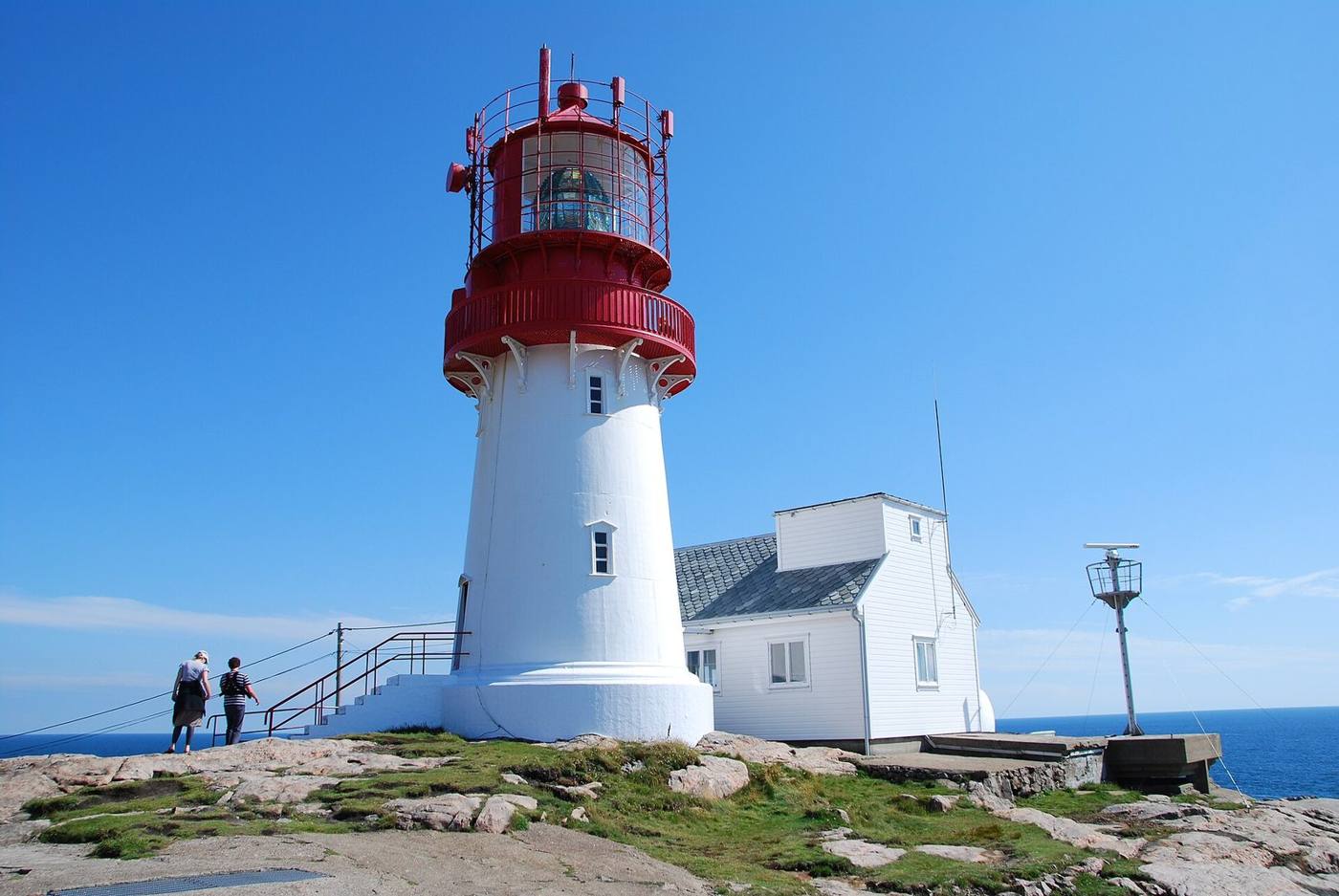
The Norwegian summer by the sea: white wooden towns such as Lillesand, Grimstad and Arendal, the archipelago of smooth rocks to explore by boat or kayak, Kristiansand with its centre and beaches, and Lindesnes lighthouse, the southernmost point of mainland Norway.
 4 daysEasy
Trondheim and Røros
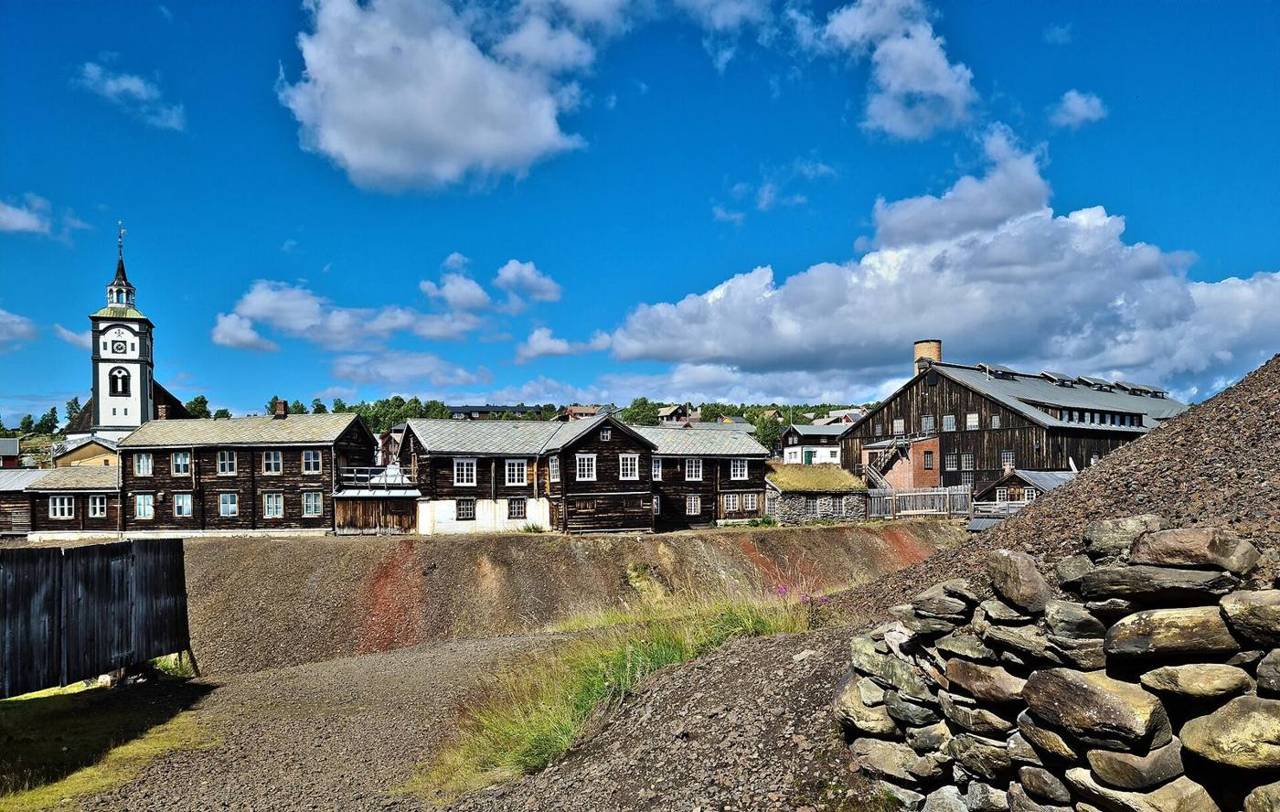
From the city of the Viking kings to the mining town: Nidaros Cathedral, the old bridge and the colourful wharf houses on the Nidelva in Trondheim, then Røros, a UNESCO site, with the wooden houses of the copper miners, the slag heaps and the baroque church.
 6 daysEasy
The Helgeland coast
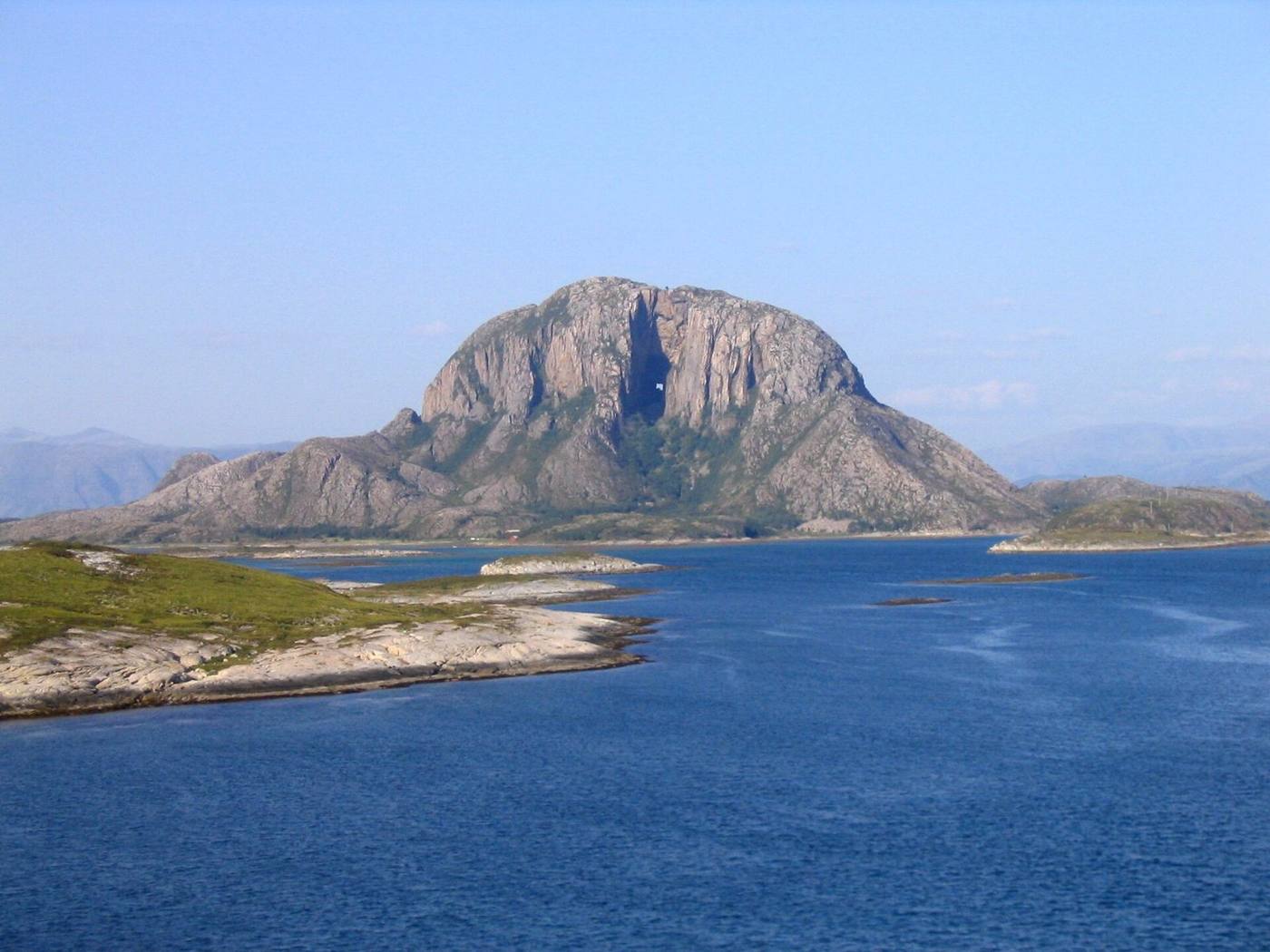
The Kystriksveien coastal route south of the Arctic Circle, made of ferries and bridges: the holed mountain of Torghatten, the Seven Sisters, the Vega archipelago (UNESCO) known for eiderdown gathering, the Svartisen glacier and the Saltstraumen tidal current.