Oslo and Norway in a Nutshell
Two days in Oslo between the Opera, the Munch museum and the Viking ships, then the train, boat and bus route through the fjords to Bergen.
- Oslo
- Myrdal
- Flåm
- Nærøyfjord
- Gudvangen
- Voss
- Bergen
Day by day
- Day 1
Oslo: the Opera House, the Munch Museum and the harbour
Norway is in the Schengen area but not in the European Union: EU citizens need only a valid identity card. From Gardermoen airport the express train or regional trains reach Oslo Central Station in about 20-25 minutes. Cards are accepted almost everywhere, including on public transport through the transport company's app.
Drop your bags and start at the Opera House on the fjord beside the station: a building of white marble and glass that looks like an iceberg, with a sloping roof you can walk up freely to the top for views over the fjord and the city. A little further on is the Munch Museum, a thirteen-storey glass tower holding the world's largest collection of Edvard Munch's work, with several versions of The Scream shown in rotation.
In the afternoon walk along the waterfront to the medieval Akershus Fortress, overlooking the whole harbour, and then on to Aker Brygge and Tjuvholmen, the modern seafront district with the Astrup Fearnley Museum of contemporary art designed by Renzo Piano. In front stands the red-brick City Hall, where the Nobel Peace Prize is awarded each December: entry to the great decorated hall is at no cost.
In the evening, in summer, try one of the floating saunas on the fjord, with a plunge into cold water. Practical tip: Oslo is expensive; to save money consider the Oslo Pass, covering transport and entry to many museums, after checking which ones you really want to visit.
- Day 2
Vigeland Park and the Bygdøy peninsula
In the morning go to Frogner Park, home of Gustav Vigeland's sculpture park: more than two hundred statues in bronze, granite and wrought iron depicting the cycle of human life, from children to the elderly. At the centre stands the Monolith, a granite column about fourteen metres high carved with 121 intertwined human figures. The park is at no cost and open all day; the statue of the angry little boy, Sinnataggen, is the most photographed.
In the afternoon head to the Bygdøy peninsula, by bus or in summer by boat from City Hall. Several museums here are devoted to the sea and exploration. The Fram Museum houses the polar ship used by Nansen and Amundsen on their Arctic and Antarctic expeditions: you can go aboard and see the cabins. Next door, the Kon-Tiki Museum tells the story of Thor Heyerdahl's 1947 crossing of the Pacific on a balsa-wood raft.
The Viking Ship Museum, with the Oseberg and Gokstad ships, has been closed for works since 2021 to become the new Museum of the Viking Age: check the official website to see whether it has reopened before going. The Norwegian Folk Museum, however, is well worth a visit: an open-air museum with over 150 historic buildings brought from all over the country, including a thirteenth-century stave church.
Practical tip: in the evening pack a light bag for the next two days: with trains and boats it is easier to travel with little luggage.
- Day 3
The Oslo-Myrdal train and the Flåm Railway
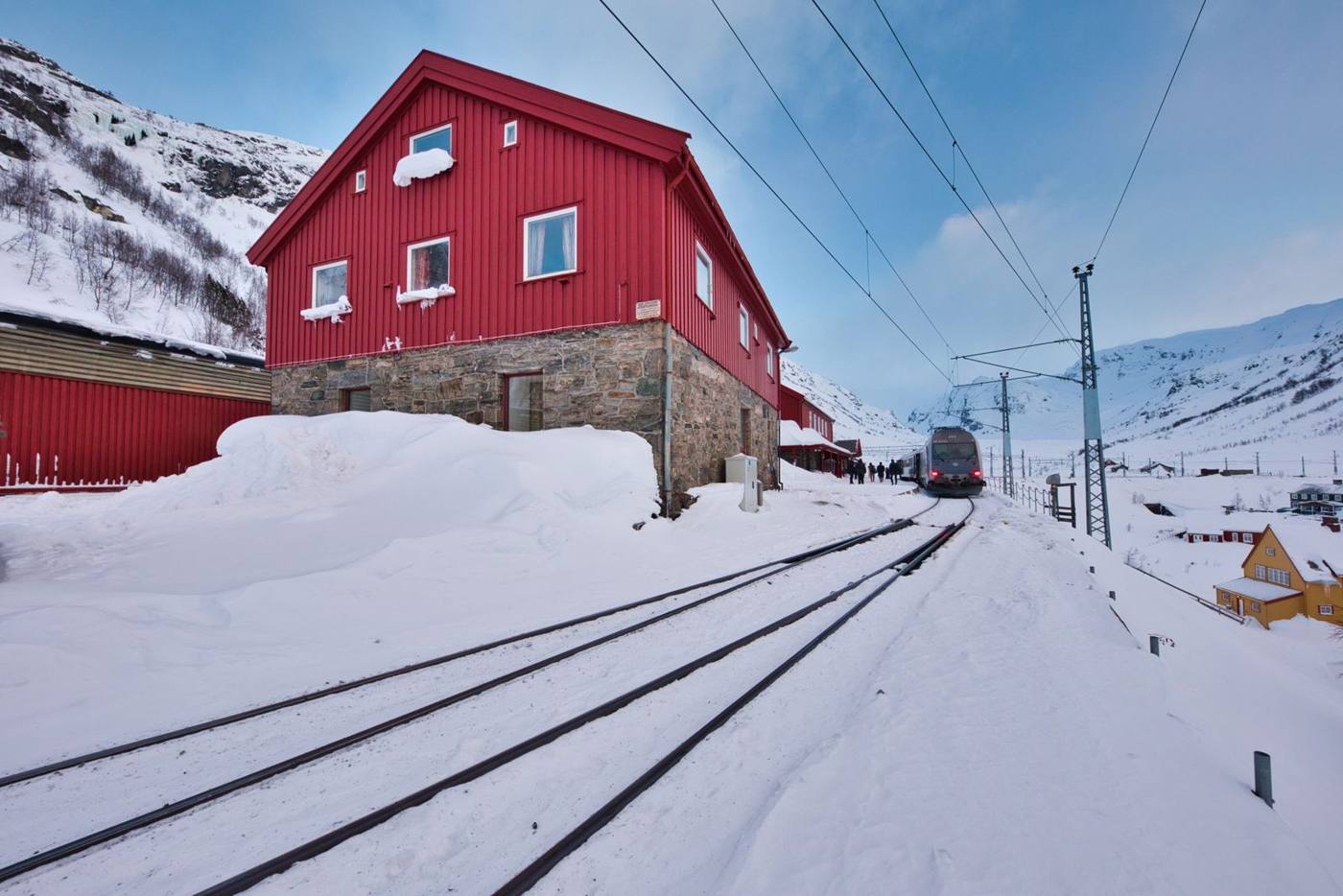
Today the journey to the fjords begins, which Norwegians call Norway in a Nutshell: you can buy it as a single package or book each leg yourself, often for less. In the morning take the Bergen Line train west from Oslo: one of Europe's most beautiful railways. After lakes and forests it climbs onto the Hardangervidda, Europe's largest plateau, with Finse station at about 1,220 metres, the highest point on the line, among glaciers and lakes still frozen in June.
After about five hours get off at Myrdal, an isolated mountain station, and change for the Flåm Railway. In about an hour the train descends twenty kilometres to the fjord, a drop of about 860 metres, through tunnels, hairpins cut in the rock and past waterfalls. It stops for a few minutes at the Kjosfossen waterfall. According to Norwegian railways, adult one-way tickets start from 399 kroner; in summer book early.
You arrive in Flåm, a small village at the head of the Aurlandsfjord. In the afternoon visit the no-cost railway museum, which tells how the line was built, or hike up to the Brekkefossen waterfall, about an hour round trip. Stay in Flåm. Practical tip: on the train from Oslo sit on the right-hand side for the best views of the plateau, and on the Flåm Railway switch sides halfway.
- Day 4
The Nærøyfjord by boat, Voss and the train to Bergen
In the morning take the boat from Flåm to Gudvangen, about two hours sailing through the Aurlandsfjord and then the Nærøyfjord, one of Europe's narrowest fjords and a UNESCO World Heritage site. The rock walls rise over a thousand metres, waterfalls drop straight into the water, and along the shores you see small villages and farms reachable only by boat. Many boats are now electric and nearly silent. Bring a warm jacket: it is cold on deck even in summer.
In Gudvangen board the bus to Voss. The route runs through the Nærøydalen valley; at some times of year buses take the Stalheimskleiva road, one of Norway's steepest, with thirteen hairpins and two waterfalls, otherwise they go through the tunnel. After about an hour you reach Voss, a mountain town known for outdoor sports, with a thirteenth-century stone church by the lake.
From Voss take the train to Bergen, about an hour and a quarter along rivers and fjords. You arrive in Bergen in the late afternoon. Take a first walk around the harbour and Bryggen, the old wharf of the Hanseatic merchants with its colourful wooden houses, a UNESCO World Heritage site, and have fish or fish soup for dinner.
Stay in Bergen. Practical tip: if you buy the legs separately, leave time between connections; with the single package connections are guaranteed.
- Day 5
Bergen and departure
The last day is devoted to Bergen, Norway's second city, set among seven mountains. In the morning go up Mount Fløyen on the Fløibanen funicular, which reaches about 320 metres in a few minutes: from the terrace you see the whole city, the harbour and the islands. At the top easy woodland trails circle small lakes, and you can walk down in half an hour.
Then return to Bryggen and step into the inner courtyards of the wooden houses, where from the fourteenth to the eighteenth century German merchants lived, trading the dried cod of northern Norway. The Hanseatic Museum tells their story. Then stop at the fish market to taste shrimp, smoked salmon and crab.
If you still have time, visit the KODE art museums around the lake in the centre, with works by Munch and the Norwegian landscape painter J.C. Dahl, or Bergenhus Fortress with medieval Haakon's Hall.
Bergen Flesland airport is about 45 minutes from the centre by light rail, which stops near the harbour. Things to take home: a Norwegian wool sweater, brunost brown cheese, Scandinavian design objects. Practical tip: it often rains in Bergen, sometimes several times a day; always keep an umbrella or waterproof jacket in your bag and do not give up on sightseeing, because the sun soon returns.
The best taste of Norway in a few days without a car. The Norway in a Nutshell route can also be done by booking the tickets yourself, often for less. A night in Flåm avoids rushing everything. Oslo's Viking museum has moved to a new building, so check opening times.
Before you go
- Documents and visa
- EU citizens need only a valid identity card or passport: Norway is not in the European Union but is in the Schengen area.
- Health and vaccines
- No vaccines required. The European Health Insurance Card is valid in Norway; insurance covering mountain rescue is useful. Emergencies: 112 police, 113 ambulance, 110 fire.
- Money and payments
- Norwegian krone. Cards are accepted almost everywhere, even for small sums and on public transport; cash is hardly needed. Prices are among the highest in Europe.
- Power sockets
- Types C and F, 230 volts.
- Time zone
- UTC+1 in winter, UTC+2 in summer.
- Safety
- One of the safest countries in the world. Risks are natural: bad weather in the mountains, rockfalls, roads closed in winter. Official advice: GOV.UK.
Information checked in November 2026 for Italian and EU citizens. Rules change: always check before you travel.
Variations
In 3 days: Oslo on the morning of day one, then the Oslo-Flåm-Gudvangen-Voss-Bergen journey in one long day, which can also be done in a single day, and Bergen on day three.
In 8 days: after Bergen add Geiranger and the Eagle Road with a rental car, or the Hardangerfjord with the Vøringsfossen waterfall.
Frequently asked questions
Is the Norway in a Nutshell package worth it, or should I book myself?
The package is convenient because it covers every leg with guaranteed connections. Booking trains, the Flåm Railway, boat and bus separately is often cheaper, especially with discounted train fares bought early, but you have to plan the connections yourself.
Can I do it in winter?
Yes: trains, the Flåm Railway and boats run all year, with fewer departures. The snowy landscape is beautiful, but days are short and some mountain roads close.
Is the Viking Ship Museum open?
It has been closed for works since 2021 to become the new Museum of the Viking Age. Check the official website to see whether it has reopened before going.
Indicative itinerary written by World Atlas. Before booking, check timetables, seasonal openings, documents and safety.
 6 daysModerate
Svalbard: polar bears and ice
A thousand kilometres from the North Pole: Longyearbyen, glaciers by boat, the Russian mining town of Barentsburg, walruses and, with luck, polar bears.
 7 daysEasy
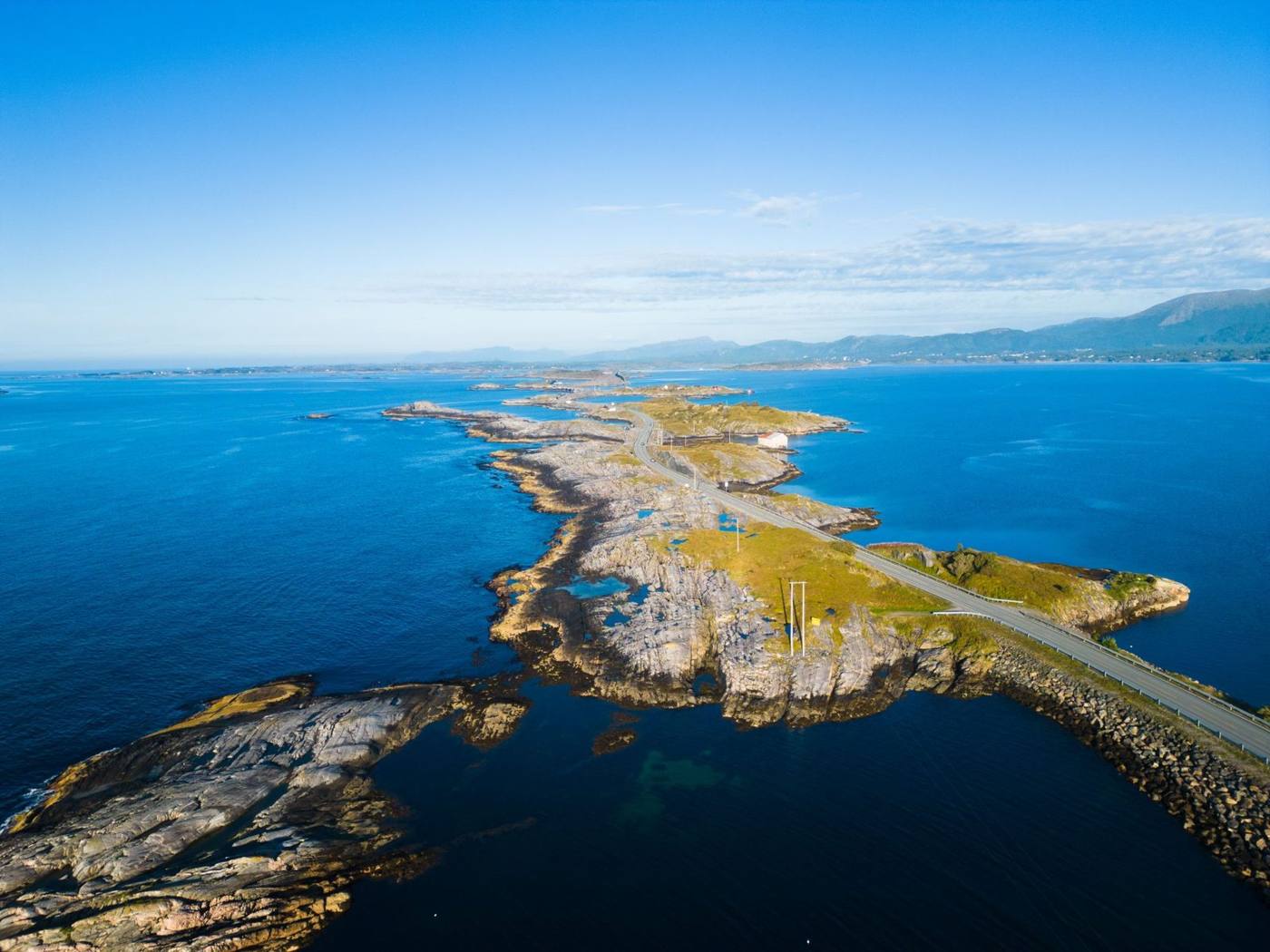
Atlantic Road, Trollstigen and Ålesund
A road loop from Ålesund: the Atlantic Road across bridges between islets, the Romsdal valley, the hairpins of Trollstigen and the Geirangerfjord.
 7 daysEasy
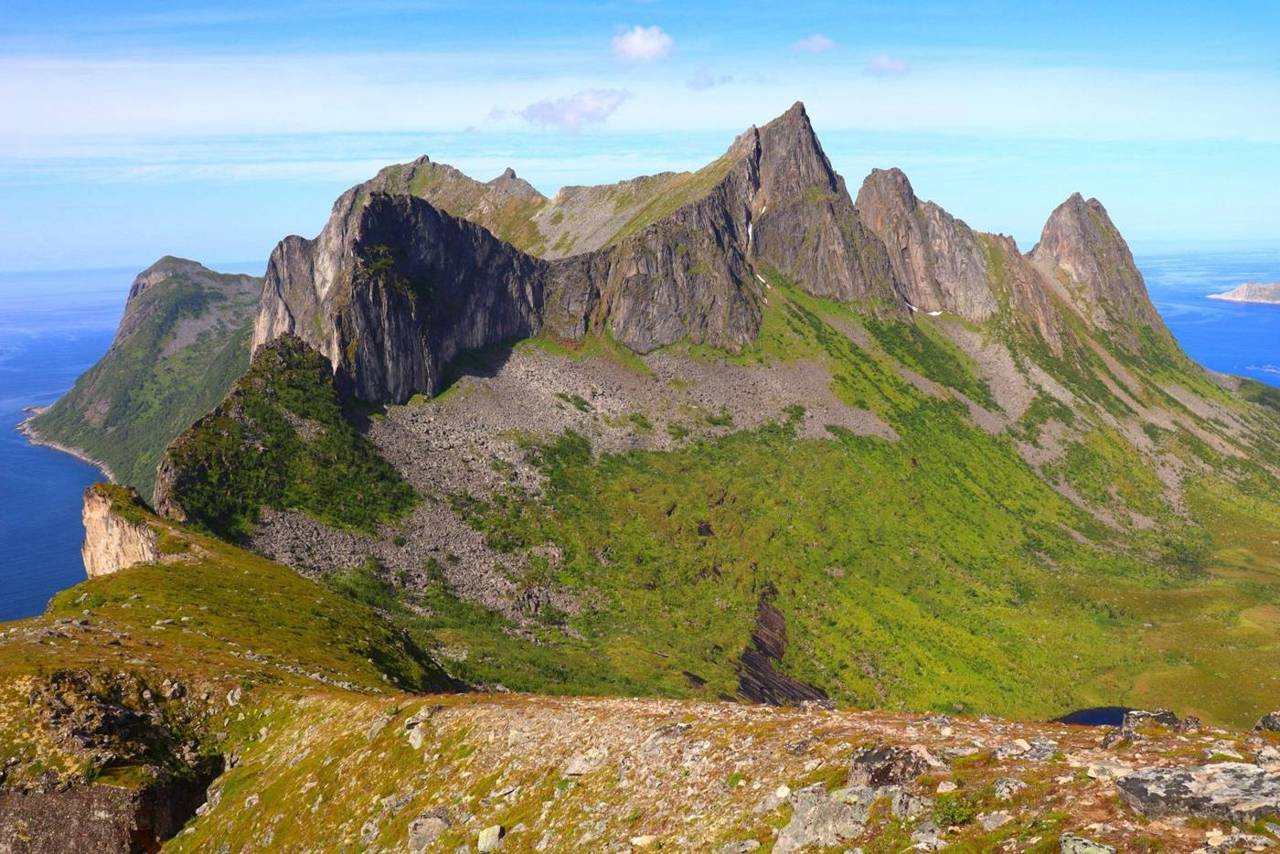
Senja and Vesterålen
The quiet alternatives to Lofoten: the sheer mountains of Senja and sperm whale safaris from Andenes in Vesterålen.