Wellington and the Wairarapa
The windy, creative capital: Te Papa national museum, the cable car and botanic garden, the Zealandia sanctuary where the forest has returned to its pre-human state, then the vineyards of Martinborough and Cape Palliser lighthouse with its fur seal colony.
- Wellington
- Zealandia
- Martinborough
- Cape Palliser
Day by day
- Day 1
Te Papa and the Wellington waterfront
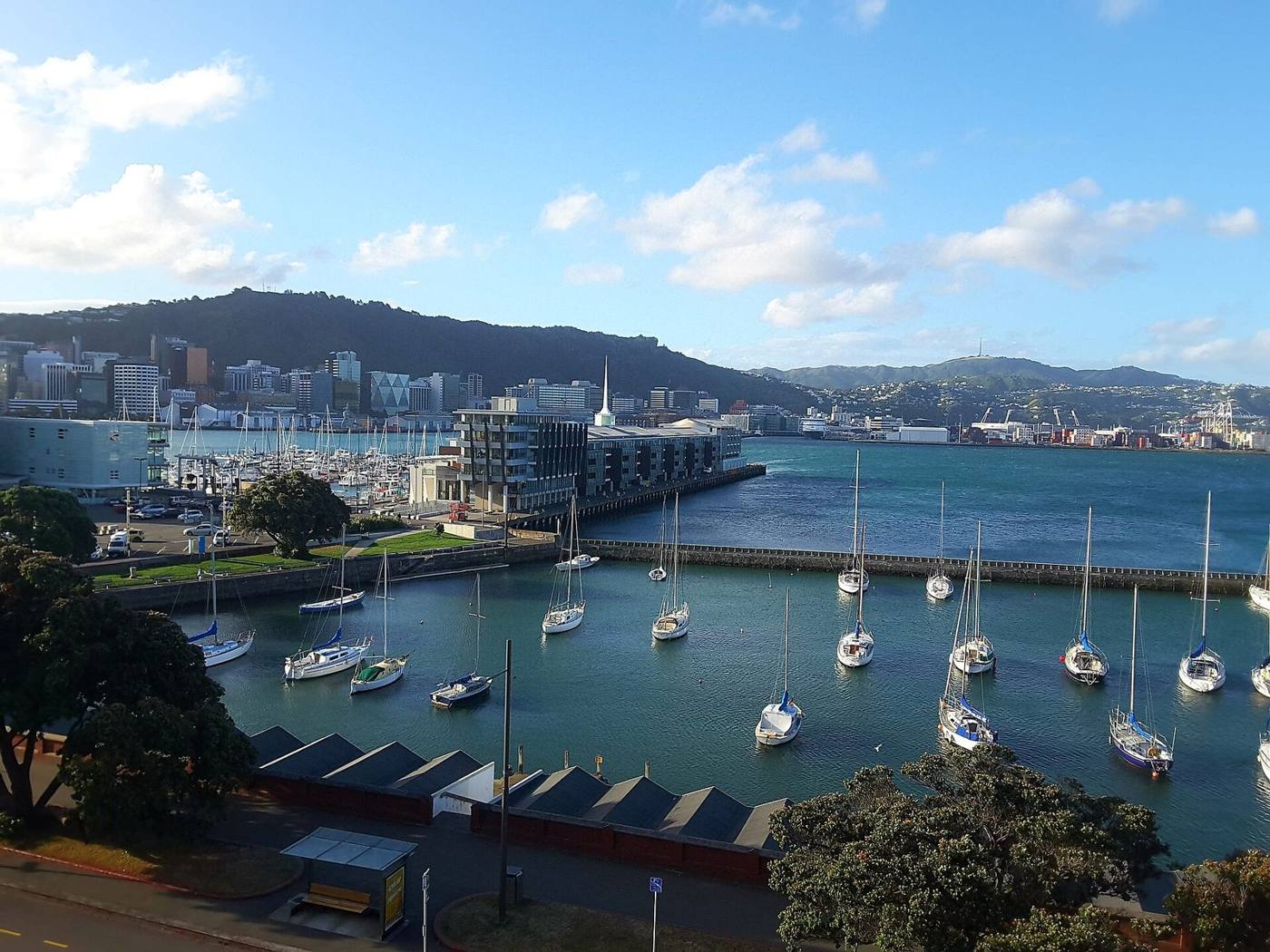
Wellington, New Zealand's capital, lies at the southern tip of the North Island, overlooking a natural harbour surrounded by green hills. It is a compact city full of cafés, museums, theatres and bars, famous for its wind: New Zealanders call it Windy Welly. In four days you discover the city and then the Wairarapa, the countryside and wine region beyond the mountains, as far as the wild coast of Cape Palliser.
You arrive by plane at Wellington airport, about fifteen minutes from the centre, or by ferry from Picton, on the South Island, with a crossing of about three and a half hours over Cook Strait. Stay in the centre, where everything can be reached on foot.
In the morning visit Te Papa Tongarewa, the national museum, on the waterfront: a modern, engaging museum, with entry to the main collections usually no-cost, telling the story of the country's nature, history and culture. The rooms on Māori culture are among the finest, with a large carved and painted marae, the traditional meeting place. There is also a geology section with an earthquake simulator: New Zealand sits on a very active fault.
In the afternoon walk along the waterfront from Te Papa to Oriental Bay, a city beach with colourful houses on the hill. Along the way you see sculptures, piers and, on sunny days, people diving off the platforms into the harbour.
In the evening try local seafood and a craft beer: Wellington is one of the country's craft beer capitals. Practical tip: to enter New Zealand you need an NZeTA and the 100 New Zealand dollar international visitor levy, paid online.
- Day 2
The cable car, the botanic garden and Zealandia at sunset
In the morning take the Wellington Cable Car, the red funicular that since 1902 has climbed from Lambton Quay, the business street of the centre, up to the hillside suburb of Kelburn in a few minutes. At the top there is a lookout over the harbour and a small museum on the cable car's history.
From here walk down through the botanic garden, twenty-five hectares of native forest, lawns, glasshouses and a rose garden, to Parliament. Along the way you pass the Carter Observatory, with its planetarium, which explains how Polynesian navigators found their way to New Zealand by the stars.
At Parliament you see the Beehive, the round 1970s building where the prime minister and government work: it is the symbol of New Zealand politics. There are at no cost guided tours of the Parliament buildings.
In the afternoon climb Mount Victoria, the hill above the centre, for a 360-degree view over the city, the harbour and Cook Strait.
Towards sunset go to Zealandia, a nature sanctuary a few minutes from the centre, enclosed by a special fence that keeps out predators introduced by humans, such as rats, cats and stoats. Rare birds have returned to live here, such as the takahē, the kākā and the tieke, and in the evening you can join a guided night tour to see, with luck, wild kiwi and tuatara, very ancient reptiles. Book ahead.
Practical tip: in Wellington the weather changes fast and the wind can be strong; always carry a windproof jacket.
- Day 3
Martinborough and its vineyards
In the morning hire a car and drive north-east over the Remutaka range, on a winding and scenic mountain road, into the Wairarapa. In about an hour you reach Martinborough, a small country town built in the nineteenth century around a square laid out in the shape of the Union Jack, with streets radiating from the centre.
Martinborough is the heart of a small but well-known wine region, famous above all for pinot noir. Around the town there are dozens of wineries, many a few minutes from one another, which you can also tour by bike, hired in town. Stop at two or three for a tasting, often served outdoors among the vines with the hills behind. Many wineries are small and family-run, and the winemaker often tells you about the wine in person.
For lunch stop at a winery with a kitchen or have a picnic with local cheeses and produce.
In the afternoon, if you like, continue to Greytown, another Wairarapa town half an hour away, with well-preserved Victorian wooden houses along the main street, small shops and cafés.
In the evening sleep in Martinborough, in one of the town's places to stay or a house among the vines, and dine on regional produce: lamb, cheese, olive oil and, of course, the local pinot noir.
Practical tip: if you taste a lot of wine, do not drive; New Zealand's drink-driving limit is low. By bike, the winery circuit is pleasant and safe.
- Day 4
Cape Palliser, the Putangirua Pinnacles and the journey back
In the morning head south to the wild coast of Cape Palliser, the southernmost point of the North Island, about an hour and a half from Martinborough. The road descends to the sea and then runs along the coast, past pebble beaches, cliffs and small fishing villages such as Ngawi, where tractors push the boats into the water from the beach because there is no harbour.
At the end of the road stands the Cape Palliser lighthouse, striped red and white, built in 1897. To reach it you climb a stairway of about 250 steps: from the top you see Cook Strait and, on clear days, the mountains of the South Island. Below the lighthouse, on the rocks, lives the largest fur seal colony in the North Island: you see them resting on the rocks a few metres from the road. Do not get too close: they are wild animals and can bite.
On the way back stop at the Putangirua Pinnacles, in Aorangi Forest Park: a walk of about an hour there and back along a stream bed leads to a valley of rock and gravel pinnacles tens of metres high, sculpted by erosion, which look like organ pipes. The place has been used as a set for some famous films. From the higher track there is a lookout over the pinnacles.
In the afternoon return to Wellington, about two hours away, for your flight or ferry.
Practical tip: the road to Cape Palliser is partly unsealed and close to the sea; in bad weather or heavy swells it can be dangerous. Check conditions before setting off.
Te Papa is at no cost. At Zealandia the guided night tour is the best way to see a kiwi. The ferry to the South Island leaves from Wellington: handy for continuing to Picton. EU citizens do not need a visa, but before travelling they must request the NZeTA electronic travel authority and pay the NZ$100 International Visitor Levy (IVL), in the same application.
Before you go
- Documents and visa
- Valid passport and an NZeTA, requested online before leaving, with the IVL levy of 100 New Zealand dollars. The NZeTA costs 17 dollars through the official app and 23 through the website.
- Health and vaccines
- No vaccines required. Biosecurity checks on arrival are very strict: declare food, plants and hiking boots. Emergencies: 111.
- Money and payments
- New Zealand dollar. Cards are accepted almost everywhere, even in small towns.
- Power sockets
- Type I, 230 volts: you need an adapter for the angled flat-pin Australian-style plugs.
- Time zone
- UTC+12, UTC+13 with daylight saving time from late September to early April.
- Safety
- A very safe country. The main risks are natural: changeable mountain weather, strong sea currents, earthquakes and active volcanoes. Driving is on the left. Official advice: GOV.UK.
Information checked in November 2026 for Italian and EU citizens. Rules change: always check before you travel.
Variations
In 2 days: Wellington only, with Te Papa, the cable car and Zealandia, without the Wairarapa.
In 6 days: take the ferry to Picton and add the Marlborough Sounds and the sauvignon blanc country around Blenheim.
Frequently asked questions
When is the best time to go?
From November to April, with the warmest weather and long days. March and April are harvest time in the Wairarapa. In winter Wellington is windy and wet, but the museums stay open.
Do I need a car?
Not in the city, where you get around on foot and by bus. There is a train to Featherston for Martinborough, but for Cape Palliser you need a car.
Can you see kiwi at Zealandia?
It is possible on the guided night tour, but not guaranteed: kiwi are shy and nocturnal. The other rare birds are easy to see by day.
Indicative itinerary written by World Atlas. Before booking, check timetables, seasonal openings, documents and safety.
 4 daysEasy
Aoraki/Mount Cook and Lake Tekapo
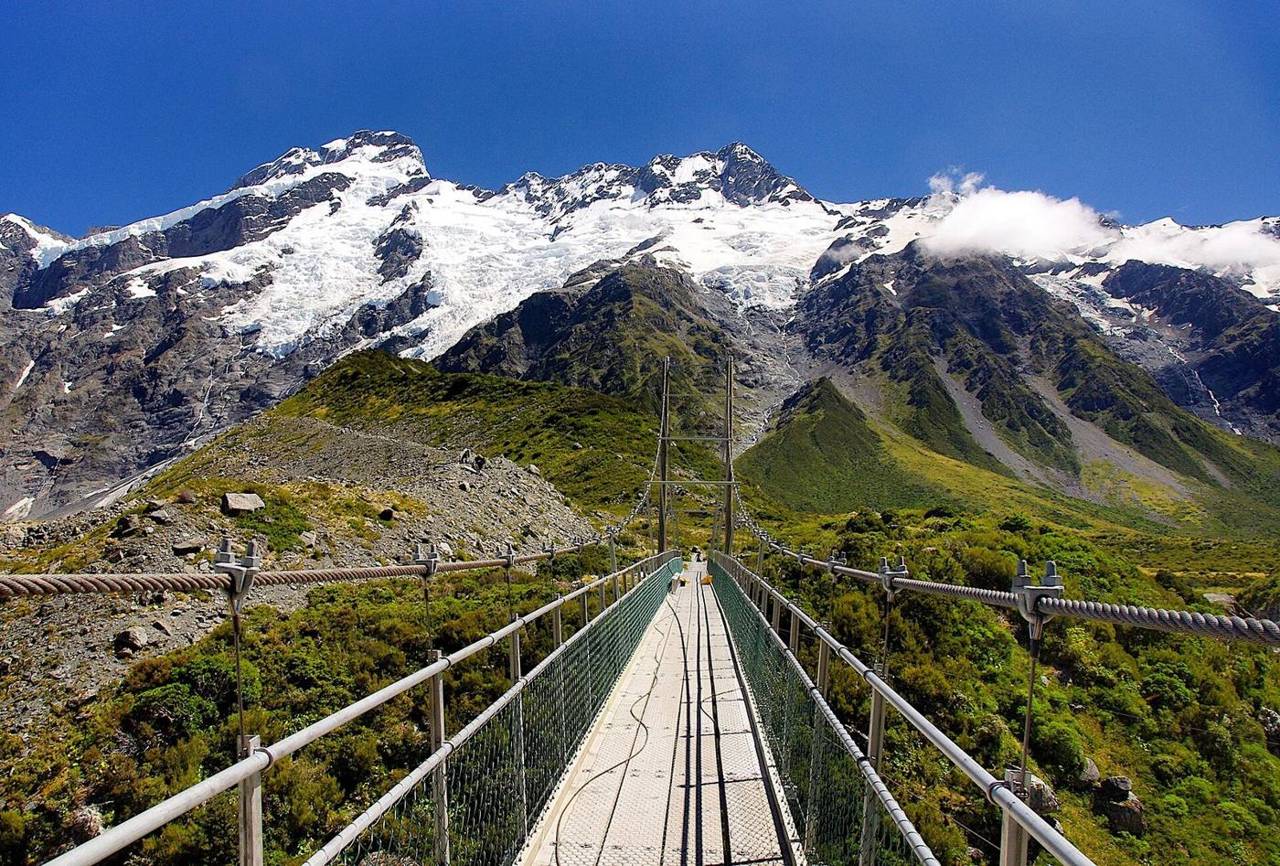
The South Island's alpine heart: turquoise Lake Tekapo and the Church of the Good Shepherd, the starry skies of the Aoraki Mackenzie reserve, Lake Pukaki, the Hooker Valley track to the glacial lake below Aoraki, the country's highest peak, and the Tasman Glacier.
 5 daysEasy
The West Coast and the glaciers
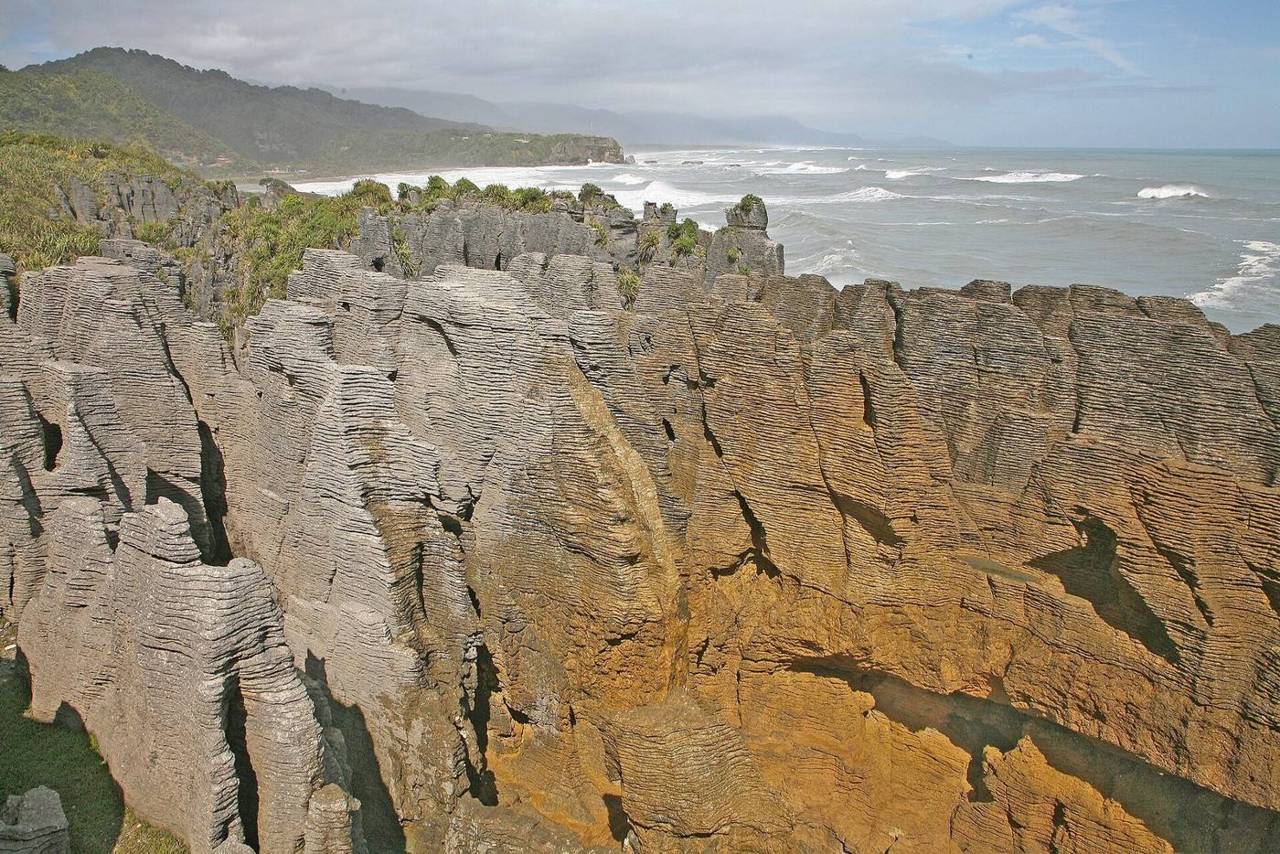
The South Island's wild coast: the Pancake Rocks of Punakaiki and their blowholes, Hokitika Gorge with its turquoise water, Lake Matheson reflecting the mountains, the Franz Josef and Fox glaciers descending towards the rainforest, and the Haast Pass.
 4 daysModerate
Wanaka and Mount Aspiring
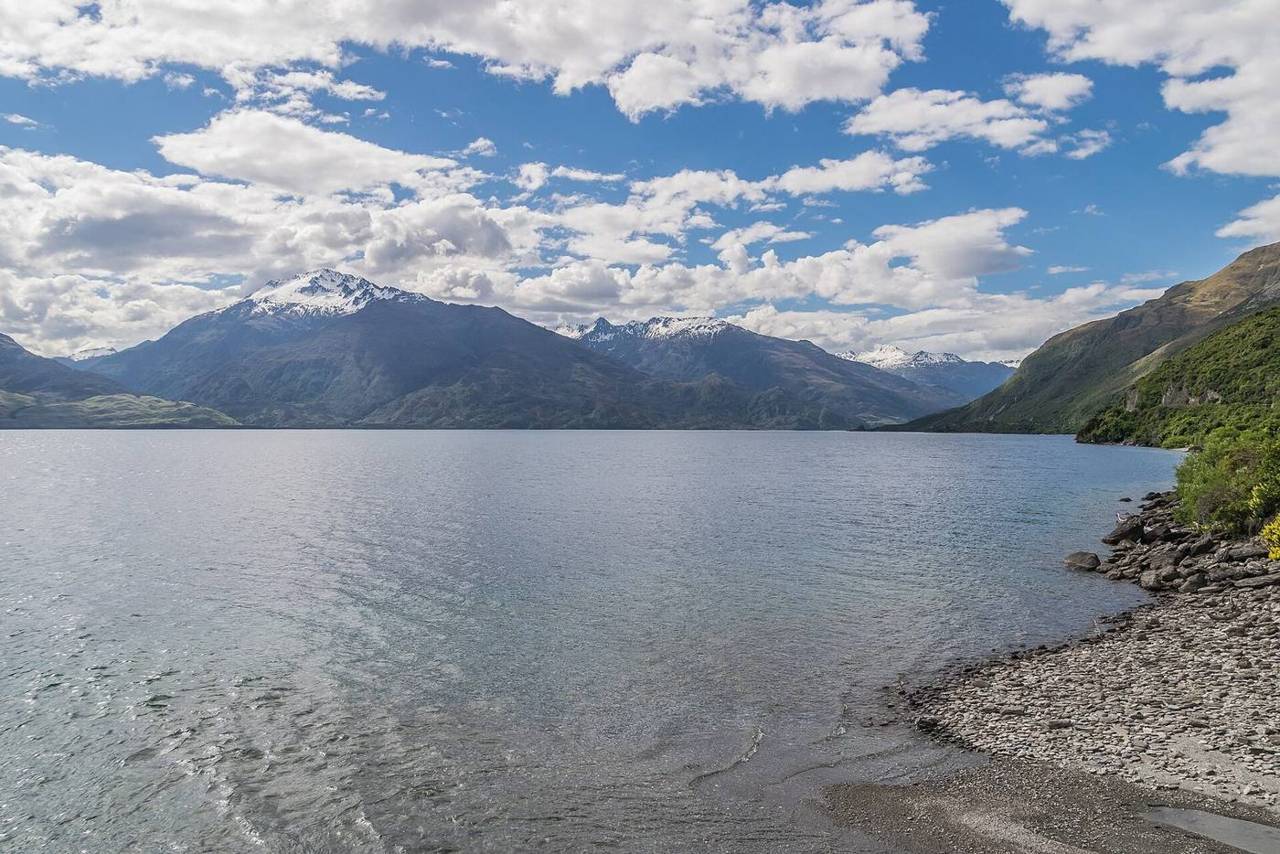
Queenstown's quiet sister: Lake Wanaka and its lone tree in the water, the climb up Roys Peak with views over the lakes, the Rob Roy Glacier track in Mount Aspiring National Park with waterfalls and a hanging glacier, and the Matukituki valley.