The Coromandel Peninsula
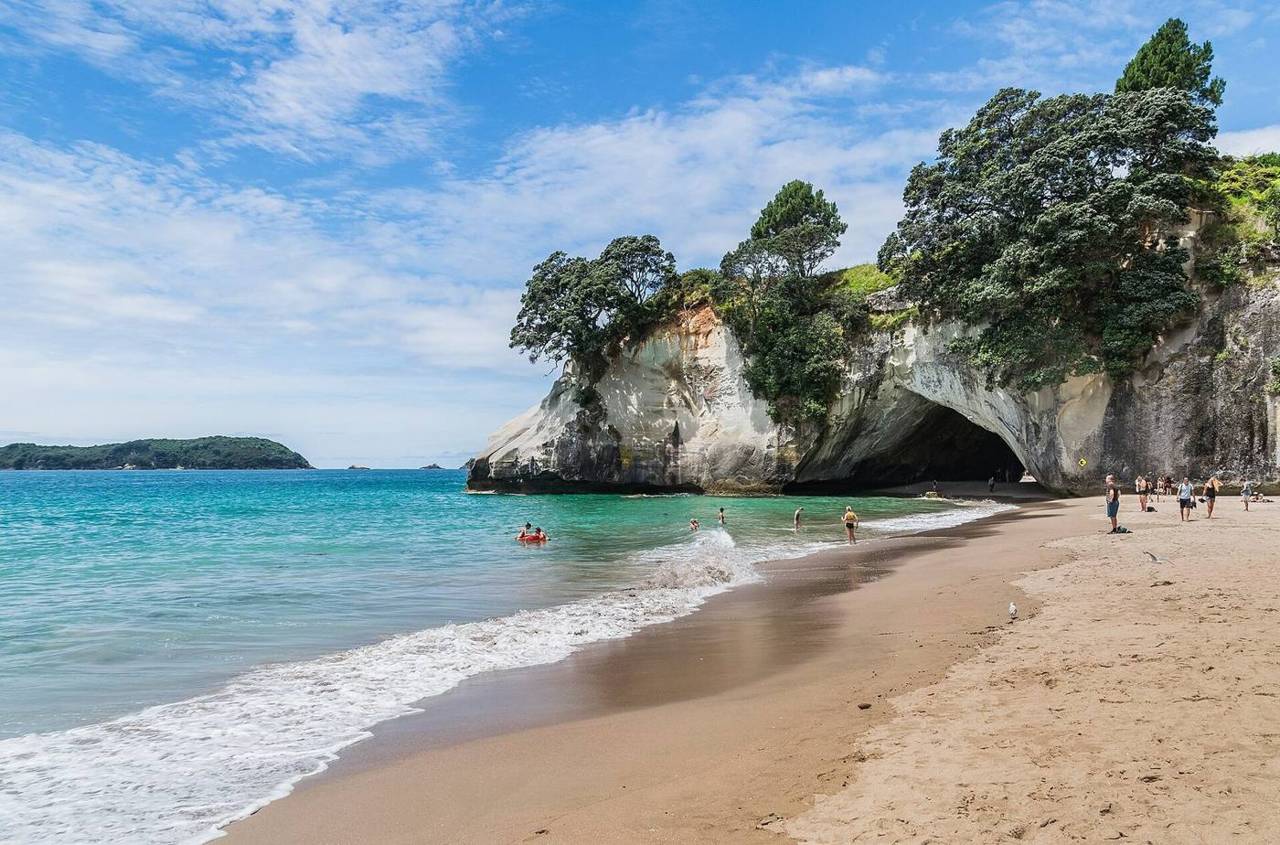
The North Island's finest beaches two hours from Auckland: the rock arch of Cathedral Cove, Te Whanganui-A-Hei marine reserve by kayak, Hot Water Beach, where you dig a warm pool in the sand, kauri forests and the coast road to Coromandel Town.
- Auckland
- Thames
- Coromandel
- Hahei
- Hot Water Beach
Day by day
- Day 1
From Auckland to Thames and Coromandel Town
The Coromandel Peninsula stretches into the sea east of Auckland, with a chain of forest-covered hills in the middle and two very different coasts: to the west the Hauraki Gulf, calm and full of small islands, to the east the Pacific Ocean, with white sand beaches, cliffs and bays. It is the favourite summer destination of Auckland's residents, but outside the December and January holidays it is quiet. In four days you see the most famous beaches, a marine reserve by kayak and the kauri forests.
In the morning, leave Auckland by car heading south-east. In about an hour and a half you reach Thames, a small town born in the nineteenth-century gold rush, with old wooden houses with verandas, a main street of old shops and an old gold mine and stamper battery you can visit.
From Thames, take the coast road north, one of the most beautiful in New Zealand: it runs narrow between the sea and the hills, with small bays, pohutukawa trees bending over the water and views of the islands of the gulf. In December the pohutukawa bloom red, which is why they are called New Zealand's Christmas trees.
In the afternoon you reach Coromandel Town, a quiet village with colourful houses. Near the village there is a small mountain railway built by a local artist and potter, which climbs into the forest over viaducts and through tunnels to a viewpoint over the gulf.
Practical tip: the peninsula's roads are narrow and winding, and after heavy rain some may be closed by landslides. Check road conditions before you set off.
- Day 2
The hills, Hahei and kayaking in the marine reserve
In the morning, cross the peninsula to the east coast on the road that climbs through forest-covered hills, with tree ferns, rimu and kauri. Along the road a short path leads to a group of large kauri, huge trees that can live more than a thousand years, protected today from a disease that affects them. Before entering the forest, clean your shoes carefully at the cleaning stations: it is compulsory.
On the east coast, continue to Hahei, a small holiday village next to one of the finest beaches on the peninsula, with pale sand and a rocky island offshore.
In the afternoon, take a guided sea kayak trip in the Te Whanganui-A-Hei marine reserve, where fishing is banned and fish are plentiful. You paddle along the coast, past white cliffs, rock arches, sea caves and islets, to the beach of Cathedral Cove, which is easy to reach from the sea. When the sea is calm you sometimes see dolphins, little blue penguins and rays.
If you prefer, you can do the same trip by fast boat or glass-bottomed boat, which lets you see the fish and seaweed of the reserve.
In the evening, go back to Hahei and walk up to the viewpoint at the old Māori fortified site on the headland above the beach, from where you see the whole coast at sunset.
Practical tip: in the marine reserve it is forbidden to fish or to take shells, fish or shellfish. No experience is needed for the kayak, but the sea must be calm.
- Day 3
Cathedral Cove at dawn and Hot Water Beach at low tide
Early in the morning, go to Cathedral Cove, the most famous beach in the Coromandel, with the great white rock arch that cuts through the headland and links two beaches, and a pointed rock standing in the sea. At dawn the light shines into the arch and the beach is almost empty.
To get there, in summer you leave the car at the car park outside Hahei and take the shuttle, or walk for about an hour and a half from the village on a scenic clifftop path. The path was closed for a long time by landslides after the 2023 cyclones: before you set off, check whether it is open or whether you can only arrive by sea.
Spend the morning between the two beaches, swimming in the clear water if the sea allows, and return to Hahei.
In the afternoon, go to Hot Water Beach, a few kilometres away, a beach where hot water from a volcanic spring rises from under the sand. With a spade, which you can hire near the beach, you dig a hole in the sand and make a small hot pool, with water that can be very hot. You can only do this around low tide, roughly two hours before and two hours after: check the day's tide times.
In the evening, if you have time left, go to Whitianga, the largest town on the coast, with its harbour and seafront.
Practical tip: at Hot Water Beach the sea has strong currents, so do not swim in the ocean in front of the spring area. In some spots the water is scalding, so be careful not to burn yourself.
- Day 4
The coast and the return to Auckland
On your last morning, choose between two options. The first is the climb to the Pinnacles, in the Kauaeranga valley near Thames: a mountain path through the forest, with wooden ladders and steps cut into the rock, that leads in about three hours to a rocky summit with a view over the whole peninsula. The return trip takes a full day, so it is best to start at dawn or keep it for another trip. The second is a quiet morning on the east coast, among the beaches of Hahei, Cooks Beach and Whitianga bay.
If you choose the coast, take a walk along the beaches, stop in one of the small bays and, if the sea is calm, have a last swim.
In the early afternoon, set off for Auckland. You can go down the east coast through Tairua, with the extinct volcano of Paku rising above the harbour, and Whangamatā, a surfers' beach, then cut west across the Hauraki plains to the motorway for Auckland. The journey takes about two and a half to three hours.
In the evening you are back in Auckland.
The Coromandel combines well with the rest of the North Island: Rotorua, with its hot springs and Māori culture, Waitomo, with its glow-worm caves, and the Hauraki Gulf, with Waiheke Island.
Practical tip: to enter New Zealand you need the NZeTA electronic authorisation, to be requested before you leave, with the international visitor levy of 100 New Zealand dollars.
At Hot Water Beach the hot water only comes up two hours either side of low tide: check the times. Currents at Hot Water Beach are dangerous; swim only where lifeguards are on duty. Peninsula roads are narrow and can close after storms. EU citizens do not need a visa, but before travelling they must request the NZeTA electronic travel authority and pay the NZ$100 International Visitor Levy (IVL), in the same application.
Before you go
- Documents and visa
- Valid passport and an NZeTA, requested online before leaving, with the IVL levy of 100 New Zealand dollars. The NZeTA costs 17 dollars through the official app and 23 through the website.
- Health and vaccines
- No vaccines required. Biosecurity checks on arrival are very strict: declare food, plants and hiking boots. Emergencies: 111.
- Money and payments
- New Zealand dollar. Cards are accepted almost everywhere, even in small towns.
- Power sockets
- Type I, 230 volts: you need an adapter for the angled flat-pin Australian-style plugs.
- Time zone
- UTC+12, UTC+13 with daylight saving time from late September to early April.
- Safety
- A very safe country. The main risks are natural: changeable mountain weather, strong sea currents, earthquakes and active volcanoes. Driving is on the left. Official advice: GOV.UK.
Information checked in November 2026 for Italian and EU citizens. Rules change: always check before you travel.
Variations
In 2 days: from Auckland straight to Hahei, with Cathedral Cove and Hot Water Beach, and back.
In 7 days: after the Coromandel, continue to Rotorua, Lake Taupo and Tongariro National Park.
Frequently asked questions
When is the best time to go?
From November to April, with warm weather for the sea. In December and January it is full of New Zealand holidaymakers, so book ahead. In winter it is quiet but cool and rainy.
Do I need a car?
Yes: buses are few and many beaches and paths can only be reached by car. You drive on the left and the roads are narrow and winding.
What documents do I need?
A passport and the NZeTA electronic authorisation, to be requested before you leave, with the international visitor levy of 100 New Zealand dollars.
Indicative itinerary written by World Atlas. Before booking, check timetables, seasonal openings, documents and safety.
 4 daysEasy
Rotorua in depth: geothermal wonders and Māori culture
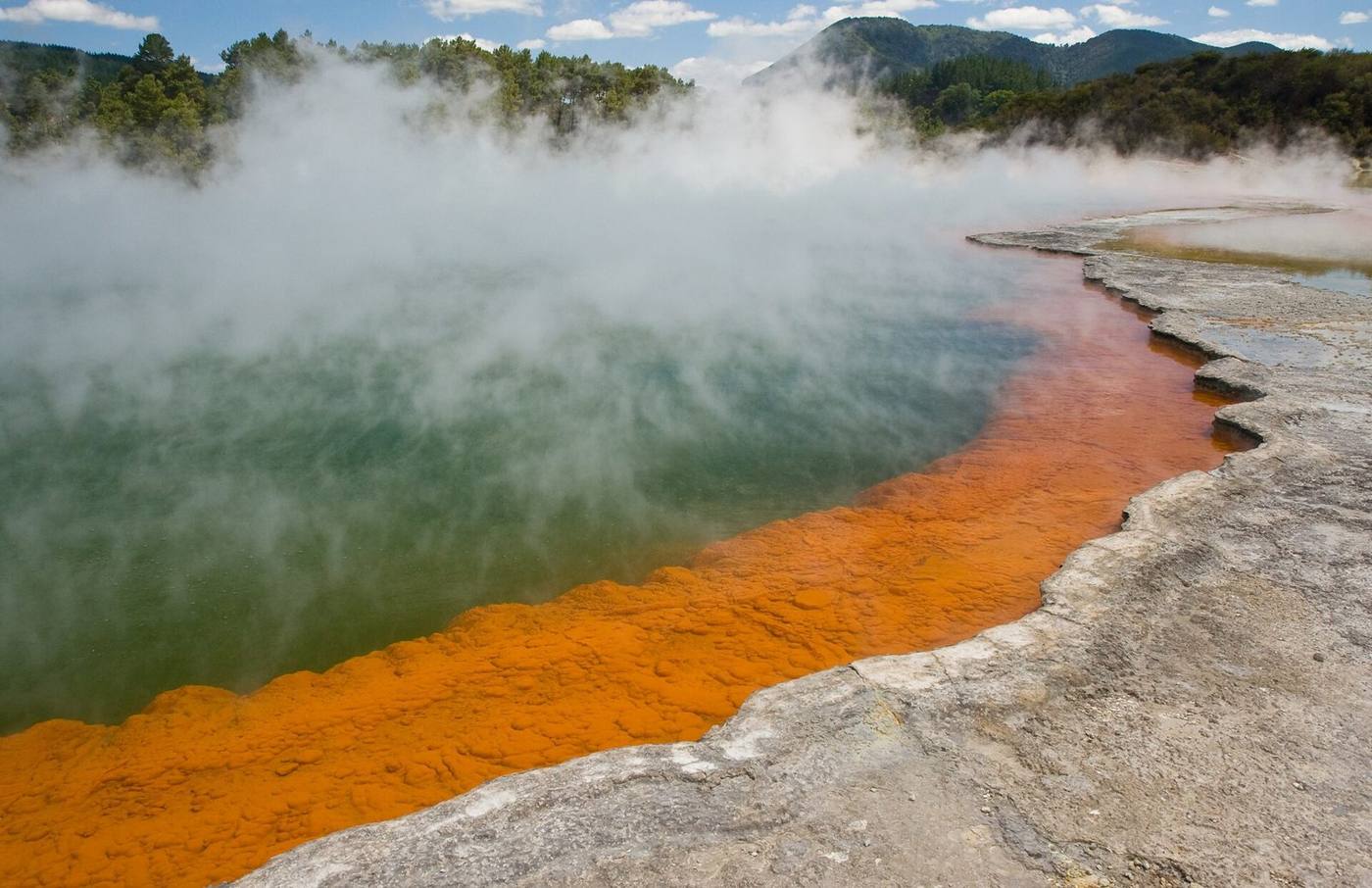
The steaming land: Pōhutu geyser at Te Puia, the coloured pools of Wai-O-Tapu and Waimangu, boiling mud, the redwoods of Whakarewarewa Forest, a living Māori village with food cooked in the steam and an evening of song and haka.
 4 daysEasy
Wellington and the Wairarapa
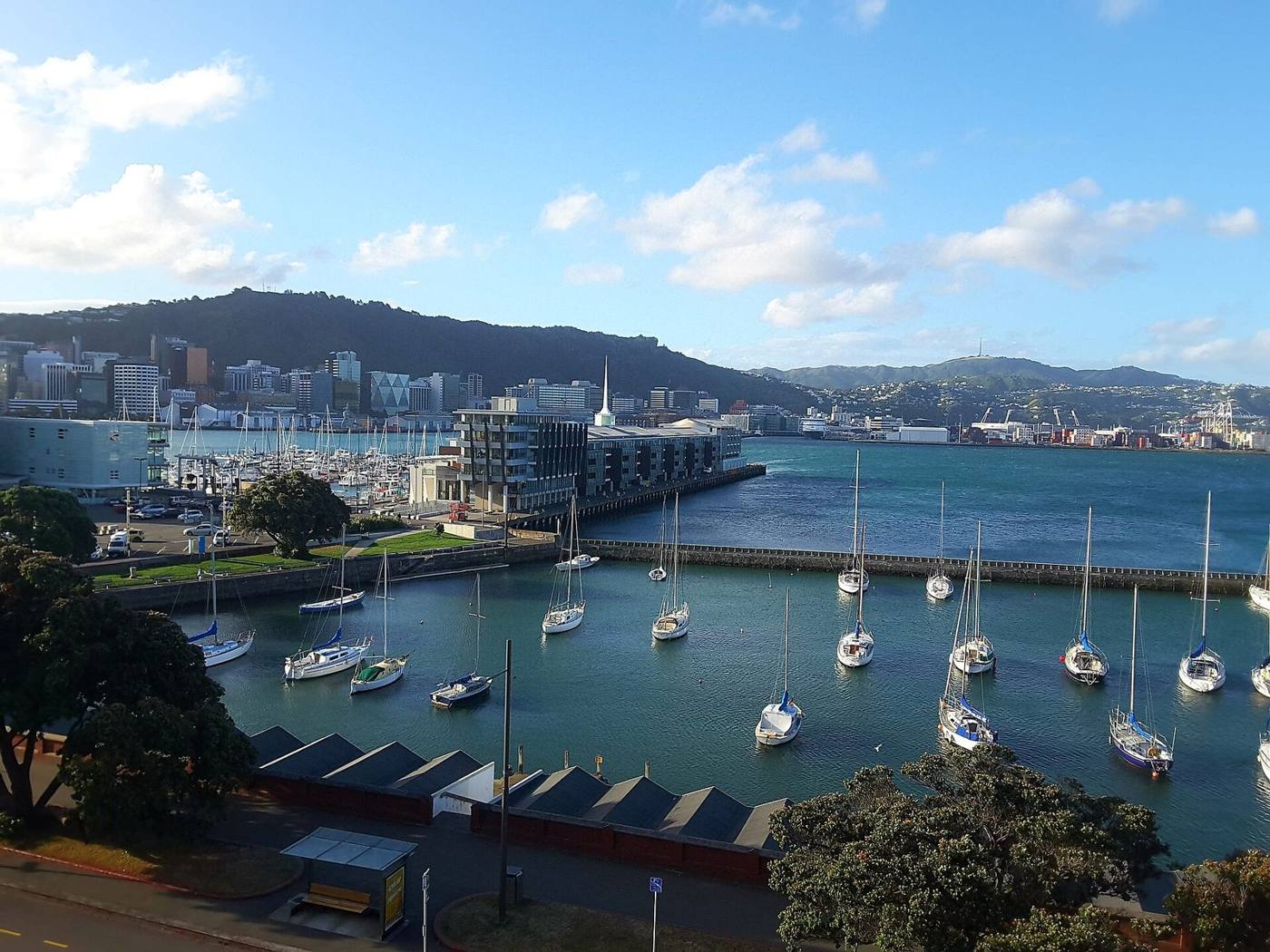
The windy, creative capital: Te Papa national museum, the cable car and botanic garden, the Zealandia sanctuary where the forest has returned to its pre-human state, then the vineyards of Martinborough and Cape Palliser lighthouse with its fur seal colony.
 4 daysEasy
Aoraki/Mount Cook and Lake Tekapo
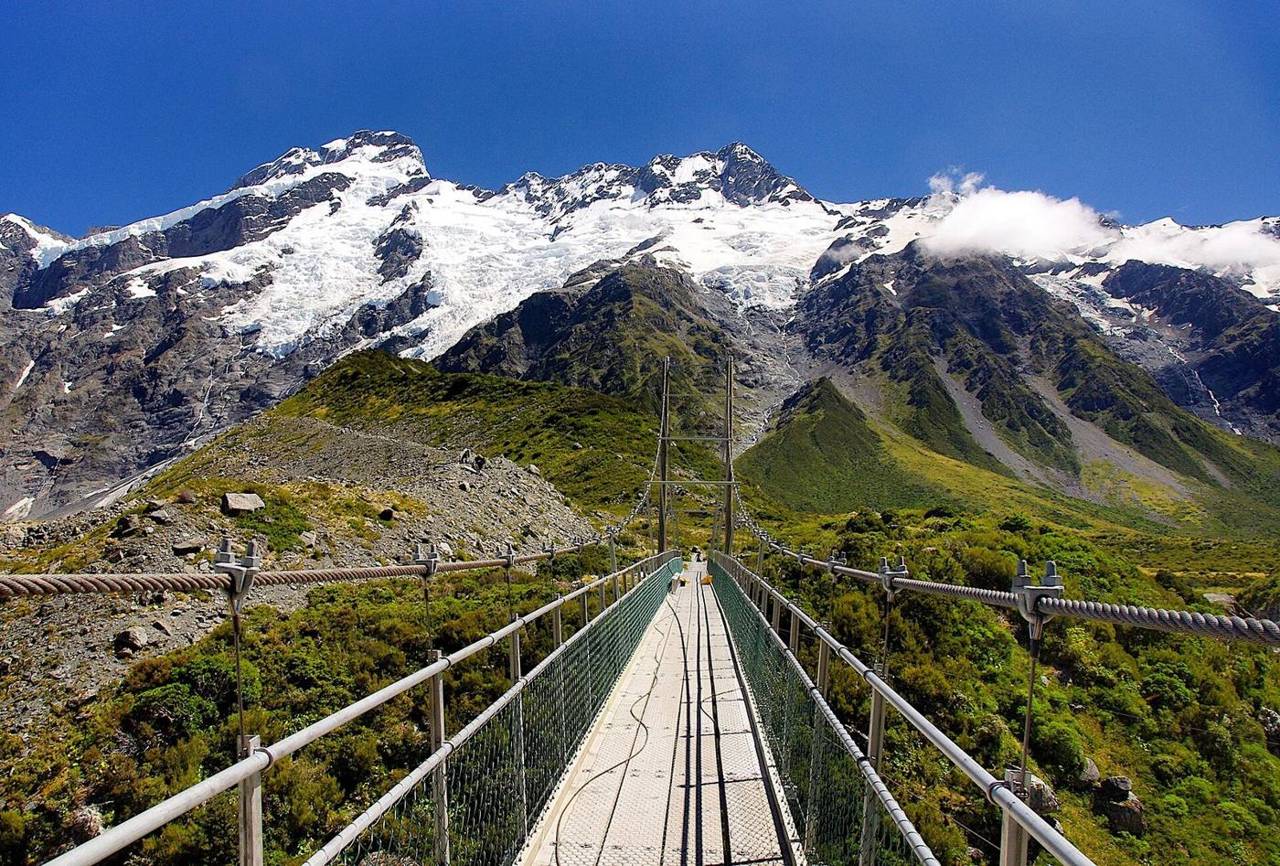
The South Island's alpine heart: turquoise Lake Tekapo and the Church of the Good Shepherd, the starry skies of the Aoraki Mackenzie reserve, Lake Pukaki, the Hooker Valley track to the glacial lake below Aoraki, the country's highest peak, and the Tasman Glacier.