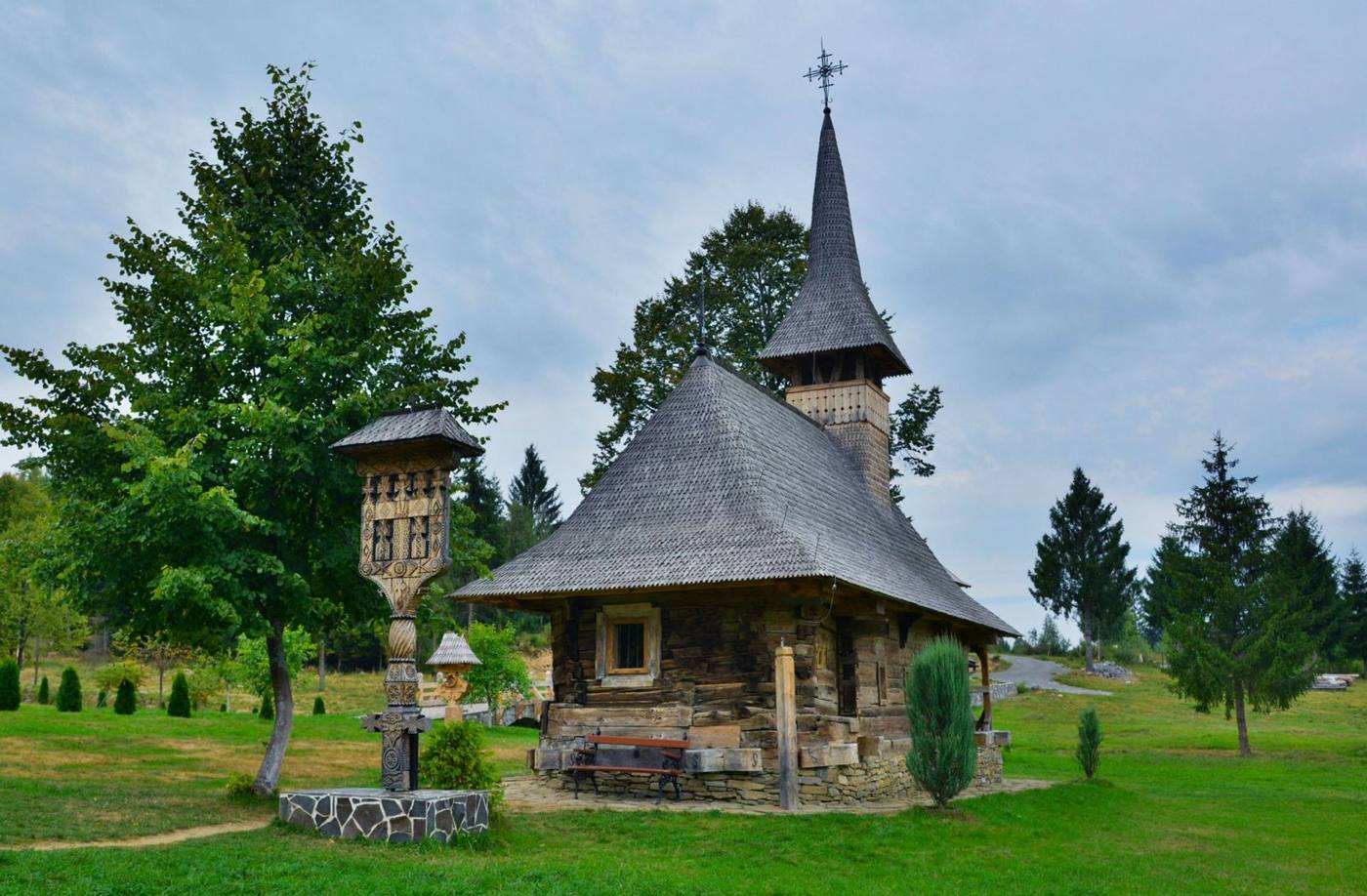
The Codri and its monasteries
The Codri forests, the Codrii nature reserve at Lozova, Hîncu monastery in the woods and the country villages with their guesthouses.
- Chișinău
- Lozova
- Hîncu
- Căpriana
Day by day
- Day 1
From Chișinău to the Codrii reserve
This trip takes you into green Moldova, less than an hour from the capital: the forests of the Codri, the Codrii nature reserve at Lozova, the monastery of Hîncu hidden in the woods and the monastery of Căpriana, one of the oldest in the country. You travel by rental car or with a driver.
Before you go: Italian citizens can enter Moldova without a visa with an electronic identity card or a passport, valid for at least three more months. Other nationalities should check their own rules. Official advice is not to travel to Transnistria, the breakaway region in the east, which this trip does not touch.
You leave Chișinău in the morning and drive west for about an hour to the village of Lozova. Here begins the Codrii reserve, the oldest protected area in Moldova, created in 1971 to protect the forests of oak, beech, hornbeam and lime that once covered the centre of the country.
Visit the small nature museum at the entrance, with the animals and plants of the reserve, then follow one of the marked paths into the forest. With a little luck and a lot of silence you may see red deer, roe deer or wild boar, and hear woodpeckers. Ask at the entrance which paths are open and whether you need a guide. Check prices and times.
In the evening, settle into a country guesthouse nearby and have home cooking for dinner: sarmale, rolls of vine or cabbage leaves, with house wine.
Overnight in the Codri area, for two nights.
Practical tip: bring insect repellent and long trousers, because in summer the forest has ticks and mosquitoes.
- Day 2
The monastery of Hîncu in the woods
Today you visit one of the best-loved monasteries in Moldova and spend the day among woods and villages.
In the morning, drive to the monastery of Hîncu, in the district of Nisporeni, along roads that rise and fall over hills covered in forest. The monastery was founded in 1678 by a boyar, Mihail Hâncu, and his daughter, who became a nun there. Today it is a large complex of white churches with green and gold roofs, flower gardens and tree-lined avenues, home to a community of nuns.
Go into the churches slowly, look at the icons and, if you arrive during a service, listen to the singing in silence. Then take a walk in the woods around the monastery, where the paths pass among oaks, beeches and small springs where pilgrims fill their bottles. Check times and rules.
For lunch, stop in a nearby village. Try zeamă, the slightly sour chicken soup with homemade noodles, and freshly baked plăcinte.
In the afternoon, walk among the fields and orchards of the village, and look at the houses with decorated iron gates and the painted wells along the road, typical of the Moldovan countryside.
In the evening, go back to the guesthouse and have dinner outdoors, if the weather is good, with vegetables from the garden.
Overnight in the Codri area.
Practical tip: in monasteries, keep your shoulders and legs covered; women must wear a headscarf and a skirt, which are often available at the entrance.
- Day 3
The monastery of Căpriana and the return to Chișinău
Today you visit the oldest monastery on the trip and return to the capital.
In the morning, drive to Căpriana, about forty kilometres north-west of Chișinău, still in the middle of the Codri forests. The monastery is one of the oldest in Moldova, already mentioned in documents from the fifteenth century, and is linked to the Moldavian princes who protected it for centuries. The oldest church, in stone, is a fine example of Moldavian architecture, with simple façades and blind arches. Around it you find other churches, the bell tower and the monks' buildings. Check times and rules.
After the visit, take a short walk in the woods behind the monastery, among centuries-old oaks, where local people come for Sunday picnics.
In the early afternoon, drive back to Chișinău, in less than an hour.
In short, in three days you have seen the quietest side of Moldova: the Codrii reserve and its forests, the monastery of Hîncu and its nuns, the country guesthouses and the ancient monastery of Căpriana.
When to go: from May to October. In May and June the woods are lush and full of flowers; in September and October come the grape harvest and autumn colours. In winter many guesthouses close and country roads are difficult.
Before you leave, if you have time, stop at the central market in Chișinău to buy honey, walnuts and dried fruit to take home.
Practical tip: always carry some lei in cash, because in villages and at the monastery stalls cards are hardly ever used.
Green Moldova, an hour from the capital. Ideal for those wanting calm and home cooking. A car or driver is needed.
Before you go
- Documents and visa
- EU citizens can enter with an identity card or passport valid for at least three more months, with no visa for stays of up to 90 days in six months. British visitors need a passport and can stay up to 90 days in 180 days without a visa.
- Health and vaccines
- No compulsory vaccinations. Public hospitals are poorly equipped and ask for payment in cash, so you need insurance covering medical costs and repatriation. Drink bottled water. Emergencies: 112.
- Money and payments
- Moldovan leu. Change money only at banks or official exchange offices. Cards work well in Chișinău; in villages and country guesthouses you need cash.
- Power sockets
- Types C and F, 230 volts: you need an adapter for British plugs.
- Time zone
- UTC+2, UTC+3 in summer, two hours ahead of the UK.
- Safety
- The UK advises against all travel to Transnistria, the breakaway region east of the river Dniester, where consular help is extremely limited: do not cross the river or follow roads to its checkpoints. Take care near the Ukrainian border. Avoid demonstrations in central Chișinău and do not drive outside towns at night. Official advice: GOV.UK.
Information checked in November 2026 for Italian and EU citizens. Rules change: always check before you travel.
Variations
With two days, visit the Codrii reserve and the monastery of Căpriana, spending just one night in the countryside.
With two extra days, add Orheiul Vechi and the monastery of Curchi, north-east of Chișinău.
Frequently asked questions
Do I need a car?
Yes, or a driver: public transport reaches the villages, but at awkward times, and there are no direct links between the reserve and the monasteries.
Are the country guesthouses comfortable?
They are simple but welcoming, often with the family's own cooking. Book ahead and ask whether dinner is included.
Can you see animals in the reserve?
Yes, red deer, roe deer and wild boar live in the forest, but they are shy. The best times are early morning and sunset, walking quietly.
Indicative itinerary written by World Atlas. Before booking, check timetables, seasonal openings, documents and safety.
 3 daysEasy
The wine festival
National Wine Day in Chișinău in early October, with producers from across the country in the main square, and winery visits in the following days.
 3 daysEasy
The Prut and Lake Beleu
The Prutul de Jos reserve with Lake Beleu, pelicans and herons, the town of Cahul with its spa and the southern vineyards along the Romanian border.
 4 daysEasy
Chișinău and the wine cellars
The green capital, then the underground galleries of Mileștii Mici and Cricova, among the world's largest wine cellars, and the Purcari estate.