Chuuk and Pohnpei
Chuuk Lagoon with the Japanese fleet sunk in 1944, then Pohnpei with the stone city of Nan Madol and forest waterfalls.
- Weno
- Chuuk Lagoon
- Pohnpei
- Nan Madol
- Kepirohi
Day by day
- Day 1
Arrival in Weno, in Chuuk Lagoon
This trip combines two states of the Federated States of Micronesia: Chuuk Lagoon, with the Japanese fleet sunk in 1944, for divers who love wrecks, and then Pohnpei, with the stone city of Nan Madol, the waterfalls in the forest and Sokehs Rock. Between the two islands you fly on the route that crosses the Pacific between Guam and Honolulu.
Before you go: Italian citizens enter the Federated States of Micronesia with a passport that must be valid for at least 120 days after arrival, without a visa for short tourist trips; you may be asked for a return ticket. On arrival you complete a customs, immigration and quarantine form, and a departure tax is paid when leaving. Other nationalities should check their own rules. The UK does not advise against any part of the country, but notes that crime is higher in Chuuk State, especially at night. Medical facilities are limited: you need insurance with air evacuation. Flights between the islands are few each week: always check days and times before booking.
You land on Weno, the main island of the lagoon. Weno has no tourist sights: the roads are in poor condition and life is simple. Use it only as a base, with the dive centre picking you up by boat.
In the afternoon, if you arrive early, do a check dive on an easy site to test your equipment and weights.
Sleep in Weno, for four nights.
Practical tip: in the evening do not walk alone in Weno and ask the place where you are staying to arrange your transfers.
- Day 2
The Fujikawa Maru
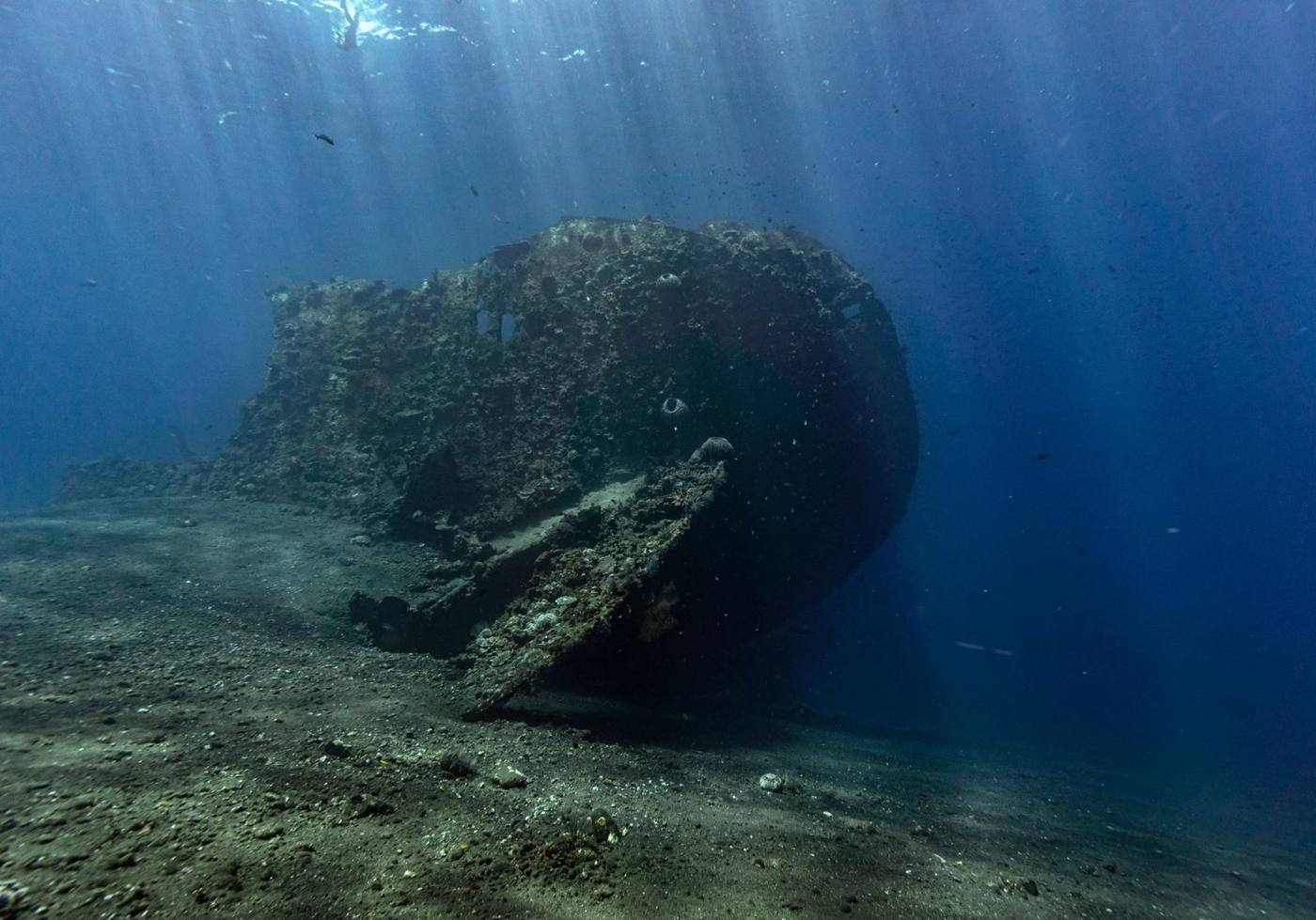
Today you dive on the most famous wreck in the lagoon, the Fujikawa Maru.
On 17 and 18 February 1944 the United States Navy attacked the Japanese base at Chuuk, then called Truk, in Operation Hailstone. In two days dozens of ships were sunk and hundreds of aircraft were destroyed. Today the lagoon, one of the largest in the world, holds one of the greatest ship graveyards on the planet.
The Fujikawa Maru was a merchant ship used to carry aircraft. It rests upright on the bottom, as if still sailing, and its masts come close to the surface. The holds still contain parts of Zero fighters, while the hull is covered in soft corals, sponges and gorgonian fans, with lionfish, groupers and schools of glassfish.
With the centre's guide you go down the mooring line, swim around the bow gun and look into the holds. Penetration into enclosed spaces is only for divers with the right certification and experience: never go inside without the guide.
The wrecks are war graves and are protected by law: do not touch or take anything. Ask the centre whether the lagoon diving permit is included and check prices and times.
In the afternoon you make a second dive on another wreck, chosen by the centre according to sea conditions.
In the evening, on the boat or in your room, check your dive computer and rest: deep, repeated dives are tiring.
Practical tip: use only licensed centres with well-kept equipment, oxygen on board and guides who know the wrecks well.
- Day 3
The Shinkoku Maru
Today you explore the Shinkoku Maru, a large tanker and one of the richest wrecks in the lagoon for marine life.
The ship sits upright on the bottom and its highest part, the bridge with the superstructure, is at a depth suitable for calmer dives too. Over the years the iron has been covered in soft corals, anemones and sponges of many colours, so that in places the shape of the ship almost disappears.
With the guide you see the bridge, the guns, the engine telegraph and, for those with the right experience, the sick bay, where an operating table is still in place. Barracuda, jacks and turtles swim around the hull, and reef sharks sometimes pass by.
In this wreck, as in others in the lagoon, there are human remains of the sailors who died in 1944. Behave with respect and do not photograph them up close.
In the afternoon the second dive can be on an aircraft wreck, for example a bomber sunk in shallow water, or on one of the reefs around the inner islands of the lagoon. Snorkellers can also see some shallow wrecks.
Between dives the boat stops near one of the small islands of the lagoon, with sandy beaches and palm trees, for lunch.
Practical tip: drink plenty of water between dives and always respect the limits of your computer: the nearest decompression chamber may be far away.
- Day 4
The last day in the lagoon
Today is your last day in Chuuk and tomorrow you fly: plan your dives so that you finish early.
After diving you must wait at least 18 to 24 hours before flying. So today make only one or two dives in the morning, ideally shallow ones, or choose snorkelling. Discuss it with the centre on the first day, so that the programme takes the flight into account.
In the morning you can return to the wreck you liked most or discover a new one, such as a cargo ship with lorries, ammunition and bottles still in the holds. On a shallow site you will also see the hard corals growing on the steel plates and the fish that use the wreck as a shelter.
In the afternoon, on land, take a tour of Weno by taxi or with the guide. On Sapuk hill, in the north of the island, there are the remains of a Japanese lighthouse and some gun positions, with a wide view over the lagoon and its islands. Ask permission, because the land is private, and check prices and times.
In the evening get your gear ready for the journey: rinse it in fresh water and let it dry well.
Practical tip: if you bring your own diving gear, check with the airline the baggage allowance on the flights between the islands, because the excess charge can be high.
- Day 5
Flight to Pohnpei
Today you leave Chuuk and fly east to Pohnpei.
The flight on the island route takes just over an hour. You arrive at Pohnpei airport, on an islet linked by a road to the town of Kolonia. Pohnpei is the largest island of the federation and is home to the capital, Palikir, a small administrative centre a few kilometres from Kolonia.
The island is green and mountainous, covered by a rainforest among the wettest in the world, with dozens of waterfalls and rivers. Mangroves grow along the coast and around it lies a lagoon protected by the reef.
In the afternoon walk around Kolonia. You see the bell tower of the church built during the German administration, in the early twentieth century, and the remains of the wall of the Spanish fort, from the nineteenth century, reminders of the different powers that ruled the island before Japan and the United States.
Also stop at the market, where fish, tropical fruit and Pohnpei pepper, grown on the island, are sold.
In the evening try sakau, the traditional drink made from the root of a plant of the pepper family, offered at ceremonies and drunk in company. It has a relaxing effect: taste it in moderation.
Sleep in Kolonia, for three nights.
Practical tip: on Pohnpei it rains almost every day, often in short showers: bring a light waterproof jacket and a dry bag for your phone.
- Day 6
Nan Madol by boat at high tide
Today you visit Nan Madol, the stone city built on the sea, a UNESCO World Heritage Site.
Nan Madol lies on the east coast, in the Madolenihmw area, about an hour's drive from Kolonia. It is made up of almost a hundred artificial islets built on the reef and separated by channels, which is why it is called the Venice of the Pacific. The walls are made of black basalt columns, stacked in crossed layers like the logs of a cabin, alternating with coral blocks.
Here the Saudeleur dynasty, which controlled the whole island, ruled for centuries. Nan Madol was the political and religious centre, with the chiefs' residences, the ceremonial sites and the tombs. No one knows for sure how such heavy stones were moved.
The best way to visit is by boat at high tide, when the water fills the channels and you can pass between the walls. With a local guide you land on the islet of Nandauwas, the most impressive, with walls many metres high and a tomb in the centre. At low tide some areas can also be reached on foot, wading through shallow water.
The site is on traditional land: an entrance fee is paid to the landowners. Check prices and times and ask the guide for the tide times.
In the afternoon go snorkelling in the nearby lagoon or return to Kolonia.
Practical tip: wear water shoes with sturdy soles, because the stones and the bottom of the channels are slippery and sharp.
- Day 7
Kepirohi Falls and Sokehs Rock
Today you see the waterfalls in the forest and climb the rock that towers over Kolonia.
In the morning head back towards Madolenihmw and reach Kepirohi Falls, a short distance from Nan Madol. A short, easy path crosses the forest and leads to a wall of basalt columns, where the water falls like a white veil into a wide pool. You can swim in the cool water. The path crosses private land: check prices and times.
In the afternoon drive back towards Kolonia and reach Sokehs Island, linked by a road. Here rises Sokehs Rock, a great basalt cliff that can be seen from all over town. A steep path climbs through grass and trees to the top, in about an hour. Up there you find some Japanese guns from the Second World War and a wide view over Kolonia, the lagoon and the reef.
Sokehs is also an important place in the island's history. In 1910 the people of this area rose up against the German administration. The revolt was crushed, its leaders were executed and the people of Sokehs were deported to other islands.
Come down before sunset, because the path is muddy and slippery after rain, and ask a local guide whether the trail is open.
In the evening, in Kolonia, choose the catch of the day, tuna or mangrove crab.
Practical tip: for the climb up Sokehs wear shoes with good grip and set off early in the morning or late in the afternoon, when it is less hot.
- Day 8
Departure
Today you leave Pohnpei and Micronesia.
If your flight leaves late, use the morning for a last visit. You can go to Palikir to see the federal government buildings, surrounded by forest, or take a boat trip in the lagoon to snorkel over the corals, with eagle rays and turtles.
Another option is a visit to one of the many waterfalls of the interior, reached on short walks. Always ask permission, because almost all the land belongs to families, and check prices and times.
Then go to the airport, a few minutes from Kolonia. Arrive early and keep cash ready for the departure tax. Flights on the island route can be delayed: leave a margin if you have connections in Guam or Honolulu.
In these eight days you have seen two very different sides of Micronesia: the wrecks of Chuuk Lagoon, with the Japanese fleet sunk in 1944, the corals on the steel plates and the holds full of objects, and then Pohnpei, green and rainy, with the basalt walls of Nan Madol, Kepirohi Falls and Sokehs Rock.
When to go: the best months are from December to April, with less rain and calmer seas. In Chuuk you can dive all year, with warm water and visibility that changes with the tides. On Pohnpei it rains in every season. From July to November the risk of typhoons is higher.
Practical tip: keep a copy of your return flight booking in your pocket, because some departure checks may ask for it.
The world's largest ship graveyard, for wreck-loving divers. Weno, Chuuk's main island, has no attractions and is only a base. Flights are few and expensive, on United's 'island hopper' route.
Before you go
- Documents and visa
- Passport valid for at least 120 days after the date of arrival, and no visa for short tourist trips. You may be asked for a return or onward ticket. On arrival you complete a customs, immigration and quarantine form. You also need your passport on flights between the states of the federation, where you clear immigration again. A departure tax is paid when leaving.
- Health and vaccines
- Medical facilities are limited, especially outside Pohnpei: you need insurance with high medical cover and air evacuation. Protect yourself from mosquitoes, because there are cases of dengue in the Pacific islands. Drink bottled water.
- Money and payments
- US dollar. Many hotels accept cards, but cash machines are few: bring cash.
- Power sockets
- Type A and type B, 120 volts, as in the United States: you need an adapter and should check that your devices work at 120 volts.
- Time zone
- Yap and Chuuk UTC+10, Pohnpei and Kosrae UTC+11, all year.
- Safety
- No areas are advised against. Crime is low, but rises at night, especially where alcohol is involved, and is higher in Chuuk State. Some stretches of coast have dangerous currents and waves: ask for local advice before swimming or doing water sports. The islands are exposed to typhoons, floods and droughts. Flights between the islands run only a few times a week: always check days and times. Official advice: GOV.UK.
Information checked in November 2026 for Italian and EU citizens. Rules change: always check before you travel.
Variations
In 5 days: Chuuk Lagoon only, with three days of wreck diving and one day without diving before the flight.
In 11 days: add Kosrae after Pohnpei, with the ruins of Lelu and the mangroves of Utwe, on the same flight route heading east.
Frequently asked questions
Are the Chuuk dives for beginners?
Mostly not. The most famous wrecks are deep and penetration requires an advanced certification and experience. Use only licensed centres and ask which wrecks suit your level.
How long must I wait to fly after diving?
At least 18 to 24 hours, depending on the number and depth of your dives. That is why on the fourth day you only dive in the morning or snorkel.
How do you visit Nan Madol?
The best way is by boat at high tide, with a local guide. The site is on traditional land and an entrance fee is paid: check prices and times and the tide times.
Indicative itinerary written by World Atlas. Before booking, check timetables, seasonal openings, documents and safety.
 4 daysModerate
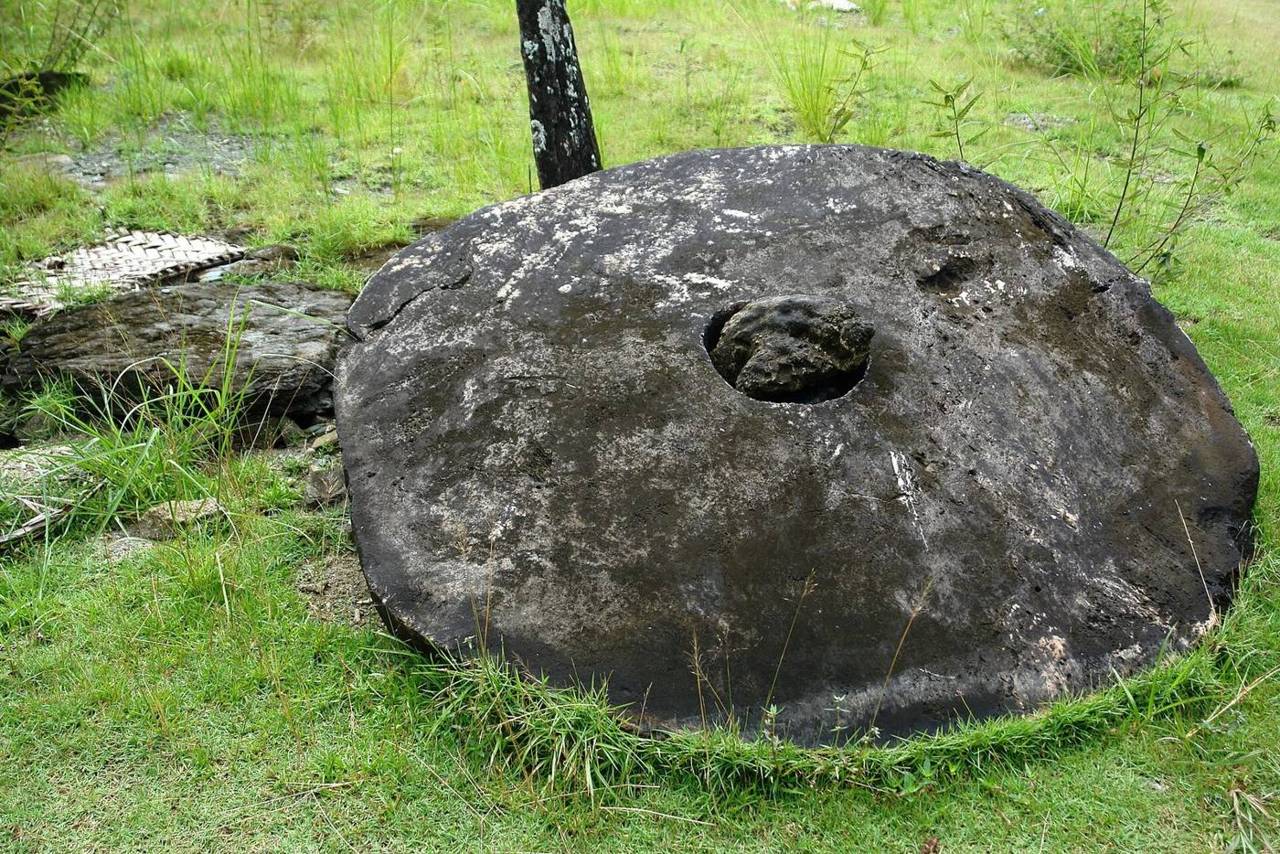
Yap and the stone money
Micronesia's most traditional island: the great stone wheels used as money along village paths, the men's houses and diving with manta rays in the channels.
 3 daysEasy
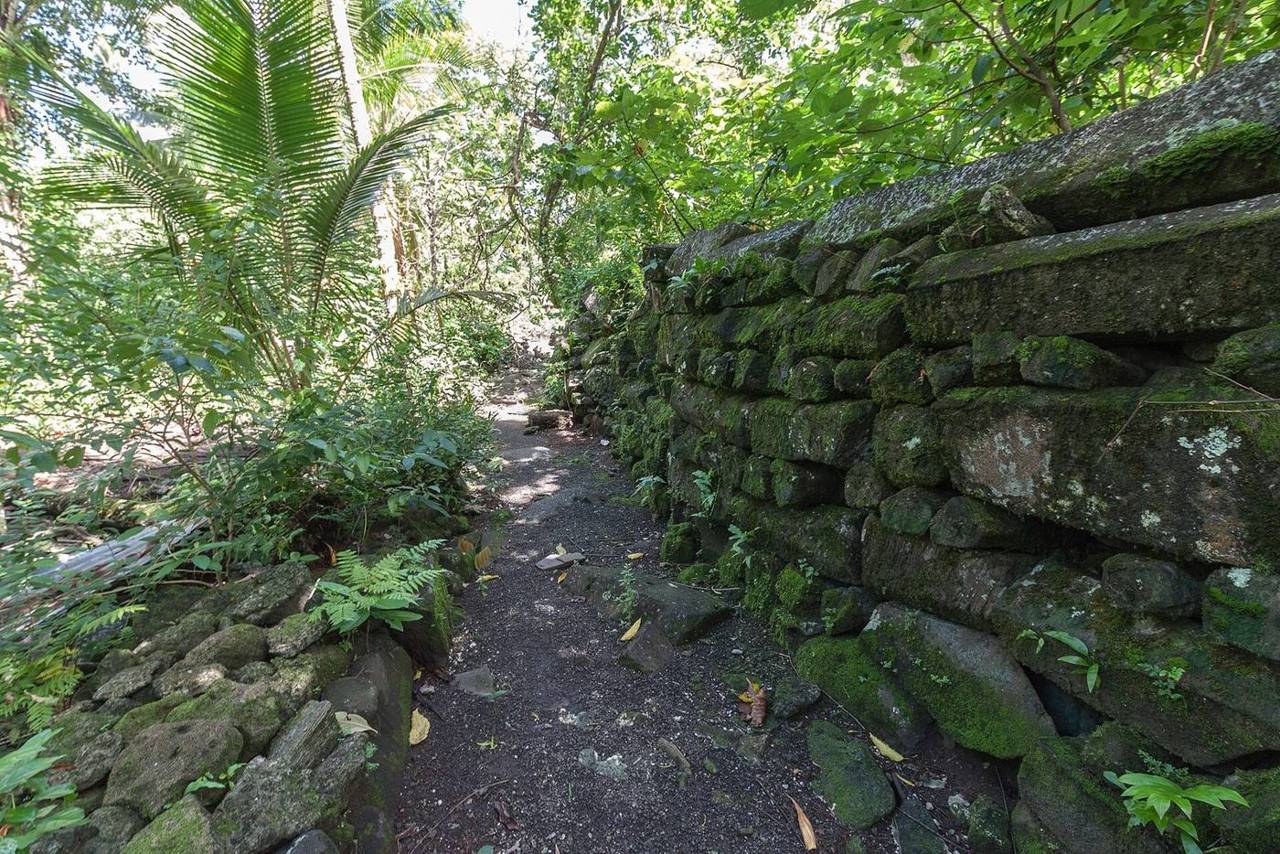
Kosrae and Lelu
The green, mountainous island of Kosrae: the basalt ruins of the ancient city of Lelu, kayaking through mangrove channels and an almost untouched reef.