Puebla, Cholula and Cuetzalan
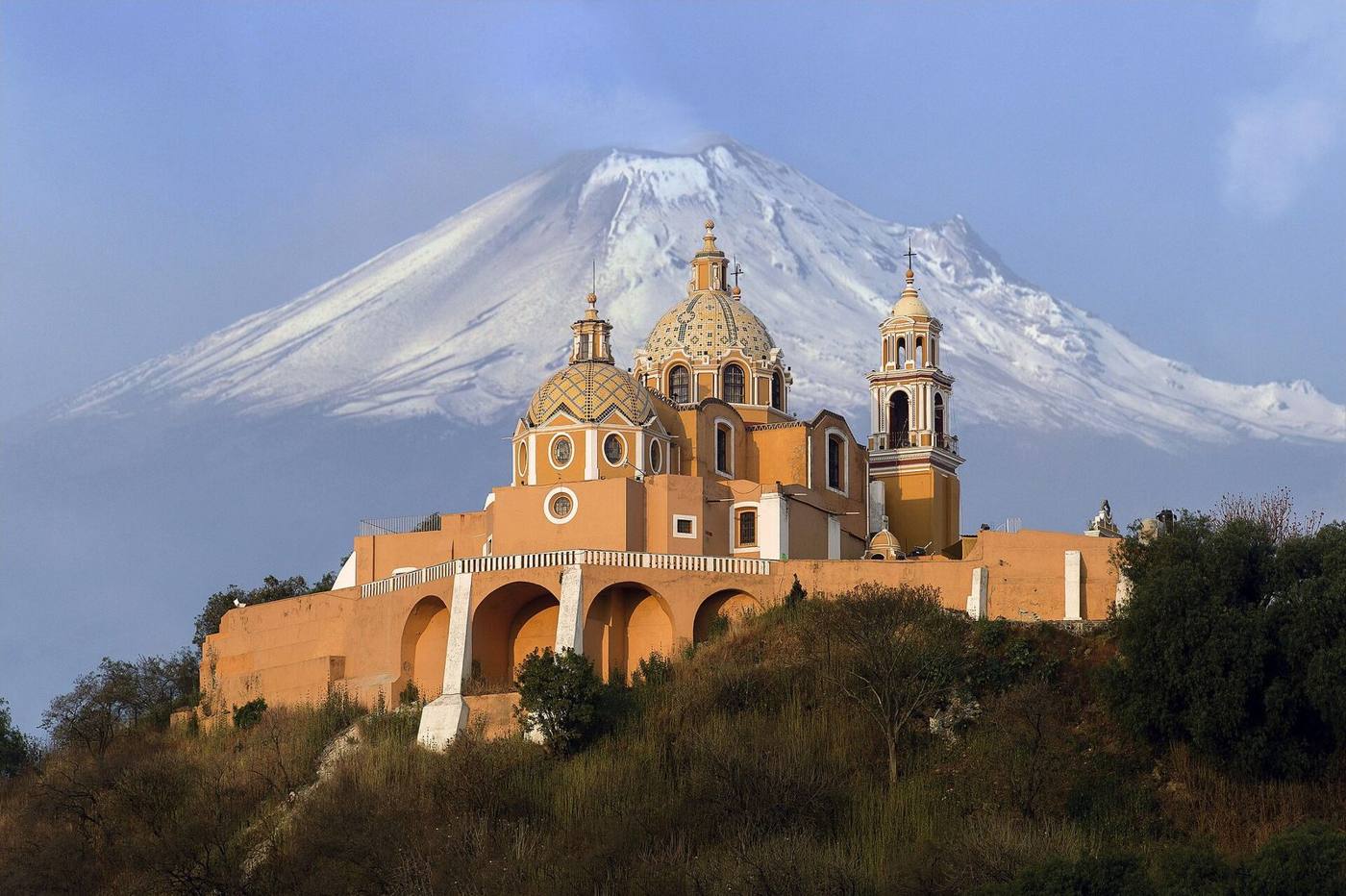
Colonial Mexico of talavera pottery and mole poblano: Puebla with its UNESCO-listed centre, the church on top of the world's largest pyramid at Cholula, the baroque churches of Tonantzintla, the Mayan murals of Cacaxtla and the town of Cuetzalan in the cloud forest of the Sierra Norte.
- Mexico City
- Puebla
- Cholula
- Cacaxtla
- Cuetzalan
Day by day
- Day 1
Puebla: the cathedral, the Palafoxiana Library and the old town
To enter Mexico you need a valid passport; EU citizens need no visa for tourism, and on arrival officials decide how many days to grant, up to a maximum of 180. Carry your return ticket and your accommodation address. Check the rules for your nationality.
Puebla, about two hours by bus east of Mexico City at over two thousand metres, was founded by the Spanish in 1531, and its old town, a UNESCO site, is one of the country's most beautiful, with more than two thousand colonial buildings, baroque churches and façades covered in colourful tiles and red brick. The state of Puebla is at level 2 in US government advice, like much of central Mexico: travel requires normal precautions.
In the morning visit the Zócalo, the main square with trees, arcades and a fountain, and the cathedral, one of Mexico's largest, with bell towers among the tallest in the country and an interior rich in altars and marble. Next to it is the Palafoxiana Library, founded in 1646 and considered the first public library in the Americas, with carved wooden shelves on three levels and tens of thousands of old books.
In the afternoon stroll through the centre, with houses decorated in talavera, the white and blue glazed pottery brought by the Spanish that became the city's symbol, and visit the Casa del Alfeñique, whose façade seems iced with sugar, now a museum.
In the evening taste mole poblano, the dark sauce born here, made with dozens of ingredients including various chillies, spices, nuts and chocolate, served over turkey or chicken.
Practical tip: Puebla is near the active Popocatépetl volcano; follow local advice, as ash sometimes closes the airport.
- Day 2
Puebla: the Rosary Chapel, talavera workshops and food
In the morning visit the church of Santo Domingo and, inside it, the seventeenth-century Rosary Chapel, one of the masterpieces of Mexican baroque: walls and dome are entirely covered in gilded stucco, angels, flowers and figures of saints, so that it was once called the eighth wonder of the world. Light from the windows makes the gold shine.
Then visit a talavera workshop to see how this pottery is made: clay kneaded with the feet, the wheel, the first firing, the white glaze and hand painting with brushes of mule hair in the traditional colours, blue, yellow, green, orange and black. Genuine Puebla talavera follows strict rules and carries a certificate; since 2019 the technique has been on UNESCO's intangible heritage list, together with the Spanish one.
In the afternoon wander through the artists' quarter and the street of sweets, where traditional convent sweets are sold, such as camotes, sweet potato confections, and borrachitos. Then visit the Amparo Museum, with a rich collection of pre-Columbian and colonial art and a terrace overlooking the city's domes.
In the evening, if you travel between late July and September, try chiles en nogada, Puebla's most famous dish: green peppers stuffed with meat and fruit, covered in a white walnut sauce and pomegranate seeds, in the colours of the Mexican flag. They are eaten mainly in the months around the national holiday.
Practical tip: buy talavera only from workshops that show a certificate of origin.
- Day 3
Cholula: the Great Pyramid, the Remedios sanctuary and Tonantzintla
In the morning reach Cholula, about twenty minutes from Puebla, one of the longest continuously inhabited cities in the Americas, sacred even before the Aztecs. Here stands the Great Pyramid of Cholula, called Tlachihualtepetl, the handmade mountain: it is the largest pyramid in the world by volume, larger than the Great Pyramid of Giza, though less tall. It was built in several phases over about a thousand years from the third century BC and dedicated to Quetzalcoatl, the feathered serpent. Today it looks like a grass-covered hill.
You can enter tunnels dug by archaeologists inside the pyramid and visit the archaeological zone at its base, with plazas and altars, and the site museum. On top of the hill the Spanish built the sanctuary of Our Lady of Remedies in the sixteenth century, a yellow domed church from which you see the whole valley and, on clear days, the volcanoes Popocatépetl, often smoking, and Iztaccíhuatl, the sleeping woman, their peaks covered in snow.
In the afternoon visit the church of Santa María Tonantzintla, a few kilometres away, an extraordinary example of indigenous baroque: the interior is covered in gilded and painted stucco, with angels with indigenous faces, tropical fruit, flowers and birds, created by local craftsmen who blended Christian faith with their vision of paradise. Nearby is the church of San Francisco Acatepec, its façade covered in talavera.
Practical tip: photography is not allowed inside the church at Tonantzintla.
- Day 4
Cacaxtla and Tlaxcala
In the morning drive north into the state of Tlaxcala, Mexico's smallest, to the archaeological site of Cacaxtla, about an hour from Puebla. On a hill stands a great palace of the Olmeca-Xicalanca culture, which dominated the area between the seventh and ninth centuries AD. The site is protected by a large metal roof sheltering extraordinary painted murals, among the best preserved in Mesoamerica, with colours still vivid, reds, blues and greens. The most famous shows a battle, with warriors dressed as jaguars defeating warriors dressed as birds, in scenes of great violence and realism. Others show bird men and jaguar men, the god of trade and plants of maize and cacao. Nearby is the Xochitécatl site, with pyramids and views of the volcanoes.
In the afternoon reach Tlaxcala, the state's small capital, quiet and orderly, with a colourful main square. The Tlaxcaltecs were allies of Hernán Cortés's Spaniards against the Aztecs. In the Government Palace large murals by local artist Desiderio Hernández Xochitiotzin tell the history of Tlaxcala from its origins. Then visit the former convent of San Francisco, one of the first built in the Americas, in the sixteenth century, with a Moorish-style wooden ceiling, and the Basilica of Ocotlán on the hill, with its white and red baroque façade and gilded interior.
In the evening return to Puebla.
Practical tip: at Cacaxtla bring a hat and water; the climb to the palace is short but in full sun.
- Day 5
Cuetzalan: the village in the Sierra Norte, Yohualichan and the caves
In the morning leave early north-east for Cuetzalan, about three and a half to four hours by road from Puebla, in the Sierra Norte, a region of green, humid mountains covered in cloud forest, coffee plantations and allspice. Cuetzalan is a mountain village with steep stone streets, white houses with red tiled roofs and a strong presence of Nahua and Totonac indigenous communities, who keep their language and traditional dress.
On arrival visit the church of San Francisco on the main square, in front of which stands a tall pole used by the voladores, men who, tied by ropes at their feet, launch themselves from the top and descend spinning upside down around the pole to the sound of a flute and drum, in an ancient fertility ceremony on UNESCO's intangible heritage list.
In the afternoon visit the archaeological site of Yohualichan, a few kilometres away, with a pyramid of niches similar to El Tajín, built by the Totonacs among fields and hills. Then explore one of the area's caves, such as Atepolihui, with a local guide who provides a helmet and lamp: the region has dozens of kilometres of caves with underground rivers.
In the evening, in the village, try the local fruit liqueur and coffee grown in the Sierra.
Practical tip: Cuetzalan is often rainy and misty; bring a raincoat and shoes with good soles.
- Day 6
The Sunday market, the waterfalls and the return
In the morning, if it is Sunday, visit the tianguis, Cuetzalan's great market, one of the most authentic in Mexico, where indigenous families come down from the mountain villages to sell and trade fruit, vegetables, coffee, cinnamon, pepper, flowers, embroidered textiles and wickerwork. Women wear the traditional white costume with a headdress of woven purple and green wool. At some stalls barter is still used. On other days the market is smaller, but the village remains lively.
Then visit one of the waterfalls near the village, such as Las Brisas or El Salto, reached by short trails through the forest among ferns, orchids and bromeliads, with pools where you can swim in summer. Near the village there is also the Xoxoctic botanical garden, with Sierra plants and views over the valley.
In the afternoon head back to Puebla, about three and a half to four hours, or straight to Mexico City, about five or six hours. Alternatively there are direct buses from Cuetzalan to both cities.
Things to take home: certified talavera, Puebla sweets, mole paste, coffee and allspice from the Sierra Norte and embroidered textiles from Cuetzalan.
Practical tip: avoid driving mountain roads at night. Check your government's travel advice before leaving.
A trip of food and art near the capital, by first-class bus or with a driver. In September you can eat chiles en nogada, a seasonal dish. Cuetzalan is often rainy, even in the dry season. The United States places this state at level 2 (increased caution): no road travel at night, taxis only via apps or official ranks. Italian citizens need no visa for tourism.
Before you go
- Documents and visa
- Passport valid for the whole stay; no visa is needed for tourism. On arrival the officer sets the number of days granted. Quintana Roo state charges foreign visitors a tax, the Visitax, payable online.
- Health and vaccines
- No compulsory vaccines. Drink only bottled water and use mosquito repellent against dengue and other diseases. Emergencies: 911.
- Money and payments
- Mexican peso. Cards are accepted in cities and tourist areas; in markets, villages and on local transport you need cash.
- Power sockets
- Types A and B, 127 volts: you need a flat-pin adapter.
- Time zone
- Mexico City is UTC-6; Quintana Roo is UTC-5. Mexico no longer uses daylight saving time, except in some border areas.
- Safety
- The situation varies greatly between states: the United States rates some, such as Guerrero, Michoacán and Sinaloa, at level 4, while Yucatán and Campeche are at level 1. Official advice: GOV.UK.
Information checked in November 2026 for Italian and EU citizens. Rules change: always check before you travel.
Variations
In 3 days: Puebla on days one and two, Cholula and Tonantzintla on day three, returning to Mexico City.
In 9 days: add Mexico City and Teotihuacán, or the Sierra Gorda of Querétaro.
Frequently asked questions
What do I need to enter Mexico?
A valid passport; EU citizens need no visa for tourism, and up to 180 days are granted on arrival at the officials' discretion.
When are chiles en nogada eaten?
Mainly from late July to September, in the season of pomegranates and walnuts and the month of the national holiday.
When can I see the Cuetzalan market?
On Sundays, when indigenous families arrive from the Sierra villages; it is the liveliest day.
Indicative itinerary written by World Atlas. Before booking, check timetables, seasonal openings, documents and safety.
 6 daysEasy
Querétaro, the Sierra Gorda and Peña de Bernal
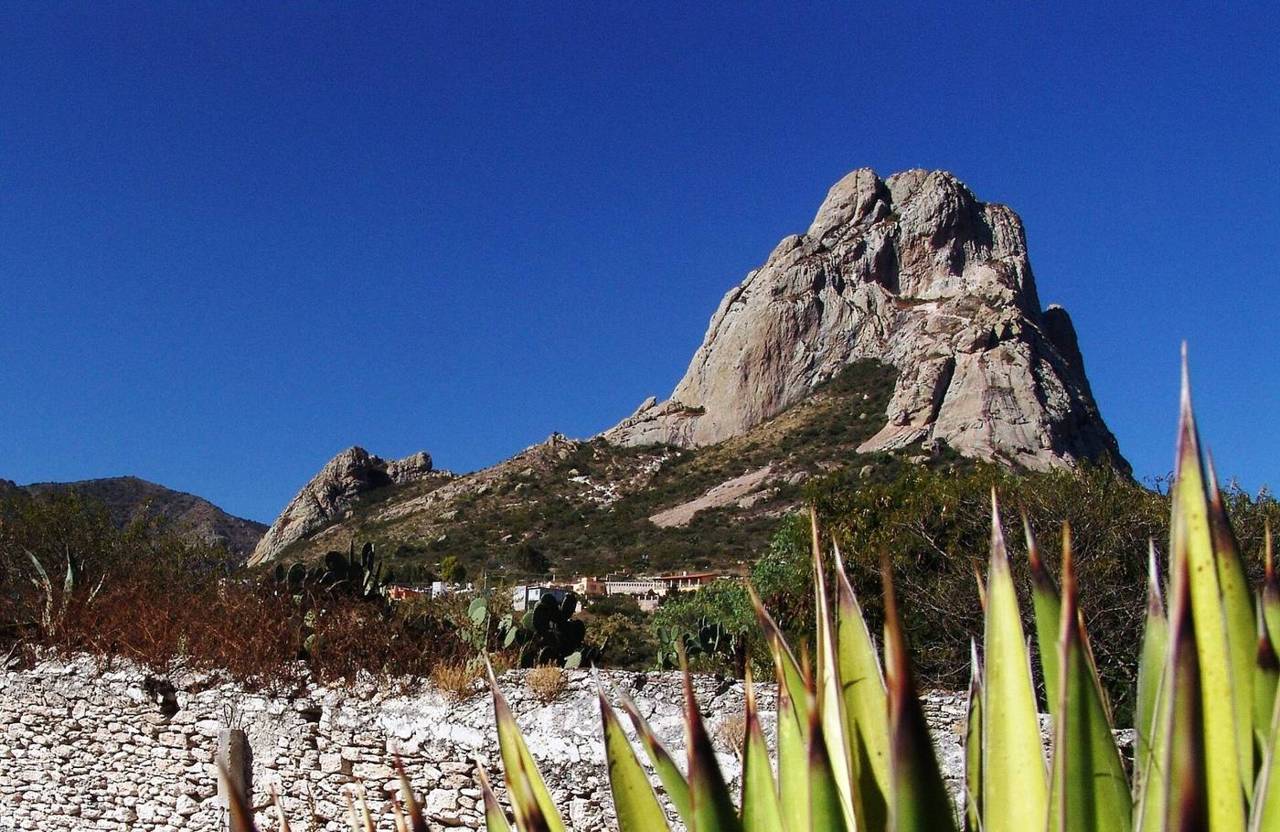
The colonial city of Querétaro with its aqueduct and squares, the wineries and cheeses of the wine route, the Peña de Bernal monolith and, in the Sierra Gorda mountains, the five Franciscan missions with their carved facades, a UNESCO World Heritage site.
 5 daysModerate
Monarch butterflies and Valle de Bravo
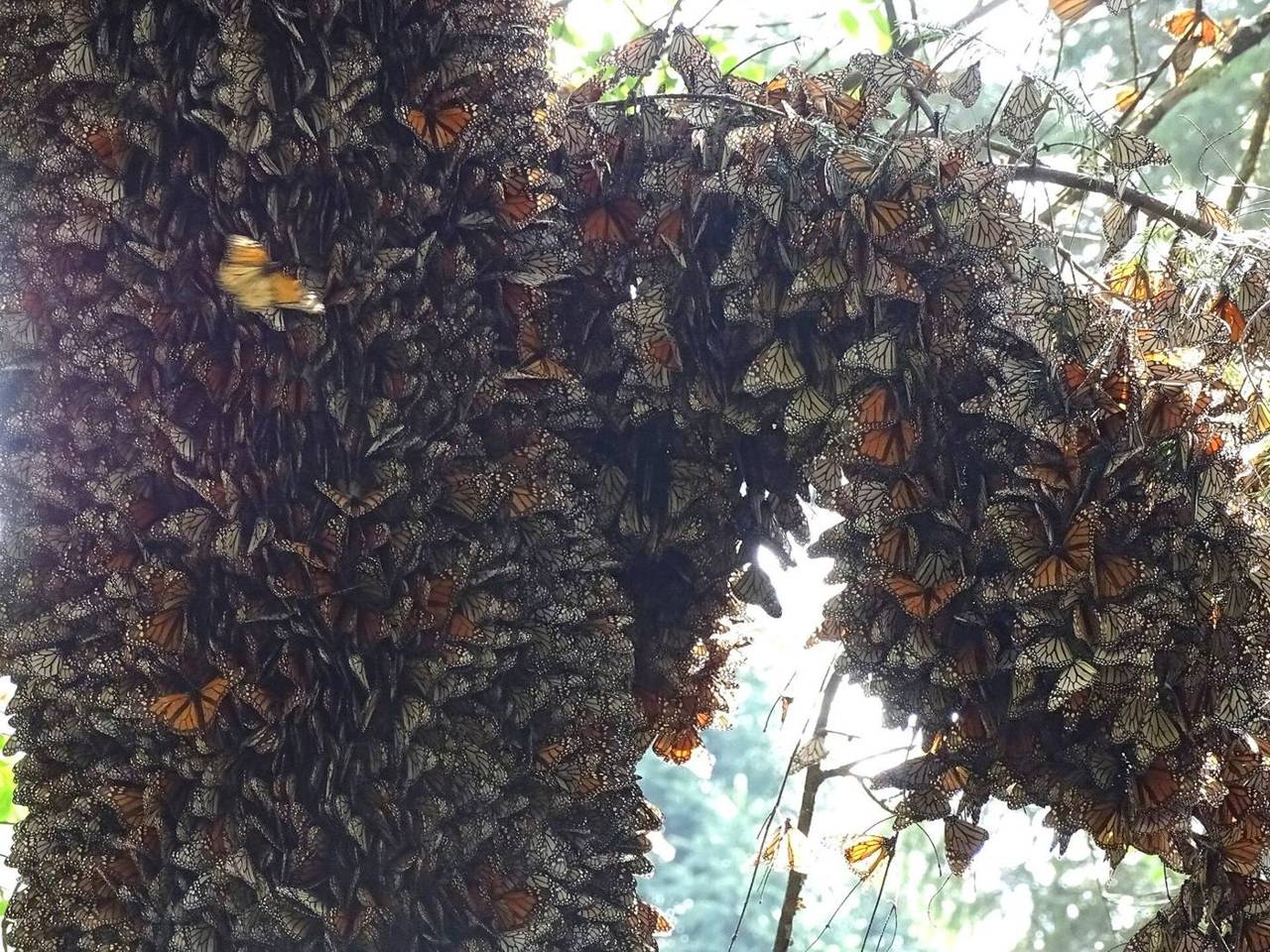
Millions of monarch butterflies covering the mountain firs in winter after a journey of thousands of kilometres from Canada: visited in the sanctuaries of the State of Mexico, based in the lakeside town of Valle de Bravo, with Malinalco and its Aztec temple carved into the rock.
 6 daysModerate
The Huasteca Potosina and Xilitla
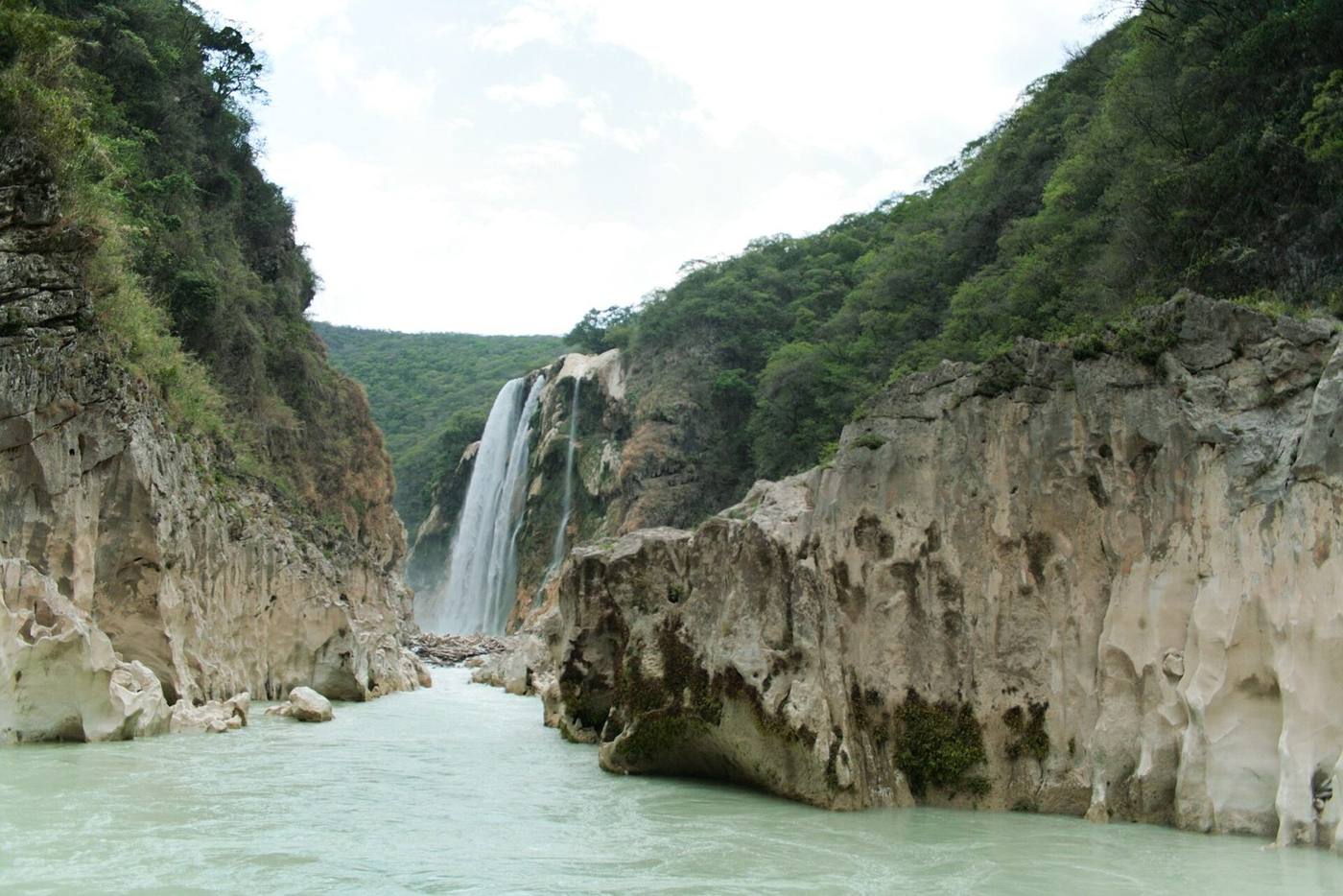
The land of turquoise waters in San Luis Potosí state: the Tamul waterfall reached by canoe, the pools of Puente de Dios and Micos, the Cave of Swallows where thousands of birds emerge at dawn, and the surrealist garden of Las Pozas in Xilitla, created by Edward James in the jungle.