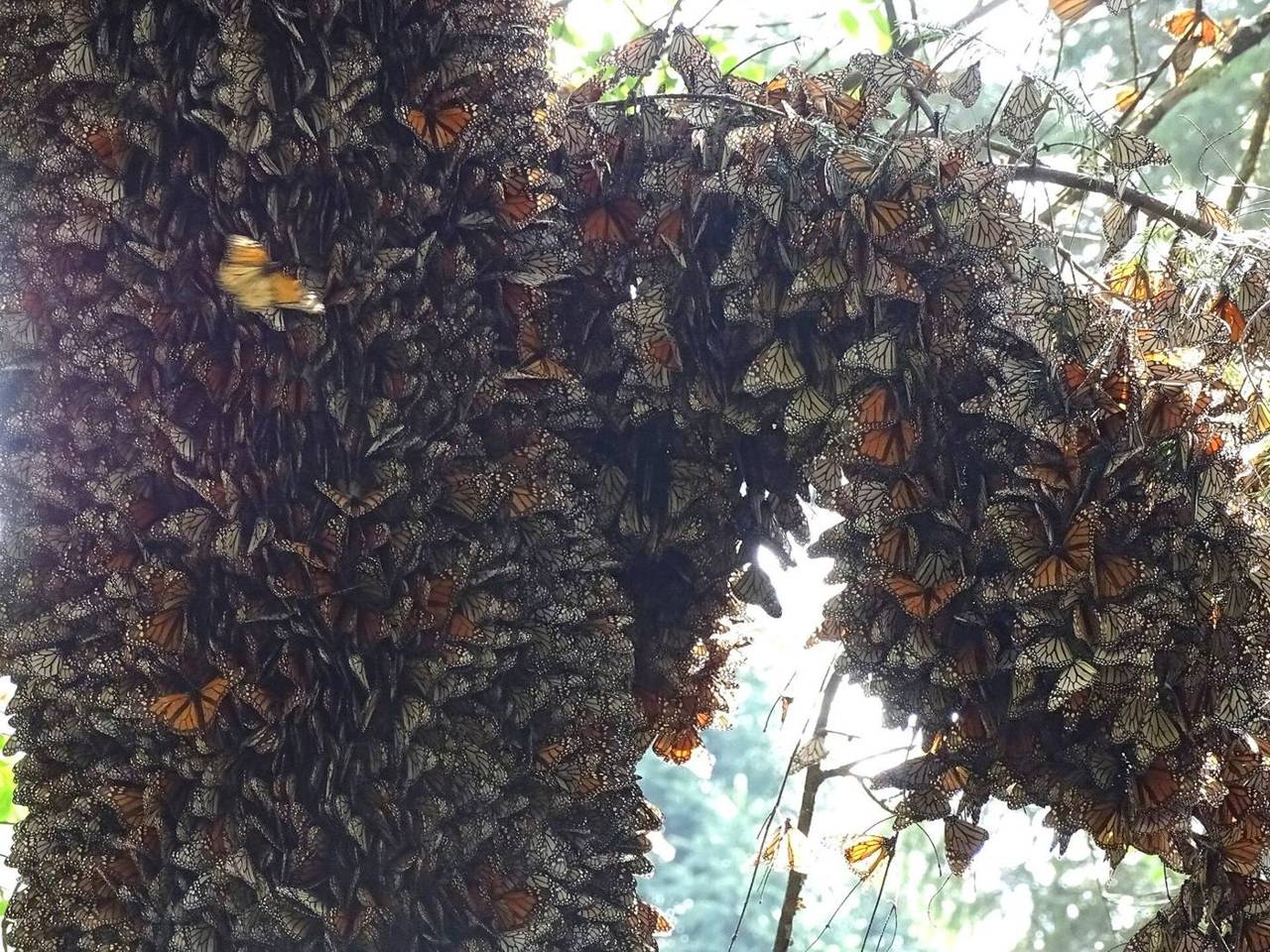
Monarch butterflies and Valle de Bravo
Millions of monarch butterflies covering the mountain firs in winter after a journey of thousands of kilometres from Canada: visited in the sanctuaries of the State of Mexico, based in the lakeside town of Valle de Bravo, with Malinalco and its Aztec temple carved into the rock.
- Mexico City
- Valle de Bravo
- Piedra Herrada
- El Capulín
- Malinalco
Day by day
- Day 1
From Mexico City to Valle de Bravo
EU citizens can enter Mexico without a visa for tourism with a valid passport; the length of stay is set by the border officer on arrival, up to a maximum of 180 days. Keep your entry record until you leave. Check the rules for your nationality.
Every year, between November and March, millions of monarch butterflies arrive from Canada and the United States in the fir forests of the mountains of central Mexico, after a journey of more than four thousand kilometres, to spend the winter hanging from branches in clusters so dense that the trees turn orange. It is one of the most extraordinary migrations in the animal world, and the Monarch Butterfly Biosphere Reserve is a UNESCO World Heritage site. The best time to see them is mid-December to February.
This trip visits the sanctuaries of the State of Mexico around Valle de Bravo, closer to the capital; the sanctuaries in the state of Michoacán are not included because of security warnings for that state.
In the morning leave Mexico City by car or first-class bus for Valle de Bravo, about two and a half hours west, among pine-covered mountains. Valle de Bravo is a colonial town of white houses with red-tiled roofs, cobbled lanes and a main square with the church of San Francisco, on the shores of a large reservoir popular at weekends with families from the capital.
In the afternoon stroll through the centre and along the lakefront, and climb to the Peña viewpoint, a large rock above the town, for sunset.
Practical tip: Valle de Bravo is at about 1,800 metres; evenings are cool, so bring a jacket.
- Day 2
The Piedra Herrada sanctuary, on foot or on horseback
Early in the morning reach the Piedra Herrada sanctuary, about half an hour from Valle de Bravo, one of the most accessible and best-organised monarch sanctuaries, run by local communities. Entry is charged and you must be accompanied by a local guide.
From the entrance you climb a trail through pine and fir forest, at around three thousand metres, for about an hour on foot, or partly on horseback, with horses led by local people. The higher you go, the more butterflies there are: first a few flying among the trees, then whole colonies hanging from the branches of oyamel firs, millions of butterflies on top of one another, bending the branches with their weight. When the sun warms the air around midday, the butterflies let go of the branches and fill the sky with a soft rustle of wings.
In the sanctuary you stay quiet, walk only on the trails and never touch or pick up the butterflies, not even those on the ground. The guides explain the monarch's life cycle: the butterflies that reach Mexico live up to eight or nine months, while the summer generations live only a few weeks, and only the fourth generation makes the journey north again.
In the afternoon return to Valle de Bravo and have lunch of trout or dishes from the State of Mexico.
Practical tip: at three thousand metres breathing is harder; climb slowly and bring water, a jacket and walking shoes. Butterflies fly most on sunny days, around noon.
- Day 3
The El Capulín sanctuary and an afternoon on the lake
In the morning visit a second sanctuary, El Capulín, in the municipality of Donato Guerra, about an hour from Valle de Bravo, less visited than Piedra Herrada and also run by a local community with compulsory guides. The trail climbs through the forest for about an hour to an hour and a half to the colonies, on a steeper, wilder route, or partly on horseback.
Each sanctuary is different, and the position of the colonies changes every year and even during the winter, depending on cold and sun: the guides know where they are at that moment. Seeing two sanctuaries increases your chance of finding the butterflies in flight.
In the afternoon return to Valle de Bravo and enjoy the lake: take a boat or sailing trip or, if you like adventure, try paragliding from the surrounding mountains, one of Mexico's most famous places for the sport, with instructors offering tandem flights.
Alternatively visit the Velo de Novia waterfall a few kilometres from town, a forest waterfall reached by a short path, or the large Buddhist stupa on the hill, a peaceful place overlooking the lake.
In the evening have dinner in the town square.
Practical tip: buy sanctuary tickets only at the official entrance and choose community guides: the money helps local people protect the forest instead of cutting it down.
- Day 4
Malinalco: the rock-cut temple and the frescoed convent
In the morning leave for Malinalco, about two hours from Valle de Bravo, a quiet town in a green valley ringed by rock walls, with colourful houses, lanes and a warmer climate.
Above the town, on a hill, lies the Malinalco archaeological zone, reached by a staircase of about four hundred steps in around twenty minutes. Here, at the end of the fifteenth century, the Aztecs built a temple unique in Mexico: the Cuauhcalli, the house of the eagles, carved entirely out of the mountain rock as a single block. The entrance is shaped like the open mouth of a serpent, and inside, on the round floor, an eagle and two jaguars are carved. Here initiation ceremonies were held for the eagle and jaguar warriors, the Aztec military elite. From the top you see the whole valley.
In the afternoon visit the former Augustinian convent of the Divine Saviour in the town centre, from the sixteenth century, famous for the frescoes in its cloister painted by indigenous artists: a garden of paradise full of plants, flowers, birds and animals of the region, a meeting of European art and the indigenous world.
In the evening stay in Malinalco, in one of the town's small guesthouses.
Practical tip: the Malinalco archaeological zone is closed on Mondays; check opening times and climb the stairs early in the morning, before the heat.
- Day 5
Back to Mexico City
In the morning, before leaving, stroll through the Malinalco market, with fruit, flowers, sweet bread and products from the surrounding communities, or visit the town's small university museum, which tells the area's history and holds a reconstruction of the temple.
Then return to Mexico City, about two and a half to three hours depending on traffic. On the way you can stop at Chalma, one of Mexico's most visited Catholic shrines, a destination for walking pilgrimages, or at Tenancingo, famous for rebozos, large handwoven shawls.
Back in Mexico City, if your flight leaves in the evening, visit the historic centre with the Zócalo, the cathedral and the Templo Mayor, the great Aztec temple of Tenochtitlan, or Chapultepec park with the National Museum of Anthropology, one of the world's most important museums of the ancient civilisations of the Americas.
Benito Juárez International Airport is in the east of the city; with traffic, allow from forty-five minutes to more than an hour from the centre.
Things to take home: Tenancingo rebozos, ceramics, handicrafts, coffee, chocolate, vanilla and mezcal.
Practical tip: in Mexico use authorised taxis or ride apps, especially in the evening, and do not drive mountain roads at night. The State of Mexico has a medium advisory level from the United States; neighbouring Michoacán is advised against. Check your government's travel advice before leaving.
A unique natural spectacle, in winter only: the butterflies fly most in the warm hours of sunny days. The sanctuaries are between 3,000 and 3,300 metres and the walk is uphill: go slowly. They are visited only with community guides, in silence and without touching the butterflies. The best-known sanctuaries in neighbouring Michoacán are excluded: the United States advises against all travel to that state (level 4). The United States places this state at level 2 (increased caution): no road travel at night, taxis only via apps or official ranks.
Before you go
- Documents and visa
- Passport valid for the whole stay; no visa is needed for tourism. On arrival the officer sets the number of days granted. Quintana Roo state charges foreign visitors a tax, the Visitax, payable online.
- Health and vaccines
- No compulsory vaccines. Drink only bottled water and use mosquito repellent against dengue and other diseases. Emergencies: 911.
- Money and payments
- Mexican peso. Cards are accepted in cities and tourist areas; in markets, villages and on local transport you need cash.
- Power sockets
- Types A and B, 127 volts: you need a flat-pin adapter.
- Time zone
- Mexico City is UTC-6; Quintana Roo is UTC-5. Mexico no longer uses daylight saving time, except in some border areas.
- Safety
- The situation varies greatly between states: the United States rates some, such as Guerrero, Michoacán and Sinaloa, at level 4, while Yucatán and Campeche are at level 1. Official advice: GOV.UK.
Information checked in November 2026 for Italian and EU citizens. Rules change: always check before you travel.
Variations
In 3 days: Valle de Bravo and the Piedra Herrada sanctuary, returning to Mexico City on the third day.
In 8 days: add Taxco, the silver town, and the Cacahuamilpa caves, or Puebla and Cholula east of the capital.
Frequently asked questions
When can you see the monarch butterflies?
From November to March, best from mid-December to February. They fly most on sunny days, around noon.
Why not the Michoacán sanctuaries?
The state of Michoacán has high security warnings; this trip uses the State of Mexico sanctuaries, Piedra Herrada and El Capulín, closer to Mexico City.
Do I need a visa for Mexico?
EU citizens need no visa for tourism, with a valid passport. The length of stay, up to 180 days, is decided on arrival.
Indicative itinerary written by World Atlas. Before booking, check timetables, seasonal openings, documents and safety.
 6 daysModerate
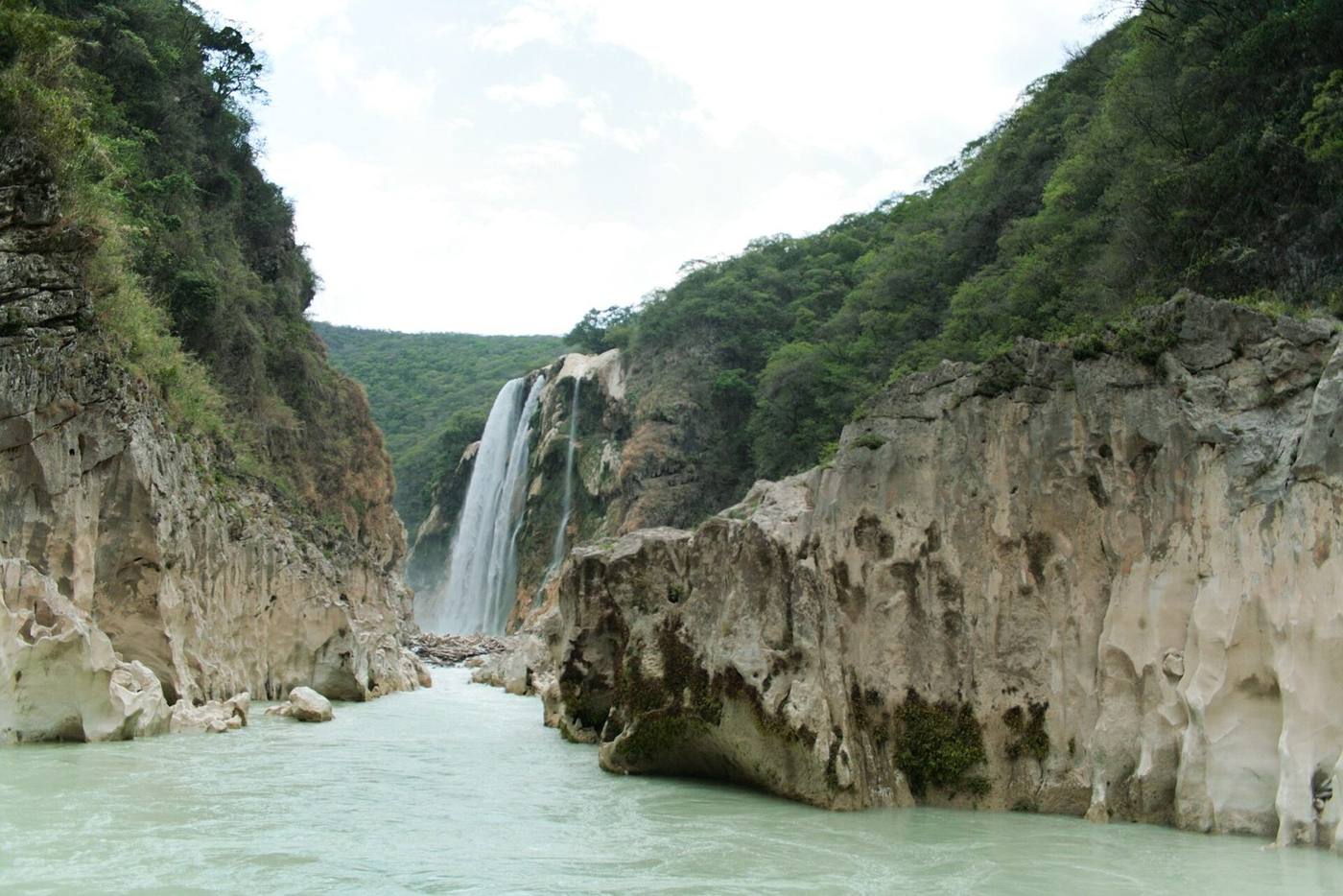
The Huasteca Potosina and Xilitla
The land of turquoise waters in San Luis Potosí state: the Tamul waterfall reached by canoe, the pools of Puente de Dios and Micos, the Cave of Swallows where thousands of birds emerge at dawn, and the surrealist garden of Las Pozas in Xilitla, created by Edward James in the jungle.
 6 daysEasy
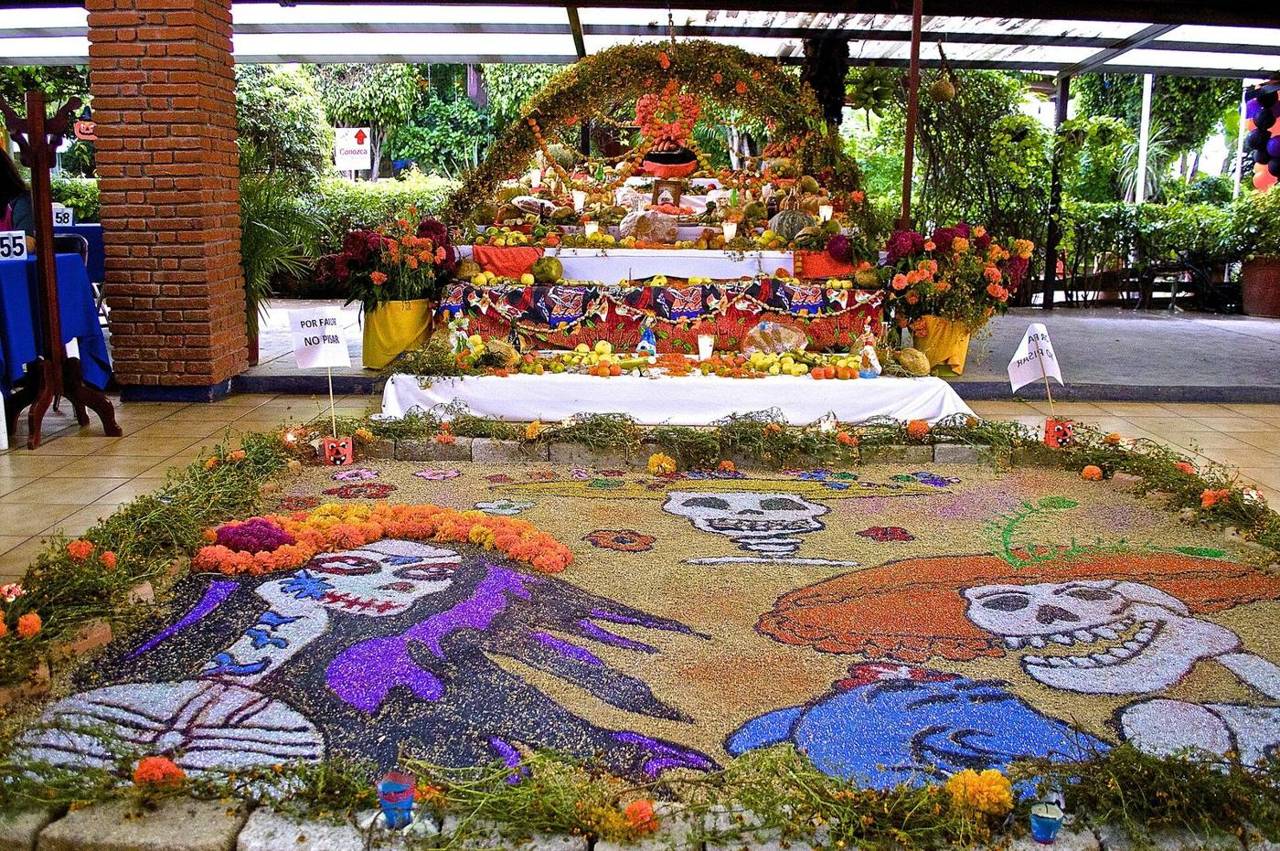
Oaxaca, the Day of the Dead
Mexico's most heartfelt festival in one of its most beautiful cities: altars with marigolds and candles, the cemeteries lit up at night in Xoxocotlán, masked comparsas, pan de muerto and mezcal, then the wool-rug villages of Teotitlán and the alebrije village of San Martín Tilcajete.
 5 daysModerate
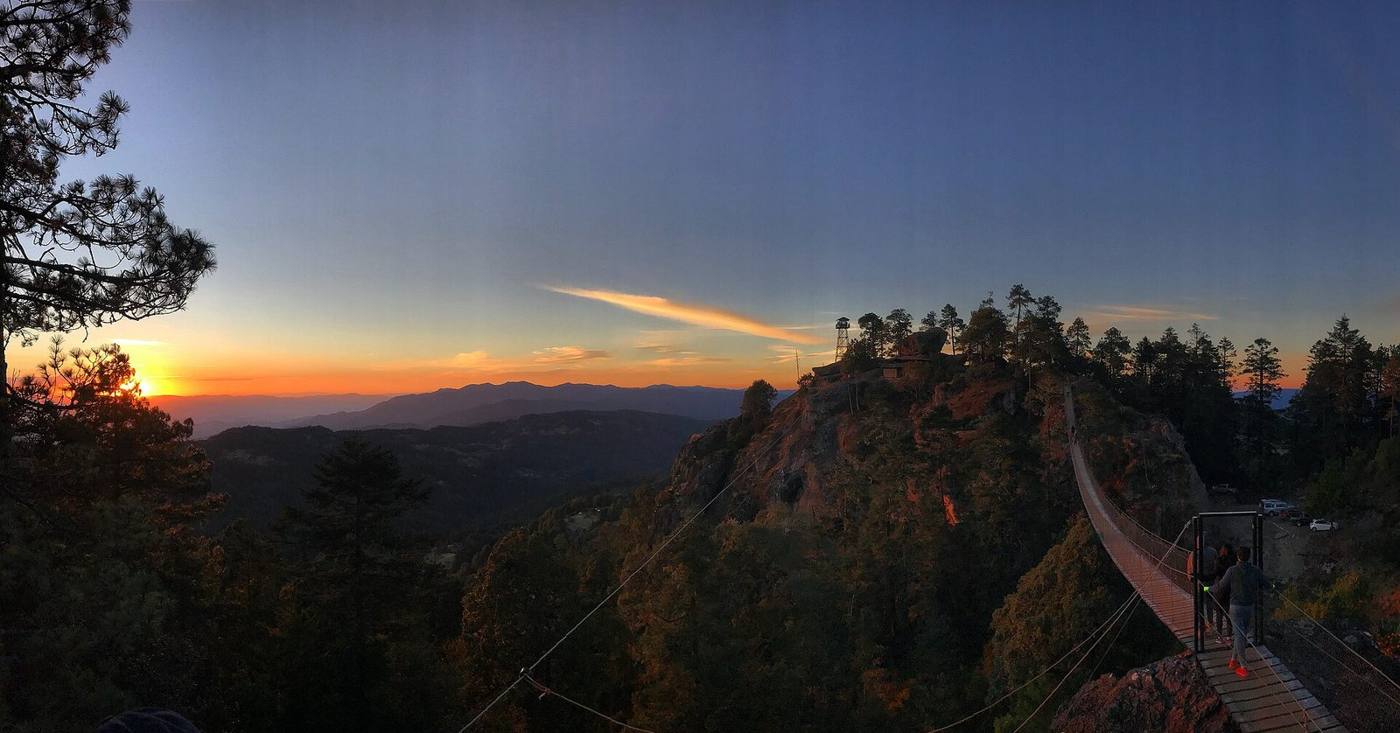
The Sierra Norte of Oaxaca on foot
A trek between the Zapotec villages of the Pueblos Mancomunados, which manage their forests and tourism together: trails through pine and oak above 3,000 metres, wooden cabins with fireplaces, community food and views over the Oaxaca valleys.