All of Mexico: colonial cities, Oaxaca, Chiapas and the Yucatán
Complete Mexico: the colonial silver cities, Oaxaca and its cuisine, the indigenous villages of Chiapas, the pyramids and the Caribbean.
- Mexico City
- Querétaro
- San Miguel de Allende
- Guanajuato
- Puebla
- Oaxaca
- San Cristóbal
- Palenque
- Mérida
- Tulum
Day by day
- Day 1
Arrival in Mexico City
This trip crosses the whole of Mexico in twenty-three days: the capital and Teotihuacán, the colonial silver cities of Querétaro, San Miguel de Allende and Guanajuato, Puebla, Oaxaca and its food, the Chiapas highlands with San Cristóbal and the Sumidero Canyon, Palenque in the jungle, then Yucatán with Campeche, Mérida, Uxmal, Chichén Itzá and the sea at Tulum. You travel by first-class bus, on two domestic flights and on the Tren Maya.
Before you go: to enter Mexico, Italian citizens need a passport valid for the whole stay; no visa is needed for tourist trips. On arrival the officer decides how many days you may stay: check the number written down. Other nationalities should check their own rules. Before leaving also read the official travel advice for the states you will cross.
Safety: the United States places Chiapas and Guanajuato at level 3, "reconsider travel". For this reason the route stays north of the 45D motorway in Guanajuato, flies from Oaxaca to Chiapas and reaches Palenque by air, avoiding federal highway 199, which the United Kingdom advises against. The trip does not touch Guerrero or Michoacán. Travel by day and do not drive alone.
You land at the capital's airport, at about 2,240 metres. In the afternoon, walk through the historic centre, a UNESCO World Heritage Site, to the Zócalo, with the Metropolitan Cathedral and the Palacio Nacional, home to Diego Rivera's great murals. Check opening times and entry rules.
Overnight in Mexico City, for three nights.
Practical tip: in the first days you feel the altitude. Walk calmly, drink plenty of bottled water and avoid the districts of Tepito and Iztapalapa.
- Day 2
The anthropology museum and Coyoacán
Today you get to know the ancient history of Mexico and one of the best-loved districts of the capital.
In the morning, start at the Templo Mayor, next to the Zócalo: these are the remains of the great temple of the Aztecs, brought to light in 1978 during building work. The site museum keeps sculptures, masks and offerings found in the excavations. Check prices and times.
Then take a taxi to the Bosque de Chapultepec, the city's great park, and visit the National Museum of Anthropology. Its halls tell the story of the Aztecs, the Maya, the Olmecs, the Zapotecs and the other cultures of ancient Mexico. In front of the Sun Stone, the great disc carved by the Aztecs, you understand how advanced their calendars were. You need at least three or four hours. Check prices and times: the museum is closed on Mondays.
In the afternoon, head south to Coyoacán, a colonial district with tree-lined squares, churches and painted houses. Here is the Casa Azul, where the painter Frida Kahlo was born and lived, now a museum with her paintings, her clothes and the garden. Tickets are sold online, days in advance. Check prices and times.
In the evening, wander through the Coyoacán market and try tostadas, crisp tortillas topped with meat, beans or fish, and a churro with hot chocolate.
Overnight in Mexico City.
Practical tip: to get around the city use app taxis or those from official ranks. On the metro, at rush hour, keep your rucksack and phone in front of you.
- Day 3
Teotihuacán and Xochimilco
Today you visit the city of the gods and the canals of the Aztecs.
Early in the morning, leave for Teotihuacán, about an hour north-east of the capital. In the first centuries after Christ it was one of the largest cities of the ancient world. When the Aztecs arrived it had already been abandoned for centuries, and it was they who gave it the name that means the place where the gods are born. It is a UNESCO World Heritage Site. Check prices and times.
Walk along the Avenue of the Dead, more than two kilometres long. On one side rises the Pyramid of the Sun, about 65 metres high, one of the largest in the world; at the end of the avenue stands the Pyramid of the Moon, from which you see the whole ancient city. Also look at the Temple of Quetzalcóatl, the feathered serpent, with stone heads jutting out from the facade.
In the afternoon, head back south to Xochimilco, where the canals and chinampas survive, the floating gardens of the Aztecs, a UNESCO World Heritage Site. Board a trajinera, a wooden boat painted in bright colours, and let yourself be carried along the canals while other boats pass with musicians and sellers of corn cobs and drinks.
In the evening, return to the centre and try mole poblano, a dark sauce of chillies, chocolate and spices, served with chicken.
Overnight in Mexico City.
Practical tip: there is very little shade at Teotihuacán and the sun is strong at altitude. Arrive at opening time with a hat, sun cream and at least a litre of water each.
- Day 4
Querétaro and its aqueduct
Today you leave the capital and climb north, into the colonial heart of Mexico.
In the morning, take a first-class bus from the Norte bus station in Mexico City to Querétaro, about three hours across the high plateau. First-class buses have numbered seats, air conditioning and a toilet: buy your ticket at the station or on the company's website.
Querétaro has a historic centre that is a UNESCO World Heritage Site, tidy and clean, with squares linked by pedestrian streets. As you enter the city you see the aqueduct, built in the eighteenth century, with a long line of pink stone arches carrying water from the hills to the centre.
In the afternoon, walk to the convent of Santa Cruz, linked to the founding of the city, then go down into the centre: the Jardín Zenea, the Plaza de Armas with its colonial palaces and the church of Santa Rosa de Viterbo, with its large painted flying buttresses. Also pass the Teatro de la República, where the Mexican Constitution was promulgated in 1917. Check the times and prices of visits.
In the evening, sit in one of the squares, where bands often play, and try gorditas, small thick tortillas filled with cheese, beans or meat.
Overnight in Querétaro.
Practical tip: if it interests you, about an hour away is the Peña de Bernal, one of the largest monoliths in the world. You can stop there with a driver tomorrow morning, before San Miguel. Ask your driver to take the main roads and set off after breakfast.
- Day 5
San Miguel de Allende
Today you reach one of the most photographed towns in Mexico.
In the morning, take the bus to San Miguel de Allende, a little over an hour. San Miguel is a small colonial town on a hillside, with steep cobbled streets, ochre, red and yellow houses, wooden doors and courtyards full of bougainvillea. The centre, together with the nearby sanctuary of Atotonilco, is a UNESCO World Heritage Site.
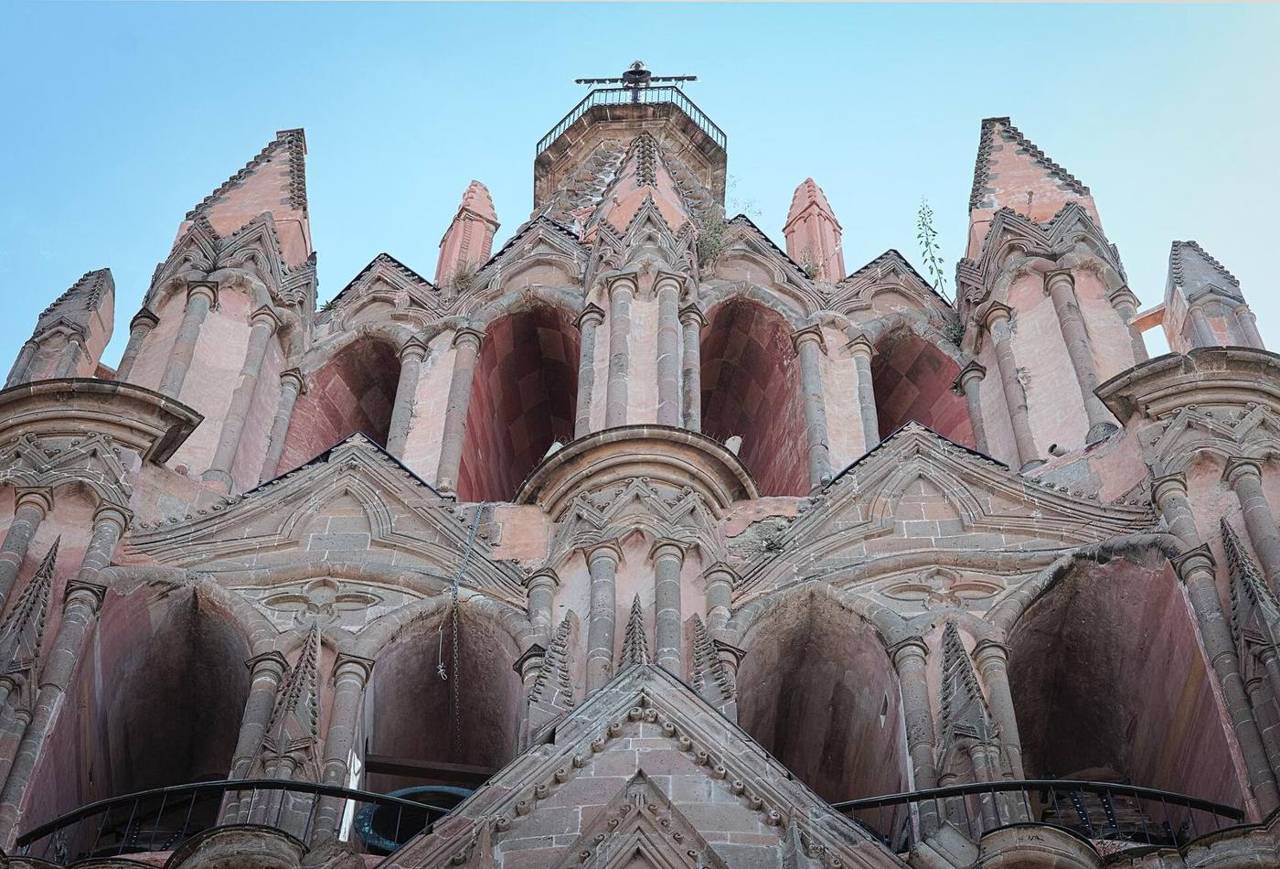
Start at the Jardín, the main square, where in the morning people sit on the benches in the shade of the trees. On one side rises the Parroquia de San Miguel Arcángel, with its pink neo-Gothic facade, added in the nineteenth century by a local mason: it is the symbol of the town.
Then stroll at random through the streets of the centre, step into churches and courtyards, and visit the house where Ignacio Allende was born, one of the heroes of independence, now a museum. Check prices and times.
In the afternoon, climb to the Mirador, the viewpoint above the town, from which you see the bell towers and domes and, in the distance, the reservoir and the hills.
In the evening, at sunset, the facade of the Parroquia glows orange: it is the finest moment in the square. Try enchiladas and a sweet made with cajeta, goat's milk caramel.
Overnight in San Miguel de Allende.
Practical tip: the streets of San Miguel are steep and the cobbles slippery. Wear comfortable shoes with a good sole and leave heels at home. In the midday heat, rest in a shady courtyard.
- Day 6
Atotonilco and arrival in Guanajuato
Today you visit a painted sanctuary and arrive in the city of the silver mines.
In the morning, go by taxi or with a driver to the sanctuary of Atotonilco, about twenty minutes from San Miguel. Outside it looks like a simple church; inside, the walls and vaults are covered in eighteenth-century frescoes, with scenes from the Bible, angels and decorations, so much so that it is called the Sistine Chapel of Mexico. From here, in 1810, the priest Miguel Hidalgo set out with the banner of the Virgin of Guadalupe, at the start of the war of independence.
Then take the bus to Guanajuato, about an hour and a half, on a road that stays in the north of the state, away from the areas south of the 45D motorway.
Guanajuato is a city squeezed into a valley between hills, a UNESCO World Heritage Site. It grew rich thanks to its silver mines, among the richest in the world in colonial times. The houses are painted in bright colours and climb the slopes, and many streets run underground, in tunnels cut into the rock where the river once flowed.
In the afternoon, walk to the Jardín de la Unión, the triangular square with its trees, and to the Teatro Juárez, with its columned facade. Then find the Callejón del Beso, an alley so narrow that people on opposite balconies can kiss.
In the evening, in the squares, follow the callejoneadas, musical walks through the alleys led by students in period costume.
Overnight in Guanajuato, for two nights.
Practical tip: in Guanajuato travel only by day, by first-class bus or with a driver, and keep to the main roads.
- Day 7
Guanajuato, the mines and the Pípila
Today you discover the silver history of Guanajuato.
In the morning, visit the Alhóndiga de Granaditas, a large stone granary where one of the first battles of the war of independence was fought in 1810. Today it is a museum with the history of the city and murals on the main staircase. Check prices and times.
Then pass the university, with its white flight of steps, and the basilica of Nuestra Señora de Guanajuato, yellow and red. Step into the Hidalgo market, in an iron and glass building from the late nineteenth century, with stalls of fruit, sweets and crafts.
At midday, take a taxi to the Valenciana area, on the hill above the city. Here was one of the most productive silver mines in the world, and next to it stands the church of San Cayetano, with gilded altars paid for by the mine owners. In some nearby mines you can go down the shafts with a guide. Check prices and times.
In the afternoon, if it interests you, visit the mummy museum, with bodies naturally preserved in the city cemetery. Then ride the funicular up to the monument to the Pípila, a miner who became a hero of independence: from up there you see the whole colourful city in the valley, with its domes and houses on the slopes.
In the evening, walk down through the alleys and have enchiladas mineras for dinner, filled with cheese and topped with potatoes and carrots.
Overnight in Guanajuato.
Practical tip: if you travel in October, the Festival Cervantino brings shows to the whole city. Book your bed well in advance.
- Day 8
Heading back south to Puebla
Today is a long travel day, taking you from Guanajuato to Puebla.
Early in the morning, take a first-class bus to Querétaro and continue from there towards Puebla, or choose a service to Mexico City and change at the station for Puebla. In all it takes about six or seven hours. This way you stay on the main motorways and do not pass through the cities south of the 45D. Bring water and something to eat.
Puebla is a large colonial city at the foot of the volcanoes, with a centre that is a UNESCO World Heritage Site. It is famous for talavera, the white and blue glazed ceramic that covers the facades of houses and churches, and for its food, among the richest in Mexico.
In the late afternoon, walk to the Zócalo, with its arcades and the cathedral, one of the largest in the country, with two tall bell towers. Then go to the church of Santo Domingo and enter the Capilla del Rosario, from the seventeenth century, where the walls and vault are covered in gilded stucco: it is one of the masterpieces of Mexican baroque. Check the times, because it closes in the afternoon.
In the evening, stroll along the Callejón de los Sapos and through the Barrio del Artista, with the painters' studios. Have mole poblano for dinner or, if you travel in August or September, chiles en nogada, stuffed peppers with walnut sauce and pomegranate.
Overnight in Puebla.
Practical tip: at bus stations buy your ticket only at the official counters and keep your hand luggage with you at all times, including on board.
- Day 9
Cholula and the road to Oaxaca
Today you see the largest pyramid in the world by volume and arrive in Oaxaca.
In the morning, go to Cholula, about twenty minutes from Puebla. It looks like a grassy hill with a yellow church on top, the sanctuary of the Virgen de los Remedios. In reality, underneath lies a very ancient pyramid, built and enlarged in many phases before the arrival of the Spanish. Inside you can visit some of the tunnels dug by archaeologists. Check prices and times.
Walk up to the church: on clear days you see the volcanoes Popocatépetl and Iztaccíhuatl, covered in snow. Popocatépetl is active and sometimes sends out smoke and ash.
At midday, return to Puebla and take the first-class bus to Oaxaca, about four and a half hours on a motorway that crosses dry mountains with giant cacti.
Oaxaca is a colonial city of green stone, in a valley at about 1,550 metres, with a centre that is a UNESCO World Heritage Site together with Monte Albán. Around it live many indigenous peoples, above all Zapotecs and Mixtecs, with their languages, markets and festivals.
In the evening, walk around the Zócalo, under the great trees, among balloon sellers and musicians, and eat a tlayuda, a large crisp tortilla with beans, cheese and meat.
Overnight in Oaxaca, for four nights.
Practical tip: if you travel in July, the Guelaguetza takes place, the great festival of the dances of the peoples of Oaxaca. Book well in advance, because the city fills up and prices rise.
- Day 10
Monte Albán and the centre of Oaxaca
Today you climb to the city of the Zapotecs and discover the markets of Oaxaca.
Early in the morning, go to Monte Albán, about half an hour from the centre. The Zapotecs founded it around 500 BC by levelling the top of a mountain, about 400 metres above the valley. Around the great plaza stand pyramids, palaces, a ball court and the slabs of the Danzantes, figures carved in stone. From the top you see the three valleys of Oaxaca. Check prices and times.
At midday, return to the city and visit the church of Santo Domingo de Guzmán, its interior covered in gold and stucco. In the convent next door is the Museum of the Cultures of Oaxaca, with the jewels of Tomb 7 at Monte Albán. Behind it is the ethnobotanical garden, with the plants of the region, which can only be visited with a guide. Check prices and times.
In the afternoon, enter the 20 de Noviembre market and its smoke corridor, where you choose raw meat from the stalls and they grill it for you over the coals. Then move on to the Benito Juárez market, with baskets of dried chillies, chocolate for grinding and chapulines, grasshoppers toasted with lime and salt.
In the evening, taste mole negro, the most famous sauce of Oaxaca, dark and complex, and a hot chocolate made with water.
Overnight in Oaxaca.
Practical tip: there is almost no shade at Monte Albán. Bring a hat and water, and if you want to understand the site well, take a guide at the entrance. Go early, before the coach groups arrive.
- Day 11
Hierve el Agua and mezcal
Today you see the stone waterfalls and get to know the drink of Oaxaca.
In the morning, set off with a driver or on an organised excursion eastwards, into the Tlacolula valley. The first stop is Santiago Matatlán, which presents itself as the mezcal capital. Mezcal is made from the heart of the agave, cooked for days in ovens dug into the ground, then crushed with a large stone wheel pulled by a horse, fermented and distilled. At a palenque, the traditional distillery, you see every stage and taste mezcal made from different agaves.
Then continue on a mountain road to Hierve el Agua, about an hour and a half from Oaxaca. Here mineral-rich springs, flowing for thousands of years over the edge of a cliff, have formed white petrified waterfalls that look frozen. At the top there are small natural pools where you can bathe, with a view over the mountains. The site is run by local communities and sometimes stays closed because of disputes between villages: find out before you set off. Check prices and times.
In the afternoon, return to Oaxaca and rest.
In the evening, have memelas, thick tortillas with beans and cheese, and Oaxacan tamales, wrapped in banana leaves.
Overnight in Oaxaca.
Practical tip: mezcal is strong. Sip it slowly, as they do in Oaxaca, and do not drink if you have to drive the next day. At Hierve el Agua wear shoes with a good grip, because the rock by the pools is slippery.
- Day 12
El Tule, Teotitlán and Mitla
Today you follow the valley road east of Oaxaca, among giant trees, rugs and stone mosaics.
In the morning, stop at Santa María del Tule, about a quarter of an hour from the city. Next to the church grows the Tule tree, an ahuehuete, a Mexican cypress, with one of the widest trunks in the world: it takes dozens of people to hug it. There is a small ticket. Check prices and times.
Then go to Teotitlán del Valle, a Zapotec village of weavers. Families work wool on large wooden looms and dye it with natural colours: red comes from cochineal, a small insect that lives on cacti, blue from indigo, yellow from flowers and mosses. In many houses they show you how a rug is made.
Around midday you reach Mitla, the place of the dead for the Zapotecs. Its palaces are famous for the geometric mosaics on the walls, made of thousands of small cut stones fitted together without mortar, like a fabric of stone. The Spanish built a church over part of the ruins. Check prices and times.
In the afternoon, return to Oaxaca and take a last walk through the centre and the Jalatlaco district, with its painted houses and murals.
In the evening, pack your bag: tomorrow you fly to Chiapas.
Overnight in Oaxaca.
Practical tip: if you buy a rug in Teotitlán, ask which colours are natural. They cost more, but last for many years. Ask the weaver to show you the dyes: many families keep jars of cochineal and plants ready to explain.
- Day 13
Flying to Chiapas
Today you leave Oaxaca and climb to the Chiapas highlands.
In the morning, take the flight from Oaxaca to Tuxtla Gutiérrez, the capital of Chiapas. Check the airlines and times: some routes are direct, others go via Mexico City. The flight avoids the long road across the Isthmus of Tehuantepec, which crosses areas where the United States government asks its staff not to go.
Tuxtla airport is close to Chiapa de Corzo, a small colonial town on the Grijalva River. If you have time, stop to see the square with its sixteenth-century brick fountain shaped like a crown. You will come back here in three days for the canyon.
Then climb by official taxi or a pre-booked transfer to San Cristóbal de las Casas, about an hour on a motorway that winds up through the mountains to about 2,200 metres.
San Cristóbal is a colonial town of low, colourful houses, tiled roofs, cobbled streets and churches. Around it live the Tzotzil and Tzeltal Maya peoples, who keep their language, clothes and traditions. The centre is lively, with many travellers, craftspeople and cafés.
In the afternoon, walk along the Andador Guadalupe, the pedestrian street, to the yellow cathedral on the main square.
In the evening it is cool: try a Chiapas coffee, one of the best in Mexico, and a hot soup.
Overnight in San Cristóbal de las Casas, for four nights.
Practical tip: in Chiapas there are sometimes protest roadblocks. Check every morning and move your visits if needed.
- Day 14
San Cristóbal de las Casas
Today you explore San Cristóbal at your own pace.
In the morning, visit the church of Santo Domingo, from the sixteenth century, with its carved pink baroque facade. Around it is the craft market, where women from the villages sell embroidered fabrics, belts, bags and rag dolls. In the former convent is the highland textile centre, with the traditional clothes of the different communities: you learn to recognise where a woman comes from by the pattern on her blouse. Check prices and times.
Then go down to the municipal market, very lively, with fruit, vegetables, flowers, candles and spices. It is a real market, where village families come to buy and sell: move about respectfully and ask before taking photographs.
At midday, enter the amber museum, in an old convent, with pieces of Chiapas amber, a fossil resin millions of years old, sometimes with insects inside. Check prices and times.
In the afternoon, climb the steps to the church on the Cerrito de San Cristóbal, west of the centre, or to the church of Guadalupe, to the east, to see the town and the mountains at sunset.
In the evening, have chipilín tamales, made with a local herb, and try pox, a liqueur of corn and sugar cane also used in ceremonies.
Overnight in San Cristóbal de las Casas.
Practical tip: evenings from November to February are cold, sometimes close to zero. Bring a fleece, a jacket and thick socks, because many guesthouses have no heating.
- Day 15
San Juan Chamula and Zinacantán
Today you visit two Tzotzil Maya villages around San Cristóbal.
In the morning, go with a local guide to San Juan Chamula, about twenty minutes away. The community has its own government and its own rules. The church of San Juan is a unique place: inside there are no pews, the floor is covered in pine needles, and families pray on their knees in front of hundreds of candles, with bottles of soft drinks, eggs and sometimes chickens, in rites that combine Maya and Catholic traditions. There is a small ticket. Inside, photography is strictly forbidden: respect the rule without exception.
On Sundays Chamula has its market, with sellers from the surrounding villages: if you can, plan your visit for that day.
Then go to Zinacantán, another Tzotzil village, famous for the flowers grown in greenhouses and for clothes embroidered with brightly coloured flowers, which change a little every year. Many families welcome you into their homes to show you the women weaving on backstrap looms and offer you a tortilla freshly cooked on the fire. Buying a piece of fabric is the right way to say thank you.
In the afternoon, return to San Cristóbal and rest, or walk through the less touristy districts, such as El Cerrillo.
In the evening, have dinner in the centre.
Overnight in San Cristóbal de las Casas.
Practical tip: go to the villages with a local guide, who knows the communities and explains the rules. Never photograph people without asking.
- Day 16
The Sumidero Canyon
Today you sail through a canyon of towering rock.
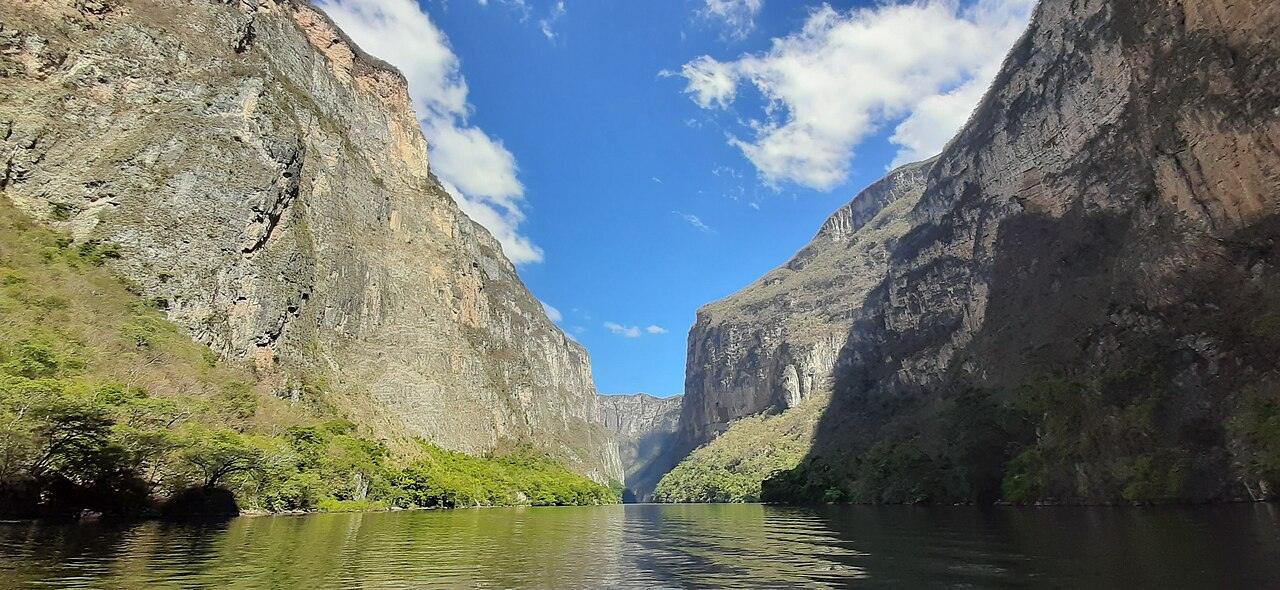
In the morning, go down from San Cristóbal to Chiapa de Corzo, about an hour, with a driver or on an organised excursion. From the jetty on the Grijalva River, motor boats leave for the Sumidero Canyon, a national park. The rock walls rise up to about a thousand metres above the water.
The boat trip takes about two hours. Along the river you see crocodiles on the banks, herons, cormorants, sometimes spider monkeys in the trees, caves in the rock and a moss-covered waterfall called the Christmas Tree, because with the water running down it looks like a fir. At the end of the canyon the boat reaches the great Chicoasén dam and then turns back. Check prices and times.
After the boat, walk around Chiapa de Corzo: the square with its crown-shaped fountain, the large church of Santo Domingo and the workshops of lacquerware, hand-painted wooden objects that are a tradition of the town.
In the afternoon, if you like, go up to the viewpoints on the rim of the canyon, on the side of the park near Tuxtla, to see from above the walls dropping sheer into the river. Then return to San Cristóbal before dark.
In the evening, have sopa de pan, a soup of bread, vegetables and broth typical of San Cristóbal.
Overnight in San Cristóbal de las Casas.
Practical tip: on the boat the wind is cool and the sun strong. Bring a light jacket, a hat and sun cream, and keep your camera in a waterproof bag.
- Day 17
Flying to Palenque
Today you leave the highlands and go down into the jungle.
Early in the morning, return to Tuxtla Gutiérrez airport, about an hour from San Cristóbal. From here take a flight to Palenque, which usually goes via Mexico City, or a flight to Villahermosa, in the state of Tabasco, and from there continue by road for about two hours to Palenque. Check the connections on the day you book, because there are few flights to Palenque.
This way you avoid federal highway 199 between San Cristóbal and Palenque, which the United Kingdom government advises against except for essential travel, because of roadblocks and crime on the road. For the same reason the trip does not go to the Agua Azul waterfalls.
In the afternoon you arrive in Palenque, a small town at the foot of forest-covered hills, where Chiapas meets the Tabasco plain. Stay in the La Cañada area or along the road to the ruins, where you sleep among the trees.
If you have time left, walk around the centre, near the main square, or rest: tomorrow is an early start.
In the evening, listen to the sounds of the jungle. After dark you hear the howler monkeys, whose deep roar carries for kilometres, and the frogs in the ponds.
Overnight in Palenque, for two nights.
Practical tip: Palenque is hot and humid all year round. Pack a strong insect repellent, light long-sleeved cotton clothes and a water bottle. Keep your flight documents and onward train ticket together.
- Day 18
Palenque, the Maya city in the jungle
Today you visit one of the most beautiful Maya cities.
Early in the morning, at opening time, enter the archaeological site of Palenque, a UNESCO World Heritage Site. You pay entry to the site and to the national park: check prices and times. At that hour there is often mist over the forest and the temples appear among the trees.
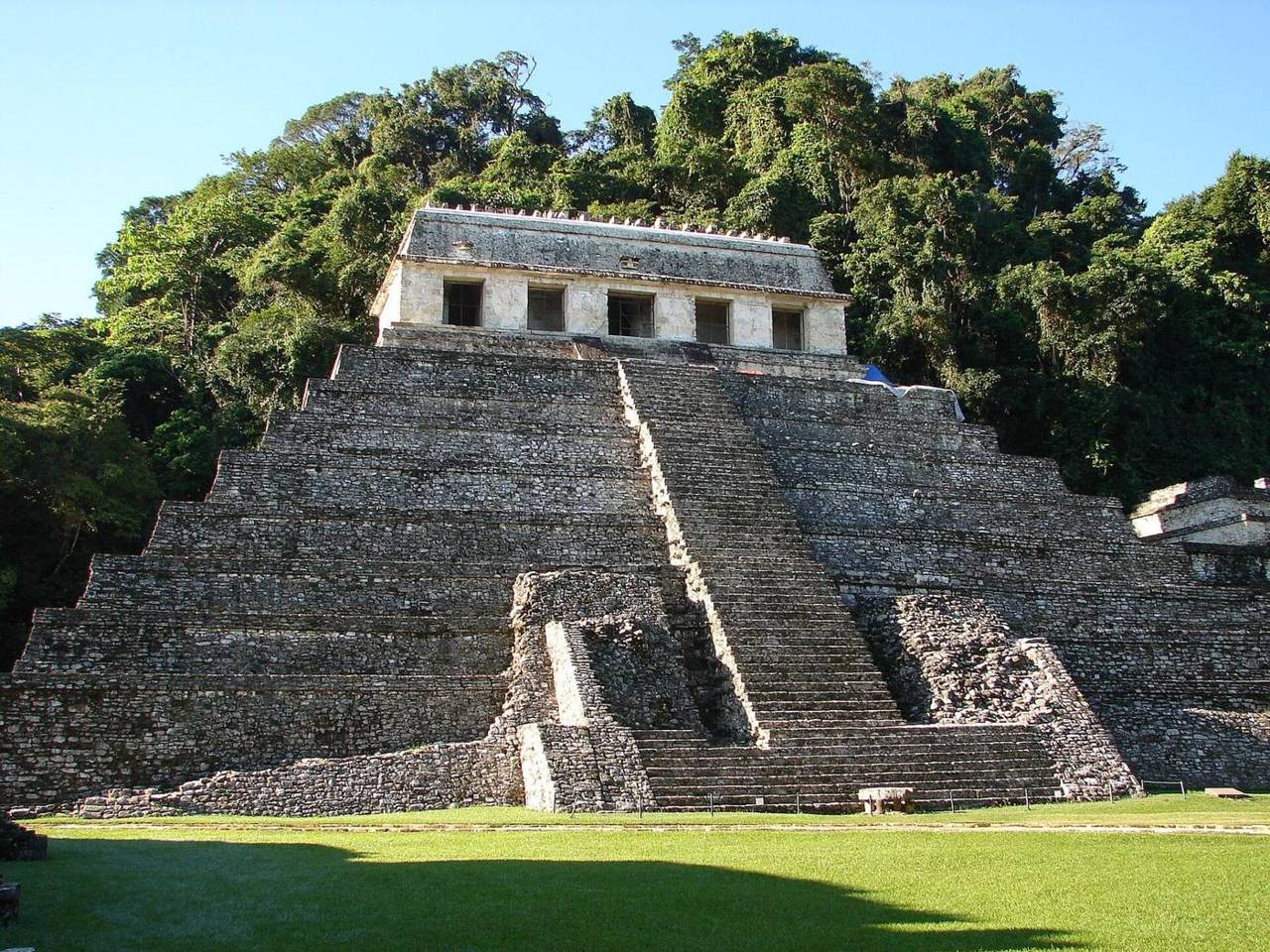
Palenque was a powerful city between the sixth and eighth centuries. Its most famous king was Pakal the Great, who reigned for almost seventy years. The Temple of the Inscriptions is a stepped pyramid with long Maya inscriptions: inside it, in 1952, the archaeologist Alberto Ruz discovered the tomb of Pakal, with its great carved lid and jade mask.
Opposite stands the Palace, a complex of courtyards, galleries and rooms with a square tower, unique in the Maya world, perhaps used to observe the sky. Then climb to the Group of the Crosses, with three temples on the hills and very fine reliefs.
Follow the forest trails towards the small waterfalls and the less visited temples, where you hear howler monkeys and see toucans.
In the afternoon, visit the site museum, with sculptures, ceramics and a copy of Pakal's tomb. Check the times.
In the evening, rest and have river fish for dinner, or chicken in a Tabasco-style sauce with fried plantain.
Overnight in Palenque.
Practical tip: at the entrance there are authorised local guides. With one of them you understand the inscriptions and the history of the kings much better. Agree the price and length of the tour before you start.
- Day 19
Campeche, the walled city
Today you leave the jungle and reach the Gulf of Mexico.
In the morning, take the Tren Maya from Palenque station to Campeche, or a first-class bus, about five hours. The train crosses plains, marshes and pastures and has comfortable air-conditioned carriages. Check times and prices on the official website and book in good time.
Campeche, on the Gulf coast, was founded by the Spanish in the sixteenth century and is a UNESCO World Heritage Site. To defend itself from the pirates who sacked it several times, in the seventeenth century it was surrounded by walls with bastions, many of which still stand. The centre is one of the best kept in Mexico, with colonial houses painted in pastel colours, yellow, blue, pink and green, windows with iron grilles and straight streets.
In the afternoon, walk from the main square, with the cathedral, to the city gates, the Land Gate and the Sea Gate. Climb a stretch of the walls and visit one of the bastions, which now house small museums. Check prices and times.
At sunset, stroll along the malecón, the seafront promenade several kilometres long, and watch the sun go down over the gulf.
In the evening, taste seafood from the gulf, such as coconut prawns, and pan de cazón, a tortilla pie with fish and tomato sauce.
Overnight in Campeche.
Practical tip: in Yucatán it is hot all year round. Visit the towns early in the morning and late in the afternoon, and rest in the middle of the day. Carry a refillable bottle and drink often.
- Day 20
Uxmal and Mérida
Today you visit one of the most elegant Maya cities and arrive in the capital of Yucatán.
In the morning, leave Campeche by car with a driver or on an excursion towards Uxmal, about two and a half hours, in the Puuc hills.
Uxmal, a UNESCO World Heritage Site, is famous for the Puuc style: facades decorated with stone mosaics, masks of the rain god Chaac with his trunk-like nose, serpents and geometric patterns. The most famous monument is the Pyramid of the Magician, about 35 metres high, with an oval base and rounded corners, unique in the Maya world. Also visit the Nunnery Quadrangle, a courtyard enclosed by four decorated palaces, and the Governor's Palace, considered one of the most beautiful buildings of the ancient Americas. Check prices and times.
In the afternoon, continue to Mérida, about an hour. Mérida was founded by the Spanish in 1542 on the ruins of the Maya city of T'hó. It is a calm city, with a strong Maya culture and a cuisine famous throughout Mexico.
In the evening, walk around the Plaza Grande, with the cathedral of San Ildefonso and the government palace with its murals on the history of Yucatán, then along the Paseo de Montejo, the great avenue lined with the villas of wealthy henequen producers, the agave fibre known as green gold. Have cochinita pibil for dinner, pork marinated with achiote and slowly cooked in banana leaves.
Overnight in Mérida.
Practical tip: at Uxmal you cannot climb the Pyramid of the Magician. Respect the ropes and signs at all the sites.
- Day 21
Chichén Itzá and the cenotes
Today you visit the most famous Maya city in the world.
Early in the morning, leave Mérida heading east to Chichén Itzá, about two hours. Chichén Itzá, a UNESCO World Heritage Site, was one of the most powerful Maya cities between the ninth and twelfth centuries. Check prices, times and entry rules before you go.
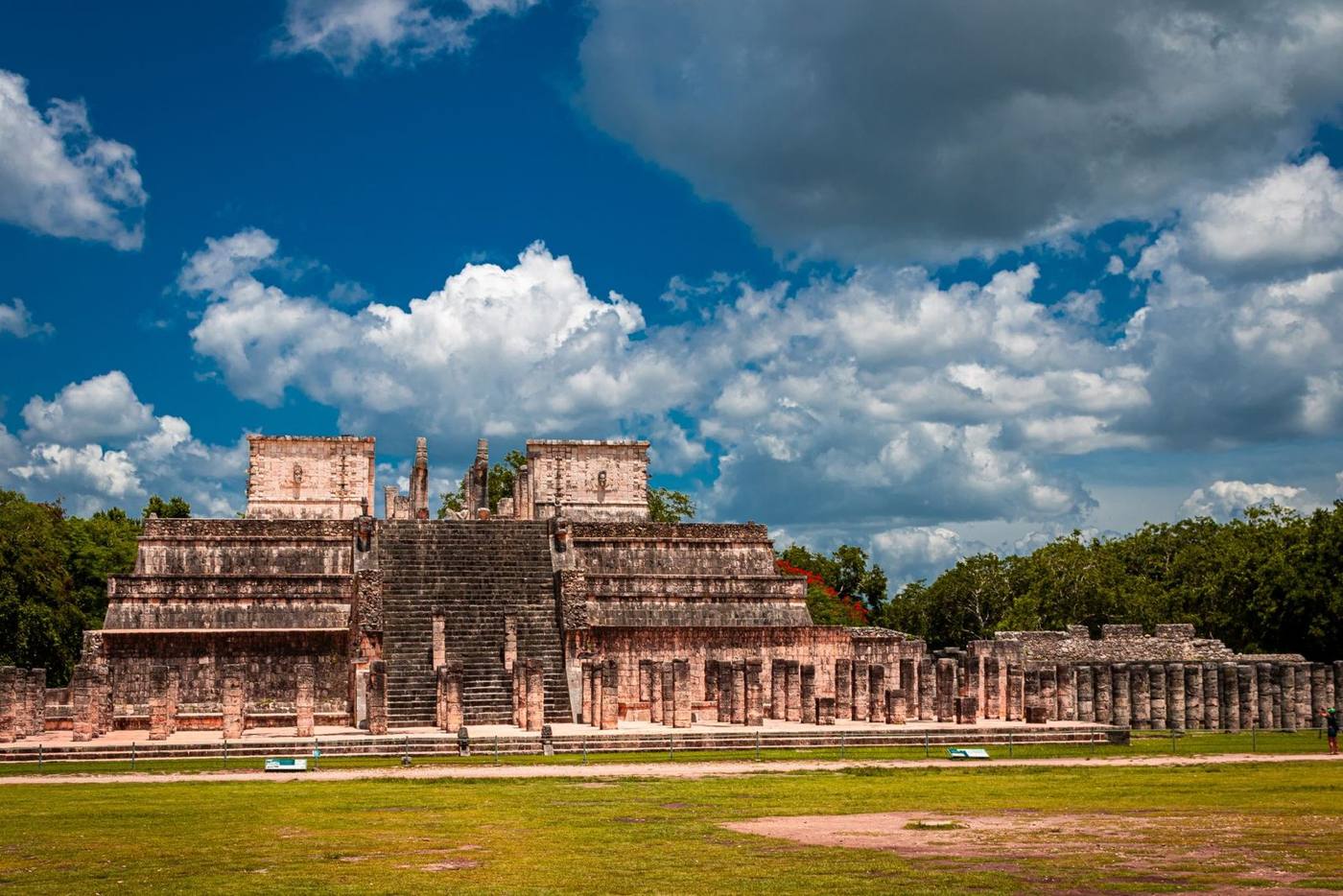
The most famous monument is El Castillo, also called the Temple of Kukulcán, a stepped pyramid with 91 steps on each side which, with the top step, make 365, like the days of the year. At the spring and autumn equinoxes, the afternoon sun draws a serpent-shaped shadow on the staircase. Also visit the great ball court, the largest of the ancient Americas, the Temple of the Warriors with its thousand columns, the observatory called El Caracol and the sacred cenote, where the Maya threw offerings.
In the afternoon, swim in a cenote, a natural freshwater well in the limestone, typical of Yucatán, with clear water, tree roots hanging from above and light coming in through the opening. There are several between Chichén Itzá and Valladolid. Check prices and times.
In the evening, sleep in Valladolid, a small, colourful colonial town, with the convent of San Bernardino and the main square. Try panuchos, small fried tortillas filled with beans.
Overnight in Valladolid.
Practical tip: many groups arrive at Chichén Itzá from Cancún around ten. Arrive at opening time, when it is cooler and there are fewer people. You cannot climb the pyramid.
- Day 22
Tulum and the Caribbean Sea
Today you finally reach the Caribbean Sea.
In the morning, leave Valladolid heading south-east to Tulum, about an hour and a half, by bus, by car with a driver or on the Tren Maya. Check times and prices.
Tulum is the only large Maya city built by the sea, on a cliff above a white sand beach and turquoise water. It was an important port for Maya trade, with walls on three sides and the sea on the fourth. Its most famous temple is El Castillo, on the cliff, which perhaps also served as a lighthouse for canoes. You pay entry to the site and to the national park: check prices and times.
In the afternoon, swim in the sea at one of Tulum's public beaches, or in a nearby cenote, such as the Gran Cenote, with crystal-clear water and freshwater turtles. Beneath the Yucatán peninsula run some of the longest flooded cave systems in the world.
In the evening, have the fish of the day, fish tacos or ceviche, and celebrate the end of the trip under the stars.
Overnight in Tulum.
Practical tip: in the cenotes and the sea use only sun creams that do not harm the environment, or better still a T-shirt, and shower before entering the water, as the managers ask. From April to September large amounts of sargassum, a seaweed, sometimes wash up on the beaches: check the news and choose the cleanest beaches. In Tulum, in the evening, get about by taxi and stay in busy areas.
- Day 23
Departure from Cancún
Today you leave Mexico.
In the morning, leave Tulum for Cancún airport, about an hour and a half or two hours along the Riviera Maya road. Alternatively, check whether your flight leaves from the new Tulum airport, which is closer. If you have time, stop at Playa del Carmen, halfway, for a last swim in the Caribbean and a walk along Quinta Avenida, the pedestrian street.
Then take your flight to Europe, direct or with a connection.
In these twenty-three days you have crossed Mexico from coast to coast: the Zócalo and the anthropology museum of the capital, the pyramids of Teotihuacán and the canals of Xochimilco, the aqueduct of Querétaro, the streets of San Miguel de Allende, the mines and alleys of Guanajuato, the talavera of Puebla and the pyramid of Cholula, Monte Albán, the markets and mezcal of Oaxaca, Mitla, San Cristóbal and the Maya villages, the Sumidero Canyon, Palenque in the jungle, Campeche, Uxmal, Mérida, Chichén Itzá and the sea at Tulum.
When to go: the best period is from November to April, in the dry season, with sunny days and little rain. In the highlands, in Mexico City, San Cristóbal and Guanajuato, winter nights are cold. From May to October the rains arrive, especially in the afternoon. From June to November is hurricane season on the Caribbean and Gulf coasts. At the end of October and the start of November comes the Día de Muertos, deeply felt in Oaxaca: book well in advance.
Practical tip: at Cancún airport many sellers offer taxis and transfers. Book your transfer beforehand or use the official services, and arrive in good time for security checks.
The Mexico few people see all at once: the colonial cities of the centre are the trip's surprise, and Oaxaca is the country's food capital. Many hours on buses between stops: Mexico's first-class buses are comfortable and punctual. October to April; late October brings the Day of the Dead.
Before you go
- Documents and visa
- Passport valid for the whole stay; no visa is needed for tourism. On arrival the officer sets the number of days granted. Quintana Roo state charges foreign visitors a tax, the Visitax, payable online.
- Health and vaccines
- No compulsory vaccines. Drink only bottled water and use mosquito repellent against dengue and other diseases. Emergencies: 911.
- Money and payments
- Mexican peso. Cards are accepted in cities and tourist areas; in markets, villages and on local transport you need cash.
- Power sockets
- Types A and B, 127 volts: you need a flat-pin adapter.
- Time zone
- Mexico City is UTC-6; Quintana Roo is UTC-5. Mexico no longer uses daylight saving time, except in some border areas.
- Safety
- The situation varies greatly between states: the United States rates some, such as Guerrero, Michoacán and Sinaloa, at level 4, while Yucatán and Campeche are at level 1. Official advice: GOV.UK.
Information checked in November 2026 for Italian and EU citizens. Rules change: always check before you travel.
Variations
In 16 days: Mexico City, Puebla and Oaxaca, then the flight to Chiapas and the journey through Yucatán to Tulum, without the colonial cities of the north.
In 27 days: add two days at Bacalar, the lagoon of seven colours, after Tulum, and two days on Holbox or Isla Mujeres before leaving from Cancún.
Frequently asked questions
What documents do I need for Mexico?
Italian citizens need a passport valid for the whole stay, with no visa for tourism. On arrival the officer decides how many days you may stay: check the number written down. Other nationalities should check their own rules.
Why are there two domestic flights?
The first, from Oaxaca to Tuxtla Gutiérrez, avoids the long road across the Isthmus of Tehuantepec. The second takes you to Palenque without federal highway 199, which the United Kingdom advises against except for essential travel. This way you spend fewer hours on the road and in risky areas.
Are Chiapas and Guanajuato safe?
The United States places them at level 3. San Cristóbal, the nearby villages, the Sumidero, Palenque and the colonial cities of Guanajuato are much visited, but caution is needed: travel by day, do not drive alone and read the official travel advice before you leave.
Indicative itinerary written by World Atlas. Before booking, check timetables, seasonal openings, documents and safety.
 7 daysEasy
Yucatán: Maya pyramids and cenotes
Chichén Itzá, Valladolid, the cenotes and the sea at Tulum: the easiest Mexico for a first week.
 15 daysModerate
Chiapas, Yucatán and the Caribbean
From the capital to the colonial towns of Chiapas, then Palenque in the jungle, the Maya cities of Yucatán and the sea.
 12 daysEasy
Maya triptych: Mexico City, Palenque and the Yucatán
The capital with Teotihuacán, the jungle pyramids of Palenque and the great Maya cities of the Yucatán, with cenotes to cool off.