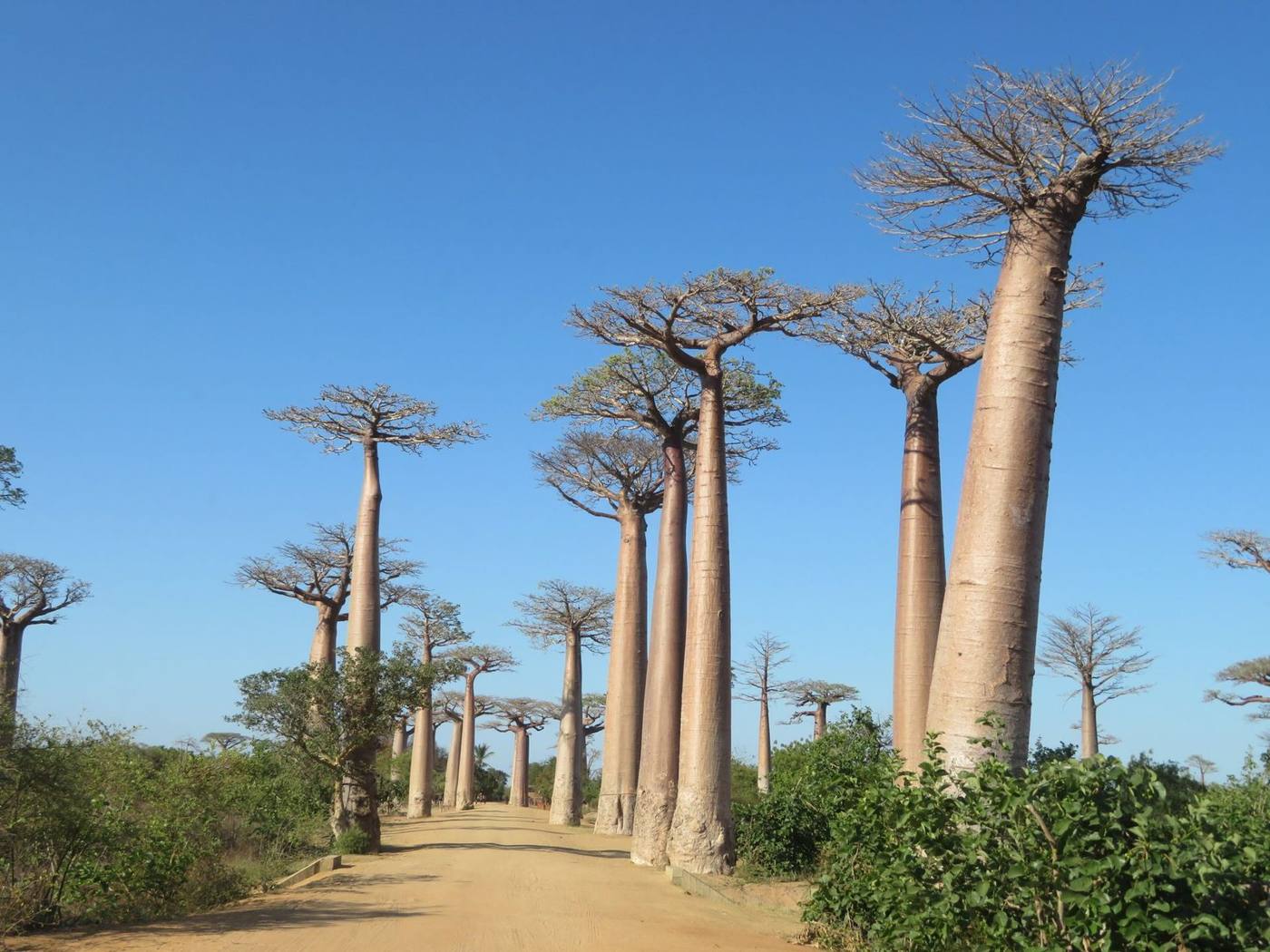
Route Nationale 7 to the sea
The great journey south: highlands, lemur forests, the Isalo canyons and the Ifaty coral reef.
- Antananarivo
- Andasibe
- Antsirabe
- Ranomafana
- Anja
- Isalo
- Ifaty
Day by day
- Day 1
Arrival in Antananarivo
This fifteen-day trip is the great classic of Madagascar: the Route Nationale 7, the road that runs south from the capital all the way to the sea. You will see the indri of Andasibe, the spa town of Antsirabe, the rainforest of Ranomafana, the ring-tailed lemurs of Anja, the canyons of Isalo and finally the coral reef and spiny forest of Ifaty, near Toliara. You travel by 4x4 with a driver.
Before you go: Italian citizens need a passport valid for at least six months on entry, with blank pages, a return ticket and a tourist visa, issued on arrival at the airport or online in advance, between 7 days and 6 months before, on the official e-visa website listed by Viaggiare Sicuri. Other nationalities should check their own rules. After violent protests in late September and early October 2025, a transitional government took office on 17 October 2025: avoid demonstrations and gatherings. There are armed robberies on main roads, especially at night: never travel by road after dark. The British government reports attacks by criminal gangs on vehicles travelling in convoy on the RN7 between Antananarivo and Toliara, asks for a high level of vigilance on this road and describes the situation between Ihosy, Toliara and Fort Dauphin as tense: travel only with a recognised tour operator and an experienced driver. Malaria is present: ask your doctor about antimalarials.
You land in Antananarivo, known to everyone as Tana, built on hills among the rice fields of the highlands.
In the evening, stay at your accommodation or use an official taxi.
Overnight in Antananarivo.
Practical tip: meet your driver today and go through the stages and times of each day together, so that you always arrive before dark.
- Day 2
Towards Andasibe
Today you leave the capital for the rainforest of the east, before heading south.
Early in the morning, set off with your driver along the national road heading east. In a few hours you come down from the highlands, past terraced rice fields, villages of red brick houses and fruit stalls, to hills covered in forest.
Andasibe is a small village on the edge of Andasibe-Mantadia National Park, one of the easiest rainforests to visit on the island. The air is humid and cool, and it often rains even in the dry season.
In the afternoon, rest and prepare your gear for the coming days: closed shoes, long trousers, a waterproof, a head torch and insect repellent.
At sunset, go on a night walk with a local guide in the community reserves near the park, where visits after dark are allowed. With a torch your guide finds chameleons asleep on the branches, some tiny, others as long as a forearm, colourful frogs, leaf-tailed geckos and mouse lemurs, the smallest lemurs, with eyes that shine in the dark.
Do not touch the animals and do not use the flash close up: it disturbs them and blinds them for a few minutes.
In the evening, try romazava, the Malagasy stew of zebu meat with green leaves, served with rice.
Overnight in Andasibe, for two nights.
Practical tip: use insect repellent at sunset and sleep under a mosquito net, because mosquitoes are most active in the evening.
- Day 3
The indri of Andasibe
Today you meet the indri, the largest living lemur.
Early in the morning, enter the park with a local guide, who is compulsory, as Madagascar National Parks requires. Pay for the entry and the guide: check prices and times. You walk along paths among huge trees, tree ferns, orchids and lianas.
Shortly after dawn you hear the indri's call, a long and powerful wail like the song of a whale, which families use to mark their territory and which can be heard for kilometres. Your guide follows the sound to a group used to the presence of people. Indri are black and white, with long legs and a face like a teddy bear, and they leap from one trunk to another.
The same forest is home to the diademed sifaka, with orange and grey fur, brown lemurs and many birds found only in Madagascar. Stay silent and keep the distance your guide tells you.
In the afternoon, if you have the energy, visit the Mantadia area with your guide, wilder, with steeper paths and waterfalls. Otherwise rest: from tomorrow the long days on the road south begin.
In the evening, go through tomorrow's plan with your driver. It is one of the longest stages of the trip, and you need to leave at dawn.
Overnight in Andasibe.
Practical tip: bring a light waterproof even if the sky is clear. In the rainforest, downpours arrive within minutes, and the paths quickly become muddy and slippery.
- Day 4
Antsirabe, spa town of the highlands
Today you cross the highlands from east to south, as far as Antsirabe.
Leave Andasibe at dawn and head back towards the capital with your driver. Past Tana, you finally join the Route Nationale 7, the great road south. It is a long day, with many hours of driving, slow lorries and villages to cross slowly: that is why you leave early and arrive before dark.
Along the road the landscape is that of the highlands: terraced rice fields, red hills, two-storey brick houses with wooden balconies, carts pulled by zebu and children carrying water. Stop for a break at a village market to see the fruit, vegetables and woven baskets.
In the afternoon you reach Antsirabe, at about 1,500 metres above sea level. It was founded in the nineteenth century by Norwegian missionaries, near the hot springs, and later became a health resort for French colonists. The climate is cool and the evenings are cold, especially in winter.
Antsirabe is famous for its pousse-pousse, the colourful hand-pulled rickshaws that fill the streets. Take a short ride in one and agree the price before you get in.
Overnight in Antsirabe.
Practical tip: bring a jacket or fleece for the highlands. After the heat of the forest, the temperature drops a lot in the evening in Antsirabe, and many rooms have no heating.
- Day 5
From Antsirabe to Ranomafana
Today you continue south on the RN7, as far as the forest of Ranomafana.
In the morning, visit a few craft workshops in Antsirabe. Here zebu horn is worked into spoons, combs and small carvings, and miniature bicycles and lorries are built from recycled materials. Then go through the market, where Malagasy stones, fruit and fabrics are sold.
Set off again with your driver and stop in Ambositra, the town of woodcarvers. Here you see woodwork inspired by the art of the Zafimaniry, a people of the nearby forests, whose woodcrafting knowledge is recognised by UNESCO as intangible cultural heritage. Buy only objects made from unprotected woods and ask where they come from.
After Ambositra the road climbs and falls among farmed hills, then leaves the RN7 and descends east, through bends and forest, to Ranomafana. The name means hot water: the village grew up around the hot springs, in a green valley with a river running between the rocks.
Arrive before dark: it is a day of many hours on the road, with stops.
In the evening, if you like, ask about the village thermal pool: check prices and times.
Overnight in Ranomafana, for two nights.
Practical tip: keep coins and small notes for tips, stops and small purchases along the road. Large notes are often impossible to change, especially in villages and at roadside stalls.
- Day 6
Ranomafana and the bamboo lemurs
Today you explore Ranomafana National Park, one of the richest forests in Madagascar.
The park is part of the Rainforests of the Atsinanana, a UNESCO World Heritage Site. It covers steep hills covered in forest, with streams, waterfalls and very high humidity.
Early in the morning, enter with a local guide: Madagascar National Parks states that visits are always guided. The official website also lists a communal tax of 5,000 ariary per person for foreign visitors, to be paid before the trails. For the entry and the guide, check prices and times.
The paths are steep, with earth steps and roots, often slippery. Your guide looks for the bamboo lemurs, which feed on bamboo shoots, including the golden bamboo lemur, discovered here only at the end of the twentieth century. You may also see Milne-Edwards' sifaka, dark with pale flanks, red-bellied lemurs, chameleons, frogs and incredible insects, such as the giraffe weevil, with its very long neck.
Walk slowly and quietly, and let your guide choose the route according to where the animals are that day.
In the afternoon, rest by the river, or take a shorter walk near the village.
Overnight in Ranomafana.
Practical tip: pull long socks over your trousers. In the humid forest there are leeches, harmless but annoying, especially after rain. Check your ankles at the end of each walk.
- Day 7
Fianarantsoa and the Anja reserve
Today you return to the RN7 and head down into the drier south, as far as the ring-tailed lemurs of Anja.
In the morning, leave Ranomafana and climb back to the main road. You pass through Fianarantsoa, the town of schools and churches, with its upper town, the old district on the hill, made of brick houses, stairways and bell towers. If there is time, take a short walk with your guide.
Then continue south among vineyards and rice fields, to Ambalavao. Here antemoro paper is made, a handmade paper produced from the bark of a tree and decorated with pressed dried flowers. Visit a workshop and watch the stages of the work.
Shortly afterwards you reach Anja, a community reserve run by the people of the nearby villages. It is one of the best places on the island to see ring-tailed lemurs, with their black and white ringed tails. They live among large granite boulders, trees and caves, and warm themselves in the morning sun with their arms open. Go in with a community guide: check prices and times. The entry fees help the villages protect the forest.
Canada reports armed attacks on the RN7 between Fianarantsoa and Toliara: from here on, travel only by day, with your driver, and make no unplanned stops.
Overnight in the Ambalavao area.
Practical tip: at Anja, wear shoes with a good sole. The paths between the granite rocks are uneven and a little slippery.
- Day 8
The Horombe plateau and Isalo
Today you cross the great emptiness of the south, as far as the Isalo massif.
Leave early with your driver. After Ambalavao the rice fields disappear and the landscape opens up: granite hills, then the Horombe plateau, an immense grassland almost without trees, where the yellow grass moves in the wind as far as the horizon. Here you meet herds of zebu with their herders.
You pass through Ihosy, the town of the Bara, the zebu-herding people of the south. For the Bara the zebu means wealth and prestige, and it is also an important animal in ceremonies.
The British government reports that cattle rustlers, the dahalo, have caused violent incidents in the south: tourists have not been targeted, but you should avoid staying in rural areas without security arrangements. Stay with your driver and follow the plan.
In the afternoon you reach Ranohira, the village at the gateway to Isalo National Park. On the horizon appear the sandstone walls of the massif, carved by wind and water into towers, canyons and arches.
At sunset, with your guide, go to the Window of Isalo, a rock arch from which you watch the sun set over the savannah. The light turns the rocks red and orange.
Overnight in the Isalo area.
Practical tip: in Ranohira, buy plenty of water for the coming days. There are no shops in the park and the heat is strong even in winter, especially on the open plateau.
- Day 9
Isalo: canyons and natural pools
Today you walk in the heart of the Isalo massif, among canyons and natural pools.
Early in the morning, go to the park office with your validated ticket: Madagascar National Parks asks you to always visit with a local guide. For the entry and the guide, check prices and times. The park is open all year round.
With your guide, climb onto the sandstone plateau, among rocks eroded by the wind into strange shapes, grasslands and small drought-resistant plants, such as the pachypodium, called elephant's foot because of its swollen trunk.
Then go down to the natural pool, a basin of clear water beneath a waterfall, surrounded by ferns and palms. Here you can swim: the water is cool and the contrast with the hot rock is perfect.
In the afternoon, with your guide, enter one of the canyons, narrow and shaded, where streams flow and a humid forest grows, very different from the savannah above. Ring-tailed lemurs, Verreaux's sifakas and brown lemurs live here, and you can see them on the branches above the path.
The walks can be long and hot. Choose a route suited to your fitness with your guide and carry at least two litres of water each.
Overnight in the Isalo area.
Practical tip: set off at dawn. Between midday and three o'clock the sun on the sandstone is very strong, and it is best to be already in the shade of a canyon or near a pool.
- Day 10
A night in the sandstone massif
Today you stay in the park and spend the night among the rocks of Isalo.
The park has facilities for bivouac and camping, and lets you combine several trails into a walk of one or more days. Organise the night with your tour operator and with the park guide, who always goes with you.
In the morning, set off on foot with your guide and, if planned, with porters carrying tents, water and food. You cross the plateau on paths of sand and stone, with views of rock towers, deep gorges and savannah to the horizon. Stop at the water points your guide shows you to cool off.
In the afternoon, reach the camp, in an area where the park allows camping. Pitch your tent, rest in the shade and watch the light change on the rock.
At sunset the sandstone walls turn red, then purple. After dinner, around the fire or the lamp, look at the sky: with no artificial lights for kilometres, there are countless stars and you can see the Milky Way.
Respect the park rules: do not light fires where they are not allowed, take all your rubbish away and do not leave food outside the tent.
Overnight in a tent in Isalo National Park.
Practical tip: bring a warm sleeping bag. In the dry season, between June and August, the night in the massif can be cold, even if it is hot during the day.
- Day 11
Ilakaka, Toliara and the Ifaty coast
Today you come down from the highlands to the sea, on the last stretch of the RN7.
At dawn, walk back from the camp with your guide and meet your driver in Ranohira. Leave early: the road to Toliara and then to Ifaty is long, and you must arrive before dark.
After Isalo you cross Ilakaka, a town that grew almost out of nothing at the end of the 1990s, after sapphires were discovered in the area. You see the signs of the gem traders and the wooden houses built in a hurry. Do not stop to buy stones by the road.
Further on, the road passes Zombitse-Vohibasia National Park, a dry forest left like an island in the savannah, famous among birdwatchers. If time allows, make a short visit with the compulsory guide: check prices and times.
Then the land becomes drier and drier, with baobabs, euphorbias and herders' villages, as far as Toliara, on the Mozambique Channel. Here the RN7 ends. Your driver continues north, along the coast, to the area of Ifaty and the village of Mangily.
The British government reports violent robberies on the beaches near Toliara, even in the daytime: do not walk alone on isolated beaches and get local advice.
Overnight in Ifaty, for four nights.
Practical tip: before you say goodbye to your driver, check that you have arranged the transfer to Toliara airport for the last day with your tour operator.
- Day 12
The spiny forest and the baobabs
Today you visit the spiny forest, one of the strangest environments on the planet.
Early in the morning, enter the Reniala reserve, near Mangily, with a local guide. Pay for the entry and the guide: check prices and times. Go early, because after ten o'clock the heat becomes strong and the animals hide.
The spiny forest exists only in the south and south-west of Madagascar. It grows with very little rain, on sand and limestone, and almost all of its plants exist nowhere else. You see the octopus trees, with long thorny branches rising towards the sky, euphorbias, succulents and above all baobabs: some are as fat as barrels, others have trunks swollen with the water they store for the dry season.
Your guide also shows you the rare birds of this forest, which live only here, the chameleons and the lizards warming themselves in the sun.
You also see radiated tortoises, with high shells patterned with yellow stars on a black background. They live only in southern Madagascar and are critically endangered, threatened by poaching and by the loss of the forest. Do not touch them and do not feed them.
In the afternoon, rest: after so many days on the road, you finally have the sea in front of you. Swim in the lagoon at high tide.
Overnight in Ifaty.
Practical tip: in the spiny forest, wear closed shoes and long trousers. There are thorns everywhere, even on the ground, and some plants have sap that irritates the skin.
- Day 13
The coral reef of Ifaty
Today you discover the reef, the coral barrier that protects this coast, one of the longest in the world.
If you dive, choose a centre with certified instructors, equipment in good condition, oxygen on board and an emergency plan. Dives take place on the outer side of the reef and in the channels that cross it, where you find coral walls, schools of fish, moray eels, rays and sometimes turtles.
If you are not a diver, go out in the morning by boat or pirogue with a guide to the snorkelling spots in the lagoon. With a calm sea and the right tide you see corals, clownfish in the anemones, butterflyfish and parrotfish. Swim slowly and touch nothing.
The reef in this area has suffered from intense fishing and warmer seas, but there are areas protected by the fishing communities, where marine life is coming back. Ask your guide to take you there, and do not buy shells, coral or turtle shell.
Between July and September, on boat trips, you may see humpback whales passing along the coast. Keep your distance and do not chase them.
In the afternoon, rest in the shade: the southern sun is very strong and the wind rises almost every day after lunch.
Overnight in Ifaty.
Practical tip: today is the last good day for diving. You should not fly within 24 hours of your last dive, and the day after tomorrow you take the plane. Plan your dives so that the last one ends this afternoon.
- Day 14
By pirogue with the Vezo fishermen
Today you spend your last day on the sea, with the people who know it best.
The Vezo are the fishermen of the south-west. They live from fishing and use the outrigger pirogue, carved from a single trunk, with a float on one side and a square sail. The pirogues go out at dawn and come back in the middle of the day with the catch.
In the morning, board a sailing pirogue with a fisherman and a guide. You sail slowly inside the lagoon, close to the reef. Sit where you are told, because the balance is delicate, and wear your life jacket.
Then visit the village of Mangily with your guide. You see fish drying in the sun, nets mended by hand and children playing among the boats. Greet an elder first and always ask permission before taking photos.
The south of Madagascar gets very little rain, and drought often hits the people who live inland. Fresh water is precious: use it carefully at your accommodation too.
In the afternoon, have a last swim in the lagoon, then pack your bags calmly.
At sunset, sit on the beach and watch the sails of the pirogues come back against the light. After two weeks of roads, forests and canyons, it is the right way to end the trip.
In the evening, eat the grilled catch of the day, with rice and coconut sauce.
Overnight in Ifaty.
Practical tip: confirm the time of tomorrow's flight from Toliara today. Domestic flights change often, even at the last minute.
- Day 15
Flight from Toliara
Today you leave the south and take the flight from Toliara.
In the morning, your driver takes you from Ifaty to Toliara airport. Leave in good time, because the road is slow and there may be checkpoints. Domestic flights are often delayed or cancelled: if you can, add a night in Antananarivo before your long-haul flight, and never book it on the same day.
In fifteen days you have travelled through Madagascar from north to south along its most famous road. You heard the indri sing in Andasibe, saw the pousse-pousse of Antsirabe and the workshops of Ambositra, looked for bamboo lemurs in the forest of Ranomafana and ring-tailed lemurs among the boulders of Anja. You crossed the Horombe grassland, walked in the canyons of Isalo and slept among its rocks, and finally reached the sea, among the baobabs of the spiny forest and the coral reef of Ifaty.
It is a demanding trip, with slow roads and simple accommodation, but every stage shows you a different environment.
When to go: the best period is from April to November, in the dry season. Between June and August the highlands are cool and the nights are cold, while the south stays warm. From July to September the humpback whales pass by. From December to March it rains a lot, some roads deteriorate and there is a risk of cyclones.
Practical tip: before you leave, check the Viaggiare Sicuri advice again, because the situation on the RN7 can change quickly.
Madagascar's great classic, for travellers who accept slow roads and simple lodging in exchange for unique landscapes. Each stage brings a different environment, from rainforest to the Isalo canyon. A driver with a 4x4 is needed: self-driving is not advisable.
Before you go
- Documents and visa
- Passport valid for at least six months on entry, with blank pages and a return ticket. You need a tourist visa: it is issued on arrival at the airport or online in advance, between 7 days and 6 months before, on the official e-visa website. It is valid for up to 60 days. Declare large sums of foreign currency on arrival.
- Health and vaccines
- Malaria is present, especially on the coasts: ask your doctor about antimalarials. Plague is endemic in some rural areas: use repellent against fleas too. Drink only bottled water. Outside Antananarivo care is limited and serious cases go to South Africa or Réunion: you need insurance covering medical costs and repatriation.
- Money and payments
- Malagasy ariary. Bring euros in cash to change at banks or authorised offices; cards work only in towns and large hotels.
- Power sockets
- Types C and E, 220 volts: you need an adapter for British plugs.
- Time zone
- UTC+3 all year.
- Safety
- After violent protests in late September and early October 2025, a transitional government took office on 17 October 2025; demonstrations can happen again and roads can close at short notice. Armed robberies on main roads, especially at night: never travel by road after dark. For western roads such as the RN35, the British government advises using a recognised operator. Official advice: GOV.UK.
Information checked in November 2026 for Italian and EU citizens. Rules change: always check before you travel.
Variations
Shorter version: 10 days, without Andasibe and without the night in a tent at Isalo, with one day less in Ifaty.
Longer version: after Ifaty, take the boat to Anakao, south of Toliara, and add three days by the sea and the islet of Nosy Ve.
Frequently asked questions
Can you drive the RN7 on your own?
It is not advisable. The British government reports attacks on vehicles on the RN7 and asks for a high level of vigilance: travel with a recognised tour operator, an experienced driver and never at night.
Do you need a guide in the Ranomafana and Isalo parks?
Yes. Madagascar National Parks states that visits are always made with a local guide. For entry fees and guides, check prices and times.
How long is the road from Antananarivo to Toliara?
It is many hundreds of kilometres, which on the RN7 take several days of driving. That is why the trip divides the route into stages and always plans to arrive before dark.
Indicative itinerary written by World Atlas. Before booking, check timetables, seasonal openings, documents and safety.
 7 daysModerate
Andasibe and the Avenue of the Baobabs
Indri lemurs in the rainforest and the island's most famous sunset among the baobabs of Morondava.
 10 daysEasy
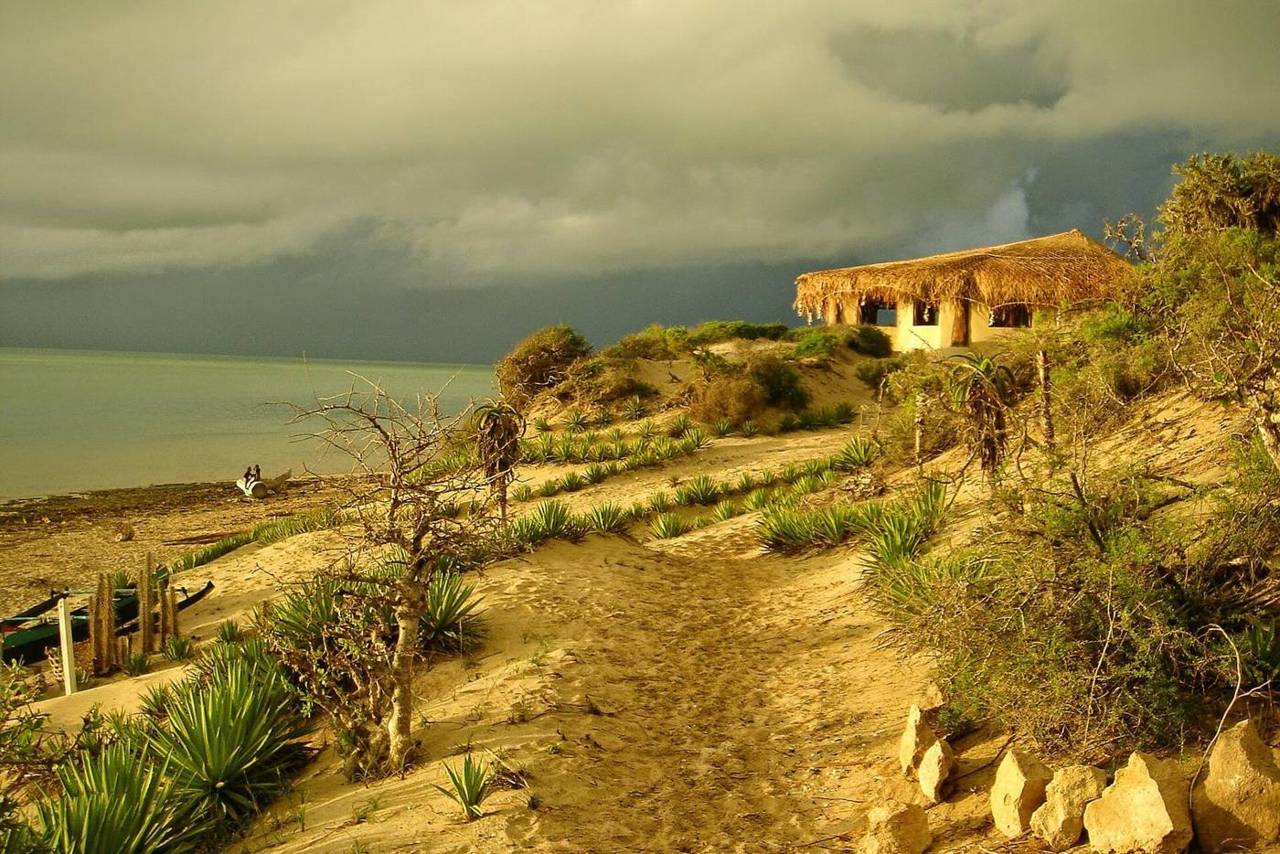
Toliara and the south-west reef: Anakao and Ifaty
One of the world's longest coral reefs, Vezo fishing villages, Ifaty's spiny baobab forest and the island of Nosy Ve with its red-tailed tropicbirds.
 10 daysEasy
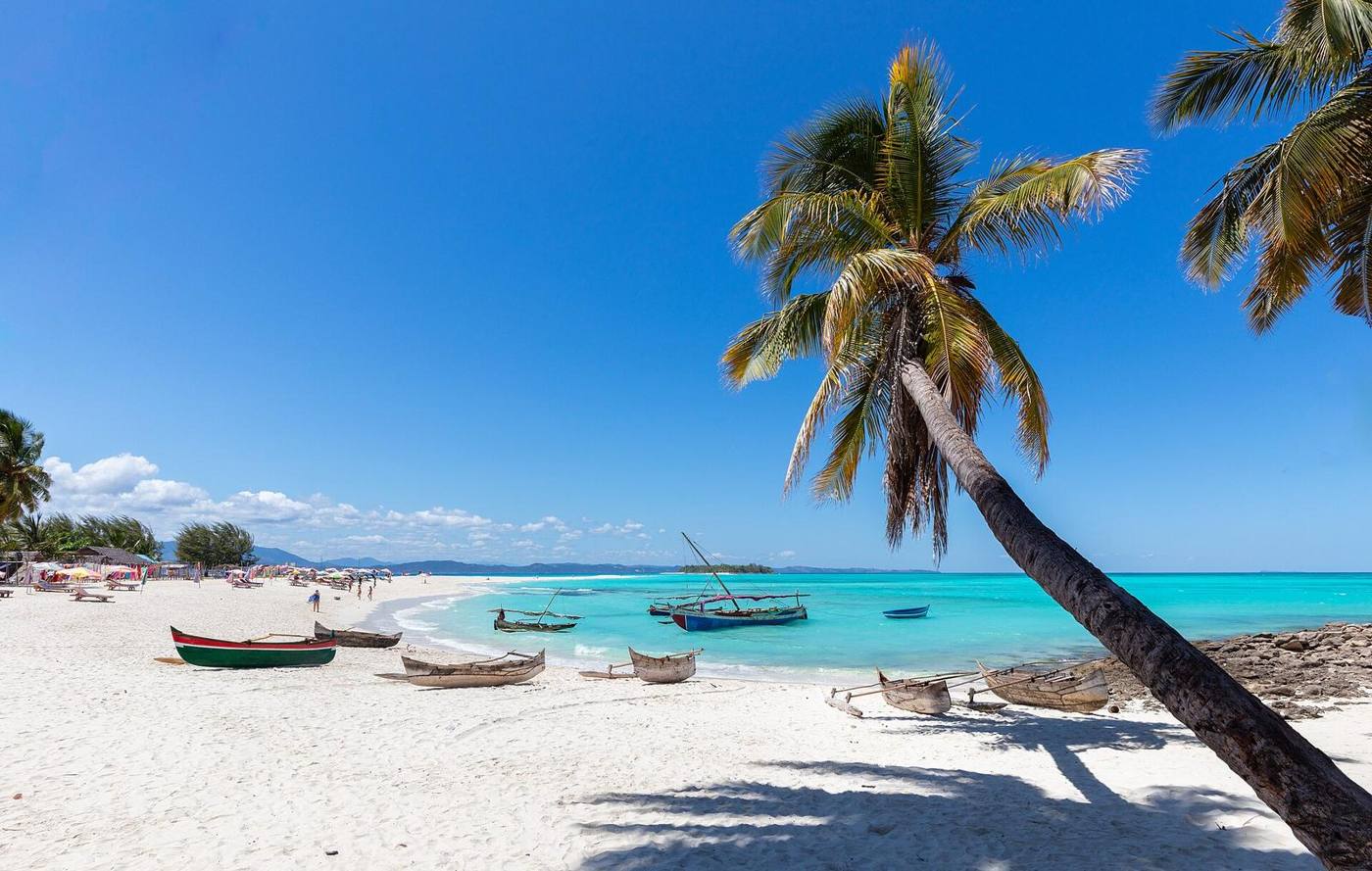
Nosy Be and the Mitsio islands by boat
The island of perfumes and its archipelago: the lemurs of Nosy Komba, turtles at Nosy Tanikely and a multi-day cruise to the Mitsio islands.