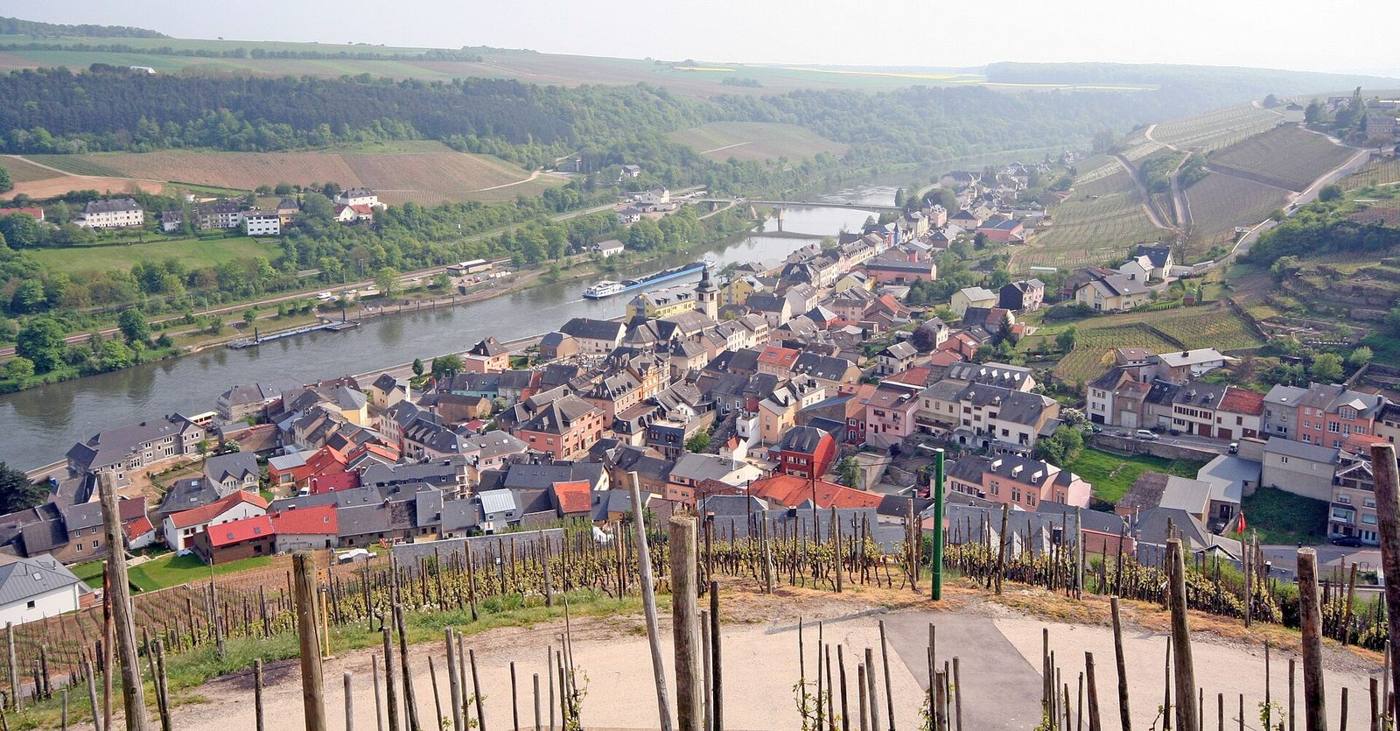
The wine Moselle
Luxembourg's Moselle valley from Schengen to Grevenmacher: crémant and Riesling, the Palmberg vineyard trail and a river cruise.
- Schengen
- Remich
- Wormeldange
- Ahn
- Grevenmacher
Day by day
- Day 1
Schengen, the European museum and the Remich riverside
This short trip follows the Luxembourg Moselle, the river that forms the border with Germany, among hills covered with vines, winegrowers' villages and cellars. You drink crémant, the sparkling wine made by the traditional method, and white wines such as Riesling, Auxerrois and Pinot Gris. It is half an hour from the capital.
Before you go: Italian citizens enter Luxembourg with an electronic identity card or a passport: the country is in the European Union and the Schengen area. Italian paper identity cards are no longer valid for travel abroad from 3 August 2026. Other nationalities should check their own rules. Luxembourg is very safe. Since 1 March 2020 buses, trams and second class trains need no ticket anywhere in the country; for stretches beyond the border you need a ticket.
Start in Schengen, the village at the far south, where Luxembourg, France and Germany meet. On 14 June 1985, on a boat moored on the Moselle, five countries signed the agreement that led to a Europe without border checks. The European Museum Schengen, on the riverside, tells this story with documents, photos and objects. Check prices and times. Outside are the steles of the monument to the agreement.
Then head north, through the vineyards, to Remich, known as the pearl of the Moselle. Walk along the long esplanade by the river, with its trees and benches, and look at the German bank opposite.
Sleep in Remich.
Practical tip: Remich and Schengen have no railway station; you get there by bus from the capital, and buses also link the villages along the Moselle.
- Day 2
The crémant cellars and a cruise on the Moselle
Today is wine day. The Luxembourg Moselle produces mainly white wines and crémant de Luxembourg, a sparkling wine with a protected designation of origin, made with a second fermentation in the bottle, like champagne, but at much lower prices.
In the morning, visit one of the large sparkling wine cellars in Remich or Grevenmacher. Some have galleries dug into the rock, where the bottles rest in the dark and cool for months. Guided tours almost always end with a tasting. Check prices and times and book at weekends.
In the afternoon, board one of the boats that sail up and down the river in the warmer months. From the boat you see the terraced hills, the villages with their bell towers and the vineyards running down to the water, on both the Luxembourg and the German bank. Check prices and times, which change from one season to the next.
Get off at Grevenmacher, a small town with old houses and a church on the market square, and walk along the riverside.
In the evening, have a Moselle dish: friture de la Moselle, small fried river fish, or Rieslingspaschtéit, a meat pie with Riesling.
Sleep in Grevenmacher or go back to Remich.
Practical tip: if you taste a lot of wine, leave the car; Moselle buses link all the main cellars, and in Luxembourg drink-driving checks are strict.
- Day 3
The Palmberg trail at Ahn and the return
On the last morning, go to Ahn, a small winegrowers' village between Grevenmacher and Wormeldange, with stone houses packed along the river.
From here the Palmberg trail climbs the hill above the village. The Palmberg is a nature reserve of dry grassland on limestone, rare in Luxembourg, where wild orchids flower in May and June. The trail runs among vineyards, sun-warmed rocks and copses, with views over the Moselle valley and the German villages opposite. Do not pick the flowers and stay on the path.
Going down towards Wormeldange, look up at the Koeppchen chapel, on a knoll in the middle of the vineyards, one of the finest viewpoints in the valley.
In the afternoon, take the bus back towards the capital.
In these three days you have seen Schengen and its European museum, the Remich riverside, the crémant cellars, the Moselle by boat, Grevenmacher and the orchid meadows of the Palmberg.
When to go: from May to October. In May and June the orchids flower, in summer the boats sail the river, and in September and October comes the grape harvest, with a wine festival in every village.
Practical tip: by bike, the cycle path along the Moselle is almost flat; if you get tired, take the train or bus back, because in Luxembourg bikes travel with no ticket, if there is room.
A short, relaxed escape half an hour from the capital. Luxembourg crémant is excellent and inexpensive compared with champagne. In September and October every village holds a wine festival. By bike the riverside path is flat, and no-cost trains and buses help with the return.
Before you go
- Documents and visa
- EU citizens need a valid identity card or passport: Luxembourg is in the EU and the Schengen area. Always carry your document. Other nationalities should check the Schengen rules.
- Health and vaccines
- No vaccines required. EU citizens should bring their EHIC. Emergencies: 112; police 113.
- Money and payments
- Euro. Cards are accepted almost everywhere, even for small amounts. The country is expensive, above all for accommodation and eating out.
- Power sockets
- Types C and F, 230 volts: you need an adapter for British plugs.
- Time zone
- Central European Time (UTC+1, summer UTC+2), one hour ahead of the UK.
- Safety
- A very safe country: the United States has rated it level 1 since 8 April 2026. Watch out for pickpockets at the main railway station, on buses and at tourist sites. In the north and east, unexploded ordnance from both world wars remains in woods and fields: stay on marked paths and do not touch metal objects. Since 1 March 2020 buses, trams and second class trains need no ticket anywhere in the country; first class and journeys beyond the border must be paid for. Official advice: GOV.UK.
Information checked in November 2026 for Italian and EU citizens. Rules change: always check before you travel.
Variations
In 1 day: Schengen, Remich and a cellar visit, returning by bus.
In 5 days: add a bike ride on both banks of the river, towards Saarburg and Trier in Germany.
Frequently asked questions
Do you need a car for the Moselle?
No. Buses link the capital with Remich, Grevenmacher and the riverside villages, with no ticket needed. On the German bank there is also a railway.
What is crémant de Luxembourg?
It is the sparkling wine of the Luxembourg Moselle, with a designation of origin, made with a second fermentation in the bottle. It costs much less than champagne.
When are the wine festivals?
Mainly in September and October, during and after the grape harvest. Almost every Moselle village has its own festival.
Indicative itinerary written by World Atlas. Before booking, check timetables, seasonal openings, documents and safety.
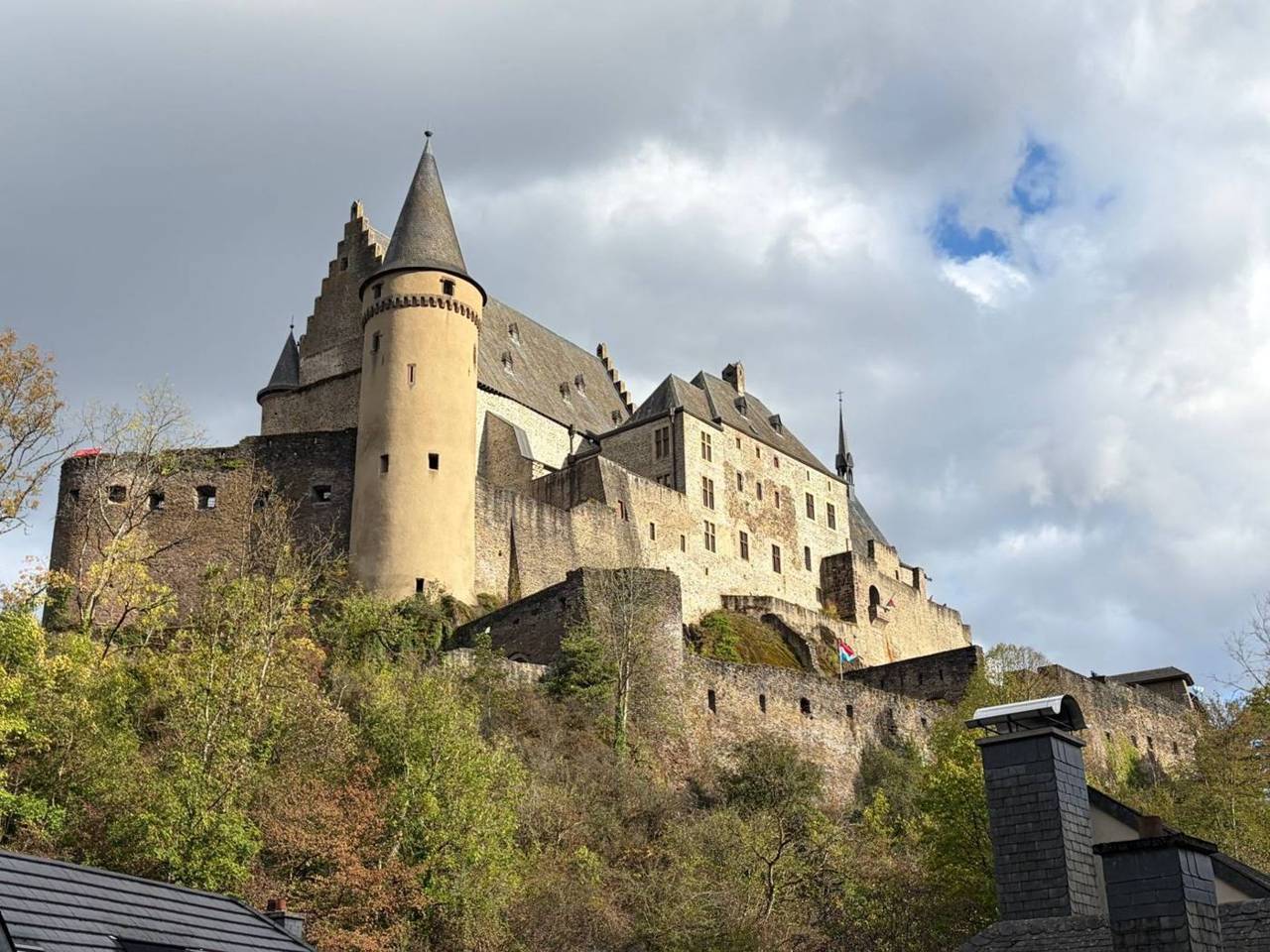 4 daysEasy
The castles of the Éislek
The north of the Luxembourg Ardennes: Vianden and its chairlift, Bourscheid above the Sûre, Clervaux with The Family of Man exhibition and Esch-sur-Sûre by its lake.
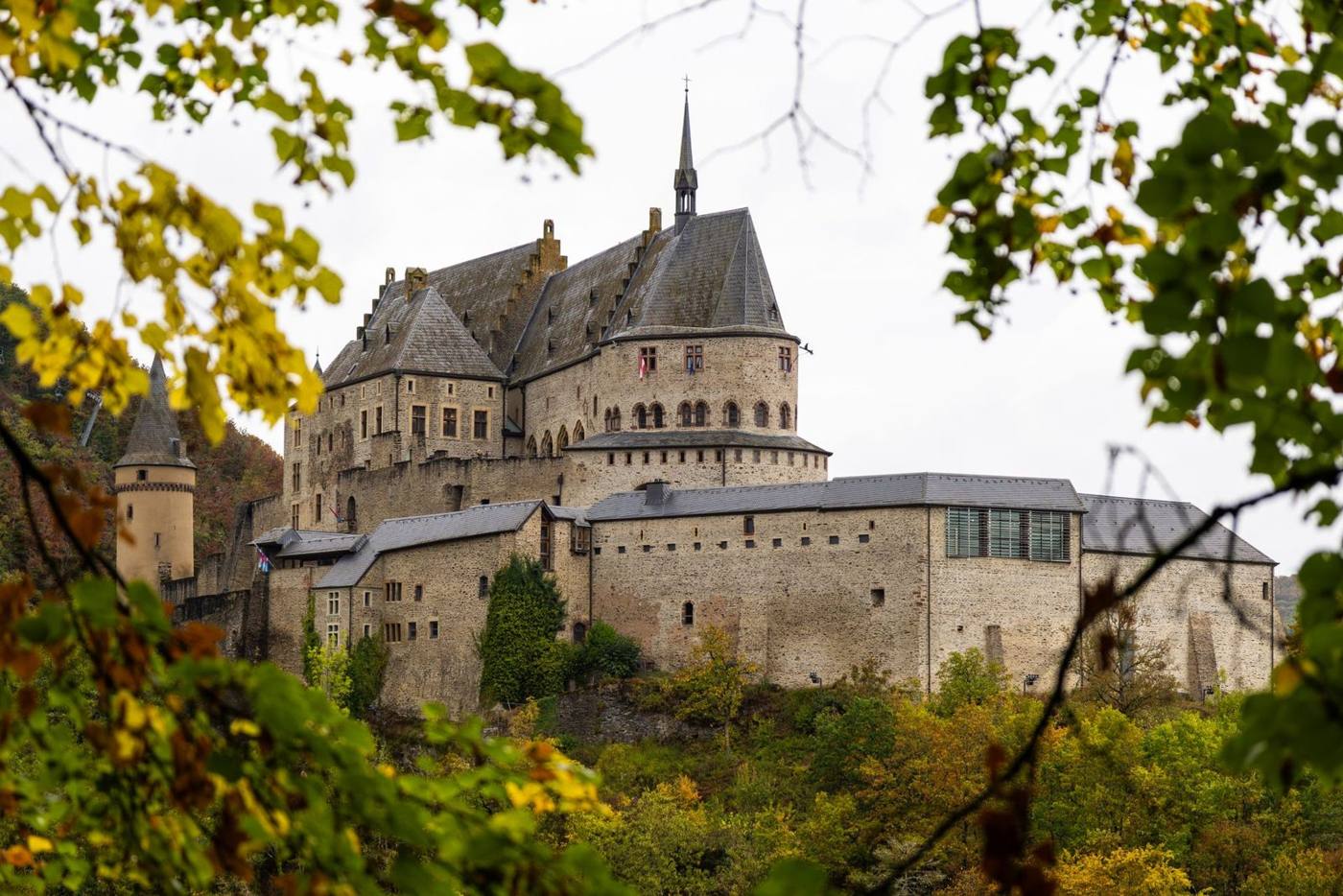 4 daysModerate
The Escapardenne Trail
The cross-border trail between Luxembourg and Belgium, from the Eislek Trail between Ettelbruck and Kautenbach to the Lee Trail on to La Roche-en-Ardenne.
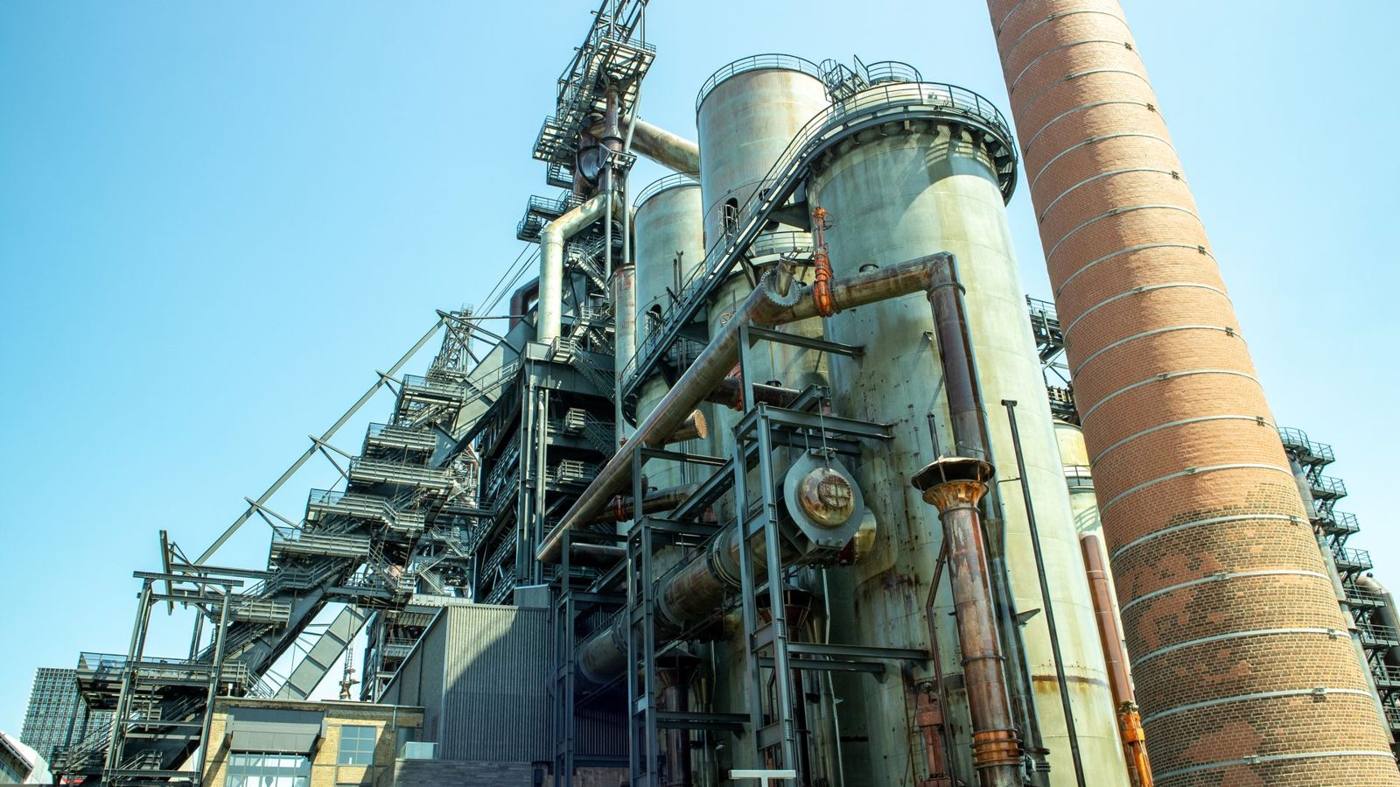 2 daysEasy
The Minett, the red earth
The industrial south: the Belval blast furnaces, the Rumelange mine, the Fond-de-Gras steam train and former open-cast mines turned into a UNESCO biosphere reserve.