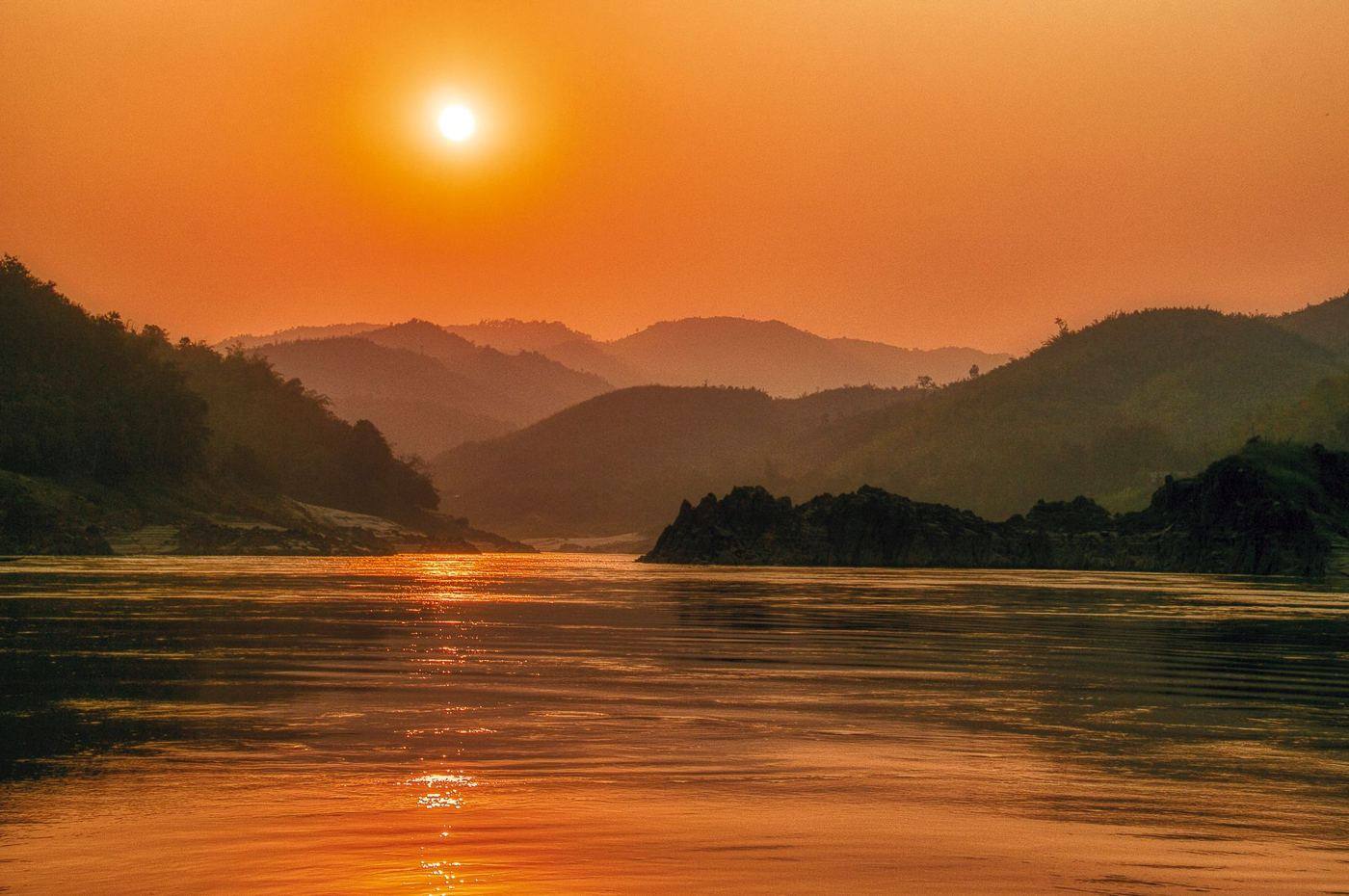
The Mekong slow boat
Two days by slow boat from the Thai border at Huay Xai to Luang Prabang, with a night in Pakbeng and the Pak Ou caves on arrival.
- Huay Xai
- Pakbeng
- Pak Ou
- Luang Prabang
Day by day
- Day 1
From Huay Xai to Pakbeng on the Mekong
This three day trip is the slowest way to enter Laos from northern Thailand: two days by boat on the Mekong from Huay Xai to Luang Prabang, with a night in the village of Pakbeng and a visit to the Pak Ou caves.
Before you go: for Laos Italian citizens need a passport valid for at least six months from entry, with two blank pages, and a tourist visa. The eVisa, to be requested only on the official website laoevisa.gov.la at least five days ahead, is also valid at Friendship Bridge IV between Chiang Khong and Huay Xai; otherwise there is the visa on arrival. Also fill in the LDIF digital immigration form within the three days before entry. Other nationalities should check their own rules.
Safety: the British government points out that the Mekong can be dangerous because of changing water levels and hidden obstacles. Do not board overcrowded boats and ask where the lifejackets are.
Cross the bridge by shuttle bus, complete the formalities and head to the Huay Xai slow boat pier, where tickets are sold. Check prices and times the day before. The public boat is long and narrow, with simple seats, and leaves in the morning.
The journey takes almost all day. You pass forested hills, sand beaches, buffalo and villages where the boat stops to pick up families with sacks of rice. You reach Pakbeng in the late afternoon: a village along a single uphill street, with wooden houses looking over the river. Sleep there.
Practical tip: bring a cushion, water, fruit and something to eat, and board early to choose a seat away from the engine.
- Day 2
From Pakbeng to Luang Prabang
Early start in Pakbeng. In the morning mist often covers the river and the village comes alive with its market, where you can buy sticky rice, fritters and Lao coffee for the journey. Then go back to the pier: the boat leaves again in the morning and another long day on the water lies ahead.
This second stretch is the most beautiful. The Mekong narrows between dark rocks and higher mountains, the current gets faster and the boatman steers skilfully between the stone banks. You will see fishermen with nets, children swimming and small vegetable gardens planted on the banks when the water drops. On board people chat, read and watch the scenery: it is the slowness itself that makes the journey special.
In the late afternoon you reach the Luang Prabang slow boat pier, which lies outside the centre. Take a shared tuk-tuk to the old town and look for a room on the peninsula between the Mekong and the Nam Khan, where everything is within walking distance.
In the evening stroll through the night market, with textiles, mulberry paper and lanterns, and eat at a street food stall: try Luang Prabang khao soi, a noodle soup with pork and tomato paste, and the local sausage.
Practical tip: keep a warm layer handy on the boat too, because between December and February the first hours on the river are cool and damp.
- Day 3
The Pak Ou caves and Luang Prabang
Today you go back on the river, but only briefly. In the morning take a boat from the Luang Prabang riverfront and travel up the Mekong to the Pak Ou caves, where the Nam Ou flows into the great river. The trip takes a couple of hours on the way out, less on the way back.
There are two caves, cut into the limestone cliff. The lower one is visible from the boat and is full of wooden and bronze Buddha statues left by worshippers over the centuries. The upper one is reached by a flight of steps and is dark: bring a torch. Check prices and times. Many boats also stop at a village where lao-lao, the rice spirit, is distilled: taste it only from sealed bottles.
In the afternoon, back in town, visit Wat Xieng Thong, the most famous temple in Luang Prabang, with low roofs that sweep almost to the ground and coloured glass mosaics. Then climb Phou Si for sunset over the Mekong.
In these three days you have crossed the border at Huay Xai, sailed two days on the Mekong with a night in Pakbeng, and seen the Pak Ou caves and the temples of Luang Prabang.
When to go: the best period is from November to March, with dry skies and a calm river. From March the smoke from farm fires blurs the landscape, and in the rainy season the river is high and fast.
Practical tip: if you want more comfort, private boats with fewer passengers and better seats run on the same route; book them a few days ahead.
A slow, beautiful way into Laos from northern Thailand. Public boats are basic and crowded; more comfortable private boats exist. Bring a cushion.
Before you go
- Documents and visa
- Passport valid for at least six months from entry, with at least two blank pages, and a tourist visa: the eVisa, to be requested only on the official website laoevisa.gov.la (accepted at the main airports and at Friendship Bridges I and IV), or a visa on arrival at the main entry points. You must also fill in the LDIF digital immigration form within the three days before arrival and departure.
- Health and vaccines
- Malaria is present in rural areas and dengue cases are regular: use repellent. Medical facilities are poor even in the capital, so you need insurance covering medical costs and repatriation. Drink only bottled water. Emergencies: ambulance 1195, police 1191.
- Money and payments
- Lao kip. Tourist businesses often accept US dollars and Thai baht; cards work in towns, but carry cash in the countryside.
- Power sockets
- Types A, B and C, 230 volts: you need an adapter for British plugs.
- Time zone
- UTC+7 all year.
- Safety
- The British government advises against all travel to Xaisomboun province. Unexploded ordnance remains across the country: walk only on marked paths and never pick up metal objects. There have been fatal methanol poisonings from drinks served in tourist areas: avoid unsealed spirits. Drug penalties are extremely severe. Official advice: GOV.UK.
Information checked in November 2026 for Italian and EU citizens. Rules change: always check before you travel.
Variations
In two days: just the boat from Huay Xai to Luang Prabang, with the night in Pakbeng.
In six days: add three days in Luang Prabang with the Kuang Si waterfalls and the monks' dawn procession.
Frequently asked questions
How long does the slow boat take?
Two full days of travel, with a night in Pakbeng. Times change with the season and the water level: check them at the Huay Xai pier the day before.
Is the eVisa valid at Huay Xai?
Yes, the eVisa requested on the official website laoevisa.gov.la is accepted at Friendship Bridge IV between Chiang Khong and Huay Xai. Otherwise there is the visa on arrival.
Is the public boat safe?
Usually yes, but the river has currents and hidden obstacles. Do not board overcrowded boats and check that there are lifejackets on board.
Indicative itinerary written by World Atlas. Before booking, check timetables, seasonal openings, documents and safety.
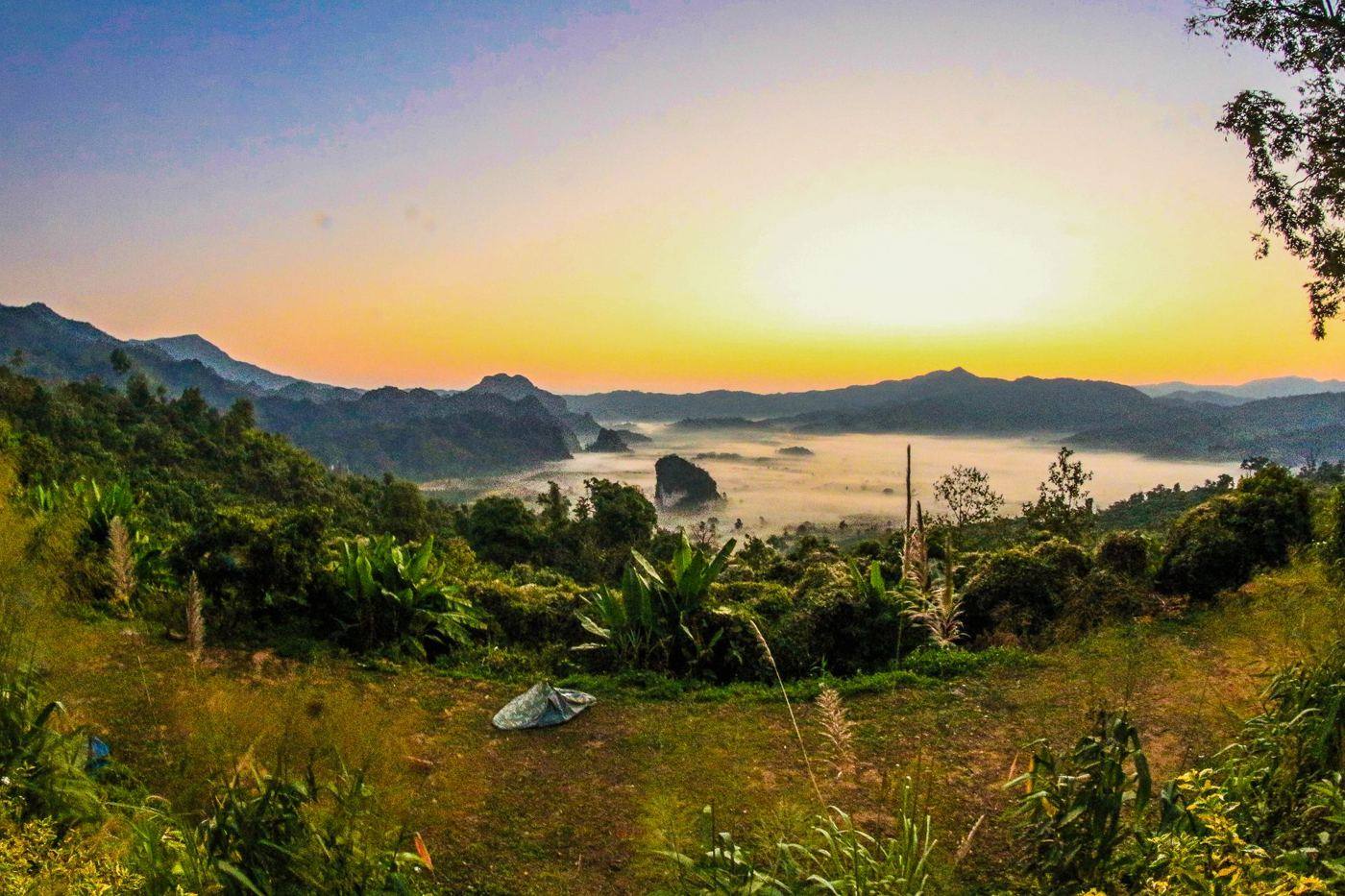 4 daysModerate
The Thakhek loop
A loop by motorbike or car through the central karst mountains, with Kong Lor cave, crossed by the river for seven kilometres by boat.
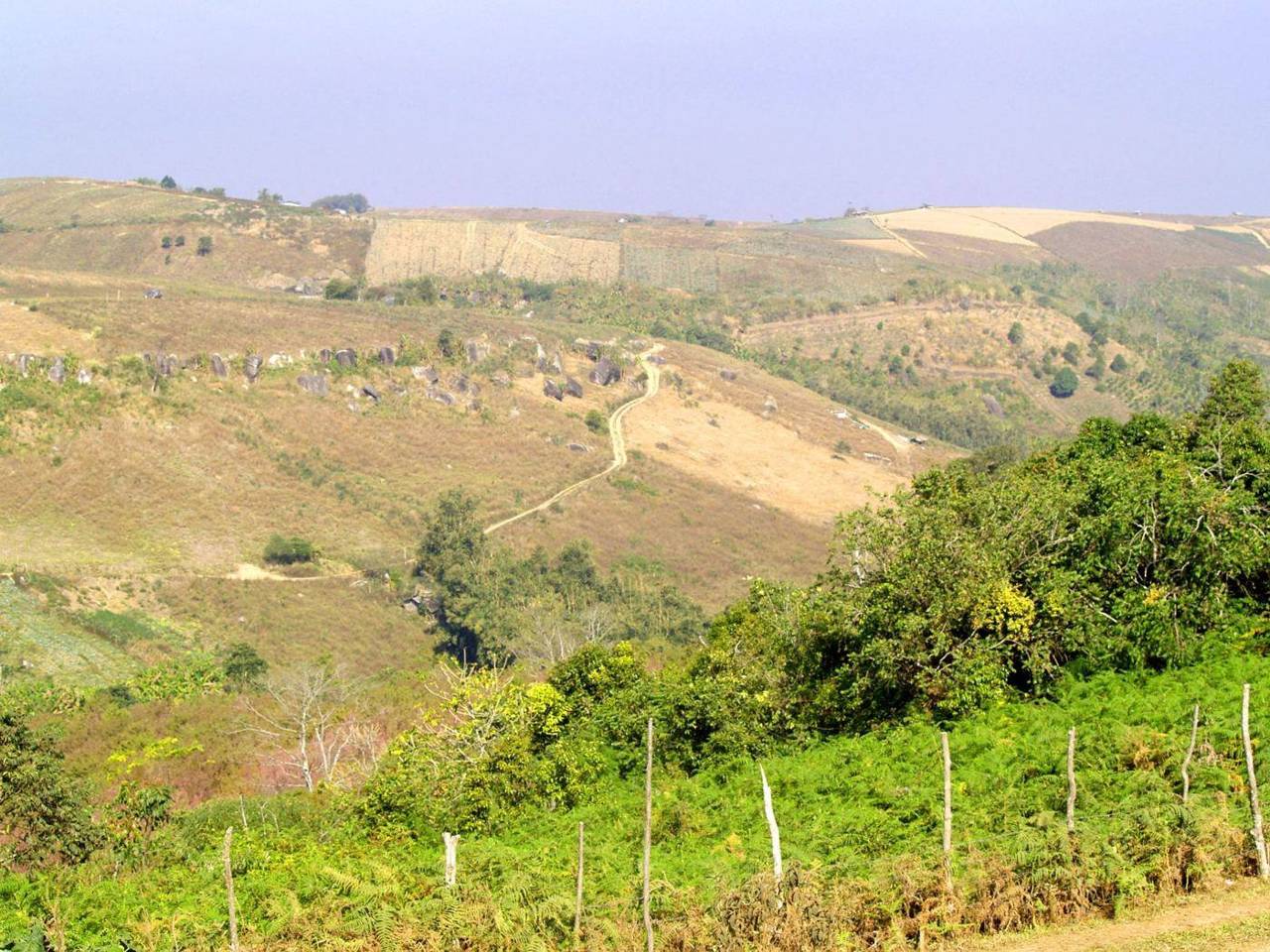 3 daysEasy
The Plain of Jars
Hundreds of prehistoric stone jars around Phonsavan, a UNESCO site, and the story of the secret bombing, told at the MAG information centre.
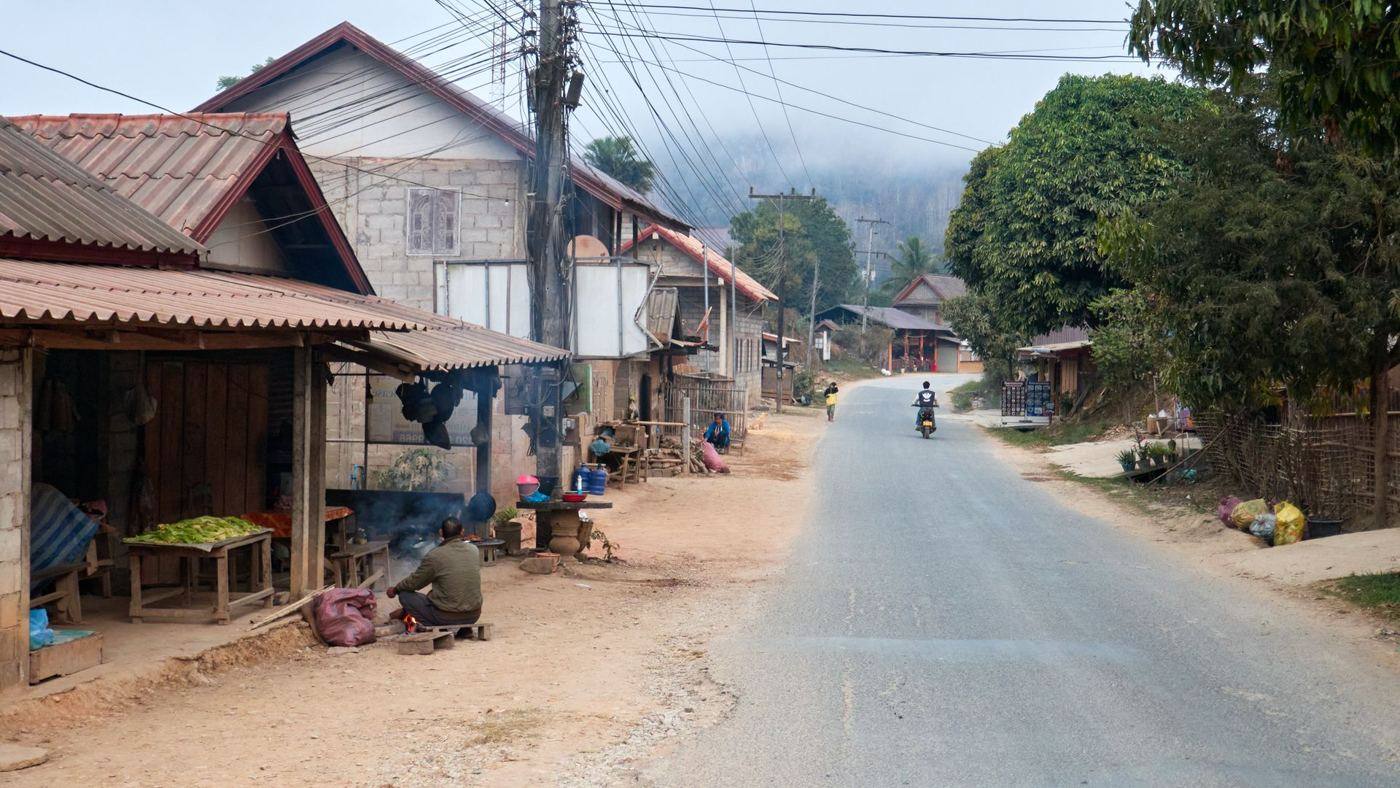 3 daysModerate
Luang Namtha and Nam Ha forest
Community trekking in the Nam Ha protected area, with a night in an Akha or Khmu village and the Luang Namtha night market, near China.