Turkestan and the Silk Road
Shymkent, the UNESCO mausoleum of Khoja Ahmed Yasawi in Turkestan, the abandoned city of Sauran and the site of Otrar.
- Shymkent
- Sayram
- Otrar
- Turkestan
- Sauran
Day by day
- Day 1
Shymkent and ancient Sayram
This trip takes you to southern Kazakhstan, along the ancient Silk Road: Shymkent, the old town of Sayram, the Arystan Bab mausoleum and the ruins of Otrar, the great mausoleum of Khoja Ahmed Yasawi in Turkestan, a UNESCO World Heritage Site, and the walls of Sauran on the steppe. This is the Islamic, caravan Kazakhstan, little known to visitors.
Before you go: Italian citizens enter Kazakhstan without a visa for up to 30 days per visit, with a passport valid for at least six months from arrival; the electronic identity card is not enough. For stays of up to 30 days, Italians do not need to register with immigration. From 1 July 2027 you will need the QazETA electronic travel authorisation, applied for online at least 72 hours ahead. Other nationalities should check their own rules. The country is generally stable; at pilgrimage sites wear modest clothes.
You fly into Shymkent, the country's third city, lively and hot, close to the border with Uzbekistan.
In the afternoon take a taxi to Sayram, a short distance from the city. Sayram is one of the oldest towns in Kazakhstan, a caravan stop as early as the Middle Ages. Walk among the low houses and visit the mausoleums of Ibrahim Ata and Karashash Ana, whom tradition names as the father and mother of Yasawi. Then look at the old brick minaret.
In the evening return to Shymkent and walk in Independence Park or the central market, among fruit, spices and round bread baked in a clay oven.
Sleep in Shymkent.
Practical tip: Sayram is a conservative town, with a large Uzbek community. Cover your shoulders and legs, always ask before photographing people and take off your shoes in mosques.
- Day 2
The Arystan Bab mausoleum and the ruins of Otrar
Today you follow the Silk Road north-west, along the valley of the Syr Darya River.
In the morning drive from Shymkent towards Otrar. The road crosses fields of cotton and melons, and then ever drier steppe.
Around midday you reach the mausoleum of Arystan Bab, Yasawi's spiritual teacher. According to tradition, pilgrims should visit his tomb first and then Yasawi's in Turkestan. The present building, of pale brick with two domes and two towers, has been rebuilt several times over the ancient graves. Inside, pilgrims pray in silence: go in wearing modest clothes, and women with their hair covered.
In the afternoon visit the ruins of Otrar, a few kilometres away, a hill of earth and mud brick on the steppe. Otrar was one of the great caravan cities of Central Asia. In the early thirteenth century it was besieged and destroyed by the army of Genghis Khan, and later Tamerlane died here, in 1405, as he set out to conquer China. Walk among the walls, the streets and the foundations of the houses dug up by archaeologists. If it is open, visit the Otrar museum, useful for understanding the ruins. Check prices and times.
In the late afternoon continue to Turkestan.
Sleep in Turkestan for three nights.
Practical tip: there is no shade on the ruins and summer is very hot. Visit Otrar in the late afternoon, with a hat and water, and walk only on the paths so as not to damage the excavations.
- Day 3
Turkestan: the mausoleum of Khoja Ahmed Yasawi
Today you visit the most important monument in Kazakhstan.
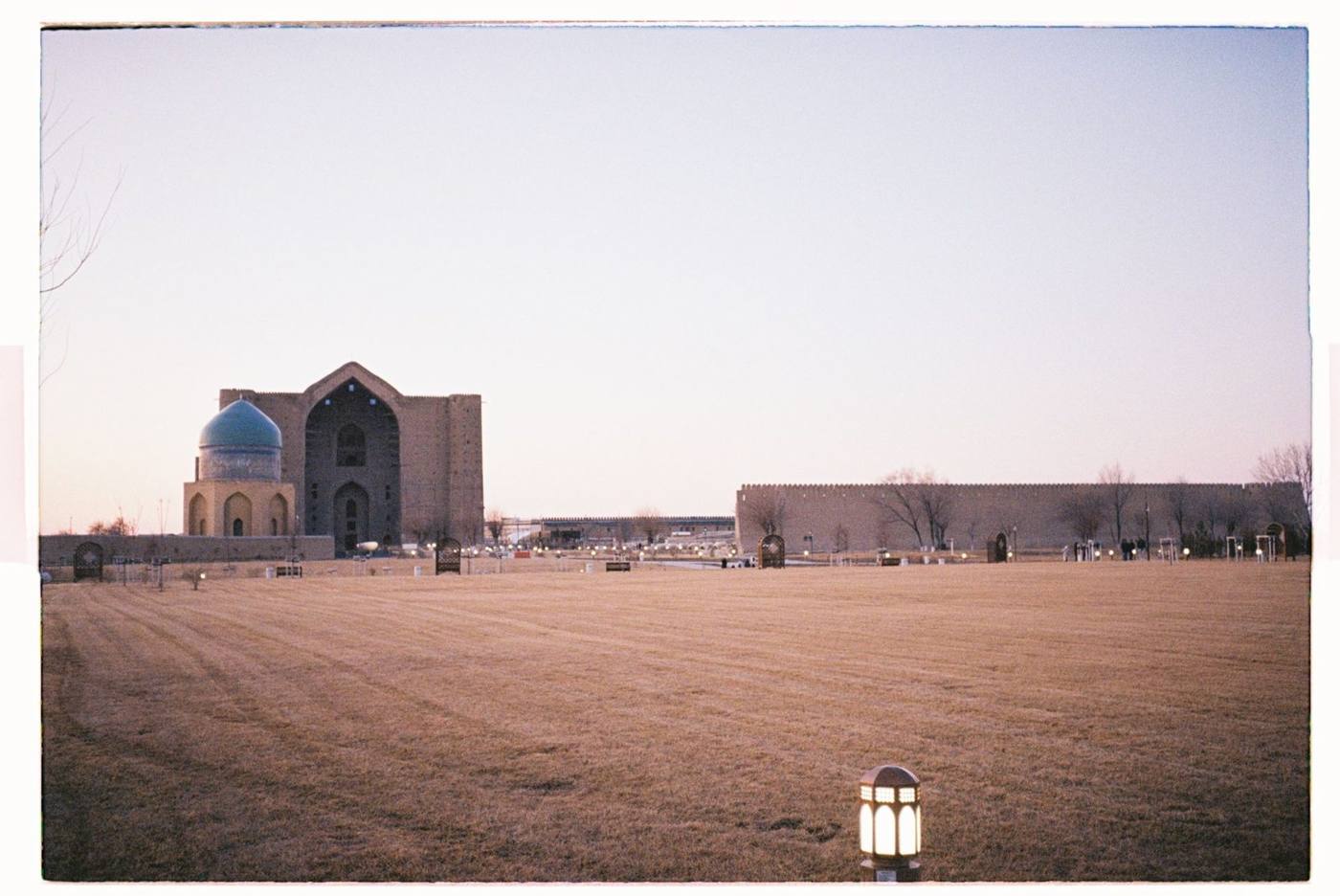
Early in the morning enter the complex of the mausoleum of Khoja Ahmed Yasawi, the twelfth-century Sufi master and poet who spread Islam among the Turkic peoples of the steppe. The present mausoleum was built on Tamerlane's orders from 1389, by Persian craftsmen, and was left unfinished after his death in 1405. It is a UNESCO World Heritage Site.
Look at the great brick facade, almost forty metres high, still without its cladding, and then the sides and back, covered with blue, green and white tiles with inscriptions in Arabic script. The main dome is the largest in Central Asia. Inside, in the central hall, stands an enormous bronze cauldron for holy water, and around it are the prayer rooms, the library and Yasawi's tomb.
In the afternoon visit the small mausoleum of Rabiga Sultan Begim, next door, and the underground mosque of Khilvet, where according to tradition Yasawi withdrew to pray in his last years.
At sunset look at the mausoleum from the esplanade in front: the warm light brings out the domes and the brickwork.
In the evening walk in the new centre of Turkestan, with its fountains, avenues and lit streets.
Sleep in Turkestan.
Practical tip: the mausoleum is a busy pilgrimage site, especially on Fridays and holidays. Go early, wear modest clothes and check prices and times before you go in.
- Day 4
The walls of Sauran on the steppe
Today you see an abandoned medieval city, surrounded by the silence of the steppe.
In the morning take a taxi or a car with a driver north-west, along the road to Kyzylorda. Sauran is about 48 kilometres from Turkestan. From the road it looks like a long, low hill, but as you get closer you see the walls of sun-baked earth, with the remains of bastions and gates.
Sauran was an important city between the thirteenth and eighteenth centuries and in the fourteenth century it was the capital of the White Horde, one of the kingdoms born from the Mongol empire. Sixteenth-century writers described it as a pleasant city, with two tall minarets and a sophisticated system for bringing in water. Walk along the walls, go in through the main gate and look down on the great empty space where the houses, streets and square once stood.
Outside the walls you will see traces of the karez, the underground channels that carried water from the mountains to the city.
In the afternoon return to Turkestan and rest during the hottest hours, as the locals do.
Towards evening go back to the Yasawi complex for a second, quieter visit, or walk through the bazaar, with fabrics, sweets and dried fruit.
Sleep in Turkestan.
Practical tip: there are no facilities or shade at Sauran. Bring plenty of water, a hat and closed shoes, and ask your driver to wait for you, because no taxis pass by.
- Day 5
Train to Almaty or flight from Turkestan
Today you leave the Silk Road.
In the morning, if you have time, take a last walk around the Yasawi mausoleum, when pilgrims arrive for prayer and the morning light shines on the blue tiles.
Then choose how to leave. From Turkestan there are flights to Almaty and other cities, as well as some international flights. Alternatively take the train to Almaty: the journey lasts many hours and is often overnight, in a sleeper carriage, across the steppe and the mountains of the south. The train is an experience in itself: passengers share tea, bread and fruit.
In these five days you have seen Silk Road Kazakhstan: Shymkent and old Sayram, the Arystan Bab mausoleum and the ruins of Otrar, where Tamerlane died, the great Yasawi mausoleum in Turkestan and the walls of Sauran on the steppe.
When to go: the best months are April and May, with the green steppe, and September and October, with mild weather and markets full of fruit. In summer southern Kazakhstan is extremely hot, and in winter it can be cold and rainy.
Before you leave, buy something to take home: dried fruit and nuts from the south, an embroidered textile, a ceramic bowl or a small rug.
Practical tip: Turkestan is a few hours from Tashkent. If you want to continue into Uzbekistan, check the entry rules and the opening times of the border crossings first.
Little-known Islamic, caravan-route Kazakhstan. The Yasawi mausoleum is a pilgrimage site: dress modestly. It pairs well with Uzbekistan, a few hours from Tashkent.
Before you go
- Documents and visa
- Passport valid for at least six months from the date of entry; you can enter without a visa for up to 30 days per visit, with a maximum of 90 days in any 180 days. Your hotel or host must register your arrival within three working days. From 1 July 2027 you will need the QazETA electronic travel authorisation, applied for online through the official app or portal at least 72 hours before arrival.
- Health and vaccines
- No compulsory vaccinations for travellers from Europe. In the mountains and forests, especially around Almaty and in the east, ticks can carry encephalitis: ask your doctor about the vaccine. Take insurance covering medical costs and repatriation. Emergencies: 112; police 102, ambulance 103, fire 101.
- Money and payments
- Kazakh tenge. Cards work well in cities; in rural areas and deserts carry cash. Cash above the equivalent of 10,000 dollars must be declared.
- Power sockets
- Types C and F, 220 volts: you need an adapter for British plugs.
- Time zone
- Since 2024 the whole country has a single time zone, UTC+5 all year: five hours ahead of the UK in winter, four in summer.
- Safety
- The situation is generally stable and the risk of violent crime against visitors is low, but there are pickpockets and scams in cities. The UK does not advise against any region, but Baikonur, the village of Gvardeyskiy and the districts of Karmakchi and Kazalinsk are closed without a permit. Do not photograph government or military buildings or border areas. Roads are the main risk; in remote areas there is often no phone signal: do not travel alone. Official advice: GOV.UK.
Information checked in November 2026 for Italian and EU citizens. Rules change: always check before you travel.
Variations
In 3 days: Turkestan with the Yasawi mausoleum, Arystan Bab and Otrar, arriving and leaving by Turkestan airport.
In 8 days: add Tashkent and Samarkand, in Uzbekistan, a few hours by road from Shymkent.
Frequently asked questions
What should I wear to visit the mausoleums?
They are places of pilgrimage: cover your shoulders and legs, and women cover their hair with a scarf. Take off your shoes where asked and speak quietly.
How do you get to Turkestan?
Turkestan has an airport with flights from Almaty, Astana and other cities, and a railway station on the line to Almaty. From Shymkent it is a few hours by road.
How much is the entrance to the Yasawi mausoleum?
Check prices and times before you go. Times can change on religious holidays, when huge numbers of pilgrims arrive.
Indicative itinerary written by World Atlas. Before booking, check timetables, seasonal openings, documents and safety.
 3 daysModerate
Altyn-Emel
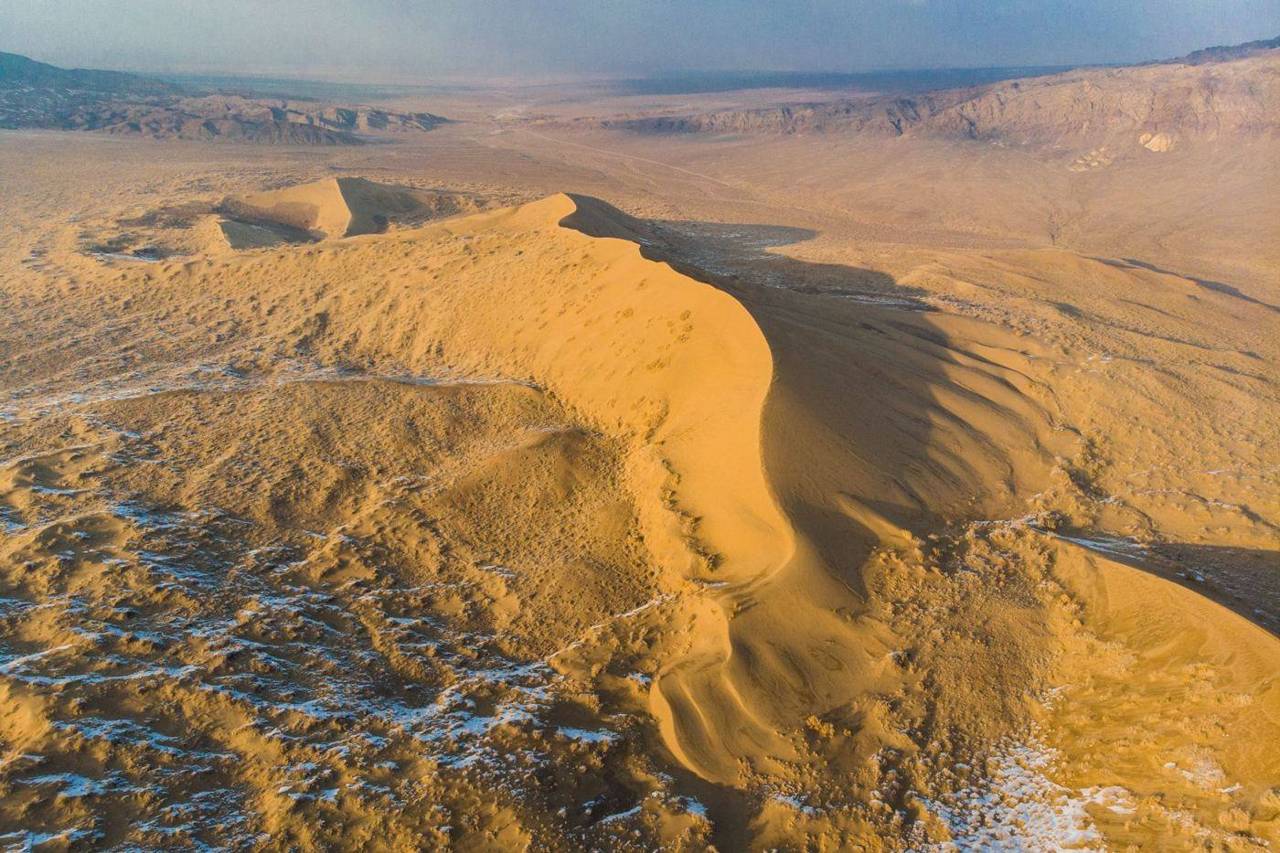
Altyn-Emel National Park: the singing dune, the white and red Aktau mountains, the volcanic Katutau and the gazelles and wild asses of the steppe.
 5 daysModerate
Mangystau
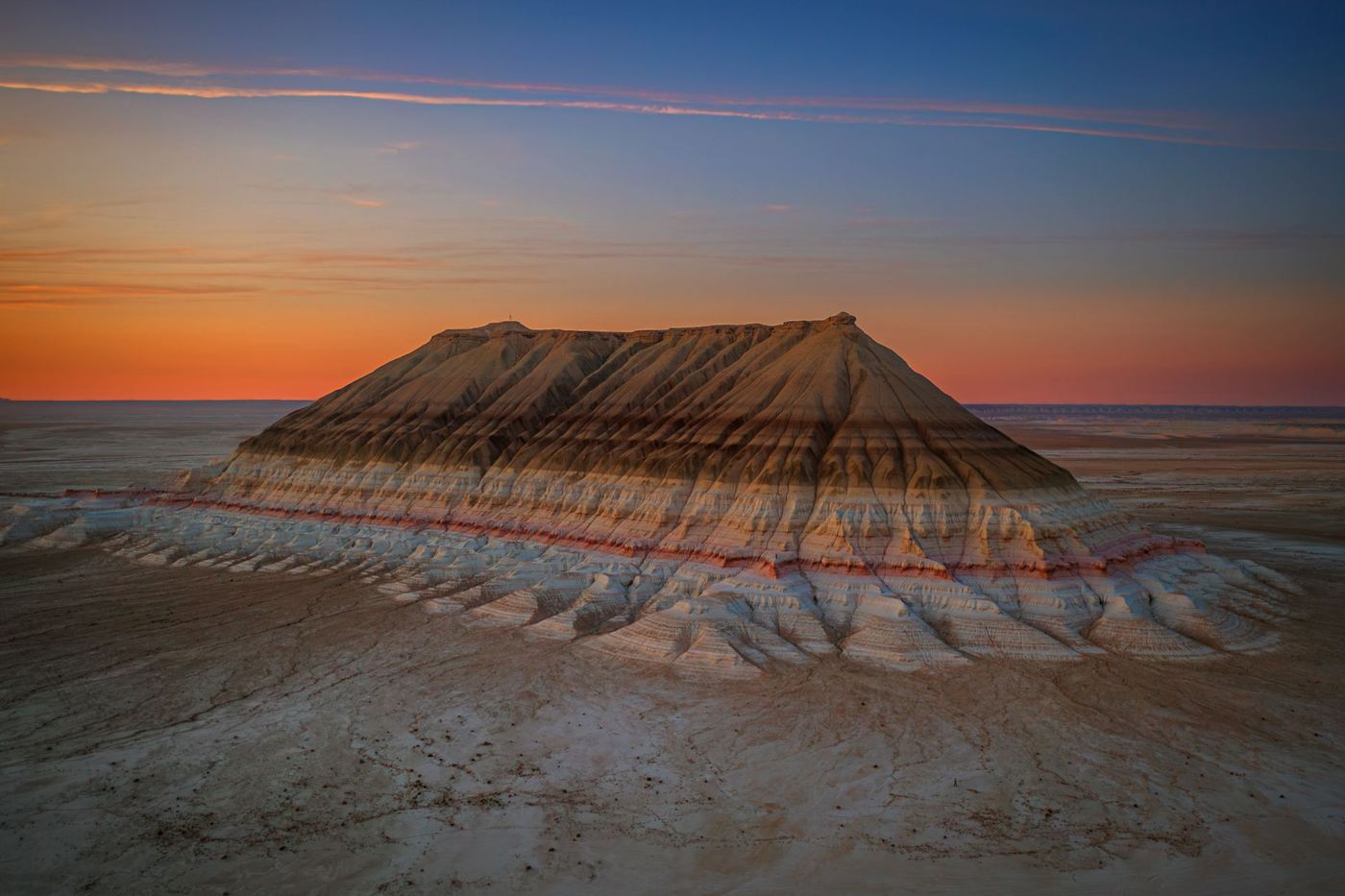
The desert of western Kazakhstan: the white cliffs of Bozzhyra, the underground mosques of Beket-Ata and Shakpak-Ata, the Torysh valley of stone spheres and the city of Aktau on the Caspian.
 4 daysEasy
Almaty and Shymbulak
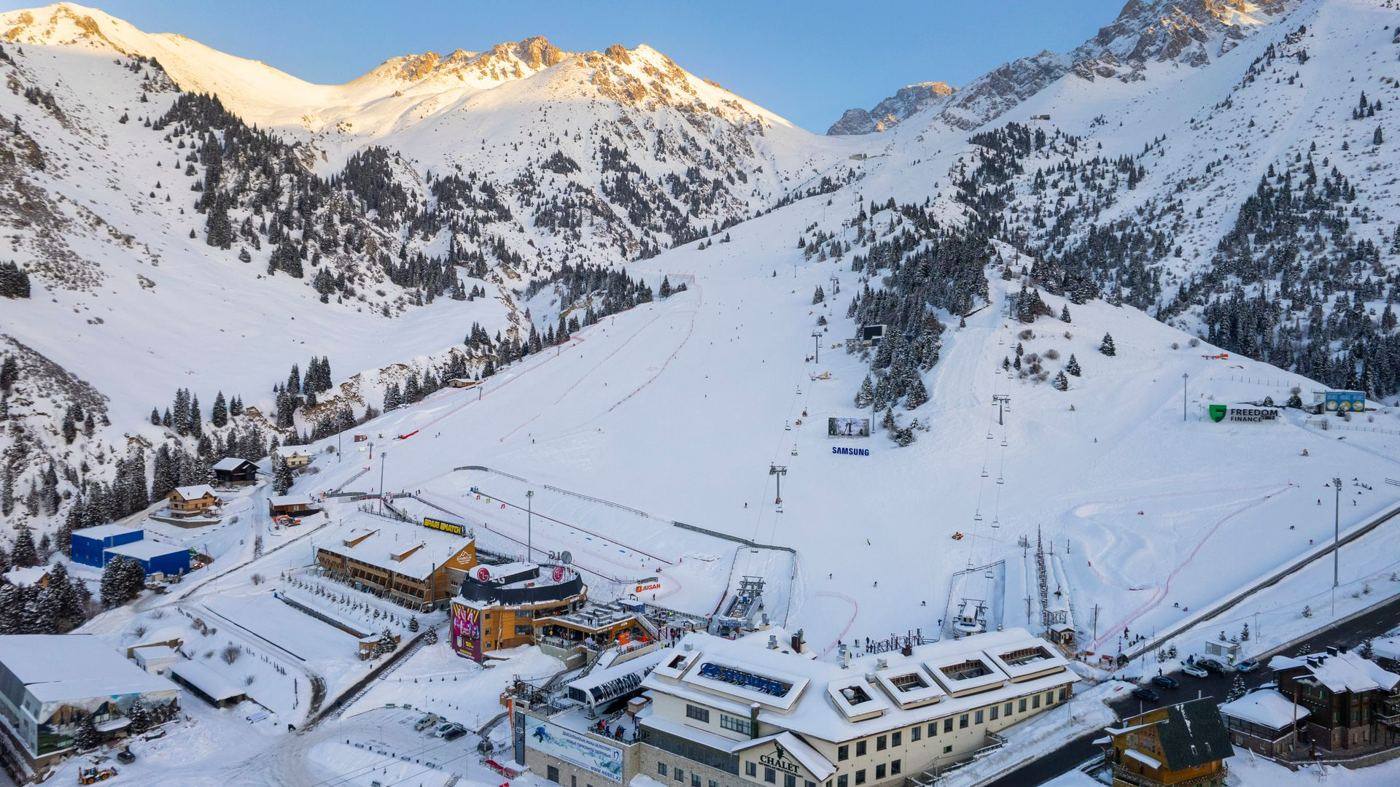
Almaty with Zenkov's wooden cathedral, the Green Bazaar and Kok-Tobe, then the Medeu skating rink and the Shymbulak resort half an hour from the centre.