Petra, Wadi Rum and the Dead Sea
Essential Jordan: Jerash, two days in Petra, a night in the red desert and a float in the Dead Sea.
- Amman
- Jerash
- Petra
- Wadi Rum
- Dead Sea
Day by day
- Day 1
Arrival in Amman
This seven day trip is essential Jordan: Amman and the Roman city of Jerash, the King's Highway with Madaba and Mount Nebo, two days in Petra, a night in the Wadi Rum desert and a swim in the Dead Sea. You get around by hire car or with a driver.
Before you go: Italian citizens need a passport valid for at least six months from entry and a visa, applied for online on the Jordanian Ministry of Interior website or on arrival at Queen Alia airport. The Jordan Pass, bought only on the official website jordanpass.jo before you leave, costs 70, 75 or 80 dinars for one, two or three consecutive days in Petra, includes Jerash, Wadi Rum and more than forty sites, and covers the visa fee if you stay at least three nights. Other nationalities should check their own rules.
Safety: with the regional conflict of 2026 Jordan has suffered missile and drone attacks, and flights can be cancelled suddenly. The UK advises against all travel within 3 kilometres of the Syrian border; the United States rates the country level 3, with a ban on going near the borders with Syria and Iraq. Viaggiare Sicuri asks travellers to avoid the border areas. This route stays well away from them.
You land at Queen Alia airport, about half an hour by road from the city. In the late afternoon go down to the old centre, the Balad, and look up at the Roman theatre cut into the hillside. Then walk among the stalls of the souk, with spices, dried fruit and honey pastries.
In the evening try freshly fried falafel and knafeh, the warm dessert of cheese and crisp pastry.
Sleep in Amman, for two nights.
Practical tip: choose the Jordan Pass with two days in Petra, the minimum to see it without rushing.
- Day 2
Jerash and the Amman Citadel
Today you see Roman Jordan: Jerash in the morning and the Amman Citadel at sunset.
Set off early for Jerash, less than an hour north of Amman. Ancient Gerasa was one of the cities of the Decapolis and is one of the best preserved Roman cities in the eastern Mediterranean. You enter through Hadrian's Arch, built for the emperor's visit, and pass the hippodrome. Then you reach the Oval Plaza, ringed by Ionic columns, and walk along the cardo, the main paved street, with the ruts left by chariot wheels. Climb to the Temple of Artemis, with its tall columns, and sit on the steps of the South Theatre, where the acoustics are still perfect. The site is in the Jordan Pass: check prices and times.
Have lunch in Jerash with a spread of mezze, the starters for sharing, such as hummus, aubergine mutabbal and tabbouleh.
In the afternoon go back to Amman and climb to the Citadel, on the highest hill of the old city. Here you see the columns of the Temple of Hercules, with the fragments of a giant stone hand, the Umayyad palace with its dome and an ancient cistern. At sunset the view over the districts and the Roman theatre is the finest in Amman.
In the evening stroll along Rainbow Street, with its cafés and terraces.
Sleep in Amman.
Practical tip: in Jerash go in at opening time and visit the southern part first, so you walk with the sun behind you.
- Day 3
The King's Highway, Madaba and Mount Nebo
Today you head south along the King's Highway, one of the oldest routes in the Middle East, all the way to Petra.
The first stop is Madaba, the city of mosaics, about half an hour from Amman. In the Greek Orthodox Church of Saint George you see the Madaba Map, a sixth century mosaic that depicts the Holy Land, with Jerusalem, its walls and its gates. Then visit the archaeological park, with more Byzantine floors.
A little further on climb Mount Nebo, the place from which, according to the Bible, Moses saw the Promised Land. In the memorial church there are Byzantine mosaics with hunting scenes and animals. From the terrace, on clear days, the view takes in the Jordan Valley and the Dead Sea. Check prices and times.
Take the King's Highway south again. You cross the great canyon of Wadi Mujib, with hairpin bends that drop down to the dam and climb up the other side: stop at the viewpoints. Further on you can stop at Kerak Castle, a Crusader fortress on the hill. Then the road continues across plateaus and villages to Wadi Musa, the small town at the entrance to Petra.
It is a long day, with many hours of driving: you reach Wadi Musa in the late afternoon.
Sleep in Wadi Musa, for two nights.
Practical tip: fill up with fuel in Amman or Madaba, because there are few petrol stations along the King's Highway.
- Day 4
Petra, from the Siq to the Monastery
Today is Petra day, the ancient capital of the Nabataeans carved into pink sandstone, a UNESCO World Heritage Site.
Go in at opening time from the visitor centre. The first stretch descends towards the Siq, the narrow, winding gorge more than a kilometre long, with walls tens of metres high and the remains of the channels that brought water into the city. At the end of the Siq, between the rocks, the Treasury appears, the most famous facade in Petra: in the morning the light creeps in and the stone turns orange.
Continue along the Street of Facades, with tombs cut into the rock, to the theatre. Then climb to the Royal Tombs, on the right hand cliff: the Urn Tomb, the Silk Tomb with its coloured veins and the Corinthian Tomb. Go down to the colonnaded street, as far as the Great Temple and Qasr al-Bint.
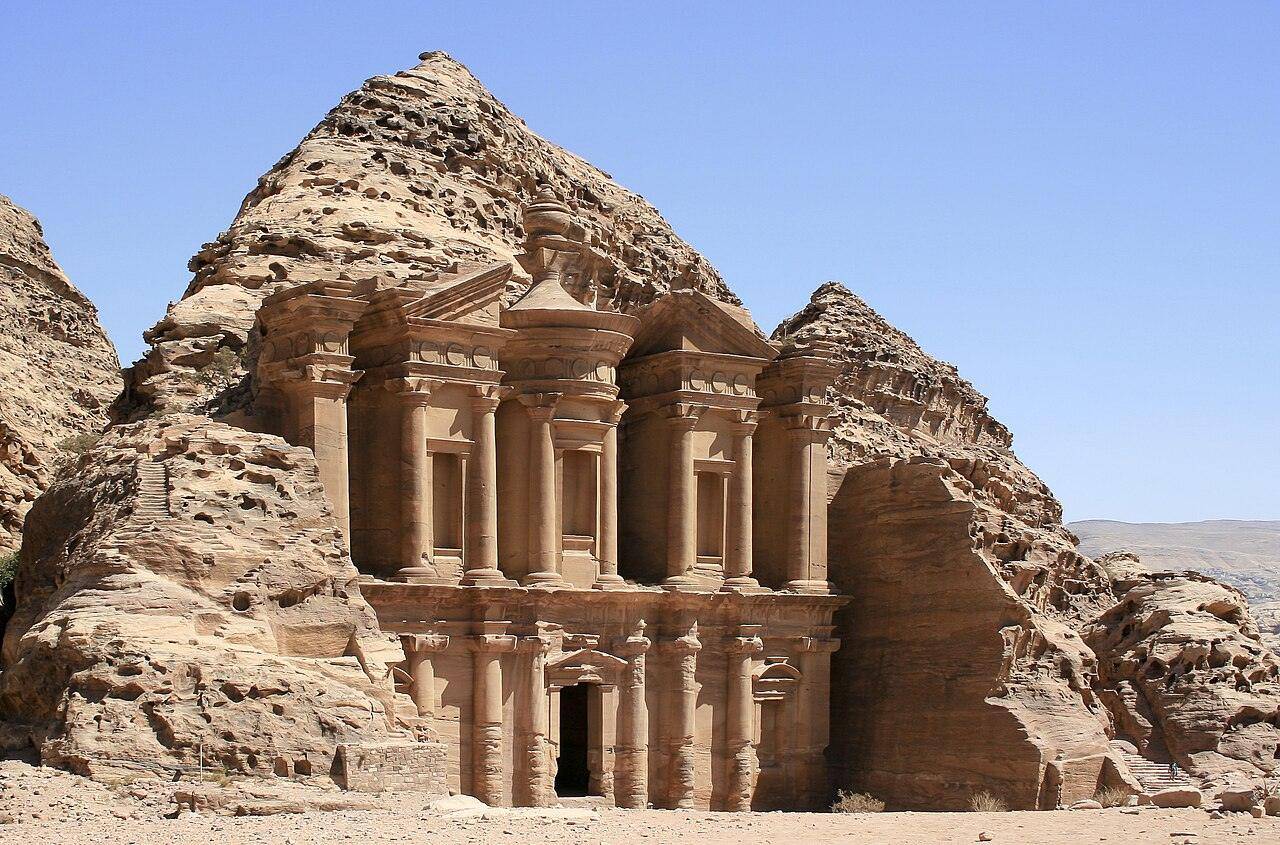
In the afternoon tackle the climb to the Monastery, about eight hundred steps cut into the rock, among gorges and souvenir stalls. At the top the facade of the Monastery is even bigger than the Treasury. A few minutes higher up there are viewpoints over the Arabah valley.
Head back towards the exit calmly: getting from the Monastery back to the visitor centre takes a couple of hours. Along the colonnaded street you find kiosks for a mint tea and a little shade.
Sleep in Wadi Musa.
Practical tip: carry at least two litres of water each, hiking shoes and a hat, because in Petra you can easily walk twenty kilometres.
- Day 5
The High Place of Sacrifice, Little Petra and Wadi Rum
Today you say goodbye to Petra and go down into the Wadi Rum desert.
Early in the morning use the second day of your pass and go back into Petra to climb to the High Place of Sacrifice, a platform on the mountain top where the Nabataeans held their rites. The path climbs with steps in the rock and at the top the view sweeps over the tombs and the valley. Come down the other side, past the Lion Fountain and the Tomb of the Roman Soldier.
At the end of the morning go to Little Petra, Siq al-Barid, a few kilometres to the north. It is a narrow gorge with houses and storerooms carved into the rock, where caravans used to stop. In one room traces of paintings with vines and birds survive.
In the afternoon set off for Wadi Rum, about two hours by road. One stretch runs on the Desert Highway in Ma'an Governorate: the United States asks travellers to reconsider the city of Ma'an and the areas along the road, so drive in daylight and do not stop. At the Wadi Rum visitor centre, a protected area and UNESCO World Heritage Site, you leave the car and climb into the camp's four by four.
At sunset watch the sandstone walls turn red. In the evening have zarb for dinner, meat and vegetables cooked under the sand, and gaze at a sky full of stars.
Sleep in a Bedouin camp in Wadi Rum.
Practical tip: choose a small camp far from Rum village, where the silence and the darkness are real.
- Day 6
Wadi Rum at dawn and the Dead Sea
Today you see dawn in the desert and end the day at the lowest point on earth.
Wake up before the sun and climb a dune or a rock near the camp: the light reaches the mountains slowly and turns them pink and orange. After breakfast set off by four by four with a Bedouin guide for three or four hours. You see the red sand dunes, Khazali canyon with ancient inscriptions on its walls, the spring linked to Lawrence of Arabia and one of the natural rock arches, which you can climb with care. Check prices and times with the camp.
At the end of the morning head north again. Take the Arabah valley road, which climbs towards the Dead Sea and passes well away from Ma'an: it is about four hours of driving, among bare mountains, palm trees and small villages.
You reach the Dead Sea in the afternoon. The shore lies more than four hundred metres below sea level and the water is so salty that you float without doing anything. Wade in slowly, keep your face dry, do not put your head under and shower straight afterwards. Try the black mud on your skin.
In the evening watch the sun set behind the hills on the other side of the lake.
Sleep on the Dead Sea.
Practical tip: do not shave the day before your swim and bring flip flops for the stones and the salt.
- Day 7
Departure from Amman
Today is the day you fly home.
Early in the morning take a last dip in the Dead Sea, when the water is calm and the sun is not yet burning. Then drive up to Queen Alia airport: it is about an hour or an hour and a half by road, with the climb from the depression up to the plateau.
If your flight is in the afternoon, you can stop in Amman to buy spices, za'atar, olive oil or dates at the market, or visit the Jordan Museum, which displays the Ain Ghazal statues, among the oldest known human figures. Check prices and times.
Trip summary: in seven days you have seen the heart of Jordan. In Amman and Jerash you walked among Roman temples and columns, in Madaba and on Mount Nebo you saw the Byzantine mosaics and the Jordan Valley, in Petra you followed the Siq to the Treasury and climbed to the Monastery, in Wadi Rum you slept under the stars and in the Dead Sea you floated in the saltiest water in the world.
When to go: the best months are March, April and May and from September to November, with mild days and cool evenings. In summer Petra and Wadi Rum are very hot, and the Dead Sea often goes above 40 degrees. In winter Amman and Petra can be cold, with rain and sometimes snow, while the desert is freezing at night.
Practical tip: get to the airport well in advance and check your flight status, because with the regional situation schedules can change.
Jordan's essentials in one week, with two days at Petra as the minimum to avoid rushing. The Jordan Pass, bought in advance, covers the visa and Petra entry and saves money. Choose the Wadi Rum camp carefully: the smaller ones far from the village are the best.
Before you go
- Documents and visa
- Passport valid for at least six months from entry and a tourist visa, applied for online on the Jordanian Ministry of Interior website or on arrival at Queen Alia airport in Amman, paid in dinars. The Jordan Pass, bought only on the official website jordanpass.jo before arrival, covers the visa fee if you stay in Jordan for at least three nights and includes Petra, Jerash, Wadi Rum and more than forty sites.
- Health and vaccines
- No compulsory vaccinations: ask your doctor about recommended ones at least eight weeks before. Protect yourself from the sun and drink plenty of water, above all in the desert and the canyons. Outside Amman and Aqaba medical facilities are basic: you need insurance with medical costs and repatriation. Emergencies: 911.
- Money and payments
- Jordanian dinar. Cards work in cities and hotels; keep cash for villages, the desert and tips.
- Power sockets
- Mixed sockets for type A and C plugs, often also F and G, 230 volts: bring a universal adapter.
- Time zone
- UTC+3 all year.
- Safety
- With regional tensions and the missile and drone attacks of 2026, the United States rates Jordan level 3 and the UK advises against all travel within 3 km of the Syrian border. Do not go near the borders with Syria and Iraq, the refugee camps, Zarqa or Rusayfah; avoid the city of Ma'an. Flights and airspace can close without notice. In the canyons there is a risk of flash floods: follow the reserves' closures. Official advice: GOV.UK.
Information checked in November 2026 for Italian and EU citizens. Rules change: always check before you travel.
Variations
Shorter version: in five days do Amman, Petra and Wadi Rum, without Jerash and the Dead Sea.
Longer version: add two days in Aqaba, for snorkelling on the Red Sea reef.
Frequently asked questions
Is the Jordan Pass really worth it?
Yes, if you stay at least three nights: it covers the visa fee and includes Petra, Jerash and Wadi Rum. Buy it only on the official website jordanpass.jo, before you leave.
Can you drive yourself in Jordan?
Yes, the main roads are good and well signposted. Avoid driving at night, watch out for speed bumps in the villages and do not stop in the city of Ma'an.
How much walking is there in Petra?
A lot: with the Monastery you easily walk more than twenty kilometres in a day, with climbs and steps. You need comfortable shoes, water and a hat.
Indicative itinerary written by World Atlas. Before booking, check timetables, seasonal openings, documents and safety.
 10 daysModerate
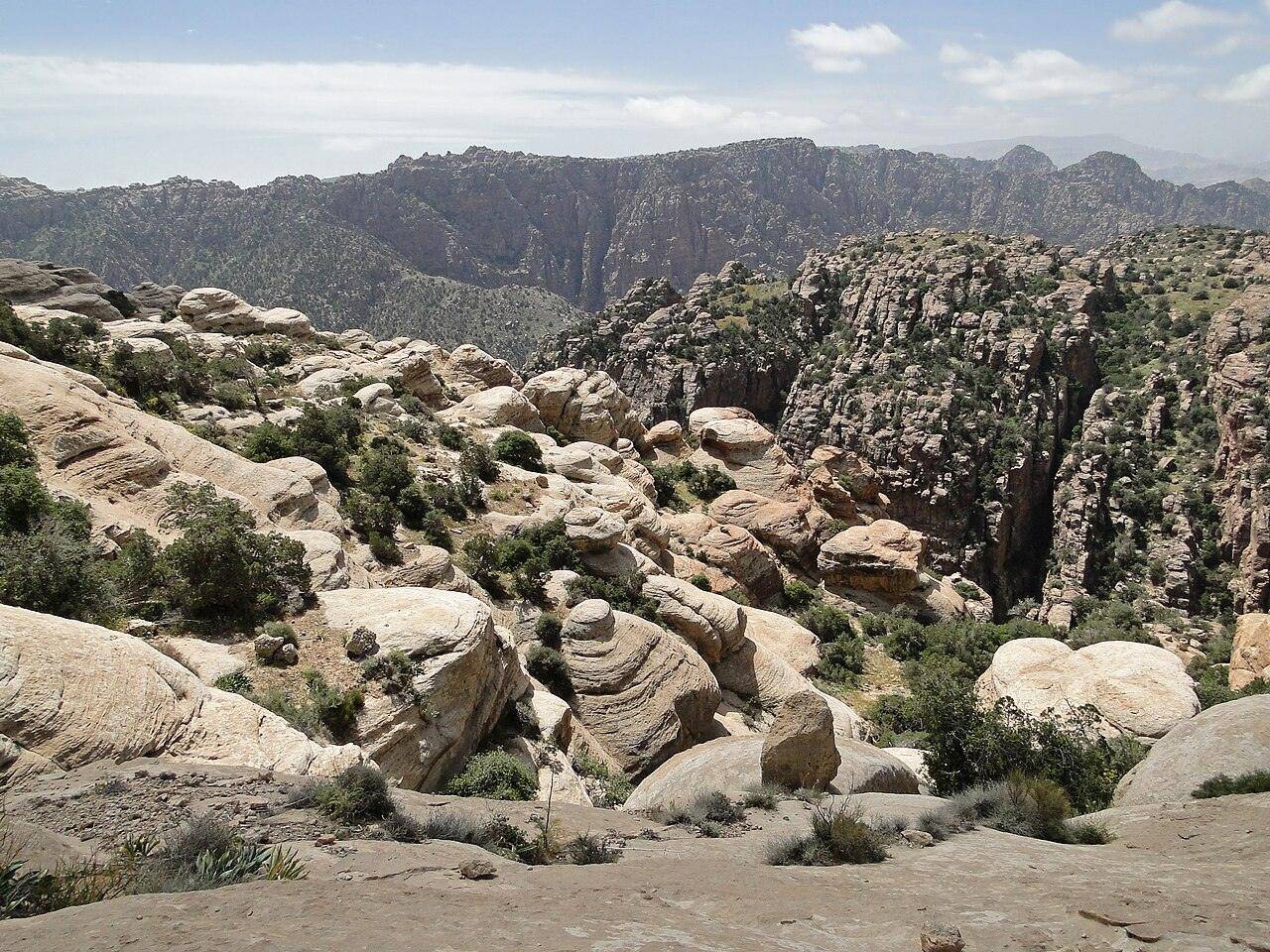
Jordan on foot: Dana, Petra and Wadi Rum
Trekking in the Dana reserve, entering Petra by the back trail, nights in the desert and snorkelling in Aqaba.
 7 daysEasy
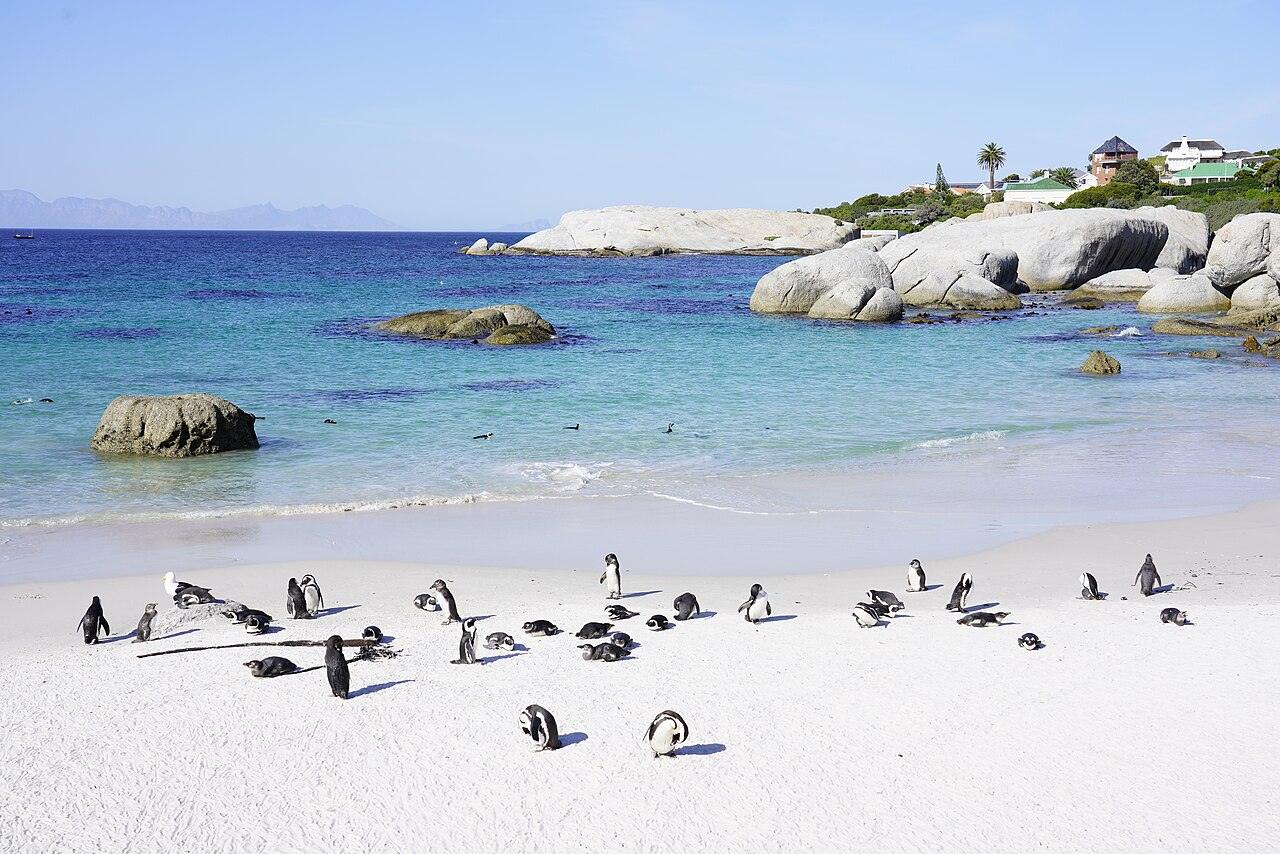
Cape Town and the Cape Peninsula
A week of Table Mountain, the penguins of Boulders Beach, the Cape of Good Hope and the Stellenbosch vineyards.
 15 daysModerate
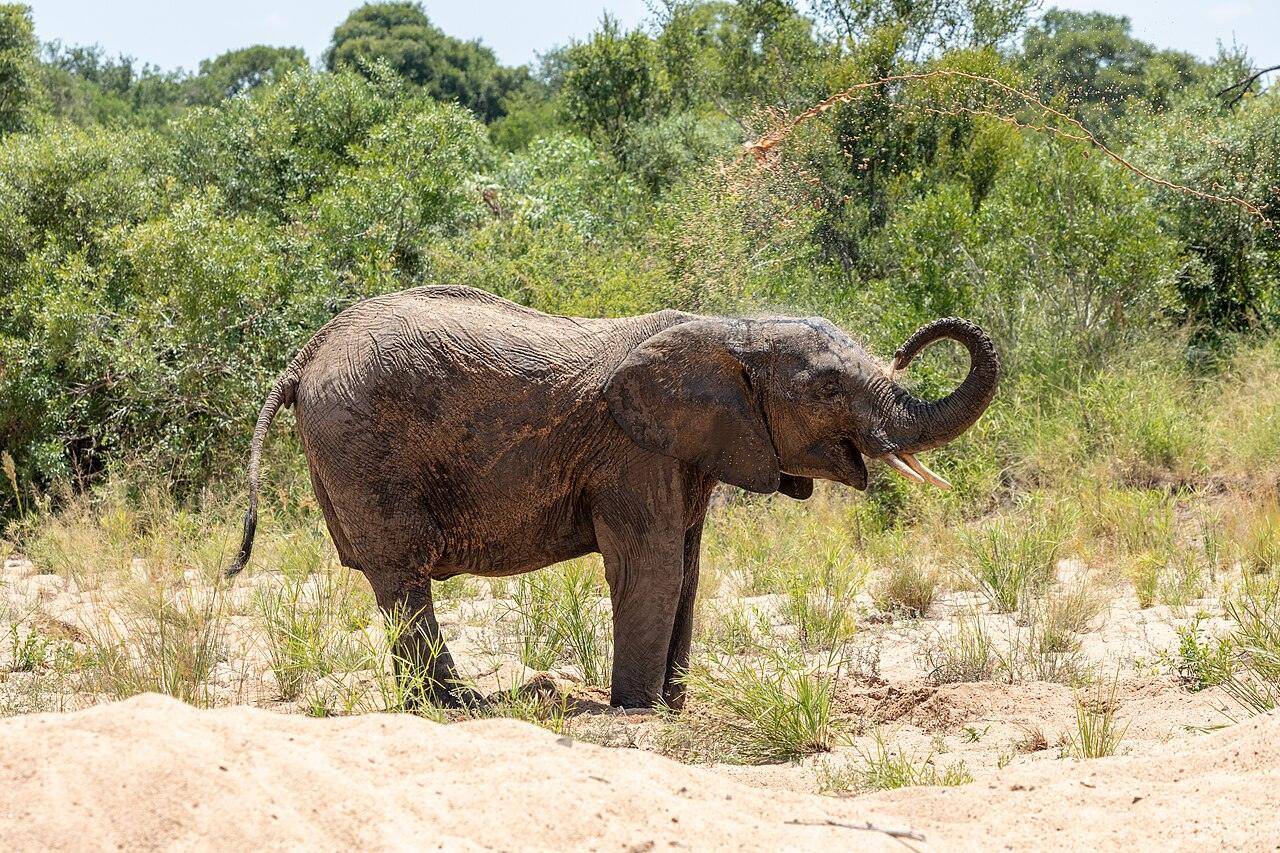
Kruger, the Garden Route and Cape Town
The great classic: a Kruger safari, the scenic Garden Route and a finale in Cape Town.