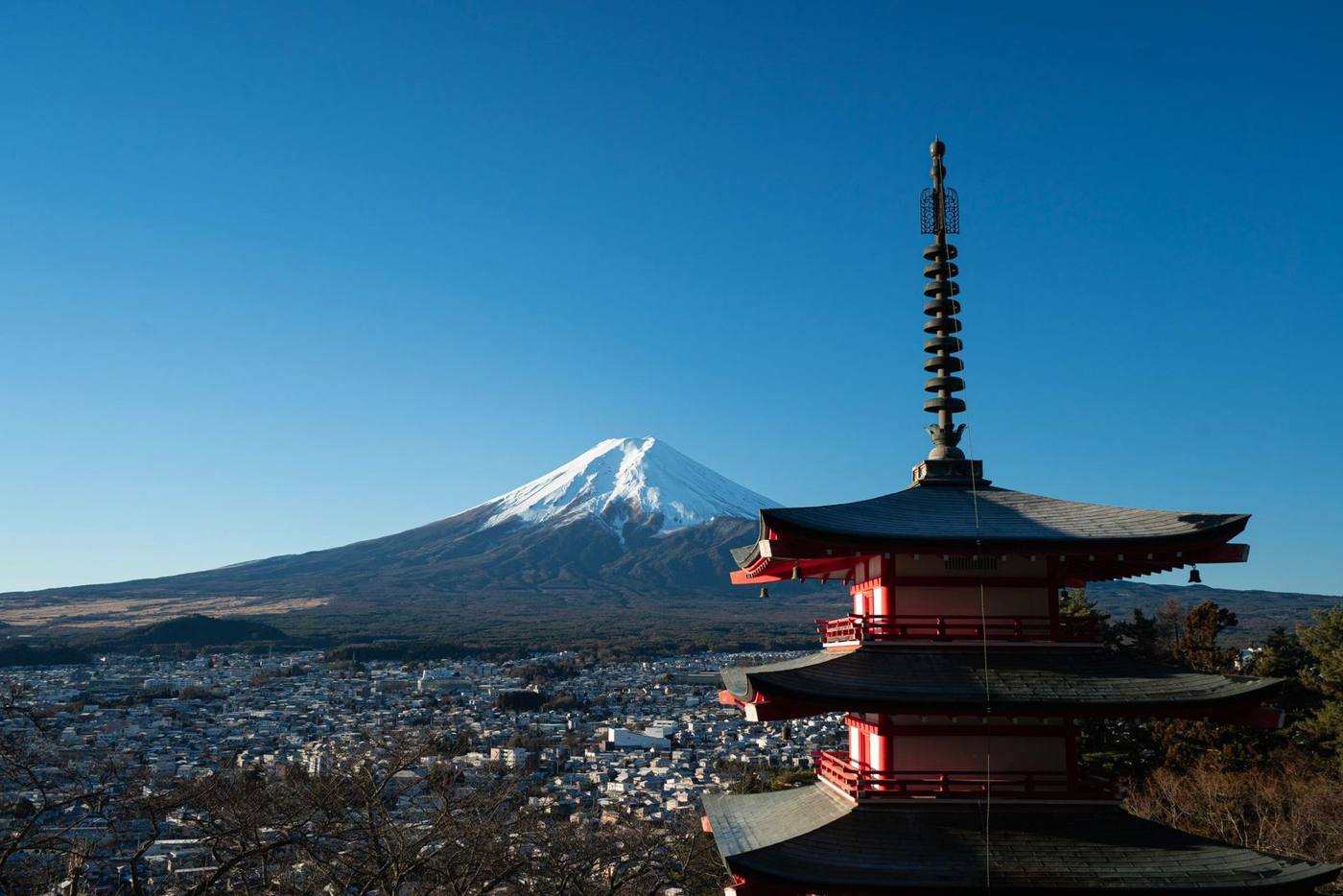
Mount Fuji, Hakone and Kamakura
A week around Tokyo: the Great Buddha of Kamakura, the hot springs of Hakone and Mount Fuji reflected in the lakes.
- Tokyo
- Kamakura
- Enoshima
- Hakone
- Lake Ashi
- Kawaguchiko
- Tokyo
Day by day
- Day 1
Arrival in Tokyo: Asakusa and Senso-ji
EU citizens, including Italians, enter Japan for tourism without a visa for up to ninety days with a passport valid for the whole stay; check the rules for your own nationality. On arrival you fill in the immigration and customs forms online on Visit Japan Web to get through faster. On departure, a 3,000 yen departure tax is included in your air ticket.
From Narita and Haneda airports you reach the centre by train in about an hour from Narita and about half an hour from Haneda. Get a rechargeable transport card straight away, such as Suica or Pasmo, also on your phone: it works on trains, metros and buses, and in shops.
In the afternoon visit Asakusa, Tokyo's most traditional district. You enter through the Kaminarimon gate with its great red paper lantern and walk along Nakamise, a street of sweet and souvenir stalls, to Senso-ji, the city's oldest Buddhist temple, founded in the seventh century. In front of the temple worshippers wave incense smoke over themselves, said to bring good health.
At sunset cross the Sumida river to see the Tokyo Skytree, Japan's tallest tower at 634 metres, with two observation decks.
In the evening try ramen or tempura in the small restaurants of the area.
Practical tip: Japan is considered one of the safest countries in the world; the main risk is earthquakes. Download an alert app and follow staff instructions if there is a tremor.
- Day 2
Tokyo: Meiji Jingu, Shibuya and Shinjuku
In the morning visit Meiji Jingu, the great Shinto shrine dedicated to Emperor Meiji, who modernised Japan at the end of the nineteenth century. It stands in a forest of about a hundred thousand trees planted from all over the country, in the middle of the city. You pass under huge wooden torii gates and see the sake barrels donated to the shrine. Sometimes you witness a traditional wedding, with the bride dressed in white.
Leaving the shrine you reach Harajuku, the district of youth fashion, with Takeshita street full of colourful shops, and then Omotesando avenue, with designer stores in buildings by famous architects.
In the afternoon go to Shibuya, home of the world's most famous pedestrian crossing: at each green light hundreds of people cross from every direction at once. Next to the station is the statue of Hachiko, the dog who waited for his owner at the station for years after his death. To see the crossing from above, go up to a rooftop deck such as Shibuya Sky, with tickets to book.
In the evening visit Shinjuku, with its skyscrapers, neon signs and the alleys of Omoide Yokocho, with tiny bars serving grilled chicken skewers, yakitori. From the no-cost observatory of the Metropolitan Government Building, on clear days, you can see Mount Fuji.
Practical tip: avoid the metro at rush hour, from eight to half past nine in the morning.
- Day 3
Kamakura and Enoshima
Today is a day trip to Kamakura, about an hour from Tokyo by train, a seaside town that was Japan's political capital between the twelfth and fourteenth centuries, with dozens of temples and shrines among wooded hills.
In the morning visit the Great Buddha of Kamakura, a bronze statue about eleven metres high from the thirteenth century, sitting in the open air since a tsunami destroyed the hall that covered it in the fifteenth century. You can go inside the statue for a small fee. Nearby, Hasedera temple on the hillside has a wooden statue of the goddess Kannon over nine metres high, gardens with ponds and a terrace overlooking the bay.
Then reach Tsurugaoka Hachimangu, the town's most important shrine, with its long staircase, bridges over lotus ponds and Komachi street with its traditional sweet shops. North of town, in Kita-Kamakura, are quiet Zen temples in the woods, such as Engaku-ji and Kencho-ji, Japan's oldest Zen monastery.
In the afternoon take the Enoden, the little electric train running along the coast between the houses, to the island of Enoshima, linked to the mainland by a bridge, with its shrine, sea caves and, on clear days, views of Mount Fuji across the bay.
In the evening return to Tokyo.
Practical tip: Kamakura is very crowded at weekends and during the hydrangea season in June; go on a weekday.
- Day 4
Hakone: the mountain railway, Owakudani and the ryokan
In the morning leave Tokyo for Hakone, a volcanic mountain area south-west of Mount Fuji, about an hour and a half from Shinjuku on the Romancecar express. Many visitors buy a Hakone pass, covering trains, cable cars, buses and boats in the area: it is worth it if you do the full loop.
The classic Hakone circuit is a loop: you climb on the little Hakone Tozan mountain railway, which zigzags up through the woods and reverses direction three times, then by funicular and ropeway, which passes over the Owakudani valley, a still-active volcanic crater with steaming vents and a smell of sulphur. At Owakudani you eat black eggs boiled in the hot springs, which by tradition add seven years to your life. On clear days you see Mount Fuji up close.
Along the route, the Hakone Open-Air Museum has modern sculptures outdoors in a park against the mountains, and a pavilion with works by Picasso.
In the evening stay in a ryokan, a traditional Japanese inn: you sleep on futons laid on tatami floors, wear a yukata, a cotton robe, and dine on kaiseki, a menu of many small seasonal dishes served in sequence.
Practical tip: the Owakudani ropeway closes in strong wind or when volcanic gases rise; check its status before setting off, as replacement buses run when it is closed.
- Day 5
Lake Ashi, the old Tokaido and the onsen
In the morning, after a Japanese breakfast at the ryokan, with rice, grilled fish, miso soup and pickles, go down to Lake Ashi, a volcanic lake at the heart of Hakone.
Cross the lake on the pirate-ship-style boat linking Togendai with Hakone-machi and Moto-Hakone in about half an hour. On clear days Mount Fuji is reflected in the water. Near Moto-Hakone is Hakone Shrine, with its red torii rising from the lake water, one of the most photographed places in the area. You climb a staircase through a cedar forest to the main shrine.
Then walk a stretch of the old Tokaido, the ancient road linking Edo, today's Tokyo, with Kyoto, paved with stones and lined with huge cedars. Along the road, the Amazake-chaya is a teahouse more than three hundred years old, where you drink amazake, a sweet rice drink. Near the lake, the Hakone checkpoint recreates the control of travellers in the days of the shoguns.
In the afternoon relax in an onsen, a hot spring bath with volcanic water. The rules are simple: wash thoroughly sitting at the showers before getting in, bathe naked without a swimsuit, and keep the small towel out of the water. Many onsen do not admit visible tattoos; some allow them or offer private baths.
In the evening spend a second night at the ryokan.
Practical tip: in the hot onsen pools stay only a few minutes at a time and drink water.
- Day 6
Mount Fuji: Kawaguchiko, Chureito and Oshino Hakkai
In the morning reach Kawaguchiko, the best known of the Fuji Five Lakes, north of the mountain, by bus from Hakone in about two hours, or by bus from Tokyo. Mount Fuji, 3,776 metres high, is Japan's highest mountain, a perfectly shaped volcano and a UNESCO World Heritage site as a sacred place and source of artistic inspiration. The summit is often in cloud: the best times to see it are early morning and in winter, when the air is clear.
Visit the Chureito pagoda, a five-storey red pagoda on the hillside above Fujiyoshida with Fuji behind it, perhaps Japan's most famous view, especially in spring with the cherry blossom. You climb a staircase of about four hundred steps.
Then visit Oshino Hakkai, a small village with eight ponds of crystal-clear water fed by Fuji's snow, filtered through volcanic rock for decades, with thatched houses and water mills.
In the afternoon go round Lake Kawaguchi on foot or by bike along the north shore, where you see the mountain's reflection, or take the Mount Kachi Kachi ropeway for views over the lake and Fuji.
Climbing Fuji is only possible in summer, from July to September; on the Yoshida trail there is a daily cap and an entry fee, booked online.
Practical tip: Kawaguchiko is colder than Tokyo, especially in the evening; bring a warm jacket even in spring and autumn.
- Day 7
Back to Tokyo and departure
Early in the morning, if the sky is clear, look at Fuji from the lakeshore: it is the best moment of the day. Then return to Tokyo by express bus or train, in about two hours.
If your flight leaves in the afternoon or evening, visit the Tsukiji outer market, with stalls of fresh fish, sushi, sweet omelette and seafood skewers, or Hamarikyu garden, a traditional garden with a teahouse on an island in the pond, surrounded by skyscrapers. Alternatively walk through Ginza, with its department stores, whose basement food halls, called depachika, sell sweets and ready meals packaged with great care.
For the round trip between Tokyo and Fuji the Japan Rail Pass is not worth it: it costs 53,000 yen for seven days and only pays off if you travel a lot by bullet train, for example to Kyoto and Osaka.
Things to take home: green tea, fans and washi paper goods, Japanese kitchen knives, traditional sweets in gift boxes, ceramic cups and Fuji souvenirs.
Practical tip: for Narita, allow at least an hour and a half from central Tokyo. Check your government's travel advice before leaving, and keep your passport at hand, as it is needed for tax refund shopping.
The right week if time is short, or as an add-on to a stay in Tokyo. In summer Fuji is often hidden by clouds, while in winter it is almost always visible. Kawaguchiko and Hakone are crowded at weekends, so weekdays are better.
Before you go
- Documents and visa
- Passport valid for the whole stay; many nationalities, including EU citizens, enter without a visa for up to 90 days for tourism. An electronic travel authorisation (JESTA) has been announced but is not yet in force: check before you go.
- Health and vaccines
- No vaccines required. Healthcare is excellent but expensive: travel insurance with high medical cover is essential. Some common medicines, such as certain codeine painkillers, are banned or restricted. Emergencies: 119 ambulance, 110 police.
- Money and payments
- Yen. Cards are increasingly accepted, but temples, small restaurants and rural areas need cash: convenience-store ATMs accept foreign cards. Tipping is not customary.
- Power sockets
- Type A, 100 volts: you need a flat-pin adapter; phone and laptop chargers work, European hairdryers often do not.
- Time zone
- UTC+9, no daylight saving time.
- Safety
- One of the safest countries in the world. The risks are natural: earthquakes, typhoons from July to October, extreme summer heat. Download an English-language alert app. Official advice: GOV.UK.
Information checked in November 2026 for Italian and EU citizens. Rules change: always check before you travel.
Variations
In 4 days: a day in Tokyo, a night in a ryokan in Hakone and a day at Kawaguchiko with the Chureito pagoda, skipping Kamakura.
In 12 days: after Fuji, continue by bullet train to Kyoto, Nara and Osaka; in that case the Japan Rail Pass may be worth it.
Frequently asked questions
Do I need a visa for Japan?
EU citizens enter for tourism without a visa for up to ninety days with a valid passport; check the rules for your nationality. On departure, the 3,000 yen departure tax is included in your air ticket.
When is Mount Fuji most visible?
Early in the morning and in the cold months, from November to February, when the air is clearest. In summer the summit is often hidden by clouds.
Is the Japan Rail Pass worth it for this trip?
No: it costs 53,000 yen for seven days and is only worth it for long bullet train journeys, for example to Kyoto and Osaka. For Kamakura, Hakone and Fuji a rechargeable card and local passes are enough.
Indicative itinerary written by World Atlas. Before booking, check timetables, seasonal openings, documents and safety.
 9 daysEasy
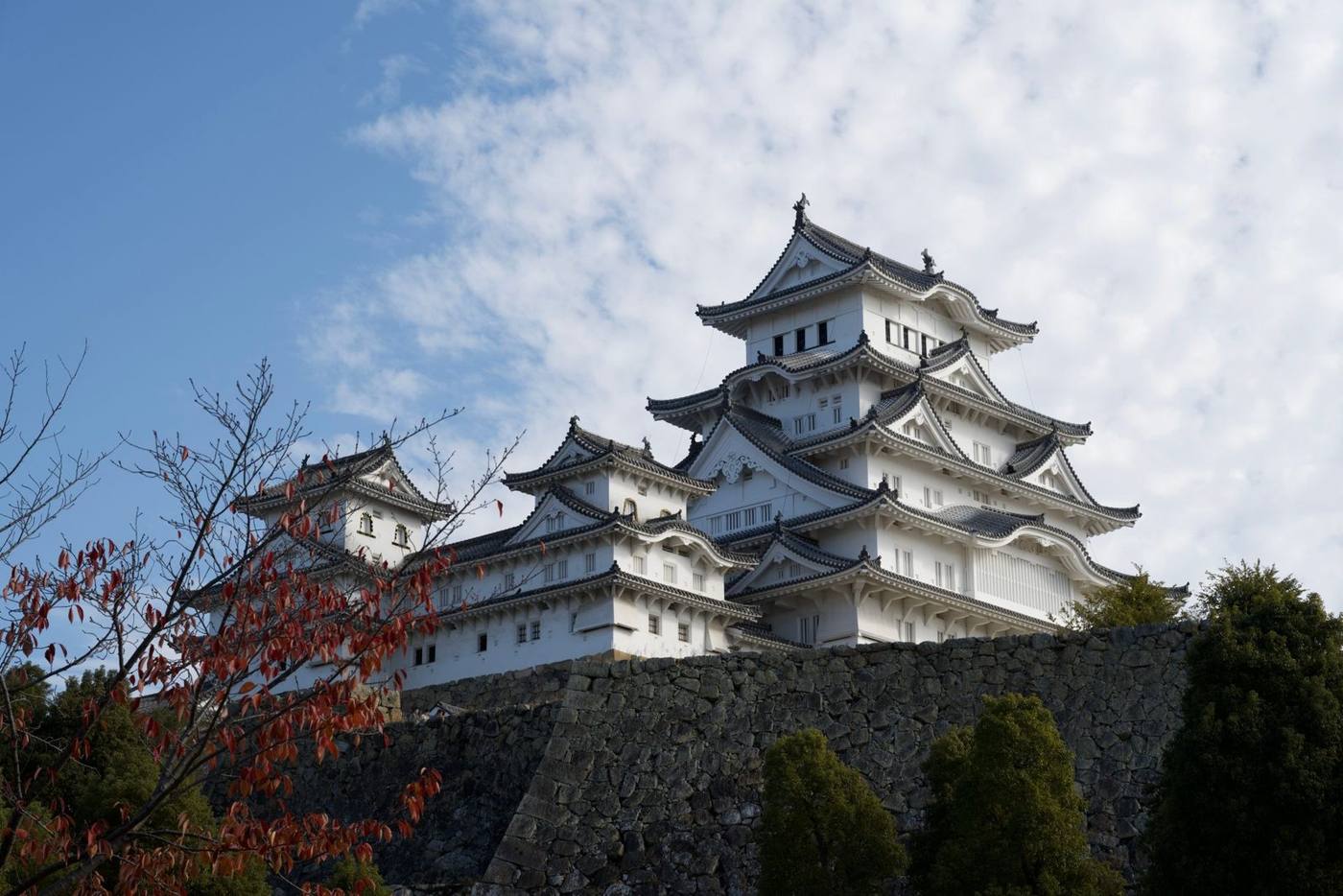
Kansai at a slow pace: Kyoto, Nara, Koyasan and Himeji
Four days in Kyoto, a night in a monastery on Mount Koya, the deer of Nara and Japan's finest castle.
 10 daysEasy
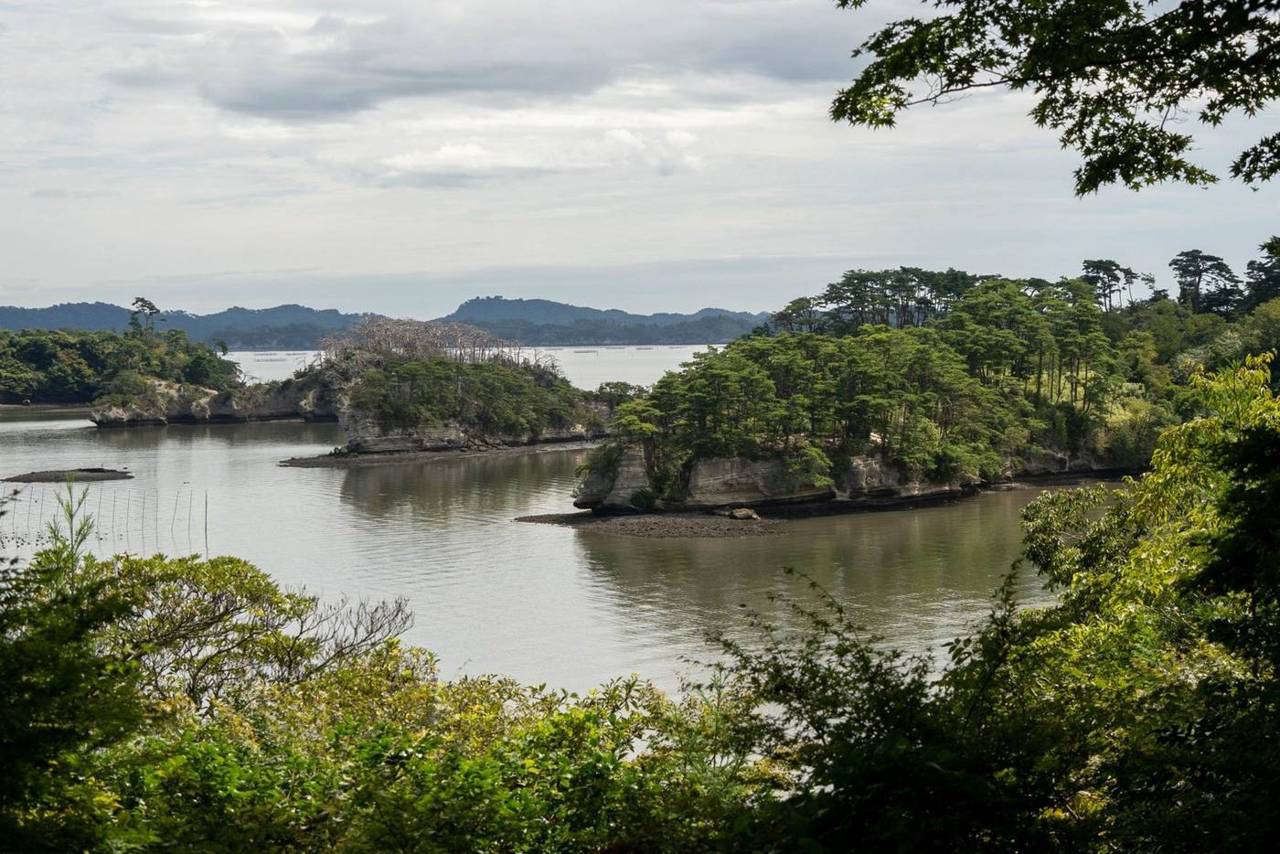
Tohoku, the authentic north
The Japan few foreigners see: Matsushima Bay, the temples of Hiraizumi, the samurai houses of Kakunodate and the Oirase stream.
 5 daysEasy
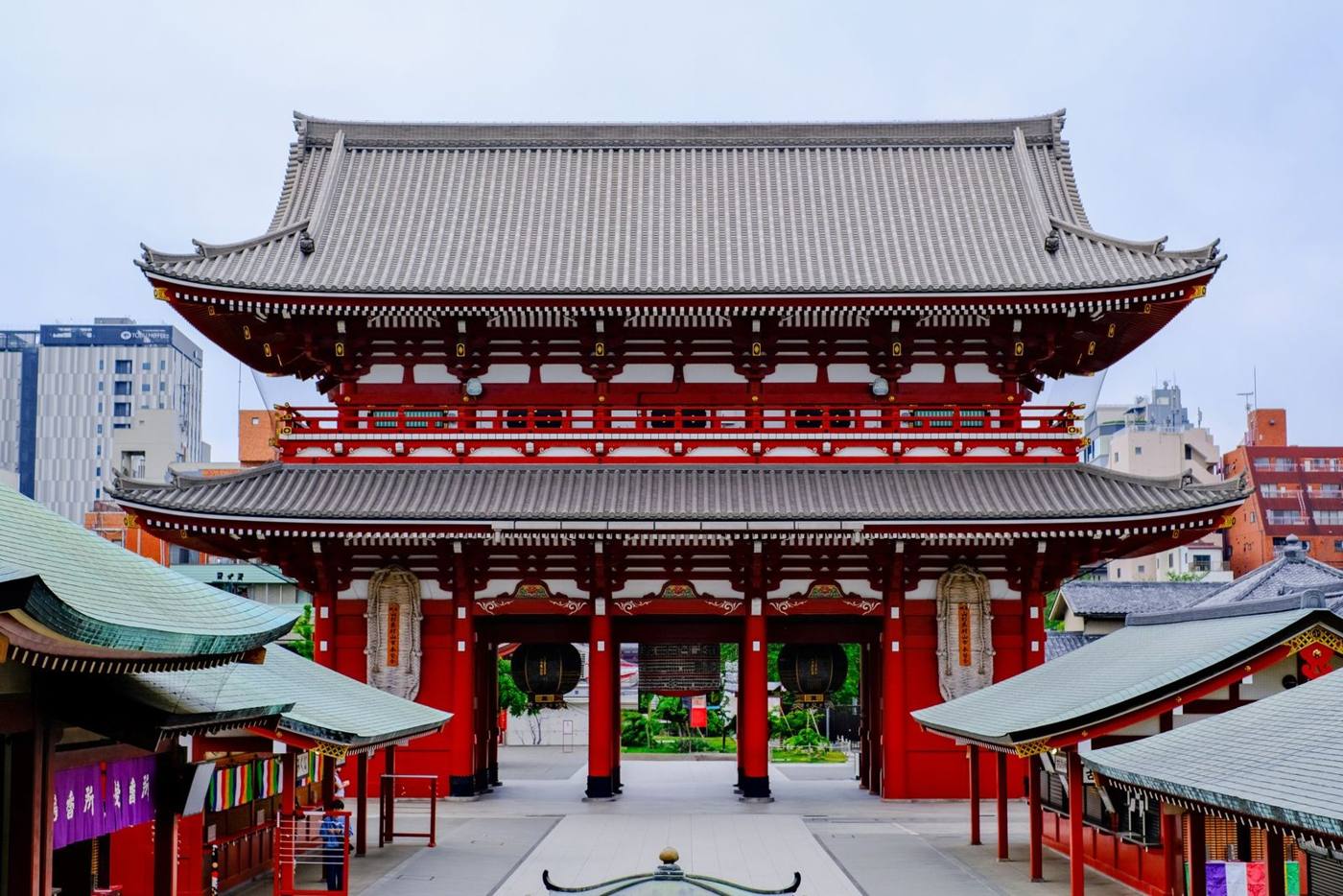
Tokyo in depth: neighbourhoods, markets and Kawagoe
Five days just for the capital, neighbourhood by neighbourhood: Sensō-ji temple in Asakusa, old Tokyo in Yanaka, the Ueno museums, Meiji Shrine and Harajuku, Shibuya and Shinjuku at night, Tsukiji outer market and a day trip to the historic town of Kawagoe.