Friuli Venezia Giulia: Trieste, Aquileia and Collio
Italy's borderland: Habsburg Trieste with its historic cafés and Miramare Castle, the basilica of Aquileia with its mosaic floor, Grado on the lagoon, Lombard Cividale and the white wines of Collio.
- Trieste
- Miramare
- Aquileia
- Grado
- Cividale del Friuli
- Cormons
Day by day
- Day 1
Trieste: Piazza Unità d'Italia, historic cafés and the Roman theatre
Friuli Venezia Giulia, in the far north-east of Italy between the Alps, the Adriatic, Austria and Slovenia, is a border region where Latin, Slavic and German cultures meet. Trieste is about two hours by train from Venice, or reached by air at Ronchi dei Legionari airport. EU citizens can use a valid identity card or passport; check the rules for your nationality and carry your document for trips into Slovenia.
For more than five centuries Trieste was the great port of the Austrian Empire, and its centre looks like a Central European city facing the sea. In the morning visit Piazza Unità d'Italia, one of Europe's largest squares open to the sea, surrounded by nineteenth-century palaces such as the town hall, the Lloyd Triestino building and the government palace. In front stretches the Molo Audace, where locals walk at sunset.
Then explore the Borgo Teresiano, the eighteenth-century grid district with the Canal Grande, where boats sailed into the centre, the Serbian Orthodox church of San Spiridione with its blue domes, and the statue of James Joyce, who lived in Trieste for more than ten years.
In the afternoon stop in one of the city's historic cafés, where writers such as Italo Svevo, Umberto Saba and Joyce spent their days. Trieste has its own coffee language: a nero is an espresso, a capo is a macchiato in a cup, a capo in b is served in a glass. Then visit the first-century Roman theatre at the foot of the hill and the antiquarian bookshop where Saba worked.
Practical tip: Trieste is swept by the bora, a cold wind that can exceed a hundred kilometres an hour, especially in winter; in the most exposed streets there are ropes to hold on to.
- Day 2
San Giusto hill and Miramare Castle
In the morning climb San Giusto hill, the ancient heart of the city, via the steps and lanes of the old town. At the top are the remains of the Roman forum and the Cathedral of San Giusto, formed by joining two medieval churches, with a great Gothic rose window and, inside, gilded Byzantine-style mosaics from the twelfth and thirteenth centuries. Next to it is San Giusto Castle, a Venetian and Austrian fortress with an armoury museum and bastions overlooking the whole gulf, the port and the Karst hills.
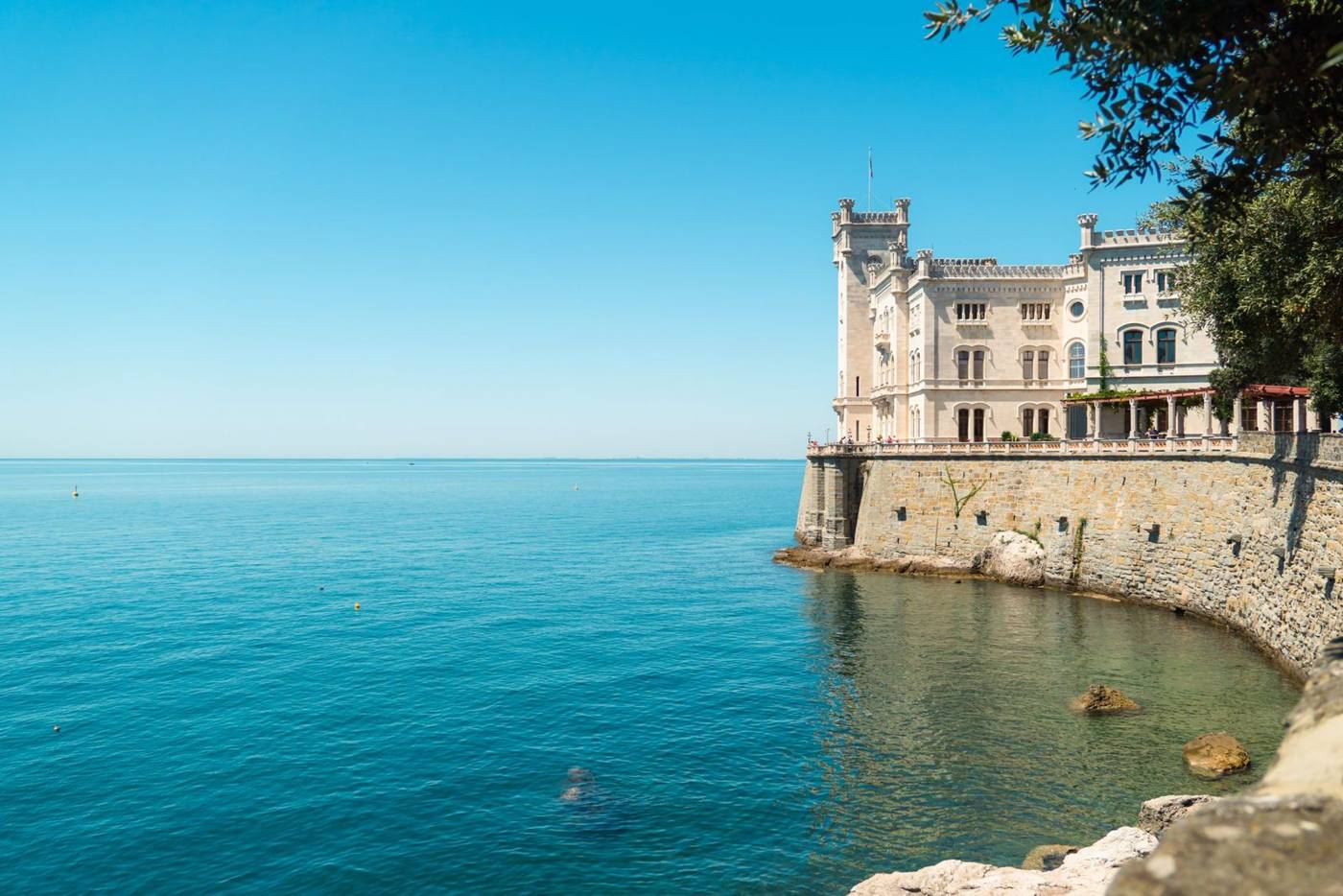
In the afternoon reach Miramare Castle, about eight kilometres north-west of the centre, by bus or, in summer, on foot along the Barcola seafront, where locals sunbathe on concrete terraces nicknamed topolini. The white castle, built between 1856 and 1860 on a headland over the sea, was the residence of Archduke Maximilian of Habsburg, brother of Emperor Franz Joseph, who left from here in 1864 to become Emperor of Mexico, where he was executed three years later. Inside you see the rooms furnished as they were, including a bedroom imitating a ship's cabin. The park around it, more than twenty hectares, has exotic plants, ponds and seaside avenues. In front of the castle is a protected marine reserve.
If you are interested in twentieth-century history, Trieste also has the Risiera di San Sabba, the only Nazi concentration camp in Italy with a crematorium, now a museum and national monument, to visit another morning.
Practical tip: in high season it is best to book Miramare Castle online.
- Day 3
Aquileia: the basilica and fourth-century mosaics, then Grado and its lagoon
In the morning drive west to Aquileia, about an hour from Trieste. In Roman times Aquileia was one of the largest and richest cities of the empire, with more than a hundred thousand inhabitants, a great river port and the starting point of roads to the north and east. It was destroyed by Attila in 452. Today it is a small village, but its remains are a UNESCO World Heritage site.
The masterpiece is the Patriarchal Basilica, a great Romanesque church with a tall bell tower, built over a fourth-century church. The nave floor is the largest early Christian mosaic in the Western world, about seven hundred and fifty square metres, uncovered in the early twentieth century: you walk on glass walkways over sea scenes, fish, birds, portraits of the faithful and the story of Jonah swallowed by the whale. Beneath the bell tower, in the excavations crypt, are more mosaics. Then visit the remains of the Roman forum, the river port along the ancient riverbed and the National Archaeological Museum, with Roman statues, jewellery and glass.
In the afternoon continue to Grado, about ten kilometres away, a small town on a lagoon island linked to the mainland by road. Its old centre of narrow lanes looks like a little Venice, with the sixth-century Basilica of Sant'Eufemia and its mosaics. Take a boat trip in the lagoon among islets and casoni, fishermen's reed huts, or enjoy the beach.
In the evening taste boreto alla gradese, a fish soup with vinegar and pepper.
Practical tip: on Sunday mornings Aquileia basilica holds masses; check visiting times.
- Day 4
Cividale del Friuli: the Lombard temple and the Devil's Bridge
In the morning drive north to Cividale del Friuli, about an hour from Grado, at the foot of the hills on the Slovenian border. Founded by Julius Caesar as Forum Iulii, which gave Friuli its name, in the sixth century it became the capital of the first Lombard duchy in Italy. Since 2011 its monumental complex has been part of the UNESCO site of the Lombards in Italy.
The most important monument is the Lombard Temple, a small eighth-century chapel overlooking the River Natisone, its walls decorated with stucco and six large figures of female saints, among the finest works of the early Middle Ages in Europe. In the cathedral's Christian museum you see the Altar of Ratchis, carved for a Lombard duke, and the Baptistery of Callixtus. The National Archaeological Museum displays treasures found in Lombard tombs, with weapons, buckles and gold crosses.
Then cross the Devil's Bridge, spanning the Natisone with two arches resting on a large rock in the middle of the river; legend says the devil built it in one night, asking in return for the soul of the first to cross, and the townspeople sent him a cat. From the bridge you see the river's emerald water among the rocks.
In the afternoon stroll through the old town and visit the Celtic hypogeum, a chamber cut into the rock beneath a house, its origin still a mystery.
In the evening taste gubana, a spiral cake filled with walnuts, raisins and grappa.
Practical tip: the temple is small and entry is in turns; arrive early.
- Day 5
The Collio hills around Cormons: Friulano and Ribolla Gialla
In the morning reach the Collio, an area of gentle hills between Cividale and Gorizia on the Slovenian border, covered in vineyards, woods and small villages. Some of Italy's most admired white wines are made here, thanks to soil called ponca, made of layers of marl and sandstone. The typical grapes are Friulano, a dry, soft white with a hint of almond, and Ribolla Gialla, fresh and fragrant, grown here for centuries and now also made with long skin contact into so-called orange wines, as farmers once did.
The centre of the area is Cormons, a quiet town with a square and streets from its Austrian past. Climb Monte Quarin, the hill above town, to see the vineyards stretching to the Alps. Then visit one or two wineries, many small and family-run, which welcome visitors for tastings by appointment. The area also has osmize, farmhouses that open for a few days a year to sell their produce, marked by a leafy branch hung at the crossroads.
In the afternoon, if you have time, continue to Gorizia, a city divided by the border after the Second World War and now joined with Slovenian Nova Gorica, with which it was European Capital of Culture in 2025. In Piazza della Transalpina a line in the paving marks the border.
From Gorizia trains reach Trieste and Udine in under an hour.
Things to take home: Collio wine, San Daniele ham, Montasio cheese, gubana, grappa and Trieste coffee.
Practical tip: if you taste many wines, plan the day with a driver.
A little-known region that is never crowded, ideal for a short trip. Trieste is best on foot; Cividale and Collio need a car, and wine tasters need a driver. In winter the bora wind in Trieste can exceed 100 km per hour.
Before you go
- Documents and visa
- EU citizens only need a valid identity card or passport; hotels and guesthouses must register it on arrival. Other nationalities should check the visa rules for the Schengen area.
- Health and vaccines
- No vaccines required. EU citizens should bring their European Health Insurance Card (EHIC). Emergency number: 112.
- Money and payments
- Euro. Cards are accepted almost everywhere; many cities charge a tourist tax per night, paid directly at your accommodation.
- Power sockets
- Types C, F and L, 230 volts.
- Time zone
- Central European Time (UTC+1), summer time (UTC+2) from the last Sunday of March to the last Sunday of October.
- Safety
- A safe country. In big cities and on crowded public transport watch out for pickpockets. Emergencies: 112. Official advice: GOV.UK.
Information checked in November 2026 for Italian and EU citizens. Rules change: always check before you travel.
Variations
In 3 days: Trieste on day one, Miramare and San Giusto on day two, Aquileia and Grado on day three.
In 8 days: add Udine, San Daniele del Friuli and the Carnia mountains, or the Karst caves and Ljubljana.
Frequently asked questions
How do I get to Trieste?
By train from Venice in about two hours, or by air to Ronchi dei Legionari airport, about half an hour from the city.
What is the bora?
A cold north-easterly wind that blows mainly in winter and can exceed a hundred kilometres an hour.
Do I need a car?
Not for Trieste; for Aquileia, Grado, Cividale and the Collio it is much easier.
Indicative itinerary written by World Atlas. Before booking, check timetables, seasonal openings, documents and safety.
 10 daysEasy
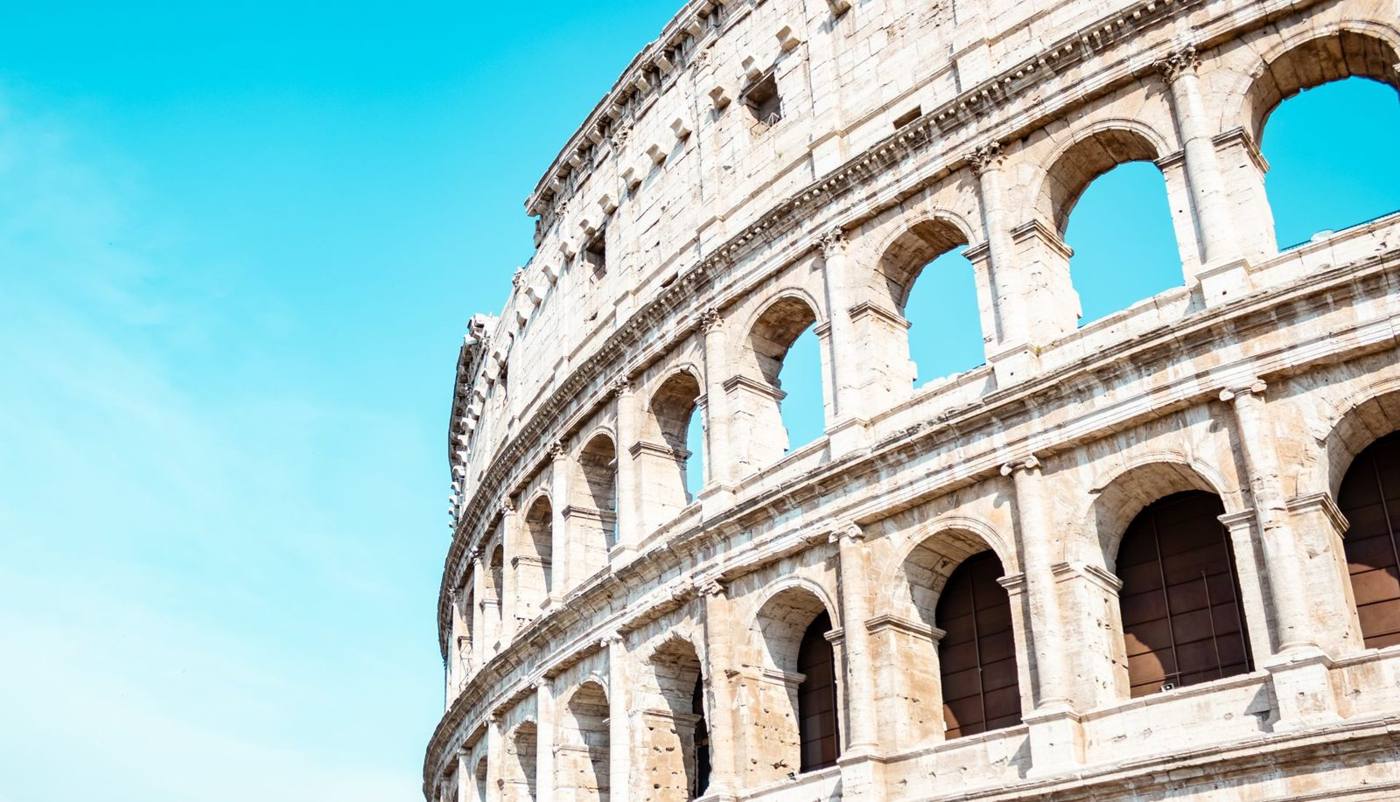
Rome, Florence and Venice
A first trip to Italy by high-speed train: ancient Rome and the Vatican, the Renaissance in Florence and the canals of Venice.
 7 daysEasy
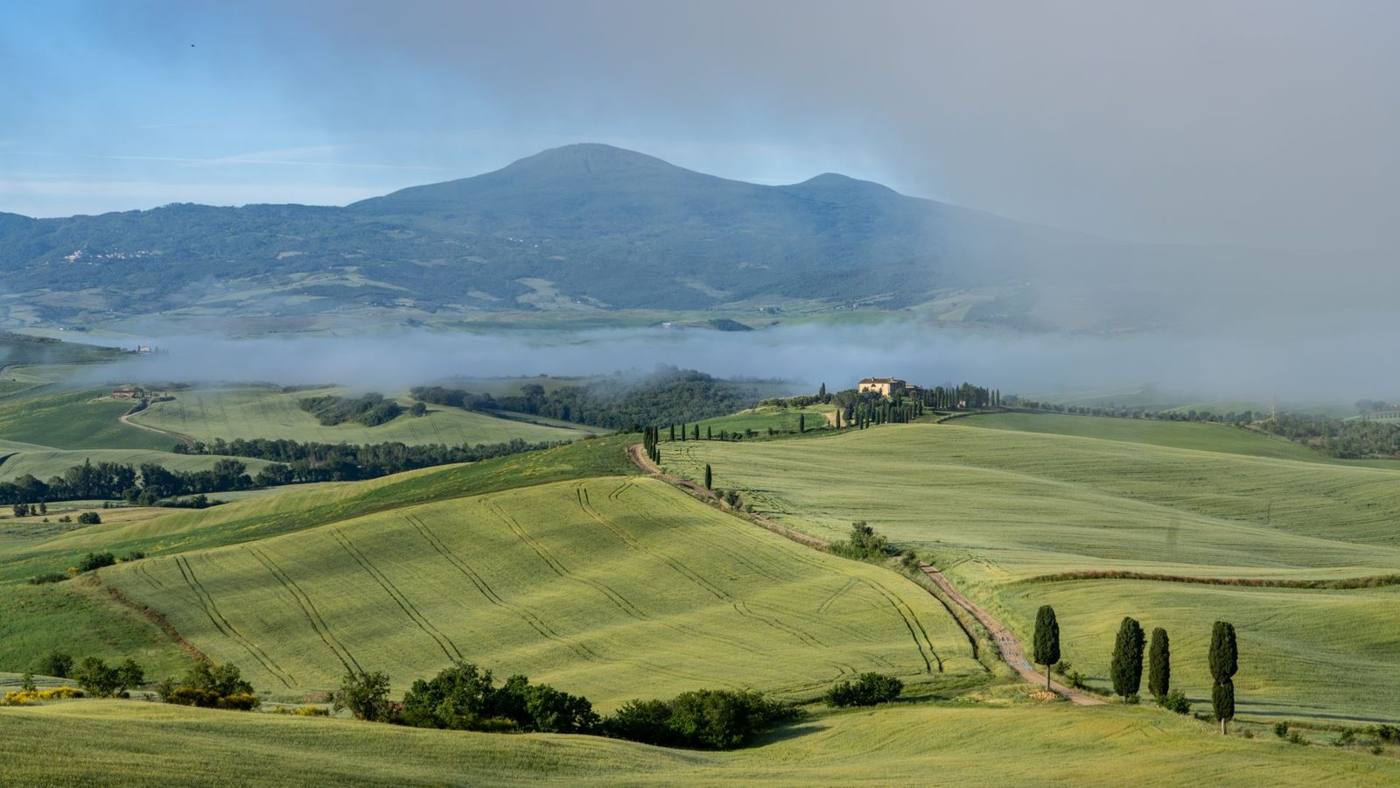
Tuscany: Val d'Orcia and Chianti
Siena and the Palio, San Gimignano, the Chianti vineyards, the cypresses of the Val d'Orcia, Pienza and Montepulciano.
 7 daysModerate
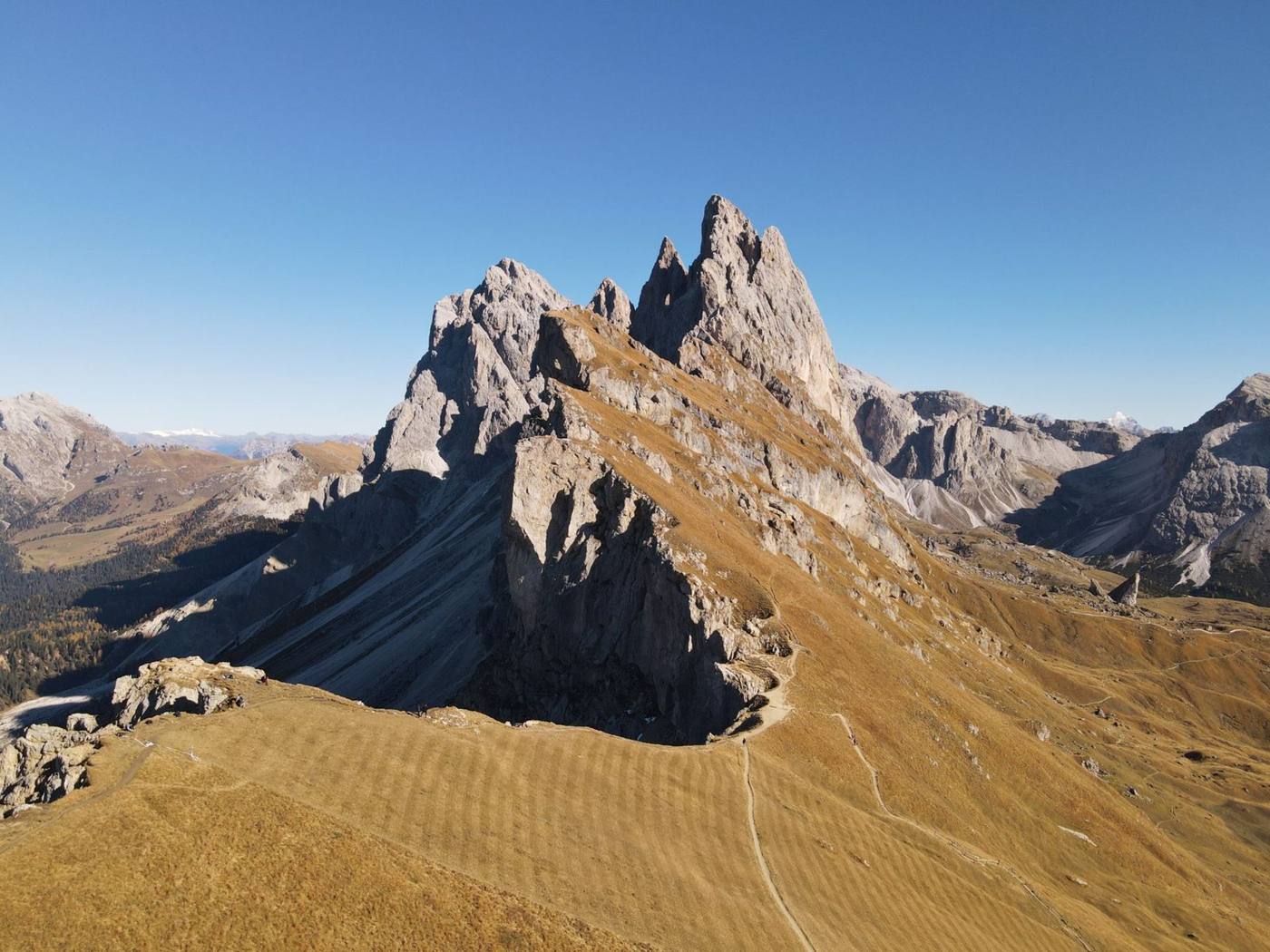
The Dolomites
Val Gardena and the Alpe di Siusi, Seceda, the Tre Cime di Lavaredo, Lake Braies and Cortina, among mountain huts and Dolomite passes.