Great Indonesia: Java, Bali and Flores
The complete trip for a first visit: Borobudur and Bromo, Bali's rice terraces and the Komodo dragons.
- Yogyakarta
- Borobudur
- Prambanan
- Bromo
- Ubud
- Sidemen
- Labuan Bajo
- Komodo
- Padar
Day by day
- Day 1
Arrival in Yogyakarta
This trip is the great Indonesia for a first visit, in sixteen days and three very different islands: Java with the temples of Borobudur and Prambanan and sunrise over Bromo volcano, Bali with its rice fields, water temples, the Sidemen valley and the sea at Amed, and finally Flores with Komodo National Park, its dragons, the island of Padar and the manta rays. You travel with three domestic flights, a train, cars with drivers and two nights on a boat.
Before you go: Italian citizens need a valid passport and the visa on arrival, which costs 500,000 rupiah and can also be paid online before departure; in August 2026 an increase to 750,000 rupiah was proposed, check the amount before leaving. Anyone entering Bali also pays the provincial tourist levy, 150,000 rupiah per person. Other nationalities should check their own rules. Bromo is an active volcano: in November 2026 it erupted and there is a one kilometre exclusion zone around the crater, so check the alert level before you go.
You arrive in Jakarta or Bali after a long flight with a stopover, then take a domestic flight to Yogyakarta. The new Yogyakarta international airport is far from the city, about an hour by road, and is also served by a train.
Yogyakarta, which everyone calls Jogja, is the cultural capital of Java, with a sultan who still lives in his palace, batik schools and shadow puppet theatre.
In the evening walk along Malioboro, the main street, among the stalls and the pedal rickshaws, and have dinner with gudeg, the local dish of young jackfruit slowly cooked in coconut milk.
Sleep in Yogyakarta, for three nights.
Practical tip: buy a local SIM card with data at the airport, you need your passport. With ride hailing apps you can travel by car or motorbike at clear prices.
- Day 2
Borobudur at dawn
Today you see the largest Buddhist monument in the world.
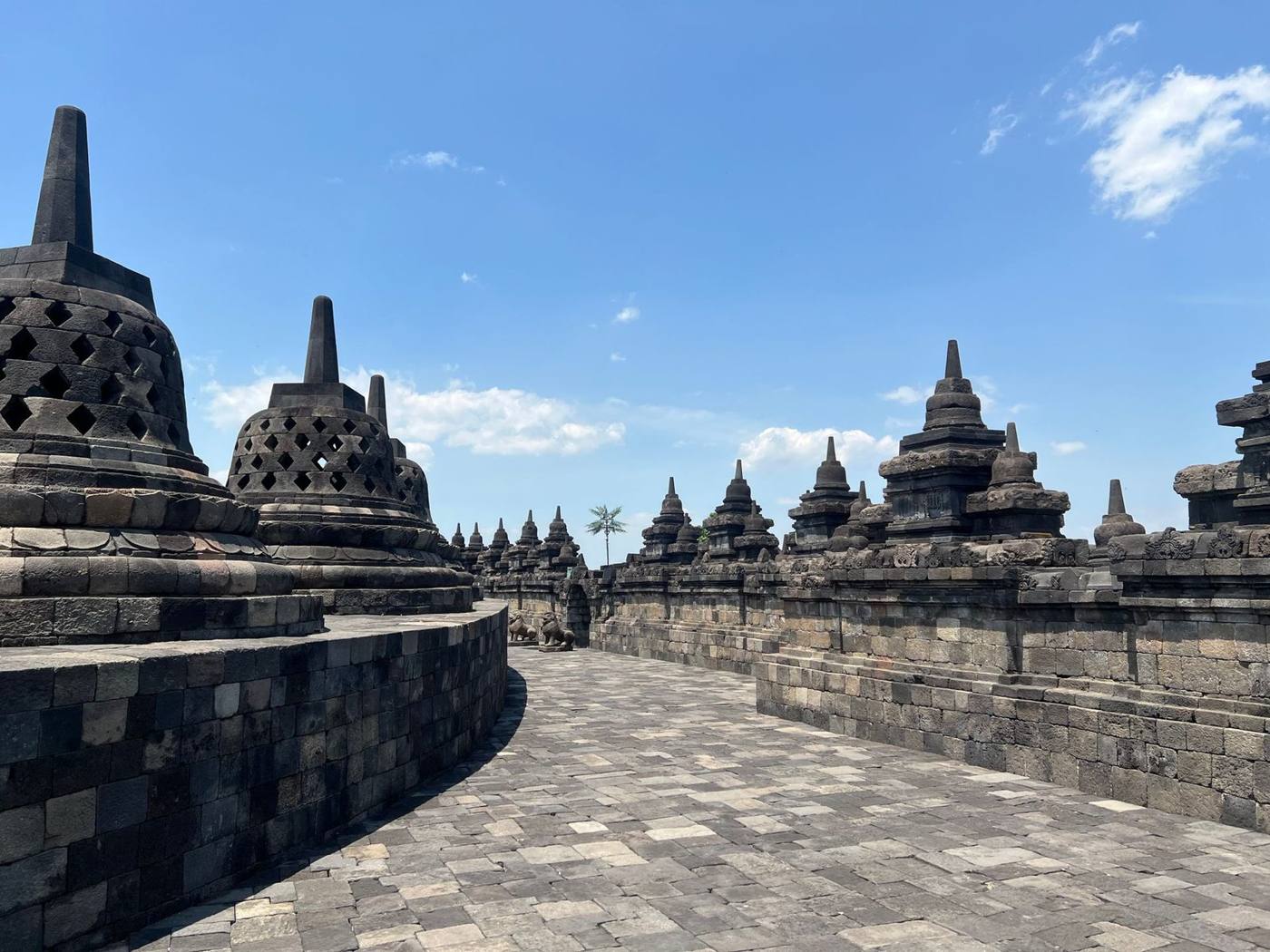
Leave very early, before five, to reach Borobudur, about an hour and a quarter north-west of Yogyakarta, in the Kedu valley, among volcanoes and rice fields. The temple was built between the eighth and ninth centuries, under the Sailendra dynasty, then it was abandoned and covered by ash and forest for centuries. It has been a UNESCO World Heritage Site since 1991.
Borobudur is a great stepped mountain of stone, with no rooms inside. Pilgrims climbed by walking around the terraces, from bottom to top, along kilometres of reliefs that tell the life of the Buddha and Buddhist teachings. At the top, the round terraces hold dozens of perforated bell-shaped stupas, each with a statue of the Buddha inside.
To protect the stone, climbing the monument is limited to a set number of visitors per day, with timed tickets and special sandals handed out at the entrance. Book on the official website a few days ahead and check prices and times.
After the visit, stop at the small temples of Pawon and Mendut, on the same line as Borobudur. Inside Mendut temple there is a large statue of the seated Buddha, about three metres tall, with two bodhisattvas at his sides.
In the afternoon return to Yogyakarta and rest. In the evening try kopi joss, coffee with a piece of glowing charcoal dropped inside, at the stalls near the station.
Sleep in Yogyakarta.
Practical tip: cover your shoulders and knees, and bring water and a hat. After nine the sun on the stone becomes very strong.
- Day 3
Prambanan and the sultan's palace
Today you move from Hindu temples to the palaces of the city.
In the morning visit the kraton, the palace of the sultan of Yogyakarta, built in the eighteenth century. It is a group of courtyards and open pavilions, with collections of gamelan, portraits, carriages and court objects. On some mornings there are music or dance performances. Check prices and times, because it closes early.
Nearby visit Taman Sari, the water castle, the old garden of pools and underground passages where the sultan's family relaxed. Around it is a neighbourhood of alleys with batik workshops.
In the afternoon go to Prambanan, about half an hour east of the city. It is the largest Hindu complex in Indonesia, from the ninth century, a UNESCO World Heritage Site. The three main temples, very tall and pointed, are dedicated to Shiva, Vishnu and Brahma. The Shiva temple, in the centre, is about forty-seven metres high and has reliefs with the stories of the Ramayana. The complex was damaged by an earthquake in 2006 and has been largely restored.
In the same park visit the Buddhist temple of Sewu, the second largest in Java, and much less crowded.
At sunset climb to the site of Ratu Boko, on a nearby hill, with its stone gateway.
In the evening, in the dry season, watch the Ramayana ballet in the open air in front of the floodlit temples.
Sleep in Yogyakarta.
Practical tip: there are combined tickets for Prambanan and Ratu Boko. Check on the official website and buy only at the park ticket offices.
- Day 4
East to Bromo
Today you cross Java from west to east, a long travel day.
Early in the morning take the train from Yogyakarta eastwards to Probolinggo, the most convenient town for going up to Bromo. The journey takes many hours, through rice fields, sugar cane plantations, villages and volcanoes on the horizon. Indonesian trains are clean and punctual, with air conditioned carriages. Book your seats on the official railway website or app. Alternatively, you can fly from Yogyakarta to Surabaya and continue by car, about three hours.
In Probolinggo a car with driver will take you up to Cemoro Lawang, the village on the rim of the caldera, about two hours away. The road climbs through fields of onions, cabbages and potatoes, grown on very steep slopes by the Tengger people, a Hindu community that has lived in these mountains for centuries.
Bromo lies inside Bromo Tengger Semeru National Park. The volcano rises in the middle of a huge ancient caldera, called Tengger, with a flat floor of grey volcanic sand, the sea of sand. Further south you can see Semeru, the highest volcano in Java, which smokes almost all the time.
You reach Cemoro Lawang in the late afternoon. At over two thousand metres it is cold, especially at night: bring a warm jacket, a hat and gloves.
Have an early dinner with a hot soup and go to bed straight away, because tomorrow the alarm goes off at around three.
Sleep in Cemoro Lawang.
Practical tip: buy the park entrance ticket online in advance, on the official website. Check prices and times, as well as any closures due to volcanic activity.
- Day 5
Sunrise over Bromo
Today you see one of the most famous sunrises in Asia.
At about half past three set off by jeep to the viewpoints on the rim of the caldera, such as Penanjakan or the nearby hills. Wait in the dark, with hundreds of other people, while the sky changes colour. As the sun rises the landscape appears: the smoking cone of Bromo, the extinct volcano Batok with its flanks carved by the rain, the sea of sand covered in mist and, in the background, Semeru.
After sunrise the jeep goes down into the sea of sand. Normally you walk to the staircase that climbs to the rim of the Bromo crater. After the eruption of November 2026, however, the authorities set a one kilometre exclusion zone around the crater. Respect the limits marked on the ground and the rangers' instructions: steam explosions can come without warning.
At the foot of the volcano stands the Hindu temple of Luhur Poten, where the Tengger celebrate the Yadnya Kasada festival every year, throwing offerings into the crater.
Visit also the savannah and the green hills south of the caldera, known as the Teletubbies hills, and the area of the whispering sand, where the wind makes the sand vibrate.
By mid morning return to your lodging, have breakfast and set off again towards Surabaya, about three and a half hours away. In the afternoon rest and stroll through the centre of Indonesia's second city.
Sleep in Surabaya, near the airport.
Practical tip: bring a mask and glasses against the volcanic dust. On the sea of sand the wind lifts it very often.
- Day 6
Flight to Bali and Ubud
Today you leave Java and arrive in Bali, the island of the gods.
In the morning take a flight from Surabaya to Denpasar, about an hour. Alternatively, if you come from Bromo heading east, you can reach the port of Ketapang and cross the Bali Strait by ferry to Gilimanuk, but then you need many hours on the road to the centre of the island. The flight is easier.
From Denpasar airport drive to Ubud, in the centre of the island, in about an hour and a half, longer with traffic.
Bali is an island unlike the rest of Indonesia: most of the people are Hindu, and religion is present at every moment of the day. In front of houses and shops you see canang sari, small baskets of palm leaves with flowers, rice and incense, offered to the gods every morning. Every village has at least three temples and every house has its own small family temple.
Ubud is the cultural heart of Bali, among rice fields, forests and river valleys, with many temples, art galleries, and painting and wood carving workshops.
In the afternoon visit the Ubud palace and the village market, and walk to Saraswati temple, with its pond of lotus flowers.
In the evening watch a Balinese dance performance: the legong, danced by girls in golden costumes, or the kecak, the chorus of men chanting seated in a circle around a fire.
Sleep in Ubud, for four nights.
Practical tip: in Bali you drive on the left and traffic is chaotic. For long journeys book a car with driver for the day.
- Day 7
Ubud and the rice fields
Today you discover the surroundings of Ubud on foot and by car.
Early in the morning walk the Campuhan ridge, an easy path along a grassy crest between two valleys, with coconut palms and views over the forest. At seven it is cool and there are few people.
Then visit the Ubud monkey forest, a sacred wood with three temples and hundreds of macaques. Do not carry food in sight, keep glasses and phone well closed in your bag and do not touch the monkeys. Check prices and times.
In mid morning go to the Tegallalang rice terraces, north of Ubud, with green steps running down a narrow valley. They are much photographed and crowded: arrive early or walk down among the fields, away from the tourist swings.
Bali's rice fields are watered by the subak system, born more than a thousand years ago: the farmers of each group share the water of the canals, and every decision goes through the water temples. The subak landscape has been a UNESCO World Heritage Site since 2012.
In the afternoon visit a batik or silver workshop in the surrounding villages, such as Celuk, or Mas, known for wood carving.
In the evening try babi guling, roast suckling pig with spices, or bebek betutu, duck slowly cooked in banana leaves.
Sleep in Ubud.
Practical tip: in the rice fields and at some viewpoints farmers ask for a small contribution to pass. Keep some small notes in your pocket.
- Day 8
Tirta Empul and Gunung Kawi
Today you visit the water temples along the sacred Pakerisan river, north of Ubud.
Arrive early in the morning at Tirta Empul, the temple of the holy springs, founded more than a thousand years ago. The water rises from the ground into a pool and flows into long stone basins with dozens of spouts. The Balinese queue in the water and wet their heads under each spout, in a purification ritual. Visitors can take part too, respectfully, wearing a sarong. Check prices and times.
A little further south visit Gunung Kawi, one of the most atmospheric places in Bali. Walk down a long staircase into a green valley, among rice fields and palms, to the river. Carved into the rock walls are ten large funerary monuments about seven metres high, from the eleventh century, dedicated to a king and his family. The silence, the sound of the water and the forest make the place very special.
In the afternoon drive up to Kintamani, on the rim of the Batur caldera, with views of the volcano and the lake. Have lunch with a view, then visit the temple of Ulun Danu Batur, dedicated to the goddess of the lake, who gives water to all the rice fields in the east of the island.
Return to Ubud in the late afternoon.
Sleep in Ubud.
Practical tip: in temples you need a sarong and a sash around the waist, for men and women. They are often lent at the entrance, but having your own is more comfortable and hygienic.
- Day 9
Taman Ayun, Jatiluwih and Lake Beratan
Today you head west and into the mountains, among temples and rice fields on the UNESCO list.
In the morning visit the temple of Taman Ayun, in Mengwi, from the seventeenth century, the royal temple of the old local kingdom. It is surrounded by a moat full of water and has several meru, towers with many roofs of black thatch, which represent the sacred mountain of the gods.
Then climb to the rice fields of Jatiluwih, at the foot of the Batukaru volcano, the widest and most beautiful in Bali. Here the terraces cover whole hills, without the crowds of Tegallalang. There are marked paths of different lengths: follow the shortest, about an hour, or a longer one among the fields and the small subak temples. Check prices and times.
In the afternoon continue to Lake Beratan, at over a thousand metres, with a cool and often misty climate. On the shore visit the temple of Ulun Danu Beratan, dedicated to the goddess of water, with towers that seem to float on the lake. It is one of the most photographed temples on the island.
On the way back stop at the Candikuning market, with mountain fruit, strawberries and spices, or at the Munduk waterfall, if you have time.
Return to Ubud in the evening.
Sleep in Ubud.
Practical tip: in the mountains it can rain even in the dry season. Bring a light waterproof jacket and shoes that do not mind mud for the paths through the rice fields.
- Day 10
Sidemen and eastern Bali
Today you leave Ubud and head east, into the most rural and peaceful Bali.
In the morning, on the way, stop at Klungkung, the old capital of a Balinese kingdom. In the Kerta Gosa pavilion, the old court of justice, the ceilings are painted in the traditional Kamasan style, with scenes of punishments in the afterlife. Check prices and times.
Then climb into the Sidemen valley, one of the most beautiful on the island. Terraced rice fields run down to the river, the villages are small and in the background, when the sky is clear, you see Mount Agung, the highest and most sacred mountain in Bali, over three thousand metres.
In the afternoon walk through the rice fields with a village guide, or on your own along the paths between the fields. You will see farmers at work, ducks in the flooded fields and plantations of chilli and salak, the fruit with a skin that looks like snakeskin.
Sidemen is also known for songket fabrics, woven with gold and silver threads. In some houses you can watch the women at the loom.
At sunset sit on a terrace above the valley: the light on the rice fields and on Agung is beautiful.
In the evening have a simple dinner of nasi campur, rice with many small side dishes, vegetables, tempeh and sambal, the hot chilli sauce.
Sleep in Sidemen.
Practical tip: the road to Sidemen is narrow and full of bends. Travel with a local driver and do not drive after dark.
- Day 11
Tirta Gangga and snorkelling at Amed
Today you go down to the sea of eastern Bali.
In the morning visit Tirta Gangga, the water palace built in the twentieth century by the last king of Karangasem. It is a garden of pools, fountains and statues, with stepping stones that let you walk on the water among colourful fish. Arrive early, before the groups. Check prices and times.
If you wish, you can also see the temple of Lempuyang from afar, with its famous gate of heaven. For the photo people queue for hours: decide whether it is worth it.
At the end of the morning reach Amed, a long coast of small fishing villages, with black volcanic sand beaches, jukung outrigger boats and Mount Agung behind.
In the afternoon go snorkelling straight from the shore. A few metres from the beach there are corals, clownfish, butterflyfish and, with some luck, turtles. In front of the village of Banyuning there is a small Japanese wreck a few metres deep, easy to see with a mask.
A little further north, at Tulamben, lies the wreck of the Liberty, an American ship sunk after an attack in the Second World War, now covered in coral, which you reach by swimming from the beach. It is one of the most famous dives in Indonesia.
At sunset watch the fishermen coming back with their boats.
Sleep in Amed.
Practical tip: the beaches at Amed are made of pebbles and coarse sand. Bring water shoes and check the currents with locals before swimming far out.
- Day 12
Flight to Labuan Bajo
Today you leave Bali for the wildest part of the trip.
Early in the morning leave Amed for Denpasar airport, about three hours by road. From here take the flight to Labuan Bajo, on the island of Flores, about an hour and a quarter. From the plane, if the sky is clear, you see the islands of Lombok and Sumbawa and their volcanoes.
Flores is a long, mountainous island in the Lesser Sunda Islands, very different from Bali. Most of the people are Catholic, with churches, processions and traditional villages in the interior.
Labuan Bajo was a small fishing village and has become the gateway to Komodo National Park. The harbour is full of wooden sailing boats, the pinisi, which run cruises among the islands.
In the afternoon check the details of tomorrow's cruise with your operator: times, snorkelling equipment, life jackets, food and water. Since 1 April 2026 the park has limited visits to Komodo, Rinca and Padar to a thousand people a day: make sure the permits are already booked.
At sunset climb one of the hills above the town, such as Sylvia hill, to watch the sun go down behind the islands of the bay.
In the evening have dinner at the fish market on the seafront, where you choose fresh fish and have it grilled with rice and sambal.
Sleep in Labuan Bajo.
Practical tip: domestic flights in Indonesia are often late. Do not plan the cruise on the same day as the flight, and always keep a margin.
- Day 13
By boat to Rinca and the bat islands
Today you start the two night cruise in Komodo National Park.
The park, a UNESCO World Heritage Site since 1991, protects the islands of Komodo, Rinca, Padar and many smaller islands, with their sea. It is the only place in the world where the Komodo dragon lives in the wild, the largest lizard on Earth, which can exceed three metres.
In the morning board the boat in the harbour of Labuan Bajo and sail among dry islands and golden hills, on a blue and clear sea. The first stop is often the small island of Kelor, with a short but steep climb to a viewpoint.
Then you reach the island of Rinca, where you go ashore with a park ranger for a walk through savannah and dry woodland. Dragons are often seen near the ranger post and along the trails. They seem slow, but they are fast and dangerous: always stay behind the ranger, in a group, and do not go close. You will also see water buffalo, deer and monkeys.
In the afternoon go snorkelling on a nearby reef, with corals and tropical fish.
At sunset the boat stops in front of the island of Kalong, covered in mangroves. As the sky darkens, thousands of large fruit bats leave the trees and fly over the boat towards Flores, looking for food.
In the evening have dinner on board, under a sky full of stars.
Sleep on the boat.
Practical tip: women on their period should tell the ranger before the walk, because dragons can smell blood from far away. It is a park safety rule.
- Day 14
Padar, Pink Beach, Komodo and the manta rays
Today is the richest day of the cruise.
Before dawn the boat drops you on the island of Padar. Climb with a torch for about forty minutes on a path of steps and earth to the viewpoint. As the sun rises you see the most famous landscape in Indonesia: three crescent shaped bays, one of white sand, one black and one pinkish, among hills of dry grass and a turquoise sea.
Then go to Pink Beach, a beach with a pink colour, due to fragments of tiny red marine organisms mixed with the white sand. Snorkel on the reef in front of the beach, one of the richest in the park.
In mid morning you arrive on the island of Komodo, the largest in the park. With a ranger you walk the trails of Loh Liang, among palms and savannah, looking for dragons and other animals, such as deer, wild boar and the yellow-crested cockatoo.
In the afternoon the boat goes to Manta Point, an area of strong currents where giant manta rays come to feed on plankton and be cleaned by fish. You swim above them with a mask: they can exceed four metres across. Then have a swim at Taka Makassar, a sandbank of white sand that appears at low tide.
In the evening the boat stops in a quiet bay.
Sleep on the boat.
Practical tip: at Manta Point the currents are strong. Always swim close to the guide, with a life jacket or a buoy, and get back on board at once if you tire.
- Day 15
Kanawa and the return to Labuan Bajo
Today is the last day on the boat in Komodo National Park.
Early in the morning go snorkelling off a small island, such as Kanawa or Siaba, with the low light that makes the corals glow. Here you often see green turtles grazing on seagrass on the bottom, Napoleon wrasse, shoals of colourful fish and, sometimes, small blacktip reef sharks on the sand.
The sea of Komodo National Park is among the richest in the world. The currents between the Indian Ocean and the Flores Sea bring nutrients and clean water, and that is why corals and fish are so abundant. Respect the rules: do not touch the corals, do not walk on the reef and do not feed the fish.
At the end of the morning the boat heads back towards Labuan Bajo. During the crossing enjoy the view of the dry islands and the fishermen's sailing boats.
You reach the harbour around lunchtime. In the afternoon rest and take a long shower. If you have energy, visit the cave of Batu Cermin, a few kilometres from town, a limestone cave where the sun comes in through a crack and lights up the walls. Check prices and times.
In the evening have dinner on the seafront with grilled fish and a last view of the sunset over the bay.
Sleep in Labuan Bajo.
Practical tip: on the boat use a reef safe sun cream, without oxybenzone, and bring a long sleeved shirt for snorkelling. The sun on the water burns a lot.
- Day 16
Flight to Bali and departure
On the last day take the flight from Labuan Bajo to Denpasar, about an hour and a quarter, and from Bali the long haul flight with a stopover.
Choose a morning domestic flight and leave many hours of margin before the international departure, because delays are frequent. If you can, buy a single ticket with the same airline, so that if there is a delay they move you to the next flight.
If you have a few hours in Bali, spend them near the airport: a walk on Jimbaran beach, with the fishing boats, or the temple of Uluwatu on the cliff, at sunset, if your flight leaves at night.
What to bring home: batik from Yogyakarta, bought in workshops or schools, coffee from Java and Flores, spices, carved wooden figures from Bali, ikat textiles from Flores, small gamelan pieces or bamboo instruments.
This trip shows three very different faces of Indonesia: in Java the great Buddhist and Hindu temples and the volcanoes of Bromo; in Bali everyday religion, the subak rice fields and the sea at Amed; in Flores the wild nature of Komodo National Park, with the dragons, Padar and the manta rays.
When to go: the best period is from May to September, in the dry season, with clear skies for Bromo and calm seas at Komodo. April and October are good compromises. From December to March it rains a lot and the sea at Komodo can be rough.
Practical tip: keep everything you need for one night in your hand luggage, in case you miss a connection.
The most complete trip to discover Indonesia in two weeks, with three very different islands. At least three domestic flights are needed, cheap in Indonesia but often delayed. With less time, drop Java and stay longer in Komodo.
Before you go
- Documents and visa
- Passport with at least six months' validity. Visa on arrival 500,000 rupiah for 30 days, extendable once, or online on the official immigration website. In Bali you also pay the 150,000 rupiah tourist levy.
- Health and vaccines
- No compulsory vaccines arriving from Europe. Protect yourself against mosquitoes because of dengue; Bali has rabies, so keep away from dogs and monkeys. The eastern regions carry malaria risk: ask your doctor. Emergencies: 110 police, 112 general number.
- Money and payments
- Indonesian rupiah. Cards work in hotels and shops in tourist areas; QR payments are widespread; markets and villages need cash.
- Power sockets
- Types C and F, 230 volts: the same round-pin sockets as much of Europe.
- Time zone
- The country has three time zones. Java is UTC+7, Bali UTC+8, with no daylight saving time.
- Safety
- Tourist areas are generally calm. The United States rates Indonesia level 2 and the Papua regions level 4. Active volcanoes may close on alert. Very severe drug penalties. Official advice: GOV.UK.
Information checked in November 2026 for Italian and EU citizens. Rules change: always check before you travel.
Variations
In 10 days: skip Java and do Bali with Ubud and Sidemen, then three days at Komodo.
In 21 days: add Ijen volcano after Bromo and inland Flores, with Wae Rebo, Bajawa and Kelimutu.
Frequently asked questions
What documents do I need?
A valid passport and the visa on arrival at 500,000 rupiah, which can also be paid online, with an increase proposed in August 2026: check the amount. In Bali you also pay the tourist levy of 150,000 rupiah. Other nationalities should check their own rules.
Can you climb to the Bromo crater?
After the eruption of November 2026 there is a one kilometre exclusion zone around the crater. Sunrise from the viewpoints is still possible, but check the alert level and follow the rangers.
How do I book the Komodo cruise?
With a licensed operator in Labuan Bajo, who also handles the park permits. Since 1 April 2026 visits to Komodo, Rinca and Padar are limited to a thousand people a day: book early and check the life jackets on board.
Indicative itinerary written by World Atlas. Before booking, check timetables, seasonal openings, documents and safety.
 7 daysModerate
The Banda Islands
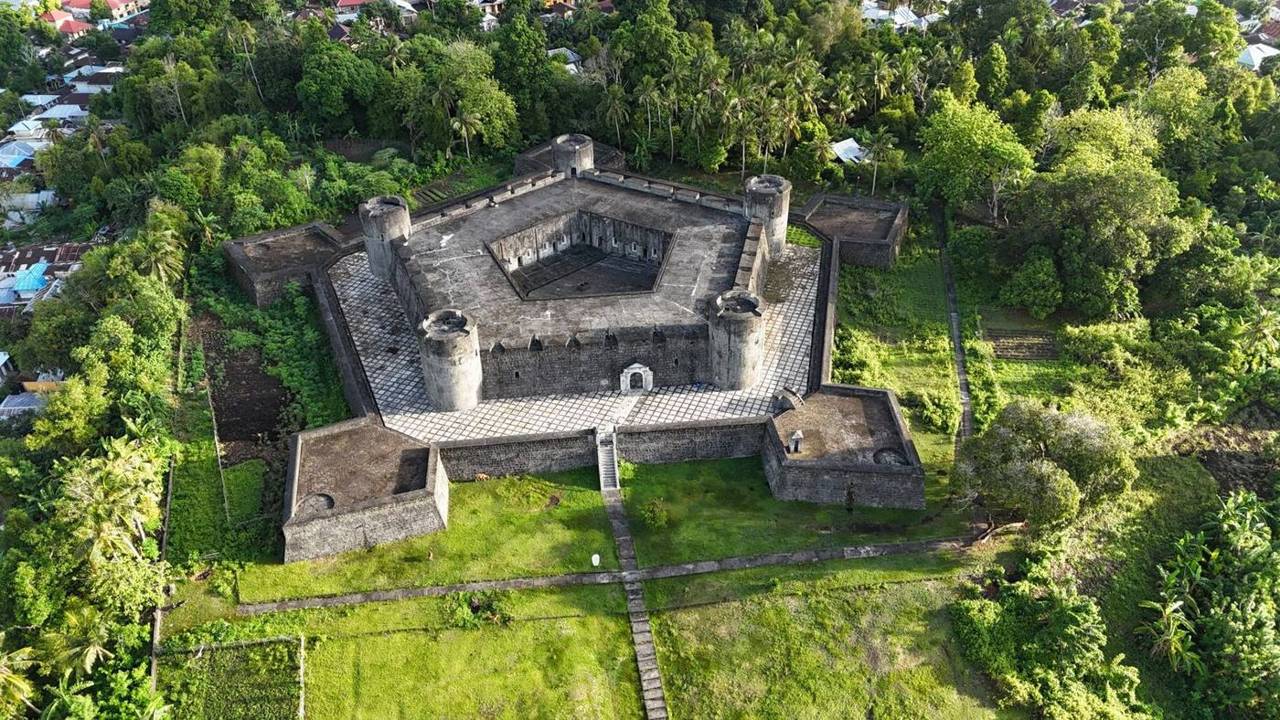
The Spice Islands of the Moluccas, over which the Dutch and English went to war: nutmeg plantations beneath giant canarium trees, the Dutch forts of Banda Neira, the Gunung Api volcano and pristine reefs with coral walls dropping sharply a few metres from shore.
 7 daysModerate
Flores overland: Wae Rebo and Bajawa
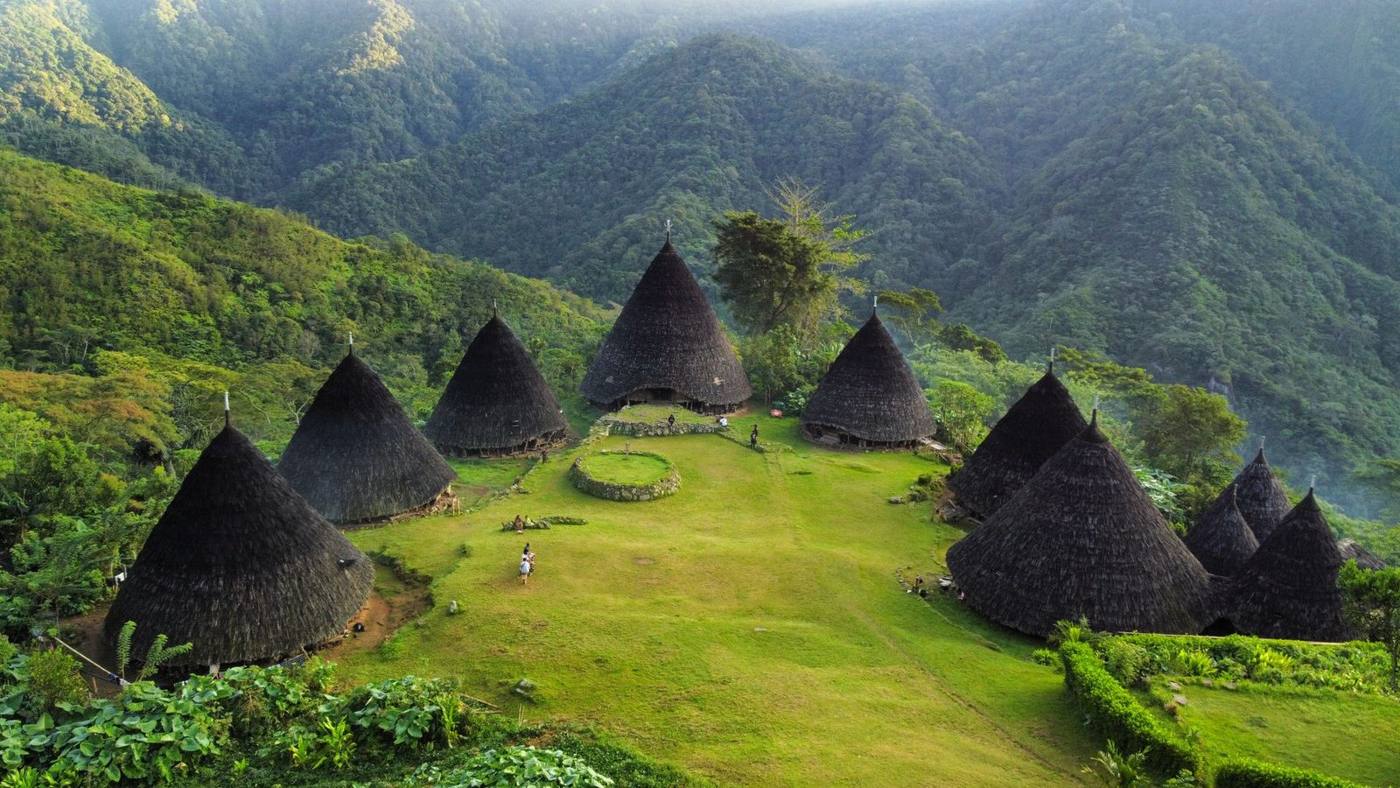
Inland Flores away from the Komodo boats: the spiderweb rice fields of Cancar, the village of Wae Rebo with its conical houses reached on foot through the forest, the megalithic Ngada villages of Bena around Bajawa, hot springs and the three coloured lakes of Kelimutu.
 7 daysModerate
Sumba: megalithic villages and the Pasola
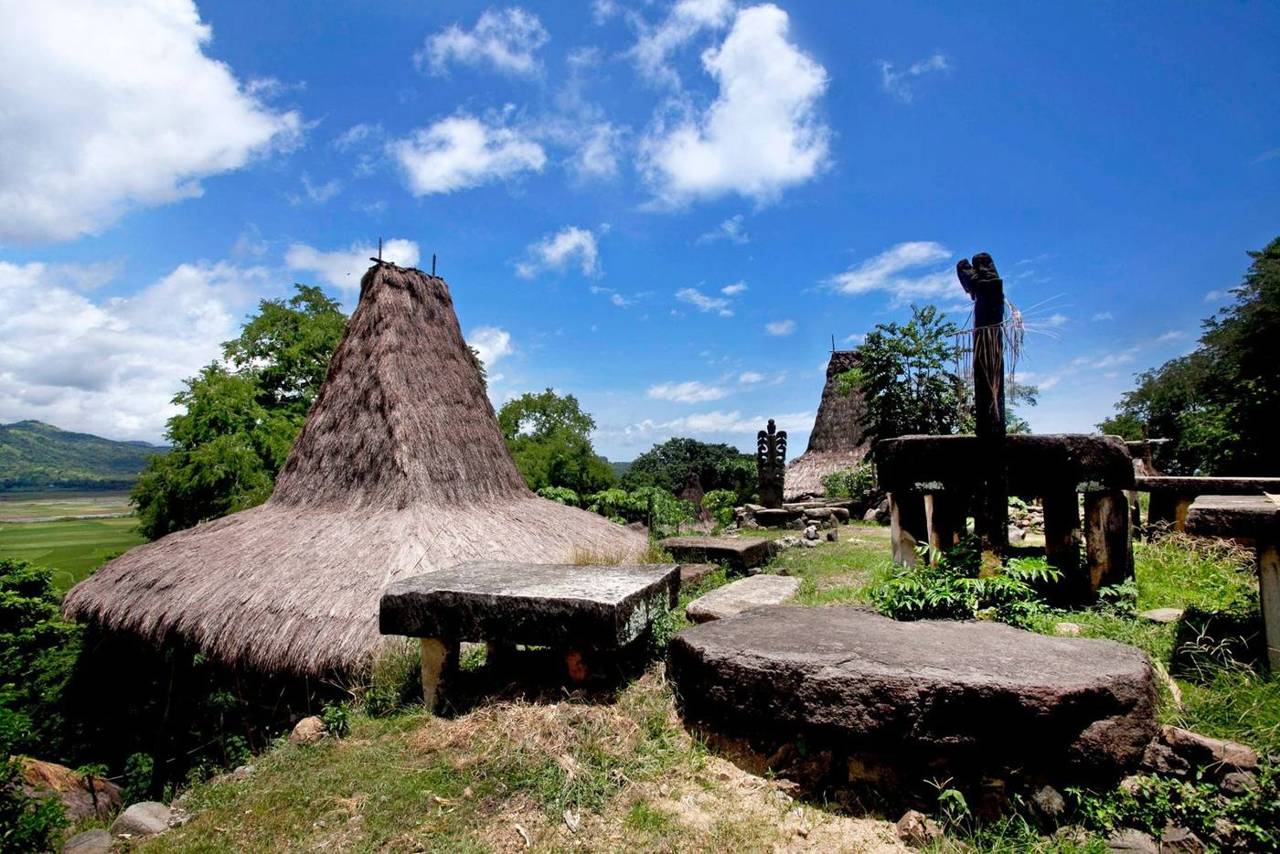
An island outside time, where the Marapu religion is still practised: villages with tall pointed roofs and stone tombs, ikat weavers, wild beaches such as Weekuri and Mandorak and, between February and March, the Pasola, a ritual battle on horseback with wooden spears.