Reykjavík and Snæfellsnes in a long weekend
Four days for a first taste: the capital, a geothermal lagoon and the peninsula known as Iceland in miniature.
- Reykjavík
- Snæfellsnes
- Kirkjufell
- Arnarstapi
- Reykjavík
Day by day
- Day 1
Reykjavík: Hallgrímskirkja, the harbour and Harpa
You land at Keflavík, on the Reykjanes peninsula: Reykjavík is about 45 minutes away by airport bus or by the rental car you will need tomorrow. EU citizens need only a valid identity card or passport. If you pick up the car straight away, note that since 2026 Iceland has charged a fee per kilometre driven, which rental companies collect through the contract.
Drop your bags and start with Hallgrímskirkja, the great white church towering over the city: its façade recalls basalt columns, and from the tower, reached by lift, you see the colourful roofs, the harbour and the mountains across the bay. Walk down Skólavörðustígur, the sloping street with its painted rainbow stripes, to Laugavegur, the main shopping street.
In the afternoon walk to the Tjörnin pond beside the city hall, where swans and ducks swim, then on to the old harbour, with fishermen's huts turned into cafés and boats leaving for whale watching and, in summer, puffin trips. Harpa, the concert hall, has a cellular glass façade that changes colour with the light; entry to the foyer is at no cost. Along the seafront stands the Sun Voyager, a steel sculpture shaped like a Viking ship.
In the evening try an open-air municipal pool, the true daily ritual of Icelanders. Practical tip: Reykjavík's tap water is excellent and drinkable everywhere, so there is no need to buy bottled water.
- Day 2
Snæfellsnes south coast: seals, a black church and cliffs
Set off early by car heading north. The road passes through the tunnel under the Hvalfjörður fjord and reaches Borgarnes in just over an hour; from there you enter the Snæfellsnes peninsula, called Iceland in miniature because in 90 kilometres it has a glacier-capped volcano, lava fields, cliffs, black and golden beaches and fishing villages. Arnarstapi is about two and a half hours from Reykjavík.
The first stop is Ytri-Tunga beach, where seals are often seen lying on the rocks, especially in summer; parking is paid. A little further on is the black church of Búðir, a small wooden church painted black, alone in a lava field by the sea: with the glacier behind it, it is one of the finest images of the trip.
In the afternoon take the walk between Arnarstapi and Hellnar, about two and a half kilometres each way on an easy path above basalt cliffs, with rock arches, sea caves and colonies of gulls and terns. In Arnarstapi stands a large stone statue of Bárður, the peninsula's guardian spirit according to the sagas.
Stay two nights on the peninsula, in or near Arnarstapi or in Ólafsvík. Practical tip: Arctic terns defend their nests by dive-bombing in June and July; a hat or a stick held above your head is enough to keep them away.
- Day 3
The tip and north coast of Snæfellsnes: Djúpalónssandur and Kirkjufell
Today you circle the tip of the peninsula, inside Snæfellsjökull National Park. The glacier-capped volcano, over 1,400 metres high, is the one Jules Verne chose as the gateway in Journey to the Centre of the Earth; on clear days it is visible even from Reykjavík. The glacier can be climbed only with guides and equipment.
In the morning walk down to Djúpalónssandur, a bay of black pebbles scattered with rusty iron from a trawler wrecked in 1948, and four stones fishermen lifted to prove their strength. The waves here are strong and sudden: keep well back from the shore. Nearby, the Vatnshellir lava cave can be visited only on a guided tour, and the Saxhóll crater is climbed in a few minutes by a staircase.
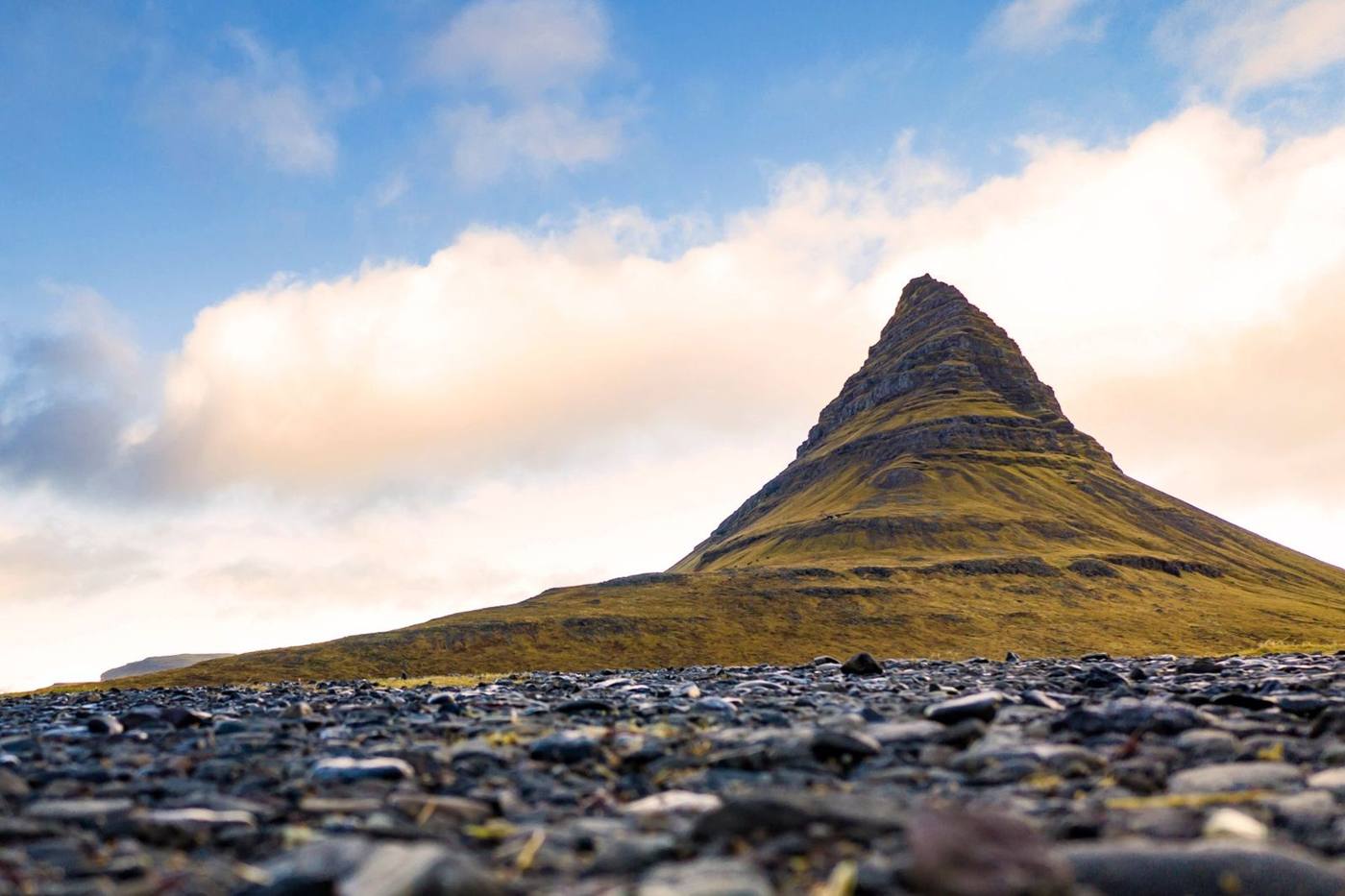
In the afternoon move to the north coast, with the fishing villages of Hellissandur, with murals on its houses, and Ólafsvík. Then Kirkjufell, the arrowhead mountain near Grundarfjörður, with the Kirkjufellsfoss waterfall in front: one of Iceland's most photographed views, at its best in the low light of late afternoon.
In the evening continue to Stykkishólmur, a village of colourful wooden houses around its harbour: climb the islet of Súgandisey, linked by a causeway, for sunset over the islands of Breiðafjörður bay. Practical tip: the wind on the peninsula is ferocious, so open the car door with both hands.
- Day 4
A geothermal lagoon and departure
In the morning drive back to Reykjavík: from Stykkishólmur it takes about two and a half hours, over the pass and then along the coast. For a stop, Borgarnes has a museum on the Icelandic sagas, the medieval tales of families, voyages and feuds that are the country's great literature.
The best way to end the trip is a soak in a geothermal lagoon, naturally hot water in the open air, even in snow. There are several near the capital and the airport, to be booked online for an entry time. Prices vary widely by day, hour and package: check each one's official website. A much cheaper alternative, popular with Icelanders, is the capital's municipal pools, with hot tubs and steam baths.
Be aware: the Reykjanes peninsula, home to the airport and the most famous lagoon, has had many volcanic eruptions since 2021 along the Sundhnúkur crater row near Grindavík. Magma keeps accumulating beneath the area and a new eruption is possible. When one happens, some roads, the town of Grindavík and the nearby lagoon can close at short notice, while the airport has so far always operated. Check the Icelandic Met Office news and the official traveller safety website on the day.
Return the car at the airport. Practical tip: reach Keflavík at least two and a half hours before your flight, and if you spent more than 12,000 krónur in a single shop you can claim the VAT refund at the airport before checking your bags.
The right choice for a long weekend from Luxembourg or Italy, with direct flights. Snæfellsnes is less crowded than the south coast. A smaller geothermal lagoon costs less than the Blue Lagoon and is quieter.
Before you go
- Documents and visa
- EU citizens need only a valid identity card or passport: Iceland is not in the European Union but is in the Schengen area. The ETIAS authorisation is not yet in operation and need not be requested.
- Health and vaccines
- No vaccines required. EU citizens should carry the European Health Insurance Card, valid in Iceland, plus insurance covering rescue in remote areas. Emergencies: 112.
- Money and payments
- Icelandic króna. Cards are accepted everywhere, even for small sums and at petrol pumps; cash is hardly needed. Tipping is not expected.
- Power sockets
- Types C and F, 230 volts.
- Time zone
- UTC all year round: Iceland does not use daylight saving time.
- Safety
- The country is very safe; the risks are natural: storms, icy roads, sneaker waves on southern beaches, eruptions on the Reykjanes peninsula. Official advice: GOV.UK.
Information checked in November 2026 for Italian and EU citizens. Rules change: always check before you travel.
Variations
In 3 days: Reykjavík on the morning of day one, then Snæfellsnes in one long loop of about 400 kilometres, and on day three the lagoon before your flight.
In 6 days: add the Golden Circle (Þingvellir, Geysir, Gullfoss) and the south coast as far as Vík, with the Seljalandsfoss and Skógafoss waterfalls and the black beach of Reynisfjara.
Frequently asked questions
Can I visit Snæfellsnes without a car?
With difficulty: scheduled buses to the peninsula are few and do not reach the beaches and trails. Without a car, a one-day organised tour from Reykjavík is the better option, although it is long and leaves little time at each stop.
How expensive is accommodation in Iceland?
It is expensive and should be booked early, especially in summer and on Snæfellsnes, where villages are small. Each night carries a tax of 800 krónur per unit, 400 at campsites.
Does the long weekend work in winter?
Yes, Snæfellsnes is close and the coast road is usually cleared, but in December there are only four or five hours of daylight. You need a 4x4 with winter tyres and should check the road website and weather warnings every morning.
Indicative itinerary written by World Atlas. Before booking, check timetables, seasonal openings, documents and safety.
 7 daysEasy
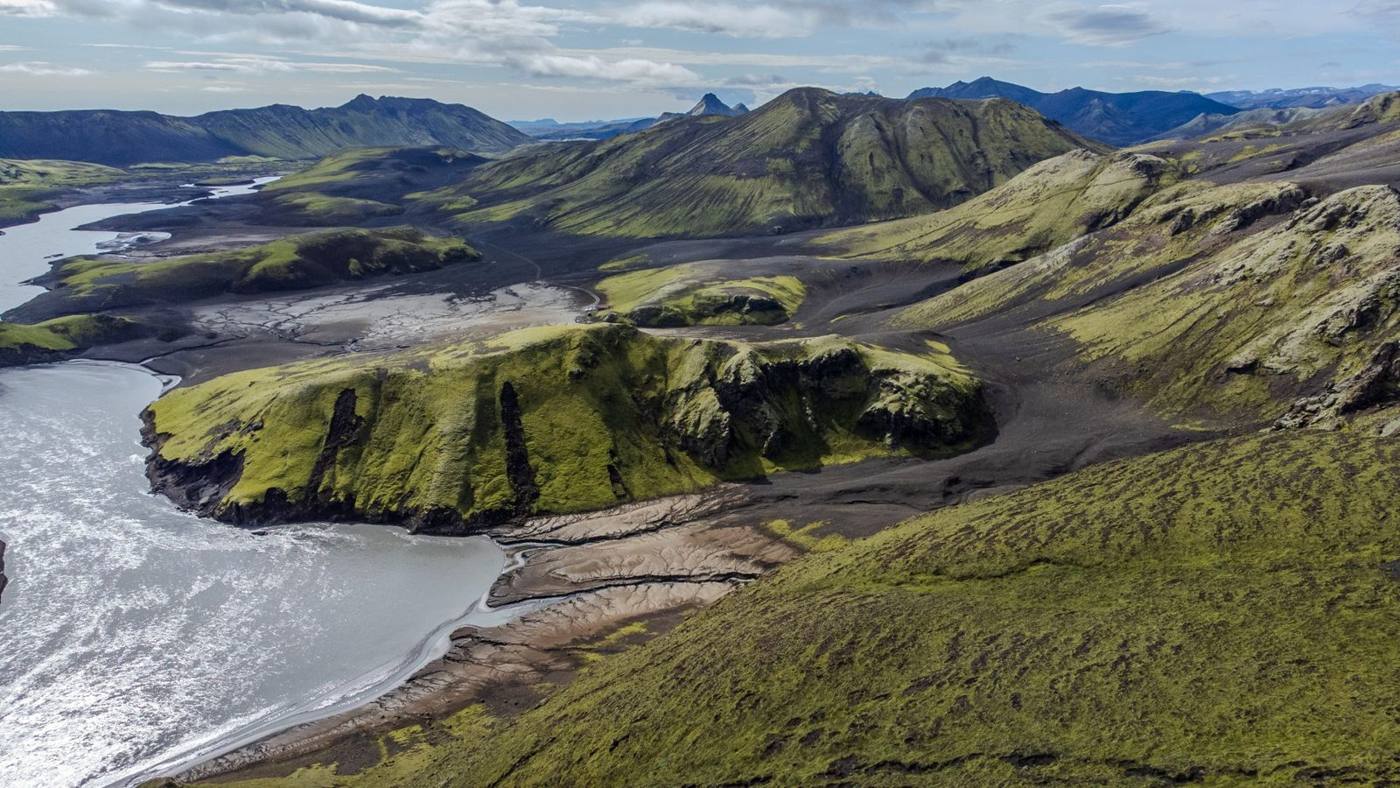
The north: Mývatn, whales and Tröllaskagi
Fly to Akureyri for a week in the north: whales at Húsavík, Goðafoss and Dettifoss waterfalls, the craters of Mývatn and the troll peninsula.
 6 daysModerate
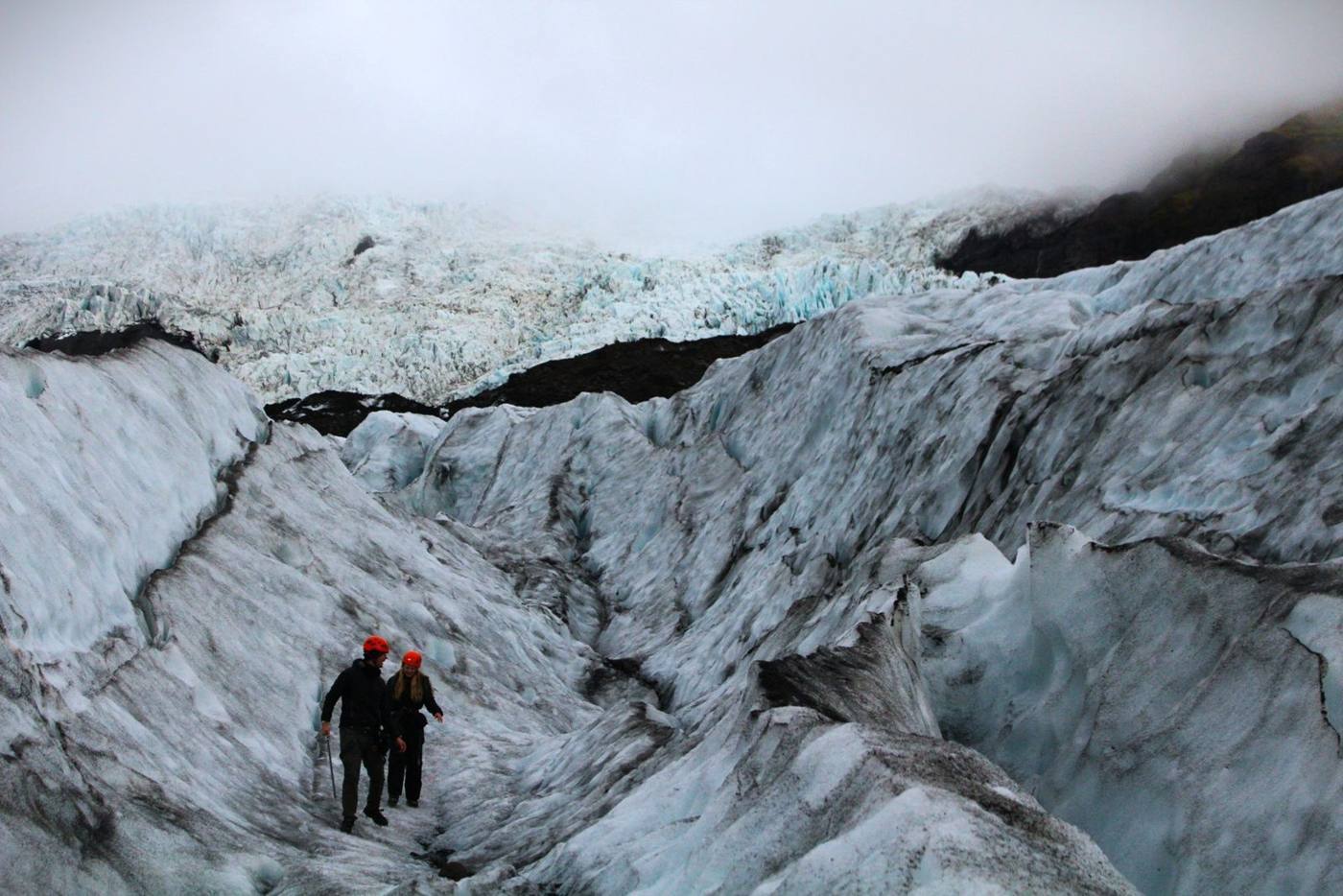
Glaciers and active volcanoes
A glacier hike with crampons at Sólheimajökull or Skaftafell, the Reykjanes peninsula with its recent lava flows and snorkelling in the Silfra fissure.
 10 daysModerate
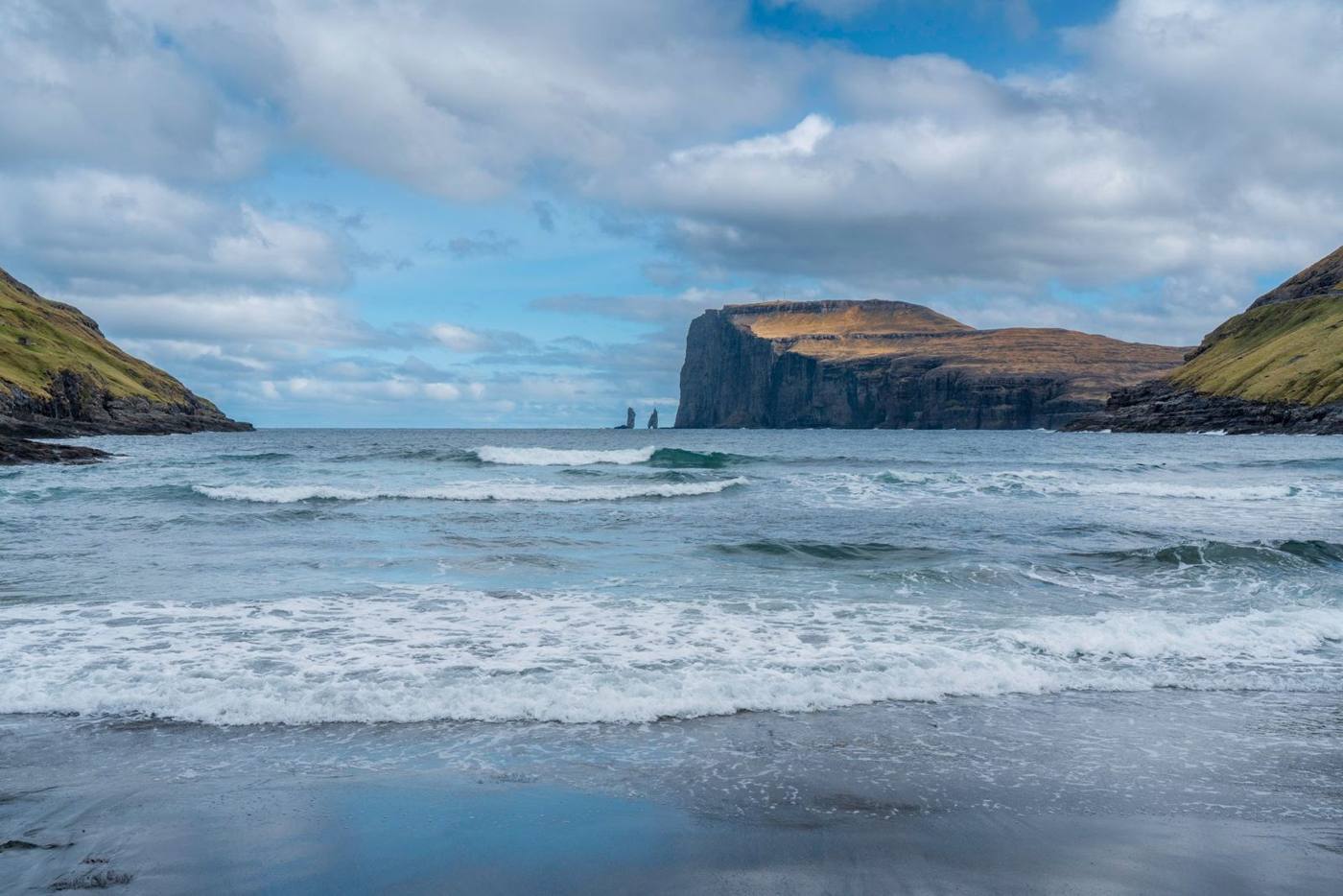
Iceland and the Faroe Islands
Five days on Iceland's south coast and five in the Faroes, among sheer cliffs, turf-roofed villages and seabirds.