Pécs and the south
Hungary's Mediterranean city: the UNESCO early Christian necropolis, the mosque turned church, the Zsolnay quarter and the wines of Villány.
- Pécs
- Zsolnay
- Villány
- Siklós
- Mohács
Day by day
- Day 1
Pécs: Széchenyi Square, the mosque and the necropolis
This trip takes you to southern Hungary, the warmest and least touristy part of the country, with Ottoman and Balkan influences and excellent food. Its centre is Pécs, a city of hills and churches with the early Christian necropolis listed by UNESCO, the mosque that became a church and the Zsolnay cultural quarter; then the red wines of Villány, Siklós castle and Mohács on the Danube.
Before you go: Hungary is part of the European Union and the Schengen area, but the currency is the Hungarian forint, not the euro. Italian citizens only need an electronic identity card or a passport; the paper identity card has not been valid for travel abroad since 3 August 2026. Other nationalities should check their own rules. Near the borders with Croatia and Serbia checks can be more frequent: keep your document with you. Motorways need an electronic vignette and drink driving has a zero tolerance limit.
From Budapest you reach Pécs in about three hours by car or train. Start with Széchenyi Square, the heart of the old town, on a gentle slope. At the top stands the mosque of Pasha Gázi Kászim, built in the sixteenth century during Ottoman rule and later turned into a Catholic church: the green dome, the prayer niches and the Arabic inscriptions sit side by side with the cross and the altar. Check prices and times.
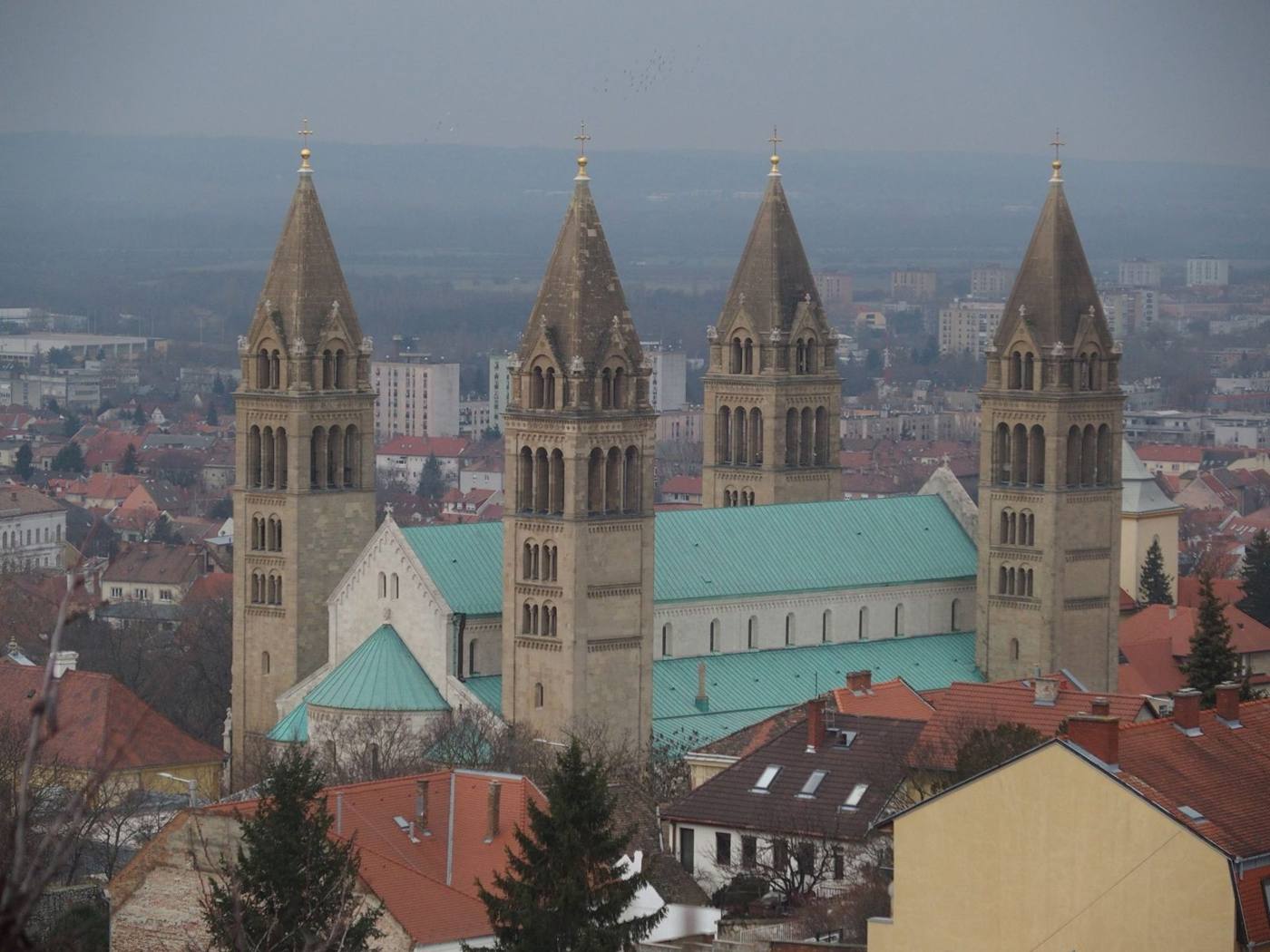
Then climb to the cathedral, with its four towers, and go down beneath the square in front of the church into the early Christian necropolis of ancient Sopianae: painted tombs and burial chapels from the fourth century, protected by a modern structure. Check prices and times.
Sleep in Pécs, for two nights.
Practical tip: Pécs is a city of slopes. Wear comfortable shoes and visit the upper part in the morning, when it is cooler.
- Day 2
Pécs: the Zsolnay quarter and the museums
Today you discover the Pécs of the artists. In 2010 the city was European Capital of Culture, and since then it has had many new cultural spaces.
In the morning walk to the Zsolnay cultural quarter, east of the centre. This was the site of the great Zsolnay ceramics factory, famous for the coloured tiles that cover the roofs of many Hungarian buildings, such as Matthias Church in Budapest. The old restored brick buildings now house museums, workshops, a planetarium and spaces for children. Look above all at the eosin glazed ceramics, with metallic green, purple and golden reflections. Check prices and times.
Return to the centre along Király Street, the pedestrian street with its eclectic buildings and the national theatre. Near the square is the Zsolnay fountain, with its ceramic bulls' heads.
In the afternoon visit one of the museums on Museum Street, near the cathedral. The Csontváry Museum displays the large visionary canvases of Tivadar Csontváry Kosztka, a highly original Hungarian painter. The Vasarely Museum is devoted to the op art artist born in Pécs. Check prices and times.
Further west you see the mosque of Jakovali Hassan, the best preserved in Hungary, still with its minaret.
At sunset go up into the Mecsek hills, above the city, for the view over the rooftops.
Practical tip: at dinner try the food of the south, spicier and more Balkan, with grilled meat, stuffed peppers and fish stew with plenty of paprika. Portions are large, so one main course is often enough for two.
- Day 3
Villány and Siklós castle
In the morning drive south for about forty minutes to Villány, home of the fullest bodied reds in Hungary, at the foot of a small limestone hill. The climate here is almost Mediterranean, with long hot summers.
The main street and the side lanes are lined with white wine cellars dug into the hill, one beside the other. The typical grapes are Cabernet Franc, Merlot and Portugieser, a light red to drink young. Many family wineries offer tastings: choose the ones you like and check prices and times. In the oldest cellars you still see the old wooden barrels and harvest tools.
Then take a walk through the vineyards above the village, with a view over the plain reaching the Croatian border.
In the afternoon continue for fifteen minutes to Siklós. Siklós castle is one of the best preserved medieval castles in the country, with its walls, its Gothic chapel and rooms that tell its long history, up to the nineteenth century. Check prices and times. In town there is also the small Malkocs Bey mosque, restored.
If you have time left, take a dip at the Harkány baths, a few kilometres away, a public bath with outdoor pools and sulphurous water.
Sleep in Villány or Siklós, for one night.
Practical tip: if you go wine tasting, sleep in Villány and walk between the cellars. The next day wait until the alcohol has completely gone before driving: in Hungary the limit is zero. Ask for a spittoon during tastings if you want to try many wines.
- Day 4
Mohács and departure
Last day. Drive east for about forty minutes to Mohács, a small town on the Danube. The name of Mohács is linked to the saddest day in Hungarian history: on 29 August 1526, on the nearby plain, the Ottoman army defeated the Hungarian army and the young King Louis II died while fleeing. It was the start of a century and a half of Ottoman rule over much of the country.
Visit the national memorial, a few kilometres south of town, at the place where the mass graves of the soldiers were found. In the park there are dozens of carved wooden posts, tall and dark, recalling the dead. Check prices and times.
In town see the large votive church and the riverside. Mohács is also famous for the Busójárás, the carnival listed by UNESCO: at the end of winter the men of the Šokci community, of Croatian origin, wear frightening wooden masks and sheepskins to chase winter away. If you are not there in February, you can see the masks in the local museum.
Then head back to Budapest, in about two and a half hours.
In these four days you have seen the south of Hungary: the mosque and necropolis of Pécs, the Zsolnay quarter, the red wines of Villány, Siklós castle and the Mohács memorial.
When to go: the best time is from April to October. September is harvest month in Villány. In February, for the Mohács carnival, book well in advance.
Practical tip: before you leave buy a small piece of Zsolnay ceramics or a bottle of Villány red. Wrap it well in your clothes, in your checked luggage.
A warm, little-visited Hungary with Ottoman and Balkan influences and excellent food. In February the Busójárás carnival in Mohács, a UNESCO heritage event, is a unique festival with fearsome masks. Pécs is about three hours from Budapest.
Before you go
- Documents and visa
- EU citizens need a valid identity card or passport: Hungary is in the EU and the Schengen area. Checks can be more frequent on the borders with Serbia, Croatia, Austria and Ukraine: always carry your document. Other nationalities should check the Schengen rules.
- Health and vaccines
- No vaccines required. Public healthcare is adequate; EU citizens should bring their EHIC, and everyone needs insurance covering medical costs and repatriation. Emergencies: 112, ambulance 104, police 107, fire 105.
- Money and payments
- Hungarian forint (HUF), not the euro. Cards are accepted almost everywhere; when a card machine or cash machine offers to convert into euros or pounds, choose to pay in forints. Motorways need an electronic vignette (e-matrica), bought on the official website or at authorised sales points before you join the motorway.
- Power sockets
- Types C and F, 230 volts.
- Time zone
- Central European Time (UTC+1, summer UTC+2).
- Safety
- There are no areas to avoid, but take normal precautions. Watch for pickpockets in crowded places, thefts from changing rooms at baths and pools, fake taxis and Budapest nightclubs that charge huge bills. Drink driving has a zero tolerance limit, and outside built up areas dipped headlights must be on in daytime too. Official advice: GOV.UK.
Information checked in November 2026 for Italian and EU citizens. Rules change: always check before you travel.
Variations
In 3 days: a full day in Pécs, then Villány and Siklós, returning to Budapest on the evening of the third day.
In 6 days: add two days in the Mecsek hills and at Szigetvár, with the fortress of the 1566 siege and the Turkish Hungarian friendship park.
Frequently asked questions
How far is Pécs from Budapest?
About three hours by car or train. That is why it is worth spending at least two nights in Pécs rather than going on a day trip.
When is the Mohács carnival?
The Busójárás takes place at the end of winter, in the days before Lent, usually in February or early March. The dates change every year: check them before booking.
Do I need a car?
Not for Pécs: you arrive by train and walk around. For Villány, Siklós and Mohács a car is much more convenient, as buses are few.
Indicative itinerary written by World Atlas. Before booking, check timetables, seasonal openings, documents and safety.
 6 daysEasy
The Hungarian spas
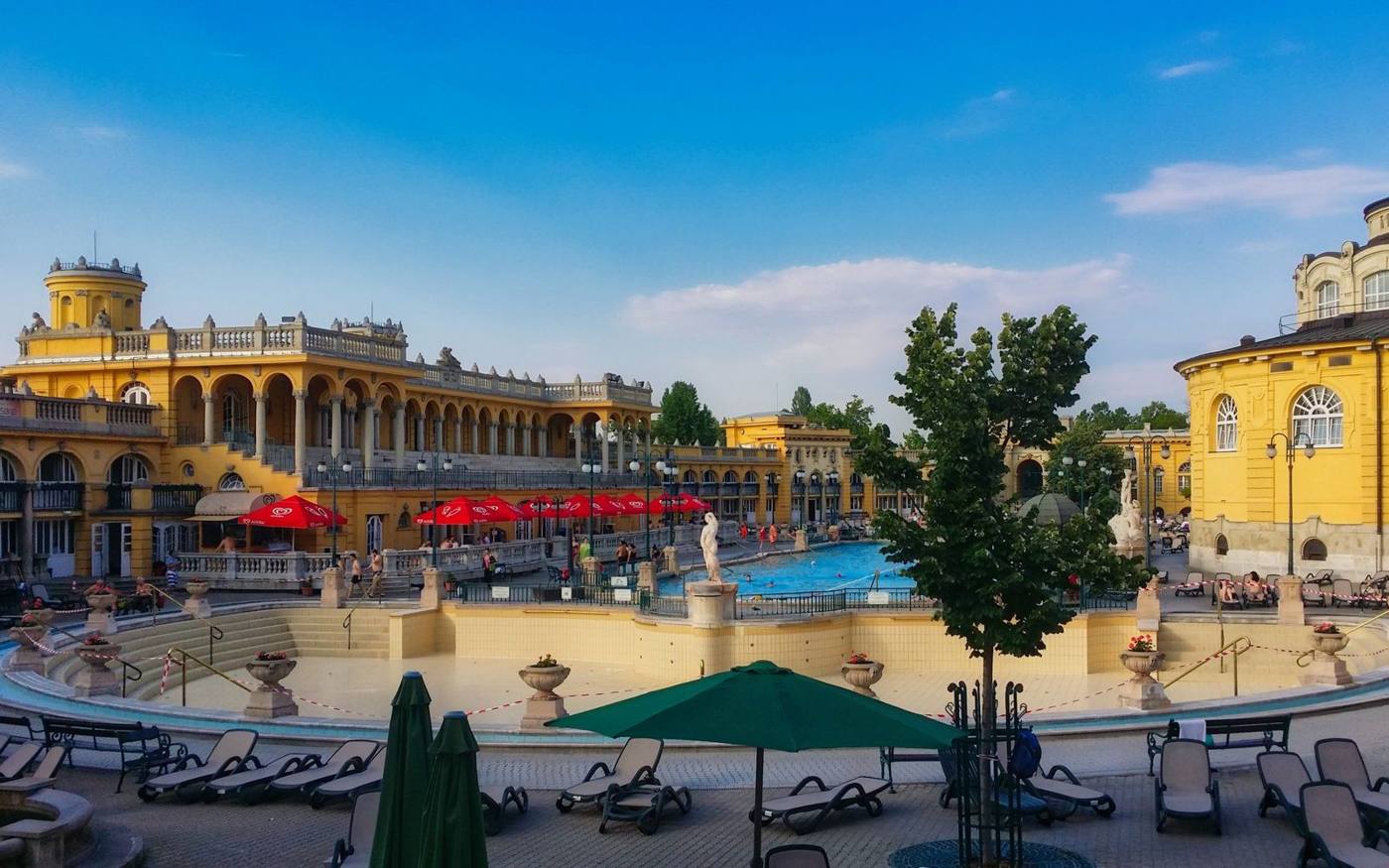
The land of hot waters: the Ottoman and Art Nouveau baths of Budapest, the thermal cave of Miskolctapolca, the travertine terraces of Egerszalók and the Hévíz lake.
 4 daysEasy
Sopron and Pannonhalma
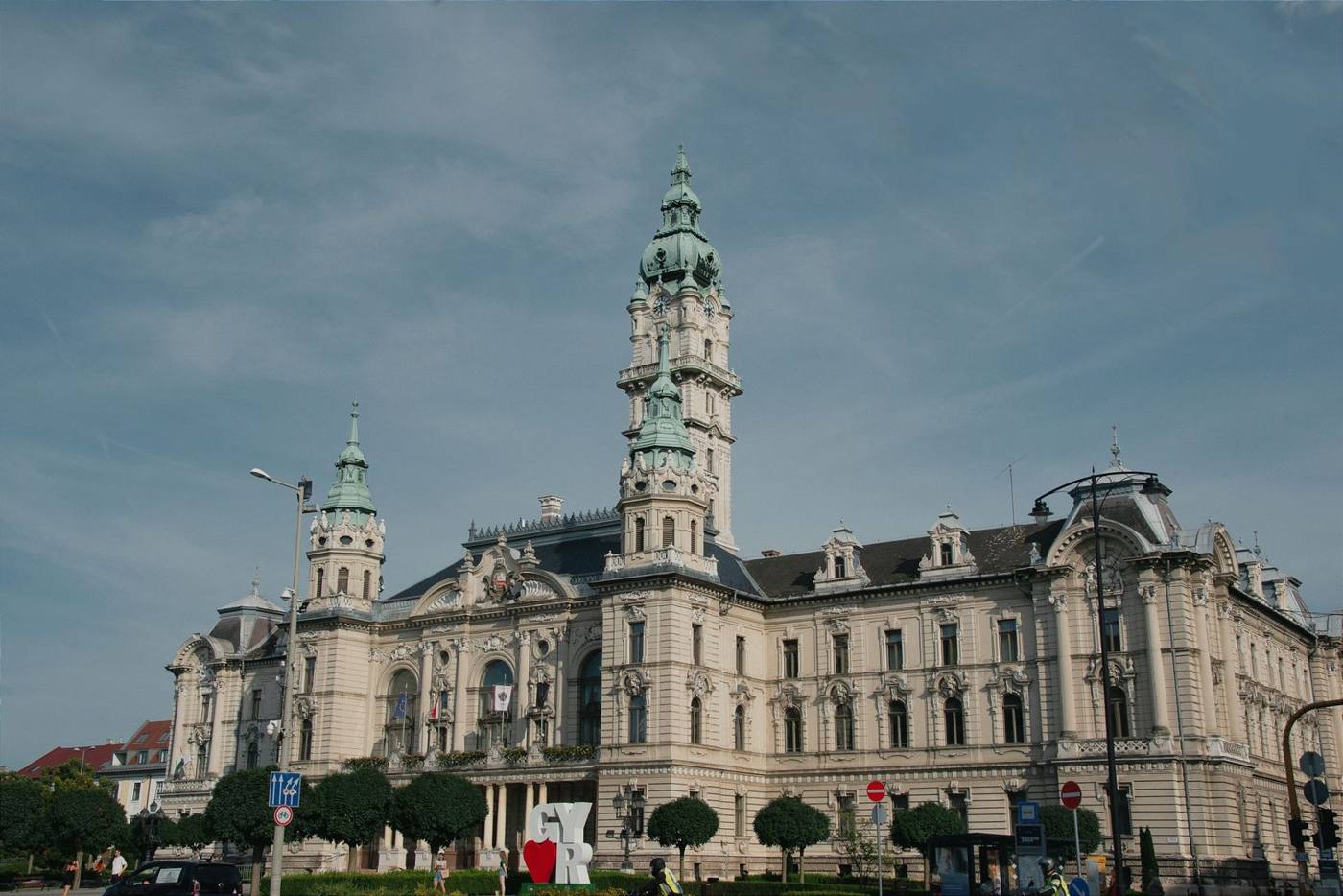
Western Hungary: the medieval town of Sopron and UNESCO-listed Lake Fertő, the Esterházy Palace at Fertőd and the thousand-year-old Benedictine abbey of Pannonhalma.
 4 daysEasy
Szeged, Kecskemét and paprika
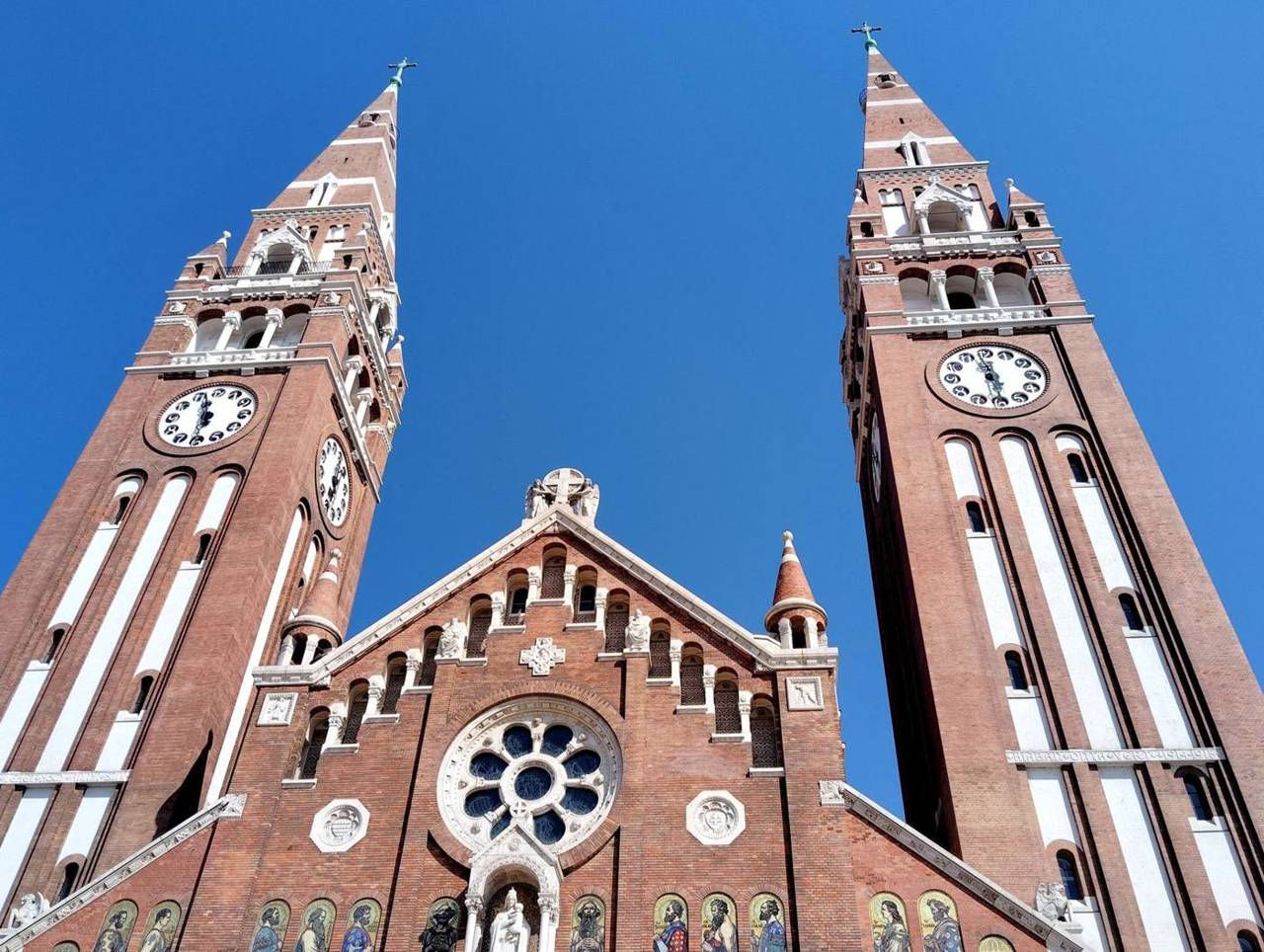
The southern Great Plain: Art Nouveau Kecskemét and its pálinka, the paprika museums of Kalocsa and Szeged, fisherman's soup and Szeged's Art Nouveau.