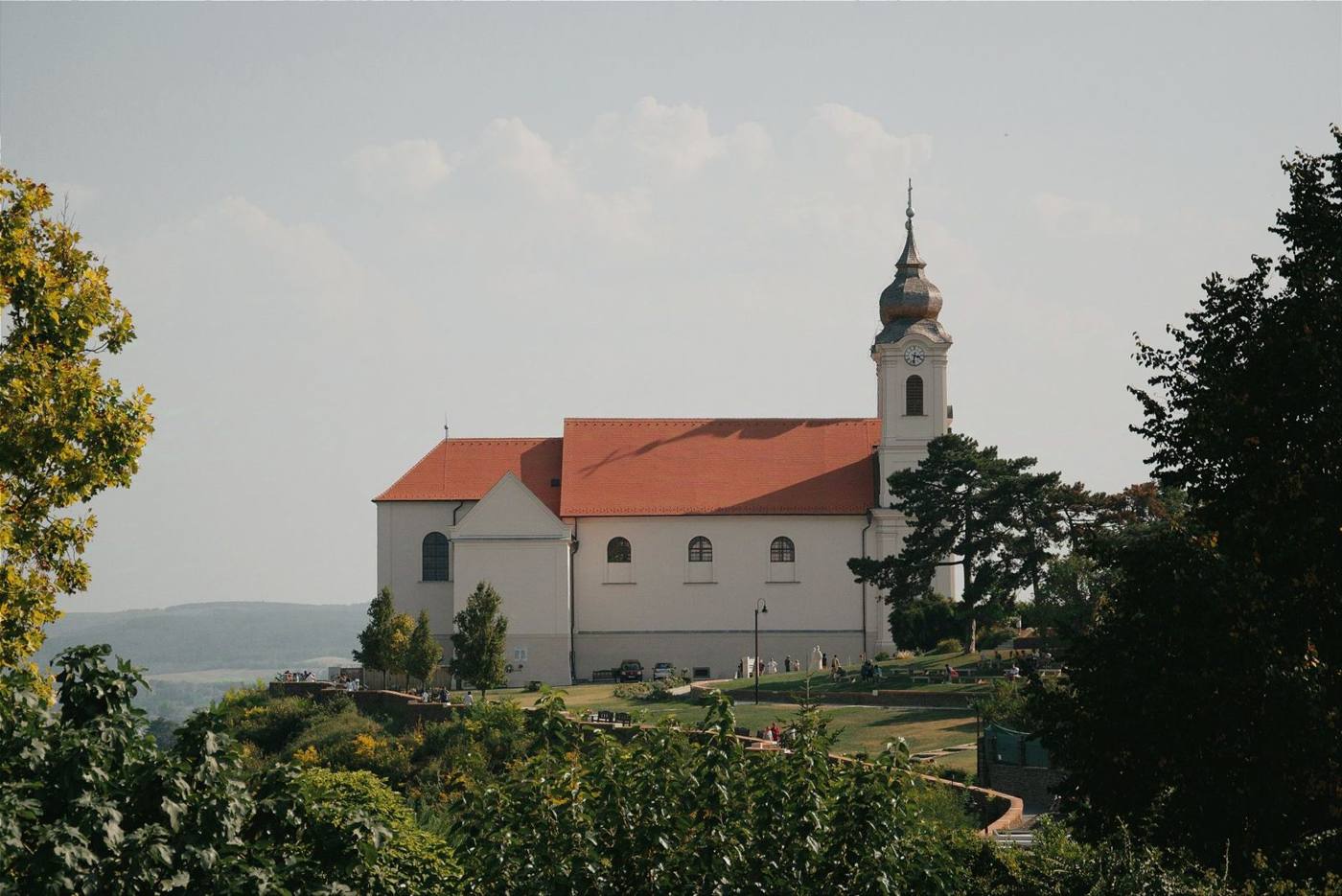
Lake Balaton
Hungary's sea: the Tihany peninsula with its abbey, the volcanic hills and wines of Badacsony, Sümeg Castle and the Hévíz thermal lake.
- Balatonfüred
- Tihany
- Badacsony
- Szigliget
- Hévíz
- Keszthely
Day by day
- Day 1
Balatonfüred and the lakeside promenade
This trip takes you to Lake Balaton, the sea of Hungary: a very long, shallow lake with warm water in summer, where Hungarians spend their holidays. You follow the north shore, the most beautiful and hilly one, with the Tihany peninsula, the volcanic hills and wines of Badacsony, Szigliget castle, the Festetics Palace in Keszthely and the thermal lake of Hévíz. A car is handy, but a train also runs along the shore.
Before you go: Hungary is part of the European Union and the Schengen area, but the currency is the Hungarian forint, not the euro. Italian citizens only need an electronic identity card or a passport; the paper identity card has not been valid for travel abroad since 3 August 2026. Other nationalities should check their own rules. The motorway from Budapest needs an electronic vignette; drink driving has a zero tolerance limit, even after a single tasting.
From Budapest you reach Balatonfüred in about an hour and a half. It is the oldest resort on the lake, which grew up around its mineral springs. Walk along the promenade named after the Indian poet Rabindranath Tagore, who planted a tree here in 1926 after a cure. Drink the sparkling water of the Kossuth spring, under a pavilion on the spa square, and look at the nineteenth century villas, such as the house museum of the writer Mór Jókai. Check prices and times.
In the evening have your first swim at the lido or enjoy the sunset on the pier, with the sailing boats.
Sleep in Balatonfüred, for two nights.
Practical tip: Balaton beaches are often equipped lidos with a paid entrance, called strand. Carry cash and check prices and times at the entrance.
- Day 2
Tihany: the abbey, the lavender and the inner lake
Today you go to Tihany, a green peninsula reaching five kilometres into the lake, fifteen minutes from Balatonfüred. It is a protected area, with hills, meadows and old geyser cones.
At the top of the village is the Benedictine abbey, founded in 1055 by King Andrew I. The abbey's founding charter contains some of the oldest written words in the Hungarian language. The present church is baroque, with carved wooden altars, but the Romanesque crypt still holds the tomb of the founding king. From the terrace in front of the church the view over the lake is splendid. Check prices and times.
Then walk down into the village, among thatched houses and pottery workshops. Try the echo path, a hill from which your voice bounces back from the abbey.
In the afternoon walk to the inner lake, the Belső-tó, a small crater lake higher than the Balaton, surrounded by reeds. Around it, in late June and July, the lavender fields bloom and colour the hills purple. The path to the geyser cones and to the viewpoint on the highest point of the peninsula takes a few hours of easy walking.
At the end of the day take the ferry for a short ride, or drive back to Balatonfüred for dinner. Try the lake fish, the fogas, a large pikeperch, grilled or in breadcrumbs.
Practical tip: arrive in Tihany early, before ten. In the summer months the car parks near the abbey fill up quickly and the village lanes become very crowded. Bring a hat and water for the lavender paths, where there is little shade.
- Day 3
Badacsony: the volcanic hill and the vineyards
In the morning drive west along the shore for about forty minutes to Badacsony. The landscape changes: strange hills rise from the lake, flat on top, which are old extinct volcanoes. The most famous is Mount Badacsony itself, its slopes covered in vines.
Leave the car below and walk up the mountain. The path climbs through vineyards and woods to the basalt organ pipes, huge columns of black rock formed by cooling lava. At the top you reach the Stone Gate, a gap between the rocks with a view over the whole lake, and the lookout tower. The climb takes two or three hours there and back.
On the way down stop at the Rose Stone, the Rózsakő, a large basalt boulder: according to tradition, if a man and a woman sit on it together, back to back, they will marry within a year.
In the afternoon taste the local wines, grown on volcanic soil. The typical grapes are Kéknyelű, an old and rare white, and Szürkebarát, which is pinot gris. Along the wine road there are many small family wineries: choose the ones you like and remember not to drive afterwards.
Sleep in Badacsony, for one night.
Practical tip: if you want to taste wine, plan without the car. You can reach Badacsony by train along the shore and get around on foot, or let someone who is not drinking drive: in Hungary the alcohol limit is zero. Many visitors also come by boat from the other towns on the lake in summer.
- Day 4
Szigliget castle, Keszthely and the Festetics Palace
In the morning drive a few minutes to Szigliget, a small village below another volcanic hill. At the top are the ruins of the castle, built in the thirteenth century after the Mongol invasions. The path climbs in about twenty minutes and from the walls you see the hills of Badacsony, the vineyards and the lake. Check prices and times.
Then continue to Keszthely, the small town at the western end of the Balaton. Here is the Festetics Palace, one of the largest baroque palaces in Hungary, the residence of the family of counts who dominated the region for centuries. Visit the furnished rooms, the hall of mirrors and above all the Helikon library, with its oak panelled walls and tens of thousands of old books. In the park there is also a carriage exhibition and a hunting museum. Check prices and times.
In 1797 the Festetics family founded the Georgikon here, one of the first agricultural colleges in Europe. Today the town has a small university and a pleasant historic centre, with a pedestrian street leading down to the lake.
In the evening walk on the Keszthely pier, with the swans and the boats, and watch the sunset over the hills.
Sleep in Keszthely, for one night.
Practical tip: at the Festetics Palace only buy the combined ticket if you have time to see every part. The palace and the library are enough for a two hour visit, while the other museums take almost half a day.
- Day 5
The thermal lake of Hévíz and departure
Last day. Drive about ten minutes to Hévíz, a spa town that grew up around a special lake. Lake Hévíz is the largest swimmable thermal lake in Europe: the water rises warm from a spring on the bottom, tens of metres down, and is constantly renewed. Water lilies float on the surface and flower in summer.
You enter from the large pavilion built on stilts in the middle of the lake. You bathe in warm water even in winter, when steam rises above the lake. Many people swim with a small float, because the lake is deep and you cannot touch the bottom. Check prices and times. There are clear rules on how long to stay in the water: doctors advise short sessions with a break between one bath and the next.
Then head back to Budapest, in about two and a half hours, or to Sármellék airport if your flight leaves from there.
In these five days you have seen the finest shore of the Balaton: the Balatonfüred promenade, the abbey and lavender of Tihany, Mount Badacsony with its volcanic vineyards, Szigliget castle, the Festetics Palace and the thermal lake of Hévíz.
When to go: the best time is from June to September, for swimming in the lake. The lavender flowers in July. In August everything is full and expensive, so book well ahead. Hévíz can be visited all year round.
Practical tip: in Hévíz take off rings and silver jewellery before bathing. The thermal water, rich in minerals and sulphur, can tarnish silver.
Hungarians' summer holiday spot, with warm, shallow water ideal for families. The south shore is flat, sandy and full of bars; the north shore is prettier and hilly. Hévíz is Europe's largest swimmable thermal lake, and you can bathe there even in winter. In August everything is full.
Before you go
- Documents and visa
- EU citizens need a valid identity card or passport: Hungary is in the EU and the Schengen area. Checks can be more frequent on the borders with Serbia, Croatia, Austria and Ukraine: always carry your document. Other nationalities should check the Schengen rules.
- Health and vaccines
- No vaccines required. Public healthcare is adequate; EU citizens should bring their EHIC, and everyone needs insurance covering medical costs and repatriation. Emergencies: 112, ambulance 104, police 107, fire 105.
- Money and payments
- Hungarian forint (HUF), not the euro. Cards are accepted almost everywhere; when a card machine or cash machine offers to convert into euros or pounds, choose to pay in forints. Motorways need an electronic vignette (e-matrica), bought on the official website or at authorised sales points before you join the motorway.
- Power sockets
- Types C and F, 230 volts.
- Time zone
- Central European Time (UTC+1, summer UTC+2).
- Safety
- There are no areas to avoid, but take normal precautions. Watch for pickpockets in crowded places, thefts from changing rooms at baths and pools, fake taxis and Budapest nightclubs that charge huge bills. Drink driving has a zero tolerance limit, and outside built up areas dipped headlights must be on in daytime too. Official advice: GOV.UK.
Information checked in November 2026 for Italian and EU citizens. Rules change: always check before you travel.
Variations
In 3 days: Tihany on the first day, Badacsony on the second and Hévíz on the third, always sleeping on the north shore.
In 7 days: add a day on the south shore, flat and sandy, and a day in Veszprém and Herend, with the castle and the porcelain.
Frequently asked questions
Which is the best shore of the Balaton?
The north shore is prettier and hillier, with villages, vineyards and extinct volcanoes. The south shore is flat, with sandy beaches, shallow water and many bars: it is ideal for families with small children.
Can you swim in Hévíz in winter?
Yes. The water stays warm all year, even in winter, and it is warmer still in summer. You enter from the pavilion on the lake: check prices and times.
Do I need a car?
It is handy but not essential. The train runs along the north shore and links Balatonfüred, Badacsony and Keszthely; for Tihany, Szigliget and Hévíz there are local buses.
Indicative itinerary written by World Atlas. Before booking, check timetables, seasonal openings, documents and safety.
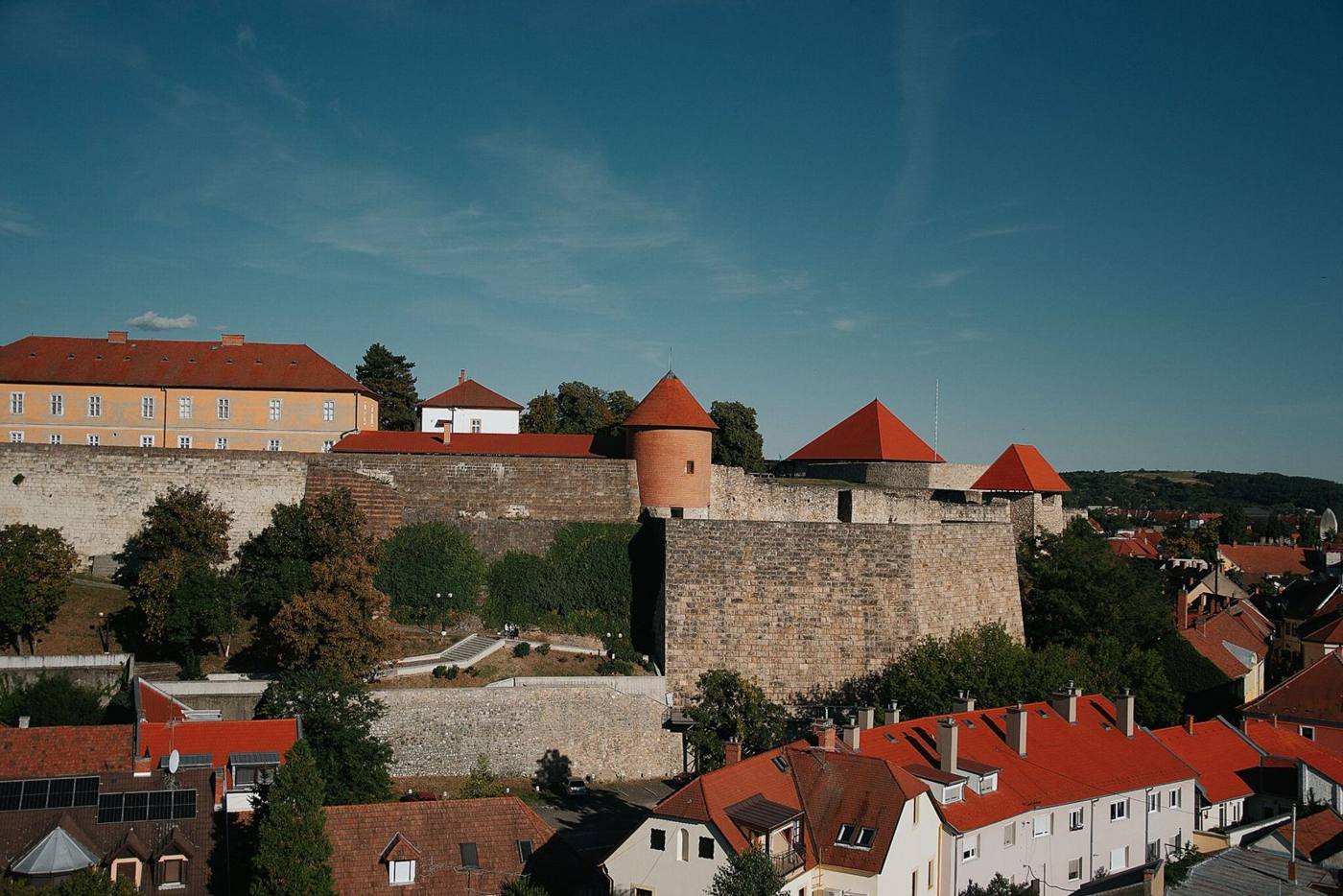 5 daysEasy
Tokaj and Eger
Hungary's wine lands: the baroque town of Eger and the Valley of Beautiful Women with its Bull's Blood, then the rock-cut cellars of Tokaj and sweet aszú wine.
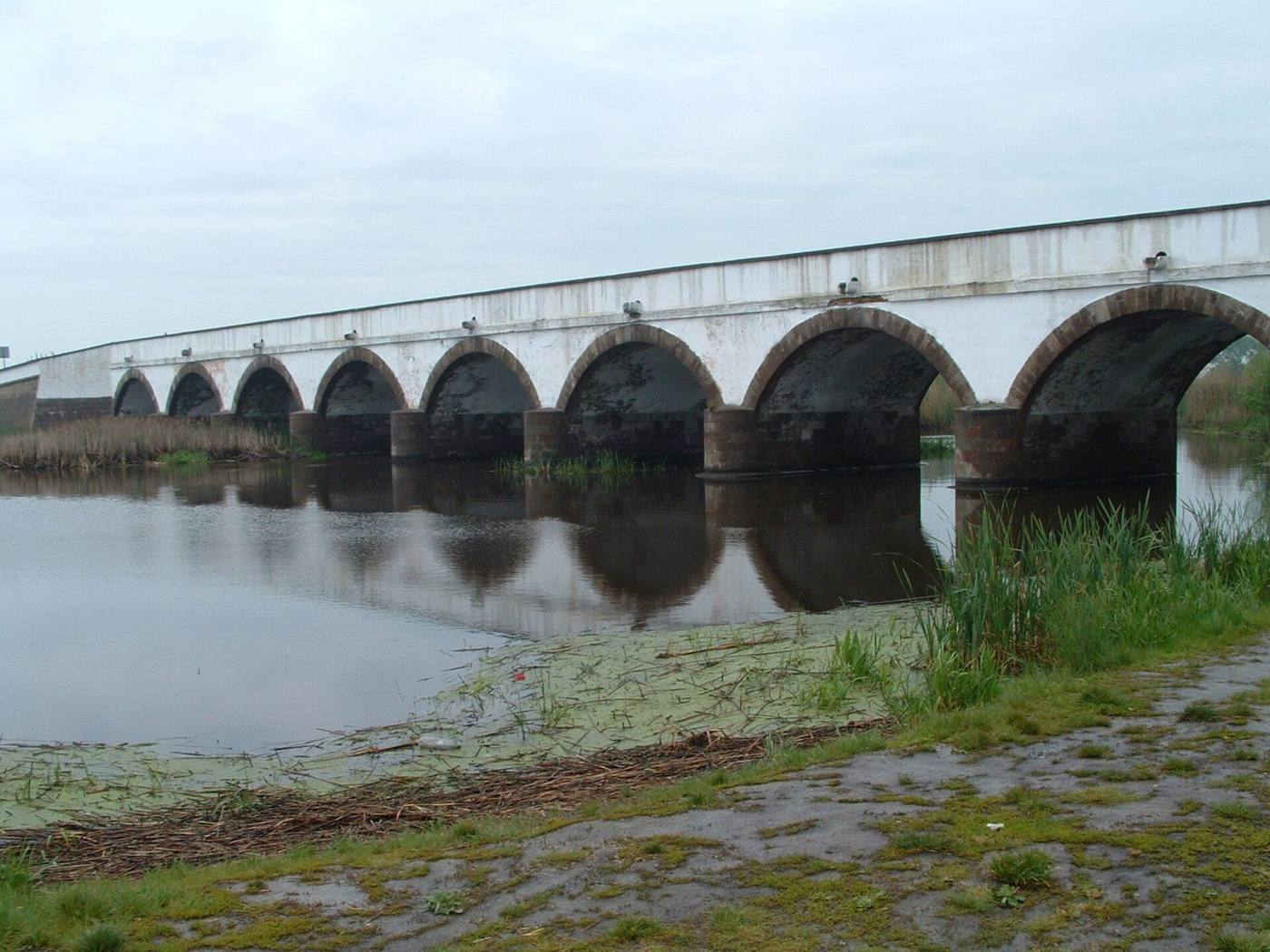 4 daysEasy
The Hortobágy puszta
The Great Plain: the horsemen and grey cattle of the Hortobágy puszta, the Nine-Arch Bridge, migrating cranes and Debrecen.
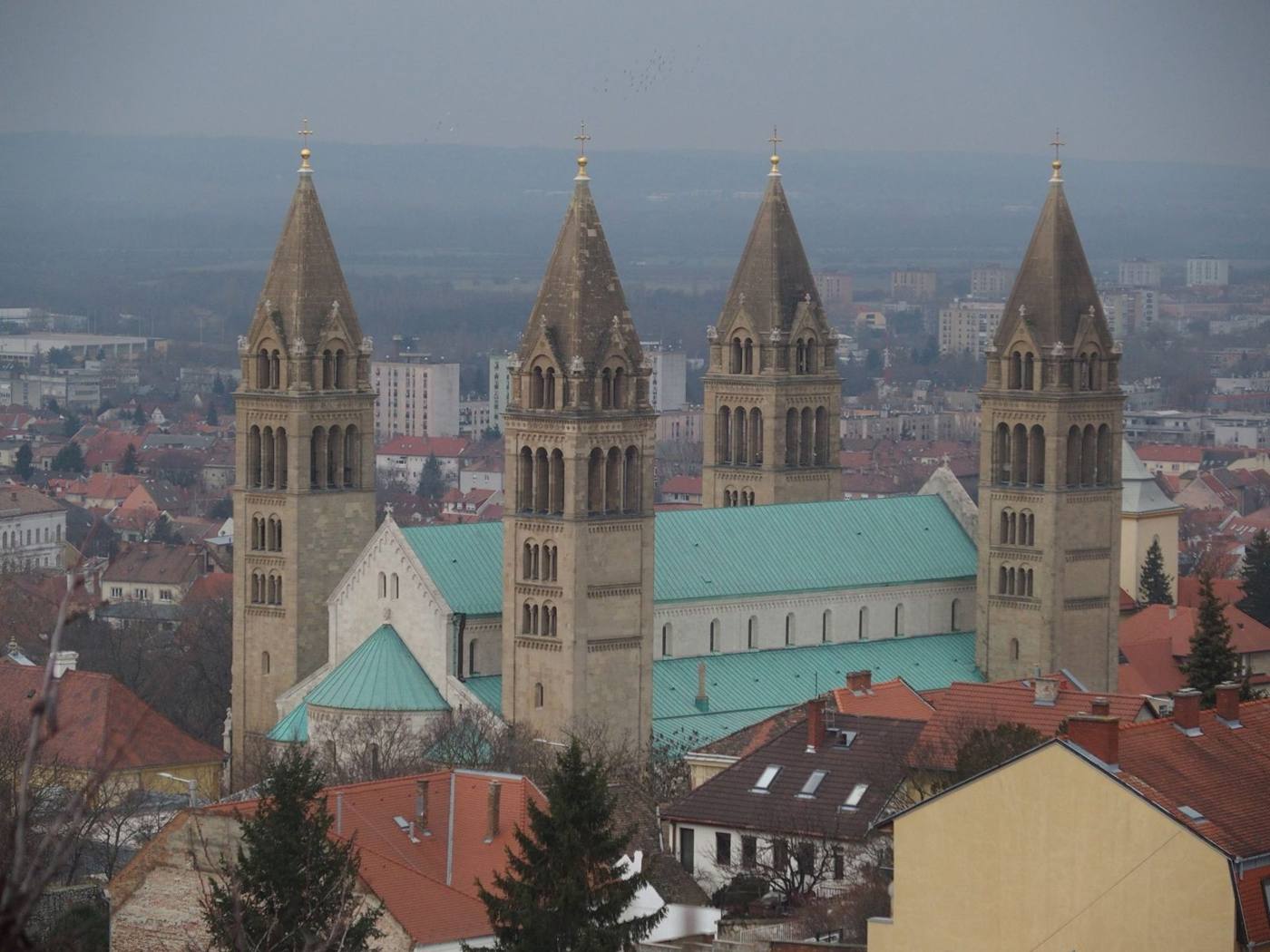 4 daysEasy
Pécs and the south
Hungary's Mediterranean city: the UNESCO early Christian necropolis, the mosque turned church, the Zsolnay quarter and the wines of Villány.