Kaieteur and the Rupununi savannah
The flight to Kaieteur Falls, five times higher than Niagara, the Iwokrama canopy walkway and the community lodges of the Rupununi with giant otters and anteaters.
- Georgetown
- Kaieteur
- Iwokrama
- Surama
- Rewa
- Karanambu
Day by day
- Day 1
Georgetown and the wooden cathedral
This seven-day trip combines Kaieteur Falls with the Iwokrama forest, the Amerindian village of Surama and the Karanambu savannah, with giant otters and anteaters. You travel by domestic flight, dirt road and boat.
Before you go: Italian citizens enter Guyana with a passport valid for at least six months from arrival, without a visa for stays of up to 90 days. Other nationalities should check their own rules. The yellow fever vaccine is recommended and the certificate is needed if you arrive from a country at risk; there is malaria in the interior, so ask your doctor about antimalarials. The United States rates Guyana at level 3 because of crime. The Italian government advises avoiding Stabroek Market and the south of Georgetown, and not travelling to or from the airport at night. The border with Venezuela is tense and this trip does not go near it.
You arrive at the international airport and go into the city by daylight in a taxi booked by your lodging.
In the afternoon tour the colonial centre by taxi, with its white wooden houses on stilts, the shutters and the canals dug by the Dutch. The Anglican cathedral of St George, finished at the end of the nineteenth century, is one of the tallest wooden churches in the world: inside, look at the dark beams and the light from the stained glass. Here caution is advised, so go in and leave again by taxi. Then pass the City Hall, made of wood with neo-Gothic turrets.
In the evening have dinner near your lodging with pepperpot, a spiced stew, or a curry of Indian origin.
Practical tip: in Georgetown do not keep jewellery or cameras on show, and always have your lodging call a taxi rather than hailing one in the street.
- Day 2
The flight to Kaieteur Falls
Today you fly over the forest for a day trip to one of the most spectacular waterfalls in the world.
In the morning go to Ogle airport, close to the centre, where the small planes for the interior leave. In about an hour you fly over the coastal plain, tea-coloured rivers and then unbroken forest, with no roads or villages. When the plane turns above the gorge, you see the falls from above.
At Kaieteur the Potaro River drops 226 metres in a single fall, about five times the height of Niagara. You land on a nearby airstrip and a national park guide takes you along a short, flat trail to three viewpoints. There are no railings: stay away from the edge, especially when the rock is wet.
Along the trail look at the huge bromeliads, plants that collect water between their leaves, where a tiny golden frog lives. With luck you see the cock-of-the-rock, a bright orange bird, and the swifts flying into the cloud of spray behind the falls.
In the afternoon you return to Georgetown. Rest and pack your bags for the interior.
In the evening have dinner with fish and rice, and try the coconut sweets.
Practical tip: flights to Kaieteur leave only with enough passengers and good weather, so put this day at the start of the trip and keep a spare day in reserve.
- Day 3
Flight to the interior and the Iwokrama canopy walkway
Today you leave the coast and reach the Iwokrama forest, a large protected reserve in the centre of the country.
In the morning you take a domestic flight from Georgetown to the airstrip at Annai, on the edge of the Rupununi savannah. From here a four-wheel drive takes you along the red dirt road through the forest. It is the only road linking the coast to the south and to Brazil: keep watching the sides, because jaguars or tapirs are sometimes seen crossing here.
In the afternoon you reach the Iwokrama canopy walkway, a series of rope bridges and wooden platforms hung from the great trees at treetop height. Up there you are at the level of the birds and monkeys, which you usually hear without seeing. Look for toucans, parrots, macaws and the small aracaris with their colourful bills.
In the evening you sleep in simple lodgings in the forest, near the walkway. After dinner take a short night walk with the guide to see frogs, stick insects, spiders and perhaps an owl.
The reserve is managed together with the Amerindian communities of the area, who work as guides and researchers.
You sleep in the Iwokrama forest.
Practical tip: the walkway is at its best at dawn and dusk, when the birds are active; bring binoculars and a head torch.
- Day 4
The village of Surama
Today you return to the walkway at dawn and then reach Surama, an Amerindian village in a savannah surrounded by forest.
At dawn climb onto the canopy walkway again. The sky changes colour, the mist lifts from the treetops and the birds begin to call. It is the best time to see spider monkeys and parrots flying in flocks.
After breakfast you move by four-wheel drive to Surama. The village has mud-brick houses with thatched roofs, a playing field and a small church. The villagers run community tourism and work as guides, cooks and boatmen.
In the afternoon walk with a village guide in the nearby forest. They show you medicinal plants, how a roof of palm leaves is built and how cassava, the basis of the local diet, is prepared. If the guides know of an active nest, you can go and see the harpy eagle from a distance, one of the largest birds of prey in the world.
At sunset climb a hill near the village to watch the savannah turn orange.
In the evening have dinner with village dishes, such as river fish and cassava bread.
You sleep in Surama.
Practical tip: always ask permission before photographing people, and bring a few small useful gifts for the school, to leave with the teachers.
- Day 5
To Karanambu on the Rupununi River
Today you cross the savannah and the Rupununi River to Karanambu, an old cattle ranch that has become a place where giant otters are protected.
Early in the morning, if you like, climb Surama Mountain with a guide to see the village and the forest from above. Then set off by four-wheel drive on the red savannah tracks, between tall termite mounds, palms and small groves.
At a landing on the Rupununi you board a motorboat and travel up the river, the same one that receives the Rewa further north. The banks are high, with sandy beaches and trees full of birds: look for herons, kingfishers and the jabiru, a large white stork with a black and red neck.
In the afternoon you reach Karanambu, in the middle of the savannah, between the river, the lakes and the forest along the banks. For decades giant otters have been rescued and studied here, and the guides know the groups living in the area well.
At sunset go out by boat on a nearby lake, where the great Victoria amazonica water lilies open, the national flower of Guyana, with leaves as wide as a table.
You sleep in Karanambu, for two nights.
Practical tip: on the boat the sun is strong and the glare off the water burns quickly: bring a wide-brimmed hat, sunglasses and sun cream.
- Day 6
Giant otters and anteaters in the savannah
Today is devoted to the animals of Karanambu, between the savannah and the river.
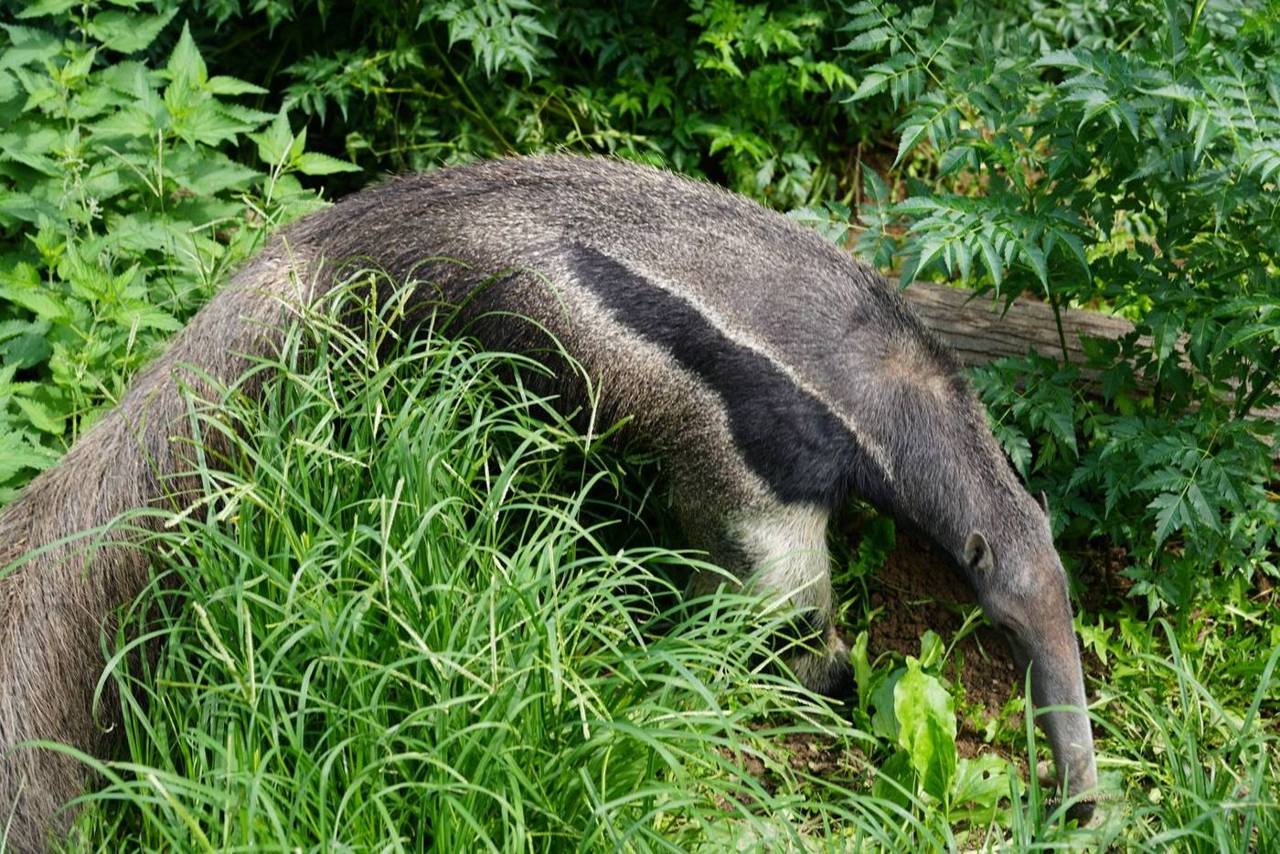
At dawn you head out by four-wheel drive into the savannah with the guide to look for the giant anteater. With its long snout and great plumed tail, it walks slowly among the termite mounds and opens them with its claws. Then the guide leads you closer on foot, in silence and downwind, to watch it close up without disturbing it.
Return for breakfast and rest during the hottest hours.
In the afternoon go out by boat on the Rupununi to look for giant otters, almost two metres long including the tail, which fish in groups and call to each other loudly. Watch them from a distance, with the engine off. Along the river you also see black caimans, turtles on the logs and macaws flying back in pairs towards the forest.
At sunset stop on a sandy beach to watch the sky turn red over the savannah. On the way back, with a torch, look for the eyes of caimans and the nightjars rising from the bank.
In the evening, after dinner, look at the starry sky: far from the cities, you can see the Milky Way over the savannah.
You sleep in Karanambu.
Practical tip: for the anteaters wear neutral colours and no perfume; the guide decides how close to get, and you should always listen to them.
- Day 7
Back to Georgetown
Today is the last day, with one more outing at dawn and the flight back.
Early in the morning take a short trip on the river or in the savannah, to see the otters again or the birds gathering near the water. Then pack your bags and go to the airstrip for the domestic flight to Georgetown. From the window watch the savannah, the rivers and then the forest giving way to the coast.
In Georgetown, if you still have time, visit the national museum or the museum of anthropology, devoted to the Amerindian peoples. If you leave tonight, do not travel to the international airport at night: it is better to sleep in the city and leave the next morning.
In these seven days you have seen the wooden cathedral of Georgetown, Kaieteur Falls, the Iwokrama forest from the canopy walkway, the village of Surama and the Karanambu savannah with its giant otters and anteaters. It is an expensive trip because of the domestic flights, but with very few tourists and community tourism at its heart.
When to go: from September to April, in the drier months, when the tracks are passable and the animals gather near the water. In the rainy season, roughly from May to August, the savannah floods and some tracks close.
Practical tip: keep a day of margin before your international flight, because domestic flights can change times or be cancelled because of the weather.
Untouched nature and very few tourists, with indigenous community tourism at its heart. It is an expensive trip because of internal flights. In Georgetown, take taxis in the evening.
Before you go
- Documents and visa
- Passport valid for at least six months from arrival; Italian citizens need a visa only for stays over 90 days. On entry you must declare all the foreign currency you carry. Travel to and from Venezuela is not currently possible.
- Health and vaccines
- A yellow fever vaccination certificate is required from the age of 12 months if you arrive from a country at risk, even after a stopover of more than 12 hours; the vaccine is recommended anyway, because there is a risk throughout the country. Malaria throughout the interior, with antimalarials advised; very low risk in Georgetown and on the coast. Dengue, Zika and chikungunya are also present. Medical facilities are very limited, even in the capital: you need insurance with repatriation. Ambulance: 913.
- Money and payments
- Guyanese dollar. US dollars are accepted at many lodgings and for domestic flights. Use ATMs inside banks or shopping centres and carry cash for the interior.
- Power sockets
- Types A and B, 110 or 220 volts depending on the area: bring an adapter and check the voltage of your devices.
- Time zone
- UTC-4 all year.
- Safety
- The United States rates Guyana at level 3 because of violent crime, which is common especially at night. The United Kingdom reports that foreigners have been targeted at Stabroek Market, Tiger Bay, Albouystown and Sophia, that visitors have been assaulted in the Botanical Gardens, and that gangs have followed cars from Cheddi Jagan airport. In Georgetown use pre-booked taxis from reputable companies. Venezuela disputes the border and claims the Essequibo region: the border area is tense, with organised crime and no official crossings. Official advice: GOV.UK.
Information checked in November 2026 for Italian and EU citizens. Rules change: always check before you travel.
Variations
Shorter: five days, with Kaieteur as a day trip and three days between Iwokrama and Surama.
Longer: add three days on the Rewa River, with the arapaima lake and the climb up Awarmie Mountain.
Frequently asked questions
Is the trip suitable for people who are not sporty?
Yes, the walks are short and the pace is gentle. You do need patience with the dirt roads, the humid heat and the simple lodgings.
Will you definitely see a jaguar?
No, it lives throughout the area but is rarely seen. Giant otters, anteaters and birds, on the other hand, are almost always seen with the local guides.
Why is it so expensive?
Because of the domestic flights in small planes and the transfers by four-wheel drive and boat in areas without paved roads. Much of the rest of the money goes to the communities.
Indicative itinerary written by World Atlas. Before booking, check timetables, seasonal openings, documents and safety.
 4 daysEasy
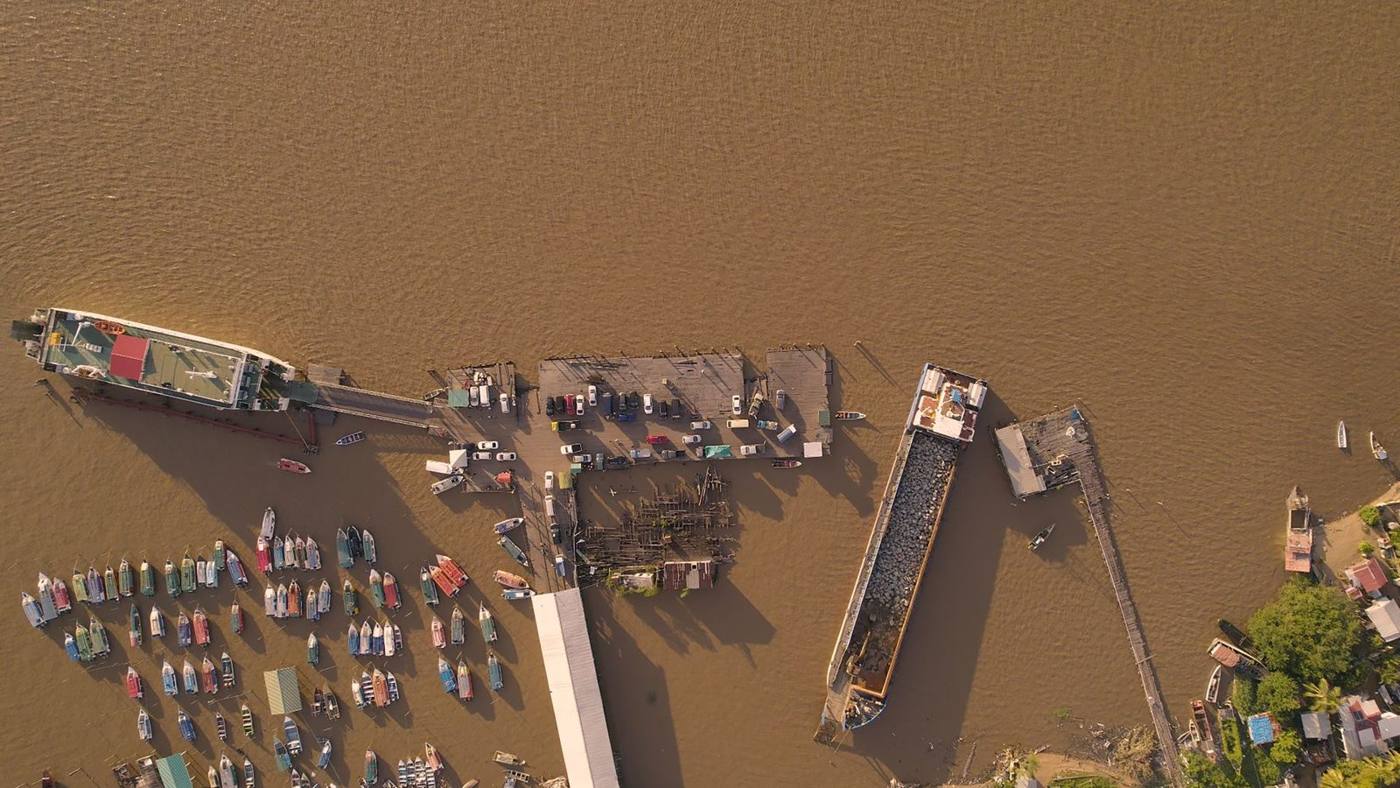
Georgetown and the Essequibo river
The wooden colonial capital, Stabroek market, the botanical gardens with manatees and a lodge at the mouth of the Essequibo.
 1 daysEasy
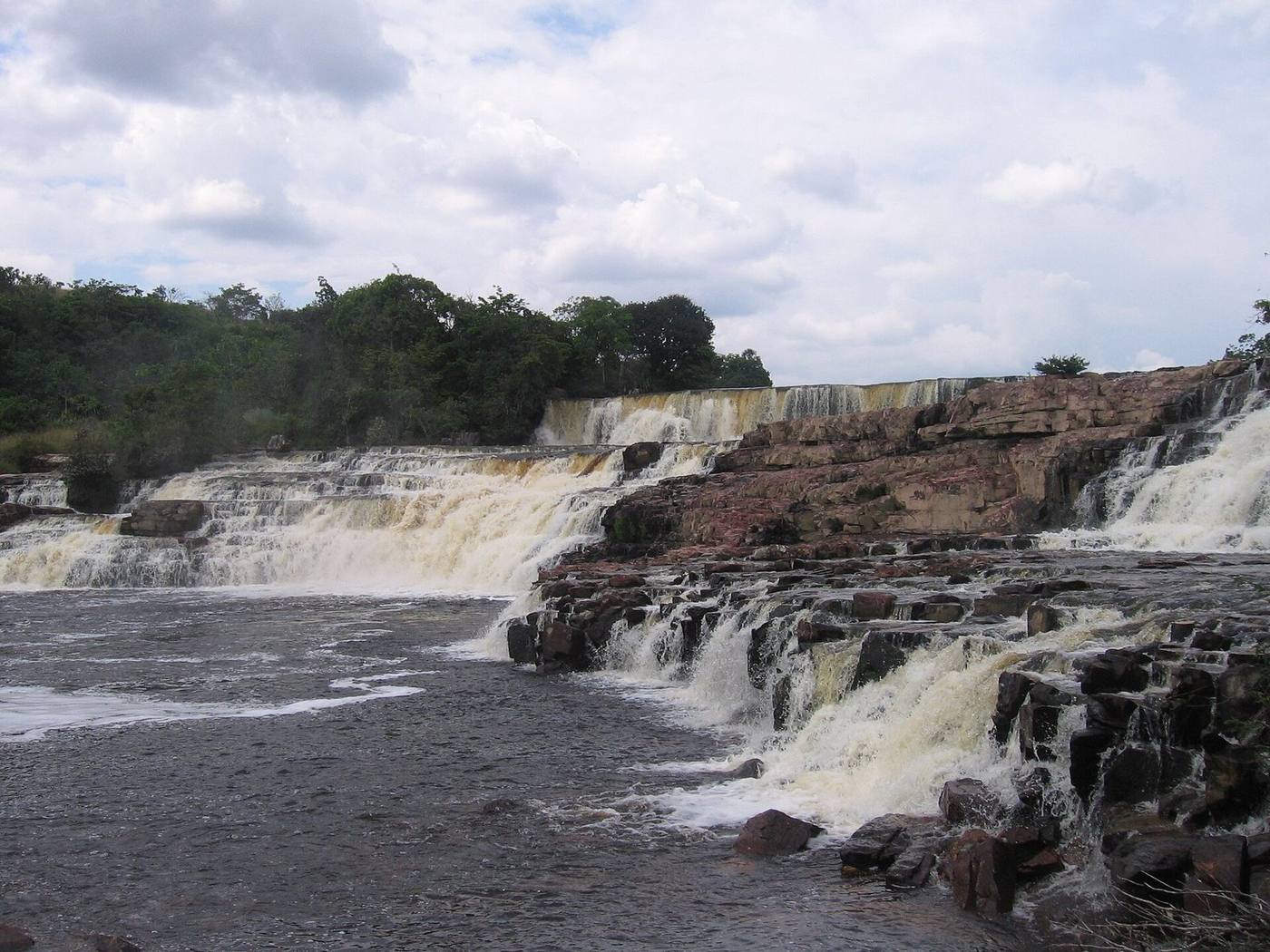
Kaieteur and Orinduik in a day
A small-plane flight from Georgetown over the forest: Kaieteur Falls, one of the world's most powerful single-drop waterfalls, then the stepped Orinduik Falls, where you can swim.
 4 daysModerate
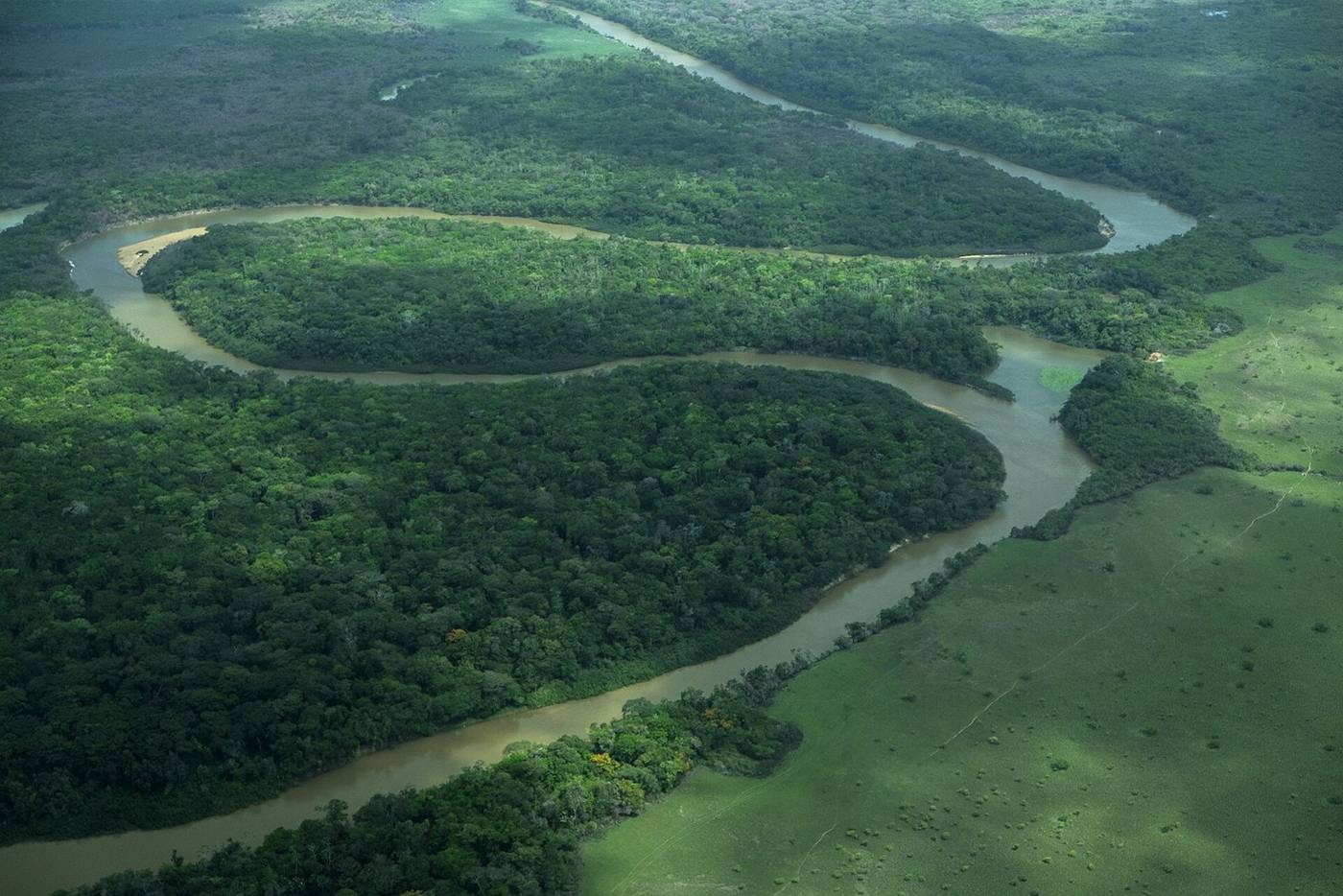
The Rewa River
An Amerindian community lodge where the Rewa meets the Rupununi: canoeing through the forest, giant otters, black caimans, birds, the climb of Awarmie Mountain and catch-and-release fishing for the giant arapaima.