Antigua and Lake Atitlán
The UNESCO colonial city of Antigua beneath the volcanoes, the Maya market of Chichicastenango and the villages around Lake Atitlán.
- Antigua
- Pacaya Volcano
- Chichicastenango
- Panajachel
- San Juan La Laguna
- San Pedro
Day by day
- Day 1
Antigua and the Arch of Santa Catalina
This seven-day trip combines the two best-loved places in Guatemala: Antigua, the UNESCO colonial city beneath the volcanoes, and Lake Atitlán, with the Maya villages on its shores. In between you walk on the lava of the Pacaya volcano and visit the market of Chichicastenango.
Before you go: Italian citizens enter Guatemala with a passport valid for at least six months from the date of arrival, and without a visa for stays of up to 90 days, which count in total for El Salvador, Honduras and Nicaragua too; before entering, complete the online immigration declaration. Other nationalities should check their own rules. The United States advises reconsidering travel to Guatemala because of crime; the United Kingdom reports armed robberies on many tourist routes, including around Atitlán. Travel by day, by tourist shuttle or organised transport, and avoid public buses. Spend as little time as possible in Guatemala City.
From the airport you reach Antigua in about an hour. The city was the capital of the kingdom of Guatemala until the earthquakes of 1773 and keeps its cobbled streets, low houses painted yellow, ochre and red, and baroque churches, some still in ruins.
In the afternoon walk to the Arch of Santa Catalina, built in the seventeenth century so that the nuns of the convent could cross from one side of the street to the other without being seen. Behind the arch, on clear days, rises the Agua volcano. Carry on to the church of La Merced, with its yellow façade decorated in white stucco.
In the evening sit in the Parque Central, in front of the cathedral and the Palace of the Captains General.
Sleep in Antigua for three nights.
Practical tip: Antigua lies at about 1,500 metres, so it is cool after sunset: bring a jumper.
- Day 2
The ruined churches and the Cerro de la Cruz
Today you discover the Antigua of the earthquakes and see it from above.
Early in the morning climb the Cerro de la Cruz, the hill north of the centre. The stepped path starts at the edge of town and in about twenty minutes reaches a large stone cross. From here you see all of Antigua, with the regular grid of streets, the tiled roofs and the white domes, and behind it the perfect cone of the Agua volcano. Go up in the morning, when the air is clear, and not alone.
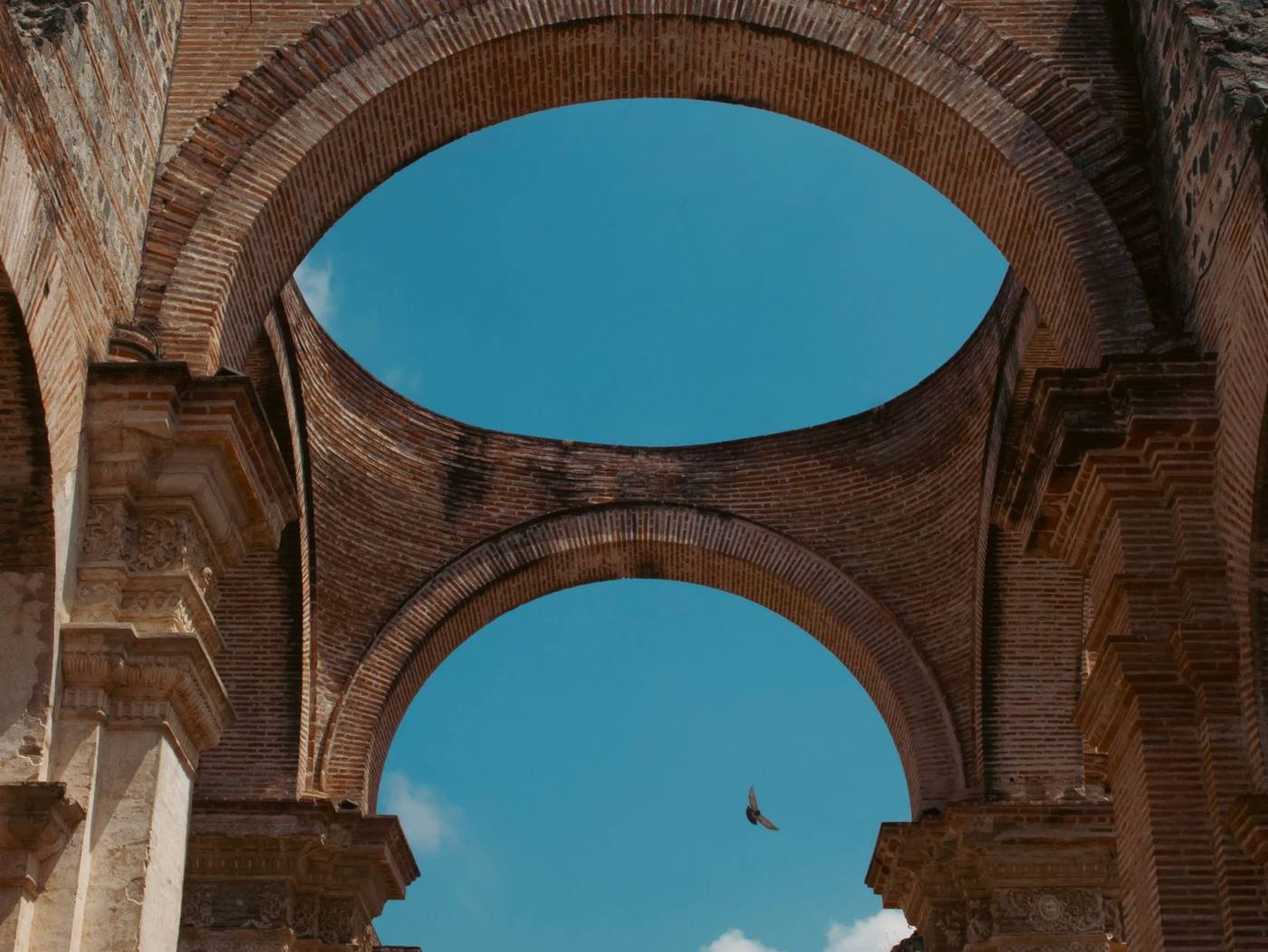
Back in the centre, visit the ruins of the cathedral, behind the façade of the church of San José on the Parque Central: broken arches, columns and roofless chapels, where plants grow and light falls from above. Check prices and times.
Then walk to the convent of Las Capuchinas, one of the largest in the colonial city. The cloister with its fountain and the round tower with the nuns' small cells still stand, among thick walls and gardens. Check prices and times.
In the afternoon wander through the market, near the bus station, among tropical fruit, vegetables, flowers and textiles, and try a tamal or a hot atol.
In the evening, if the day is clear, look south-west: the Fuego volcano, always active, sometimes sends up small puffs of smoke and, after dark, red glows.
Sleep in Antigua.
Practical tip: on the cobbled streets wear comfortable shoes with thick soles and watch where you put your feet.
- Day 3
The Pacaya volcano
Today you walk on an active volcano, among recent lava flows.
Before setting off, check the notices from INSIVUMEH and CONRED, the national agencies for volcanoes and emergencies: the park may close when activity increases. On Pacaya you climb only with an authorised guide.
Leave Antigua in the morning by organised shuttle. In about an hour and a half you reach San Francisco de Sales, the entrance to the Pacaya volcano national park, about 2,550 metres high. At the entrance you pay and take a guide: check prices and times.
The trail climbs for about an hour and a half through maize fields and woods, over dark earth and fine ash. Halfway up, turn round and see the valley, with Lake Amatitlán and, on clear days, the Agua, Fuego and Acatenango volcanoes in a row. Then the woods end and a black landscape of cooled lava opens up in front of you, with cracks breathing out warm air. Walk only where the guide shows you, because the rock is sharp and in places still hot. If you get tired, you can hire a horse for the climb at the entrance.
Come down slowly, return to Antigua in the afternoon and spend the evening in the centre, between the square and the streets around La Merced.
Sleep in Antigua.
Practical tip: wear closed shoes with thick soles and long trousers, because the lava is as sharp as glass.
- Day 4
The market of Chichicastenango
Today you leave Antigua for the Maya highlands, with a stop at the most famous market in the country.
Plan this day for a Thursday or a Sunday, the market days. Leave early by shuttle. To reach the lake and Chichicastenango use the Pan-American Highway via Sololá: the United Kingdom, together with the Guatemalan tourist assistance service, advises avoiding the Godínez short cut through Patzún, an isolated area reported for crime.
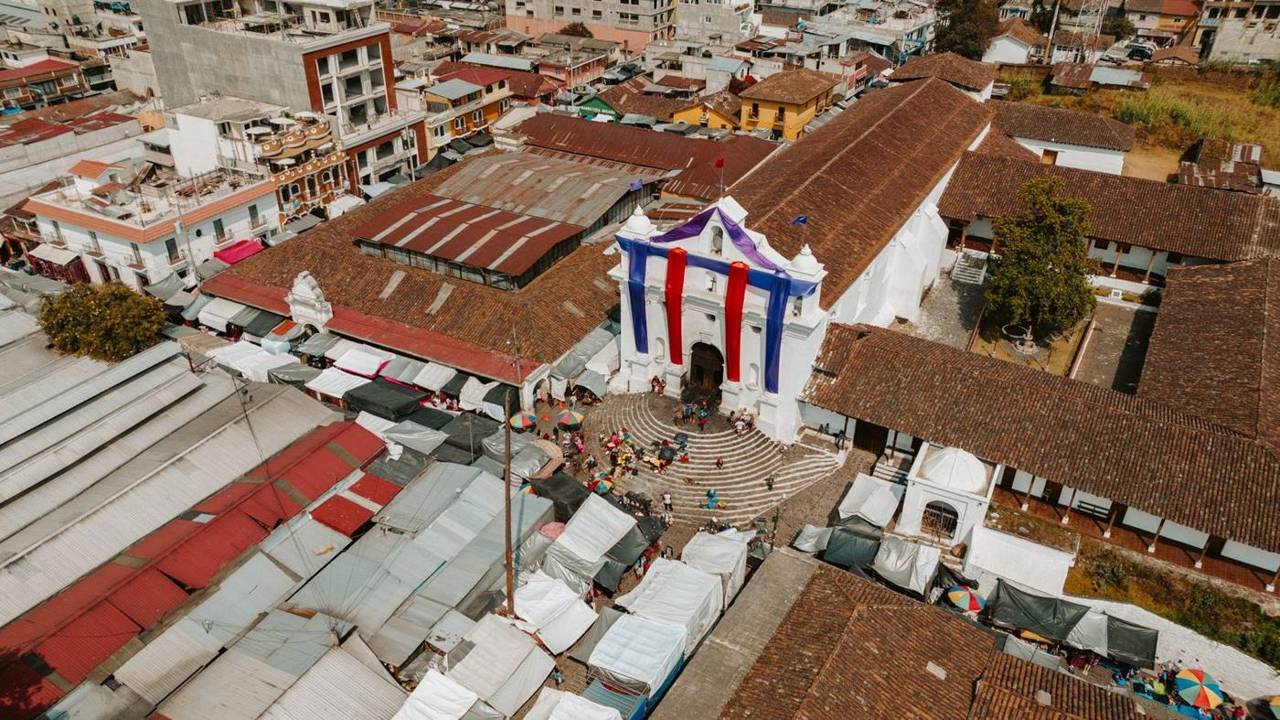
Chichicastenango, at about 2,000 metres, is a K'iche' town. The market fills the square and the streets around it: fruit, vegetables, flowers, hens and incense, and next to them stalls of huipiles, the embroidered blouses of Maya women, belts, bags and painted wooden masks. Walk slowly and bargain with a smile.
On the steps of the church of Santo Tomás, white and from the sixteenth century, the men of the brotherhoods burn copal, a fragrant resin, and pray aloud. Do not climb the main steps, which are reserved for rituals: visitors enter by a side door and photography is not allowed inside.
Have lunch with pepián, a meat stew in a sauce of seeds and chillies, at the stalls of the covered market.
In the early afternoon head down to the lake. After Sololá the road twists in tight bends and suddenly you see Lake Atitlán below you, with the volcanoes on the far shore. You reach Panajachel before evening.
Sleep in Panajachel.
Practical tip: carry quetzales in small notes and always ask permission before photographing someone.
- Day 5
By boat to San Juan La Laguna
Today you cross Lake Atitlán by boat and get to know the Maya villages on its south-western shore.
The lake fills an ancient volcanic caldera at about 1,560 metres and is ringed by three volcanoes: Atitlán, Tolimán and San Pedro. Kaqchikel and Tz'utujil communities live around its shores, and each village has its own colours and crafts.
In the morning go to the jetty in Panajachel and board a public lancha, a motorboat linking the lakeside towns. Boats are the easiest and also the safest way to move between the villages. Agree the fare before boarding. The crossing to San Juan La Laguna takes less than an hour, over gentle waves and with views of the volcanoes.
San Juan is a quiet Tz'utujil town, with uphill streets decorated with murals. Visit the women's weaving cooperatives: they show you how they spin cotton and dye it with plants, bark and flowers, then weave it on backstrap looms tied around the waist. There are also coffee cooperatives and painters' workshops, where artists paint lake life in bright colours. Buy directly from them.
In the afternoon walk along the shore to the jetty and watch the fishermen in their wooden canoes.
Sleep in San Juan La Laguna or nearby San Pedro, for two nights.
Practical tip: travel by boat in the morning, because in the afternoon the wind called xocomil often rises and the lake gets rough.
- Day 6
Sunrise from Indian Nose and San Pedro
Today you see the lake from above at sunrise and then spend the day in San Pedro.
Get up very early: around four in the morning set off with a local guide for the Indian Nose viewpoint, the peak that from afar looks like the profile of a Maya face. Robberies have been reported on the walking trails between the lake villages, so never walk alone and book the guide in town the day before. A pickup takes you up the hill and then you climb on foot, by torchlight, up a steep path. At the top you wait for the sun: the lake appears under the mist, the volcanoes turn pink and the lights of the villages go out one by one.
Come back down for breakfast. Then explore San Pedro La Laguna, at the foot of the volcano of the same name: a lively town, with steep streets running down to the lake, the market, the white church on the square and the Spanish schools.
In the afternoon hire a kayak for an hour near the shore, when the water is calm, or sit on a jetty and watch the volcanoes change colour with the sun.
In the evening try a fish from the lake or chicken in tomato sauce with freshly made maize tortillas.
Sleep in San Juan or San Pedro.
Practical tip: at dawn it is cold at the top, so bring a jacket, a hat and a hot drink.
- Day 7
Back to Antigua or the city
Today you leave the lake and head back towards Antigua or the airport in Guatemala City.
In the morning take a boat to Panajachel, while the lake is still calm. If you have time, walk along Calle Santander, the main street running down to the lake, among the textile stalls.
Then board the tourist shuttle. The road climbs back towards Sololá and joins the Pan-American Highway, among maize fields and mountain villages. In about three hours you reach Antigua; for the airport allow more time, because of traffic around the capital. Travel by day and leave plenty of margin before your flight. If you sleep in the city before leaving, choose an area near the airport and get around by licensed taxi.
In these seven days you have seen classic Guatemala: the baroque and ruined churches of Antigua, the lava of Pacaya, the rituals and colours of the market of Chichicastenango, the Tz'utujil villages of San Juan and San Pedro and the sunrise over Lake Atitlán, among volcanoes and mist.
When to go: from November to April, in the dry season, the sky over the volcanoes is clearer and the roads are better. Avoid Holy Week if you want a quiet Antigua, or choose it precisely for the processions, booking well ahead. From May to October it rains almost every afternoon.
Practical tip: keep the textiles you bought at the lake in your hand luggage, so they are not damaged on the way.
One of Central America's finest trips, with living Maya culture and volcanoes. Travel by tourist shuttle and never on the road at night. Guatemala City has dangerous areas: spend as little time there as possible.
Before you go
- Documents and visa
- Passport valid for at least six months from your arrival date; no visa is needed for stays of up to 90 days. The period counts in total for Guatemala, El Salvador, Honduras and Nicaragua and does not restart when you cross from one country to another. Before entering and leaving, complete the online immigration declaration and keep the QR code. The airport departure tax is usually included in your ticket.
- Health and vaccines
- There is a risk of dengue, Zika and chikungunya, and of malaria in some lowland areas: ask a travel health clinic. If you arrive from a country at risk you need a yellow fever vaccination certificate. In Antigua, Xela and on the volcanoes you feel the altitude and nights are cold. Drink bottled water. You need insurance covering medical costs and repatriation.
- Money and payments
- Quetzal. US dollars are easy to change, but in markets and villages you pay in quetzales. Cards work in hotels and town shops; use cash machines by day, inside banks or shopping centres.
- Power sockets
- Types A and B, 120 volts: you need an adapter for American plugs, and check that your devices accept this voltage.
- Time zone
- UTC-6 all year.
- Safety
- The United States advises reconsidering travel because of crime and says do not travel to the departments of San Marcos and Huehuetenango, Zone 18 of Guatemala City and Villa Nueva. The United Kingdom advises against all but essential travel within 5 km of the Mexican border, from the Pacific coast up to the Gracias a Dios crossing, and to some towns in Huehuetenango. Since mid-November 2026 a 30-day state of exception has been in force in the departments of Izabal and Zacapa. Canada advises against the Melchor de Mencos crossing into Belize. There have been armed robberies on tourist routes: travel by day, by shuttle or organised transport, and avoid public buses. Before climbing volcanoes check the INSIVUMEH and CONRED alerts and go with authorised guides. Official advice: GOV.UK.
Information checked in November 2026 for Italian and EU citizens. Rules change: always check before you travel.
Variations
Shorter: five days, with one day in Antigua, Chichicastenango on a Thursday or Sunday and two days on the lake.
Longer: add a night on the lake to visit Santiago Atitlán and San Marcos La Laguna, always moving by boat.
Frequently asked questions
How do you get around between the lake villages?
By lancha, the public motorboats leaving from each town's jetty. They are the easiest and also the safest way: robberies have been reported on the walking trails between the villages.
Which days is the Chichicastenango market held?
Thursday and Sunday. Plan the fourth day on one of these two days and arrive early, before the tour groups.
Is Pacaya difficult?
It is an easy to moderate walk, about three hours in all, with a steady climb. You go up only with an authorised guide, and the park may close if the volcano is more active.
Indicative itinerary written by World Atlas. Before booking, check timetables, seasonal openings, documents and safety.
 4 daysEasy
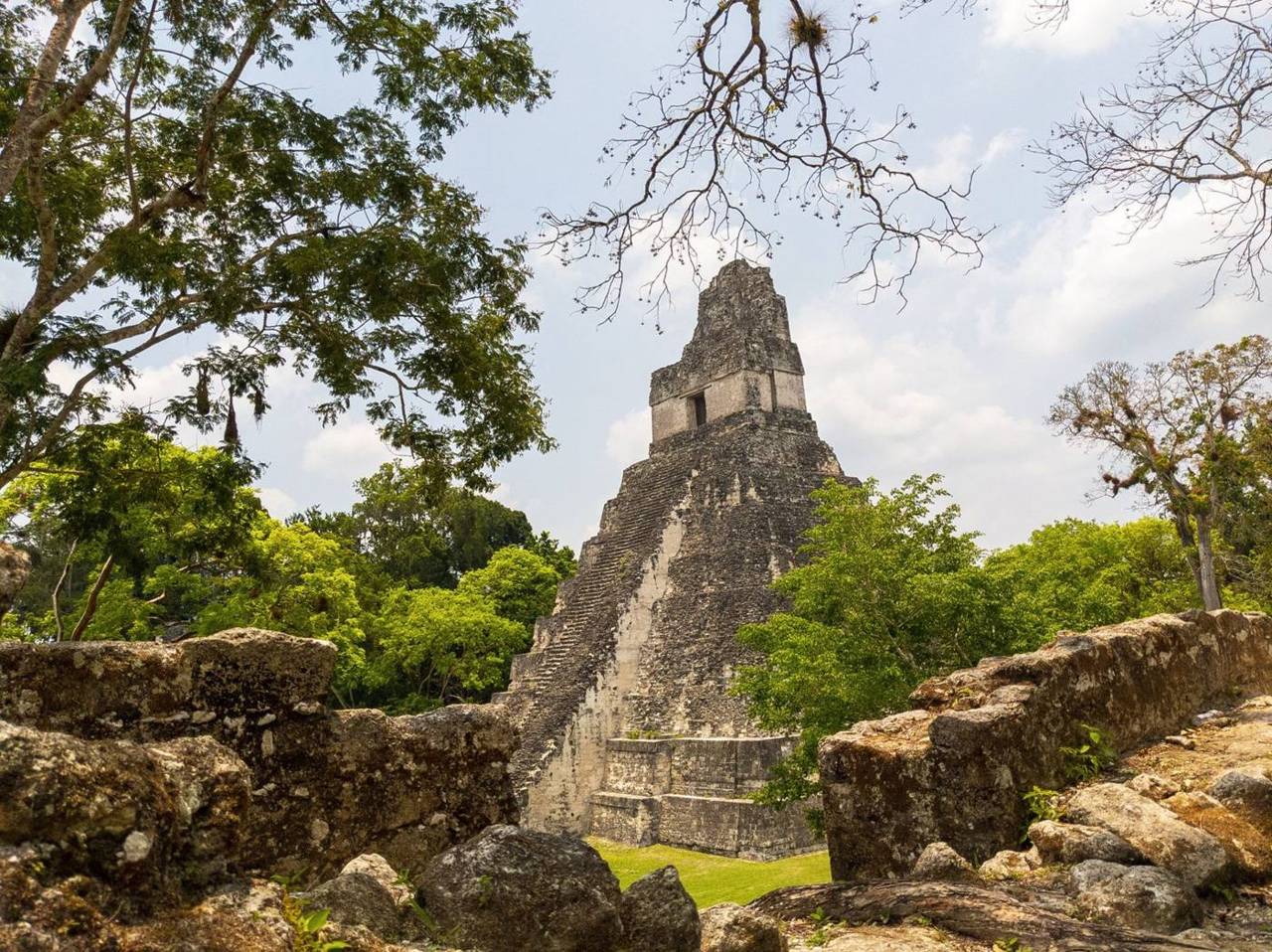
Tikal and the Petén
The great Maya city of Tikal in the jungle, with howler monkeys and toucans, sunrise from Temple IV and the island town of Flores on Lake Petén Itzá.
 5 daysModerate
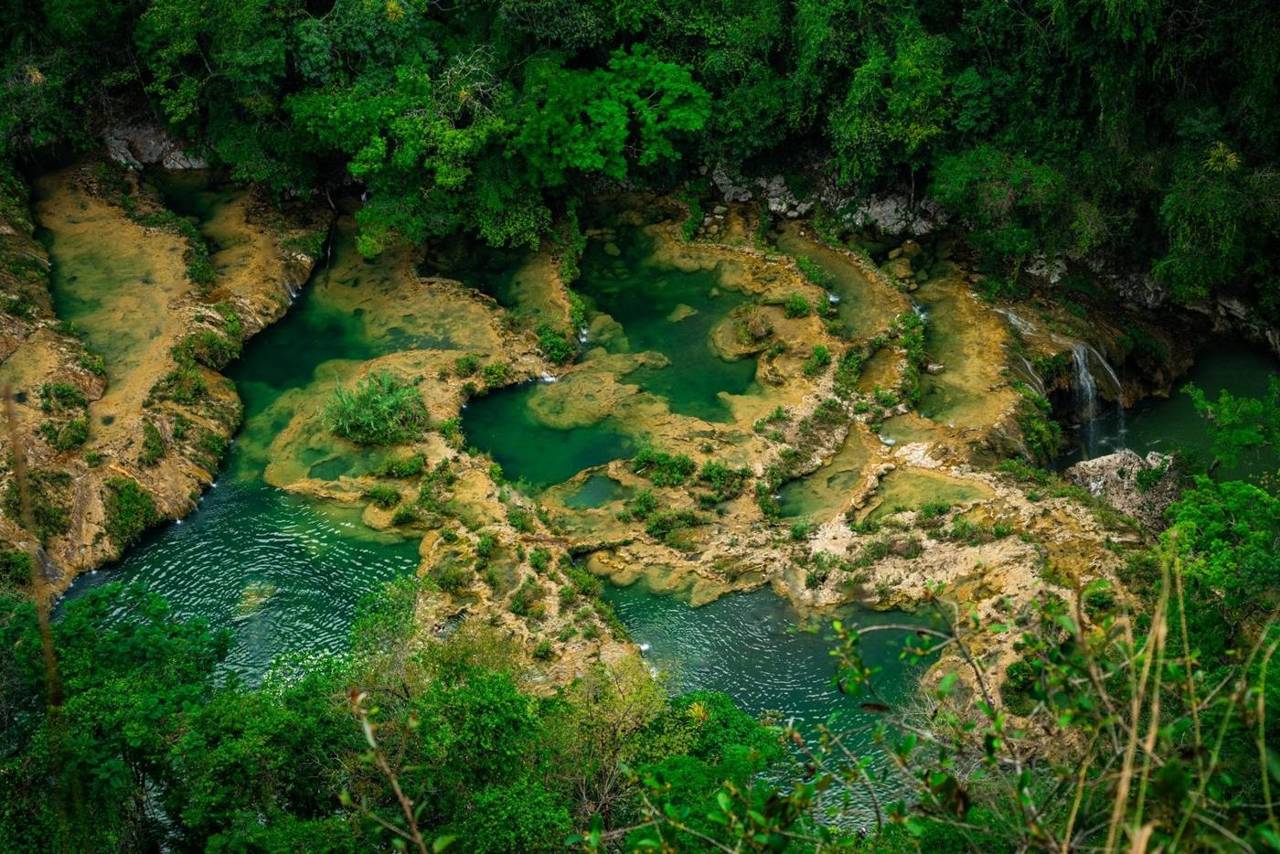
Semuc Champey and the Verapaces
The turquoise pools of Semuc Champey above an underground river, the K'anba cave by candlelight and the cardamom farms of Cobán.
 2 daysEasy
Chichicastenango
Central America's most famous Maya market, on Thursdays and Sundays, with Santo Tomás church, incense rituals on its steps and the colourful cemetery.