Corfu and Paxos
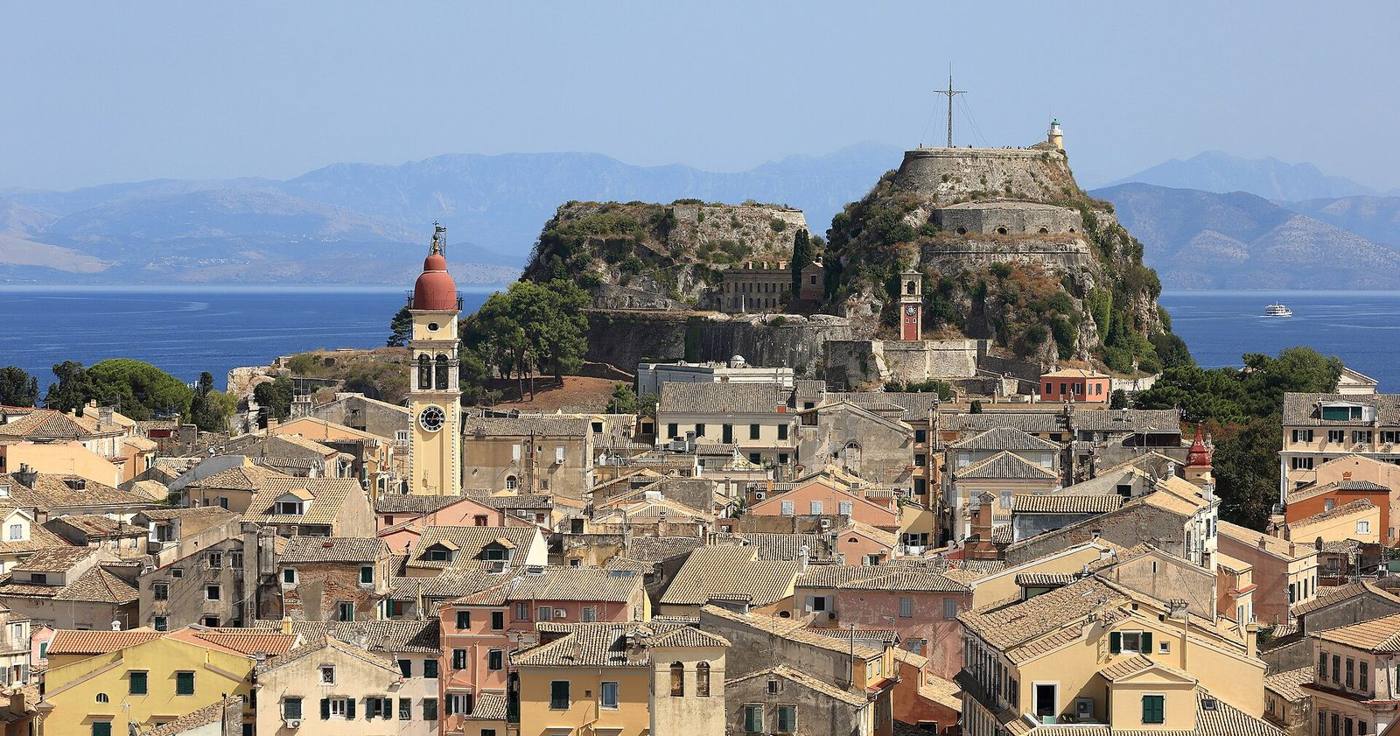
The greenest Ionian islands: Corfu old town (UNESCO) with its two Venetian fortresses and the Liston, the Achilleion palace, the bays of Paleokastritsa, the north-east coast up to Kassiopi, then Paxos with its olive groves and the white beaches of Antipaxos.
- Corfu
- Achilleion
- Paleokastritsa
- Kassiopi
- Paxos
- Antipaxos
Day by day
- Day 1
Corfu town: the two fortresses, the Liston and the lanes of the old town
Corfu is the northernmost of the Ionian Islands, opposite the coast of Albania, a green island of olives and cypresses with a history unlike the rest of Greece: for four centuries it was Venetian, then French and British, and it was never conquered by the Ottomans. Greece is in the Schengen area and uses the euro; EU citizens can enter with a valid identity card or passport. A small tax per room is charged for each hotel night.
Corfu's old town is a UNESCO World Heritage site. In the morning visit the Old Fortress, built by the Venetians on a headland separated from the town by a canal, with walls, the temple-like church of St George and views over the sea and the Albanian mountains. Then cross the Spianada, the largest square in Greece, where cricket is still played, a British legacy, and stroll under the arcades of the Liston, built by the French on the model of the rue de Rivoli in Paris.
In the afternoon lose yourself in the kantounia, the narrow lanes of the old town between tall ochre and pink houses with washing hung out. Enter the church of St Spyridon, the island's patron saint, with its red-domed bell tower, where the saint's relics are kept. Then climb to the New Fortress above the old port.
In the evening try Corfiot cooking with Venetian influences: pastitsada, spiced stewed meat with pasta, sofrito, veal in a garlic and parsley sauce, and bourdeto, fish in a spicy sauce.
Practical tip: in summer many cruise ships call at Corfu; visit the old town early in the morning or in the evening.
- Day 2
The Achilleion palace and the islet of Pontikonisi
In the morning drive south to the Achilleion, about twenty minutes from town, the palace built in 1890 for Empress Elisabeth of Austria, the famous Sisi, who loved Corfu and came here to escape the Viennese court. The neoclassical palace is dedicated to the Greek hero Achilles: in the garden above the sea stand statues of Achilles, including a gigantic one commissioned by the next owner, Kaiser Wilhelm II of Germany, and the famous Dying Achilles, pulling the arrow from his heel. From the terraces you see the coast and Corfu town.
In the afternoon go to Kanoni, a peninsula south of town, with one of the most famous views in Greece: the small white monastery of Vlacherna, linked to the shore by a thin causeway, and behind it the islet of Pontikonisi, Mouse Island, covered in cypresses, with a small Byzantine chapel. Legend says it is Odysseus's ship turned to stone by Poseidon. You reach Pontikonisi by small boat from the Vlacherna jetty. Planes landing at Corfu airport pass very low right over the lagoon, a curious sight.
In the evening return to town for a walk along the seafront and taste kumquat, a small citrus grown on Corfu, made into liqueur and candied fruit.
Practical tip: check the Achilleion's opening times, which can change between summer and winter.
- Day 3
Paleokastritsa, the monastery above the bay and Angelokastro castle
In the morning drive to the west coast to Paleokastritsa, about half an hour from town, one of the island's most beautiful landscapes: a series of bays and coves of turquoise and emerald water, surrounded by hills covered in olives and cypresses, with cliffs falling into the sea.
On the headland above the bays stands the Monastery of the Virgin of Paleokastritsa, founded in the thirteenth century and rebuilt in the eighteenth, with a courtyard full of flowers, a small icon museum and a terrace overlooking the sea. Shoulders and legs must be covered to enter.
From the small harbour little boats take you to the sea caves along the coast, such as the Blue Grotto, where the water is crystal clear. Then swim at one of the pebble beaches: the water here is cooler than on the east coast, because of colder currents.
In the afternoon drive up to the remains of the Byzantine castle of Angelokastro, built in the thirteenth century on a very high rock above the sea a few kilometres from Paleokastritsa. From the top, after a short walk, you see the whole west coast. The castle withstood several sieges by pirates and Ottomans.
In the evening watch the sunset from the village of Lakones above Paleokastritsa, one of the island's most famous views.
Practical tip: Corfu's mountain roads are narrow and winding; drive slowly.
- Day 4
The north-east coast to Kassiopi and Mount Pantokrator
In the morning drive north along the east coast, one of the most beautiful in Greece, with small bays of calm clear water, olive trees down to the sea and fishing villages. Across the channel, a few kilometres away, you see the mountains of Albania.
Stop at Kalami, a small bay where the English writer Lawrence Durrell lived in the 1930s in a white house on the shore. His brother Gerald told of those years on Corfu in the book My Family and Other Animals. Then continue to Agni and Kouloura, a small fishing harbour with a Venetian fortified house.
In the afternoon you reach Kassiopi, a fishing village with a harbour full of colourful boats and a ruined Byzantine and Venetian castle on a headland. Around the castle a coastal path leads to small coves for swimming.
If you have time, drive up Mount Pantokrator, the island's highest mountain at 906 metres, with a monastery at the top and a view that on clear days takes in all of Corfu, the Albanian coast and sometimes Italy. On the way you pass Palia Perithia, an abandoned village of Venetian stone houses, now partly restored.
In the evening return to town or stay on the north coast.
Practical tip: the road up Pantokrator is narrow and steep in the last stretch; in hot weather set off early.
- Day 5
The hydrofoil to Paxos, Gaios and Loggos
In the morning take the hydrofoil or ferry from Corfu port to Paxos, a small island south of Corfu, about ten kilometres long, covered in ancient olive groves and surrounded by very clear sea. The crossing takes about an hour by hydrofoil; sailings are more frequent in summer.
You arrive in Gaios, the main harbour, a village of pastel houses facing a channel sheltered by two green islets, St Nicholas, with a Venetian fortress, and Panagia, with a monastery. Stroll along the waterfront and the little square.
In the afternoon hire a scooter or a small boat, or take the bus to Loggos, a tiny fishing village on a bay, with colourful houses and an old stone olive press by the sea. Along the way you cross very old olive groves, with twisted trunks, and small churches. Paxos olive oil is considered among the best in Greece.
Near Loggos there are white-pebble coves with turquoise water for swimming. Further north is Lakka, another village on a round, sheltered bay.
In the evening return to Gaios and stay on the island: when the day-trip boats leave, the village becomes peaceful.
Practical tip: in summer book the hydrofoil in advance; in strong wind sailings can be cancelled.
- Day 6
A boat to Antipaxos, the caves of Paxos and back to Corfu
In the morning hire a small motorboat, which can be driven without a licence at the lowest power levels, or take a scheduled boat to Antipaxos, a small island south of Paxos, almost uninhabited, covered in vineyards and Mediterranean scrub. Its beaches, such as Voutoumi and Vrika, have white sand and incredibly turquoise water, among the clearest in the Mediterranean.
If you have a boat, on the way back follow the west coast of Paxos, high and rocky, full of sea caves you can enter by boat, such as the Ypapanti cave, and pass the rock arch of Tripitos rising from the sea. It is the wildest part of the island, with no roads and no houses.
In the afternoon return to Gaios and take the hydrofoil to Corfu.
In the evening, in Corfu, take a last walk through the old town lanes and along the Liston. Corfu airport has flights to many European cities, especially in summer, and from the port ferries sail to Italy, such as Brindisi, Bari and Ancona, and to Igoumenitsa on the Greek mainland.
Things to take home: Paxos and Corfu olive oil, kumquat liqueur and candied fruit, olive-wood objects and olive-oil soap.
Practical tip: if you drive a boat, keep away from the caves in rough seas and ask the hire company which areas to avoid.
Corfu has direct flights from Italy in season and ferries from Adriatic ports. Inland roads are narrow and winding. Paxos is small: get around by scooter or by rented boat, with no licence needed for low-powered engines. A valid identity card is enough for EU citizens. Accommodation charges a nightly tax that varies with season and category. In summer the wildfire risk is high: on alert days some forest areas and trails may be closed, and lighting fires outdoors is forbidden.
Before you go
- Documents and visa
- EU citizens need a valid identity card or passport, including on ferries, where ID may be checked at boarding. Other nationalities should check the Schengen rules.
- Health and vaccines
- No vaccines required. EU citizens should bring their EHIC; in summer protect yourself from the sun and drink plenty. Emergencies: 112.
- Money and payments
- Euro. Cards are accepted almost everywhere; every accommodation charges a fee per room per night, often paid on departure.
- Power sockets
- Types C and F, 230 volts.
- Time zone
- Eastern European Time (UTC+2), summer time (UTC+3) from late March to late October.
- Safety
- A safe country. In summer watch for wildfires and 112 alerts; in Athens, for pickpockets on the metro. Official advice: GOV.UK.
Information checked in November 2026 for Italian and EU citizens. Rules change: always check before you travel.
Variations
In 4 days: Corfu town, the Achilleion and Kanoni, Paleokastritsa, then one day on Paxos and Antipaxos.
In 9 days: add the coast of Parga and Sivota on the mainland, reached by ferry from Corfu or Paxos.
Frequently asked questions
Do I need a car on Corfu?
It is useful for Paleokastritsa, the north coast and Pantokrator; for the town and Paxos it is not needed.
When is the best time to go?
May to June and September: warm sea, less heat and fewer people than in July and August.
Can Paxos be done as a day trip?
Yes, with boat trips from Corfu, but staying a night on the island lets you enjoy the calm when the boats leave.
Indicative itinerary written by World Atlas. Before booking, check timetables, seasonal openings, documents and safety.
 5 daysEasy
Mount Pelion, mountain villages and beaches
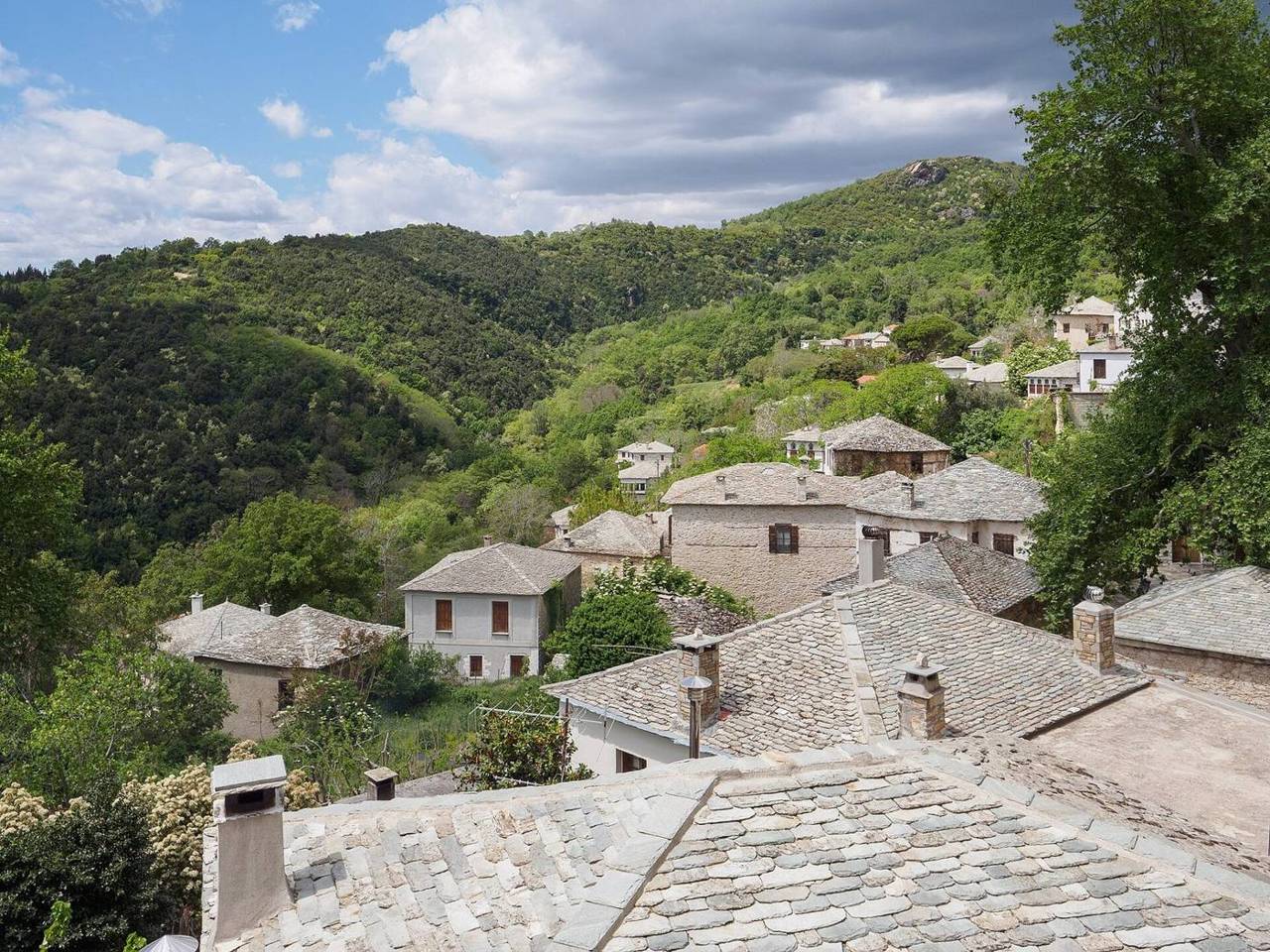
The mountain of the centaurs between the Gulf of Volos and the Aegean: the stone villages of Makrinitsa and Portaria, chestnut and beech woods, old cobbled mule tracks, Tsagarada and the beaches of Damouchari and Mylopotamos, and the little steam train to Milies.
 7 daysEasy
Lefkada and the Epirus coast: Parga and Sivota
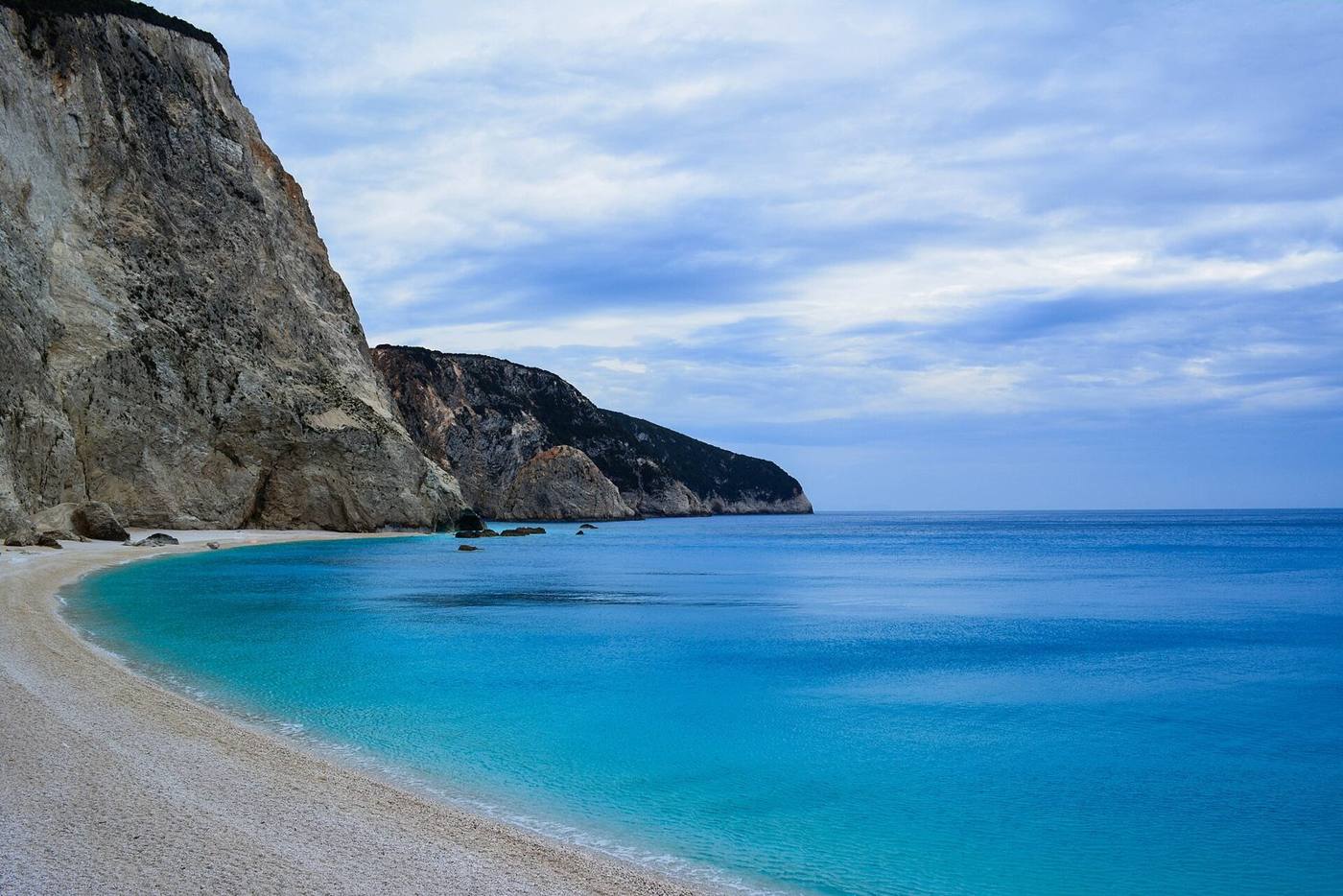
The turquoise sea of western Greece by car: Lefkada, linked to the mainland by a bridge, with Porto Katsiki and Egremni below the white cliffs, the islands of Meganisi and Kalamos by boat, then Parga with its Venetian castle, Sivota and the springs of the Acheron river.
 6 daysEasy
The Saronic islands: Aegina, Poros, Hydra and Spetses
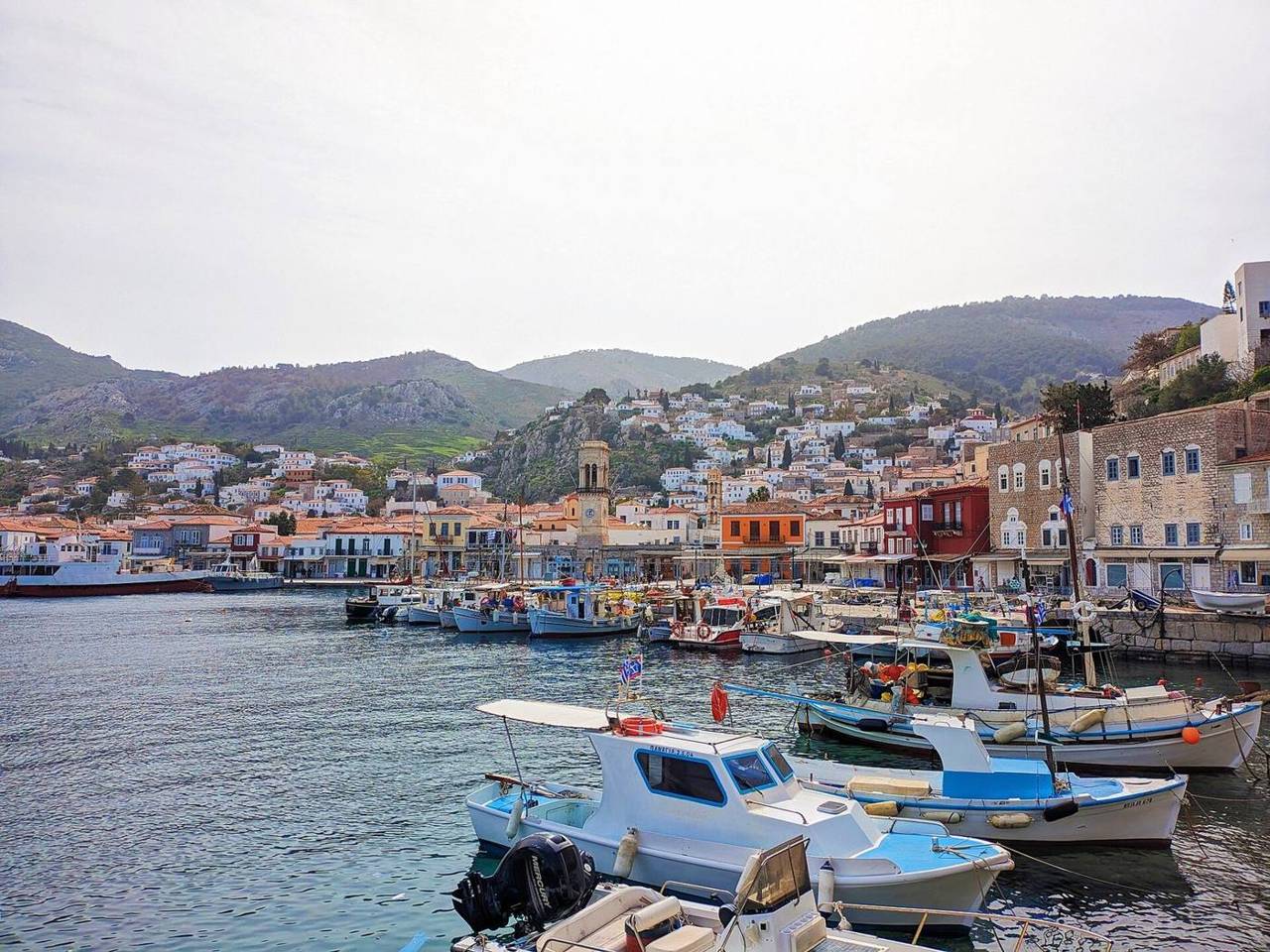
Four islands a few hours from Piraeus: Aegina with the temple of Aphaia and its pistachios, Poros with its clock tower above the channel, Hydra closed to cars, where you get around on foot, by boat or by mule, and Spetses with its captains' mansions and horse carriages.