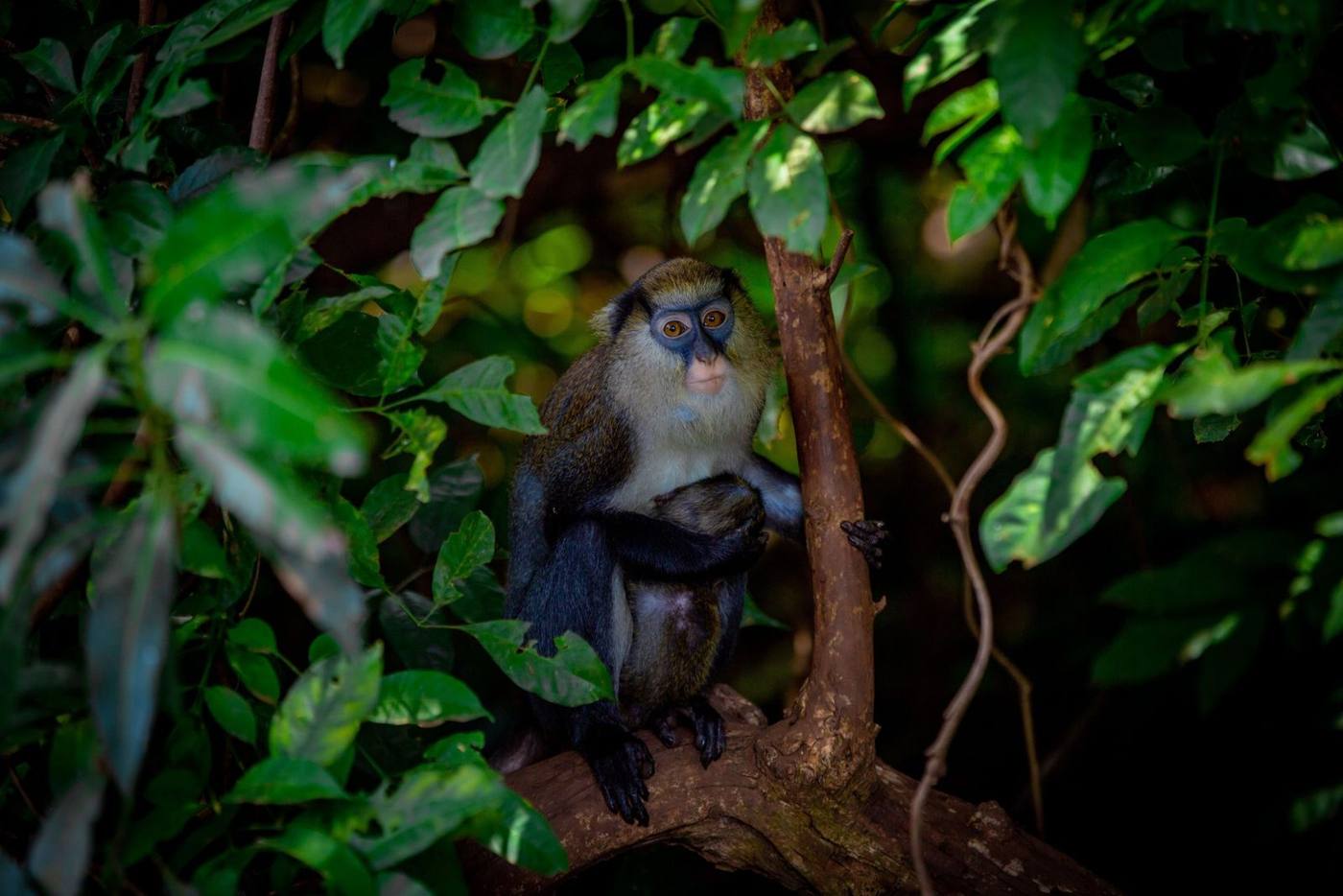
Boabeng-Fiema and Kintampo
The Boabeng-Fiema monkey sanctuary, where colobus and mona monkeys are protected by village tradition, and the Kintampo and Fuller falls in the centre of the country.
- Kumasi
- Techiman
- Boabeng-Fiema
- Kintampo
Day by day
- Day 1
From Kumasi to Boabeng-Fiema
This trip takes you to the centre of Ghana: the Boabeng-Fiema monkey sanctuary, where colobus and mona monkeys live among the houses, protected by the tradition of two villages, and the Kintampo and Fuller waterfalls. You travel by car with a driver from Kumasi.
Before you go: Italian citizens enter Ghana with a passport and a visa, to be obtained before departure; since May 2026 it is requested online on the official electronic visa portal of the Ghana Immigration Service, without going through intermediary websites. Yellow fever vaccination is compulsory for all travellers over nine months old and the certificate is checked on arrival. Since November 2026, as a precaution against Ebola, a health declaration and a temperature check are required at airports. Talk to your doctor about malaria prevention. Other nationalities should check their own rules. The UK advises against all but essential travel to the Bawku area, in the Upper East region, and reports attacks on some northern roads and clashes in the western part of the Savannah region: this trip stops well before, in the Bono East region.
In the morning you leave Kumasi heading north. The road crosses the forest and then a more open area, with fields of yam, cassava and maize. Halfway, stop in Techiman, a very lively market town, where traders arrive from all over the centre of the country with fruit, vegetables, grain and livestock.
In the afternoon you reach Boabeng and Fiema, two neighbouring villages separated by a sacred grove. On arrival you already see monkeys in the trees around the houses and on the roofs.
Sleep in or near Boabeng-Fiema, for two nights.
Practical tip: travel only by day and arrive before dark, because the UK advises against roads outside towns after sunset.
- Day 2
The sacred monkeys of the villages
Today you spend the day with the monkeys of Boabeng-Fiema, a rare example of nature conservation born from tradition.
Early in the morning, when the monkeys are most active, walk with a village guide in the sacred grove and along the paths between the houses. Two species live here: black-and-white colobus monkeys, elegant, with long white tails, which stay mostly high up in the treetops, and mona monkeys, smaller and curious, which often come down close to people.
For the people of Boabeng and Fiema the monkeys are sacred, and for generations nobody has hunted or disturbed them. According to tradition, when a monkey dies it receives a funeral like a person and is buried in a small cemetery in the grove. The guide tells you the stories linked to the origin of this tradition and shows you the graves.
In the afternoon, after the hottest hours, go back to the grove: towards evening the groups of monkeys move through the trees to find a place to sleep, and the colobus leap from branch to branch in great bounds.
In the evening try fufu with groundnut or palm nut soup, the most common dish in central Ghana.
Practical tip: do not feed the monkeys, do not touch them and avoid sudden movements, and leave a contribution for the sanctuary, which depends on visits and on the work of the community.
- Day 3
The Kintampo and Fuller waterfalls, then the return
Today you visit two waterfalls in the heart of the country and then return to Kumasi.
In the morning you reach Kintampo, a small town often considered the geographical centre of Ghana. Just outside the centre are the Kintampo waterfalls: the river drops between rocks in a series of falls, surrounded by forest. A staircase leads down to the base of the main fall, where the water forms natural pools. Check prices and times.
Then continue for a few kilometres to the Fuller waterfalls, lower but wide, with the water flowing down in steps between the rocks and forming a calm pool under the trees. It is a quiet place, perfect for a break in the shade.
In the afternoon set off south and return to Kumasi before dark.
In three days you have seen the sacred monkeys of Boabeng-Fiema, protected by the tradition of the villages, the market of Techiman and the Kintampo and Fuller waterfalls, in the green centre of Ghana.
When to go: from November to March, in the dry season, with easier roads, even if the waterfalls carry less water and the harmattan sometimes brings haze. In the rainy season the waterfalls are more spectacular, but the paths become slippery.
Practical tip: at the waterfalls swim only in the calm pools indicated by the keepers and be careful on the wet rocks, which are very slippery.
A fine example of community-led conservation. The monkeys are sacred: don't feed them. The north beyond Tamale is advised against near the border: this trip stops before it.
Before you go
- Documents and visa
- Valid passport and a compulsory visa, to be obtained before departure. Since May 2026 the visa is requested online on the official electronic visa portal of the Ghana Immigration Service: beware of unofficial websites.
- Health and vaccines
- Yellow fever vaccination is compulsory for all travellers over nine months old: the certificate is checked on arrival. Since November 2026, as a precaution against Ebola, international airports require a health declaration and a temperature check. Malaria prevention is recommended, after medical advice. Drink only bottled water.
- Money and payments
- Ghanaian cedi. Mobile payment is everywhere; cards work in large hotels and shopping centres in Accra, outside the cities you need cash.
- Power sockets
- Type G, 230 volts, the same as in the UK.
- Time zone
- UTC+0 all year.
- Safety
- The UK advises against all but essential travel to the Bawku Municipal area in the Upper East region, and reports attacks on some northern roads and clashes in the western part of the Savannah region, near the borders with Côte d'Ivoire and Burkina Faso. In Accra robbery and bag-snatching are increasing: avoid walking alone at night and taking a taxi alone after dark. On southern beaches currents are dangerous. Avoid roads outside towns after dark. Official advice: GOV.UK.
Information checked in November 2026 for Italian and EU citizens. Rules change: always check before you travel.
Variations
In 2 days: Boabeng-Fiema on the first day and the Kintampo waterfalls on the second, returning to Kumasi in the evening.
In 6 days: add Kumasi and the Ashanti kingdom, and Lake Bosumtwi.
Frequently asked questions
Why are the monkeys of Boabeng-Fiema protected?
Because of the tradition of the two villages, which consider them sacred: for generations nobody has hunted them, and when they die they receive a funeral and a burial in the grove.
Does this trip pass through the areas advised against in the north?
No. The UK advises against the Bawku area, in the Upper East, and reports risks on some northern roads. This trip stays in the Bono East region, much further south.
What documents do I need for Ghana?
Italian citizens enter with a passport and a visa, to be requested online on the official portal of the immigration service. Yellow fever vaccination is compulsory. Other nationalities should check their own rules.
Indicative itinerary written by World Atlas. Before booking, check timetables, seasonal openings, documents and safety.
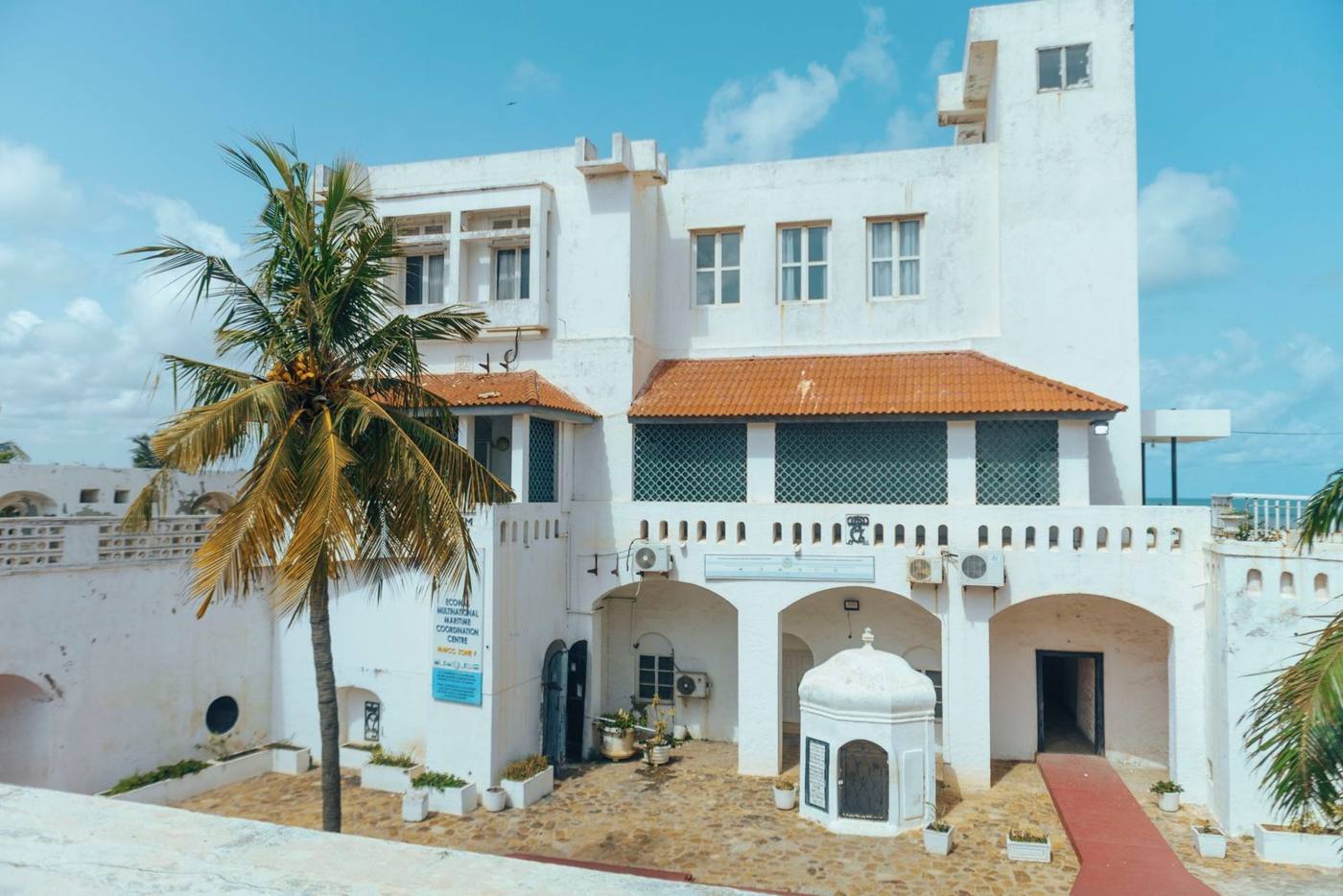 2 daysEasy
Accra, art and food
The creative capital: Jamestown with its lighthouse and murals, the galleries of Osu and Labadi, Makola market and street food, from jollof to kelewele.
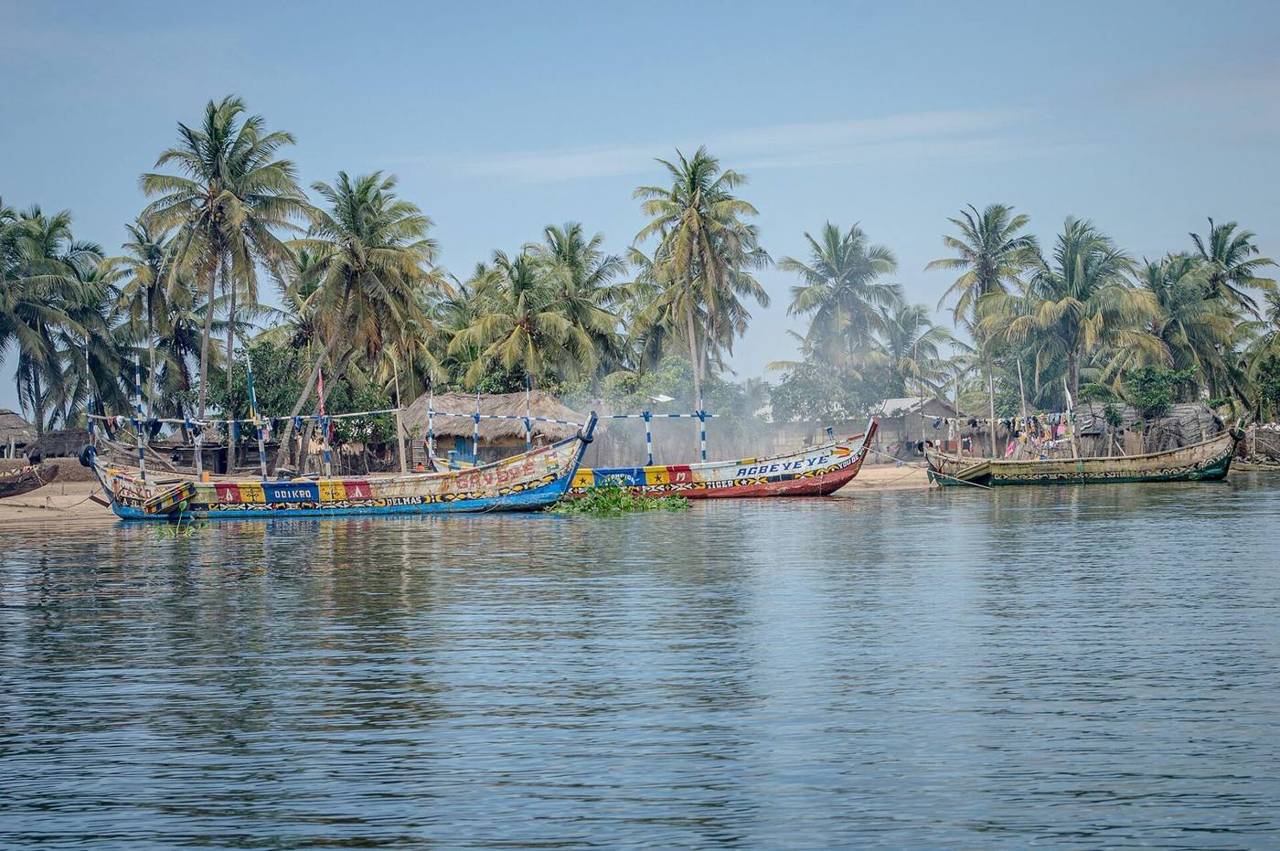 2 daysEasy
Ada and the Volta estuary
Where the Volta river meets the ocean: sand islands, waterside lodges, boat trips between villages and sea turtles nesting in winter.
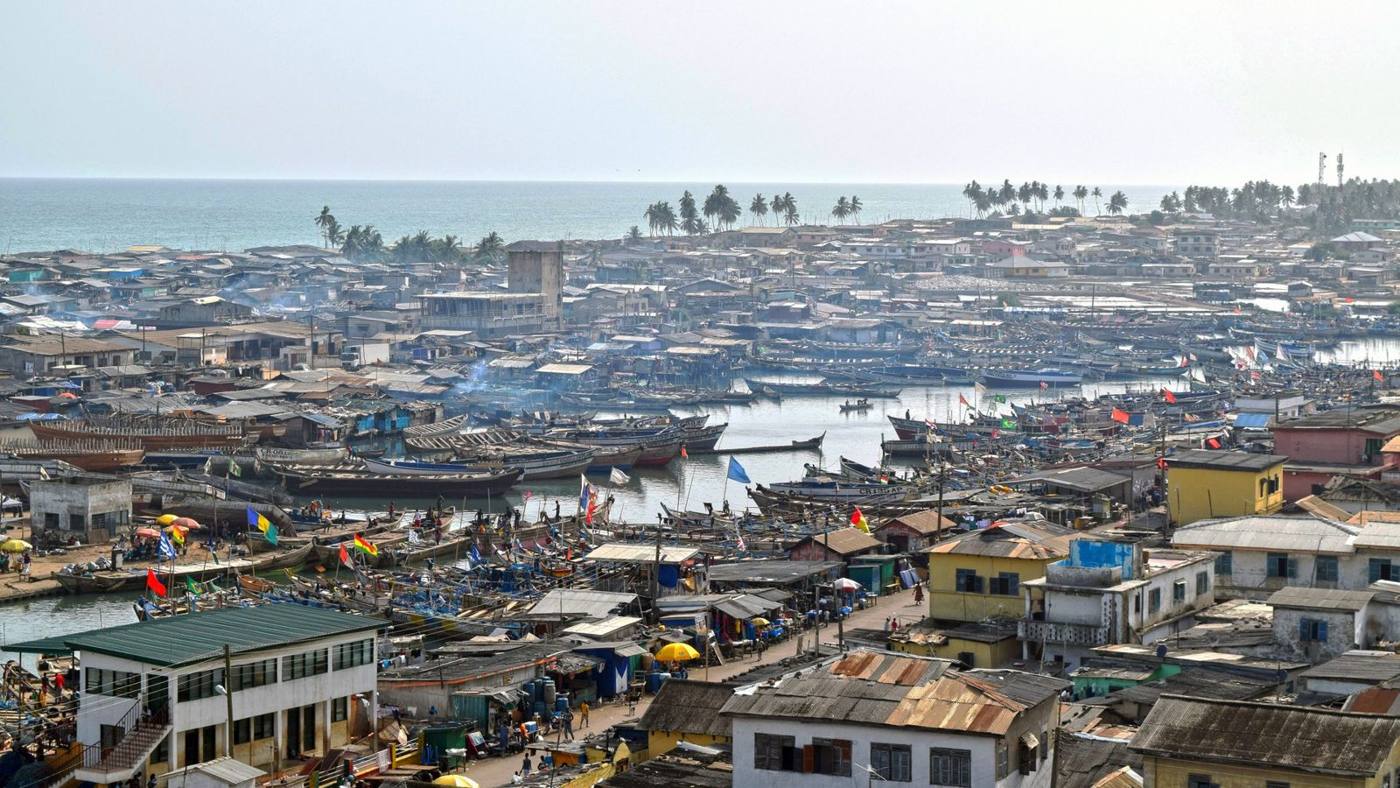 6 daysEasy
Accra and the coast of forts
Accra and Jamestown, the UNESCO slave-trade castles of Cape Coast and Elmina, the canopy walkway of Kakum park and the beaches of Busua.