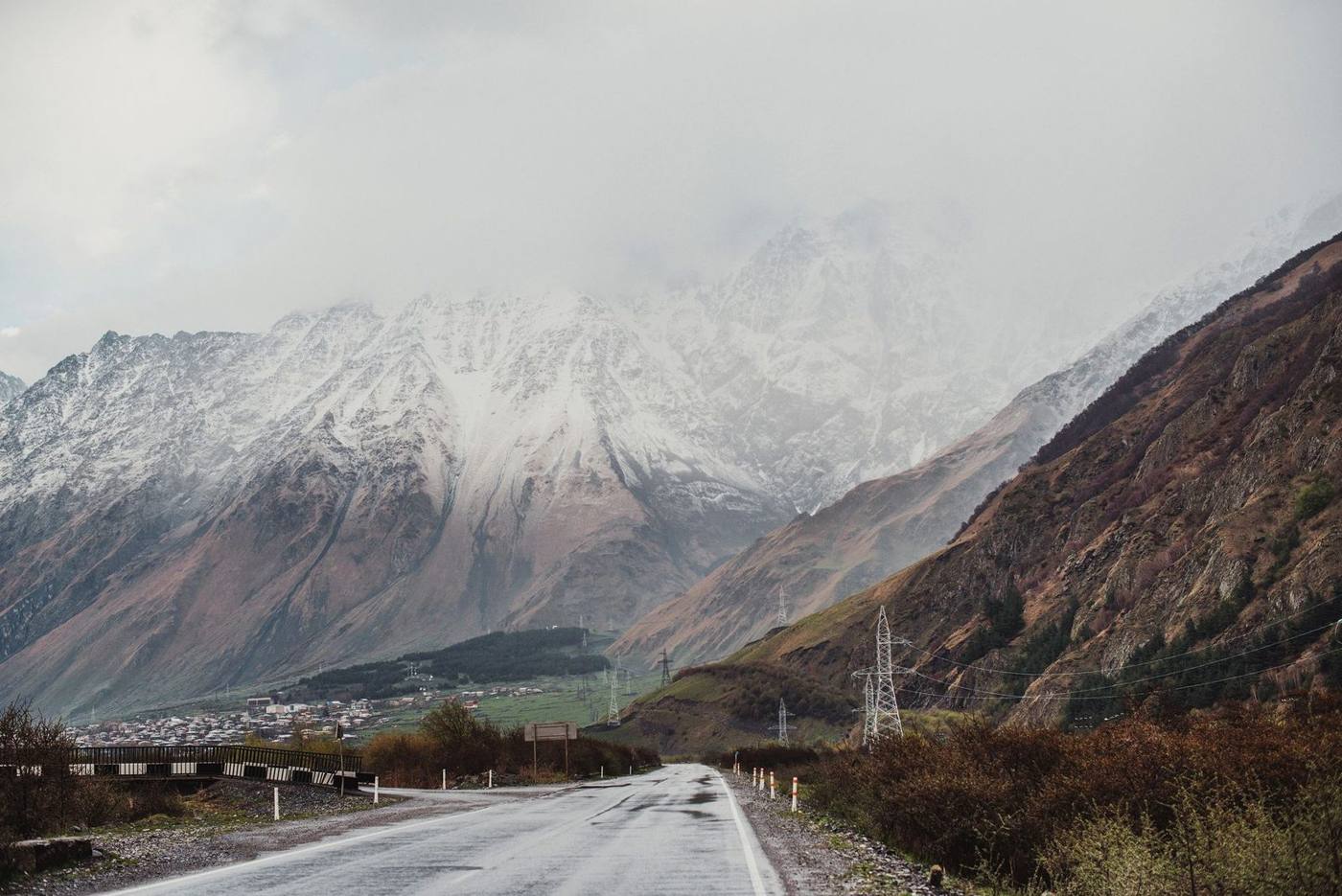
Svaneti, Khevsureti and Tusheti by 4x4
The three tower regions of the Georgian Caucasus in one journey, on mountain roads, with short walks and no nights in tents.
- Tbilisi
- Kutaisi
- Mestia
- Ushguli
- Martvili
- Kazbegi
- Shatili
- Telavi
- Omalo
- David Gareja
Day by day
- Day 1
Arrival in Tbilisi
This trip brings together in two weeks the three tower regions of the Georgian Caucasus: Svaneti with Mestia and Ushguli, Khevsureti with Mutso and Shatili and Tusheti with Omalo and Dartlo, plus Kazbegi, the monasteries of Kutaisi and Kakheti and David Gareja. You travel by 4x4 with a driver, walk only a few hours a day and always sleep indoors.
Before you go: for Italian citizens the recommended document is a passport, valid for at least six months from the date of entry: you will also need it at border police posts. The electronic identity card is accepted only if you transit through Schengen countries, but there have been cases of refusal. No visa is needed for stays of up to 365 days. Since 2026 health and accident insurance with cover of at least 30,000 lari has been compulsory. Other nationalities should check their own rules. Italy's travel advice warns against all travel to Abkhazia and South Ossetia, and the UK also advises against the areas immediately next to their boundary lines: that is why this route skips Uplistsikhe, near Gori, and the Truso valley. Italy's travel advice also asks for particular caution near the border with Chechnya, Ingushetia and Dagestan, including Omalo and Shatili. In Tbilisi avoid the protests outside Parliament.
You land at Tbilisi airport, about half an hour from the centre. Withdraw cash: there are no cash machines in Khevsureti or Tusheti.
In the afternoon walk through the old town, among the wooden balconies, and go down to the sulphur baths of Abanotubani.
In the evening have khinkali and khachapuri for dinner.
Sleep in Tbilisi.
Practical tip: book your driver for the whole trip before you leave home: for Svaneti, Shatili and the Abano road you need someone who knows the mountain tracks.
- Day 2
Mtskheta, Ubisa monastery and Kutaisi
Today you cross Georgia westwards, with two monasteries along the way.
In the morning stop at Mtskheta, about twenty minutes from Tbilisi, the ancient capital where tradition says Georgia became Christian in the 4th century, a UNESCO World Heritage Site. Drive up to Jvari monastery, from the 6th century, on the hill above the meeting of the Aragvi and Mtkvari rivers, which have two different colours. Then go down into town and visit Svetitskhoveli cathedral, from the 11th century, where tradition places the robe of Christ. Go in with your shoulders covered; women usually cover their hair with a scarf.
At midday take the motorway west. The stretch near Gori runs not far from the boundary line with South Ossetia: stay on the main road, do not turn off to the north and do not stop in the villages of the area.
In the afternoon, beyond the Rikoti pass, stop at Ubisa monastery, in a green valley near Kharagauli, with its medieval church, a defensive tower beside it and 14th century frescoes, among the finest in Georgia. Then drive down into the plain of Imereti to Kutaisi, the ancient capital of Colchis, where Greek myth places the Golden Fleece sought by Jason and the Argonauts.
In the evening have khachapuri imeruli for dinner, the round cheese-filled bread of this region, with a white wine from Imereti.
Sleep in Kutaisi.
Practical tip: for the long drives of this trip keep water, fruit and something for car sickness in the car: the mountain roads of the coming days are slow and full of bends.
- Day 3
Prometheus cave, Gelati and the climb to Mestia
Today you visit a cave and a great monastery, then climb into Svaneti. It is a very long day.
Early in the morning go to Prometheus cave, near Tskaltubo, about twenty kilometres from Kutaisi. The route crosses several underground halls with stalactites, stalagmites, columns and stone cascades, lit with coloured lights. Inside it is cool even in summer. Check prices and times and arrive at opening time.
Then visit Gelati monastery, a few kilometres from Kutaisi, founded in 1106 by King David IV the Builder and a UNESCO World Heritage Site. There was an academy here, one of the great centres of Georgian culture in the Middle Ages. In the main church look at the mosaic of the Virgin in the apse, from the 12th century. At the entrance lies the tomb of King David, who wanted to be buried under the gate so that everyone would step on him as they came in.
At midday set off towards Zugdidi. Here follow the main road towards the mountains and do not head towards the Enguri bridge, which leads to Abkhazia, an area advised against.
In the afternoon the road climbs along the lake of the Enguri dam, one of the tallest arch dams in the world, and then through the narrow wooded gorge to Mestia, the main town of Upper Svaneti, at about 1,500 metres, a UNESCO World Heritage Site. Allow about five hours of driving from Kutaisi.
In the evening try kubdari, the bread filled with spiced meat typical of Svaneti.
Sleep in Mestia, for two nights.
Practical tip: there is no time for long lunches today: buy bread and cheese in Kutaisi for the journey and eat during a stop by the Enguri lake.
- Day 4
Ushguli and Lamaria church
Today you go to Ushguli, the group of villages beneath Shkhara, the highest peak in Georgia.
In the morning, before leaving, visit the Svaneti Museum of History and Ethnography in Mestia, with medieval icons, silver and gold crosses and manuscripts that families kept for centuries in churches and towers. Check prices and times. Then set off by 4x4: the road, partly paved and partly gravel, climbs for about two and a half hours along the Enguri valley, through woods, meadows and villages with towers.
At midday walk through the four villages of Ushguli, at about 2,100 metres, one of the highest settlements in Europe lived in all year round. The stone towers, built in the Middle Ages by families to defend themselves from attacks and feuds, rise among the houses, stables and haylofts. Climb to Lamaria church, medieval, on a hill above the village, with its tower beside it and the great white wall of Shkhara in front.
In the afternoon, if you like, take a short walk on the ridge above Ushguli, about an hour and a half, to see the villages from above. Then return to Mestia on the same road.
In the evening try chvishtari, cornbread with cheese, and tashmijabi, mashed potato with stretchy cheese, with a glass of chacha.
Sleep in Mestia.
Practical tip: between Mestia and Ushguli the road can be closed for a few hours by landslides or roadworks: leave early and ask your driver for the morning's news.
- Day 5
Zugdidi and Martvili canyon
Today you leave Svaneti and drive down to the plain of Samegrelo, with its palaces and canyons.
In the morning leave Mestia early and drive back through the Enguri gorge and along the lake of the dam, with your last views of the snowy peaks. It is about three and a half hours of driving to Zugdidi.
In Zugdidi visit the palace of the Dadiani, the family of princes who ruled Samegrelo for centuries, now a museum of history and architecture, with a botanical park around it. Check prices and times. Stay in the centre and on the main road: the Enguri bridge, west of the town, leads to Abkhazia, an area advised against, and is not part of this trip.
At midday you reach Martvili canyon, carved by the Abasha river into the limestone. You walk on walkways and steps along the walls, above clear green water, with small waterfalls and pools between mossy rocks. If there is enough water, you can take a short boat ride through the narrowest part. Check prices and times.
In the afternoon carry on to Kutaisi, about an hour away. Climb to Bagrati cathedral, on the hill above the city, built in the early 11th century by King Bagrat III, the first king of united Georgia, for the view over the Rioni river.
In the evening taste the food of Samegrelo, the spiciest in Georgia: elarji, cornmeal with stretchy cheese, and Megrelian kharcho, beef in a walnut sauce.
Sleep in Kutaisi.
Practical tip: the walkways in the canyon are damp and slippery: keep your walking shoes on here too.
- Day 6
Motsameta, Ananuri and the Military Road to Gudauri
Today is a long transfer day, from western Georgia to the mountains of the Greater Caucasus.
In the morning visit Motsameta monastery, a few kilometres from Kutaisi, a small medieval church on a rocky spur above a bend of the Tskaltsitela river, in the woods. Tradition tells of two princely brothers killed here for their faith; their relics are kept inside the church. It is a quiet place, with a view of the river below the cliffs.
Then take the motorway east, over the Rikoti pass. Near Gori stay on the main road and do not turn off to the north. We have taken the rock-cut town of Uplistsikhe out of this day: it lies in the Gori area, not far from the boundary line with South Ossetia.
At midday, after Mtskheta, take the Georgian Military Road north. Stop at Ananuri fortress, from the 17th century, on the shore of the Zhinvali reservoir, with two churches inside the walls and outer walls carved with crosses and vines. Climb the highest tower for the view over the turquoise water.
In the afternoon carry on up the Aragvi valley to Pasanauri, the village tradition calls the home of khinkali, and then climb through hairpin bends to Gudauri, at about 2,200 metres, the ski resort below the Jvari pass.
In the evening have mountain khinkali and a hot soup for dinner.
Sleep in Gudauri.
Practical tip: split the day into stages of two hours at most, with stops to stretch your legs: in all it is many hours of driving.
- Day 7
Kazbegi, Gergeti church and the Juta valley
Today you cross the Jvari pass and arrive beneath Kazbek, one of the highest extinct volcanoes in the Caucasus, at over 5,000 metres.
In the morning drive up from Gudauri to the Jvari pass, at almost 2,400 metres. Just before it stop at the Friendship Monument, from 1983, a large concrete arch with colourful mosaics above a deep gorge. Then drop into the Terek valley to Stepantsminda, the village everyone still calls Kazbegi.
Go up by 4x4 or on foot to Gergeti Trinity church, from the 14th century, at about 2,170 metres, on the meadow above the village. It is the most famous image of Georgia: the small stone church standing alone, with the Kazbek glacier behind. Go in with your shoulders and legs covered.
At midday, instead of the Gveleti waterfalls, which lie in the Dariali gorge towards the Russian border, go to the village of Juta, at about 2,200 metres, in the Sno valley, beneath the spires of the Chaukhi massif. Walk for about an hour and a half on an easy path along the stream, through flowering meadows, to the foot of the peaks, then return the same way.
In the afternoon go back to Stepantsminda and watch Kazbek turn pink at sunset.
In the evening have kharcho for dinner, a meat soup with walnuts.
Sleep in Stepantsminda.
Practical tip: beyond Stepantsminda the Military Road leads to the Russian border: it is not part of this trip, so stay in the village and in the side valleys to the south.
- Day 8
Zhinvali, Datvis Jvari and Mutso to Shatili
Today you enter Khevsureti, the land of stone fortresses, on one of the most spectacular tracks in Georgia.
In the morning drive down the Military Road to the Zhinvali dam, with its turquoise lake among the hills. Then turn north-east and climb up the Pshavi Aragvi valley, through woods and villages, to Barisakho.
At midday the road becomes a gravel track and climbs to the Datvis Jvari pass, the pass of the bear's cross, open only in summer. In winter snow cuts Shatili off for months. From the top you see the valleys of Khevsureti and the snowy peaks on the border. Then drop into the Argun valley. Along the road there is a border police post, where they will ask for your passport.
In the afternoon drive up the Andaki gorge to Mutso, a medieval fortified village perched on a rocky spur, with stone towers and houses climbing in steps up the cliff, restored in recent years. Climb slowly up the steep path to the top, about half an hour: the view over the gorge is dizzying. Then return towards Shatili, a few kilometres from the border with Chechnya. Do not carry on beyond the village to the north or along the valley towards the border: we have taken the Anatori crypts out of the programme, because they lie in exactly that direction.
In the evening have dinner in the fortress village with khinkali and Khevsur cheese.
Sleep in Shatili.
Practical tip: in Shatili and Mutso always ask before photographing people or entering sacred places: in Khevsureti some traditional shrines are closed to visitors and to women.
- Day 9
The towers of Shatili and the Abudelauri lakes
Today you discover Shatili in the morning and then take the finest walk of the trip, to the lakes beneath the Chaukhi massif.
In the morning walk among the tower houses of Shatili, dozens of stone and slate towers joined together, built for defence against attacks. They are linked by ladders, terraces and covered passages, and some have been restored. Climb the hill opposite to see the whole village, compact as a castle above the Argun river.
Then set off again by 4x4 heading south and cross the Datvis Jvari pass once more. Shortly after, a side track leads to Roshka, the village at the foot of the Chaukhi massif, where you leave your bags.
At midday set off on foot towards the Abudelauri lakes, in a glacial valley beneath rock walls. The path climbs through meadows of flowers and rhododendrons, for about two hours. There are three lakes, of different colours: the green lake, surrounded by grass, the blue lake, higher up, and the white lake, almost beneath the glacier. If you still have energy, climb to the white lake; otherwise stop at the blue lake, the most beautiful.
In the afternoon walk back down to Roshka by the same path. In all it is about five hours of walking, with no technical difficulty.
In the evening have mtsvadi for dinner, grilled meat skewers, with warm bread.
Sleep in Roshka.
Practical tip: even in summer a cold wind blows at the Abudelauri lakes: bring a warm layer, a waterproof jacket and walking boots, because the path has stony and muddy stretches.
- Day 10
Alaverdi, Tsinandali and Telavi
Today you leave the mountains and go down into Kakheti, the wine region.
In the morning leave Roshka, drive down to Barisakho and on to the Zhinvali reservoir. From here follow the roads east, across the Tianeti plateau, through woods, pastures and villages, to Akhmeta, at the entrance to the Alazani valley. It is a few hours on the road.
At midday you reach Alaverdi cathedral, from the 11th century, one of the tallest churches in Georgia, among the vineyards with the mountains behind. The monks still make wine in qvevri, large clay jars buried in the ground, next to the monastery. Go in with your shoulders and legs covered.
In the afternoon visit the Tsinandali estate, the 19th century residence of the poet Alexander Chavchavadze, with its house museum, the old wine cellar and a large English-style park, with old trees and avenues. Check prices and times.
Towards evening you reach Telavi, the old capital of the kingdom of Kakheti. Stroll through the centre to the fortress of King Erekle II, called Batonis Tsikhe, and the great old plane tree next to it.
In the evening taste an amber white wine from Kakheti, fermented in qvevri with its skins, and chakapuli, lamb stew with tarragon.
Sleep in Telavi.
Practical tip: buy everything you need for the two days in Tusheti in Telavi, including cash, snacks and medicines: up there shops are very few.
- Day 11
Gremi and the Abano pass to Omalo
Today you climb into Tusheti, one of the most isolated regions of Georgia, on one of the most exposed mountain roads in the country.
Early in the morning visit Gremi citadel, on the hill above the road, with the 16th century Church of the Archangels and the royal tower, from the time when Gremi was the capital of Kakheti. From the tower you see the whole Alazani valley. Check prices and times.
Then the road over the Abano pass begins, at over 2,800 metres, the only way to Omalo. It is a narrow gravel track, with no barriers, with hairpins above drops of hundreds of metres, waterfalls crossing the road and stretches lost to landslides. It is open only in summer, usually from June to early autumn, and it can close suddenly in bad weather. Travel it only with an experienced local driver, never in a hire car. The journey takes several hours, with stops to let the brakes cool.
From the pass, with a clear sky, you see the valleys of Tusheti and the mountains towards Dagestan.
In the afternoon you reach Omalo, the main village of Tusheti, at around 2,000 metres. Climb to Keselo fortress, a group of restored stone towers above the village, with a view over the whole valley.
In the evening try guda, the Tusheti shepherds' cheese matured in sheepskin, and kotori, a thin pie filled with cheese.
Sleep in Omalo, for two nights.
Practical tip: if you are afraid of heights, sit on the mountain side and look at the road ahead, not at the drop; ask the driver to stop whenever you need to.
- Day 12
Shenako and Dartlo, the finest villages of Tusheti
Today you visit the two most beautiful villages of Tusheti, in two different valleys, with short walks.
In the morning go east by 4x4 into the Gometsari Alazani valley, to Shenako, a village of stone houses with wooden balconies, gathered around the 19th century Trinity church, one of the few churches in Tusheti. Walk among the houses and the meadows around, with flocks of sheep and the view over the gorge. The border with Dagestan lies further east: stay in the village and do not carry on towards the ridges.
At midday return towards Omalo and take the track north-west, into the Pirikiti Alazani valley, to Dartlo. It is one of the best preserved villages in the Caucasus, with stone houses and slate roofs, wooden balconies and the tower above the houses. Have a packed lunch on the riverbank.
In the afternoon walk up the hill to the towers of Kvavlo, high above the village, in about half an hour of steep climbing. From up there you see the whole valley, the stone villages and the mountains towards the border. Then return to Omalo by 4x4.
Towards evening stroll through lower Omalo and watch the sunset over the towers of Keselo.
In the evening have Tusheti khinkali for dinner, filled with lamb, and a hot soup.
Sleep in Omalo.
Practical tip: if you want to carry on beyond Dartlo towards Girevi, remember that registration at the border police post there is compulsory, with your passport: ask your driver first.
- Day 13
The descent and David Gareja monastery
Today is the longest day of the trip: you come down from Tusheti, cross Kakheti and visit a monastery in the desert.
In the morning leave Omalo at dawn and climb back to the Abano pass. Then the long descent on the gravel track begins, with hairpins above the drops, down to Kvemo Alvani on the Alazani plain. Carry on south across Kakheti, through vineyards and hills.
At midday you enter the semi-desert steppe on the border with Azerbaijan. You pass through the village of Udabno and reach the David Gareja complex, founded in the 6th century by the monk David, one of the Syrian fathers who brought monastic life to Georgia. Visit the Lavra, the main monastery, with cells and churches carved into red and yellow sandstone. Go in with your shoulders and legs covered. Check prices and times.
If you have time and energy, climb for about an hour on the hill path to Udabno monastery, with its frescoed caves and the view over the plains of Azerbaijan. Here the border is unmarked and partly disputed: stay on the main path and ask the border guards for advice if they are there.
In the afternoon set off for Tbilisi, about two and a half hours away. You arrive in the evening.
In the evening have a simple dinner in town, with lobio, bean stew in a clay pot, and warm bread.
Sleep in Tbilisi, for two nights.
Practical tip: at David Gareja it is very hot in summer, there is no shade and there are snakes among the rocks: bring water and a hat and watch where you put your feet.
- Day 14
Tbilisi and the National Museum
Today you explore the capital at leisure, founded according to tradition in the 5th century by King Vakhtang Gorgasali near the hot springs that gave it its name.
In the morning start from Freedom Square and walk down into the old town, with Sioni cathedral and the 6th century Anchiskhati basilica, the oldest church in the city. Walk among the houses with carved wooden balconies, often a little crooked, above the courtyards.
At midday go up to Narikala fortress, built from the 4th century onwards, by the cable car from Rike park. Check prices and times. From the walls you see the whole city and the statue of Mother Georgia, holding a bowl of wine for friends and a sword for enemies. Then walk down to the sulphur baths of Abanotubani, with their brick domes.
In the afternoon visit the Georgian National Museum, on Rustaveli Avenue, with the gold treasury of Colchis and the remains of the ancient inhabitants of Dmanisi. The museum closes one day a week: check prices and times before planning the day.
Towards evening cross the river and climb to Metekhi church, on its cliff, for the view over the city lit up at night.
In the evening have a final dinner with a supra, the Georgian feast with the toasts of the tamada, the toastmaster, with pkhali, little balls of vegetables and walnuts, cheeses and Kakheti wine.
Sleep in Tbilisi.
Practical tip: Rustaveli Avenue, with Parliament and the museum, is the centre of the protests: check local news and, if there is a demonstration, use side streets.
- Day 15
Flight home
Today is departure day.
In the morning, if you have time, take a walk through the Dry Bridge market, with Soviet objects, paintings and drinking horns, or the central market near the station, to buy spices, mountain honey and churchkhela, walnuts threaded on a string and coated in thickened grape juice. Then go to the airport, about half an hour from the centre.
In these two weeks you have seen the most remote side of Georgia without trekking: Mtskheta and Ubisa monastery, Prometheus cave and Gelati, Mestia and Ushguli beneath Shkhara, the Dadiani palace and Martvili canyon, Motsameta and Ananuri, Gergeti church and the Juta valley, Mutso and the towers of Shatili, the Abudelauri lakes, Alaverdi, Tsinandali and Gremi, the Abano road, Omalo, Shenako and Dartlo, and finally David Gareja. The limit is the pace: many days are spent almost entirely in the car, on slow tracks. If you get car sick, ask for the front seat.
When to go: the best period is from late June to early October. Before that the Abano road and the Datvis Jvari pass may still be closed by snow; in July and August the mountain meadows are in flower, but it is very hot at David Gareja. From mid October the first snow arrives and the tracks of the north-east close.
Practical tip: before you leave, register your trip with your country's travel service, for Italians Dove Siamo Nel Mondo, and leave your itinerary with the dates for Shatili and Tusheti with someone you trust.
For travellers who want remote Georgia without trekking: Shatili and Tusheti are reached by 4x4 and walking is limited to a few hours. Compared with the classic circuits it adds the north-eastern valleys, the most authentic part of the country. The drawback is the pace, with many days spent largely in the car on slow tracks. Anyone prone to car sickness should claim a front seat.
Before you go
- Documents and visa
- Passport valid for the whole stay. British citizens can visit without a visa for up to one year. Since 1 January 2026 health and accident insurance is compulsory, valid for the whole stay, with cover of at least 30,000 lari: you may be asked for proof on arrival. Some British citizens have been refused entry or had trouble leaving, apparently linked to taking part in demonstrations or to unpaid fines.
- Health and vaccines
- No compulsory vaccinations. Medical facilities in remote areas are limited: you need insurance covering medical costs and repatriation. Georgia has strict rules on medicines: some products sold over the counter in the UK, such as those containing codeine, are illegal. Carry prescription medicines with the prescription and original packaging. Emergencies: 112.
- Money and payments
- Georgian lari. Withdrawing cash and changing euros or dollars is easy in Tbilisi and the main towns; carry cash in mountain villages.
- Power sockets
- Types C and F, 230 volts: you need an adapter for British plugs.
- Time zone
- UTC+4 all year, four hours ahead of the UK in winter, three in summer.
- Safety
- The UK advises against all travel to the Russian occupied regions of Abkhazia and South Ossetia, and against all but essential travel to the areas immediately next to the administrative boundary lines, which are generally unmarked. Protests have taken place in Tbilisi almost every day for nearly two years, centred on Parliament on Rustaveli Avenue, and some have turned violent: avoid demonstrations and large gatherings. At the Udabno caves of David Gareja, take care not to cross the unmarked border with Azerbaijan; the land border with Azerbaijan is closed. Mountain rescue can be limited. Official advice: GOV.UK.
Information checked in November 2026 for Italian and EU citizens. Rules change: always check before you travel.
Variations
In 10 days: drop Svaneti and keep Kazbegi, Shatili, Kakheti and Tusheti, with David Gareja before flying home.
In 18 days: add a night in Girevi in Tusheti, with registration at the border post, and an extra day in Mestia for the Chalaadi glacier.
Frequently asked questions
Do I need a 4x4 with a driver?
Yes. The Datvis Jvari track to Shatili and the Abano road to Omalo are gravel, narrow and prone to landslides, and open only in summer. Travel them only with an experienced local driver, never on your own in a hire car.
Why is Uplistsikhe not included?
The rock-cut town of Uplistsikhe is in the Gori area, not far from the boundary line with South Ossetia. The UK advises against the areas immediately next to the boundary lines, so this route passes Gori only on the motorway. For the same reason it skips the Truso valley.
Is it safe to go near the Russian border?
Italy's travel advice asks for particular caution in the areas near the border with Chechnya, Ingushetia and Dagestan, including Omalo and Shatili. Stay in the villages, keep your passport with you for checks and never carry on beyond Shatili to the north or towards the border ridges.
Indicative itinerary written by World Atlas. Before booking, check timetables, seasonal openings, documents and safety.
 9 daysEasy
Cave cities, Borjomi and Kakheti
A loop from Tbilisi linking Kazbegi with the caves of Vardzia and Uplistsikhe, the monasteries of Kutaisi and the wineries of Kakheti.
 14 daysModerate
Azerbaijan and Georgia, from Baku to the Black Sea
From the Caspian to the Black Sea across the southern Caucasus: Baku and Sheki, then Kakheti, Tbilisi, Vardzia, Svaneti and Batumi.
 16 daysModerate
The whole Caucasus: Azerbaijan, Georgia and Armenia
Three countries in sixteen days, from Baku to Yerevan by way of Kazbegi, Svaneti and Vardzia, ending with Lake Sevan and Armenia's monasteries.