Cave cities, Borjomi and Kakheti
A loop from Tbilisi linking Kazbegi with the caves of Vardzia and Uplistsikhe, the monasteries of Kutaisi and the wineries of Kakheti.
- Tbilisi
- Ananuri
- Kazbegi
- Uplistsikhe
- Borjomi
- Vardzia
- Kutaisi
- David Gareja
- Signagi
- Telavi
Day by day
- Day 1
Arrival in Tbilisi
This trip is a great nine day loop from Tbilisi: the Military Road up to Kazbegi, the rock-cut town of Uplistsikhe, Gori and the spa valley of Borjomi, the cave monastery of Vardzia, the monasteries of Kutaisi, the hermitages of David Gareja and the wineries of Kakheti.
Before you go: for Italian citizens the recommended document is a passport, valid for at least six months from the date of entry. The electronic identity card is accepted only if you transit through Schengen countries, but there have been cases of refusal: use the same document to enter and to leave. No visa is needed for stays of up to 365 days. Since 2026 health and accident insurance with cover of at least 30,000 lari has been compulsory. Other nationalities should check their own rules. Italy's travel advice warns against all travel to Abkhazia and South Ossetia, and the UK also advises against the areas immediately next to their boundary lines, which are often unmarked: near Gori, stay on the main roads. At David Gareja the border with Azerbaijan is not marked. In Tbilisi there are frequent protests outside Parliament: avoid demonstrations.
You land at Tbilisi airport, about half an hour from the centre. Withdraw some lari: changing money in town is easy.
In the afternoon take a first walk through the old town, among houses with wooden balconies, to the Bridge of Peace over the Mtkvari river. At sunset look at Narikala fortress lit up on the hill.
In the evening have khachapuri, cheese bread, and khinkali, dumplings filled with meat and broth.
Sleep in Tbilisi.
Practical tip: for this loop a car with a driver or a sturdy hire car is best: some days cover more than 300 kilometres and mountain roads.
- Day 2
Ananuri, the Jvari pass and Kazbegi
Today you head up towards the Greater Caucasus on the Georgian Military Road, opened in the early 19th century along the line of an ancient route between Georgia and the north.
In the morning stop at Ananuri fortress, from the 17th century, on the shore of the Zhinvali reservoir. There are two churches inside the walls; the larger one has outer walls carved with crosses, vines and animals. Climb the tower for the view over the turquoise water.
Then the road passes Gudauri, the country's best known ski resort, and climbs to the Jvari pass, at almost 2,400 metres. Just before the pass stop at the Friendship Monument, a large concrete arch with colourful mosaics above a deep gorge.
At midday you drop into the Terek valley to Stepantsminda, the village still called Kazbegi, beneath Kazbek, the extinct volcano that rises above 5,000 metres.
In the afternoon climb to Gergeti Trinity church, from the 14th century, at about 2,170 metres, standing alone on a meadow with the glacier behind. You can walk up in about an hour and a half on a steep path, or go by 4x4. Go in with your shoulders and legs covered.
Towards evening drive back to Gudauri, where you spend the night, at about 2,200 metres.
In the evening have kharcho, meat soup with walnuts, or mtsvadi, grilled meat skewers.
Sleep in Gudauri.
Practical tip: beyond Stepantsminda the road leads to the Russian border: it is not part of this trip, so do not carry on north.
- Day 3
Uplistsikhe, Gori and the Borjomi valley
Today is a long day towards southern Georgia, with three very different stops.
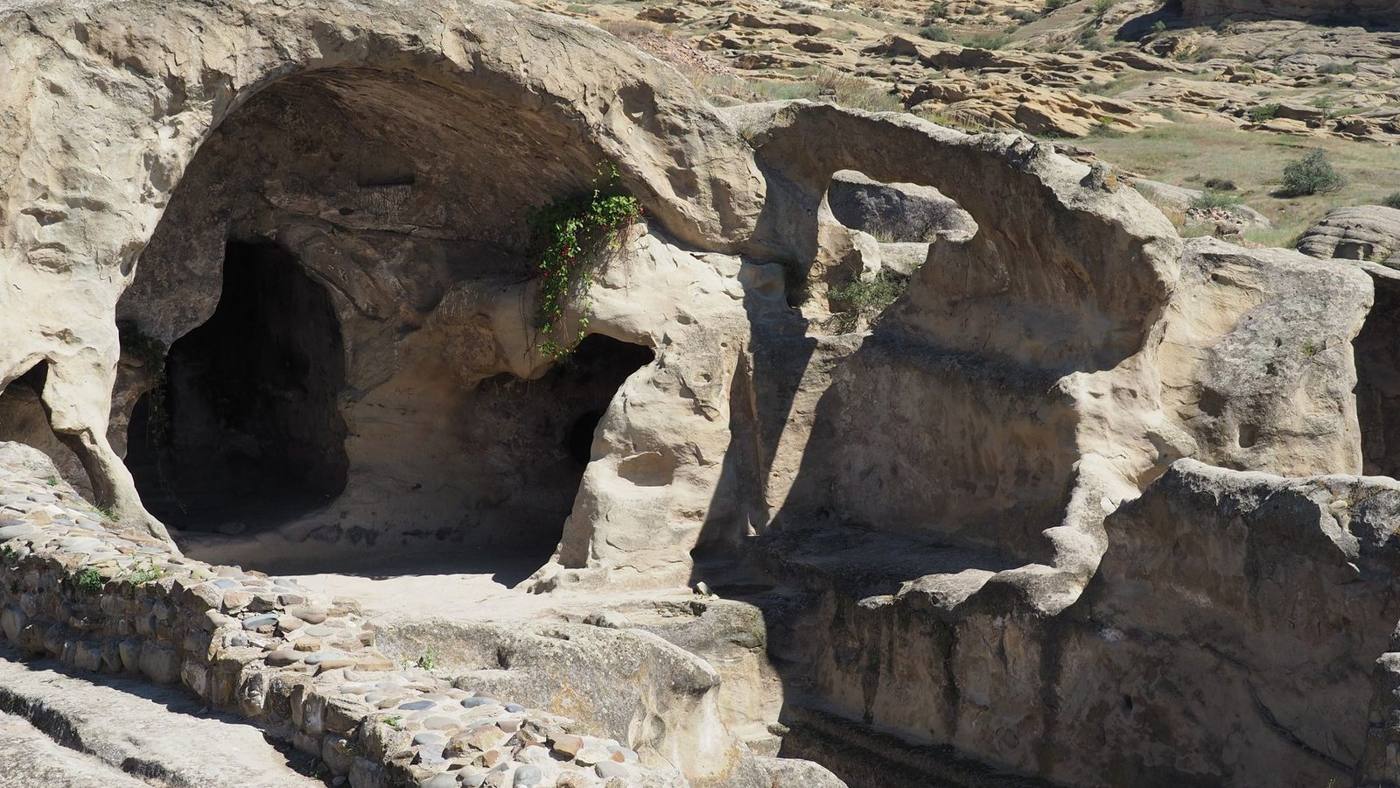
In the morning drive down to the plain and reach Uplistsikhe, one of the oldest towns in the country, carved into the rock above the Mtkvari river. It was lived in for many centuries, until the Middle Ages, and you walk among halls, streets, steps, cellars and a large theatre cut into the sandstone. At the top stands a brick basilica. Check prices and times, and wear shoes with good soles: the rock is smooth.
Then you pass through Gori, the town where Stalin was born. The museum dedicated to him keeps his birth house, under a stone portico, and the railway carriage he used. Check prices and times. Gori lies not far from the boundary line with South Ossetia: stay in town and on the main road, and do not head north.
At midday you enter the Mtkvari valley towards Borjomi. Before the town stop at Timotesubani church, in a village among the woods, with well preserved medieval frescoes.
In the afternoon walk in the mineral water park of Borjomi, famous across the former Soviet Union for its salty, sparkling water. Taste it at the spring: the flavour is strong. All around are the forests of the Borjomi-Kharagauli national park.
Towards evening you reach Akhaltsikhe and see Rabati fortress lit up, with its mosque, palace and restored walls.
Sleep in Akhaltsikhe.
Practical tip: at the Gori museum ask for a guided tour: without explanations the story of Stalin it tells remains very celebratory.
- Day 4
Khertvisi, Vardzia and the road to Kutaisi
Today you see the most spectacular monument of southern Georgia and then cross the country westwards.
In the morning follow the Mtkvari valley, squeezed between rock walls. Stop at Khertvisi fortress, one of the oldest in the country, on a spur where two rivers meet. The walls and towers you see today are medieval.
Soon after you reach Vardzia, the 12th century cave monastery linked to Queen Tamar and Georgia's golden age. Hundreds of caves on several levels are carved into the face of Mount Erusheti: monks' cells, chapels, wine cellars, refectories and tunnels. An earthquake in 1283 brought down the outer part of the mountain, and today the rooms open onto the void like the cells of a beehive. In the middle visit the church of the Dormition, with its frescoes and the portrait of Queen Tamar. Check prices and times. Allow at least two hours: there are many steps and some low, narrow tunnels.
At midday have lunch in one of the villages of the valley, with trout from the river.
In the afternoon take the road back north and west. You pass Borjomi and Khashuri again, then drop down into the Imereti region to Kutaisi, the country's second city. It is about four or five hours of driving.
In the evening have dinner in Kutaisi and try khachapuri imeruli, the round cheese-filled bread typical of this region.
Sleep in Kutaisi.
Practical tip: at Vardzia bring a small torch or use your phone light: some passages between the caves are dark.
- Day 5
Bagrati, Gelati, Ubisa and Mtskheta
Today you visit the great monasteries of the west and then head back towards Tbilisi, with a stop in Mtskheta.
In the morning go up to Bagrati cathedral, on the hill above Kutaisi, built in the early 11th century by King Bagrat III, the first king of a united Georgia. It was destroyed by the Ottomans in the 17th century and has been rebuilt in recent times. From the churchyard you see the whole city and the Rioni river.
Then go to Gelati monastery, a few kilometres away, founded in 1106 by King David IV the Builder and a UNESCO World Heritage Site. It housed an academy, one of the centres of medieval Georgian culture. In the main church look at the mosaic of the Virgin in the apse and the frescoes on the walls. At the entrance to the complex lies the tomb of King David.
At midday take the road east and stop at Ubisa monastery, close to the motorway, with a stone defence tower and a small church covered in medieval frescoes whose colours are still bright.
In the afternoon carry on to Mtskheta, the ancient capital where Georgia became Christian in the 4th century, also a UNESCO site. Visit Svetitskhoveli cathedral, from the 11th century, and then drive up to Jvari monastery, from the 6th century, above the meeting of the Aragvi and Mtkvari rivers. At sunset the view is beautiful.
In the evening return to Tbilisi, about twenty minutes away.
Sleep in Tbilisi.
Practical tip: in Georgian churches go in with shoulders and legs covered; women usually cover their hair. Always keep a scarf and a pair of long trousers in the car.
- Day 6
David Gareja, Bodbe and Signagi
Today you head south-east, into the semi-desert steppe on the border with Azerbaijan, then climb among the vineyards of Kakheti.
In the morning set off early and drive through the village of Udabno. You reach the David Gareja complex, founded in the 6th century by the monk David, one of the Syrian fathers who brought monastic life to Georgia. First visit the Lavra, the monastery still lived in by monks, with cells and churches carved into the rock.
Then walk up onto the ridge, in about an hour, to the Udabno caves, with medieval frescoes painted in chapels carved into the hill. From the top you see the plains of Azerbaijan. Here the border is unmarked and partly disputed: stay on the main path and ask the border guards for advice if they are there. Bring water and a hat, and watch out for snakes in the hot months.
At midday drive back north to Bodbe monastery, among the cypresses, where Saint Nino is buried, who according to tradition brought Christianity to Georgia.
In the afternoon walk in Signagi, along the 18th century walls with more than twenty towers, facing the Alazani valley full of vineyards and the Caucasus mountains on the horizon.
Towards evening carry on to Telavi, the main town of Kakheti, with the castle where King Erekle II lived and a huge old plane tree in the centre.
In the evening taste the wines of the region, such as red saperavi or the amber whites made in clay jars.
Sleep in Telavi.
Practical tip: the road to David Gareja is partly unpaved and there is no shade: leave early and make sure you have fuel and water before Udabno.
- Day 7
Alaverdi, Gremi and the wineries of Kakheti
Today you stay in the Alazani valley, the land of Georgian wine, before heading back to Tbilisi.
In the morning visit Alaverdi cathedral, from the 11th century, one of the tallest churches in Georgia, in the middle of a field of vines with the mountains behind. Inside the walls there is a monastery where the monks still make wine. Go in with your shoulders and legs covered.
Then go to Gremi citadel, from the 16th century, the old capital of the kingdom of Kakheti. On the hill stand the brick church of the Archangels, the tower and a small museum. Climb to the top of the tower to see the valley. Check prices and times.
At midday stop at a family winery for lunch and a tasting. You will see the clay jars called qvevri, buried in the floor: the juice ferments inside with the skins and sometimes the stems, as it has for thousands of years. This method is on UNESCO's list of intangible heritage. Taste saperavi, amber whites made from rkatsiteli and chacha, the grape pomace brandy.
In the afternoon return to Tbilisi, in about two and a half hours, over the Gombori pass through the forests.
In the evening have a light dinner in town with pkhali, vegetable pastes with walnuts, and lobio, red bean stew.
Sleep in Tbilisi, for two nights.
Practical tip: if you taste a lot of wine, do not drive: Georgia's drink-driving limit is lower than the UK's. A driver is the best choice for this day.
- Day 8
A full day in Tbilisi
Today you have the whole day for the capital, on foot and by cable car.
In the morning start from Freedom Square and walk down into the old town, with Sioni cathedral and the 6th century Anchiskhati basilica, the oldest church in the city. Then go up to Narikala fortress by cable car from Rike park or on foot, and look at the statue of Mother Georgia, with her bowl of wine and her sword. Check prices and times.
Walk down to the Abanotubani district, with the domes of the sulphur baths. Tradition says the city was born here, beside the hot springs. You can take a bath in a private room: check prices and times. Then walk to the waterfall in the gorge behind the baths.
At midday visit the Georgian National Museum, with the gold treasury of Colchis and Iberia. Check prices and times.
In the afternoon walk around Sololaki, with its 19th century houses and painted entrance halls, then on to the Dry Bridge, the flea market with Soviet souvenirs, paintings and old cameras. Later go up to Holy Trinity cathedral, Sameba, completed in 2004.
In the evening climb to Metekhi church for the view over the city lit up and have dinner at a Georgian table, rich with small dishes to share.
Sleep in Tbilisi.
Practical tip: Rustaveli Avenue, outside Parliament, is the centre of the protests, especially on Saturday evenings: check local news and, if there is a demonstration, change route.
- Day 9
Departure
Today is the day you fly home.
In the morning, if your flight is in the afternoon, go to the covered station market, known as Dezerter, for spices, honey, cheeses and churchkhela, walnuts threaded on a string and coated in thickened grape juice. Buy some khmeli suneli, the herb mix of Georgian cooking, and a jar of tkemali, the sour plum sauce.
Then go to the airport, about half an hour from the centre, and take your flight home.
In these nine days you have seen Georgia's main historic sites without physical strain: Ananuri fortress and Gergeti church beneath Kazbek, the rock-cut town of Uplistsikhe, Gori and the waters of Borjomi, Rabati fortress, Vardzia monastery, Bagrati and Gelati in Kutaisi, the frescoes of Ubisa, Mtskheta, the hermitages of David Gareja, Bodbe, Signagi, Alaverdi and Gremi, and finally the old town of Tbilisi. It is a trip with many hours on the road, but very varied: from mountains to caves, from monasteries to wine. Svaneti is missing, and it deserves a trip of its own.
When to go: the best months are April to June and September to November, with a mild climate. September and October are harvest time in Kakheti. In summer it is very hot at David Gareja and Uplistsikhe. In winter the road to Kazbegi can close because of snow.
Practical tip: if you take wine or chacha home, put the bottles in your hold luggage wrapped in clothes and check the rules of your airline and of customs.
The right format for a first visit on limited leave: in nine days it covers the main historic sites, Vardzia included, with no physical strain. Its strength is variety, from the Caucasus to the southern caves to amphora wine. The drawbacks are the distances, with days of over 300 km, and the absence of Svaneti. In winter the Kazbegi road can close for snow, so spring and autumn work better.
Before you go
- Documents and visa
- Passport valid for the whole stay. British citizens can visit without a visa for up to one year. Since 1 January 2026 health and accident insurance is compulsory, valid for the whole stay, with cover of at least 30,000 lari: you may be asked for proof on arrival. Some British citizens have been refused entry or had trouble leaving, apparently linked to taking part in demonstrations or to unpaid fines.
- Health and vaccines
- No compulsory vaccinations. Medical facilities in remote areas are limited: you need insurance covering medical costs and repatriation. Georgia has strict rules on medicines: some products sold over the counter in the UK, such as those containing codeine, are illegal. Carry prescription medicines with the prescription and original packaging. Emergencies: 112.
- Money and payments
- Georgian lari. Withdrawing cash and changing euros or dollars is easy in Tbilisi and the main towns; carry cash in mountain villages.
- Power sockets
- Types C and F, 230 volts: you need an adapter for British plugs.
- Time zone
- UTC+4 all year, four hours ahead of the UK in winter, three in summer.
- Safety
- The UK advises against all travel to the Russian occupied regions of Abkhazia and South Ossetia, and against all but essential travel to the areas immediately next to the administrative boundary lines, which are generally unmarked. Protests have taken place in Tbilisi almost every day for nearly two years, centred on Parliament on Rustaveli Avenue, and some have turned violent: avoid demonstrations and large gatherings. At the Udabno caves of David Gareja, take care not to cross the unmarked border with Azerbaijan; the land border with Azerbaijan is closed. Mountain rescue can be limited. Official advice: GOV.UK.
Information checked in November 2026 for Italian and EU citizens. Rules change: always check before you travel.
Variations
In 7 days: drop Kazbegi and the full day in Tbilisi, and keep the southern loop with Vardzia, Kutaisi, David Gareja and Kakheti.
In 12 days: add three days in Svaneti, with Mestia and Ushguli, starting from Kutaisi.
Frequently asked questions
What document do I need for Georgia?
A passport valid for at least six months from entry is the recommended document for Italian citizens. The electronic identity card is accepted only if you transit through Schengen countries, but there have been refusals. No visa is needed for up to 365 days and health insurance is compulsory. Other nationalities should check their own rules.
Are Gori and David Gareja safe?
Yes, if you stay on the usual routes. Gori is not many kilometres from the boundary line with South Ossetia: do not head north. At David Gareja the border with Azerbaijan is unmarked: stay on the main path and follow the advice of the border guards.
How much driving is there?
A lot: some days exceed 300 kilometres, such as the one between Vardzia and Kutaisi. A car with a driver lets you rest and taste the wine in Kakheti.
Indicative itinerary written by World Atlas. Before booking, check timetables, seasonal openings, documents and safety.
 14 daysModerate
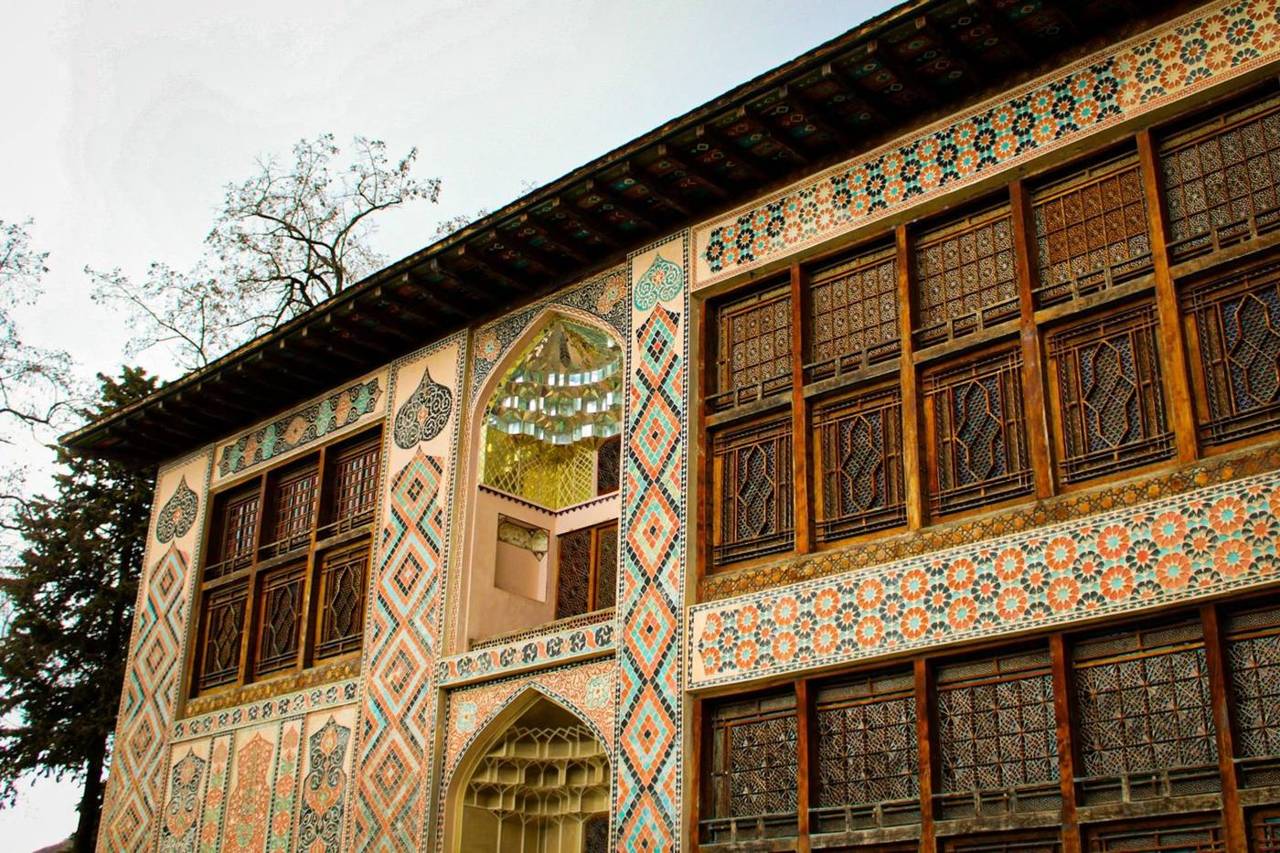
Azerbaijan and Georgia, from Baku to the Black Sea
From the Caspian to the Black Sea across the southern Caucasus: Baku and Sheki, then Kakheti, Tbilisi, Vardzia, Svaneti and Batumi.
 16 daysModerate
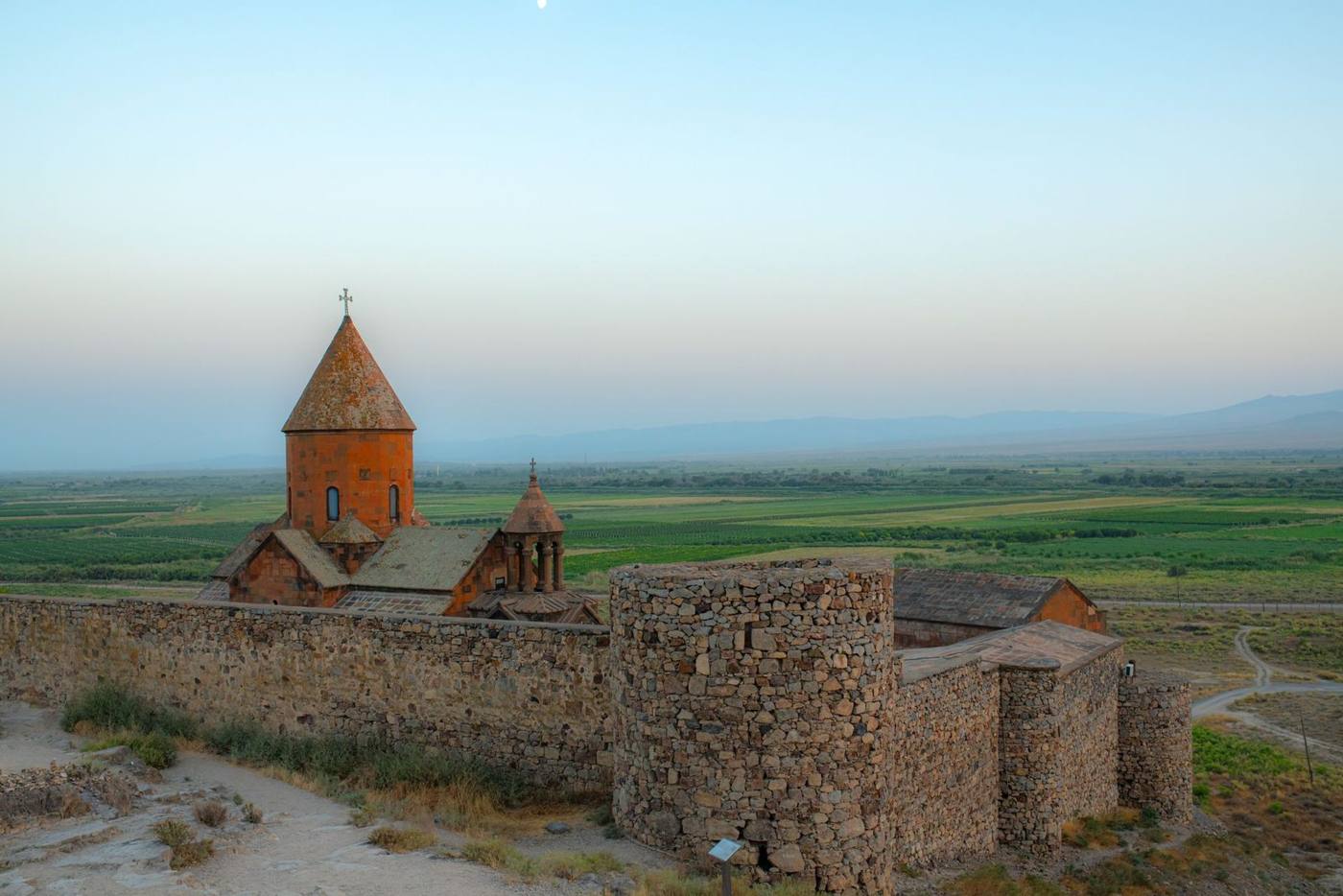
The whole Caucasus: Azerbaijan, Georgia and Armenia
Three countries in sixteen days, from Baku to Yerevan by way of Kazbegi, Svaneti and Vardzia, ending with Lake Sevan and Armenia's monasteries.
 10 daysChallenging
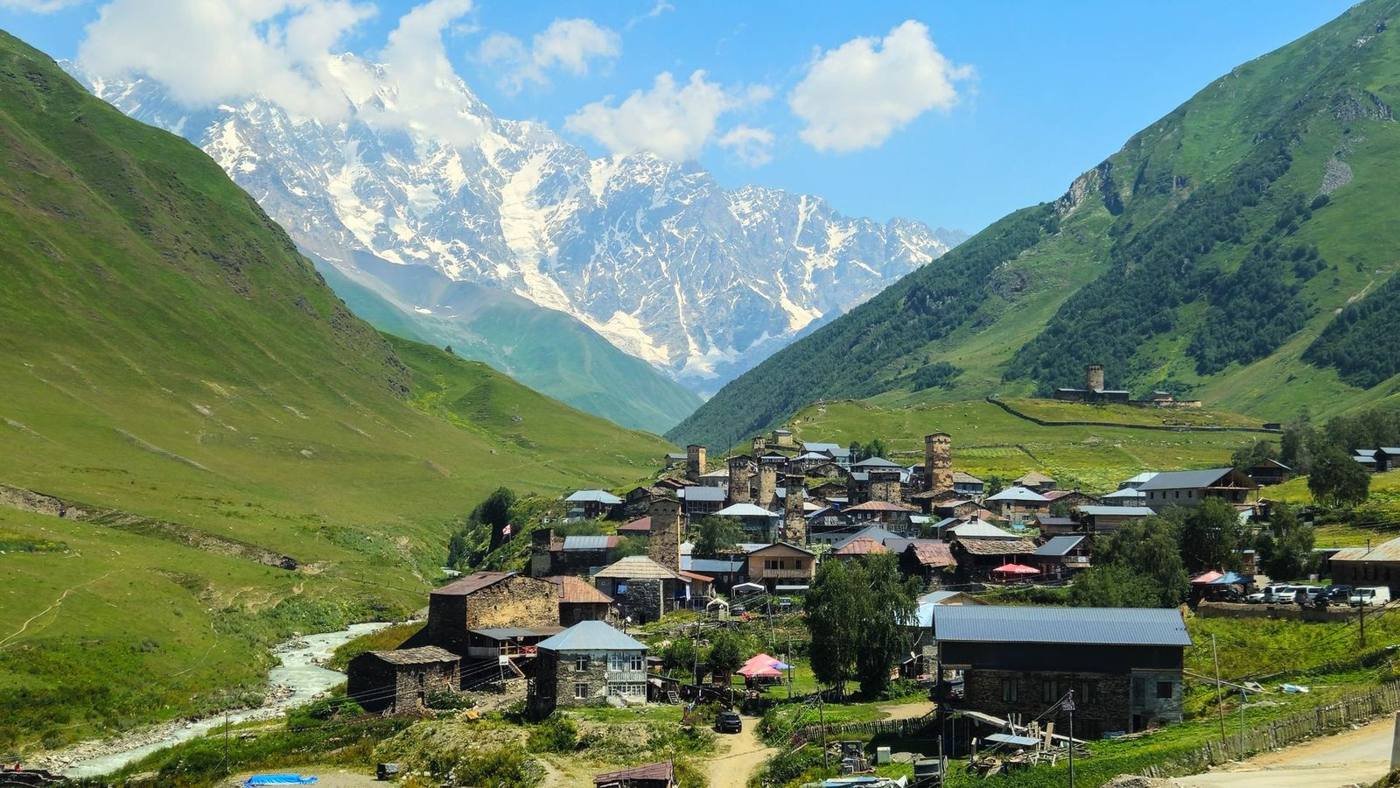
Trekking Upper Svaneti, from Mestia to Ushguli
Ten days on foot among medieval towers, passes above 2,700 metres and the glaciers of the Greater Caucasus, flying in and out of Kutaisi.