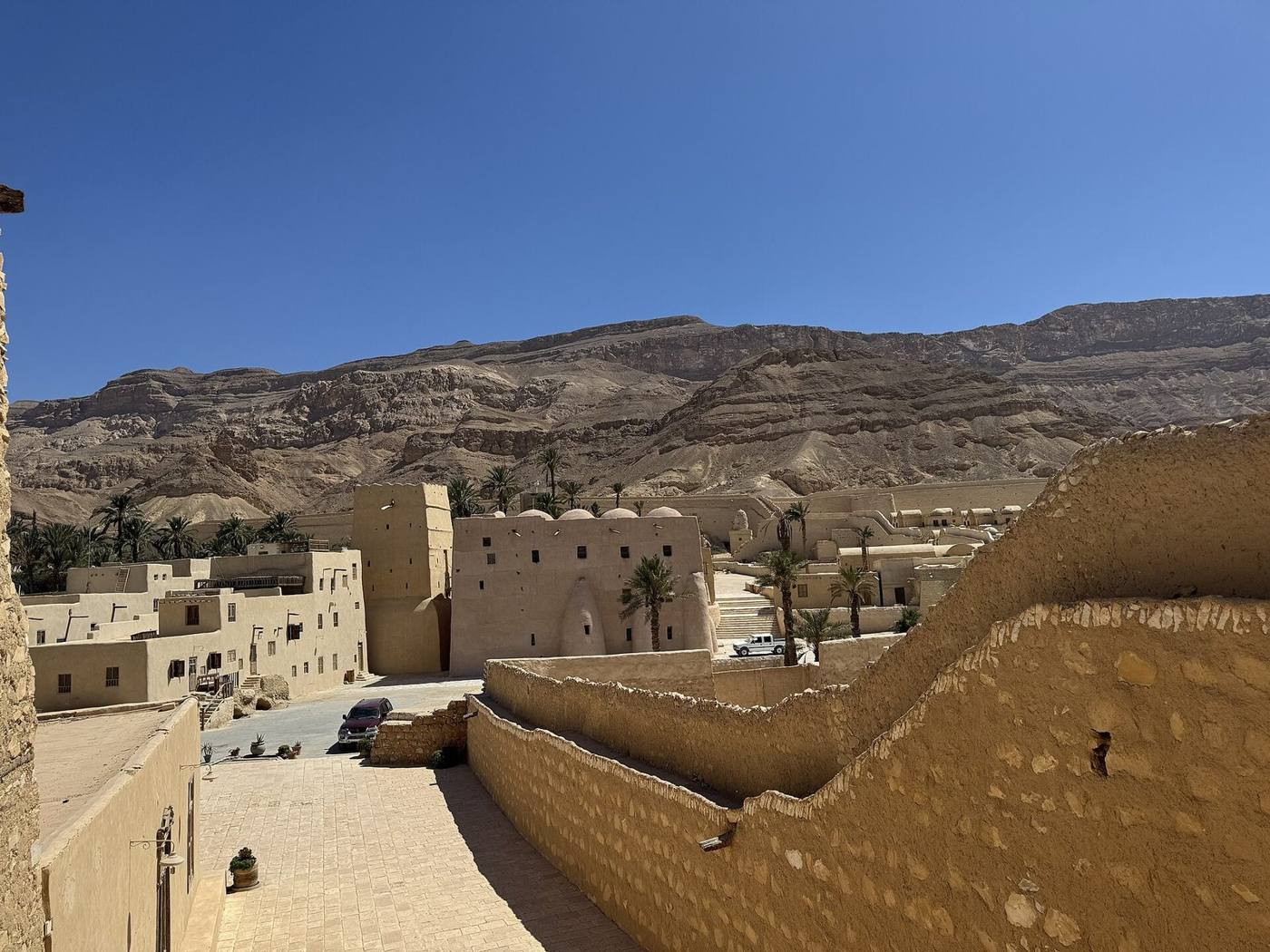
The Coptic monasteries of the Red Sea
Two of the oldest Christian monasteries in the world, in the desert between the Nile and the sea: St Anthony's, with its restored wall paintings and the hermit's cave above the convent, and St Paul's behind the mountains, with its rock-cut church, plus a few hours on the Ain Sokhna coast.
- Cairo
- Ain Sokhna
- Zafarana
- St Anthony's Monastery
- São Paulo
Day by day
- Day 1
From Cairo to Ain Sokhna and Zafarana
This is a short, little-known trip, away from the crowds of tourist Egypt: three days on the Red Sea coast south of Suez, between the sea and the mountains of the Eastern Desert, to visit the two oldest Christian monasteries in the world still inhabited, Saint Anthony's and Saint Paul's, where Coptic monks have lived and prayed for more than sixteen centuries.
In the morning leave Cairo heading east with a car and driver, the most convenient way to do this route. The new road crosses the desert and reaches Ain Sokhna, on the Gulf of Suez, in about two hours. Ain Sokhna is a seaside resort popular with Cairo residents at weekends, with beaches, holiday villages and a name meaning hot spring, after the thermal springs that flow at the foot of the mountain.
After a stop for lunch and a swim, continue south along the coast road, with the turquoise sea on your left and the Galala mountains on your right, dropping steeply to the coast. You reach Zafarana, about an hour and a half away, a small seaside settlement with an old lighthouse and one of Egypt's large wind farms, with hundreds of turbines in the desert. Zafarana is the nearest base for the two monasteries.
In the evening sleep in one of the hotels on the coast and have dinner with grilled Red Sea fish. Practical tip: Italian citizens can get an Egyptian visa on arrival at the airport for 30 dollars. There are checkpoints along the road: keep your passport to hand.
- Day 2
Saint Anthony's monastery, the climb to the cave and Saint Paul's
Early in the morning set off for Saint Anthony's monastery, about forty kilometres inland, at the foot of the southern Galala mountains. Anthony, born in Egypt in the third century, is considered the father of Christian monasticism: he gave up everything to live as a hermit in the desert, and after his death in 356 his disciples founded a community here. Surrounded by high walls, the monastery is a small town with churches, monks' cells, palm gardens, a mill, a spring and an old defensive tower.
The visit is guided by a monk, who tells you the story of the place. Its jewel is the church of Saint Anthony, with thirteenth-century Coptic frescoes, carefully restored in the 1990s and 2000s, showing saints on horseback, monks and prophets in vivid colours.
Then, if you feel up to it, climb to Saint Anthony's cave, where the saint lived in solitude in his last years: it lies on the mountain about three hundred metres above the monastery, reached by a stairway of more than a thousand steps, in about an hour. The cave is narrow and dark, but the view from above over the desert and, far off, the Red Sea repays the effort.
In the afternoon go to Saint Paul's monastery, on the other side of the mountain: by car you must return to the coast and drive back inland, about an hour and a half. Paul of Thebes, the hermit, lived in a cave that is now the heart of the monastery church.
Practical tip: dress modestly, covering shoulders and legs; during some fasting periods, such as before Easter, the monasteries may be closed to visitors: check before you go.
- Day 3
A morning on the coast and back to Cairo
The last morning is for the sea. The Red Sea around Zafarana and Ain Sokhna has clear, warm water for much of the year, with coral reefs close to shore in places. Swim early, when the sea is calm and the beach quiet, or snorkel where the reef is near the shore, asking your hotel for the best and safest spots.
If you prefer, take a walk along the coast to the old Zafarana lighthouse, built in the early twentieth century to guide ships towards the Gulf of Suez and the canal.
Around midday leave for Cairo. The journey takes about three and a half hours, passing through Ain Sokhna again and then across the desert. If you have time, stop in Ain Sokhna for lunch by the sea.
You reach Cairo in the afternoon. If your flight home is in the evening, you can go straight to the airport; otherwise, spend the evening in Coptic Cairo, with the Hanging Church, built over a gate of the Roman fortress of Babylon, and the Coptic Museum, which displays manuscripts, textiles and icons linked to the same tradition as the monasteries you visited.
Practical tip: the United States has Egypt at level 2, increased caution; the United Kingdom advises against travel to North Sinai and some areas of the Western Desert, far from this coast. The Red Sea coast road between Ain Sokhna and Zafarana is not among the areas to avoid. Even so, avoid driving in the desert at night.
About three hours by car from Cairo. The monasteries are places of worship: clothes covering shoulders and legs, hours tied to the monks' routine and closures during fasting periods. St Anthony's cave is reached by about 1,200 steps. A visa is required, obtained online before travelling or on arrival at the airport. The UK advises against all travel to North Sinai and within 20 km of the Libyan border, and against all but essential travel to most of the Western Desert: this itinerary stays outside those areas.
Before you go
- Documents and visa
- Passport valid for at least six months and a tourist visa, obtained online on the official portal or on arrival at the airport, where since 1 March 2026 it costs 30 dollars in cash.
- Health and vaccines
- No compulsory vaccines for travellers from Europe. Drink only bottled water and take out travel health insurance. Emergencies: 122 police, 123 ambulance.
- Money and payments
- Egyptian pound. Cards work in hotels and larger shops, but for tips, taxis and markets you need cash in small notes.
- Power sockets
- Types C and F, 220 volts.
- Time zone
- UTC+2 in winter; Egypt uses daylight saving time in summer.
- Safety
- Tourist areas along the Nile and the Red Sea are busy and well policed. Governments advise against North Sinai, the Libyan border strip and much of the Western Desert off the main roads. Official advice: GOV.UK.
Information checked in November 2026 for Italian and EU citizens. Rules change: always check before you travel.
Variations
In 2 days: Saint Anthony's and the sea on day one, Saint Paul's and the return to Cairo on day two, without the morning on the coast.
In 6 days: continue south along the coast to Hurghada and El Gouna, with the Giftun islands and the coral reef.
Frequently asked questions
Are the monasteries open to everyone?
Yes, they welcome visitors of every faith, with tours led by monks. You must dress modestly and respect the silence; during some fasting periods they may be closed.
When is the best time to go?
From October to April, when the weather is mild and the climb to the cave is less tiring. Summer is very hot, but the sea is perfect.
Can I go without a driver?
It is possible with a hire car, but a driver knows the road and the checkpoints. Public transport to the monasteries is almost non-existent.
Indicative itinerary written by World Atlas. Before booking, check timetables, seasonal openings, documents and safety.
 3 daysEasy
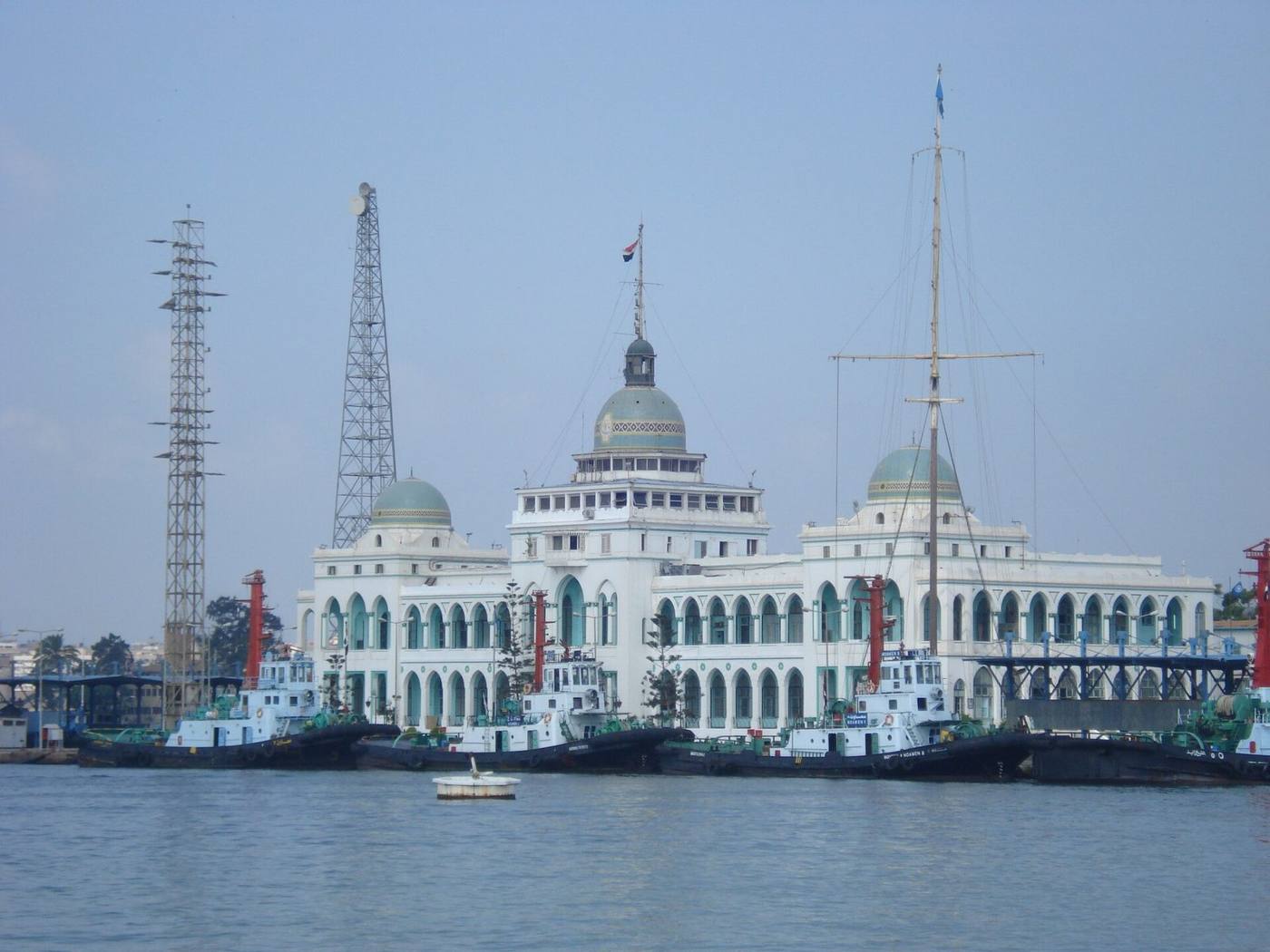
Port Said, Ismailia and the Suez Canal
Canal Egypt, unlike anywhere else: Port Said with its colonial buildings and wooden balconies, the domed Canal Company building and the no-cost ferry to Port Fuad, then Ismailia, a garden city on Lake Timsah, where ships seem to sail between the houses.
 5 daysEasy
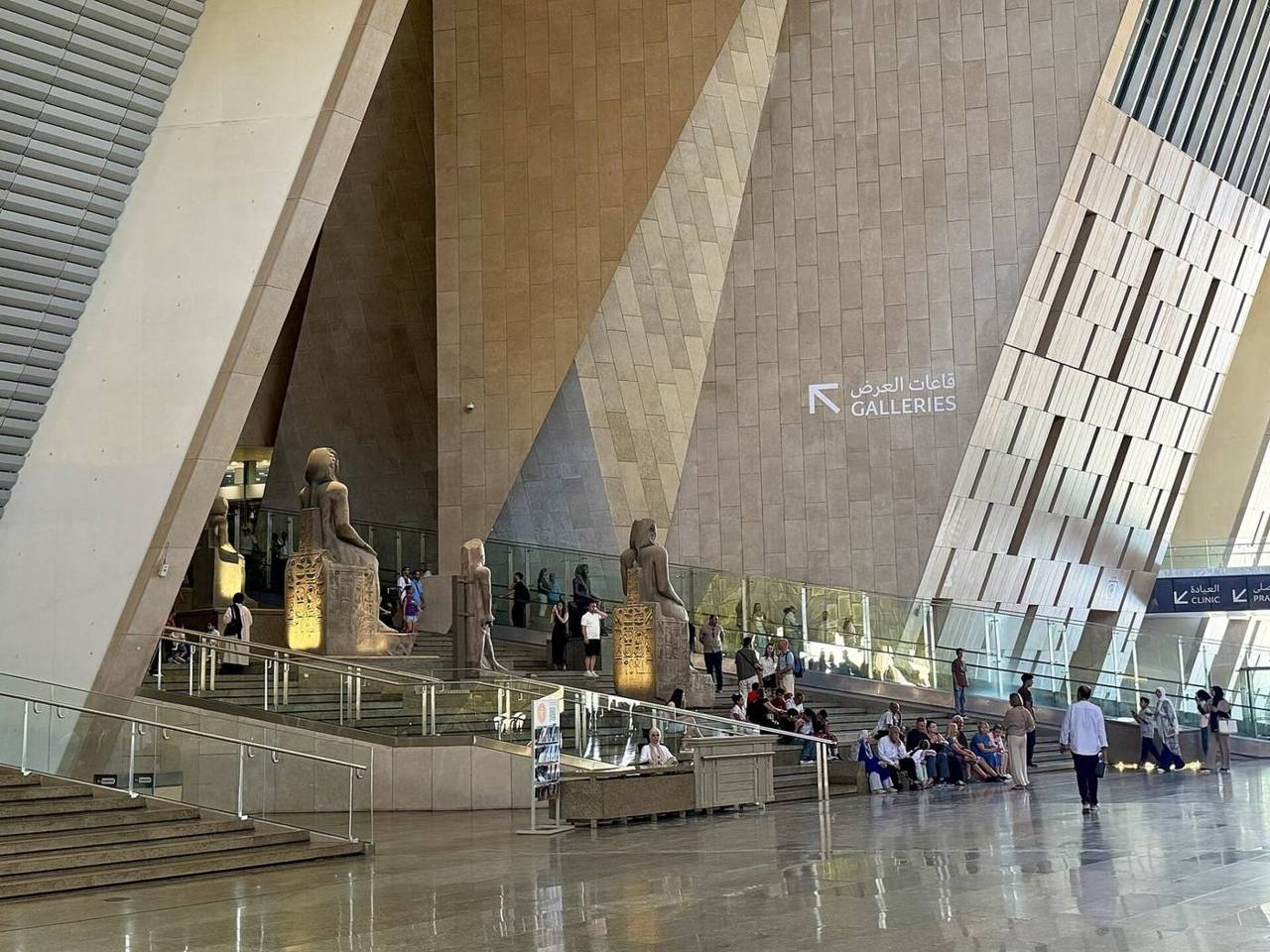
The Grand Egyptian Museum and Cairo in depth
Cairo with the time it deserves: a full day at the Grand Egyptian Museum near the pyramids, with Tutankhamun's complete treasure, the Egyptian Museum on Tahrir Square, Coptic Cairo with the Hanging Church, Islamic Cairo between al-Azhar, Bab Zuweila and al-Muizz Street, and the Khan el-Khalili bazaar.
 5 daysEasy
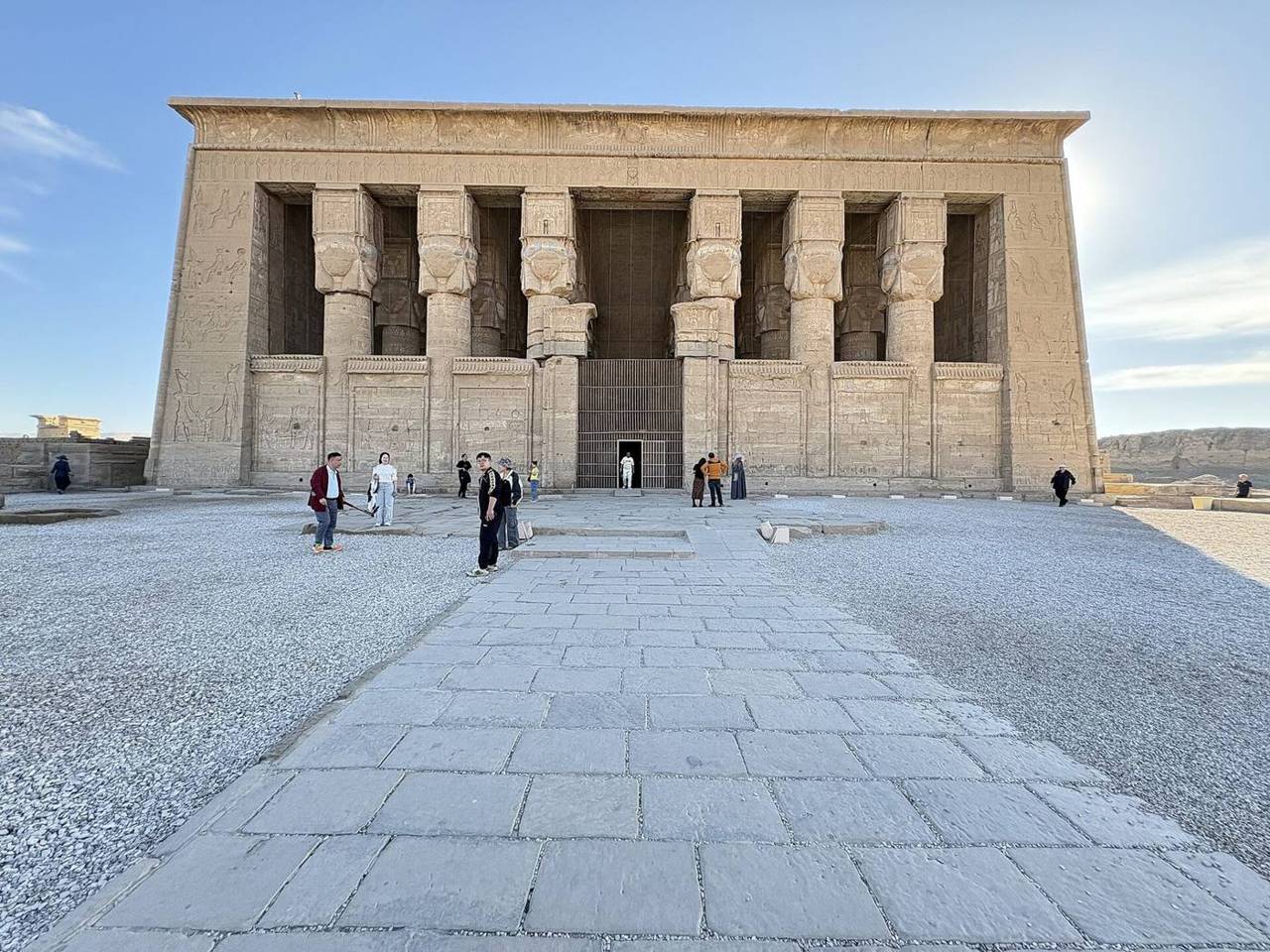
Luxor in depth, Dendera and Abydos
Ancient Thebes beyond the classic visits: on the west bank Medinet Habu, the Ramesseum, the craftsmen's village of Deir el-Medina and the tombs of the nobles, then the temple of Hathor at Dendera with its zodiac ceiling and the temple of Seti I at Abydos, with the finest reliefs in Egypt.