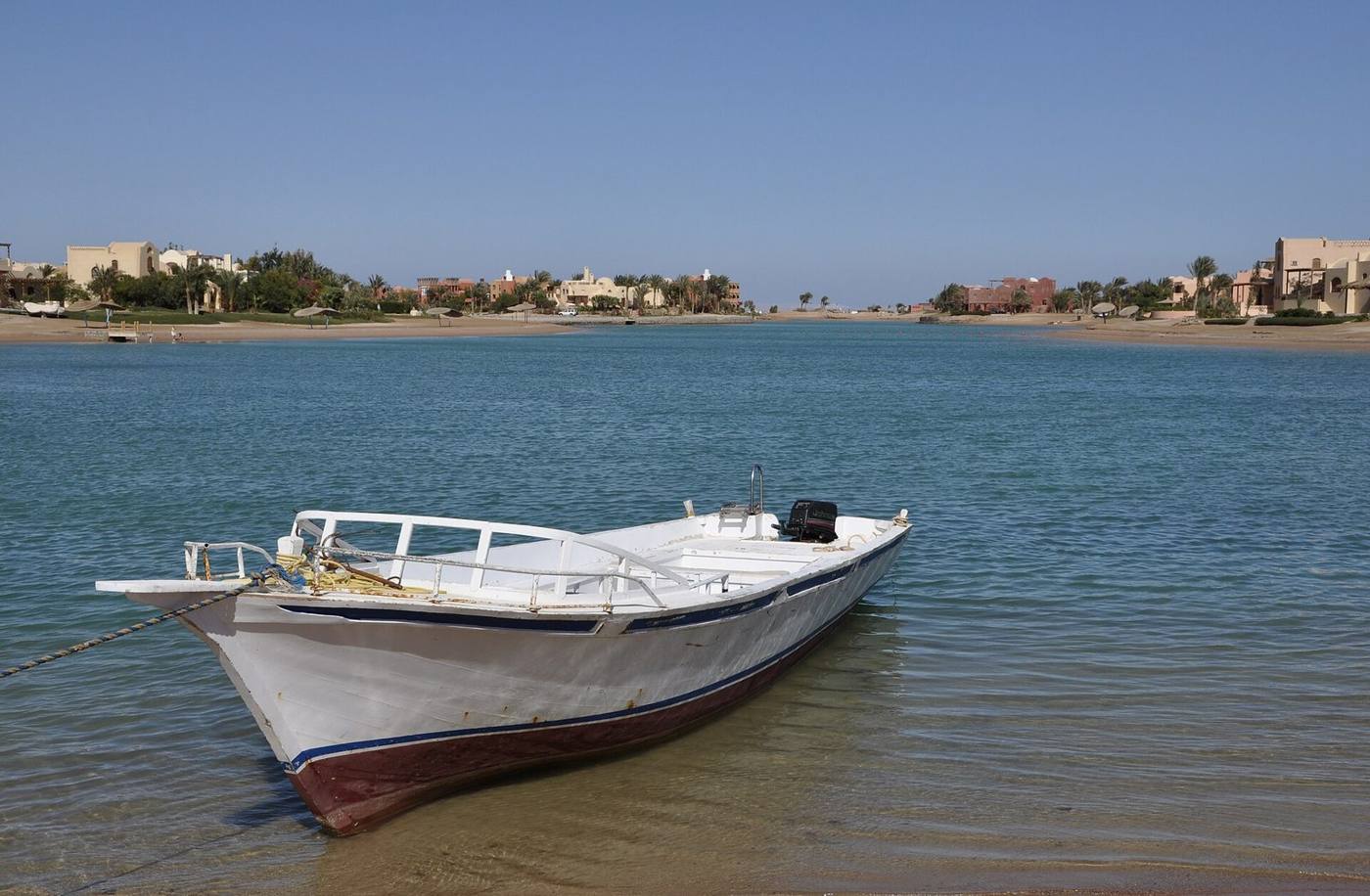
Hurghada, El Gouna and the Giftun Islands
The easy Red Sea, children included: El Gouna with its lagoons and canals, the boat to the Giftun Islands, a national park with white beaches and snorkelling reefs, a first try-dive and an outing into the Eastern Desert with the Red Sea mountains at sunset.
- Hurghada
- El Gouna
- Giftun
Day by day
- Day 1
Arriving in Hurghada and transfer to El Gouna
Egypt's Red Sea coast, between Hurghada and El Gouna, is one of the closest winter beach destinations to Europe, with sun almost all year, warm water and one of the richest coral reefs in the world, just minutes from the shore. Behind it rise the bare red mountains of the Eastern Desert. In six days you alternate sea, reef and desert, without long journeys.
You arrive by plane at Hurghada airport, with many direct flights from Europe. Italian citizens can get a tourist visa on arrival for 30 US dollars, or apply for the e-visa online before leaving.
From the airport you go to El Gouna, about half an hour north, a town built from the 1990s on a series of islands and lagoons linked by canals and bridges, with low Nubian-style houses, domes and sand colours. It is quieter and tidier than Hurghada, with a small centre, a marina and lagoon beaches.
In the afternoon, walk around the centre of El Gouna, Kafr El Gouna square, and along the harbour, where boats return from the sea at sunset.
In the evening, try Egyptian cooking: grilled Red Sea fish, spiced rice, sesame and aubergine dips, and sweets with honey and nuts.
Practical tip: your passport must be valid for at least six months. At customs it is best to have dollar or euro notes for the visa, if you have not applied online.
- Day 2
The El Gouna lagoons and the beach
In the morning, explore the El Gouna lagoons, which you can tour by boat along the canals or by bicycle along the pedestrian paths. The lagoons have shallow, calm, turquoise water, ideal for swimming and learning water sports.
El Gouna is one of the best places on the Red Sea for kitesurfing, thanks to the steady wind blowing from the north almost all year and the shallow lagoons where you can learn without waves. There are schools with instructors for beginners. You can also try windsurfing and paddleboarding.
In the afternoon, relax on one of the beaches, such as those on the islets off El Gouna, reached by a small boat, or those near the kitesurfing area, where you watch the colourful kites. From some beaches you can snorkel straight from the shore, among colourful fish and small corals.
Towards evening, visit the town's small museum, or walk around Abu Tig marina, with its sailing boats and promenades along the quay.
In the evening, try koshari, Egypt's most popular dish, with rice, lentils, pasta, chickpeas, tomato sauce and fried onions, or grilled meats with warm bread.
Practical tip: the Red Sea sun is very strong even in winter, and the wind cools you so you forget the heat. Use high-factor sunscreen, a hat and sunglasses.
- Day 3
By boat to the Giftun islands
Early in the morning, leave by boat from Hurghada or El Gouna harbour for the Giftun islands, about an hour's sailing away. The Giftun islands are part of a protected marine park, with white sandy beaches, clear water and coral reefs all around.
The boat stops at two or three snorkelling spots on the reef. With mask and fins you see hard and soft corals of every shape and colour, parrotfish, butterflyfish, pufferfish, rays, moray eels and sometimes sea turtles and dolphins, which often approach boats in the channels between the islands.
At midday the boat stops at one of the island beaches, such as Orange Bay, a bay of white sand with shallow turquoise water, where you can swim and rest. Lunch is served on board.
In the afternoon, return to port. On the way back, with luck, you see dolphins swimming alongside the boat.
In the evening, in Hurghada, walk along the new marina promenade, with its boats, shops and large white mosque, or through the old El Dahar quarter, with its market and everyday Egyptian life.
Practical tip: there is an entry fee for the marine park. Choose an operator that follows the rules: no anchoring on the coral, no feeding the fish, and small groups.
- Day 4
A try-dive or snorkelling
Today you go underwater. The Red Sea is one of the best places in the world to learn to dive, with warm, very clear water, few currents near the coast and a coral reef full of life just a few metres deep.
Those who have never dived can do a try-dive with an instructor. After a short lesson in a pool or shallow water, you descend to about six metres, guided step by step by the instructor, among corals and fish. Those who want to go further can take the course for a first certification, in three or four days.
Certified divers can make two dives on the reefs around Hurghada, such as Abu Ramada, Carless Reef or the walls of the Giftun islands, with great coral formations, giant moray eels and schools of fish. Further north lies the wreck of the Thistlegorm, a British ship sunk in 1941, one of the most famous wrecks in the world, reached on a day trip.
Those who prefer snorkelling can take another boat trip to a different reef, or snorkel from the shore in one of the bays with a reef nearby.
In the afternoon, rest on the beach.
Practical tip: do not dive in the twenty-four hours before your return flight, to avoid decompression problems on the plane.
- Day 5
The Eastern Desert at sunset
In the morning, rest or enjoy the sea. In the early afternoon, set off for the Eastern Desert behind Hurghada, a region of granite and sandstone mountains, dry valleys, the wadis, and plains of sand and stones stretching to the Nile valley.
The trip is made by four-wheel drive or, for those who want some adventure, by quad bike or desert motorbike, with a guide. You cross wadis between the mountains, see wind-eroded rocks and sometimes desert gazelles and foxes.
You reach a small camp of the Bedouin, the nomadic desert peoples, who today live partly from herding and tourism. You drink sage tea made over the fire, see how bread is baked under hot sand, and can take a short camel ride. The Bedouin guides also explain how they find water in the desert and which plants are used as medicine.
At sunset the mountains turn red and orange. After dark, the desert sky, far from the lights of the coast, fills with stars, and some guides bring a telescope to look at the planets and the Milky Way.
In the evening, return to town.
Practical tip: choose a reliable operator, with vehicles in good condition and helmets for quad bikes. Desert nights are cold in winter: bring a sweatshirt and a jacket.
- Day 6
Departure
On your last morning, before leaving, have a last swim or a last walk by the sea. If you have time, visit the Hurghada aquarium or the large Hurghada Museum, opened in recent years, with a collection of ancient Egyptian objects, from statues to jewellery, for those who do not have time to go to Luxor or Cairo.
Then go to Hurghada airport for your flight home.
This trip combines well with a trip to Luxor, about four hours by car or bus across the desert, to see the temples of Karnak and Luxor and the Valley of the Kings. You can also add a Nile cruise from Luxor to Aswan, or a few days in Cairo with the pyramids and the Grand Egyptian Museum.
For sea lovers, further south, Marsa Alam and the Wadi el Gemal reserve offer even quieter reefs, turtles and sometimes dugongs, the marine mammals that graze the seagrass meadows.
Practical tip: the US government rates Egypt level 2 of 4, exercise increased caution. The United Kingdom advises against travel to North Sinai and some border and western desert areas: Hurghada and El Gouna are not among them. Italian citizens can get a visa on arrival for 30 US dollars.
Hurghada has direct flights from many European cities. The Giftun Islands are a marine park: there is an entry fee and collecting coral or shells is forbidden. In winter the water is cool and the wind can be strong. A visa is required, obtained online before travelling or on arrival at the airport. The UK advises against all travel to North Sinai and within 20 km of the Libyan border, and against all but essential travel to most of the Western Desert: this itinerary stays outside those areas.
Before you go
- Documents and visa
- Passport valid for at least six months and a tourist visa, obtained online on the official portal or on arrival at the airport, where since 1 March 2026 it costs 30 dollars in cash.
- Health and vaccines
- No compulsory vaccines for travellers from Europe. Drink only bottled water and take out travel health insurance. Emergencies: 122 police, 123 ambulance.
- Money and payments
- Egyptian pound. Cards work in hotels and larger shops, but for tips, taxis and markets you need cash in small notes.
- Power sockets
- Types C and F, 220 volts.
- Time zone
- UTC+2 in winter; Egypt uses daylight saving time in summer.
- Safety
- Tourist areas along the Nile and the Red Sea are busy and well policed. Governments advise against North Sinai, the Libyan border strip and much of the Western Desert off the main roads. Official advice: GOV.UK.
Information checked in November 2026 for Italian and EU citizens. Rules change: always check before you travel.
Variations
In 4 days: El Gouna, a boat trip to the Giftun islands and a try-dive.
In 9 days: add Luxor and the Valley of the Kings, about four hours from Hurghada.
Frequently asked questions
When is the best time to go?
From October to May. In winter the air is mild and the sea stays pleasant; summer is very hot, but the sea is calmer.
Do I need certification to see the reef?
No. Snorkelling needs no experience, and with a try-dive you can go down with an instructor without certification.
What documents do I need?
A passport valid for at least six months. Italian citizens can get a visa on arrival for 30 US dollars, or the e-visa online.
Indicative itinerary written by World Atlas. Before booking, check timetables, seasonal openings, documents and safety.
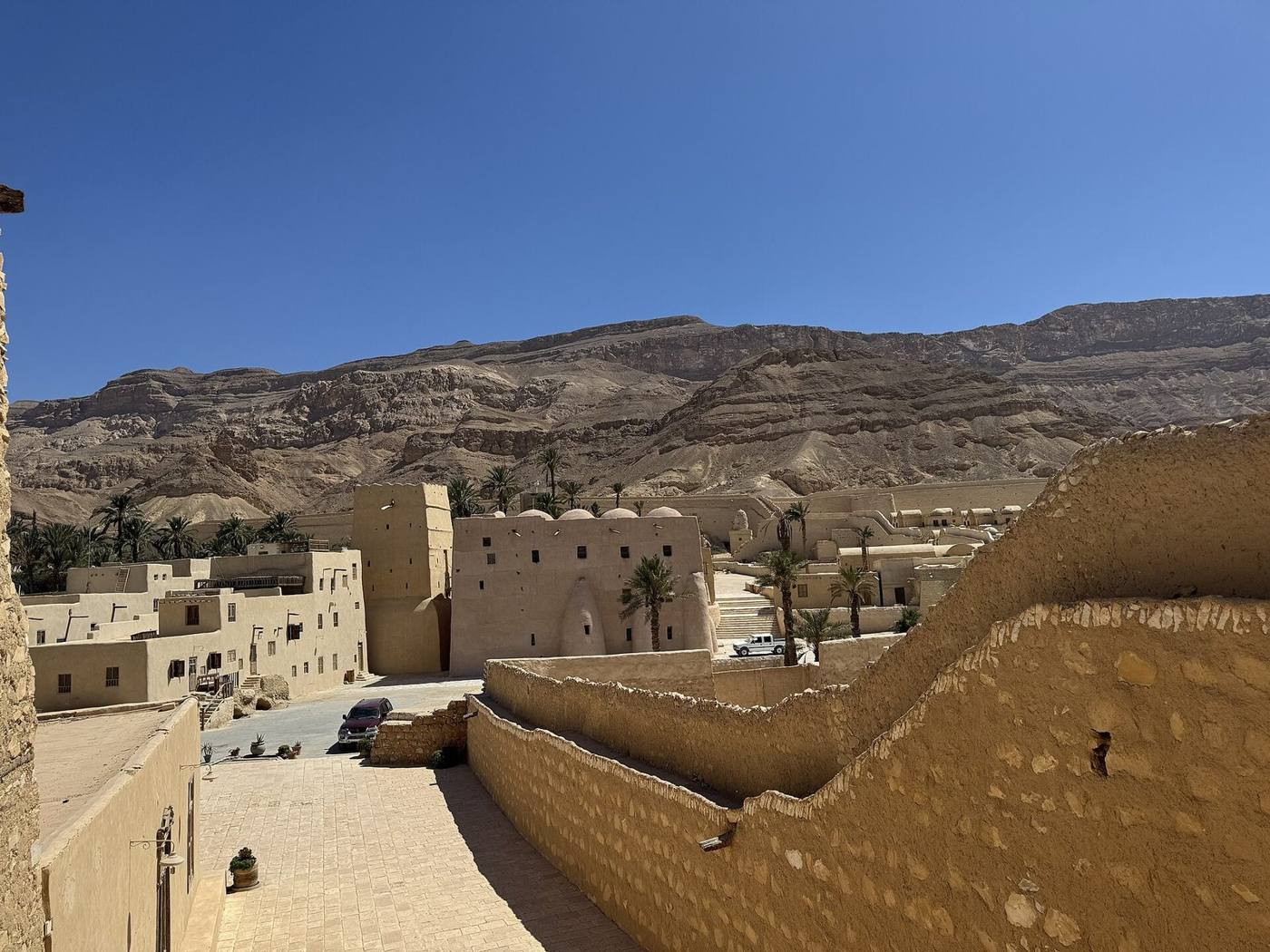 3 daysEasy
The Coptic monasteries of the Red Sea
Two of the oldest Christian monasteries in the world, in the desert between the Nile and the sea: St Anthony's, with its restored wall paintings and the hermit's cave above the convent, and St Paul's behind the mountains, with its rock-cut church, plus a few hours on the Ain Sokhna coast.
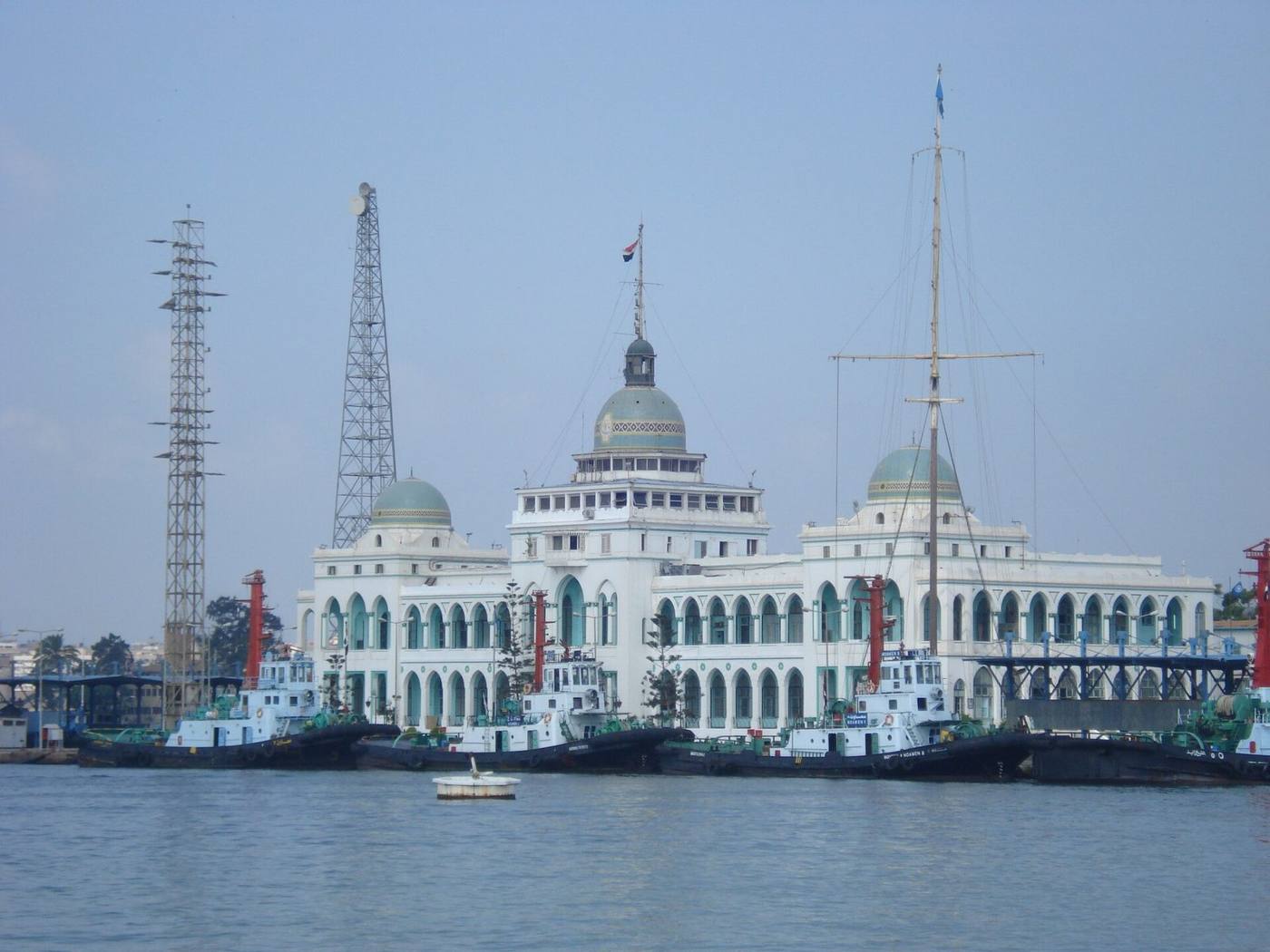 3 daysEasy
Port Said, Ismailia and the Suez Canal
Canal Egypt, unlike anywhere else: Port Said with its colonial buildings and wooden balconies, the domed Canal Company building and the no-cost ferry to Port Fuad, then Ismailia, a garden city on Lake Timsah, where ships seem to sail between the houses.
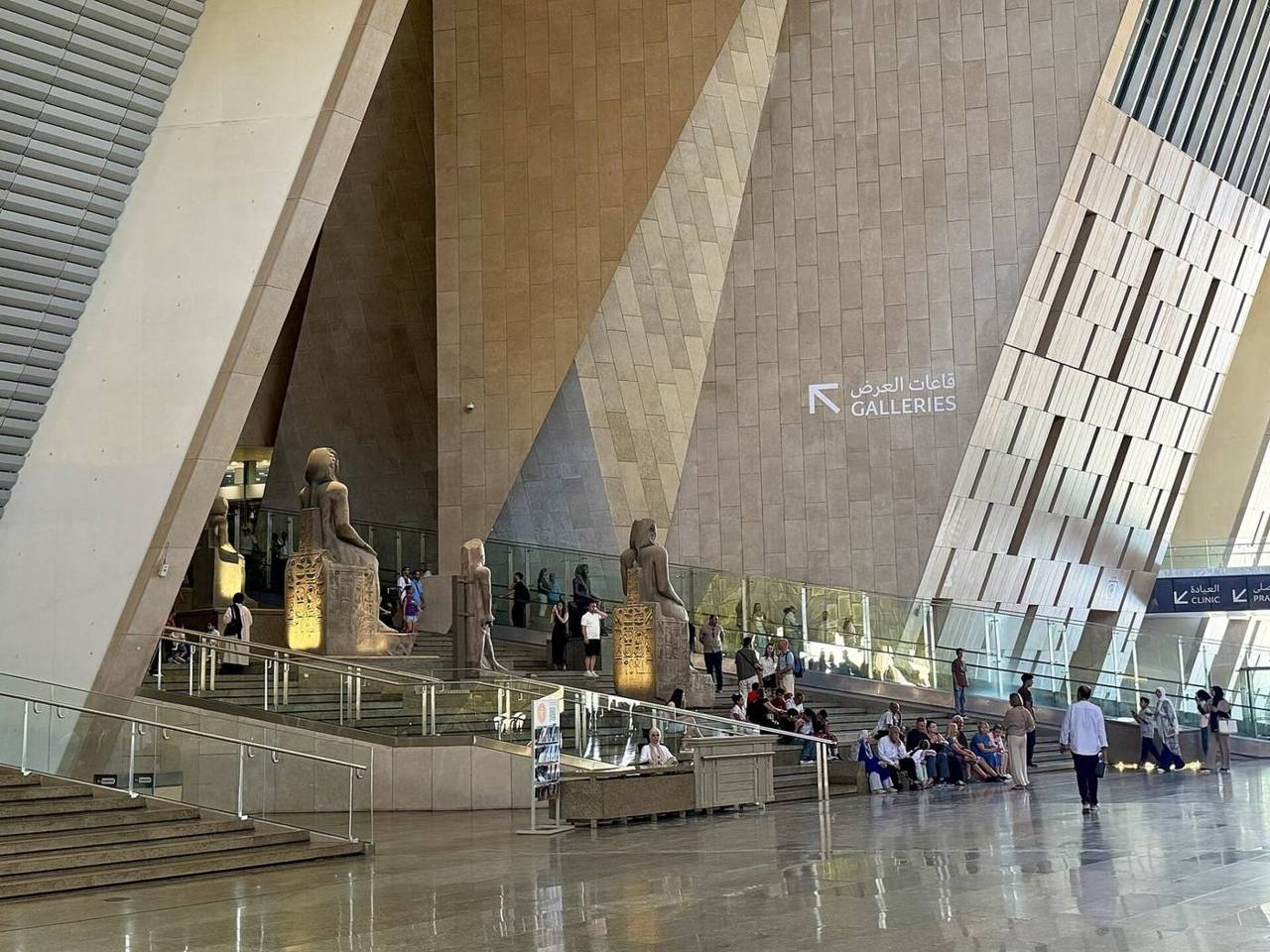 5 daysEasy
The Grand Egyptian Museum and Cairo in depth
Cairo with the time it deserves: a full day at the Grand Egyptian Museum near the pyramids, with Tutankhamun's complete treasure, the Egyptian Museum on Tahrir Square, Coptic Cairo with the Hanging Church, Islamic Cairo between al-Azhar, Bab Zuweila and al-Muizz Street, and the Khan el-Khalili bazaar.